Agnosia: What is Agnosia?
Agnosia is a complex neurological condition that impacts an individual’s ability to recognize and interpret sensory information. This recognition disorder can manifest in various forms. It affects a person’s daily life and interactions significantly. Understanding Agnosia is key to developing effective treatment plans and providing support. It falls under the broader category of neurological disorders. A thorough approach is needed to manage its symptoms and enhance the quality of life for patients. To grasp Agnosia, we must explore how our brains handle sensory data and what causes recognition problems. It’s not just one condition but a range of neurological disorders. These disorders impact how people perceive and understand sensory inputs.
Definition and Core Characteristics
Agnosia makes it hard for people to recognize or understand certain sensory inputs. This is true even if their sensory organs seem fine. For example, someone with visual agnosia might see perfectly but struggle to identify objects or faces.
- Difficulty in recognizing objects, people, or sounds
- Intact sensory organs (e.g., eyes, ears)
- Impaired ability to process specific types of sensory information
Neurological Basis of Recognition
The root of Agnosia lies in brain dysfunction, mainly in areas that handle sensory data. Studies reveal that certain brain parts, like the occipital and temporal lobes, are vital for recognition. These areas are responsible for processing visual and auditory information.
- The occipital lobe is involved in processing visual information.
- The temporal lobe plays a key role in processing auditory information and memory.
- Damage to these areas can lead to various forms of Agnosia.
By understanding Agnosia’s neurological roots, experts can improve diagnosis and treatment. This knowledge helps those affected by these complex conditions.
The Historical Context of Agnosia
The study of agnosia is deeply intertwined with the evolution of neurology. This condition, marked by an inability to process sensory information, has long intrigued scientists. It has been a focal point for centuries in the field.
Early Discoveries and Case Studies
By the late 19th century, neurologists started documenting cases of patients with unique perceptual challenges. Sigmund Freud, before his psychoanalytic career, contributed to the study of neurological disorders, including agnosia. These early case studies have been instrumental in grasping the intricacies of agnosia, revealing the complex interplay between brain function and perception.

Evolution of Understanding Through Modern Neuroscience
Modern neuroscience has greatly expanded our comprehension of agnosia. Tools like functional magnetic resonance imaging (fMRI) and electroencephalography (EEG) have enabled researchers to pinpoint brain regions critical for recognition and perception. These breakthroughs have not only enriched our knowledge of agnosia but also illuminated the neural processes behind everyday perception.
Types of Agnosia
Agnosia is a complex condition that affects how we process sensory information. It is categorized based on the sensory modality impacted, leading to various types of Agnosia.
Visual Agnosia
Visual Agnosia makes it hard for people to recognize visual stimuli. They struggle to identify objects, shapes, or even faces, even with normal vision. This condition arises from damage to the visual pathway or brain areas that process visual information. It includes subtypes like apperceptive and associative visual Agnosia, each with unique features.
Auditory Agnosia
Auditory Agnosia prevents individuals from recognizing or interpreting sounds. It can affect understanding spoken language or recognizing non-verbal sounds like music. This condition often results from brain damage, such as from a stroke or traumatic injury.
Tactile Agnosia
Tactile Agnosia, or Astereognosis, is the inability to identify objects by touch. People with this condition struggle to recognize the shape, size, or texture of objects in their hands, despite normal sensation. It shows the complex relationship between sensory input and cognitive processing.
Grasping the different types of Agnosia is key for diagnosis and treatment. Each type sheds light on the neural mechanisms of perception and cognition. It reveals how specific brain damage can cause distinct perceptual deficits.
Visual Agnosia in Detail
Exploring visual agnosia reveals its different forms, such as apperceptive and associative visual agnosia. This neurological condition prevents people from recognizing visual stimuli, even with normal vision. It shows how complex visual perception and recognition truly are.

Apperceptive Visual Agnosia
Apperceptive visual agnosia is a form where individuals face challenges in the initial processing of visual information. Those affected might find it hard to combine basic visual elements into recognizable forms. This makes it tough to identify objects or shapes.
This condition often stems from damage to the brain’s early visual processing areas. Such damage can occur due to strokes or traumatic brain injuries.
Associative Visual Agnosia
Associative visual agnosia disrupts the connection between visual perceptions and their meanings. People with this condition can see and describe visual stimuli but fail to understand their significance or identity.
This highlights the difference between seeing something and understanding its meaning. It shows the cognitive processes involved in giving visual stimuli significance.
Specialized Forms of Visual Agnosia
Visual agnosia shows the complex nature of human vision. It reveals specific challenges in perception. This highlights the intricacy of our visual system.
Prosopagnosia: Face Blindness
Prosopagnosia, or face blindness, makes it hard for people to recognize faces. This includes those of family and friends. It greatly affects social interactions and daily life.
- Difficulty recognizing family members and close friends
- Challenges in social situations due to inability to recognize faces
- Often, individuals with prosopagnosia develop alternative strategies to recognize people, such as by voice or clothing
Color Agnosia and Achromatopsia
Color agnosia is when someone can’t recognize colors, even though they see them. Achromatopsia means seeing everything in shades of gray, often with light sensitivity.
- Color agnosia involves difficulty in naming colors, despite being able to distinguish between them.
- Achromatopsia results in a complete or severe deficiency in color vision.
- Both conditions underscore the complex processing of visual information in the human brain.
These specialized forms of visual agnosia present unique challenges. They also offer insights into the human visual system. Understanding these conditions can lead to better support and accommodations for those affected.
Auditory Agnosia Explored
Auditory agnosia is a rare neurological disorder where individuals struggle to recognize sounds. It comes in various forms, each impacting sound processing differently.
Pure Word Deafness
Pure word deafness is a specific type of auditory agnosia. People with this condition find it hard to understand spoken language. Despite having normal hearing, they struggle to distinguish words. This makes communication a significant challenge.
- Difficulty in understanding speech in noisy environments
- Trouble following conversations
- Normal hearing thresholds as measured by audiological tests
Nonverbal Auditory Agnosia
Nonverbal auditory agnosia affects the recognition of non-speech sounds, like music or environmental noises. It can greatly hinder an individual’s interaction with their surroundings.
- Impaired recognition of familiar sounds like a doorbell or a cat’s meow
- Difficulty appreciating music or understanding its emotional content
- Potential challenges in responding appropriately to auditory cues
Auditory agnosia, whether it’s pure word deafness or nonverbal auditory agnosia, reveals the brain’s complex processing of sound. Studying these conditions offers valuable insights into how we recognize sound.

Tactile and Other Forms of Agnosia
The process of perceiving touch is complex and can be influenced by neurological conditions. Tactile agnosia is a condition where individuals struggle to identify objects through touch, even though their sensory perception is intact. This condition reveals the complex relationship between sensory input and cognitive processing.
Astereognosis: Tactile Object Recognition Impairment
Astereognosis is a specific form of tactile agnosia. It involves the inability to recognize objects by touch. People with astereognosis find it hard to identify everyday items like keys or coins when they are placed in their hands without visual cues. This condition emphasizes the critical role of tactile perception in our daily lives.
- Difficulty identifying objects through touch
- Intact sensory perception
- Impact on daily activities due to impaired object recognition
Autotopagnosia and Body Recognition Disorders
Autotopagnosia is a condition where individuals struggle to recognize or identify parts of their own body. This can lead to confusion about the location or identity of body parts. It affects one’s ability to perform tasks that require self-awareness of bodily structure. Autotopagnosia is another aspect of agnosia that impacts personal and spatial awareness.
- Impaired recognition of body parts
- Difficulty with tasks requiring self-awareness
- Potential impact on motor functions and coordination
Neurological Mechanisms Behind Agnosia
The neurological basis of Agnosia involves a complex network of brain regions and pathways. Damage to these areas can cause various recognition impairments. Agnosia affects the brain’s ability to process and interpret sensory information.
Brain Regions Involved
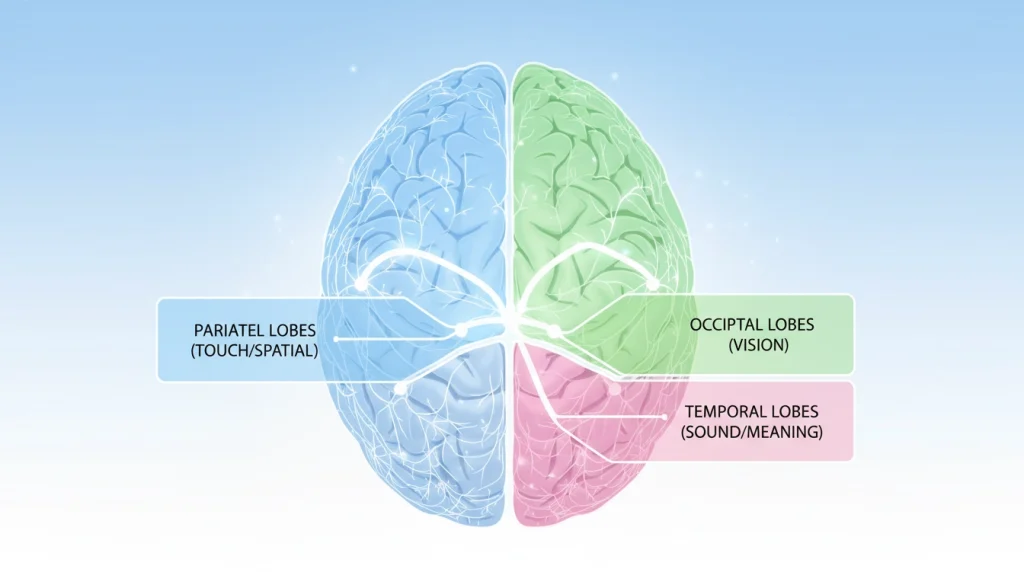
Agnosia is linked to damage in specific brain areas. These areas are responsible for processing different sensory information types. The main regions include:
- The occipital lobe, essential for visual processing
- The temporal lobe, involved in auditory and memory functions
- The parietal lobe, which plays a role in processing tactile information
Different types of Agnosia can occur based on the location and extent of the damage. This can result in visual, auditory, or tactile Agnosia.
Neural Pathways and Processing
The neural pathways for recognition and identification are complex. The ventral pathway, known as the “what pathway,” is key for object recognition. The dorsal pathway, or the “where/how pathway,” is involved in spatial location and object movement.
Damage to these pathways disrupts normal sensory information processing. This leads to Agnosia’s characteristic symptoms. Understanding these pathways is vital for diagnosing and treating Agnosia.
- The ventral pathway is responsible for object identification.
- The dorsal pathway is involved in spatial awareness and object movement.
- Damage to these pathways can result in various forms of Agnosia.
Causes of Agnosia
Agnosia stems from various pathological processes, including vascular events, traumatic injuries, and degenerative neurological diseases. Grasping these causes is vital for diagnosing and managing the condition effectively.
Stroke and Vascular Events
Stroke is a primary cause of agnosia, most commonly visual agnosia. Interruption of blood flow to specific brain areas can damage critical regions for recognition and identification. The severity and type of agnosia depend on the brain area affected by the stroke.
Traumatic Brain Injury
Traumatic brain injury (TBI) is another major cause of agnosia. TBI can stem from accidents, falls, or other incidents causing head trauma. The impact damages brain areas responsible for processing sensory information, leading to various agnosia forms. The severity of agnosia often mirrors the severity of the TBI.
Neurodegenerative Diseases
Neurodegenerative diseases, like Alzheimer’s disease and frontotemporal dementia, can also cause agnosia. These conditions progressively damage brain cells and pathways, impacting cognitive functions such as recognition and memory. As these diseases progress, agnosia’s incidence and severity typically increase.
Diagnosis of Agnosia
Diagnosing Agnosia demands a detailed approach, combining clinical assessments and neuroimaging techniques. Accurate diagnosis is key to grasping the extent and nature of the perceptual disorder. This understanding is vital for developing effective management and rehabilitation plans.
Clinical Assessment Methods
Clinical evaluation of Agnosia involves a series of tests aimed at assessing the patient’s sensory information recognition and interpretation abilities. These evaluations include:
- Object recognition tests
- Face recognition tests (for prosopagnosia)
- Auditory tests to assess sound recognition
- Tactile tests for object identification through touch
These assessments help clinicians pinpoint the specific type and severity of Agnosia. This information is essential for crafting a suitable treatment plan.
Neuroimaging Techniques
Neuroimaging is indispensable in diagnosing Agnosia, shedding light on brain areas affected. MRI and CT scans are employed to detect structural brain anomalies.
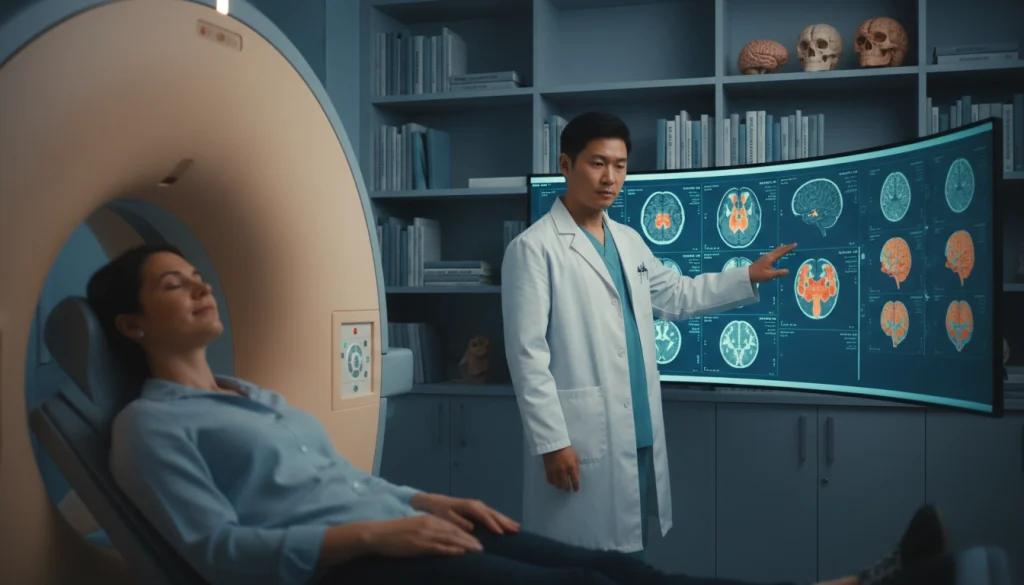
Functional neuroimaging, like fMRI and PET scans, uncovers the functional brain impacts of Agnosia. This reveals how Agnosia disrupts neural networks.
By integrating clinical assessments and neuroimaging, healthcare professionals gain a thorough understanding of Agnosia. This enables them to design interventions that meet the individual’s unique needs.
Differential Diagnosis: Distinguishing Agnosia from Other Conditions
Diagnosing agnosia demands a detailed and precise method to differentiate it from other neurological conditions. This is because agnosia, which involves an inability to recognize or interpret sensory information, shares symptoms with various disorders. This similarity makes diagnosis challenging.
Similar Neurological Disorders
Several neurological disorders can be mistaken for agnosia due to their similar symptoms. For instance, dementia can lead to cognitive decline affecting recognition abilities. Psychiatric disorders like schizophrenia also present perceptual disturbances that might be confused with agnosia. A deep understanding of the patient’s symptoms and medical history is critical for accurate diagnosis.
Other conditions, such as visual or hearing impairments, can also be mistaken for agnosia. A detailed assessment is needed to distinguish between a primary sensory issue and a higher-level processing disorder.
Diagnostic Challenges
The diagnostic journey for agnosia is complex due to its varied presentation. Different types of agnosia (visual, auditory, tactile) necessitate specific tests to evaluate the recognition deficit. Clinicians must employ a combination of clinical evaluation and neuroimaging to exclude other causes of symptoms.
Comorbid conditions can also complicate the diagnosis. A nuanced and multi-faceted diagnostic approach is essential to address these complexities.
Famous Case Studies in Agnosia Research
Throughout the history of neuroscience, case studies on agnosia have provided invaluable insights into the human brain’s complexities. These studies have not only deepened our understanding of agnosia but have also contributed significantly to the broader field of neurology.
Historical Cases That Advanced Understanding
Several historical cases have been key in shaping our understanding of agnosia. For instance, the case of Patient DF, who suffered from visual agnosia due to carbon monoxide poisoning, has been extensively studied. Her condition helped researchers differentiate between the ventral and dorsal pathways in the visual system.
- Patient DF’s case highlighted the distinction between conscious perception and unconscious visually guided behavior.
- Other historical cases have illustrated various forms of agnosia, including prosopagnosia and auditory agnosia.
Modern Documented Cases
Modern neuroscience continues to benefit from detailed case studies of agnosia. Recent documented cases have utilized advanced neuroimaging techniques to study the brain areas affected by agnosia. For example, studies using fMRI have provided insights into the neural mechanisms underlying different types of agnosia.
- A recent case study published in a leading neurology journal detailed a patient with a rare form of tactile agnosia, shedding light on the somatosensory cortex’s role.
- Modern cases often involve detailed neuropsychological testing, providing a more nuanced understanding of agnosia’s impact on daily life.
Treatment Approaches for Agnosia
Managing agnosia requires a multi-faceted strategy, encompassing cognitive rehabilitation and adaptive techniques. Each treatment plan is customized to the individual’s specific agnosia type, severity, health status, and personal objectives.
Cognitive Rehabilitation Strategies
Cognitive rehabilitation seeks to mitigate or compensate for agnosia-induced cognitive impairments. It involves training programs aimed at boosting visual, auditory, or tactile recognition skills. For example, treatments for visual agnosia might include exercises to enhance object recognition. Auditory agnosia treatment could focus on speech comprehension improvement.
These strategies are tailored to the individual’s remaining abilities and agnosia severity. Techniques may include repetitive tasks, compensatory strategies, and assistive technology integration to aid daily functioning.
Adaptive Techniques and Compensatory Methods
Adaptive techniques and compensatory methods are also vital in managing agnosia. They help individuals adapt to their condition, improving daily task performance and social engagement. For instance, those with visual agnosia might rely more on auditory or tactile cues for navigation.
Compensatory strategies can significantly enhance independence. They might include using labels or color-coding for object identification or employing memory aids for information recall. These methods empower individuals with agnosia to manage their condition better, leading to improved quality of life.
Living with Agnosia
The journey of living with agnosia is filled with daily battles and adjustments that test both physical and emotional limits. Those affected must navigate a world where familiar sights, sounds, and faces become enigmatic and unrecognizable.
Daily Challenges and Adaptations
Daily life with agnosia presents a multitude of hurdles, from identifying family and friends to understanding everyday objects and sounds. To overcome these, individuals often resort to creative coping mechanisms. They might rely on contextual clues or embrace assistive technology.
For example, someone with visual agnosia might use labels or color-coding to identify items or rooms. Others might enhance their sense of hearing or touch to make up for their visual shortcomings.
Psychological Impact
The psychological toll of living with agnosia is significant, often resulting in feelings of frustration, isolation, and anxiety. The relentless effort to comprehend and interact with the environment can be mentally draining.
Further, the inability to recognize loved ones or fully engage with the surroundings can lead to a deep sense of disconnection. This can severely impact an individual’s mental health and overall well-being.
Conclusion
Agnosia is a complex neurological condition where individuals struggle to recognize or interpret sensory information. This article has delved into its definition, types, and the underlying neurological mechanisms. It’s a condition that affects how we perceive the world around us.
The various forms of Agnosia, including visual, auditory, and tactile, underscore the brain’s complexity in processing sensory information. Grasping these differences is essential for accurate diagnosis and treatment. It helps us understand the depth of sensory processing in the human brain.
Research into Agnosia has greatly expanded our understanding of brain function and perception. As we continue to explore Agnosia, we’re getting closer to finding effective treatments. This will significantly improve the lives of those affected by this condition.
In conclusion, Agnosia is a complex condition that demands a holistic approach to diagnosis and treatment. By integrating our knowledge of Agnosia, we can better tackle its challenges. This will lead to improved outcomes for patients.
FAQ
Q: What is Agnosia?
A: Agnosia is a neurological disorder where individuals struggle to recognize or identify people, objects, or sounds. This occurs despite having normal sensory function.
Q: What are the main types of Agnosia?
A: The main types of Agnosia include visual, auditory, and tactile Agnosia. Each type affects different senses and aspects of recognition.
Q: What is visual Agnosia?
A: Visual Agnosia is a condition where people have trouble recognizing visual stimuli. This includes objects or faces, despite having normal vision.
Q: What is prosopagnosia?
A: Prosopagnosia, or face blindness, is a form of visual Agnosia. It affects individuals who struggle to recognize faces, even those of familiar people.
Q: How is Agnosia diagnosed?
A: Diagnosing Agnosia involves several steps. These include neurological examinations and neuroimaging techniques like MRI or CT scans.
Q: Can Agnosia be treated?
A: While there’s no cure for Agnosia, treatments exist. Cognitive rehabilitation strategies and adaptive techniques help individuals cope with the condition.
Q: What are the causes of Agnosia?
A: Agnosia can stem from various causes. These include stroke, traumatic brain injury, and neurodegenerative diseases. These factors affect the brain’s ability to process and recognize information.
Q: How does Agnosia affect daily life?
A: Agnosia significantly impacts daily life. Individuals may struggle to recognize objects, people, or sounds. This leads to challenges in social interactions, daily tasks, and overall independence.
Q: Are there any famous case studies related to Agnosia?
A: Yes, several significant case studies on Agnosia exist. These include both historical and modern cases. They have greatly contributed to our understanding of the condition and its complexities.