Basal Cell Carcinoma (BCC): What is Basal Cell Carcinoma?
Basal Cell Carcinoma is the most common form of skin cancer. It’s vital to grasp its basics for prevention and treatment. This type of skin cancer starts in the basal Cell layer of the skin. Understanding it can help individuals prevent it and seek timely medical care. Being the most prevalent form of skin cancer, Basal Cell Carcinoma (BCC) impacts a large number of people globally. Basal Cell Carcinoma (BCC) is a prevalent form of skin cancer, emerging from the basal cell layer. It is known for its slow progression and its ability to destroy the surrounding tissues.
Definition and Basic Characteristics
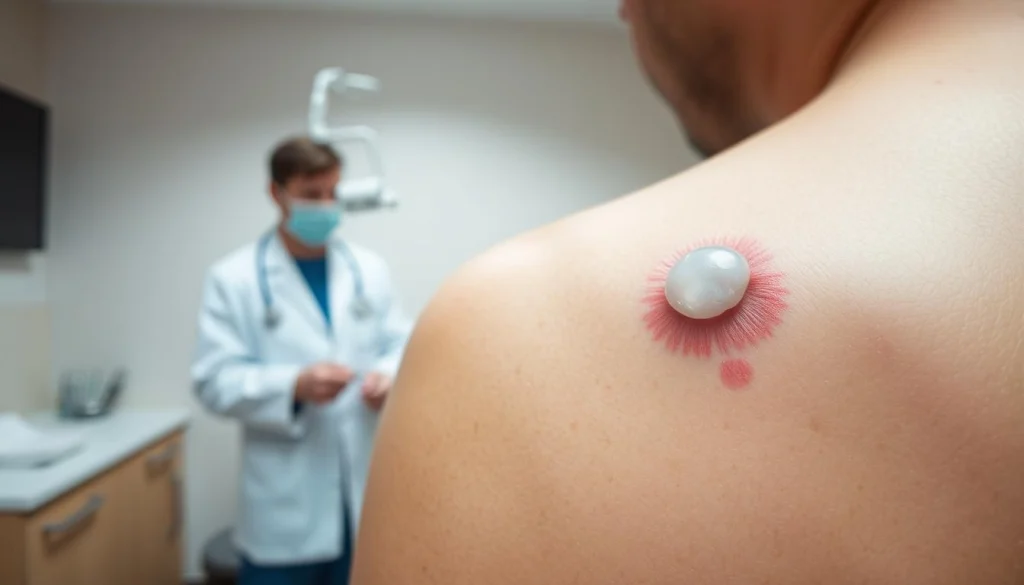
Characterized by the uncontrolled growth of basal cells, BCC resides in the skin’s lowermost layer. It is notable for its invasive nature and rare tendency to metastasize. Typically, BCC manifests as a small, shiny bump or nodule, often accompanied by visible blood vessels.
- Local invasiveness without distant metastasis
- Slow-growing nature
- Appearance as a small, shiny bump or nodule
For more information on the types of skin cancer and their diagnosis, you can visit Acıbadem International’s resource on skin cancer.
Significance in Skin Cancer Classification
BCC is a cornerstone in the classification of skin cancers, given its widespread occurrence and unique clinical manifestations. It falls under the category of non-melanoma skin cancers (NMSCs), alongside squamous cell carcinoma. Grasping BCC’s role in skin cancer classification is essential for accurate diagnosis and effective treatment planning.
- High prevalence among skin cancers
- Classification under non-melanoma skin cancers
- Distinct clinical features aiding diagnosis
Epidemiology of Basal Cell Carcinoma (BCC)
Understanding the epidemiology of Basal Cell Carcinoma (BCC) is vital for creating effective prevention and treatment plans. It involves studying the distribution and determinants of BCC in various populations. This research sheds light on risk factors and trends.
Global Prevalence Statistics
Basal Cell Carcinoma is the most prevalent skin cancer globally, making up a large portion of all skin cancer cases. Recent data show that BCC impacts millions worldwide, with incidence rates differing by region.
- Highest incidence rates are observed in populations with fair skin and those exposed to high levels of UV radiation.
- Australia and the United States report some of the highest incidence rates of BCC.
- The global prevalence of BCC is expected to continue rising due to factors such as aging populations and increased UV exposure.
Demographics and Risk Distribution
The demographics most affected by BCC include older adults, individuals with fair skin, and those with a history of prolonged sun exposure. Risk factors also include genetic predisposition and exposure to certain environmental carcinogens.
- Age: BCC incidence increases with age, with most cases diagnosed in individuals over 50.
- Skin type: Fair skin is a significant risk factor due to lower melanin levels, which offer less protection against UV radiation.
- Family history: Individuals with a family history of skin cancer are at higher risk.
Causes and Risk Factors
The emergence of Basal Cell Carcinoma is a result of both genetic and environmental influences. Grasping these factors is key to preventing and managing BCC effectively.
UV Radiation Exposure
Ultraviolet (UV) radiation is a major risk factor for Basal Cell Carcinoma. UV rays from the sun or artificial sources like tanning beds harm skin cells’ DNA, causing cancerous mutations. Those who spend extensive time outdoors, mainly during peak sun hours, face a greater risk. Employing protective measures like sunscreen, clothing, and shade can reduce this risk.
Genetic Predisposition
Genetic predisposition is vital in the development of BCC. Individuals with a family history of skin cancer or specific genetic conditions, such as Basal Cell Nevus Syndrome, are more prone to BCC. Genetic factors can impair the skin’s DNA repair capabilities, elevating cancer risk.
Other Environmental Factors
Environmental factors beyond UV radiation also contribute to BCC risk. Exposure to certain chemicals, like arsenic, and radiation therapy for previous cancers can heighten risk. A weakened immune system, due to conditions like HIV/AIDS or immunosuppressive drugs, also increases susceptibility to BCC.
Types and Classifications of BCC
BCC is not a single entity; it encompasses a range of subtypes with distinct features. Understanding these subtypes is critical for accurate diagnosis and effective treatment planning.
Nodular BCC
Nodular BCC is the most prevalent subtype, making up 60-80% of all BCC cases. It manifests as a slow-growing, flesh-colored or pink nodule. This nodule often has a characteristic “rolled edge” and central ulceration.
Superficial BCC
Superficial BCC presents as a flat, reddish patch or plaque with a scaly surface. It is more superficial and can be mistaken for other skin conditions. This makes diagnosis challenging.
Morpheaform/Infiltrative BCC
Morpheaform or infiltrative BCC is a more aggressive subtype. It is characterized by its ability to invade deeper into the skin, making it difficult to define its borders. It often appears as a firm, white or yellowish plaque.
Pigmented BCC
Pigmented BCC contains melanin, giving it a brown or black appearance. This subtype can be mistaken for melanoma. Accurate diagnosis is essential due to this similarity.
The main types of BCC are summarized in the following list:
- Nodular BCC: Most common subtype, characterized by a nodule with a rolled edge.
- Superficial BCC: Appears as a flat, reddish patch.
- Morpheaform/Infiltrative BCC: Aggressive subtype with deep invasion.
- Pigmented BCC: Contains melanin, giving it a pigmented appearance.
Signs and Symptoms
Identifying the signs of Basal Cell Carcinoma (BCC) is key to catching it early. BCC often shows up as a skin change, which can be subtle but persistent.
Common Physical Manifestations
BCC can take many forms, such as a shiny bump or a red patch. It might also appear as a sore that doesn’t heal. These lesions can bleed and crust over. Sometimes, BCC looks like a flat, white or yellowish scar.
The look of BCC varies by type and where it is on the body. For example, nodular BCC is a firm, painless nodule. Superficial BCC might resemble a red, scaly patch.
Warning Signs to Monitor
People should watch for new or changing skin lesions, more so if they’re at risk for BCC. This includes those with fair skin or a history of UV exposure. Look out for lesions that grow, bleed, or don’t heal.
- New or changing skin growths
- Sores that don’t heal within a few weeks
- Persistent red or pink patches
By keeping an eye out for these signs and seeing a dermatologist if needed, you can catch BCC early. This makes it easier to manage.
High-Risk Anatomical Locations
It’s vital to know the high-risk spots for Basal Cell Carcinoma to catch it early. Basal Cell Carcinoma (BCC) can pop up anywhere, but some spots are more likely due to sun exposure and skin type.
Facial and H-Zone Considerations
The face, and the H-zone in particular, is a hotspot for BCC. This zone, around the eyes, nose, and lips, gets a lot of sun. Its complex structure makes treatment here a tough challenge.
The H-zone is a big worry because it’s close to important structures. If not treated right, it could lead to serious disfigurement.
Other Concerning Locations
But the face isn’t the only worry spot. Other high-risk areas include the ears, neck, and hands. These get a lot of sun, increasing the risk of BCC.
Also, areas that have had radiation or chronic skin problems are at higher risk. Knowing these risk factors helps in spotting and managing BCC early.
Diagnosis Methods and Procedures
Diagnosing Basal Cell Carcinoma (BCC) requires a blend of clinical examination and advanced diagnostic techniques. Accurate diagnosis is key for effective treatment and patient outcomes.
Clinical Examination Techniques
Clinical examination is the initial step in diagnosing BCC. Dermatologists employ visual inspection and dermoscopy to assess suspicious lesions. Dermoscopy, in particular, offers a detailed look at the skin lesion, aiding in identifying BCC characteristics.
- Visual inspection to identify lesions with characteristic BCC features
- Dermoscopy to examine lesions more closely
Biopsy Types and Procedures
When a lesion is suspected to be BCC, a biopsy is conducted to confirm the diagnosis. Various biopsies exist, including shave, punch, and excisional biopsies. The choice of biopsy method hinges on the lesion’s size, location, and suspected depth of invasion.
- Shave biopsy for superficial lesions
- Punch biopsy for deeper or more suspicious lesions
- Excisional biopsy for larger or more complex lesions
Advanced Diagnostic Technologies
Advanced diagnostic technologies complement clinical examination and biopsy in diagnosing BCC. Reflectance confocal microscopy (RCM) and optical coherence tomography (OCT) offer high-resolution images of the skin lesion.
- Reflectance Confocal Microscopy (RCM) for detailed imaging
- Optical Coherence Tomography (OCT) for assessing lesion depth
By integrating these diagnostic approaches, healthcare professionals can accurately diagnose BCC. This enables the development of an appropriate treatment plan.
Staging and Assessment
Understanding the stage and risk factors of Basal Cell Carcinoma is vital for effective treatment planning. Accurate staging determines the disease’s extent. This, in turn, affects treatment choices and prognosis.
TNM Classification System
The TNM classification system is a common method for staging Basal Cell Carcinoma. It considers three main components:
- T (Tumor): The size and extent of the primary tumor.
- N (Node): Involvement of nearby lymph nodes.
- M (Metastasis): Presence of distant metastasis.
By assessing these factors, clinicians can classify BCC into various stages. This helps guide treatment decisions.
Risk Stratification Approaches
Risk stratification is key in managing Basal Cell Carcinoma. It identifies patients at higher risk of recurrence or metastasis. Factors considered include:
- Tumor size and location.
- Histological subtype.
- Patient’s immune status.
By stratifying patients based on risk, clinicians can tailor follow-up and treatment plans. This approach may improve outcomes.
Treatment Options for Basal Cell Carcinoma
Understanding the treatment options for Basal Cell Carcinoma (BCC) is key. It involves both surgical and non-surgical interventions. The choice of treatment depends on several factors. These include the tumor’s type, size, and location, as well as the patient’s health and preferences.
Surgical Interventions
Surgical methods are often the first line of treatment for BCC. This is true for tumors that are large, invasive, or in sensitive areas. There are two main surgical techniques:
- Mohs micrographic surgery, which removes the tumor layer by layer. The tissue is examined immediately to ensure complete removal.
- Standard excision, where the tumor and a margin of healthy tissue are removed.
Mohs Micrographic Surgery
Mohs micrographic surgery is highly effective for removing BCC, even in sensitive areas. It preserves healthy tissue while ensuring the cancer is completely removed.
Standard Excision
Standard excision removes the tumor and a margin of healthy tissue. It’s commonly used for smaller, well-defined tumors.
Non-Surgical Treatments
For those not suited for surgery or preferring non-surgical options, there are alternatives. These include:
- Topical medications, such as imiquimod or fluorouracil, applied directly to the skin to treat superficial BCC.
- Radiation therapy, which uses high-energy rays to kill cancer cells.
Topical Medications
Topical medications treat superficial BCC. They stimulate the immune system or directly kill cancer cells.
Radiation Therapy
Radiation therapy is effective for BCC, often used for tumors in sensitive areas or for those who cannot undergo surgery. It can be used alone or with other treatments.
Emerging Therapies
New therapies are being explored for BCC management. These include targeted therapies that block specific molecular pathways involved in BCC development and growth.
Advanced Management Approaches
The management of Basal Cell Carcinoma (BCC) has seen a significant leap forward with the advent of advanced therapeutic strategies. These new methods have greatly enhanced treatment outcomes, benefiting patients with advanced or recurrent disease.
Hedgehog Pathway Inhibitors
Hedgehog pathway inhibitors mark a major breakthrough in BCC treatment. They target the Hedgehog signaling pathway, which is frequently disrupted in BCC cases.
- Vismodegib and sonidegib are FDA-approved Hedgehog pathway inhibitors.
- These drugs have shown efficacy in treating advanced BCC.
- Common side effects include muscle spasms, alopecia, and dysgeusia.
Immunotherapy Options
Immunotherapy is gaining traction as a promising management option for BCC. It leverages the body’s immune system for a targeted treatment approach.
- PD-1 inhibitors are being explored for their role in treating BCC.
- Immunotherapy may offer benefits for patients with advanced or metastatic disease.
- Ongoing research is evaluating the efficacy and safety of immunotherapy in BCC.
Advanced management strategies, including Hedgehog pathway inhibitors and immunotherapy, are revolutionizing BCC treatment. These innovative approaches provide new avenues for both patients and healthcare professionals.
Prevention Strategies
To lower the risk of Basal Cell Carcinoma (BCC), it’s key to use preventive steps. This includes sun protection and regular skin checks. These actions can greatly reduce the chance of getting this common skin cancer.
Sun Protection Methods
Sun protection is a must for BCC prevention. Effective ways include:
- Using broad-spectrum sunscreen with a Sun Protection Factor (SPF) of 30 or higher
- Wearing protective clothing, such as wide-brimmed hats and long-sleeved shirts
- Seeking shade, mainly during peak sun hours (10am-4pm)
- Avoiding tanning beds, which emit harmful UV radiation
By making these habits part of your daily life, you can cut down on harmful UV exposure.
Regular Skin Examinations
Regular skin checks are essential for catching BCC early. This means:
- Doing self-exams monthly to watch for new or changing spots
- Getting annual dermatology check-ups, more so for those at high risk
- Knowing the signs of skin cancer, like unusual growths or changes in moles
Early detection through regular skin exams can lead to better treatment results and higher survival rates.
Recurrence and Follow-up Care
Managing Basal Cell Carcinoma (BCC) effectively requires more than just treatment. It also demands careful follow-up to catch any signs of recurrence early. After treatment, patients must be closely monitored for any signs of the cancer returning.
Recurrence Rates and Patterns
Recurrence rates for Basal Cell Carcinoma vary based on treatment and tumor characteristics. Most recurrences happen within the first few years after treatment. Knowing these patterns helps tailor follow-up care to each patient’s needs.
Recommended Follow-up Protocols
Follow-up care for BCC patients usually includes regular clinical exams. The exam frequency depends on the tumor’s risk, the treatment, and the patient’s risk factors. Guidelines often recommend exams every 6 to 12 months for the first few years, with adjustments for individual risk.
Following these protocols helps healthcare providers catch and manage recurrences quickly. This approach improves patient outcomes significantly.
Special Population Considerations
Understanding BCC in special populations is key to developing targeted treatments. Certain groups, with their unique characteristics or conditions, need special care when managing BCC.
Pediatric BCC
BCC in children is rare but can be aggressive, more so in those with genetic predispositions. Early detection and treatment are vital to avoid long-term harm.
Immunocompromised Patients
People with weakened immune systems, like organ transplant recipients, face a higher risk of BCC. Their condition demands close monitoring and often more aggressive treatment.
Genetic Syndrome-Associated BCC
Certain genetic syndromes, such as Basal Cell Nevus Syndrome (Gorlin Syndrome), greatly increase BCC risk. Managing BCC in these patients requires a deep understanding of their syndrome and its implications.
Complications and Advanced Disease
The complications of Basal Cell Carcinoma, such as local destruction and metastasis, highlight the critical need for early treatment. BCC is usually slow-growing and rarely spreads, but advanced cases can cause significant harm.
Local Tissue Destruction
Advanced BCC can lead to local tissue destruction, a serious issue. As the tumor expands, it invades nearby tissues, causing disfigurement and loss of function. For example, facial BCC can erode into bone and cartilage, leading to severe cosmetic and functional problems.
Metastatic BCC
Metastatic BCC is a rare but severe complication, affecting less than 1% of cases. It spreads to lymph nodes, lungs, or bones. The prognosis for metastatic BCC is generally poor, stressing the importance of aggressive treatment for high-risk BCC.
Resources and Support for Patients
Receiving a Basal Cell Carcinoma diagnosis can be overwhelming. Yet, there are many resources available for support. Patients can find various forms of assistance to help them navigate their diagnosis and treatment.
Support Organizations
Several organizations offer support to Basal Cell Carcinoma patients. They provide counseling, educational materials, and community forums. The Skin Cancer Foundation and the American Cancer Society are among the most prominent, providing extensive support.
- The Skin Cancer Foundation offers patient education and support groups.
- The American Cancer Society provides resources on treatment options and coping strategies.
Financial Assistance Programs
Financial assistance is available for patients undergoing treatment for Basal Cell Carcinoma. Organizations like the Patient Access Network Foundation and the Cancer Financial Assistance Coalition offer aid. They help cover treatment costs.
Essential Insights About Basal Cell Carcinoma
Basal Cell Carcinoma (BCC) is the most prevalent form of skin cancer, significantly affecting public health. It’s vital to grasp the key aspects of BCC for early detection, effective treatment, and prevention.
Exposure to UV radiation, genetic predisposition, and environmental factors increase BCC risk. Recognizing signs like unusual growths or changes in skin pigmentation is critical for timely medical intervention.
Diagnosis involves clinical examination, biopsy, and advanced diagnostic technologies. Treatment options span from surgical interventions to non-surgical methods. New therapies, like Hedgehog pathway inhibitors and immunotherapy, are also emerging.
Prevention is key, with sun protection and regular skin exams playing a major role. For those at high risk, regular follow-up care is essential. It helps monitor for recurrence and manage any complications.
Understanding Basal Cell Carcinoma is the first step towards protecting skin health. It empowers individuals to seek timely medical care when necessary.
FAQ About Basal Cell Carcinoma (BCC)
Q: What is Basal Cell Carcinoma (BCC)?
A: Basal Cell Carcinoma is the most common skin cancer. It starts in the basal cell layer of the skin.
Q: What are the main risk factors for developing BCC?
A: Main risk factors include UV radiation exposure and genetic predisposition. Environmental factors like ionizing radiation and certain chemicals also play a role.
Q: What are the different types of Basal Cell Carcinoma?
A: There are several types of BCC. These include nodular, superficial, morpheaform/infiltrative, and pigmented BCC. Each type has its own characteristics.
Q: How is Basal Cell Carcinoma diagnosed?
A: Diagnosis involves clinical exams and biopsies. Advanced technologies like dermoscopy are also used.
Q: What are the treatment options for Basal Cell Carcinoma?
A: Treatment options include surgical methods like Mohs micrographic surgery and standard excision. Non-surgical treatments include topical medications and radiation therapy. Hedgehog pathway inhibitors are also emerging as a treatment option.
Q: Can Basal Cell Carcinoma recur after treatment?
A: Yes, BCC can recur. The risk depends on the type of BCC, treatment method, and patient health.
Q: How can Basal Cell Carcinoma be prevented?
A: Prevention involves sun protection and regular skin exams. Using sunscreen and protective clothing is key.
Q: Are there any specific considerations for certain populations?
A: Yes, pediatric patients, immunocompromised individuals, and those with genetic syndromes need special care.
Q: What are the possible complications of Basal Cell Carcinoma?
A: Complications include local tissue destruction and rare cases of metastatic BCC.
Q: Where can patients find resources and support for Basal Cell Carcinoma?
A: Patients can find support through skin cancer organizations, financial assistance programs, and healthcare providers.