Breast Cancer: What Is Breast Cancer?
Breast cancer is a major health issue globally, impacting millions annually. It occurs when malignant cells develop in the breast tissue. This leads to physical and emotional challenges for those affected. Grasping the nature of breast cancer is key to early detection and treatment. This piece aims to offer a detailed look at the condition, its significance, and related aspects.
Through examining current research and statistics, we aim to illuminate this critical health matter. We seek to understand its effects on individuals and communities. “Breast cancer” refers to various conditions where abnormal cell growth occurs in the breast tissue. It happens when cells in the breast grow uncontrollably, often forming tumors.
Definition and Cellular Changes
Breast cancer starts with changes in the breast tissue cells. Normally, cells grow, divide, and die in a controlled manner. But in breast cancer, cells grow and divide without control, invading surrounding tissues. The most common types are invasive ductal carcinoma and invasive lobular carcinoma.
- Invasive ductal carcinoma begins in the milk ducts and invades surrounding breast tissue.
- Invasive lobular carcinoma starts in the lobules (milk-producing glands) and spreads to nearby tissues.
Global Impact and Statistics
Breast cancer is a major global health concern. The World Health Organization (WHO) states that breast cancer is the most common cancer among women worldwide, making up about 25% of all cancer cases.
- It is estimated that over 2 million new cases of breast cancer are diagnosed annually worldwide.
- Breast cancer is the leading cause of cancer-related deaths among women, with approximately 685,000 deaths reported in 2020.
- Early detection and treatment have significantly improved survival rates in many countries.
Understanding breast cancer, its definition, and its global impact is vital for raising awareness and improving outcomes.
Anatomy of the Breast
To grasp the concept of breast cancer, it’s essential to first explore the normal anatomy of the breast. The breast is a complex structure, comprising glandular, fatty, and connective tissues.
Normal Breast Structure and Function
The breast’s anatomy includes lobules, ducts, and stroma. Lobules are responsible for milk production, while ducts serve as the milk’s transport route to the nipple. The stroma, a mix of fatty and connective tissue, envelops the lobules and ducts.
- Lobules: Produce milk
- Ducts: Carry milk to the nipple
- Stroma: Fatty and connective tissue surrounding lobules and ducts
How Cancer Develops in Breast Tissue
Cancer in the breast arises when abnormal cells within the breast tissue proliferate without control. These aberrant cells can coalesce into a tumor.
- Genetic mutations occur in breast cells
- Abnormal cells grow and multiply
- A tumor forms
Comprehending the process of cancer development in breast tissue is critical for early detection and effective treatment.
Types of Breast Cancer
Breast cancer is a complex disease with various types, each with unique characteristics and treatment options. It’s essential to understand these differences for accurate diagnosis and treatment.
Invasive Ductal and Lobular Carcinomas
Invasive ductal carcinoma (IDC) and invasive lobular carcinoma (ILC) are the most common breast cancer types. IDC starts in the milk ducts and spreads to surrounding tissue. ILC begins in the lobules, where milk is produced.
- Invasive ductal carcinoma accounts for about 80% of breast cancer diagnoses.
- Invasive lobular carcinoma is more likely to be multifocal or bilateral.
Non-invasive (In Situ) Carcinomas
Non-invasive breast cancers have not spread beyond the ducts or lobules. Ductal carcinoma in situ (DCIS) and lobular carcinoma in situ (LCIS) are examples of non-invasive carcinomas.
DCIS is considered a pre-invasive condition. LCIS is more of a risk factor for developing breast cancer.
Rare and Aggressive Forms
Some rare and aggressive breast cancer types include inflammatory breast cancer, triple-negative breast cancer, and medullary breast cancer. These types often need specialized treatments.
The classification of breast cancer into different types is based on the cells where the cancer begins and how the cancer cells behave. This classification helps in determining the prognosis and treatment plan for patients.
Breast Cancer Staging and Grading
Breast cancer staging assesses tumor size, lymph node involvement, and metastasis. This evaluation is vital for predicting outcomes and tailoring treatments for patients.
TNM Staging System
The TNM staging system evaluates three critical aspects: Tumor size (T), Lymph Node involvement (N), and Metastasis (M). It categorizes breast cancer into various stages, based on disease extent.
Stage 0 to Stage IV Explained
Breast cancer stages range from 0 to IV, with Stage 0 being non-invasive and Stage IV indicating metastasis. The stages are outlined below:
- Stage 0: Cancer is in situ, meaning it hasn’t spread.
- Stage I: Small tumors with no lymph node involvement.
- Stage II: Larger tumors or cancer that has spread to nearby lymph nodes.
- Stage III: Cancer has spread to multiple lymph nodes or is larger and more invasive.
- Stage IV: Cancer has metastasized to distant parts of the body.
Tumor Grading and Hormone Receptor Status
Tumor grading evaluates the tumor’s aggressiveness based on cellular appearance. Hormone receptor status, including estrogen and progesterone receptors, is also critical. It influences treatment decisions.
Staging, grading, and hormone receptor status collectively offer a detailed understanding of breast cancer. They guide treatment choices and predict outcomes.
Risk Factors for Breast Cancer
The risk of developing breast cancer is influenced by genetic predisposition, hormonal factors, and environmental influences. It’s vital to grasp these risk factors for early detection and prevention.
Genetic Predisposition
Genetic mutations significantly impact breast cancer development. Certain genetic alterations greatly increase breast cancer risk.
BRCA1 and BRCA2 Mutations
Mutations in BRCA1 and BRCA2 genes are well-known risk factors. Women with these mutations face a higher lifetime risk of breast cancer.
Other Genetic Factors
Genetic mutations like TP53, PTEN, and CDH1 also raise breast cancer risk. Genetic testing can identify these mutations.
Hormonal and Reproductive Factors
Hormonal influences, like estrogen exposure, are critical in breast cancer development. Factors such as early menstruation, late menopause, and delayed childbearing increase estrogen exposure.
- Early menarche
- Late menopause
- First full-term pregnancy after age 30
- Never having children
Lifestyle and Environmental Influences
Lifestyle choices and environmental exposures also impact breast cancer risk. Factors include alcohol consumption, obesity, and lack of physical activity.
- Moderate alcohol consumption
- Maintaining a healthy weight
- Regular physical activity
Non-modifiable Risk Factors
Some risk factors, like age, family history of breast cancer, and genetic predisposition, cannot be changed. Awareness of these factors aids in early detection.
Understanding breast cancer risk factors helps individuals take proactive steps towards prevention and early detection.
Signs and Symptoms of Breast Cancer
Understanding the signs and symptoms of breast cancer is key for early detection and effective treatment. Breast cancer can show through various physical changes. Some may seem minor but can signal a serious issue.
Common Warning Signs
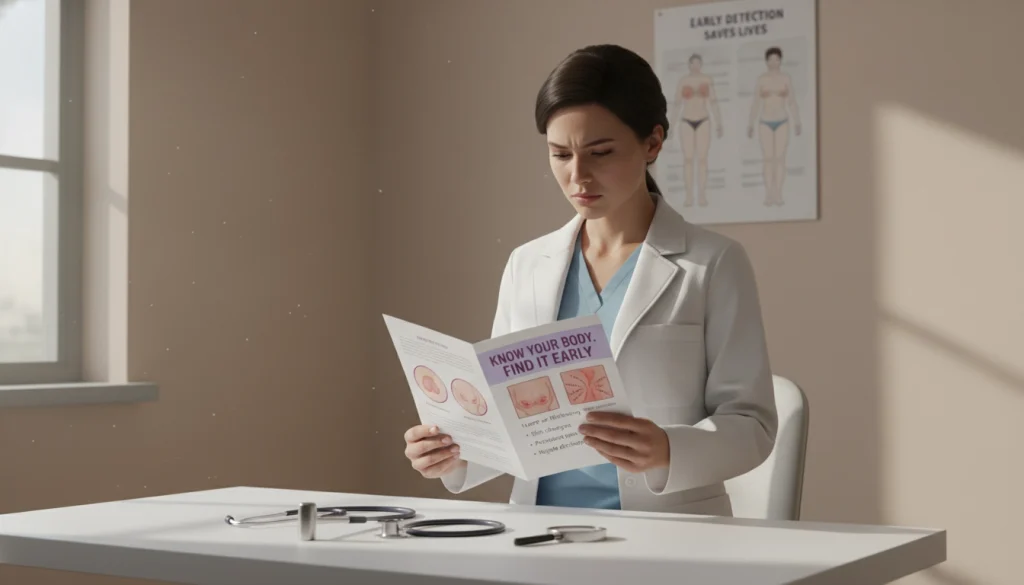
Common signs include a new lump in the breast or underarm, thickening or swelling of part of the breast, and irritation or dimpling of breast skin. Other signs are redness or scaly skin on the nipple or breast, nipple discharge other than breast milk, and a change in the size or shape of the breast.
Some people may also feel pain in one or both breasts. Though less common, it’s a sign to watch for. It’s vital to be aware of these signs and monitor any changes in breast tissue.
When to Seek Medical Attention
If you notice unusual changes in your breasts, seek medical attention right away. Early detection greatly improves treatment chances. Don’t hesitate to see a healthcare professional if you’re unsure about symptoms.
Regular self-examinations and clinical check-ups can spot issues early. If diagnosed with breast cancer, a timely treatment plan can be made. It will address your specific needs.
Breast Cancer Screening Methods
Early detection of breast cancer is key to better treatment outcomes. Screening methods aim to find cancer early, even before symptoms show. The right screening depends on age, risk factors, and health conditions.
Mammography and 3D Mammography
Mammography, using low-dose X-rays, is the top choice for breast cancer screening. It spots tumors too small to feel. 3D mammography, or digital breast tomosynthesis, offers clearer images. This helps find more abnormalities and cuts down on extra tests.
Ultrasound and MRI
Ultrasound uses sound waves to image the breast tissue. It’s often used after mammography or for dense breasts. MRI, with its magnetic field and radio waves, creates detailed images. It’s best for those at high risk of breast cancer.
Clinical and Self-Examinations
Clinical breast exams involve a healthcare professional checking for abnormalities. Self-exams help spot changes that need more investigation. Though not a mammography substitute, they’re key to a full screening program.
Screening Guidelines by Age and Risk Level
Screening advice changes with age and risk. Women at average risk should start annual mammograms at 45. High-risk women may need to start earlier and more often. Knowing your risk and following guidelines is vital for effective screening.
By using these screening methods and following guidelines, women can boost their chances of early detection and effective treatment of breast cancer.
Diagnostic Procedures
When a suspicious finding is detected during breast cancer screening, diagnostic procedures are used to confirm cancer presence. These steps are essential for understanding the disease’s extent and nature. They guide treatment choices.
Imaging Technologies
Imaging technologies are key in diagnosing breast cancer. They include:
- Mammography, including 3D mammography, which offers detailed breast tissue images.
- Ultrasound, used to examine lumps and distinguish between solid masses and cysts.
- MRI (Magnetic Resonance Imaging), beneficial for assessing cancer spread and breast implant integrity.
Biopsy Techniques
Biopsy techniques involve removing breast tissue samples for pathological examination. The main types are:
- Fine-needle aspiration biopsy, which uses a thin needle to collect cells.
- Core needle biopsy, which removes a larger tissue sample.
- Surgical biopsy, where a larger portion of the suspicious area is removed for examination.
Molecular and Genetic Testing
Molecular and genetic testing analyze the tumor’s genetic characteristics. These tests identify specific genes involved in cancer growth, like HER2 or BRCA1 and BRCA2. This information is vital for tailoring the most effective treatment plan.
Treatment Options for Breast Cancer
Understanding the various treatment options for breast cancer is essential for patients to make informed decisions. The choice of treatment depends on several factors. These include the stage and type of cancer, as well as the patient’s overall health.
Surgical Approaches
Surgery is often the primary treatment for breast cancer. There are several surgical options available.
- Surgery aims to remove the cancerous tumor and, in some cases, the surrounding tissue.
- The decision on which surgical approach to use depends on the size and location of the tumor, among other factors.
Lumpectomy vs. Mastectomy
A lumpectomy involves removing the tumor and a small margin of surrounding tissue. On the other hand, a mastectomy involves removing one or both breasts entirely.
- Lumpectomy is often followed by radiation therapy to eliminate any remaining cancer cells.
- Mastectomy may be recommended for larger tumors or for patients who cannot undergo radiation therapy.
Lymph Node Surgery
Lymph node surgery involves removing some or all of the lymph nodes under the arm to check for cancer spread.
- Sentinel lymph node biopsy is a procedure that identifies the first lymph node(s) to which cancer cells are likely to spread.
- Axillary lymph node dissection involves removing a larger number of lymph nodes.

Radiation Therapy
Radiation therapy uses high-energy rays to kill cancer cells. It is commonly used after lumpectomy to reduce the risk of cancer recurrence.
- External beam radiation is the most common type, delivering radiation from outside the body.
- Internal radiation (brachytherapy) involves placing a small radioactive device inside the breast.
Chemotherapy Protocols
Chemotherapy involves using drugs to kill cancer cells. It is often recommended for cancers that have spread beyond the breast.
- Chemotherapy can be administered before surgery to shrink the tumor.
- It can also be used after surgery to eliminate any remaining cancer cells.
Hormone Therapy
Hormone therapy is used to treat hormone receptor-positive breast cancers by blocking the body’s natural hormones.
- Tamoxifen and aromatase inhibitors are common hormone therapies used.
- These treatments can reduce the risk of cancer recurrence.
Targeted Biological Therapies
Targeted therapies are drugs that target specific characteristics of cancer cells, leaving normal cells undamaged.
- HER2-targeted therapies, such as trastuzumab, are used for HER2-positive breast cancers.
- Other targeted therapies are being researched and developed.
Innovative Approaches in Breast Cancer Treatment
The field of breast cancer treatment is rapidly evolving with the introduction of new therapeutic strategies. These advancements are revolutionizing patient care, leading to better outcomes and renewed hope.
Immunotherapy Breakthroughs
Immunotherapy is proving to be a game-changer in breast cancer treatment. It leverages the body’s immune system to target cancer cells more effectively. Surgical options are now being enhanced with immunotherapeutic agents, boosting treatment efficacy.
- Checkpoint inhibitors are being used to enhance the immune response against cancer cells.
- Cancer vaccines are being developed to prevent cancer recurrence.
- Adoptive T-cell therapies involve modifying T-cells to recognize and attack cancer cells.
Precision Medicine and Genomic Testing
Precision medicine is transforming breast cancer treatment by tailoring therapies to individual genetic profiles. Genomic testing identifies specific mutations driving cancer growth.
- Genomic tests like Oncotype DX help predict the likelihood of cancer recurrence.
- Targeted therapies are designed to attack specific genetic mutations.
Emerging Clinical Trials
Ongoing clinical trials are pushing the boundaries of breast cancer treatment, including combination therapies and novel drug targets.
- Combination regimens that pair different therapeutic approaches are showing promise.
- Trials are investigating the efficacy of new drugs and treatment protocols.
These innovative approaches are significantly improving breast cancer treatment outcomes. As research continues to advance, patients can expect even more effective and personalized treatment options.
Managing Side Effects of Treatment
To enhance the quality of life, managing side effects of breast cancer treatment is key. Effective strategies can reduce physical, emotional, and psychological impacts. This enables patients to better cope with their condition.
Physical Side Effects and Management
Breast cancer treatment can lead to fatigue, hair loss, and nausea. Managing these side effects requires a mix of medical interventions and lifestyle changes. For example, medications can help with nausea, while gentle exercise can reduce fatigue.
Emotional and Psychological Impact
The emotional and psychological effects of breast cancer treatment are significant. Patients may feel anxious, depressed, or fearful about their diagnosis and treatment. Counseling, support groups, and stress management are vital in addressing these emotional challenges.
Complementary and Supportive Care
Complementary and supportive care can greatly enhance the treatment experience. Practices like meditation, yoga, and acupuncture can manage stress and improve well-being. Nutritional counseling also helps patients make dietary choices that support their recovery.
By taking a holistic approach to managing side effects, patients can improve their quality of life during and after treatment.
Breast Cancer Prevention Strategies
To lower the risk of breast cancer, a multi-faceted approach is necessary. This includes lifestyle changes and preventive measures. Understanding and applying these strategies can significantly reduce the risk of developing breast cancer.
Lifestyle Modifications
Adopting certain lifestyle changes is vital for breast cancer prevention. These involve dietary adjustments, regular physical activity, and avoiding harmful substances like alcohol and tobacco.
Diet and Nutrition
A diet rich in fruits, vegetables, and whole grains can help prevent breast cancer. Foods high in antioxidants and fiber are most beneficial.
Physical Activity
Regular physical activity is key for maintaining a healthy weight and reducing breast cancer risk. Aim for at least 150 minutes of moderate-intensity exercise weekly.
Alcohol and Tobacco Use
Limiting alcohol intake and avoiding tobacco products is critical. Both have been linked to an increased risk of breast cancer.
Preventive Medications and Procedures
For those at high risk, certain medications and procedures can prevent breast cancer. These include selective estrogen receptor modulators (SERMs) and prophylactic mastectomy.

It’s essential to discuss these options with a healthcare provider. This ensures the best preventive strategy is chosen based on individual risk factors.
Living with Breast Cancer
Living with breast cancer demands a holistic approach, encompassing medical treatment, emotional support, and lifestyle adjustments. Patients face not just the physical aspects but also the emotional and psychological hurdles. These challenges are inherent to the disease.
Coping Strategies During Treatment
Coping with breast cancer during treatment requires managing side effects, maintaining a healthy lifestyle, and seeking emotional support. Patients are advised to stay hydrated, eat a balanced diet, and engage in gentle exercises. This helps mitigate some of the treatment’s physical effects. Understanding metastatic breast cancer treatments can also offer insights into managing the condition.
Support Networks and Resources
A strong support network is vital for patients living with breast cancer. This network includes family, friends, support groups, and healthcare professionals. Organizations provide resources like counseling, financial assistance, and educational materials. These help patients cope with their diagnosis.
Long-term Survivorship Care
Long-term survivorship care emphasizes monitoring for recurrence, managing late effects of treatment, and promoting overall health. Survivors are encouraged to maintain regular follow-up appointments with healthcare providers. Adopting healthy lifestyle habits is also key to reducing recurrence risk and improving quality of life.
Special Considerations in Breast Cancer
Breast cancer’s impact varies across different demographics, including men, young women, and pregnant individuals. While it’s more common in women, certain groups face unique challenges. These require tailored approaches to diagnosis, treatment, and care.
Male Breast Cancer
Male breast cancer, though rare, makes up about 1% of all breast cancer cases. Risk factors include genetic mutations, such as BRCA2, and conditions like Klinefelter syndrome. Symptoms often include a painless lump, and diagnosis is typically made through biopsy.
- Genetic testing is key for men with a family history of breast cancer.
- Treatment options are similar to those for women, including surgery, radiation, and chemotherapy.
Breast Cancer in Young Women
Breast cancer in young women (under 40) is often more aggressive and diagnosed at a later stage. Young women should be aware of their risk factors, including family history and genetic predisposition.
- Regular self-examinations and clinical check-ups are vital.
- Fertility preservation should be discussed before starting treatment.
Pregnancy-Associated Breast Cancer
Pregnancy-associated breast cancer is diagnosed during pregnancy or within a year postpartum. It poses unique challenges due to the physiological changes during pregnancy.
- Diagnosis can be delayed due to the similarity between pregnancy-related breast changes and cancer symptoms.
- Multidisciplinary care is essential to balance the health of both mother and fetus.
Advancements and Hope in Breast Cancer Research
Ongoing breast cancer research is leading to significant advancements in understanding the disease and developing new treatments. Recent breakthroughs in immunotherapy and precision medicine have shown promising results. These advancements offer new hope for improving outcomes for breast cancer patients.
The integration of genomic testing and targeted therapies is revolutionizing the field. This enables healthcare providers to tailor treatment plans to individual patients’ needs. Emerging clinical trials are also exploring innovative approaches, such as combining different treatment modalities to enhance efficacy.
As breast cancer research continues to evolve, it is likely that we will see improved survival rates and quality of life for patients. The progress being made in breast cancer research highlights the importance of continued investment in this area. This investment drives further advancements, ultimately leading to better patient outcomes.
FAQ
Q: What is breast cancer?
A: Breast cancer is a disease where cells in the breast grow uncontrollably, often forming tumors.
Q: What are the risk factors for breast cancer?
A: Risk factors include genetic predisposition, hormonal and reproductive factors, lifestyle and environmental influences. Non-modifiable risk factors include age and family history.
Q: What are the common signs and symptoms of breast cancer?
A: Common signs include a new lump or thickening in the breast or underarm area. Also, changes in the size or shape of the breast, and nipple discharge or pain.
Q: How is breast cancer diagnosed?
A: Diagnosis involves imaging technologies like mammography and ultrasound. It also includes biopsy techniques and molecular and genetic testing.
Q: What are the treatment options for breast cancer?
A: Treatment options include surgical approaches, radiation therapy, and chemotherapy protocols. Hormone therapy and targeted biological therapies are also used, depending on the stage and type of cancer.
Q: Can breast cancer be prevented?
A: While there’s no guaranteed way to prevent breast cancer, lifestyle modifications can help. A healthy diet, regular physical activity, and avoiding alcohol and tobacco use can reduce the risk.
Q: What is the role of screening in breast cancer detection?
A: Screening methods, including mammography, ultrasound, and MRI, help detect breast cancer early. This makes it more treatable.
Q: How does breast cancer staging affect treatment?
A: Breast cancer staging, using the TNM system, helps determine the extent of the disease. It guides treatment decisions.
Q: What are the latest advancements in breast cancer research?
A: Recent breakthroughs include immunotherapy, precision medicine, and genomic testing. These advancements offer new hope for improving outcomes for breast cancer patients.
Q: How can patients cope with the emotional and psychological impact of breast cancer?
A: Patients can benefit from support networks, resources, and complementary care. Counseling and stress management techniques help cope with the emotional and psychological aspects of the disease.