Carney Complex: What is Carney Complex?
Carney Complex is a rare genetic disorder that impacts the endocrine system, leading to various health issues. It is marked by the presence of multiple tumors and abnormalities in the endocrine glands. Understanding Carney Complex is vital due to its significant impact on patient health. Early diagnosis and treatment are essential. This article aims to provide a detailed overview of the condition, its symptoms, and available treatment options.
Our goal is to educate readers about the complexities of Carney Complex. We aim to shed light on its effects on the endocrine system. Carney Complex is a rare genetic disorder with complex genetic and clinical features. It is marked by multiple tumors, endocrine abnormalities, and systemic manifestations. This condition is a rare occurrence, making it a significant area of study.
Definition and Classification
Carney Complex is a rare genetic disorder affecting multiple body systems. It falls under the category of multiple endocrine neoplasia syndromes. The condition is characterized by the presence of multiple tumors, including cardiac myxomas, endocrine tumors, and other neoplasms.
The classification of Carney Complex involves understanding its genetic basis. This is often linked to mutations in the PRKAR1A gene. This genetic understanding is critical for diagnosis and management.
Historical Background and Discovery
The discovery of Carney Complex is attributed to J. Aidan Carney, who first described it. His work has been instrumental in understanding this complex disorder.
J. Aidan Carney’s Contribution
J. Aidan Carney’s initial description highlighted the condition’s unique combination of cardiac, endocrine, and cutaneous manifestations. His foundational work has guided subsequent research into the condition.
Evolution of Understanding
Our understanding of Carney Complex has significantly evolved over time. Advances in genetic testing and molecular biology have enhanced diagnosis and management strategies. The condition is now recognized as a distinct clinical entity with a specific genetic basis.
Ongoing research into Carney Complex continues to refine our understanding of its pathophysiology and clinical manifestations. This research aims to improve patient outcomes.
Epidemiology of Carney Complex
The study of Carney Complex’s epidemiology reveals its prevalence, incidence rates, and demographic distribution. This rare genetic disorder has been found globally, affecting various ethnic and demographic groups.
Prevalence and Incidence Rates
Carney Complex is an extremely rare condition. Its prevalence and incidence rates are hard to determine due to its rarity and the limited number of reported cases. Estimates suggest it affects fewer than 1 in 100,000 individuals.
Research indicates that the condition is often underdiagnosed. This underdiagnosis may skew the accuracy of prevalence and incidence data.
Demographic Distribution
The demographic distribution of Carney Complex shows interesting patterns. These include age of onset, gender, and ethnic variations.
Age of Onset
The age of onset for Carney Complex varies widely. It can range from infancy to late adulthood. Most cases are diagnosed in the second or third decade of life.
Gender and Ethnic Variations
Studies show that Carney Complex affects both genders equally. There is no significant gender predilection. Ethnic variations have been observed, with cases reported in diverse populations worldwide.
Further research is needed to fully understand Carney Complex’s epidemiological characteristics. Identifying risk factors is also a priority.
Genetic Basis of Carney Complex
Understanding the genetic basis of Carney Complex is key to diagnosing and managing this complex condition. It’s a rare genetic disorder marked by multiple tumors and abnormalities in various bodily systems.
PRKAR1A Gene Mutations
The PRKAR1A gene is central to Carney Complex’s pathogenesis. Mutations in this gene are found in a significant number of patients with the condition.
Inheritance Patterns
The inheritance pattern of Carney Complex linked to PRKAR1A mutations is autosomal dominant. This means only one copy of the mutated gene is needed to cause the condition.
Penetrance and Expressivity
The penetrance and expressivity of Carney Complex vary among individuals with PRKAR1A mutations. Penetrance is the proportion of individuals with the mutation who show symptoms. Expressivity is the severity and range of symptoms.
Other Genetic Factors and Loci
While PRKAR1A mutations are a primary genetic factor in Carney Complex, other genetic loci and factors also play a role in its pathogenesis.
Recently Identified Genes
Recent studies have pinpointed additional genes involved in Carney Complex. These genes are under investigation to understand their role in the condition’s development and progression.
Pathophysiology and Disease Mechanisms
Exploring the pathophysiology of Carney Complex uncovers the complex processes behind its emergence. This rare genetic disorder manifests through multiple tumors and abnormalities across various bodily systems.
Molecular Mechanisms
The molecular underpinnings of Carney Complex involve significant disruptions in key signaling pathways. A critical disruption is seen in the cAMP signaling pathway.
cAMP Signaling Pathway Dysregulation
The cAMP signaling pathway is essential for cellular functions like cell growth and differentiation. In Carney Complex, mutations in the PRKAR1A gene disrupt this pathway. This disruption causes uncontrolled cell growth and tumor formation.
Tumor Development Processes
Tumor development in Carney Complex is a complex process. It involves various genetic and molecular alterations. Protein Kinase A plays a significant role in this process.
Role of Protein Kinase A
Protein Kinase A (PKA) is a vital enzyme in the cAMP signaling pathway. Mutations in the PRKAR1A gene, which encodes PKA’s regulatory subunit, lead to its dysfunction. This dysfunction is a key factor in the development of tumors seen in Carney Complex.
The interaction between genetic mutations and molecular pathways in Carney Complex showcases its complex pathophysiology. Grasping these mechanisms is vital for creating effective diagnostic and therapeutic approaches.
Clinical Manifestations and Symptoms
Understanding Carney Complex symptoms is key to early diagnosis and management. This rare genetic disorder impacts multiple body systems, causing various symptoms. It is marked by the growth of multiple tumors and abnormalities.
Common Presenting Symptoms
Symptoms of Carney Complex vary among individuals, but some features are common. These include skin pigmentation issues like lentigines and blue nevi, and cardiac myxomas.
Early Warning Signs
Early signs of Carney Complex include skin lesions like lentigines and symptoms from cardiac myxomas. These could be shortness of breath or palpitations. Spotting these signs early is vital for timely diagnosis.
- Lentigines and other pigmented skin lesions
- Cardiac symptoms due to myxomas
- Endocrine abnormalities
Symptom Progression and Timeline
Symptoms in Carney Complex can progress gradually, with new signs appearing over time. The rate of symptom development varies, with some experiencing rapid changes and others progressing more slowly.
Age-Related Manifestations
Some symptoms of Carney Complex are more likely to appear at certain ages. For instance, cardiac myxomas often show up in young adulthood. Endocrine issues may become more apparent later in life.
- Infancy and early childhood: Skin pigmentation abnormalities
- Young adulthood: Cardiac myxomas and endocrine abnormalities
- Later in life: Additional tumors and complications may develop
Endocrine System Manifestations
The endocrine system is significantly impacted in individuals with Carney Complex, resulting in a range of systemic effects. This complex disorder affects multiple endocrine glands, leading to various abnormalities and tumors.

Pituitary Gland Abnormalities
The pituitary gland is often affected in Carney Complex, leading to abnormalities such as growth hormone-producing adenomas. These adenomas can cause an overproduction of growth hormone, resulting in acromegaly or gigantism.
Growth Hormone-Producing Adenomas
Growth hormone-producing adenomas are benign tumors that secrete excess growth hormone. This can lead to symptoms such as joint pain, sleep apnea, and changes in facial features. Early diagnosis and treatment are critical to manage these symptoms effectively.
Adrenal Gland Involvement
The adrenal glands are also frequently involved in Carney Complex, with Primary Pigmented Nodular Adrenocortical Disease (PPNAD) being a characteristic manifestation. PPNAD can lead to Cushing’s Syndrome, a condition caused by excess cortisol production.
Primary Pigmented Nodular Adrenocortical Disease (PPNAD)
PPNAD is a rare adrenal gland disorder characterized by multiple small nodules that produce cortisol. This condition is often associated with Cushing’s Syndrome and requires careful management to prevent long-term complications.
Cushing’s Syndrome
Cushing’s Syndrome is a serious condition resulting from excess cortisol. Symptoms include weight gain, high blood pressure, and mood changes. In the context of Carney Complex, Cushing’s Syndrome is often due to PPNAD and requires prompt treatment to mitigate its effects.
Cardiac Manifestations in Carney Complex
Carney Complex is linked to various cardiac issues, significantly affecting patient outcomes. The syndrome’s cardiac involvement is complex, with cardiac myxomas being a key feature.
Cardiac Myxomas
Cardiac myxomas are benign tumors found in the heart, commonly in the atria. In Carney Complex, these tumors often appear in multiples and recur.
Location and Characteristics
Carney Complex-related cardiac myxomas can occur in any heart chamber but are most frequently found in the left atrium. These tumors are gelatinous and may attach to the interatrial septum.
Clinical Implications
The presence of cardiac myxomas can cause embolic events, obstructive symptoms, and even sudden death. It’s vital to monitor patients regularly for early detection and management.
Other Cardiac Abnormalities
Patients with Carney Complex may also have other cardiac issues. These include arrhythmias and conduction defects, which require specific management strategies.
Arrhythmias and Conduction Defects
Arrhythmias in Carney Complex can stem from cardiac myxomas or other structural heart issues. Conduction defects may also occur, requiring detailed cardiac evaluation and monitoring.
The cardiac manifestations in Carney Complex highlight the need for thorough cardiac evaluation and long-term follow-up for affected individuals.
Cutaneous and Soft Tissue Manifestations
Cutaneous and soft tissue abnormalities are key features of Carney Complex, aiding in its diagnosis and management. These manifestations can be diverse, ranging from pigmented skin lesions to soft tissue tumors.
Lentigines and Pigmented Lesions
Lentigines are a hallmark of Carney Complex, often appearing as multiple pigmented lesions on the skin. These lesions can be found in various parts of the body.
Distribution Patterns
The distribution of lentigines in Carney Complex typically involves the face, lips, and genital area. These areas are significant for diagnosis.
- Facial lentigines are common and can be an early sign.
- Lips and the vermilion border are frequently involved.
- Genital lentigines, though less common, are highly suggestive of the condition.
Cutaneous and Mammary Myxomas
Myxomas are another critical cutaneous and soft tissue manifestation of Carney Complex. They can occur in the skin and breast tissue.
Diagnostic Features
The presence of myxomas, in younger patients, is a significant diagnostic clue. These lesions are typically benign but can be recurrent.
Cutaneous myxomas are often found on the eyelids, ears, and nipples. Mammary myxomas can mimic breast cancer on imaging, necessitating careful diagnosis.
Associated Conditions and Complications
Carney Complex is not just about its core features. It also comes with several significant health issues. These can greatly affect an individual’s quality of life and overall health.
These associated conditions and complications affect multiple bodily systems. This means they require a broad and team-based approach to care.
Testicular Tumors
Testicular tumors are a common part of Carney Complex, mainly affecting males.
These tumors can be either benign or malignant. In some cases, they may need to be surgically removed.
Thyroid Abnormalities
People with Carney Complex often face thyroid issues. This includes thyroid nodules and cancer.
It’s essential to keep a close eye on the thyroid. This is part of the overall management strategy.
Neurological Manifestations
Carney Complex can also lead to neurological problems. This might be due to tumors or other issues in the central nervous system.
These neurological symptoms may need specialized care and monitoring. This ensures the best possible management.
The presence of these associated conditions and complications highlights the need for thorough and ongoing evaluation. This is critical for individuals with Carney Complex.
Diagnostic Criteria and Evaluation
Diagnosing Carney Complex is complex, requiring a mix of clinical criteria and genetic testing. Accurate diagnosis is key for effective management and treatment of this rare genetic disorder.
Clinical Diagnostic Criteria
The diagnosis of Carney Complex is mainly based on clinical findings. It includes major and supplemental criteria.
Major and Supplemental Criteria
Major criteria include specific skin lesions, cardiac myxomas, and endocrine abnormalities. Supplemental criteria involve less specific features that help confirm the diagnosis when combined with major criteria.
- Major criteria:
- Lentigines and blue nevi
- Cardiac myxomas
- Endocrine abnormalities
- Supplemental criteria:
- Other skin lesions
- Non-cardiac myxomas
- Specific tumors
Genetic Testing Approaches
Genetic testing is vital for confirming Carney Complex diagnosis. Mutations in the PRKAR1A gene are commonly linked to this condition.
Next-Generation Sequencing
Next-generation sequencing (NGS) is a powerful tool for identifying PRKAR1A gene mutations and other genetic loci. NGS enables thorough genetic analysis, aiding in diagnosis and management of Carney Complex.
Interpretation of Results
Interpreting genetic testing results requires expertise. A positive result confirms the diagnosis. A negative result doesn’t necessarily exclude Carney Complex, as not all mutations are detected by current methods.
Combining clinical criteria with genetic testing improves Carney Complex diagnosis accuracy. This integrated approach is vital for effective care and management of individuals with this complex condition.
Imaging Studies and Laboratory Investigations
To diagnose and manage Carney Complex, healthcare professionals use imaging studies and laboratory tests. These tools are key to spotting the condition’s unique signs and tracking its development.
Recommended Imaging Modalities
Imaging is essential in diagnosing and managing Carney Complex. The recommended imaging modalities include:
Echocardiography
Echocardiography is vital for spotting cardiac myxomas, a hallmark of Carney Complex. It helps evaluate the heart’s structure and function.
MRI and CT Scanning
MRI and CT scans are used to find and monitor tumors and other abnormalities linked to Carney Complex. This includes those in the endocrine system.
Laboratory Tests and Biomarkers
Laboratory tests are critical for checking endocrine function and finding biochemical markers linked to Carney Complex.
Endocrine Function Tests
These tests check how various endocrine glands, like the pituitary and adrenal glands, function. These glands are often impacted in Carney Complex.
Biochemical Markers
Biochemical markers aid in diagnosing and monitoring the condition. They may include markers related to tumor activity or endocrine dysfunction.
The combination of imaging studies and laboratory tests gives a full picture of Carney Complex. This enables healthcare providers to create effective management plans.
Treatment Approaches for Carney Complex
Treatment for Carney Complex varies based on symptoms and complications. A team of specialists is often needed to manage the condition’s diverse aspects.
Surgical Interventions
Surgery is key in treating Carney Complex. It involves removing tumors and addressing other issues.
Tumor Resection Techniques
Tumor removal is vital for Carney Complex patients, like those with cardiac myxomas. The aim is to remove the tumor fully, without harming nearby tissues. Cardiac myxomas, for example, require precise surgery to avoid complications.
Adrenalectomy Considerations
Adrenalectomy might be needed for adrenal gland issues in Carney Complex, like PPNAD. This decision balances the risk of complications against the need for hormone therapy. Patients should seek expert advice and schedule an online consultation for tailored guidance.
Medical Management Strategies
Medical management is also critical for Carney Complex. It focuses on symptoms and complications not solved by surgery.
Hormone Replacement Therapy
After adrenalectomy or endocrine issues, hormone therapy may be required. It aims to replace missing hormones, improving symptoms and life quality. Regular monitoring and adjustments of hormone therapy are essential.
Management of Cushing’s Syndrome
Cushing’s Syndrome, linked to Carney Complex, needs careful management. This might include medications, surgery, or other treatments. Effective management is vital to avoid serious health issues like diabetes and osteoporosis.

Long-term Management and Surveillance
Managing Carney Complex over the long term is essential. This rare genetic disorder impacts multiple organs, requiring a detailed care plan. It’s vital to prevent and manage its various symptoms effectively.
Monitoring Protocols
Regular monitoring is key to catch new or recurring tumors and complications. It involves regular check-ups and screenings. These are tailored to each person’s specific needs and risks.
Frequency of Evaluations
The timing of evaluations depends on the individual’s health and risk level. Typically, annual or biannual checks are advised. These include thorough physical exams and necessary tests.
Screening Recommendations for Family Members
Family members of those with Carney Complex should get genetic screening. This helps identify carriers of the mutation. Carriers should then join a surveillance program for early detection.
Follow-up Care and Multidisciplinary Approach
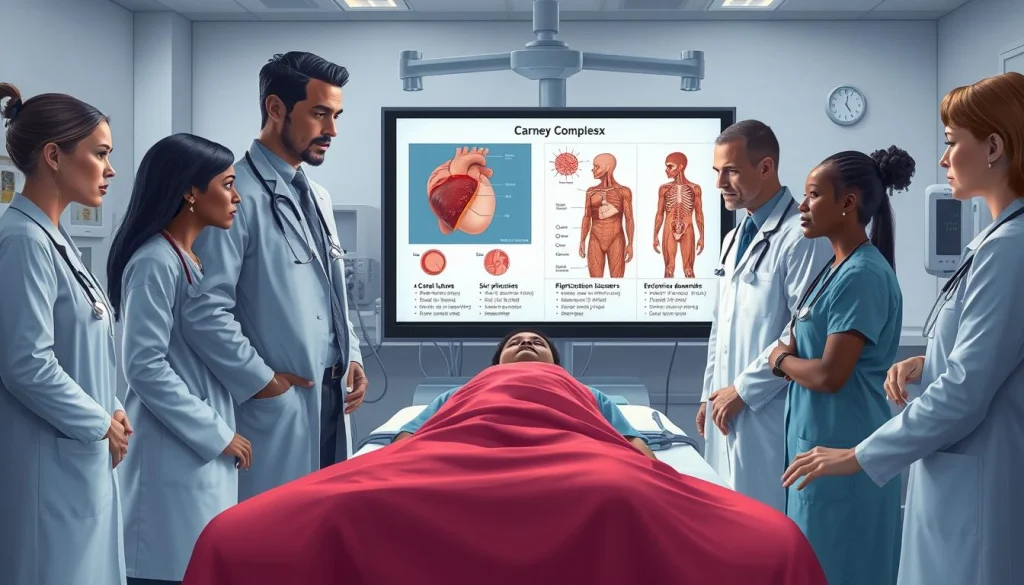
A team of various healthcare professionals is vital for managing Carney Complex. This team should include experts in cardiology, endocrinology, dermatology, and genetics.
Role of Different Specialists
Each specialist has a unique role in managing Carney Complex. For example, cardiologists focus on heart issues, while endocrinologists handle hormonal problems.
Patient Education
Teaching patients and their families about Carney Complex is critical. It’s important to educate them on the disorder, its symptoms, and the need to follow surveillance protocols. This empowers them to take an active role in their care.
Living with Carney Complex: Resources and Support
Managing Carney Complex demands a holistic approach to tackle its diverse symptoms and related conditions. Patients and their families can find numerous resources and support systems. These help them navigate the complexities of this rare genetic disorder.
Support groups, both online and in-person, offer a space for individuals to share their experiences. They receive emotional support and gain insights into managing Carney Complex. Organizations like the Carney Complex Association provide valuable resources. These include educational materials, updates on the latest research, and access to expert advice.
Effective management of Carney Complex requires regular monitoring and follow-up care. Patients should collaborate closely with their healthcare providers to create a personalized care plan. This plan should include the latest treatment strategies and surveillance protocols. By staying informed and connected with the medical community, individuals can enhance their quality of life and improve health outcomes.
FAQ About Carney Complex
Q: What is Carney Complex?
A: Carney Complex is a rare genetic disorder affecting the endocrine system. It is characterized by multiple tumors, endocrine abnormalities, and skin manifestations.
Q: What are the common symptoms of Carney Complex?
A: Symptoms include skin lentigines, myxomas, endocrine tumors, and various systemic manifestations. These symptoms can vary widely among individuals.
Q: How is Carney Complex diagnosed?
A: Diagnosis involves clinical criteria and genetic testing. Next-generation sequencing is used to identify PRKAR1A gene mutations.
Q: What is the role of PRKAR1A gene mutations in Carney Complex?
A: PRKAR1A gene mutations are the primary genetic cause. They lead to dysregulation of the cAMP signaling pathway, contributing to tumor development.
Q: How is Carney Complex treated?
A: Treatment is multidisciplinary, including surgical interventions and medical management. This includes hormone replacement therapy and managing Cushing’s Syndrome.
Q: What is the importance of long-term surveillance for Carney Complex patients?
A: Long-term surveillance is essential for monitoring disease progression and detecting new tumors. Regular evaluations and a multidisciplinary care approach are required.
Q: Are there any resources available for individuals living with Carney Complex?
A: Yes, various resources are available. These include support groups, patient education materials, and specialized healthcare services. They help individuals manage the condition and improve their quality of life.
Q: Can Carney Complex be inherited?
A: Yes, Carney Complex is an autosomal dominant disorder. A single copy of the mutated gene is sufficient to cause the condition. It can be inherited from an affected parent.