Cellulite Mesotherapy: What is Mesotherapy? A Medical Overview
Are you tired of the dimpled appearance of cellulite on your skin? Cellulite Mesotherapy is a revolutionary treatment that has gained popularity for its effectiveness in achieving smoother, more toned skin. This innovative procedure involves the use of injections to target the underlying causes of cellulite. It results in improved skin texture and reduced appearance of orange peel skin. By introducing this treatment, individuals can experience a significant improvement in the appearance of their skin. This boosts their confidence and overall well-being.
Understanding Cellulite: Causes and Formation
Grasping the causes of cellulite is key to finding effective treatments. This condition is complex, influenced by several factors. It changes the skin’s structure and the tissue beneath.
What Causes Cellulite Development
Hormonal Factors
Hormonal shifts, mainly estrogen changes, can alter the skin’s look and lead to cellulite. Puberty, pregnancy, or menopause can trigger or worsen it.
Genetic Predisposition
Genetics also significantly impact cellulite development. If a family member has it, you’re more likely to too.
Why Traditional Methods Often Fall Short
Traditional cellulite treatments, like creams and massages, rarely offer lasting results. They might not tackle the root causes. This makes more effective methods, like mesotherapy, necessary.
Mesotherapy targets cellulite directly, providing a more focused treatment approach.
What is Mesotherapy? A Medical Overview
Mesotherapy has become a groundbreaking treatment in the medical world. It offers a targeted approach to various cosmetic issues. This method involves injecting active ingredients into the subcutaneous fat. It’s a precise and effective way to tackle problems like cellulite.
The Origins and Evolution of Mesotherapy
Mesotherapy was first introduced in France in the 1950s by Dr. Michel Pistor. Initially, it was used to treat medical issues such as pain and inflammation. Over time, it has evolved, now being used in aesthetic medicine as well.
Understanding How Mesotherapy Works
Mesotherapy uses a micro-injection technique to inject a customized blend of active ingredients into the mesoderm. This is the layer of fat beneath the skin. This precise delivery method boosts the treatment’s effectiveness.
The Micro-Injection Technique
The micro-injection technique involves small injections to deliver the active ingredients. This is done with a specialized device or fine needles. It ensures minimal discomfort and lowers the risk of side effects.
Delivery of Active Ingredients
The active ingredients in mesotherapy vary based on the condition being treated. For cellulite, they may include substances that break down fat, improve circulation, and boost collagen. Directly injecting these ingredients into the affected area increases their concentration and effectiveness.
Understanding mesotherapy’s history and mechanics helps individuals decide if it’s right for them. It’s about making informed choices based on one’s specific needs.
Cellulite Mesotherapy: The Specialized Approach
Mesotherapy for cellulite treatment is a detailed method in aesthetic medicine. It’s designed to tackle cellulite’s unique challenges, aiming to enhance skin appearance for those affected.
How Cellulite Mesotherapy Differs from Standard Mesotherapy
Cellulite mesotherapy stands out from standard mesotherapy in its formulation and application. Traditional mesotherapy is versatile, used for fat reduction and skin rejuvenation. Yet, cellulite mesotherapy is crafted to tackle cellulite’s complex issues.
The main distinctions are in the:
- Specialized cocktails that aim at the skin and subcutaneous tissue changes causing cellulite.
- Injection technique, adjusted to deliver the treatment effectively to cellulite-affected areas.
- Treatment protocol, tailored to the severity of cellulite, individual health, and aesthetic goals.
Target Areas for Cellulite Treatment
Cellulite mesotherapy targets various body areas where cellulite commonly appears. The most common include:
Thighs and Buttocks
The thighs and buttocks are prime targets for cellulite treatment. They are susceptible to fat buildup and connective tissue weakening, making them ideal for mesotherapy.
Abdomen and Arms
The abdomen and arms are also treated with cellulite mesotherapy. These areas often show cellulite signs, often in those with higher body mass indexes or genetic predispositions.
The choice of treatment areas depends on individual concerns and cellulite extent. A thorough assessment by a healthcare professional is essential for a tailored treatment plan.
By focusing on these areas, cellulite mesotherapy provides a holistic approach to reducing cellulite appearance and improving skin texture.
Active Ingredients in Cellulite Mesotherapy Solutions
Mesotherapy for cellulite involves injecting a customized blend of active ingredients directly into the affected areas. These ingredients are carefully selected to address the various factors contributing to cellulite formation.
Common Medications and Compounds Used
Cellulite mesotherapy solutions typically contain a combination of medications and compounds that work synergistically to improve the appearance of the skin.
Phosphatidylcholine and Deoxycholate
Phosphatidylcholine and deoxycholate are two commonly used compounds in cellulite mesotherapy. Phosphatidylcholine is known for its ability to break down fat cells, while deoxycholate enhances the dissolution of fat.
Vitamins and Minerals
Vitamins and minerals are also essential components of cellulite mesotherapy solutions. They help improve circulation, enhance skin elasticity, and promote overall skin health.
- Vitamin C: Boosts collagen production and improves skin texture.
- Vitamin A: Enhances skin renewal and reduces the appearance of dimpling.
- Zinc: Supports skin health and aids in wound healing.
How Each Ingredient Targets Cellulite
Each active ingredient in cellulite mesotherapy solutions targets different aspects of cellulite formation. For instance, lipolytic agents like phosphatidylcholine and deoxycholate work to reduce fat cell size, while vitamins and minerals improve skin quality and circulation.

The combination and concentration of these ingredients are tailored to the individual’s specific needs and the severity of their cellulite.
The Cellulite Mesotherapy Procedure Explained
For those considering cellulite mesotherapy, understanding the procedure is key to making an informed choice. This treatment involves injecting a customized solution into the subcutaneous fat to reduce cellulite appearance.
Pre-Treatment Preparation
Before starting cellulite mesotherapy, patients need to prepare their skin and health. This includes:
- Avoiding certain medications that could interfere with the treatment
- Maintaining good hydration
- Avoiding excessive sun exposure
It’s also vital to have a consultation with a qualified practitioner. This helps discuss expectations, assess cellulite severity, and determine the best treatment plan.
What Happens During the Treatment
The cellulite mesotherapy procedure involves several key steps. First, the treatment area is cleaned and prepared. Then, the practitioner uses the injection technique.
Manual Injection Technique
The manual injection technique uses a fine needle to inject the mesotherapy solution into affected areas. This method allows for precise control over solution amount and placement.
Mesotherapy Guns and Devices
Some practitioners use mesotherapy guns or devices, which automate the injection process. This can make it faster and more consistent. These devices are designed to improve solution delivery.
Post-Treatment Protocol
After the treatment, patients are advised on how to care for the treated areas. This includes:
- Avoiding strenuous activities for a short period
- Keeping the treated area clean
- Following up with the practitioner as recommended
Understanding the cellulite mesotherapy procedure helps individuals prepare for the treatment. It also clarifies what to expect during and after the process.
Benefits and Expected Results of Cellulite Mesotherapy
Cellulite mesotherapy stands out as a non-invasive method for skin improvement. It’s favored for its targeted, effective outcomes. This makes it a compelling choice for those aiming to enhance their skin’s texture and appearance.
Short-Term Improvements
Initial improvements from cellulite mesotherapy are noticeable within weeks. These early benefits include smoother skin and less visible cellulite.
Some may also see their skin become firmer and more elastic. This is due to the increased collagen production triggered by the treatment.
Long-Term Results and Maintenance
A series of treatments is often advised for lasting results. The long-term benefits include ongoing skin quality enhancement and a more uniform texture.
Regular maintenance sessions are key to preserving the achieved improvements. They help maintain the desired outcomes from the initial treatment series.
Before and After Expectations
Before starting, it’s vital to have realistic expectations about outcomes. While results can differ, many see a notable cellulite reduction.
Post-treatment, adhering to care instructions is critical. It optimizes results and minimizes side effects.
Realistic Outcome Timeline
Results timelines vary, but most see improvements in 6-12 weeks post-treatment. A full series, usually 3-6 sessions, spaced 1-2 weeks apart, is often required for the best results.
Understanding the benefits and expected results of cellulite mesotherapy aids in making informed treatment choices. It offers a promising solution for addressing cellulite, with both short-term and long-term benefits.
Potential Side Effects and Risks
It’s vital to understand the side effects and risks of cellulite mesotherapy before making a decision. The treatment is generally safe, but there are possible downsides to consider.
Common Minor Side Effects
Most people who get cellulite mesotherapy face minor side effects. These can include:
- Bruising at the injection site
- Swelling or redness
- Tenderness or discomfort
Bruising and Swelling
Bruising and swelling are common minor side effects. They usually go away within a few days.
Tenderness and Discomfort
Some may feel tenderness or discomfort at the injection sites. This can often be managed with over-the-counter pain relievers.
Rare but Serious Complications
Though rare, serious complications can happen. These include infections, allergic reactions, or uneven fat distribution.
How to Minimize Risks
To reduce risks with cellulite mesotherapy, choose a qualified provider. Also, follow pre- and post-treatment instructions carefully.
Comparing Cellulite Mesotherapy to Other Treatments
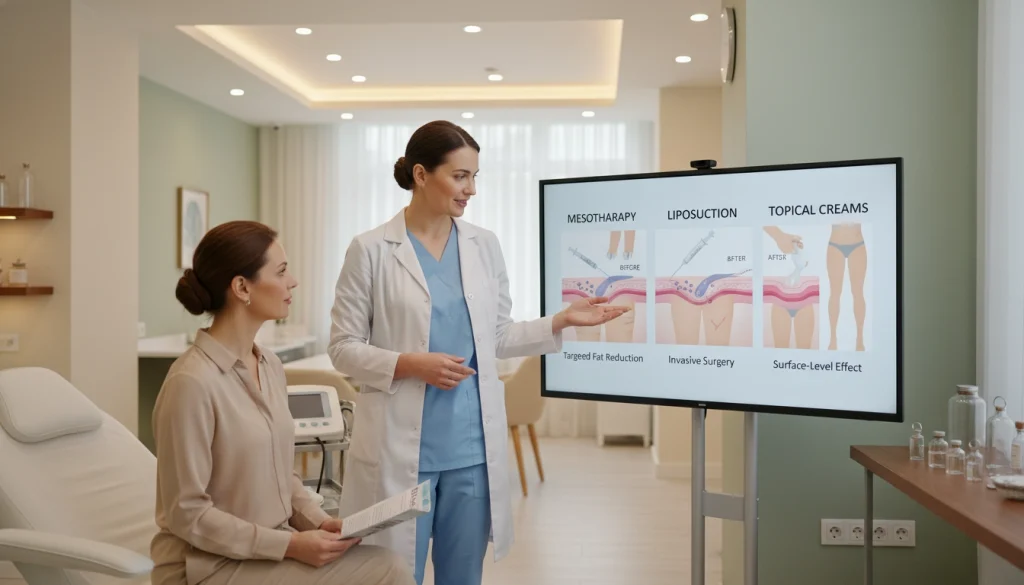
Choosing the right cellulite treatment requires understanding the options available. Treatments range from non-invasive creams to advanced technologies like laser and radiofrequency. Each has its own benefits and drawbacks.
Mesotherapy vs. Topical Creams
Topical creams are often the first line of defense against cellulite. Yet, their effectiveness is limited by their superficial application. Mesotherapy, by injecting active ingredients directly into the skin, offers deeper and potentially longer-lasting results.
- Topical creams: Easy to apply, non-invasive, but may have limited effectiveness.
- Mesotherapy: More invasive, potentially more effective due to direct delivery of ingredients.
Mesotherapy vs. Endermologie and Massage Techniques
Endermologie and massage aim to enhance circulation and reduce cellulite through mechanical means. While beneficial, they may need frequent sessions to sustain results. Mesotherapy, by targeting cellulite’s root causes, could offer a more lasting solution.
Mesotherapy vs. Laser and Radiofrequency Treatments
Laser and radiofrequency treatments stimulate collagen and improve skin texture using energy. Though effective, they often require multiple sessions and can be expensive.
Effectiveness Comparison
Mesotherapy effectively reduces cellulite by improving circulation and breaking down fat cells. Its results can rival those of laser and radiofrequency treatments, depending on the individual and practitioner expertise.
Cost-Benefit Analysis
Mesotherapy might be more cost-effective than laser or radiofrequency treatments, which require repeated sessions. Costs vary based on the number of sessions and practitioner qualifications.
In summary, mesotherapy stands out when comparing it to other treatments. It delivers active ingredients directly to the affected areas, potentially providing a more lasting solution. The choice between mesotherapy and other treatments should consider both effectiveness and cost.
Cost Considerations for Cellulite Mesotherapy
Understanding the financial aspects of cellulite mesotherapy is key for those considering it. The cost is a major factor in deciding if one should go for the therapy.
Average Price Range in the United States
In the United States, the cost of cellulite mesotherapy varies. It depends on location, practitioner expertise, and the number of sessions needed. On average, each session can cost between $250 and $600.
Insurance Coverage and Financing Options
Insurance coverage for cellulite mesotherapy is usually limited. It’s often seen as a cosmetic procedure. Yet, there are financing options to help make the treatment more affordable.
Medical Spa Payment Plans
Many medical spas offer payment plans. These allow patients to pay in installments. This makes the initial cost more manageable.
Health Savings Account Eligibility
In some cases, cellulite mesotherapy might be covered by a Health Savings Account (HSA). This depends on the specific circumstances and the HSA provider’s policies.
- Average cost per session: $250-$600
- Insurance coverage: Limited
- Financing options: Available
- Medical spa payment plans: Installment payments
- HSA eligibility: Possible under certain conditions
Ideal Candidates for Cellulite Mesotherapy
Identifying the perfect candidate for cellulite mesotherapy requires examining several factors. These include the severity of cellulite, overall health, and specific traits that enhance treatment effectiveness.
Who Benefits Most from This Treatment
Those with moderate to severe cellulite find cellulite mesotherapy highly beneficial. It’s ideal for individuals with localized fat accumulation and fibrotic changes in the subcutaneous tissue. This non-surgical approach offers a promising solution.
Age Considerations
While age isn’t a strict barrier, the treatment works best in adults with some skin elasticity. Typically, candidates range from 25 to 50 years old.
Cellulite Severity Levels
The treatment is recommended for those with:
- Moderate cellulite (visible dimpling when standing or sitting)
- Severe cellulite (persistent dimpling and skin irregularities)
Contraindications and Exclusion Criteria
Some individuals should steer clear of cellulite mesotherapy. This includes:
- Pregnant or breastfeeding women
- People with active infections or severe skin conditions
- Those with a history of allergic reactions to the ingredients used
- Individuals with certain medical conditions, such as cancer or autoimmune diseases, without consulting their healthcare provider
Recovery and Downtime After Cellulite Mesotherapy
The recovery period after cellulite mesotherapy is critical for treatment success. Though the procedure is minimally invasive, some downtime is expected.
What to Expect in the First 48 Hours
In the first 48 hours, patients might see mild redness, swelling, or bruising at the injection sites. These symptoms are usually temporary and will resolve on their own.
Long-Term Recovery Considerations
As the body heals, following post-treatment instructions is key to avoid complications.
Activity Restrictions
Patients are often told to skip strenuous activities, like heavy exercise or bending, for a few days post-treatment.
When to Resume Normal Routines
Most can get back to their usual routines within a week. This timeframe can vary based on individual factors and the practitioner’s guidance.
Understanding the recovery process and adhering to post-treatment care helps patients achieve better results and reduces downtime.
Treatment Plan: Number of Sessions and Frequency
Creating a tailored treatment plan is essential for effective cellulite mesotherapy. The number of sessions and their frequency depend on the individual’s condition and goals.
Recommended Treatment Protocols
The standard protocol includes an initial series of treatments followed by maintenance sessions.
Initial Treatment Series
The initial series typically includes:
- 4 to 6 sessions
- Spaced 1 to 2 weeks apart
- Tailored to the severity of cellulite and individual response
Spacing Between Sessions
Allowing time between sessions lets the body react to the treatment. It also gives the practitioner a chance to evaluate progress.
Maintenance Sessions and Their Importance
Maintenance sessions are vital for keeping the results from the initial series.

- Every 4 to 6 weeks for the first few months
- Every 2 to 3 months thereafter
These sessions help maintain the skin’s improved appearance. They also prevent the return of cellulite.
Scientific Evidence Supporting Cellulite Mesotherapy
The effectiveness of cellulite mesotherapy is supported by a growing body of scientific evidence. It has been studied extensively in clinical settings. These studies focus on its effectiveness and safety as a cellulite treatment.
Clinical Studies and Their Findings
Many clinical studies have explored the outcomes of cellulite mesotherapy. They use photographic evaluations and measurements to assess the reduction in cellulite appearance.
Efficacy Research
Efficacy research indicates that cellulite mesotherapy can significantly improve cellulite appearance. A study in the Journal of Cosmetic Dermatology found a noticeable reduction in cellulite severity among participants.
Safety Studies
Safety studies have also been conducted to assess the treatment’s side effects. These studies conclude that cellulite mesotherapy is safe when administered by a qualified practitioner.
Expert Opinions in the Medical Community
Dermatologists and cosmetic medicine experts have shared their views on cellulite mesotherapy. They see it as a viable option, highlighting its minimally invasive nature and the possibility of significant improvements.
The consensus is that while it’s not a cure-all, cellulite mesotherapy is a valuable solution. It helps individuals seeking to reduce cellulite appearance.
Finding a Qualified Cellulite Mesotherapy Provider
To get the best results from cellulite mesotherapy, finding a qualified and reputable provider is key. This requires thorough research and careful consideration of several important factors.
Credentials to Look For
A qualified provider should have a strong medical background. This includes:
- Medical degree from an accredited institution
- Specialized training in dermatology or a related field
- Certifications in mesotherapy or cosmetic procedures
Medical Background Requirements
Make sure your provider has a solid medical foundation. Focus on dermatology or cosmetic treatments.
Specialized Training Certifications
Look for certifications that show expertise in mesotherapy. These are often offered by reputable medical or aesthetic training organizations.
Questions to Ask During Consultation
During your initial consultation, ask questions to gauge the provider’s expertise and approach. Consider asking:
- What experience do you have with cellulite mesotherapy?
- Can you show before-and-after photos of previous patients?
- What are the possible risks and side effects, and how are they managed?
For more information on choosing the right medical professional, you can refer to resources like how to choose the right plastic, which provides valuable insights into selecting a qualified healthcare provider.
Red Flags to Watch Out For
Be cautious of providers who:
- Make unrealistic promises or guarantees
- Lack transparency about their qualifications or treatment protocols
- Have poor patient reviews or ratings
By carefully evaluating these factors, you can confidently select a qualified cellulite mesotherapy provider. They will meet your needs and ensure a safe and effective treatment experience.
Complementary Treatments and Lifestyle Changes
For the best results, patients should adopt a holistic approach to cellulite mesotherapy. This includes diet, exercise, and other treatments. Such a strategy can boost the mesotherapy’s effectiveness, leading to more satisfying outcomes.
Diet and Exercise Recommendations
A diet rich in fruits, vegetables, and lean proteins can enhance skin health and reduce cellulite. Regular exercise, focusing on circulation and muscle strength, is also beneficial.
- Eat foods high in antioxidants to combat oxidative stress.
- Engage in aerobic exercises like walking or cycling to improve circulation.
- Incorporate strength training to build muscle mass.
Hydration and Skin Care Routines
Hydration is key for healthy skin. Drinking water helps flush out toxins and keeps skin hydrated. A consistent skin care routine, including moisturizing and gentle exfoliation, can also improve skin texture.
Other Treatments That Enhance Results
Other treatments can complement cellulite mesotherapy. These include:
Lymphatic Drainage Massage
Lymphatic drainage massage improves circulation and reduces fluid retention. This can enhance mesotherapy’s effects.
Dry Brushing Techniques
Dry brushing at home can improve circulation and promote lymphatic drainage.
By adding these complementary treatments and lifestyle changes, individuals can achieve better results from their cellulite mesotherapy treatments.
Is Cellulite Mesotherapy Right for You? Making an Informed Decision
Throughout this article, we’ve discussed how Cellulite Mesotherapy can help reduce cellulite appearance. To decide if it’s right for you, consider several key factors.
Whether Cellulite Mesotherapy is suitable depends on your cellulite severity, health, and personal preferences. Understanding the procedure, its benefits, and risks helps you gauge if it meets your needs.
Seeking advice from a healthcare professional or certified practitioner is wise. They can offer personalized guidance tailored to your situation. This ensures you’re a good fit for the treatment.
Choosing Cellulite Mesotherapy should be a well-informed decision. Weigh all the information and discuss your options with a professional. This way, you can confidently choose what’s best for you.
FAQ
Q: What is Cellulite Mesotherapy?
A: Cellulite Mesotherapy is a non-surgical cosmetic treatment. It involves injecting medications and compounds into the subcutaneous fat. This aims to reduce the appearance of cellulite.
Q: How does Cellulite Mesotherapy work?
A: It works by injecting active ingredients into the affected areas. These ingredients help break down fat cells, improve circulation, and enhance collagen production. This results in smoother skin.
Q: What are the active ingredients used in Cellulite Mesotherapy?
A: Common active ingredients include phosphatidylcholine, deoxycholate, vitamins, and minerals. These help dissolve fat cells, reduce inflammation, and improve skin texture.
Q: Is Cellulite Mesotherapy painful?
A: Some discomfort may be experienced during the treatment. Most providers use topical anesthetics or fine needles to minimize pain. This makes the procedure relatively comfortable.
Q: How many sessions of Cellulite Mesotherapy are needed?
A: The number of sessions varies based on individual needs. Typically, 3-6 sessions spaced 1-2 weeks apart are recommended for optimal results.
Q: What are the side effects of Cellulite Mesotherapy?
A: Minor side effects include bruising, swelling, tenderness, and discomfort. Rare but serious complications can occur, such as infection or allergic reactions.
Q: How long do the results of Cellulite Mesotherapy last?
A: Results can last several months to a few years. This depends on individual factors, such as lifestyle and maintenance treatments. Some patients may need periodic touch-ups to maintain optimal results.
Q: Is Cellulite Mesotherapy suitable for everyone?
A: No, it’s not suitable for everyone. It’s not recommended for those with certain medical conditions, pregnant or breastfeeding women, or individuals with severe cellulite. A thorough consultation is necessary to determine candidacy.
Q: Can Cellulite Mesotherapy be combined with other treatments?
A: Yes, it can be combined with other treatments. This includes lymphatic drainage massage, dry brushing, or other cosmetic procedures. Combining treatments can enhance results and improve overall skin health.
Q: How much does Cellulite Mesotherapy cost?
A: The cost varies based on location, provider, and number of sessions. In the United States, average prices range from 0 to 0 per session.