Color Blindness: What Is Color Blindness?
Color vision deficiency, also known as Color Blindness, hampers an individual’s ability to see certain colors. It can stem from genetic factors, age-related changes, or injuries to the eye or brain. Those with Color Blindness often struggle to tell apart specific colors, like red and green. This challenge affects everyday tasks, such as picking ripe fruit or interpreting color-coded information.
Our journey into Color Blindness will uncover its causes, its impact on daily life, and the ways people adapt to it. Color vision deficiency, commonly known as color blindness, impacts a large segment of the population. It prevents individuals from seeing certain colors, affecting daily life and social interactions.
Definition and Prevalence in the Population
Color blindness is a visual disorder where people struggle to distinguish between specific colors. Its prevalence varies across different groups, with males more commonly affected due to its genetic link to the X chromosome.
Research indicates that about 8% of males and 0.5% of females in Europe suffer from color vision deficiency. Females are less likely to be affected because they have two X chromosomes. This can help compensate for the mutated gene responsible for the condition.
Color Vision Deficiency vs. Complete Color Blindness
Distinguishing between color vision deficiency and complete color blindness is critical. Color vision deficiency makes it hard to tell red from green, whereas complete color blindness, or achromatopsia, means seeing only shades of gray.
Complete color blindness is far less common than color vision deficiency. It often comes with other vision problems, like light sensitivity and amblyopia. Recognizing the difference between these conditions is key for proper diagnosis and meeting the needs of those with color vision disorders.
The Science of Color Vision
To grasp color vision, we must explore the eye’s anatomy and physiology. The human eye is a sophisticated organ. It allows us to see a vast array of colors.
How the Human Eye Perceives Color
The eye perceives color through specialized cells in the retina called photoreceptors. There are two types: rods and cones. Rods handle low light conditions, while cones are key to color vision.
The Role of Photoreceptors and Neural Pathways
Cones, with different pigments, respond to various light wavelengths, representing different colors. These signals reach the brain via neural pathways. There, they are decoded as specific colors. This complex interaction allows us to see a broad spectrum of colors. Any disruption can cause color vision deficiency.
The neural pathways are vital for color perception. They enable the brain to process and understand photoreceptor signals. Knowing how these pathways function is key to understanding color blindness.
Types of Color Blindness
Grasping the different types of color blindness is key for both diagnosis and adaptation. Color blindness, or color vision deficiency, covers a spectrum of conditions affecting color perception.
Red-Green Color Blindness
Red-green color blindness is the most prevalent form of color vision deficiency. It makes it hard to tell red from green. This condition often runs in families and is more common in males.
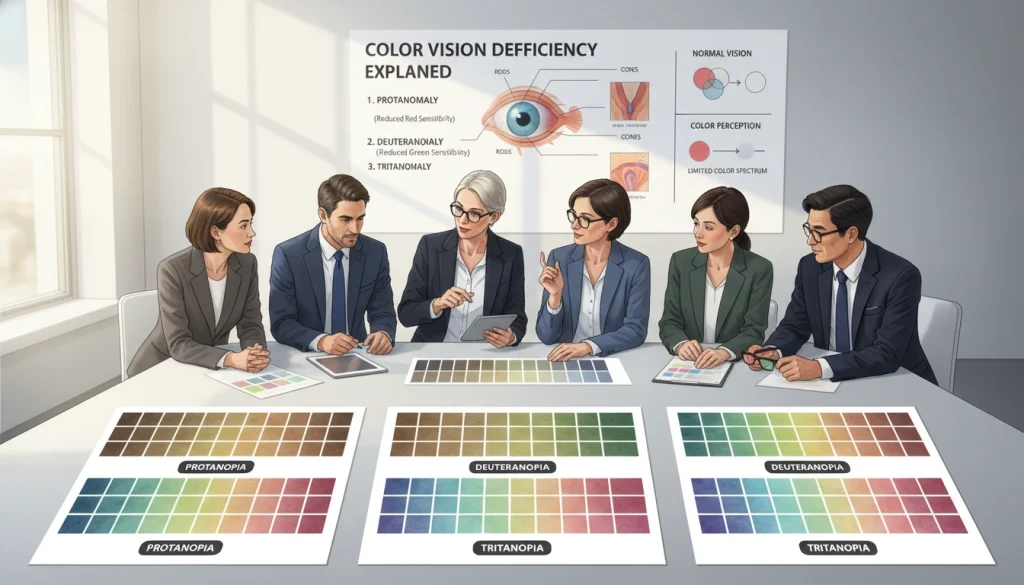
Protanopia and Protanomaly
Protanopia is a severe form where people struggle to see red due to a lack of red cone cells. Protanomaly is less severe, with red cone cells present but not working right.
Deuteranopia and Deuteranomaly
Deuteranopia affects green color perception due to a lack of green cone cells. Deuteranomaly occurs when green cone cells are present but malfunction, making green colors hard to distinguish.
Blue-Yellow Color Blindness (Tritanopia)
Blue-yellow color blindness, or tritanopia, is rare and affects blue and yellow color perception. People with tritanopia find it hard to tell these colors apart due to issues with blue cone cells.
Complete Color Blindness (Achromatopsia)
Complete color blindness, or achromatopsia, is rare and severe. It makes the world appear in shades of gray only. This condition often comes with other visual issues, like light sensitivity and involuntary eye movements.
In conclusion, the various types of color blindness show the complexity of human color perception. Understanding these differences is vital for creating effective diagnostic tools and adaptive strategies.
Genetic Factors Behind Color Blindness
The genetic factors contributing to color blindness are complex and multifaceted. Color blindness is often inherited, with its genetic basis rooted in the structure and function of genes coding for light-sensitive photoreceptors in the retina.
X-Linked Inheritance Patterns
Color blindness typically follows an X-linked inheritance pattern. This means the genes responsible for color vision are located on the X chromosome. This pattern explains why color blindness is more common in males, who have only one X chromosome. Females, with two X chromosomes, can compensate even if one X has a mutated gene.
Why Color Blindness Affects Men More Frequently
Men are more frequently affected by color blindness because they have only one X chromosome. If their X chromosome has a mutation in the gene that codes for color vision, they will express color blindness. Women, needing both X chromosomes to have the mutation, are much less likely to express the condition.
Understanding the genetic factors behind color blindness aids in diagnosing and developing treatments. Research into color blindness genetics continues to expand our knowledge of this condition.
Acquired Color Vision Deficiencies
Unlike congenital color blindness, acquired color vision deficiencies can occur at any point in life due to a range of causes. These deficiencies can significantly impact an individual’s daily life and interactions with their environment.
Medical Conditions Affecting Color Perception
Various medical conditions can lead to acquired color vision deficiencies. Some of these conditions include:
- Diabetes mellitus, which can cause diabetic retinopathy
- Multiple sclerosis, affecting the optic nerve
- Cataracts, which can alter color perception
- Age-related macular degeneration
These conditions show how health issues can impact color vision, often resulting in difficulties with color differentiation.
Medications, Aging, and Environmental Factors
Apart from medical conditions, other factors can contribute to acquired color vision deficiencies. Certain medications, for instance, can alter color perception as a side effect. Aging is another factor, as older adults may experience changes in color vision due to the natural aging process.
Environmental factors, such as prolonged exposure to certain chemicals or toxins, can also affect color vision. Some of these factors include:
- Exposure to solvents in industrial settings
- Certain chemicals used in agricultural or manufacturing processes
Understanding these causes is key for diagnosing and potentially treating acquired color vision deficiencies.
Diagnosing Color Blindness
Understanding color vision deficiency requires accurate diagnosis, which can be achieved through various methods. Diagnosing color blindness is essential for individuals to grasp their condition and adapt to it.
Ishihara Color Plates and Other Screening Tests
The Ishihara color test is a widely used tool for detecting red-green color blindness. It features circular images with dots in different colors and sizes. Those with red-green color blindness may see numbers or shapes differently in these images.
Other screening tests, like the Hardy-Rand-Rittler (HRR) test and the Farnsworth-Munsell 100 Hue Test, also aid in identifying color vision deficiency. These tests help determine the type and severity of the condition.
Advanced Diagnostic Methods
Advanced diagnostic methods, such as anomaloscopy, offer detailed insights into an individual’s color vision. Anomaloscopy assesses the ability to distinguish between red and green colors.
When to Seek Professional Evaluation
Seeking professional evaluation is advised if color perception difficulties arise or if color blindness is suspected. An eye care professional or ophthalmologist can perform detailed tests to accurately diagnose color vision deficiency.
Early diagnosis is key. It allows individuals to adapt to their condition and make informed decisions about their daily lives and career choices.
Color Blindness in Children
Understanding color blindness in children is key to supporting them effectively. Color vision deficiency, or color blindness, impacts many kids globally. It’s vital for parents and educators to grasp the condition’s effects on a child’s daily life and learning.
Early Signs and Detection Methods
Spotting color blindness in children early is critical. Signs include trouble telling red from green and issues with color-based tasks. Teachers and parents can use the Ishihara color plates for detection. Early spotting leads to timely support.
Supporting Color Blind Children in Educational Settings
After detection, educators can adapt to support color blind kids. This includes using materials that don’t rely on color and providing tech aids. By making educational settings inclusive, we ensure color blind children reach their full capacity without being held back.
Living with Color Blindness
Living with color blindness brings unique challenges that demand creative solutions for everyday life. Those with color vision deficiency must navigate a world built on color-coded systems. This includes everything from traffic signals to selecting food.
Navigating Traffic Signals and Safety Information
Color blindness makes it hard to understand traffic signals and safety information, which often rely on color. To cope, many develop strategies such as:
- Recognizing the position of lights (e.g., red is typically at the top)
- Using technology, like smartphone apps, that announce the color of the traffic light
- Paying attention to the shape and pattern of signals
Food Selection and Preparation Challenges
Color blindness also impacts food choices and preparation. It can be tough to tell if fruit is ripe or to identify meat color. Some adaptations include:
- Relying on texture and smell to assess freshness
- Using tools or apps that help identify colors
- Preparing meals with ingredients that are less color-dependent
Clothing and Personal Style Adaptations
Color blindness also shapes personal style and clothing choices. Individuals often develop strategies such as:
- Labeling clothing with color codes
- Seeking assistance from others when coordinating outfits
- Focusing on patterns and textures instead of colors
By adopting these strategies, individuals with color blindness can lead fulfilling lives. They adapt to the challenges posed by their condition.
Career Considerations for People with Color Blindness
Understanding the job requirements and available accommodations is key for those with color blindness. This condition can limit career choices, as some jobs demand normal color vision. Yet, with the right support, individuals can successfully navigate their careers.

Occupations with Color Vision Requirements
Some jobs strictly require normal color vision due to their nature. Pilots, electricians, and graphic designers must distinguish between colors to do their jobs well. The FAA has specific rules for pilots, while electricians need to identify colored wires. Graphic designers must ensure their color choices are accessible to all, including those with color blindness.
- Pilots and aviation professionals
- Electricians and electrical engineers
- Graphic designers and artists
Workplace Accommodations and Legal Rights
People with color blindness are protected by laws like the Americans with Disabilities Act (ADA). Employers must provide reasonable accommodations to help employees with color vision deficiency. These accommodations could include technology like color correction software or adjusting work processes.
It’s important for employees to know their legal rights and talk to their employers about their needs. By working together, employers and employees can find ways to support individuals with color blindness in the workplace.
Technological Solutions for Color Vision Deficiency
Advances in technology have opened up new possibilities for people with color vision deficiency. These innovations have transformed daily life, making it easier for individuals with color blindness to navigate a world designed with color-dependent cues.
Color Correction Glasses and Lenses
Color correction glasses and lenses are among the most notable technological solutions. These specialized glasses can enhance color perception by filtering out certain wavelengths of light. For instance, EnChroma lenses have gained popularity for their ability to improve color distinction, mainly for individuals with red-green color blindness.
- EnChroma lenses: Designed to improve color vision for people with red-green color blindness.
- Other brands: Various companies offer similar products with unique features.
Mobile Applications and Software Tools
Mobile applications and software tools offer another layer of assistance. Apps like Color Identifier and Color Assist can help individuals identify colors using their smartphone cameras. Software tools can also adjust display settings to make colors more distinguishable.
Accessibility Features in Operating Systems
Modern operating systems have incorporated accessibility features that can aid individuals with color vision deficiency. For example, both Windows and macOS offer settings to adjust color filters, high contrast modes, and other visual aids. These features can significantly improve usability for color blind users.
- Color filters: Can be applied to adjust the display’s color palette.
- High contrast modes: Enhance visual clarity by increasing contrast.
- Grayscale mode: Can help in certain situations by removing color entirely.
By leveraging these technological solutions, individuals with color vision deficiency can lead more comfortable and independent lives. As technology continues to evolve, we can expect even more innovative solutions to emerge.
Designing for Color Blindness
Color vision deficiency affects a significant portion of the population. As digital technology advances, making products and services accessible to all is essential. This includes those with color blindness.
Web Accessibility Guidelines for Color Vision
Adhering to web accessibility guidelines is key in designing for color blindness. These guidelines suggest using enough color contrast between text and background. They also advise against using color alone to convey information. Providing alternative text for visual elements is another important step.
For example, combining color and symbols can help those with color vision deficiency. Red for errors and green for success are common indicators. This approach ensures that information is accessible to a broader audience.
Color-Blind Friendly Design Principles
Creating inclusive designs goes beyond following guidelines. It’s about crafting an experience that everyone can enjoy. Designers should aim for a color palette that works for various color vision deficiencies.
Utilizing tools and simulations can help test and refine color choices. This ensures that the content is perceivable by a wider range of users. It’s a step towards making digital spaces more inclusive for all.
Common Myths About Color Blindness
Color blindness is often misunderstood, leading to myths that affect how we see and interact with those who have it. These misconceptions can cause misunderstandings and impact our support for color vision deficiency individuals.

Misconception: Seeing Only in Black and White
Many believe that color blind people see the world in black and white. This is incorrect; most color blind individuals see colors, but with less detail and sometimes struggle to tell certain hues apart, like red and green.
Misconception: Color Blindness Can Be Cured
There is no cure for color blindness today. Technology and assistive devices can help, but the condition persists. Gene therapy and other treatments are being researched, holding out hope for future breakthroughs.
Misconception: All Color Blind People See the Same Way
Color blindness varies greatly among individuals. The type and severity of color vision deficiency can differ, meaning no two color blind people experience it the same way.
Understanding these myths about color blindness can help clear up misconceptions. It promotes a more accurate and supportive environment for those with color vision deficiency.
Research and Future Treatments for Color Blindness
Research into color blindness is making strides, leading to new treatments. The field is advancing rapidly, thanks to gene therapy and emerging technologies. These innovations hold great promise for those affected by color blindness.
Gene Therapy Approaches and Clinical Trials
Gene therapy is showing great promise in treating color blindness at its genetic source. Clinical trials have shown it can restore color vision in some individuals with color vision deficiency. This breakthrough could significantly improve the lives of those with this condition.
- Researchers are exploring various gene editing techniques to correct the genetic mutations responsible for color blindness.
- Clinical trials are ongoing to assess the safety and efficacy of gene therapy treatments for color vision deficiency.
- Early results indicate that gene therapy could potentially improve color perception in individuals with color blindness.
Emerging Technologies and Scientific Advances
Gene therapy is not the only solution; other technologies are also being developed. Advanced color correction glasses and digital tools aim to enhance color perception for those with color blindness.
Some of the emerging technologies include:
- Advanced color correction lenses that can be tailored to an individual’s specific type of color blindness.
- Mobile applications that use camera technology to identify and adjust colors in real-time.
- Digital platforms that offer color-blind friendly design options for websites and applications.
The future of color blindness treatment is bright, with ongoing research and technological advancements. These developments offer new hope for individuals affected by this condition.
Embracing Life with Color Vision Deficiency
Understanding and accepting color vision deficiency is key to embracing it. It’s about finding ways to overcome its challenges. This way, individuals can lead fulfilling lives and maximize their abilities. People with color blindness have developed various strategies, from using technology to relying on other senses.
Color blindness is not a limitation but a different way of perceiving the world. With the right mindset and support, individuals with color vision deficiency can excel in various aspects of life. This includes their careers and personal relationships. By promoting awareness and understanding of color blindness, we can create a more inclusive environment. This allows everyone to thrive.
Embracing color vision deficiency also involves leveraging technological advancements and innovative solutions. From color correction glasses to mobile applications, these tools can significantly improve daily life. They enhance overall well-being.
FAQ
Q: What is color blindness?
A: Color blindness, also known as color vision deficiency, is a condition where a person has trouble seeing certain colors.
Q: What are the different types of color blindness?
A: The most common types include red-green color blindness, blue-yellow color blindness, and complete color blindness.
Q: How is color blindness diagnosed?
A: It’s diagnosed with Ishihara color plates and other tests. Advanced diagnostic methods are also used.
Q: Can color blindness be cured?
A: There’s no cure yet, but technology and adaptations help those with color vision deficiency.
Q: How does color blindness affect daily life?
A: It impacts daily life in many ways. This includes navigating traffic signals, choosing food, and picking clothes.
Q: Are there any occupations that are not suitable for people with color blindness?
A: Jobs like pilots, electricians, and graphic designers often require normal color vision. But, there are accommodations and legal rights for those with color blindness.
Q: What are some common myths about color blindness?
A: Myths include thinking color blind people see only in black and white. Others believe it can be cured or that all see the same way.
Q: Is there ongoing research into color blindness?
A: Yes, research is ongoing. Gene therapy and clinical trials are promising. New technologies and scientific discoveries are also emerging.
Q: How can individuals with color blindness adapt to their condition?
A: They can adapt by using technology, developing strategies, and getting support from professionals and groups.