Doppler Ultrasound: What is Doppler Ultrasound?
Medical imaging has transformed how healthcare professionals diagnose and treat diseases. Doppler Ultrasound stands out as a key tool, using sound waves to assess blood flow and identify vascular issues. This method is non-invasive, making it a cornerstone in healthcare.
Doppler Ultrasound is essential in cardiology, obstetrics, and vascular medicine. It offers deep insights into blood flow and vascular health. This information is critical for healthcare professionals to make accurate diagnoses and design effective treatment plans. Doppler Ultrasound is a non-invasive imaging technique that has become vital in medical diagnostics. It measures blood flow and detects vascular abnormalities. This method is key to assessing vascular health, providing essential information for treatment decisions.
Definition and Basic Principles
Doppler Ultrasound measures the frequency shift of sound waves reflected off moving objects, like blood cells. It’s based on the Doppler effect, where sound wave frequency changes when encountering a moving object. This frequency change is directly related to the object’s velocity, allowing for blood flow velocity calculations.
The technology uses a probe to emit sound waves towards the area of interest. These sound waves bounce off blood cells and return to the probe, where they detect frequency changes. This data is processed to create images or waveforms that represent blood flow.
History and Development
The history of Doppler Ultrasound began in the 1950s as a diagnostic tool. It was initially used to detect blood flow and vascular conditions. Over time, the technology has seen significant advancements, including better transducer design, signal processing, and imaging algorithms.
Today, Doppler Ultrasound is widely used across various medical fields, including cardiology, obstetrics, and vascular surgery. Its non-invasive nature and real-time information capabilities make it a critical tool in clinical practice.
The Science Behind Doppler Ultrasound
Doppler Ultrasound’s success in medical imaging stems from the Doppler effect. This phenomenon describes how wave frequency changes when it meets a moving object. It’s key to grasping how Doppler Ultrasound operates and its role in medical diagnostics.
The Doppler Effect Explained
The Doppler effect is seen in sound and light waves. It happens when the wave source and the observer move relative to each other. This movement changes the wave’s frequency.
Frequency Shift Principles
The frequency shift is tied to the object’s velocity. In Doppler Ultrasound, the ultrasound wave’s frequency change is directly proportional to blood flow speed. This allows for precise blood velocity measurement.
Application in Medical Diagnostics
In medical diagnostics, the Doppler effect is used to evaluate blood flow and identify vascular issues. By analyzing the ultrasound wave’s frequency shift as it hits moving blood cells, doctors can spot various cardiovascular and circulatory problems.
Sound Wave Technology in Medical Imaging
Sound wave technology underpins Doppler Ultrasound, enabling the creation of detailed images of blood vessels and organs. This technology uses sound wave transmission and reception to produce high-quality internal structure images.
Sound wave technology in Doppler Ultrasound makes imaging non-invasive and safe. It’s a critical tool in medical diagnostics.
Types of Doppler Ultrasound Techniques
Doppler Ultrasound has evolved, now encompassing various techniques for specific diagnostic needs. These advancements have broadened the scope of medical imaging. They enable more precise assessments of vascular conditions and blood flow.
Different Doppler Ultrasound techniques are chosen based on the diagnostic procedure’s needs. It’s essential for healthcare providers and patients to understand these techniques. This knowledge helps appreciate the diagnostic capabilities and limitations of Doppler Ultrasound.
Continuous Wave Doppler
Continuous Wave Doppler continuously measures the frequency shift of sound waves. It’s ideal for assessing high-velocity blood flows, commonly used in cardiovascular diagnostics. This technique offers continuous measurement, perfect for detecting significant blood flow changes.
Pulsed Wave Doppler
Pulsed Wave Doppler measures frequency shift at specific intervals. It assesses blood flow at particular depths within the body. This technique is valuable for evaluating blood flow in specific vessels, used in both cardiovascular and obstetric assessments.
Color Doppler
Color Doppler visualizes blood flow on a color-coded map, superimposed on a grayscale ultrasound image. It provides a visual representation of blood flow direction and velocity. This helps in detecting vascular abnormalities. Color Doppler is widely used for assessing blood flow in various body parts, including the heart, liver, and kidneys.
Power Doppler
Power Doppler is more sensitive to low-velocity blood flows than Color Doppler. It’s useful for detecting blood flow in smaller vessels. It’s often used in assessing organ perfusion and detecting vascular malformations.
Doppler Ultrasound techniques offer a wide range of diagnostic capabilities. They range from assessing high-velocity blood flows to detecting low-velocity flows in smaller vessels. The choice of technique depends on the specific clinical application and the information needed for diagnosis.
- Continuous Wave Doppler: Ideal for high-velocity blood flows
- Pulsed Wave Doppler: Useful for assessing blood flow at specific depths
- Color Doppler: Provides a visual representation of blood flow
- Power Doppler: Sensitive to low-velocity blood flows
Clinical Applications of Doppler Ultrasound
Doppler Ultrasound has become a vital diagnostic tool across various medical fields. It offers a non-invasive way to assess blood flow and vascular conditions. Its versatility and accuracy make it essential for diagnosing and managing a wide range of medical conditions.
Cardiovascular Assessment
Doppler Ultrasound is widely used in cardiovascular assessment. It evaluates the heart’s function and the condition of blood vessels. It helps diagnose cardiovascular diseases by measuring blood flow, detecting stenoses, and identifying vascular abnormalities.
Arterial Evaluation
In arterial evaluation, Doppler Ultrasound assesses artery patency, detects stenosis, and diagnoses peripheral arterial disease. It provides critical information on blood flow velocity and direction. This aids in diagnosing arterial stenosis or occlusion.
Venous Examination
Venous examination with Doppler Ultrasound is key for diagnosing venous thrombosis, varicose veins, and chronic venous insufficiency. It assesses blood flow in veins and detects any abnormalities or reflux.
Obstetric and Fetal Monitoring
Doppler Ultrasound is vital in obstetric and fetal monitoring. It allows healthcare providers to assess fetal well-being and detect complications. It monitors fetal blood flow, assesses placental function, and diagnoses conditions like fetal growth restriction.
Abdominal and Organ Evaluation
Doppler Ultrasound is also used to evaluate blood flow in abdominal organs. It aids in diagnosing liver diseases, assessing portal vein thrombosis, and evaluating renal artery stenosis.
Doppler Ultrasound in Cardiovascular Medicine
Doppler ultrasound has become a vital tool in cardiovascular medicine. It helps doctors assess blood flow and detect vascular issues. This technology provides insights into the heart and blood vessels, leading to timely treatments.
Detecting Blood Clots and Venous Insufficiency
Doppler ultrasound excels in spotting blood clots and venous insufficiency. It identifies deep vein thrombosis (DVT) and evaluates venous reflux severity. By analyzing blood flow, it diagnoses conditions that could cause serious problems if untreated.
This method is non-invasive and offers real-time data. It’s essential for managing patients with suspected venous disorders.
Arterial Stenosis and Occlusion Assessment
Doppler ultrasound is also key in assessing arterial stenosis and occlusion. It measures blood flow velocities and detects artery narrowing or blockages. This is vital for diagnosing peripheral arterial disease (PAD) and carotid artery stenosis.
Carotid Artery Evaluation
Doppler ultrasound evaluates the carotid arteries for stenosis or plaque buildup. This is critical for identifying stroke risk. By measuring blood flow velocities, doctors can determine stenosis severity and suggest treatments.
Peripheral Arterial Disease Detection
In the case of peripheral arterial disease (PAD), Doppler ultrasound assesses arterial narrowing or occlusion in limbs. It guides treatment, including angioplasty or surgical bypass.
Doppler Ultrasound in Obstetrics and Gynecology
In the field of obstetrics and gynecology, Doppler ultrasound is essential for evaluating fetal health and spotting early signs of complications. This technology has transformed prenatal care, giving detailed views of fetal circulation and placental function.

Fetal Blood Flow Monitoring
Fetal blood flow monitoring is a key application of Doppler ultrasound in obstetrics. It helps healthcare providers check the fetal circulation, spotting any issues that could affect fetal development or signal distress.
- Assesses fetal arterial and venous blood flow
- Identifies signs of fetal distress or compromise
- Guides management decisions in high-risk pregnancies
Placental Function Assessment
Assessing placental function is another critical use of Doppler ultrasound. It evaluates blood flow through the placenta, giving insights into its function and spotting any problems.
Umbilical Artery Doppler
Umbilical artery Doppler examines blood flow through the umbilical arteries. It provides insights into placental resistance and fetal health. Abnormal results may signal fetal growth restriction or other complications.
Uterine Artery Doppler
Uterine artery Doppler looks at blood flow to the placenta, aiding in predicting and managing preeclampsia. It’s key in spotting pregnancies at risk of placental insufficiency.
Using Doppler ultrasound for fetal blood flow monitoring and placental function assessment enhances prenatal care. It allows for early detection of issues, enabling timely interventions that can enhance outcomes for both mother and fetus.
Preparing for a Doppler Ultrasound Examination
Getting ready for a Doppler Ultrasound can ease anxiety and make the experience smoother. This non-invasive test uses sound waves to check blood flow in vessels. Being well-prepared can greatly improve the quality of the exam.
Pre-Procedure Guidelines
Before your Doppler Ultrasound, follow some key guidelines. You might need to skip certain medications or foods that could alter blood flow. Wear loose, comfortable clothes and arrive early to fill out paperwork.
- Wear comfortable, loose-fitting clothing to facilitate easy access to the area being examined.
- Avoid certain medications or foods as instructed by your healthcare provider.
- Arrive early to complete any necessary paperwork and get settled before the examination.
What to Expect During the Appointment
A trained technician will conduct the Doppler Ultrasound. The process is usually painless and non-invasive. It involves applying gel to the skin and using a transducer to capture images of blood flow.
Expect a professional and courteous experience during the exam. The technician will guide you through each step and ensure your comfort.
The Doppler Ultrasound Procedure
Understanding the Doppler Ultrasound procedure can ease patient anxiety and ensure a smooth examination. This non-invasive diagnostic tool uses sound waves to evaluate blood flow through vessels. It helps diagnose various vascular conditions.
Step-by-Step Process
The Doppler Ultrasound examination involves several key steps to ensure accurate and complete results.
Patient Positioning
Patient positioning is critical for clear images. The patient lies on an examination table and may adjust their position for access. For example, to examine leg blood flow, they might lie on their back or side.
Transducer Application and Technique
A technician applies gel to the skin for better sound wave transmission. Then, they use a transducer to emit and receive sound waves. The transducer is moved over the area of interest to capture images and blood flow data. The technique varies based on the area and patient condition.
Duration and Comfort Considerations
The Doppler Ultrasound examination’s duration varies with case complexity and areas examined. It can take 30 minutes to over an hour. To ensure comfort, the procedure is conducted in a comfortable environment. Patients can communicate with the technician if they feel discomfort.
Overall, the Doppler Ultrasound procedure aims to be as comfortable and efficient as possible. It provides valuable diagnostic information while minimizing patient discomfort.
Interpreting Doppler Ultrasound Results
Understanding Doppler Ultrasound results is key to grasping the technology’s full scope. These results offer insights into blood flow and vascular health. This information is vital for making accurate diagnoses and treatments.
Understanding Color Coding and Waveforms
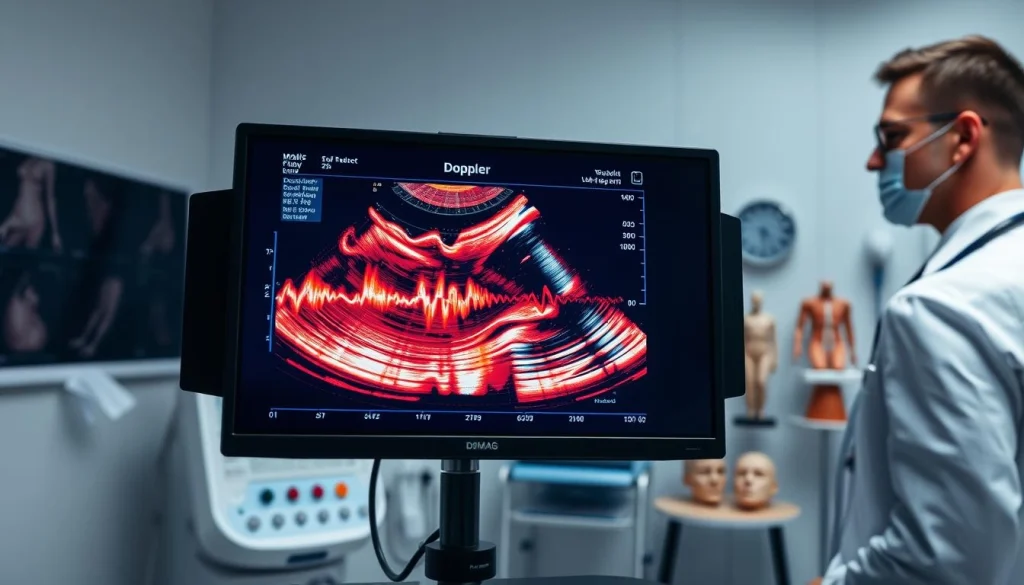
Doppler Ultrasound employs color coding and waveforms to depict and analyze blood flow. The color coding signifies the blood flow’s direction and speed.
Red and Blue Color Mapping
The red and blue colors in Doppler Ultrasound indicate blood flow direction. Red signifies flow towards the transducer, while blue shows flow away from it.
Spectral Waveform Analysis
Spectral waveform analysis examines blood flow velocity and characteristics. The waveform reveals flow patterns, aiding in vascular condition diagnosis.
Normal vs. Abnormal Findings
Interpreting Doppler Ultrasound results involves identifying normal versus abnormal findings. Normal results indicate healthy blood flow. Abnormal results may signal vascular issues like stenosis or occlusion.
Common abnormal findings include:
- Altered blood flow velocities
- Turbulent or disturbed flow patterns
- Reversal of flow direction
Advantages and Limitations of Doppler Ultrasound
Doppler Ultrasound has transformed medical imaging with its distinct benefits. It serves as a non-invasive tool for evaluating blood flow and vascular health. This section delves into the advantages and limitations of Doppler Ultrasound in medical diagnostics.
Benefits Over Other Imaging Techniques
Doppler Ultrasound stands out due to its non-invasive nature. This makes it safer for patients, avoiding the use of harmful radiation or contrast agents. It also offers real-time blood flow assessments, enabling the evaluation of vascular health and stenosis detection.
The key advantages of Doppler Ultrasound include:
- Non-invasive and painless
- No ionizing radiation
- Real-time imaging capabilities
- Ability to measure blood flow and velocity
Constraints and Possible Inaccuracies
Despite its benefits, Doppler Ultrasound has its limitations. The accuracy of Doppler Ultrasound heavily relies on the operator’s skill. Patient factors like body size and bowel gas can also impact results.
Potential inaccuracies and constraints of Doppler Ultrasound include:
- Operator-dependent variability
- Limited depth penetration
- Potential for aliasing artifacts
Recognizing these limitations is essential for accurately interpreting Doppler Ultrasound results. This ensures informed clinical decisions are made.
Safety Considerations and Side Effects
Doppler Ultrasound is generally safe, but it’s important to understand its safety and possible side effects. This technology uses sound waves to create images inside the body. It doesn’t use ionizing radiation, making it a top choice for many medical tests.
Risk Assessment for Different Patient Groups
Assessing the risks of Doppler Ultrasound involves looking at the needs and vulnerabilities of various patient groups. This includes pregnant women, children, and those with specific health conditions.
Pregnancy Considerations
Doppler Ultrasound is used during pregnancy to check fetal blood flow and placental function. It’s considered safe, but it should only be done when it’s medically necessary. The goal is to keep exposure to ultrasound energy as low as possible.
Pediatric Applications
In children, Doppler Ultrasound helps diagnose issues like blood flow problems and vascular abnormalities. It’s generally safe, but the intensity and length of the scan must be managed to reduce exposure.
Contraindications and Precautions
While Doppler Ultrasound is safe, there are some situations where it shouldn’t be used. It’s not for unnecessary tests, and caution is needed for patients with certain implants or conditions. These could interact with the ultrasound technology.
Technological Advancements in Doppler Ultrasound
Recent technological breakthroughs have transformed Doppler Ultrasound, boosting its diagnostic prowess. The integration of cutting-edge innovations has greatly enhanced the precision and dependability of Doppler Ultrasound tests.
Recent Innovations
In recent years, several groundbreaking technologies have been introduced in Doppler Ultrasound. The most significant development is the emergence of 3D and 4D imaging. These techniques offer a more detailed and dynamic view of vascular structures and blood flow.
3D and 4D Doppler Imaging
The introduction of 3D and 4D Doppler imaging has allowed healthcare professionals to see vascular anatomy with unmatched clarity. This technology facilitates a better understanding of blood flow and vascular conditions. It leads to more accurate diagnoses and treatment plans.
Artificial Intelligence Integration
Artificial intelligence (AI) is increasingly being incorporated into Doppler Ultrasound systems. This integration enhances image analysis and diagnostic accuracy. AI algorithms can spot patterns and anomalies that might elude human observers, refining the diagnostic process.
Improved Diagnostic Capabilities
The technological advancements in Doppler Ultrasound have significantly improved its diagnostic capabilities. With enhanced image quality and the ability to analyze complex data, healthcare professionals can now detect and diagnose vascular conditions more effectively.
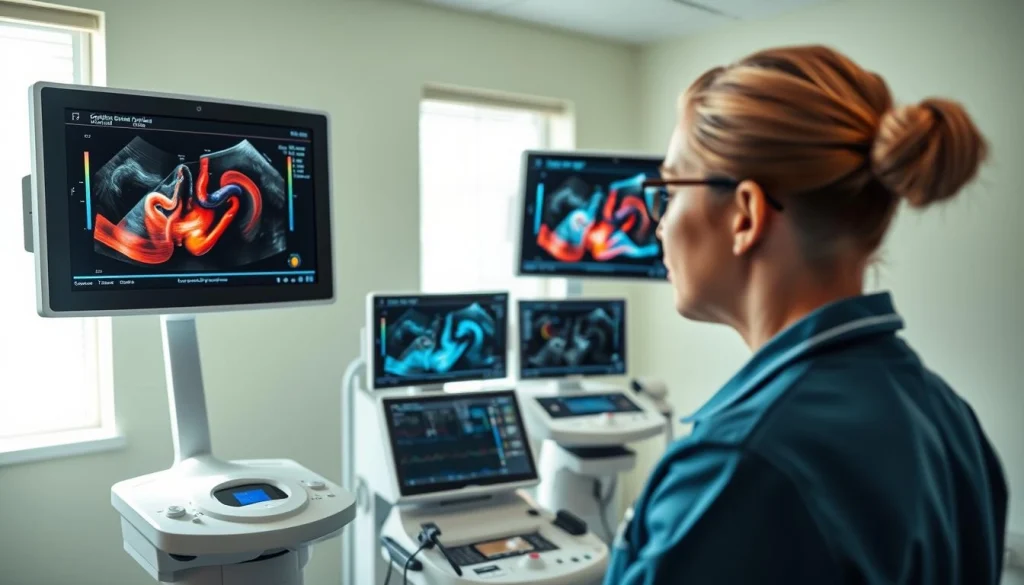
The enhanced diagnostic capabilities of Doppler Ultrasound have a direct impact on patient care. They enable healthcare providers to develop more targeted and effective treatment plans. As technology continues to evolve, we can expect further improvements in the diagnosis and management of vascular diseases.
Choosing a Doppler Ultrasound Provider
Choosing a reliable Doppler Ultrasound provider is key for accurate diagnostic results. The quality of care and the provider’s expertise greatly impact the procedure’s outcome.
Qualifications to Look For
When selecting a Doppler Ultrasound provider, qualifications and experience are critical. Ensure the provider is certified by a reputable body, like the American Registry for Diagnostic Medical Sonography (ARDMS). This certification confirms they have the training and expertise needed for accurate Doppler Ultrasound exams.
Also, consider the provider’s experience in Doppler Ultrasound procedures. A seasoned provider is more likely to deliver high-quality images and accurate diagnoses.
Questions to Ask Your Healthcare Provider
Before a Doppler Ultrasound, it’s vital to ask the right questions. Inquire about the procedure’s risks and benefits, as well as alternative diagnostic options.
- What are the possible risks and complications of the Doppler Ultrasound?
- How will the Doppler Ultrasound results guide my treatment plan?
- Are there other diagnostic tests that could replace the Doppler Ultrasound?
By asking these questions and selecting a qualified provider, patients can ensure they get accurate and reliable diagnostic results.
The Future of Vascular Diagnostics with Doppler Technology
The future of vascular diagnostics is heavily influenced by advancements in Doppler technology. This technology is expected to significantly enhance diagnostic capabilities. Ongoing research focuses on improving Doppler Ultrasound’s accuracy and effectiveness. This will lead to better patient outcomes.
As Doppler technology advances, we can anticipate major improvements in vascular diagnostics. Future advancements might include more advanced imaging techniques and enhanced signal processing. These improvements will increase precision in detecting vascular abnormalities.
The integration of Doppler technology with other diagnostic modalities is also on the horizon. This integration will enable healthcare providers to make more informed decisions. With its ability to enhance diagnostic accuracy and patient care, Doppler Ultrasound is set to remain a critical tool in vascular diagnostics.
FAQ
Q: What is Doppler Ultrasound?
A: Doppler Ultrasound is a non-invasive imaging method. It uses sound waves to check blood flow and spot vascular issues.
Q: How does Doppler Ultrasound work?
A: It measures sound wave frequency changes when reflected off moving objects, like blood cells. This is based on the Doppler effect.
Q: What are the different types of Doppler Ultrasound techniques?
A: There are several techniques, including Continuous Wave Doppler, Pulsed Wave Doppler, Color Doppler, and Power Doppler.
Q: What are the clinical applications of Doppler Ultrasound?
A: It’s used for cardiovascular checks, monitoring during pregnancy, and evaluating organs in the abdomen.
Q: Is Doppler Ultrasound safe?
A: Generally, yes. But, it’s important to consider safety and possible side effects, mainly for certain patient groups.
Q: How do I prepare for a Doppler Ultrasound examination?
A: Follow pre-procedure guidelines. Avoid certain medications and wear comfortable clothes.
Q: What can I expect during a Doppler Ultrasound appointment?
A: A trained technician will perform the exam. It’s usually painless and non-invasive.
Q: How are Doppler Ultrasound results interpreted?
A: Results are understood through color coding and waveform analysis. This includes red and blue colors and spectral waveforms.
Q: What are the advantages and limitations of Doppler Ultrasound?
A: It’s non-invasive and measures blood flow well. But, it can be inaccurate and limited by operator skill and patient factors.
Q: What are the future prospects of Doppler Ultrasound technology?
A: Its future looks bright. Ongoing research aims to enhance diagnostics, including 3D and 4D imaging and AI integration.