The Nature and Significance of Pancreatic Neuroendocrine Neoplasms
Pancreatic Neuroendocrine Neoplasms, also known as Endocrine Pancreatic Tumors, are rare tumors that originate in the pancreas. These tumors are distinct from the more common pancreatic adenocarcinomas. They can have varying clinical presentations.
Understanding these tumors is critical due to their unique characteristics and the challenges they pose in diagnosis and treatment. As we explore Pancreatic Neuroendocrine Neoplasms, it’s evident that a thorough approach is essential for effective management. This article aims to provide an overview of Endocrine Pancreatic Tumors. It covers their types, diagnosis, and treatment options. It serves as a valuable resource for both medical professionals and patients seeking to understand their condition.
To grasp Pancreatic Neuroendocrine Neoplasms, one must first understand the endocrine pancreas and its hormonal regulation role. These neoplasms, known as PNETs, stem from the pancreas’s endocrine cells.
Definition and Basic Concepts
Pancreatic Neuroendocrine Neoplasms form a diverse group of tumors from the pancreas’s endocrine part. They can either be functional, secreting hormones like insulin or gastrin, or non-functional, lacking hormone overproduction.
- Functional PNETs lead to specific syndromes due to hormone excess.
- Non-functional PNETs often show non-specific symptoms or are found by chance.
The Endocrine Pancreas: Structure and Function
The endocrine pancreas, made of islet cells, is key to hormone production. It mainly controls blood glucose levels by releasing insulin and glucagon.
Understanding the endocrine pancreas’s structure and function is vital for seeing how PNETs impact the body. The islets of Langerhans house different cell types. Beta cells make insulin, while alpha cells produce glucagon.
Types of Endocrine Pancreatic Tumors
Pancreatic neuroendocrine tumors (PNETs) are diverse, varying in functionality and clinical impact. They are categorized based on hormone production and the syndromes they cause.
Insulinomas
Insulinomas are the most prevalent functioning PNETs, mainly secreting insulin. They are mostly benign but can lead to hypoglycemia due to excessive insulin. Symptoms include confusion, sweating, and tremors.
Gastrinomas
Gastrinomas produce gastrin, resulting in Zollinger-Ellison syndrome. This syndrome is marked by severe peptic ulcers and diarrhea. These tumors can be malignant and are often linked to multiple endocrine neoplasia type 1 (MEN1).
Glucagonomas
Glucagonomas secrete glucagon, leading to a distinct syndrome. This includes diabetes mellitus, weight loss, and a characteristic rash known as necrolytic migratory erythema.
Other Functional and Non-Functional Tumors
Other functional PNETs include VIPomas, somatostatinomas, and PPomas, each causing unique hormonal syndromes. Non-functional PNETs, by contrast, do not produce hormones or specific syndromes. Yet, they can cause symptoms due to their size and location.
The following list summarizes the main types of endocrine pancreatic tumors and their characteristics:
- Insulinomas: Hypoglycemia, usually benign
- Gastrinomas: Zollinger-Ellison syndrome, potentially malignant
- Glucagonomas: Diabetes, weight loss, necrolytic migratory erythema
- Non-functional tumors: Asymptomatic until large, potentially malignant
Epidemiology and Demographics
The study of endocrine pancreatic tumors offers insights into their occurrence and who they affect. These tumors are not common, yet their numbers have grown in recent years.
Incidence and Prevalence Rates
Research indicates that pancreatic neuroendocrine tumors (PNETs) affect 2 to 5 people per 100,000 annually. The prevalence, though, is estimated to be around 35 per 100,000. This shows they are not extremely rare but also not very common.
The rise in incidence is linked to better diagnostic tools and heightened awareness among medical professionals.
Age, Gender, and Ethnic Distribution
PNETs can strike at any age, but they’re most often found in people aged 40 to 60. Some studies hint at a slight female bias, while others find no gender disparity.
Regarding ethnic distribution, the data is not definitive. Yet, it seems PNETs can impact all ethnic groups, with some variations in occurrence rates.
Risk Factors and Genetic Predisposition
Understanding risk factors and genetic predispositions is key to preventing and treating endocrine pancreatic tumors.
Hereditary Syndromes Associated with PNETs
Several hereditary syndromes raise the risk of pancreatic neuroendocrine tumors (PNETs).
- Multiple Endocrine Neoplasia Type 1 (MEN1)
- Von Hippel-Lindau Disease
- Other genetic syndromes such as Neurofibromatosis Type 1 and Tuberous Sclerosis Complex
Multiple Endocrine Neoplasia Type 1 (MEN1)
MEN1 is an autosomal dominant disorder. It causes tumors in multiple endocrine glands, including the pancreas.
Von Hippel-Lindau Disease
Von Hippel-Lindau Disease is a genetic disorder. It predisposes individuals to various tumors, including PNETs.
Other Genetic Syndromes
Other hereditary conditions, like Neurofibromatosis Type 1 and Tuberous Sclerosis Complex, also increase PNET risk.
Environmental and Lifestyle Risk Factors
Genetic factors are significant, but environmental and lifestyle factors also play a role in endocrine pancreatic tumors.

- Dietary factors
- Smoking and alcohol consumption
- Other environmental exposures
Knowing these risk factors aids in early detection and management of PNETs.
Pathophysiology and Molecular Mechanisms
Exploring the molecular basis of endocrine pancreatic tumors uncovers their complex nature. These tumors stem from the pancreas’s endocrine part, which controls hormone production. Hormones are vital for various bodily functions.
Cellular Origins and Development
Endocrine pancreatic tumors start in pancreatic islet cells. Their growth is fueled by genetic and epigenetic changes. These disruptions alter normal cell behavior.
Genetic and Epigenetic Alterations
Genetic mutations and epigenetic changes are key in tumor development. They can activate genes that promote cancer and silence those that prevent it.
Hormonal Dysregulation Pathways
The pathophysiology of these tumors often leads to hormonal imbalances. This can cause an overproduction of hormones like insulin, gastrin, or glucagon. Such imbalances result in specific clinical syndromes.
Clinical Presentation and Symptomatology
The symptoms of endocrine pancreatic tumors vary widely. They include both functional tumors that overproduce hormones and non-functional tumors. These non-functional tumors may not produce hormones but can cause symptoms due to their size or location.
Functional Tumor Syndromes
Functional endocrine pancreatic tumors lead to specific syndromes. This is because they secrete excessive amounts of hormones.
Insulinoma Symptoms
Insulinomas are known for causing hypoglycemia symptoms. These include confusion, sweating, and palpitations.
Gastrinoma and Zollinger-Ellison Syndrome
Gastrinomas cause Zollinger-Ellison syndrome. This syndrome is marked by severe peptic ulcer disease and diarrhea.
Other Hormonal Syndromes
- Glucagonomas lead to necrolytic migratory erythema, diabetes, and weight loss.
- VIPomas result in Verner-Morrison syndrome, characterized by large-volume diarrhea and electrolyte disturbances.
- Somatostatinomas can cause diabetes, gallstones, and steatorrhea.
Non-Functional Tumor Manifestations
Non-functional endocrine pancreatic tumors often present with non-specific symptoms. These include abdominal pain, weight loss, and jaundice. These symptoms arise from the tumor’s mass effect or metastasis.
Diagnostic Approaches for Endocrine Pancreatic Tumors
Diagnosing endocrine pancreatic tumors involves various methods. These include laboratory tests, imaging techniques, and biopsy procedures. Together, they ensure an accurate diagnosis and guide treatment planning.
Laboratory Tests and Biomarkers
Laboratory tests are key in diagnosing endocrine pancreatic tumors. They include:
Hormone Level Assessment
Testing hormone levels like insulin, gastrin, and glucagon helps spot functional tumors.
Tumor Markers
Markers like chromogranin A are raised in neuroendocrine tumors. This aids in diagnosis.
Genetic Testing
Genetic testing is vital for identifying hereditary syndromes. This includes Multiple Endocrine Neoplasia Type 1 (MEN1).
Imaging Techniques
Imaging is essential for locating tumors and assessing their size. Common methods include:
CT and MRI Scanning
CT and MRI scans offer detailed images. They show the tumor’s size and its relation to nearby tissues.
Nuclear Medicine Imaging
Octreotide scans help find tumors with somatostatin receptors.
Endoscopic Ultrasound
Endoscopic ultrasound (EUS) is great for spotting small pancreatic tumors.
Biopsy and Histopathological Analysis
A biopsy is often needed to confirm the diagnosis. Histopathological analysis of the biopsy specimen is critical. It determines the tumor’s grade and differentiation, essential for treatment planning.
Classification and Staging Systems
Accurate classification and staging of pancreatic neuroendocrine tumors (PNETs) are vital for prognosis and treatment planning. These systems help understand tumor behavior, predict outcomes, and tailor management strategies.
WHO Classification of PNETs
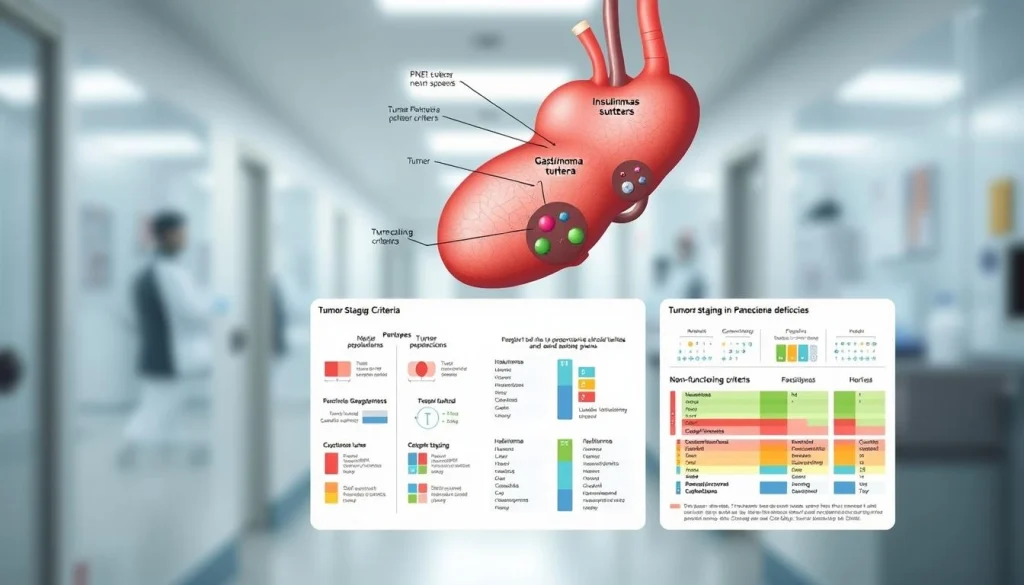
The World Health Organization (WHO) classification system for PNETs focuses on tumor differentiation and proliferative activity. It divides PNETs into well-differentiated neuroendocrine tumors (NETs) and neuroendocrine carcinomas (NECs). Grading is based on the Ki-67 index and mitotic count. This system aids in predicting outcomes and guiding treatment.
TNM Staging and Grading Criteria
The TNM staging system, developed by the American Joint Committee on Cancer (AJCC), is widely used for PNETs. It considers tumor size (T), lymph node involvement (N), and metastasis (M). Grading criteria, including the Ki-67 proliferation index and mitotic rate, offer insights into tumor biology and aggressiveness. This helps in categorizing patients by risk.
Surgical Management of Endocrine Pancreatic Tumors
Endocrine pancreatic tumors demand a treatment plan that’s both complex and multifaceted. Surgery plays a critical role in this approach. The strategies used are tailored to the tumor’s specifics and the patient’s health status.
Curative Resection Approaches
The main goal for many with endocrine pancreatic tumors is curative resection. This involves surgically removing the tumor with the aim of achieving a cure.
Pancreaticoduodenectomy (Whipple Procedure)
A pancreaticoduodenectomy, or Whipple procedure, is a complex surgery. It involves removing the head of the pancreas, duodenum, and other nearby tissues. This procedure is often used for tumors located in the pancreatic head.
Distal Pancreatectomy
Distal pancreatectomy involves removing the body and tail of the pancreas. This procedure is considered for tumors located in these areas.
Enucleation
Enucleation is a less invasive procedure. It involves carefully removing the tumor from the pancreas, preserving as much pancreatic tissue as possible.
Minimally Invasive Surgical Techniques
Minimally invasive surgery, including laparoscopic and robotic-assisted techniques, is increasingly used for endocrine pancreatic tumors. It offers benefits like reduced recovery time and less postoperative pain.
Palliative Surgical Interventions
For patients with advanced or metastatic disease, palliative surgical interventions may be necessary. These interventions aim to alleviate symptoms and improve quality of life. They can include procedures to reduce tumor burden or manage complications.
Medical and Systemic Treatment Options
Medical and systemic treatments are key in managing endocrine pancreatic tumors. They offer various methods to care for patients. These treatments aim to control symptoms, manage tumor growth, and enhance quality of life.
Somatostatin Analogs
Somatostatin analogs, like octreotide and lanreotide, help manage symptoms from hormone hypersecretion in functional tumors. They bind to somatostatin receptors on tumor cells, reducing hormone secretion.
Targeted Molecular Therapies
Targeted therapies, including everolimus and sunitinib, are effective against advanced pancreatic neuroendocrine tumors (PNETs). These drugs target specific molecular pathways involved in tumor growth and proliferation.
Chemotherapy Protocols
Chemotherapy is used for patients with advanced or metastatic PNETs, mainly those with high-grade tumors or significant tumor burden. Common chemotherapy regimens include streptozocin-based combinations.
Peptide Receptor Radionuclide Therapy (PRRT)
PRRT is a novel therapy using radiolabeled somatostatin analogs to target and destroy tumor cells expressing somatostatin receptors. It’s beneficial for patients with inoperable or metastatic disease.
For more information on the diagnosis and challenges associated with pancreatic cancer treatment, visit Acibadem International.
Management of Hormone-Related Syndromes
Managing hormone-related syndromes is key to improving life quality for those with endocrine pancreatic tumors. These syndromes arise from excessive hormone secretion, like insulin, gastrin, and others. This leads to various symptoms.
Controlling Hypoglycemia in Insulinomas
Insulinomas cause hypoglycemia due to too much insulin. To manage this, patients often adjust their diet. They eat frequent, small meals high in protein and complex carbs to keep blood sugar stable. Sometimes, medications like diazoxide or octreotide are needed to control insulin levels.
Managing Acid Hypersecretion and Other Hormonal Effects
Gastrinomas and similar tumors lead to acid hypersecretion and other hormonal issues. To tackle acid hypersecretion, proton pump inhibitors are commonly prescribed. For other hormonal effects, treatments are customized based on the hormone involved. Somatostatin analogs may be used to decrease hormone secretion.
Prognosis and Survival Outcomes
The prognosis for endocrine pancreatic tumors varies based on several factors. These include tumor type, stage, and grade. Understanding these factors is key to determining the best treatment and predicting outcomes.
Prognostic Factors and Risk Stratification
Several prognostic factors impact survival outcomes for endocrine pancreatic tumors. These include:
- Tumor size and location
- Stage at diagnosis
- Grade and differentiation
- Presence of metastasis
Risk stratification based on these factors helps tailor treatment plans. It also predicts patient prognosis. For more information on treatment options, visit Acibadem International.
Long-term Survival Rates by Tumor Type and Stage
Long-term survival rates for endocrine pancreatic tumors differ by tumor type and stage. For example, patients with localized insulinomas generally have a better prognosis. This is compared to those with metastatic non-functional tumors.

Complications and Quality of Life Considerations
Endocrine pancreatic tumors and their treatments can greatly impact a patient’s quality of life. These issues span physical and psychological realms, affecting overall well-being.
Treatment-Related Complications
Different treatments lead to various complications. Surgical methods might cause infections, bleeding, or pancreatic fistulas. On the other hand, chemotherapy and targeted therapy can induce side effects like nausea, fatigue, and diarrhea.
- Surgical complications: infection, bleeding, pancreatic fistula
- Chemotherapy side effects: nausea, fatigue, diarrhea
- Targeted therapy effects: skin rash, hypertension
Psychosocial Impact and Supportive Care
The psychological toll of endocrine pancreatic tumors is significant. Patients often face anxiety, depression, and stress due to their condition and treatment. Supportive care, including counseling and support groups, is vital in addressing these issues. It helps improve mental health and enhances coping strategies.
- Psychosocial challenges: anxiety, depression, stress
- Supportive care measures: psychological counseling, support groups
- Benefits of supportive care: improved mental health, better coping mechanisms
Special Patient Populations and Considerations
The treatment of Endocrine Pancreatic Tumors (PNETs) must be tailored to the unique needs of different patient groups. This includes pediatric and elderly patients, who face distinct challenges in managing PNETs.
Pediatric Patients with PNETs
Pediatric patients with PNETs need a customized approach due to their age and the possibility of long-term survival. Key considerations include:
- Genetic screening for hereditary syndromes
- Minimally invasive surgical techniques when possible
- Long-term follow-up for possible late effects of treatment
This tailored approach aids in managing the disease while preserving the child’s development and quality of life.
Management in Elderly and Comorbid Patients
Elderly patients or those with comorbid conditions require a distinct management strategy. This focuses on:
- Comprehensive geriatric assessment to guide treatment decisions
- Careful consideration of the risks and benefits of surgery or systemic therapy
- Palliative care options to enhance quality of life
By adopting these strategies, healthcare providers can optimize care for elderly and comorbid patients with PNETs.
Clinical Case Studies: Lessons from Practice
Clinical case studies offer deep insights into diagnosing and managing endocrine pancreatic tumors. They show the complexities and challenges healthcare professionals face. These real-life examples highlight the nuances of pancreatic neuroendocrine neoplasms (PNETs).
Case 1: Insulinoma in a Young Adult
A 25-year-old female experienced recurring hypoglycemia episodes. Tests revealed an insulinoma in the pancreatic tail. Surgery was performed, confirming a benign insulinoma. Post-surgery, her symptoms disappeared, underscoring the need for prompt diagnosis and treatment.
Case 2: Metastatic Non-Functional PNET
A 50-year-old male was found to have a non-functional PNET with liver metastases. He underwent surgery and somatostatin analog therapy. Despite the disease’s advanced stage, his quality of life improved, showing the value of a multi-faceted treatment plan.
Case 3: MEN1-Associated Multiple PNETs
A 40-year-old male with Multiple Endocrine Neoplasia Type 1 (MEN1) syndrome had multiple PNETs. Genetic testing confirmed a MEN1 gene mutation. He had surgery for the largest tumor and began surveillance for the others, demonstrating the importance of personalized care in MEN1-associated PNETs.
Emerging Research and Future Horizons in PNET Management
The field of pancreatic neuroendocrine tumors (PNETs) is rapidly advancing, thanks to new research and therapies. Studies are now delving into the molecular roots of PNETs, opening doors to targeted treatments. This shift is a significant step towards better management of these tumors.
Looking ahead, the focus will be on creating new targeted therapies and applying precision medicine. Researchers are keen on exploring peptide receptor radionuclide therapy (PRRT) and other innovative methods. These efforts aim to enhance patient outcomes and quality of life.
Improvements in imaging and biomarkers are also on the horizon. These advancements will lead to earlier detection and more precise staging of PNETs. As our knowledge of PNET biology expands, so will the effectiveness of treatments. This will significantly improve the lives of those battling these complex tumors.
Integrating new research into clinical practice is key to the future of PNET management. It brings hope to both patients and healthcare professionals, marking a new era in tumor treatment.
FAQ
Q: What are Endocrine Pancreatic Tumors?
A: Endocrine Pancreatic Tumors, also known as Pancreatic Neuroendocrine Tumors (PNETs), are rare. They originate from the pancreas’s endocrine cells.
Q: What are the different types of Endocrine Pancreatic Tumors?
A: There are several types of Endocrine Pancreatic Tumors. These include insulinomas, gastrinomas, glucagonomas, and others. They can be functional or non-functional.
Q: What are the symptoms of Endocrine Pancreatic Tumors?
A: Symptoms vary by tumor type. They can include hypoglycemia, acid hypersecretion, and hormonal imbalances.
Q: How are Endocrine Pancreatic Tumors diagnosed?
A: Diagnosis involves lab tests, imaging, and biopsy. These methods help identify the tumors accurately.
Q: What are the treatment options for Endocrine Pancreatic Tumors?
A: Treatment options include surgery, medical treatments, and managing hormone-related syndromes. Each approach is tailored to the patient’s needs.
Q: What is the prognosis for patients with Endocrine Pancreatic Tumors?
A: Prognosis varies based on tumor type, stage, and other factors. It’s essential to consider these factors for a better understanding.
Q: What are the risk factors for developing Endocrine Pancreatic Tumors?
A: Risk factors include hereditary syndromes, genetic predisposition, and lifestyle choices. These can increase the likelihood of developing the tumors.
Q: How are hormone-related syndromes managed in patients with Endocrine Pancreatic Tumors?
A: Managing hormone-related syndromes involves various treatments. These include somatostatin analogs, targeted therapies, and other medications.
Q: What is the role of surgery in the management of Endocrine Pancreatic Tumors?
A: Surgery is critical in managing these tumors. It includes curative resections and palliative interventions to improve quality of life.
Q: What are the emerging research and future directions in the management of Endocrine Pancreatic Tumors?
A: Future research focuses on new treatments like targeted molecular therapies and peptide receptor radionuclide therapy (PRRT). These aim to improve outcomes for patients.