Femur Fracture: What Is a Femur Fracture?
A femur fracture is a serious injury that requires immediate medical attention. It occurs when there is a break in the femur, the long bone of the thigh. This type of fracture can result from high-energy trauma, such as a car accident, or from a fall in older adults with weakened bones. Understanding the causes, symptoms, and treatment options is key for effective management and recovery.
The following sections will explore femur fractures in detail. We will cover diagnosis, treatment methods, and rehabilitation strategies. This will provide a thorough overview for both patients and healthcare professionals.
Understanding the Anatomy of the Femur
The femur, the longest and strongest bone in the human body, is key to our mobility and skeletal structure. It links the hip joint to the knee joint, enabling a variety of movements.
Structure and Function of the Femur
The femur’s structure features a long shaft and two ends. The proximal end connects to the hip joint, while the distal end links to the knee joint. Its role is to bear the body’s weight and aid in movement.
Importance of the Femur in Skeletal System
The femur is essential for weight-bearing and mobility. It collaborates with other bones, muscles, and ligaments to support movement and posture.
Blood Supply and Surrounding Structures
The femur’s blood supply comes from the femoral artery. Surrounding it are muscles, tendons, and ligaments, which offer additional support and facilitate movement.
Grasping the femur’s anatomy is critical for diagnosing and treating injuries like femur fractures.
What Is a Femur Fracture?
A femur fracture is a serious medical condition where the femur, the longest bone in the human body, breaks. It can happen due to high-impact trauma, falls, or conditions that weaken the bone.
Definition and Overview
A femur fracture is a break in the femur, which can be partial or complete. The femur connects the hip to the knee, essential for mobility and weight-bearing. It includes various types of breaks, affecting different parts of the femur.
Prevalence and Statistics in the United States
Femur fractures are a major health issue in the United States. Thousands of people suffer from them each year, with a high number being older adults. The incidence is significant, with a higher rate among those with osteoporosis or other bone conditions.
Impact on Mobility and Quality of Life
Femur fractures have a significant impact on mobility and quality of life. They often require immediate medical attention and can lead to chronic pain and reduced mobility. Understanding the severity of this injury is key to managing it effectively.
Types of Femur Fractures
Grasping the various types of femur fractures is key to accurate diagnosis and treatment. These fractures are categorized by location, severity, and pattern. This classification aids in selecting the right treatment approach.
Proximal Femur Fractures
Proximal femur fractures occur near the hip joint. They are divided into two main types:
- Femoral neck fractures, which occur in the narrow region just below the head of the femur.
- Intertrochanteric fractures, which happen in the region between the greater and lesser trochanter of the femur.
Femoral Neck Fractures
Femoral neck fractures are common among the elderly. They can severely impact mobility and quality of life.
Intertrochanteric Fractures
Intertrochanteric fractures are another type of proximal femur fracture. They can be treated with various surgical techniques, including the use of sliding hip screws.
Femoral Shaft Fractures
Femoral shaft fractures involve the long, cylindrical part of the femur. These fractures often result from high-energy trauma and can be associated with significant blood loss.
Distal Femur Fractures
Distal femur fractures occur just above the knee joint. They can be complex, involving the articular surface. Treatment often requires surgical intervention to restore the joint surface.
Classification by Severity and Pattern
Femur fractures are also classified based on their severity and pattern, including:
- Non-displaced or displaced fractures, depending on whether the bone fragments are out of place.
- Comminuted fractures, where the bone breaks into multiple pieces.
- Open or closed fractures, depending on whether the skin is broken.
Understanding these classifications is essential for choosing the most appropriate treatment strategy.
Common Causes of Femur Fractures
Femur fractures stem from different sources, including severe trauma and underlying health issues. These fractures significantly affect mobility and overall well-being.
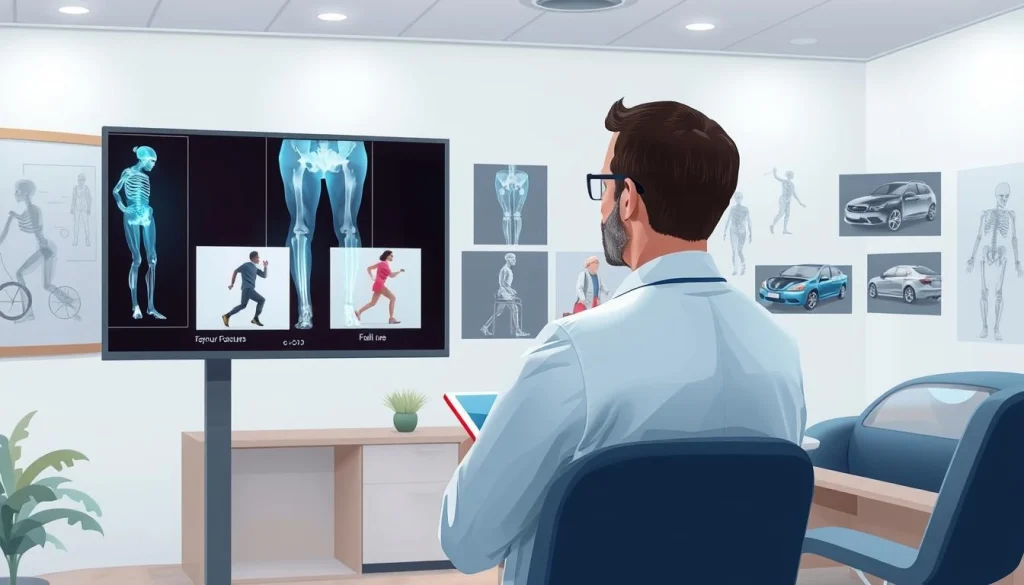
High-Impact Trauma and Motor Vehicle Accidents
High-impact trauma, often from car accidents, is a major cause of femur fractures. The intense force from such incidents can overpower the bone’s strength, causing a fracture.
Sports-Related Injuries
Sports injuries are another frequent cause, mainly in contact sports or activities with high-speed movements. Athletes in sports like football or skiing face a higher risk.
Falls from Height
Falls from great heights can also lead to femur fractures. Landing on the legs can send a strong force to the femur, potentially causing a fracture.
Pathological Fractures and Underlying Conditions
Pathological fractures happen when a bone breaks due to a pre-existing condition weakening the bone. Conditions like osteoporosis, bone cysts, or tumors raise the risk of femur fractures.
- Osteoporosis: A condition characterized by reduced bone density, making bones more susceptible to fractures.
- Bone cysts and tumors: Abnormal growths in the bone that can weaken its structure.
Risk Factors for Femur Fractures
Understanding the risk factors for femur fractures is key to prevention and management. Several factors can increase an individual’s risk of experiencing a femur fracture.
Age-Related Factors
Age is a major risk factor for femur fractures. Older adults face a higher risk due to decreased bone density and strength. They also have a greater risk of falls.
Osteoporosis and Bone Density Issues
Osteoporosis, a condition of weakened bones, significantly raises the risk of femur fractures. Those with osteoporosis or low bone density are more likely to fracture.
Medical Conditions Affecting Bone Health
Certain medical conditions, like cancer, hyperparathyroidism, and osteogenesis imperfecta, can harm bone health. This increases the risk of femur fractures.
Medication-Related Risks
Some medications, including corticosteroids and certain anticonvulsants, can weaken bones. This increases the risk of fractures.
Identifying and managing these risk factors is essential. It helps prevent femur fractures and improves outcomes for those at risk.
Signs and Symptoms of a Femur Fracture
Identifying the signs and symptoms of a femur fracture is vital for timely treatment. A femur fracture can show through immediate symptoms, physical changes, pain patterns, and significant functional limitations.
Immediate Symptoms After Injury
Following a femur fracture, individuals often face severe symptoms. These include:
- Instant pain in the thigh or hip area
- Inability to bear weight or walk
- Swelling and bruising around the affected area
- A feeling of instability or a grinding sensation when moving the leg
Physical Appearance and Deformity
A femur fracture can alter the leg’s appearance. The leg may look:
- Shorter than the unaffected leg
- Twisted or positioned at an awkward angle
- Swollen or bruised, potentially with an open wound in severe cases
Pain Patterns and Characteristics
The pain from a femur fracture is usually severe and focused on the thigh. The pain’s characteristics include:
- Sharp, intense pain at the fracture site
- Pain that worsens with movement or weight-bearing activities
- Potential referred pain to other areas, such as the hip or knee
Functional Limitations
Those with a femur fracture face significant functional challenges. These include:
- Difficulty or inability to walk or stand
- Challenges with moving the affected leg
- Potential need for assistance with daily activities due to pain and mobility issues
Grasping these signs and symptoms is key to diagnosing and treating femur fractures effectively.
Diagnosing Femur Fractures
Diagnosing femur fractures requires a blend of clinical evaluation and radiological studies. Accurate diagnosis is key to selecting the right treatment and ensuring the best outcomes for patients.
Initial Physical Examination
The first step in assessing a patient with suspected femur fracture is a detailed physical examination. This involves evaluating the patient’s overall health, looking for any deformity, checking neurovascular status, and identifying other injuries.
- Visual inspection for deformity or swelling
- Palpation to identify tenderness or crepitus
- Assessment of range of motion and limb stability
- Neurovascular examination to check for nerve or blood vessel damage
Imaging Studies and Techniques
Imaging is vital in diagnosing femur fractures. Different techniques are employed to visualize the fracture and assess its characteristics.
X-rays and Their Interpretation
X-rays are the primary tool for diagnosing femur fractures. They provide vital information about the fracture pattern, displacement, and any bone abnormalities.
In some instances, advanced imaging like computed tomography (CT) or magnetic resonance imaging (MRI) is used. This is to further evaluate the fracture or detect soft tissue injuries.
- CT scans for detailed bone structure assessment
- MRI for evaluation of soft tissue damage
Differential Diagnosis Considerations
When diagnosing femur fractures, it’s important to consider other causes of hip or thigh pain. This includes muscle strains, hip osteoarthritis, or other fractures. A thorough evaluation is necessary for an accurate diagnosis.
Emergency Management of Femur Fractures
Effective emergency management of femur fractures is critical to prevent further injury and ensure the best outcomes. Immediate care is essential to address the fracture, associated injuries, and complications.
First Aid Measures at the Scene
Initial management involves immobilizing the affected limb to prevent further injury. A splint or traction device can be used for this purpose. It’s also important to monitor vital signs and provide pain relief if possible.
Emergency Room Procedures and Protocols
In the emergency room, patients undergo a thorough assessment. This includes imaging studies to confirm the diagnosis and assess the fracture’s severity. Protocols may include pain medication, stabilization, and preparation for surgery.
Pain Management Strategies
Pain management is a key aspect of emergency care for femur fractures. Strategies may include analgesics, nerve blocks, or other tailored approaches based on the patient’s condition and history.
Addressing Blood Loss and Shock
Femur fractures can lead to significant blood loss and shock. Emergency management involves monitoring for shock signs, administering fluids or blood products, and controlling bleeding.
Non-Surgical Treatment Options
Femur fractures can be treated without surgery, using various non-surgical methods. These are tailored to the specific type of fracture.
Traction Techniques and Applications
Traction is a non-surgical method for treating femur fractures. It involves applying a pulling force to the affected leg.
Casting and Bracing Methods
Casting and bracing are non-surgical methods for managing femur fractures. They are suitable for fractures that are not significantly displaced.
Casting involves encasing the leg in a plaster or fiberglass cast. This immobilizes the fracture.
When Conservative Treatment Is Appropriate
Conservative or non-surgical treatment is often recommended for certain femur fractures. This includes stable fractures or those in young children.
Monitoring Progress During Non-Surgical Management
Regular follow-up with a healthcare provider is essential. It allows monitoring of the fracture’s healing progress.
X-rays are used to assess the bone’s alignment and healing.
Surgical Interventions for Femur Fractures
Femur fractures often necessitate surgical treatment to ensure proper healing and restore function to the affected leg. Surgical interventions are critical for managing complex fractures, where bone fragments are significantly displaced.
Intramedullary Nailing Procedures
Intramedullary nailing is a prevalent surgical technique for treating femur fractures. It involves inserting a metal rod into the marrow canal of the femur to stabilize the bone fragments. This method facilitates early mobilization and boasts a high success rate.
Plate and Screw Fixation Techniques
Plate and screw fixation is another surgical approach for femur fractures, mainly for fractures not suitable for intramedullary nailing. This technique involves attaching a plate to the bone with screws to hold the fragments in place.
External Fixation Methods
External fixation is a temporary or definitive treatment method that stabilizes the fracture with a frame outside the skin. It’s often used in cases with significant soft tissue damage or complex fractures.
Joint Replacement Options for Proximal Fractures
For certain proximal femur fractures, joint replacement surgery may be considered, mainly in elderly patients. This involves replacing the damaged hip joint with an artificial one, aiming to restore mobility and reduce pain.
Surgical Considerations and Decision-Making
The choice of surgical intervention hinges on various factors, including the fracture’s type and location, the patient’s overall health, and their activity level. Surgeons weigh these factors to determine the most suitable surgical technique for each case.
Recovery Timeline After a Femur Fracture
The path to recovery after a femur fracture is complex, with various stages to navigate. It’s essential for both patients and healthcare professionals to grasp these stages. This understanding helps manage expectations and design effective rehabilitation plans.
Hospital Stay Duration and Expectations
The recovery journey starts in the hospital, where immediate care and stabilization are provided. The length of the hospital stay varies. It can last from a few days to a couple of weeks. This depends on the fracture’s severity and the patient’s health.
Short-Term Recovery Milestones (First 6 Weeks)
In the initial six weeks, managing pain and starting to move are the main focuses. Key milestones include:
- Regaining some range of motion
- Beginning physical therapy
- Gradually increasing weight-bearing activities
Medium-Term Healing Process (6 Weeks to 6 Months)
Between six weeks and six months, the bone heals further, and rehabilitation progresses. This stage is marked by:
- Strengthening the surrounding muscles
- Improving mobility and balance
- Gradually returning to normal activities
Long-Term Recovery (Beyond 6 Months)
Recovery from a femur fracture can extend beyond six months, sometimes taking a year or more. During this prolonged period, patients focus on strengthening their bones and improving their functional abilities.
Return to Normal Activities and Work
The time frame for returning to work or normal activities varies. It depends on the job’s demands and the individual’s progress. Generally, most patients can return to their usual activities within 6 to 12 months.
Recovering from a femur fracture demands patience, adherence to rehabilitation plans, and a supportive care team. By understanding the recovery timeline, patients can better navigate their healing journey. This helps them regain their independence.
Rehabilitation and Physical Therapy
Recovering from a femur fracture requires effective rehabilitation and physical therapy. A structured program is key to regaining strength and mobility. It ensures patients can return to their usual activities.
Early Mobilization Techniques and Protocols
Early mobilization is vital in the initial rehabilitation stages. It involves gentle exercises to keep joints mobile and prevent stiffness. Techniques include passive range of motion exercises, where a therapist or device moves joints without the patient’s muscle contraction.
Progressive Exercise Programs
As recovery advances, exercises become more intense. They focus on strengthening muscles around the femur. This may include resistance band exercises, weight-bearing activities, and complex movements like squats and lunges.

Assistive Devices and Mobility Aids
During recovery, assistive devices like crutches, walkers, or canes are often needed. They help reduce the load on the fractured femur. The choice depends on the patient’s condition, fracture severity, and ability to follow instructions.
Pain Management During Rehabilitation
Effective pain management is essential during rehabilitation. It may involve medication, physical modalities like heat or cold therapy, and alternative techniques such as acupuncture or relaxation exercises.
Measuring Progress and Functional Outcomes
Regular assessments evaluate the patient’s progress. This includes range of motion, strength, and daily activity ability. For more information on recovery processes related to other orthopedic surgeries, visit Acibadem International for details on knee replacement surgery recovery.
- Regular follow-up appointments with healthcare providers
- Monitoring of pain levels and adjustment of pain management strategies
- Gradual increase in exercise intensity and complexity
Potential Complications of Femur Fractures
Understanding the complications of femur fractures is key to effective management and treatment. Femur fractures are significant injuries that can lead to various complications. These complications can impact patient outcomes significantly.
Immediate Complications
Immediate complications can arise shortly after the injury occurs. These include:
- Life-threatening conditions
- Systemic complications
Fat Embolism and Pulmonary Issues
Fat embolism syndrome is a serious complication where fat globules enter the bloodstream. They can obstruct blood vessels in the lungs, brain, or other organs. This condition can lead to respiratory distress, neurological symptoms, and even death.
Compartment Syndrome
Compartment syndrome is another immediate complication. It is characterized by increased pressure within the muscle compartments surrounding the fracture. This can compromise blood flow and potentially cause permanent muscle and nerve damage if not promptly addressed.
Long-Term Complications
Long-term complications can significantly affect a patient’s quality of life and functional recovery.
Malunion and Nonunion
Malunion occurs when the bone heals in an incorrect position. This can lead to deformity and functional impairment. Nonunion, on the other hand, refers to the failure of the bone to heal. This may require additional surgical intervention.
Post-Traumatic Arthritis
Post-traumatic arthritis can develop following a femur fracture, if the fracture involves the joint. This condition can lead to chronic pain, stiffness, and reduced mobility.
Psychological Impact and Management
The psychological impact of femur fractures should not be underestimated. Patients may experience anxiety, depression, or post-traumatic stress disorder (PTSD). Effective management involves treating the physical aspects of the injury and addressing the psychological needs of the patient. This includes appropriate support and therapy.
Prevention Strategies for Femur Fractures
Improving bone health, preventing falls, and ensuring sports safety are key to avoiding femur fractures. These steps are vital for maintaining mobility and quality of life, mainly for the elderly. They are at higher risk due to various factors.
Bone Health Optimization
Ensuring bone health is essential in preventing femur fractures. This means consuming enough calcium and vitamin D, engaging in exercises that strengthen bones, and avoiding harmful substances like smoking and excessive alcohol.
Fall Prevention Techniques
Fall prevention is critical, more so for older adults. Techniques include removing hazards at home, improving lighting, using handrails, and wearing suitable footwear.
Sports Safety and Protective Equipment
Proper protective gear and training during sports can significantly lower the risk of femur fractures. This is most important for high-impact sports.
Lifestyle Modifications for At-Risk Populations
For those at higher risk, such as those with osteoporosis, more lifestyle changes are needed. This includes sticking to medication, regular bone density checks, and customized exercise plans.
Special Considerations for Different Age Groups
Femur fractures pose unique challenges across various age groups, requiring tailored treatment approaches. The management of these fractures must consider the patient’s age, overall health, and specific needs.
Pediatric Femur Fractures and Growth Plate Concerns
In children, femur fractures require careful consideration due to the presence of growth plates. Damage to these areas can lead to growth disturbances or deformities. Treatment often involves closed reduction and casting, with a focus on minimizing disruption to the growth plates.
Femur Fractures in Active Adults
Active adults with femur fractures often require surgical intervention to restore function and enable a quick return to normal activities. Intramedullary nailing is a common technique used in this age group, allowing for early mobilization and rehabilitation.
Geriatric Considerations and Fragility Fractures
In the elderly, femur fractures are often related to osteoporosis or other bone health issues, leading to fragility fractures. Treatment in this population must address not only the fracture but also the underlying bone health. Surgical options are carefully considered, taking into account the patient’s overall health and the likelihood of recovery.
Treatment Adaptations Based on Age
Treatment plans for femur fractures are adapted based on the patient’s age, with a focus on optimizing outcomes and minimizing complications. Understanding the unique needs of different age groups is essential for effective management.
Living Well After a Femur Fracture
Recovering from a femur fracture demands patience, dedication, and a detailed rehabilitation plan. It’s a journey that can be tough, but with the right strategy, one can regain strength and mobility. This path to recovery is not just about physical healing but also about mental resilience.
A successful recovery from a femoral fracture combines physical therapy, lifestyle changes, and ongoing medical care. It’s critical to adhere to a healthcare provider’s advice on exercises, pain management, and follow-up appointments. This ensures a smooth and effective recovery process.
As recovery progresses, individuals can gradually return to their daily routines. This may involve adapting their home environment, using assistive devices, and incorporating exercises to enhance strength and flexibility. It’s a gradual process, but with persistence, one can overcome the challenges posed by a femur fracture.
By focusing on a holistic recovery plan and staying committed to rehabilitation goals, individuals can overcome femur fracture challenges and regain independence. Effective management of femoral fracture recovery allows individuals to live well and maintain a high quality of life.
FAQ
Q: What is a femur fracture?
A: A femur fracture is a break in the femur, or thigh bone. It’s the longest and strongest bone in the body.
Q: What are the common causes of femur fractures?
A: Femur fractures often result from high-impact trauma. This includes motor vehicle accidents, sports injuries, and falls from height. Pathological fractures can also occur due to conditions like osteoporosis or bone cancer.
Q: What are the symptoms of a femur fracture?
A: Symptoms include severe pain, swelling, and bruising. The thigh or hip may appear deformed. Patients may find it hard to move the affected leg or bear weight.
Q: How are femur fractures diagnosed?
A: Diagnosis involves a physical exam, X-rays, and sometimes CT or MRI scans. These help assess the fracture’s severity and location.
Q: What are the treatment options for femur fractures?
A: Treatment options include non-surgical methods like traction and casting. Surgical interventions include intramedullary nailing, plate and screw fixation, and joint replacement.
Q: What is the recovery timeline for a femur fracture?
A: The recovery time varies based on fracture severity and treatment. Patients usually spend several days in the hospital. Then, they undergo months of rehabilitation and physical therapy.
Q: Can femur fractures be prevented?
A: While some fractures are unavoidable, prevention is possible. Maintaining strong bone health, preventing falls, and using protective gear during sports can help.
Q: What are the possible complications of femur fractures?
A: Complications include immediate issues like fat embolism and compartment syndrome. Long-term concerns include malunion, nonunion, and post-traumatic arthritis.
Q: How can patients manage pain during recovery?
A: Pain management involves medications, physical therapy, and alternative therapies. Options include acupuncture or massage.
Q: What role does physical therapy play in recovery?
A: Physical therapy is key for regaining strength and mobility. A progressive exercise program helps patients return to normal activities.