Giant Cell Bone Tumor: Epidemiology and Demographics
A Giant Cell Bone Tumor is a rare, potentially serious condition that affects the bones. It is characterized by the presence of abnormal cells that can lead to bone destruction. This type of tumor is typically found in the epiphyseal region of long bones, most commonly around the knee. Understanding the nature of this condition is essential for effective management and treatment.
The condition requires a thorough approach to diagnosis and treatment, involving both medical and sometimes surgical interventions. Early detection is critical to prevent further complications.
Understanding Giant Cell Bone Tumor
Giant Cell Bone Tumor is a rare and complex bone lesion that has drawn intense focus in orthopedic research. It is distinguished by the presence of giant cells, a key feature of this condition.
Definition and Classification
Giant Cell Bone Tumor is classified as a benign yet locally aggressive neoplasm. The World Health Organization recognizes it as a distinct entity due to its unique characteristics.
The classification of Giant Cell Bone Tumor is based on its histological appearance and clinical behavior. It is categorized into three stages:
- Stage 1: Latent or inactive
- Stage 2: Active
- Stage 3: Aggressive
Histological Features
Histologically, Giant Cell Bone Tumor is marked by a mix of mononuclear cells and multinucleated giant cells. The giant cells can have numerous nuclei, often exceeding 50 per cell.
The mononuclear cells are the neoplastic component, while the giant cells are reactive. The histological features are essential for diagnosis and distinguishing it from other bone lesions.
Key histological characteristics include:
- Presence of multinucleated giant cells
- Mononuclear cells with varying degrees of atypia
- High vascularity
Epidemiology and Demographics
Research into Giant Cell Bone Tumor has uncovered key data on its prevalence and who it affects. This knowledge is vital for grasping the tumor’s impact across various groups. It aids in tailoring healthcare approaches. By delving into these aspects, healthcare experts can optimize resource allocation and craft more effective interventions.
Prevalence and Incidence Rates
Giant Cell Bone Tumor is a rare condition, making up about 4-5% of all primary bone tumors. It occurs at a rate of roughly 1.7 per million annually, highlighting its rarity. The prevalence varies by location, with some areas reporting higher incidence rates.
Age and Gender Distribution
The tumor mainly strikes young adults, with most cases diagnosed between 20 and 40 years old. There’s a slight bias towards females, with some studies indicating a female-to-male ratio of up to 1.3:1. Yet, gender distribution can differ based on the population studied.
Recognizing these demographic trends is critical for doctors to suspect Giant Cell Bone Tumor in patients with the right symptoms. It prompts them to start the right diagnostic steps.
Pathophysiology of Giant Cell Bone Tumor
The pathophysiology of Giant Cell Bone Tumor is a complex process. It involves various cellular and genetic factors. This condition is characterized by the presence of giant cells, which are multinucleated osteoclast-like cells, and mononuclear stromal cells. The interaction between these cell types contributes to the tumor’s growth and progression.
Cellular Mechanisms
The cellular mechanisms underlying Giant Cell Bone Tumor involve the interaction between giant cells and mononuclear stromal cells. The stromal cells are thought to be the neoplastic component, driving the proliferation of giant cells through various signaling pathways. This interaction leads to an imbalance in bone resorption and formation, resulting in the characteristic bone lesions.
The giant cells in Giant Cell Bone Tumor are rich in tartrate-resistant acid phosphatase, indicating their osteoclastic nature. These cells are responsible for the bone resorption observed in the tumor. The stromal cells, on the other hand, produce factors that promote the formation and activity of giant cells.
Genetic Factors
Genetic factors play a significant role in the pathophysiology of Giant Cell Bone Tumor. Studies have identified various genetic alterations in the tumor cells, including mutations and chromosomal rearrangements. These genetic changes contribute to the development and progression of the tumor.
Specific genetic mutations have been associated with Giant Cell Bone Tumor, affecting the function of genes involved in cell growth and differentiation. Understanding these genetic factors is essential for developing targeted therapies and improving treatment outcomes.
Common Locations and Presentation
Understanding where Giant Cell Bone Tumor typically occurs is vital for effective diagnosis and treatment. This tumor has a predilection for certain locations within the skeleton. Its presentation can vary based on the site and extent of the disease.
Skeletal Distribution
Giant Cell Bone Tumor most commonly affects the epiphyseal ends of long bones. It is most prevalent around the knee, including the distal femur and proximal tibia. It can also occur in the distal radius, sacrum, and pelvis. The tumor’s location within the bone can influence its symptoms and the challenges associated with its treatment.
- Distal femur
- Proximal tibia
- Distal radius
- Sacrum
- Pelvis
The skeletal distribution of Giant Cell Bone Tumor is a critical factor in its diagnosis and treatment planning. The tumor’s location can affect the choice of surgical approach and the likelihood of complications.
Typical Radiographic Appearance
The radiographic appearance of Giant Cell Bone Tumor is characterized by a well-defined, eccentric, lytic lesion. It often extends to the articular surface of the bone. On X-rays, it typically appears as a purely lytic lesion without matrix mineralization.
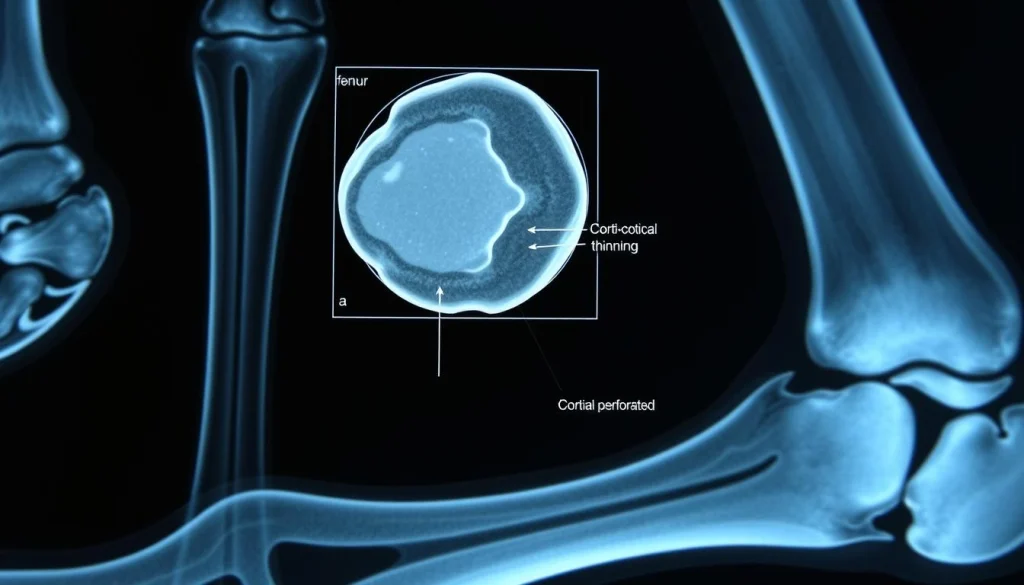
CT scans and MRI scans provide further detail. They help assess the extent of the tumor, its relationship to surrounding soft tissues, and any cortical breakthrough or soft tissue extension. The radiographic features are critical for diagnosing Giant Cell Bone Tumor and planning appropriate treatment.
- Well-defined, eccentric, lytic lesion
- Extension to the articular surface
- Lack of matrix mineralization
Clinical Symptoms and Signs
The clinical signs of Giant Cell Bone Tumor vary widely, impacting both local areas and overall health. Recognizing these symptoms early is key for timely diagnosis and effective treatment.
Local Symptoms
Local symptoms are the hallmark of Giant Cell Bone Tumor. Patients often report pain in the affected bone or joint, accompanied by swelling and tenderness. The pain’s nature can vary, from dull and persistent to sharp and severe, based on the tumor’s size and location.
Patients may also experience limited mobility or a feeling of instability in the affected limb. In some instances, a noticeable mass or deformity can occur if the tumor grows significantly. Pathological fractures can happen if the tumor weakens the bone, causing sudden pain and loss of function.
Systemic Manifestations
Systemic symptoms, though less common, can occur in some patients. These may include generalized symptoms like weight loss, fatigue, or malaise. While these symptoms are non-specific and can stem from various conditions, they necessitate a thorough medical evaluation to identify the underlying cause.
In rare instances, Giant Cell Bone Tumor can cause more severe systemic effects, such as if the tumor is large or has metastasized. It is critical to monitor for these systemic manifestations as part of managing the disease.
Identifying both local and systemic symptoms promptly is essential for timely diagnosis and treatment of Giant Cell Bone Tumor. A detailed clinical evaluation, including imaging studies and biopsy, is necessary to confirm the diagnosis and guide treatment plans.
Risk Factors and Predisposing Conditions
Several factors contribute to the risk of developing Giant Cell Bone Tumor, including genetic and environmental elements. Understanding these risk factors is essential for the early detection and management of the condition.
Genetic Predisposition
Genetic predisposition plays a significant role in the development of Giant Cell Bone Tumor. Research has identified certain genetic mutations that may increase the risk of developing this condition. For instance, alterations in the genes responsible for cell cycle regulation can lead to the formation of Giant Cell Bone Tumors.
A family history of bone tumors or other related conditions may also contribute to an individual’s risk. More research is needed to fully understand the genetic mechanisms involved.
Environmental Factors
While genetic factors are significant, environmental factors may also influence the development of Giant Cell Bone Tumor. Exposure to certain environmental elements, such as radiation, has been linked to an increased risk of bone tumors.
Previous bone injuries or conditions may also potentially contribute to the risk. The exact relationship between these factors and Giant Cell Bone Tumor is currently being studied.
By understanding both genetic predisposition and environmental factors, healthcare professionals can better identify individuals at risk. They can then develop targeted strategies for early detection and prevention.
Diagnostic Approaches
Accurate diagnosis of Giant Cell Bone Tumor requires a detailed strategy. This includes imaging studies, biopsy techniques, and laboratory tests. These methods confirm the tumor’s presence and extent.
Imaging Studies
Imaging studies are key in diagnosing Giant Cell Bone Tumor. They reveal the tumor’s location, size, and characteristics.
X-ray Findings
X-rays are often the initial imaging tool. They show a lytic lesion, an area of destroyed bone. This can be well-defined or have a more aggressive appearance with cortical destruction.
MRI and CT Scan Features
MRI and CT scans offer detailed insights into the tumor. MRI is great for soft tissue involvement and the tumor’s relation to surrounding structures. CT scans evaluate bony architecture and detect cortical breach or pathological fractures.
Biopsy Techniques
Biopsy is vital for confirming Giant Cell Bone Tumor diagnosis. Several techniques exist:
- Fine-needle aspiration biopsy
- Core needle biopsy
- Open biopsy
Each method has its benefits, chosen based on tumor location and patient condition.
Laboratory Tests
Laboratory tests support the diagnosis and rule out other conditions. These include:
- Blood tests for bone turnover markers
- Histopathological examination of the biopsy specimen to confirm giant cells and other features
These tests help differentiate Giant Cell Bone Tumor from other bone lesions.
Differential Diagnosis
Giant Cell Bone Tumor presents a diagnostic challenge due to its resemblance to other bone lesions. A detailed differential diagnosis is essential for precise diagnosis. This accuracy is vital for effective treatment planning and patient care.
Similar Bone Lesions
Several bone lesions can mimic Giant Cell Bone Tumor in both clinical and radiological aspects. These include:
- Aneurysmal bone cysts
- Non-ossifying fibroma
- Chondroblastoma
- Osteosarcoma
These lesions share characteristics with Giant Cell Bone Tumor, highlighting the need for differential diagnosis.
Distinguishing Features
To differentiate Giant Cell Bone Tumor from other bone lesions, several key features are considered:
- Radiographic appearance: Giant Cell Bone Tumor typically shows a well-defined, eccentric lytic lesion.
- Histological characteristics: The presence of giant cells and mononuclear cells is a hallmark.
- Clinical behavior: The tumor’s aggressiveness and its tendency for local recurrence.
By meticulously examining these features, clinicians can accurately diagnose Giant Cell Bone Tumor. This differentiation from other similar bone lesions is critical.
Treatment Options for Giant Cell Bone Tumor
Giant Cell Bone Tumor treatment spans various methods, from surgical to pharmacological. The selection of treatment hinges on several factors. These include the tumor’s size, location, and the patient’s health.
Surgical Interventions
Surgical methods are a key treatment for Giant Cell Bone Tumor. The aim is to excise the tumor while conserving surrounding bone and tissue.
Intralesional Curettage
Intralesional curettage involves scraping out the tumor from within the bone. It’s often chosen for less aggressive tumors. Adjuvant therapies are then used to lower recurrence risk.
Wide Resection
Wide resection removes the tumor along with a margin of healthy bone and tissue. This method is used for aggressive tumors or when the tumor’s location allows for such removal without significant harm.
Adjuvant Therapies
Adjuvant therapies complement surgical interventions to boost treatment effectiveness. They include bone cement, phenol, or liquid nitrogen to eliminate any remaining tumor cells.
Pharmacological Management
Pharmacological management employs medications to target the tumor. Denosumab, a monoclonal antibody, has proven effective in managing Giant Cell Bone Tumor. It works by inhibiting osteoclast activity.
The choice of treatment is highly personalized. It considers the tumor’s specific characteristics and the patient’s health status.
Advanced Surgical Techniques
The treatment of Giant Cell Bone Tumor has seen a significant leap forward with the introduction of advanced surgical techniques. These innovations have led to more effective and less invasive treatment options, greatly improving patient outcomes.
Reconstruction Methods
Reconstruction methods are vital in the surgical treatment of Giant Cell Bone Tumor. They aim to restore the bone or joint’s structure and function after tumor removal. Techniques include bone grafts, prosthetic replacements, and bone cement.
Autografts, taken from the patient, are often used to fill in defects. They have the advantage of promoting bone healing due to their osteoinductive properties. Allografts, sourced from donors, serve as an alternative when autografts are not possible.
Minimally Invasive Approaches
Minimally invasive approaches have become increasingly popular for treating Giant Cell Bone Tumor. They offer the benefits of shorter recovery times and less surgical trauma. Techniques like percutaneous curettage and adjuvant therapies (e.g., phenol, liquid nitrogen) are used to remove tumor cells while preserving surrounding tissue.
These minimally invasive techniques rely on advanced imaging modalities for guidance. This ensures precise tumor removal and lowers the risk of complications. The choice between minimally invasive and traditional surgery depends on the tumor’s location, size, and the patient’s health.
- Percutaneous curettage is a minimally invasive technique used to remove tumor tissue.
- Adjuvant therapies are applied to eliminate residual tumor cells.
- Advanced imaging techniques guide minimally invasive procedures.
Rehabilitation and Patient Management
Managing patient care after Giant Cell Bone Tumor treatment requires a detailed rehabilitation plan. This plan is customized to meet the individual needs of each patient. It aims to ensure the best possible recovery and return to normal function.
Post-operative Care
Post-operative care is a vital part of the rehabilitation process. It involves closely monitoring the patient’s condition, managing pain, and preventing complications. Patients are given guidance on wound care and are watched for signs of infection or other post-surgical issues.
For example, patients undergoing knee replacement surgery, a common treatment for Giant Cell Bone Tumor around the knee, need a detailed post-operative care plan. More information on knee replacement surgery recovery can be found here.
Physical Therapy Protocols
Physical therapy is a key component of rehabilitation for Giant Cell Bone Tumor patients. Protocols are designed to restore strength, improve range of motion, and enhance functional ability. The specific exercises and intensity of the therapy are tailored to the patient’s condition and the type of surgery performed.
A well-structured physical therapy program aids in achieving a faster and more effective recovery. It enables patients to return to their daily activities with minimal discomfort.
Long-term Follow-up
Long-term follow-up is essential for monitoring the patient’s recovery progress and detecting any tumor recurrence. Regular check-ups with healthcare providers, including orthopedic specialists and oncologists, are critical. Imaging studies are conducted at intervals to assess the healing process and detect any signs of recurrence early.
This holistic approach to rehabilitation and patient management ensures that Giant Cell Bone Tumor patients receive the care needed for optimal outcomes.
Complications and Recurrence
Managing Giant Cell Bone Tumor involves addressing complications and recurrence. Effective treatments aim to remove the tumor while minimizing risks. This balance is critical for patient outcomes.
Common Complications
Treatment for Giant Cell Bone Tumor can lead to several complications. Infection, nerve damage, and fracture are among the most common. Infections are a major concern, often linked to surgical procedures.
Nerve damage is a risk due to the tumor’s proximity to vital nerves. This can lead to neurological deficits. Fracture risk is also high, as the tumor can weaken the bone. Surgical reconstruction may be needed, introducing additional complications like implant failure and loosening.

Recurrence Rates and Management
Recurrence rates for Giant Cell Bone Tumor vary by treatment. Surgical methods, like curettage, tend to have higher recurrence rates. Adjuvants, such as phenol or liquid nitrogen, can reduce recurrence by eliminating remaining tumor cells.
Managing recurrence requires a thorough approach, including regular surveillance for early detection. Treatment options for recurrence include repeat surgery, radiation therapy, or systemic treatments like denosumab. The choice of treatment depends on the extent of recurrence and the patient’s health.
Advances in Research and Future Treatments
Recent years have seen a leap in research on Giant Cell Bone Tumor, opening doors to new treatments. Studies have uncovered the molecular roots of this condition, revealing targets for therapy. This breakthrough offers a glimmer of hope for those affected.
New therapies, such as targeted and immunotherapies, are being tested for their effectiveness. These developments are vital for creating more effective treatments. They could also mean fewer surgeries for patients.
Future treatments for Giant Cell Bone Tumor will likely be tailored to each patient’s genetic and molecular makeup. Research into the genetic causes of this condition will guide these personalized approaches. This focus on individual needs is a cornerstone of ongoing research.
As our knowledge of Giant Cell Bone Tumor grows, so will the treatment options for patients. The seamless integration of research findings into clinical practice will be essential. It will help enhance patient outcomes and improve their quality of life.
FAQ
Q: What is a Giant Cell Bone Tumor?
A: A Giant Cell Bone Tumor is a rare, usually benign growth in the bone. It often affects the ends of long bones.
Q: What are the common locations for Giant Cell Bone Tumors?
A: These tumors frequently appear at the ends of long bones. This includes the distal femur, proximal tibia, and distal radius.
Q: What are the typical symptoms of Giant Cell Bone Tumor?
A: Symptoms include pain, swelling, and reduced mobility in the affected limb. Pathological fractures can also occur.
Q: How is Giant Cell Bone Tumor diagnosed?
A: Diagnosis involves imaging studies like X-rays, CT scans, and MRI scans. A biopsy confirms the tumor’s presence.
Q: What are the treatment options for Giant Cell Bone Tumor?
A: Treatments include surgical options like intralesional curettage or wide resection. Adjuvant therapies like denosumab and bisphosphonates are also used.
Q: What is the recurrence rate for Giant Cell Bone Tumor?
A: Recurrence rates vary, from 10% to 50%, depending on the treatment method.
Q: Can Giant Cell Bone Tumor become malignant?
A: Though rare, it can transform into a malignant form. This usually happens after multiple recurrences or with specific genetic mutations.
Q: What are the current research directions for Giant Cell Bone Tumor?
A: Research aims to understand the tumor’s molecular mechanisms. It also seeks to develop new treatments, including targeted and immunotherapies.