Hearing Loss in Children: Types of Hearing Loss in Children
Spotting hearing issues in young ones is key to timely support and effective strategies for families. Those dealing with this need expert help to understand auditory development and communication complexities.
Early action in detection and intervention is vital for a child’s speech and language development. It’s critical for parents and caregivers to know the resources at their disposal.
Understanding Pediatric Hearing Loss
Grasping the intricacies of pediatric hearing loss is vital for timely intervention and effective management. This condition affects children’s ability to hear and process sound. It impacts their language development, social interactions, and academic performance.
Prevalence and Impact
Pediatric hearing loss is more prevalent than many realize, affecting a substantial number of children globally. The effects of hearing loss on a child’s development are significant. It can hinder their language acquisition, social interactions, and academic success. Recognizing the prevalence and impact is critical for providing the necessary support and interventions.
The Importance of Early Detection
Early detection of pediatric hearing loss is essential for minimizing its developmental impact. Identifying it early allows for timely interventions like hearing aids, cochlear implants, and speech therapy. These interventions can greatly enhance a child’s language skills and overall quality of life. Early detection and intervention are fundamental to helping children with hearing loss achieve their full developmental capabilities.
Hearing Loss in Children: An Overview
The effect of hearing loss on children’s development is deeply connected to their sound processing and auditory interpretation. It can greatly hinder a child’s speech and language development. These skills are vital for communication and academic success.
How Children Process Sound
Children’s sound processing involves the ears, auditory nerve, and brain. Sound waves are converted into electrical signals in the ear. These signals then reach the brain, where they are recognized as meaningful sounds, like speech or music. This process is key for language development and communication.
Typically, children start processing sound early in life. As they grow, this ability becomes more refined. The brain’s capacity to adapt and reorganize in response to sound is essential for language and literacy skills.
How Hearing Loss Affects Development
Hearing loss can significantly impact a child’s development, mainly in speech and language areas. Children with hearing loss may face delays in language development. This can affect their academic performance and social interactions. Hearing loss also impacts cognitive and emotional development.
Early detection and intervention are vital to reduce hearing loss’s impact on child development. With the right support and accommodations, children with hearing loss can develop effective communication strategies. They can reach their full academic and social potentials.
Types of Hearing Loss in Children
Understanding the different types of hearing loss is key for effective diagnosis and treatment in children. Hearing loss encompasses a range of disorders that can hinder a child’s ability to process sound. It’s not a single condition but a spectrum of issues.
Conductive Hearing Loss
Conductive hearing loss happens when sound waves can’t pass through the outer ear, eardrum, or middle ear. It can be due to earwax buildup, infections, or structural abnormalities. In kids, this type is often treatable with medical or surgical methods.
Sensorineural Hearing Loss
Sensorineural hearing loss affects the inner ear, like the cochlea, or the nerve pathways to the brain. It’s often permanent and can stem from genetics, infections, or loud noises. Children with this may need hearing aids or cochlear implants.
Mixed Hearing Loss
Mixed hearing loss combines conductive and sensorineural issues. It means problems in both the outer or middle ear and the inner ear or auditory nerve. A detailed treatment plan is needed to address both aspects of the hearing loss.
Auditory Neuropathy Spectrum Disorder
Auditory Neuropathy Spectrum Disorder (ANSD) affects the auditory nerve’s ability to send sound signals to the brain. Children with ANSD might have normal hearing test results but struggle to understand speech. The cause of ANSD is often unknown but can be linked to genetic conditions.
Common Causes of Hearing Loss in Children
Understanding the causes of hearing loss in children is vital for early detection and effective management. Hearing loss in children can stem from various factors. These can be broadly categorized into congenital and acquired causes.
Congenital Causes
Congenital hearing loss is present at birth. It can result from genetic factors or prenatal infections.
Genetic Factors
Genetic factors significantly contribute to congenital hearing loss. Mutations in specific genes can hinder the development of the inner ear, causing hearing impairment. Some genetic conditions are inherited, while others arise from spontaneous mutations.
Prenatal Infections
Prenatal infections, such as rubella and cytomegalovirus (CMV), can lead to congenital hearing loss. These infections can impact fetal development during pregnancy, potentially causing hearing impairment.
Acquired Causes
Acquired hearing loss occurs after birth and can stem from various factors. These include ear infections and exposure to loud noise.
Ear Infections
Ear infections, like otitis media, are a common cause of acquired hearing loss in children. Recurrent or persistent ear infections can result in temporary or permanent hearing impairment if not managed properly.
Noise-Induced Hearing Loss
Noise-induced hearing loss is a growing concern among children. Increased exposure to loud environments, such as music concerts or personal listening devices, is a factor. Prolonged exposure to loud sounds can damage the hair cells in the inner ear, leading to hearing loss.
Risk Factors for Pediatric Hearing Loss
Understanding the risk factors for pediatric hearing loss is vital for early detection and intervention. Certain factors significantly increase the likelihood of hearing loss in children. It’s essential for parents and healthcare providers to be aware of these risks.
Family History
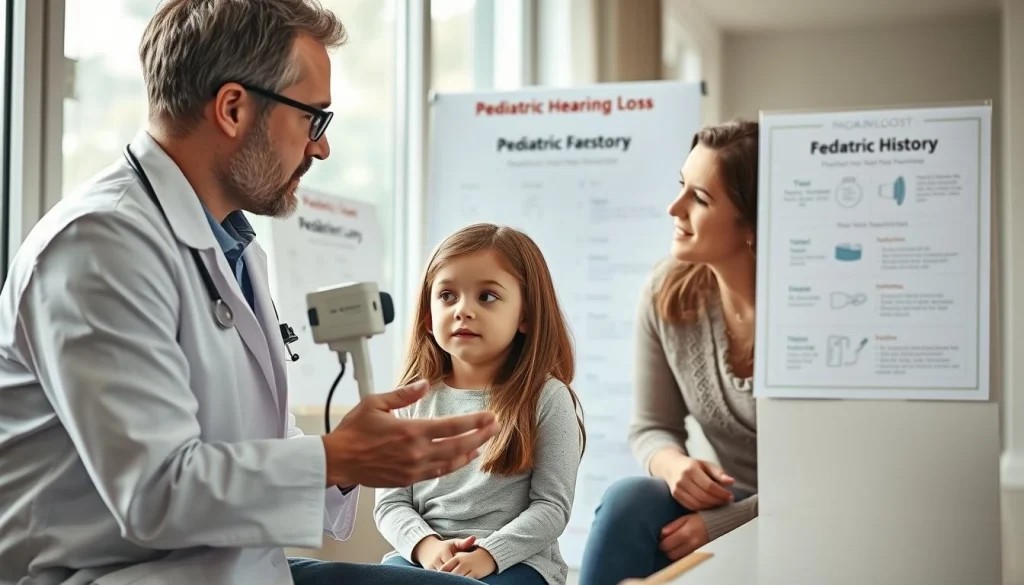
A family history of hearing loss is a significant risk factor for pediatric hearing loss. Children with a family history of hearing impairment are more likely to experience hearing loss themselves. Genetic factors play a substantial role in the development of hearing loss. Identifying these genetic predispositions can help in early detection and management.
Environmental Factors
Environmental factors also play a critical role in pediatric hearing loss. Exposure to loud noises, certain infections, and ototoxic medications are among the environmental factors that can contribute to hearing loss in children. Understanding and mitigating these risks can help prevent hearing loss.
Protecting children’s ears from loud noises, such as those from fireworks or music concerts, can reduce the risk of noise-induced hearing loss. Proper management of infections and careful use of medications can also mitigate the risk of hearing loss.
Signs of Hearing Loss in Infants (0-12 months)
Infants with hearing loss may show specific signs that parents and caregivers need to watch for. Spotting these signs early can lead to timely interventions. This can greatly impact an infant’s developmental progress. It’s essential to monitor infant behavior and developmental milestones to identify hearing issues.
Behavioral Indicators
Infants usually react to sounds by turning their head towards them or startling at loud noises. Behavioral signs of possible hearing loss include not responding to these sounds. For example, an infant not reacting to a loud noise or not turning towards a parent’s voice may indicate hearing loss.
- Not responding to loud noises
- Not turning towards the sound of a parent’s voice
- Lack of babbling or making sounds by 6 months
Developmental Red Flags
Certain developmental milestones can signal possible hearing issues. For instance, by 6 months, most infants start babbling and making various sounds. Infants not babbling or making sounds by this age may be at risk for hearing loss. Also, not responding to their name or not imitating sounds are red flags.
- Not babbling by 6 months
- Not responding to their name
- Not imitating sounds
Parents and caregivers should consult a pediatrician or audiologist if they notice these signs. Early detection and intervention can greatly improve outcomes for infants with hearing loss.
Signs of Hearing Loss in Toddlers (1-3 years)
Parents are key in spotting hearing loss in toddlers. They should watch for signs like not responding to their name or ignoring loud sounds. It’s also vital to observe their speech and language skills, as well as how they react to different noises.
Speech and Language Delays
Toddlers with hearing loss often struggle with speech and language. Look out for these signs:
- Not babbling or making sounds by 12 months
- Not saying any words by 16 months
- Not combining two words together by 24 months
- Having a limited vocabulary compared to peers
These delays suggest a possible hearing issue. It can hinder their ability to learn and communicate effectively.
Behavioral Changes
Besides speech delays, hearing loss can lead to behavioral changes. These might include:
- Turning up the volume on electronic devices
- Responding inappropriately to questions or commands
- Having difficulty following directions
- Appearing to be easily distracted or inattentive
Such behaviors could signal hearing loss. If you notice them, it’s time to consult a healthcare professional.
If you suspect your toddler has hearing loss, getting professional help is essential. Early intervention can greatly benefit their language and communication skills.
Signs of Hearing Loss in School-Age Children
Identifying hearing loss in school-age children is critical for timely support. It affects their learning and interaction with the world. Parents and educators must recognize the signs to help these children.
Academic Challenges
Children with hearing loss face unique academic hurdles. They struggle to follow instructions and understand speech in noise. These issues can hinder their reading and writing abilities, leading to frustration and poor grades.
- Difficulty understanding speech in class
- Struggling to follow instructions
- Poor reading and writing skills compared to peers
Social and Emotional Signs
Hearing loss impacts a child’s social and emotional growth. They may withdraw from social interactions due to communication difficulties. Behavioral problems and low self-esteem can also arise from these challenges.
- Withdrawal from social interactions
- Exhibiting behavioral problems
- Signs of low self-esteem or frustration
Recognizing these signs early and providing the right support can greatly benefit a child’s academic and social life. Collaboration among parents, educators, and healthcare professionals is key in supporting children with hearing loss.
Diagnostic Procedures for Hearing Loss in Children
Understanding the extent of hearing loss in children requires thorough diagnostic procedures. Accurate diagnosis is key for creating an effective treatment plan. It also supports the child’s developmental needs.
Newborn Hearing Screening
Newborn hearing screening is a critical first step in identifying hearing loss. This non-invasive test is typically performed before the baby leaves the hospital. It aids in early detection and intervention.
- Performed within the first few days of birth
- Helps in identifying hearing loss early
- Crucial for timely intervention
Behavioral Audiometry
Behavioral audiometry involves assessing a child’s response to sound. This test is used for children who are old enough to respond to auditory stimuli. It provides valuable information on the child’s hearing thresholds.
- Used for children who can respond to sound
- Assesses hearing thresholds
- Helps in understanding the child’s auditory capabilities
Physiologic Tests
Physiologic tests measure the physiological responses to sound, providing objective information about a child’s hearing. These tests are essential for infants and young children.
Auditory Brainstem Response (ABR)
The ABR test measures the brain’s response to sound. It is a valuable tool for assessing the auditory pathway from the ear to the brainstem.
- Measures brainstem response to sound
- Assesses auditory pathway integrity
Otoacoustic Emissions (OAE)
OAE testing measures the sounds produced by the inner ear in response to sound stimulation. It is a quick and non-invasive test used to assess cochlear function.
- Measures cochlear response
- Non-invasive and quick
These diagnostic procedures are essential for accurately diagnosing hearing loss in children. By combining the results of these tests, healthcare professionals can develop a detailed understanding of a child’s hearing status. This understanding is vital for creating an appropriate treatment plan.
Treatment Options for Pediatric Hearing Loss
Managing pediatric hearing loss involves a range of strategies, from medical treatments to cutting-edge hearing technologies. The right treatment depends on the type, severity, and cause of the hearing loss. It also considers the child’s health and developmental needs.
Medical Interventions
Medical treatments are key for certain types of pediatric hearing loss. For example, conductive hearing loss due to middle ear issues might need surgery or antibiotics for infections. Regular check-ups with an ENT specialist help find the best treatment.
- Surgical interventions to correct anatomical issues
- Antibiotic treatment for infections
- Insertion of tympanostomy tubes to ventilate the middle ear
Hearing Aids
Hearing aids are a common solution for sensorineural hearing loss in kids. They amplify sound to help children hear and understand speech better. Today’s hearing aids come with advanced features like digital noise reduction and feedback suppression.
Choosing hearing aids for children involves several factors:
- Proper fitting and adjustment by an audiologist
- Regular maintenance and checks of the devices
- Ongoing audiological monitoring to adjust settings as the child grows
Cochlear Implants
Cochlear implants are for kids with severe to profound sensorineural hearing loss who don’t get much help from regular hearing aids. These implants send sound directly to the auditory nerve, bypassing damaged parts of the ear.
Bone-Anchored Hearing Systems
Bone-anchored hearing systems are good for kids with conductive hearing loss or single-sided deafness. They use the skull to send sound vibrations to the inner ear, skipping the outer or middle ear.
The advantages of bone-anchored hearing systems include:
- Improved sound localization
- Enhanced hearing in noisy environments
- A surgical option that preserves the outer ear
Early Intervention Strategies
Children with hearing loss greatly benefit from early intervention strategies tailored to their needs. Early intervention is key in supporting their development, ensuring they gain essential communication skills. It also creates a nurturing environment that promotes their overall growth.
Speech-Language Therapy
Speech-language therapy is a vital part of early intervention for children with hearing loss. It’s designed to meet the child’s specific needs, focusing on speech and language skills. Speech-language pathologists work with the child and their family to create a customized plan. This plan addresses communication challenges and promotes language development.
The therapy’s goals include improving articulation, expanding vocabulary, and developing communication strategies. By tackling these areas, children with hearing loss can better fit into their educational and social environments. This leads to greater academic and social success.
Family-Centered Approaches
Family-centered approaches are essential for the success of early intervention strategies. Involving the family in the intervention process ensures the child’s needs are met within their family environment. This approach empowers families with the knowledge and support needed to facilitate their child’s development.
Family-centered practices include parent-child interaction therapy. Parents learn strategies to enhance their child’s communication skills through play and daily routines. By engaging families, early intervention programs create a supportive and inclusive environment. This environment promotes the child’s overall development.
Educational Considerations for Children with Hearing Loss
The educational path for children with hearing loss can be greatly improved with the right strategies. Ensuring these children get the education they deserve requires a detailed approach. This approach must meet their specific needs.
Individualized Education Plans (IEPs)
An Individualized Education Plan (IEP) is essential for supporting children with hearing loss in school. It’s created by parents, educators, and healthcare professionals working together. The IEP sets out specific goals, accommodations, and services tailored to the child’s needs. This personalized plan ensures children with hearing loss get the support they need to excel academically and socially.
Classroom Accommodations
Classroom accommodations are key to improving learning for children with hearing loss. These can include seating the child close to the teacher, using visual aids, and reducing background noise. By making these adjustments, teachers can create a more inclusive learning space.
Assistive Technology
Assistive technology is vital for supporting children with hearing loss. It includes a wide range of devices and systems aimed at improving communication and access to information.
FM Systems
FM systems are a type of assistive technology that greatly enhances a child’s ability to hear in noisy settings. They transmit the teacher’s voice directly to the child’s hearing aid or cochlear implant. This improves speech understanding and reduces the effort needed to listen.
Sound Field Systems
Sound field systems are also beneficial for children with hearing loss. These systems involve placing speakers around the classroom to amplify the teacher’s voice. This ensures all students can hear clearly, which is helpful in reducing background noise and reverberation.
By adopting these educational strategies, we can create a more supportive and inclusive environment for children with hearing loss. This enables them to achieve their full educational and personal growth.
Communication Methods and Language Development
Children with hearing loss need special communication methods to improve their language skills. The choice of method is key to their language growth.
Several communication methods support children with hearing loss, each with its own benefits. These methods are vital for their language and cognitive development.
American Sign Language (ASL)
American Sign Language uses hand shapes, facial expressions, and body language to convey meaning. It’s a valuable tool for children with hearing loss, enabling them to communicate effectively.
- Enhances visual-manual communication skills
- Supports linguistic development through a natural sign language
- Fosters a sense of community among ASL users
Total Communication
Total Communication combines methods like sign language, spoken language, and visual aids. It aims to maximize the child’s language exposure.
- Utilizes multiple modalities to enhance understanding
- Adapts to the individual needs of the child
- Promotes flexibility in communication
Auditory-Verbal Therapy
Auditory-Verbal Therapy aims to develop listening and spoken language skills in children with hearing loss. It involves intensive therapy to enhance their residual hearing use.
This therapy is led by professionals like audiologists or speech-language pathologists. It’s customized to meet the child’s unique needs.
By understanding and using these communication methods, parents and caregivers can greatly impact children’s language development.
Preventing Hearing Loss in Children
Preventing hearing loss in children requires awareness, education, and practical steps. Understanding the causes and risk factors helps parents and caregivers protect children’s hearing health. This proactive approach is key to safeguarding their auditory well-being.
Noise Protection Strategies
Noise-induced hearing loss is a growing concern for children. The rise in loud music and recreational activities increases this risk. Adopting noise protection strategies is essential to mitigate this risk.
- Use ear protection devices such as earplugs or earmuffs in loud environments.
- Monitor the volume levels when children are using headphones or listening to music.
- Encourage children to take regular breaks from loud activities to give their ears a rest.
Infection Prevention and Management
Infections are a common cause of hearing loss in children. Effective prevention and management of infections can reduce the risk of hearing impairment.
- Ensure children receive all recommended vaccinations, including those that protect against infections known to cause hearing loss.
- Practice good hygiene to prevent the spread of infections.
- Seek prompt medical attention if a child develops symptoms of an ear infection or other conditions that could affect hearing.
By implementing these strategies, parents and caregivers can significantly reduce the risk of hearing loss in children. This proactive approach is vital for safeguarding their auditory health.
Empowering Your Child: Building a Bright Future
Empowering children with hearing loss is essential for their growth and success. Parents and caregivers play a key role in supporting their unique needs. This support helps them build a bright future by promoting independence and fostering a positive self-image. It also ensures they have the resources to thrive.
Children with hearing loss need customized approaches to develop their communication skills. Strategies like speech-language therapy and auditory-verbal therapy are vital. These methods significantly improve their ability to interact with their surroundings. Empowering these children means giving them the tools and confidence to overcome obstacles and achieve their goals.
A supportive environment is critical for children with hearing loss. This includes family, schools, and the community. By working together, we can create an inclusive space. This allows children with hearing loss to flourish and reach their full capabilities.
Empowering children with hearing loss is about giving them the chance to succeed and live fulfilling lives. By focusing on their strengths and abilities, we can help them build a bright future. They can then make a positive impact in their communities.
FAQ
Q: What are the signs of hearing loss in children?
A: Signs of hearing loss in children can differ based on their age. Infants might not react to sounds or their name. Toddlers could face speech and language delays. School-age kids might struggle academically or show social and emotional signs.
Q: How is hearing loss diagnosed in children?
A: Diagnosing hearing loss in children involves several steps. Newborn hearing screening is the first step. Then, behavioral audiometry and physiologic tests like Auditory Brainstem Response (ABR) and Otoacoustic Emissions (OAE) are used.
Q: What are the treatment options for pediatric hearing loss?
A: Treatment for pediatric hearing loss includes various options. Medical interventions, hearing aids, cochlear implants, and bone-anchored hearing systems are available. The best choice depends on the type and severity of the hearing loss.
Q: How can families support children with hearing loss?
A: Families can help children with hearing loss in several ways. Early intervention strategies like speech-language therapy and family-centered approaches are key. They should also work with educators to create Individualized Education Plans (IEPs) and use assistive technology.
Q: Can hearing loss in children be prevented?
A: Some causes of hearing loss in children are unavoidable. Yet, steps can be taken to lower the risk. Protecting their hearing from loud noises and managing infections promptly are important.
Q: What communication methods are available for children with hearing loss?
A: Children with hearing loss can use various communication methods. American Sign Language (ASL), total communication, and auditory-verbal therapy are options. The best method depends on the child’s needs and preferences.
Q: How can educators support children with hearing loss in the classroom?
A: Educators play a vital role in supporting children with hearing loss. They can provide classroom accommodations like seating arrangements and visual aids. Using assistive technology, such as FM systems and sound field systems, is also helpful.
Q: What is the importance of early detection and intervention for hearing loss in children?
A: Early detection and intervention are critical for children with hearing loss. They significantly impact language development, academic success, and social-emotional well-being.