Penis Curvature: What Is Penis Curvature?
Penis curvature is a condition where the penis bends abnormally. This can lead to discomfort, pain, and sexual intercourse challenges. It may stem from injury, infection, or genetic factors. It’s vital to grasp the causes and treatment options for managing this condition. Treatment can range from medication and physical therapy to surgical intervention. By delving into these strategies, individuals can make informed choices about their care. Exploring penis curvature involves understanding normal penile anatomy and deviations from it. This condition, also known as penile curvature or Peyronie’s disease, occurs when the penis is not straight when erect.
Definition and Normal Anatomical Variations
Penis shape and size variations are common in normal anatomy. Yet, a notable curvature can signal a concern. Curvature can be congenital, present at birth, or acquired later due to various factors.
- Congenital curvature stems from uneven penile tissue development.
- Acquired curvature may result from injury, Peyronie’s disease, or other conditions.
The extent of curvature varies widely among individuals, from mild to severe.
Prevalence Statistics in the United States
In the United States, penis curvature impacts a considerable number of men. Research indicates that about 1-3% of men experience penile curvature. This percentage can fluctuate based on the study population and diagnostic criteria.
- Peyronie’s disease, a common cause of acquired curvature, affects about 1 in 100 men.
- The prevalence increases with age, significantly among men in their 50s and 60s.
When Curvature Becomes a Medical Concern
While some curvature is normal, significant curvature causing discomfort, pain, or sexual function issues is a medical concern. Men experiencing such symptoms should seek medical evaluation.
- Significant curvature can lead to erectile dysfunction.
- Pain during erection is a common symptom that necessitates medical attention.
- Difficulty with sexual intercourse due to curvature or pain is a significant concern.
Common Causes of Penis Curvature
Penis curvature can stem from various underlying causes, impacting men’s health and overall well-being. It’s vital to grasp these causes to find the right treatment options.
Congenital Factors
Congenital factors significantly influence penis curvature. These are present at birth and shape the penis’s structure and appearance.
Genetic Predisposition
Genetic predisposition is a major factor in congenital penis curvature. Men with a family history are more prone to it.
Developmental Anomalies
Developmental anomalies during fetal development can cause congenital curvature. These anomalies disrupt the normal growth and formation of penile tissues.
Peyronie’s Disease
Peyronie’s disease is a common acquired cause of penis curvature. It involves the formation of fibrous scar tissue inside the penis.
The plaque formation in Peyronie’s disease involves collagen and other fibrous materials. This leads to penile curvature.
Injury and Trauma
Injury and trauma to the penis can cause curvature. Damage to the tunica albuginea, the layer surrounding the corpora cavernosa, can result in scarring and curvature.
Types and Classifications of Penis Curvature
The classification of penis curvature is based on its origin, direction, and severity. This approach helps us understand the condition’s variability. It also guides treatment decisions.
Congenital Curvature Characteristics
Congenital penis curvature is present at birth and becomes noticeable during puberty. It is usually a single plane curvature, most commonly dorsal (upward) or ventral (downward). The curvature is often stable and non-progressive.
Acquired Curvature Patterns
Acquired penis curvature develops later in life, often due to injury, disease, or other factors. Peyronie’s disease is a common cause, leading to curvature that can be complex. It involves multiple planes and is often associated with pain and erectile dysfunction.
Directional Variations and Their Implications
The direction of penis curvature significantly impacts its symptoms and treatment. Different directional variations have distinct implications for sexual function and overall well-being.
Upward Curvature
Upward curvature, also known as dorsal curvature, can cause difficulties with sexual intercourse. It may lead to discomfort or pain. The severity can vary, influencing the choice of treatment.
Downward Curvature
Downward or ventral curvature can also affect sexual function. It may be associated with conditions like hypospadias. The degree of curvature determines the need for and type of intervention.
Lateral Curvature
Lateral curvature, which involves bending to the side, can result from both congenital and acquired conditions. It may lead to issues with penetration. Various treatment modalities can address it.
Understanding these classifications is essential for both diagnosis and treatment planning. The type and severity of the curvature guide healthcare providers in selecting the most appropriate interventions.
The Diagnosis Process for Penis Curvature
Accurate diagnosis of penis curvature is essential for effective treatment. It involves a mix of clinical assessment and diagnostic imaging. The goal is to assess the degree and nature of the curvature and its impact on quality of life.
Initial Consultation and Physical Examination
The journey starts with an initial consultation. A healthcare professional will take a detailed medical history and perform a physical examination. This step is vital to understand the patient’s condition and identify any underlying causes of the curvature.
- Medical history to identify any previous conditions or injuries
- Physical examination to assess the degree and direction of the curvature
- Evaluation of symptoms such as pain or discomfort
Advanced Diagnostic Techniques
Advanced diagnostic techniques are used to further assess the condition. These methods provide detailed information about the curvature and any associated conditions.
Ultrasound Imaging
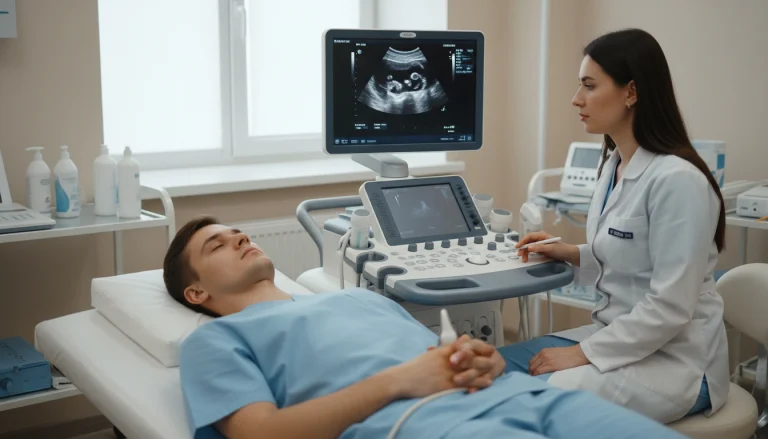
Ultrasound imaging is a valuable tool in diagnosing penis curvature. It allows for the visualization of the penile structure and the identification of any fibrotic plaques associated with Peyronie’s disease.
MRI Assessment
MRI assessment offers a detailed view of the penile anatomy. It helps identify the extent of the curvature and any associated fibrotic changes. This information is critical in planning the appropriate treatment.
Severity Assessment Scales
Healthcare professionals use severity assessment scales to quantify the severity of penis curvature. These tools help evaluate the impact of the condition on sexual function and overall well-being.
- Assessment of pain during erection
- Measurement of the degree of curvature
- Evaluation of the impact on sexual function
By combining these diagnostic approaches, healthcare providers can develop a thorough understanding of the individual’s condition. This understanding guides the selection of the most appropriate treatment strategy.
Non-Surgical Treatment Approaches
Non-surgical treatments offer a less invasive way to manage penis curvature. These methods aim to lessen the curvature and improve sexual function. They do so without the need for surgery.
Oral Medication Options
Oral medications are often the first choice for treating penis curvature. They help manage symptoms and may reduce the curvature itself.
PDE5 Inhibitors
PDE5 inhibitors, known for treating erectile dysfunction, can also help with penis curvature. They improve erectile function, which can aid in managing curvature.
Anti-inflammatory Drugs
Anti-inflammatory drugs are used to reduce pain and inflammation. This is beneficial for conditions like Peyronie’s disease, which can cause curvature.
Vitamin E and Supplements
Vitamin E and other supplements are recommended for their antioxidant properties. They may help in reducing penis curvature.
Injectable Therapies
Injectable therapies are a popular non-surgical option for treating penis curvature. They involve injecting medications directly into the penile tissue.
Collagenase Clostridium Histolyticum
Collagenase Clostridium histolyticum breaks down collagen, a key component in plaque. This enzyme is injected directly into the plaque to treat curvature.
Verapamil and Interferon
Verapamil and interferon are injectable treatments for penis curvature. They work by reducing plaque size and curvature.
Traction Devices and Physical Therapy
Traction devices and physical therapy are non-invasive methods for reducing penis curvature. They can help straighten the penis over time.
Traction devices apply gentle, consistent stretching to the penis. Physical therapy may include exercises and other non-invasive techniques.
Surgical Interventions for Penis Curvature
For men with significant penis curvature, surgical options can provide a viable solution. These interventions aim to restore normal penile function and appearance. They are considered when the curvature is severe, causes significant distress, or interferes with sexual function. The choice of surgical procedure depends on several factors, including the severity of the curvature and the patient’s overall health.
Plication Procedures
Plication procedures involve folding or tucking the tunica albuginea on the longer side of the penis to correct the curvature. This technique is less invasive compared to other surgical methods. It can be effective for men with stable, non-progressive curvature.
Nesbit Procedure
The Nesbit procedure is a well-established plication technique. It involves removing ellipses of tunica albuginea from the convex side of the curvature. This method has been widely used with satisfactory outcomes, though it may result in some shortening of the penis.
Modified Techniques
Modified plication techniques have evolved to minimize the risks associated with the traditional Nesbit procedure. These modifications aim to reduce the extent of penile shortening while maintaining the effectiveness of the curvature correction.
Grafting Techniques
Grafting techniques are employed when the curvature is more complex or when plication alone is insufficient. This involves removing the scarred area and replacing it with a graft, which can be either autologous tissue or synthetic material.
Autologous Tissue Grafts
Autologous tissue grafts are taken from the patient, typically from the saphenous vein or dermis. These grafts have the advantage of being biocompatible and potentially offer better integration with the surrounding tissue.
Synthetic Materials
Synthetic graft materials have been developed to provide an alternative to autologous grafts. These materials can reduce the morbidity associated with graft harvesting and offer consistent quality and availability.
Penile Prosthesis Implantation
Penile prosthesis implantation is considered for men with both erectile dysfunction and significant penis curvature. This approach addresses both issues simultaneously, providing a solution for men who are not candidates for or have failed other treatments.
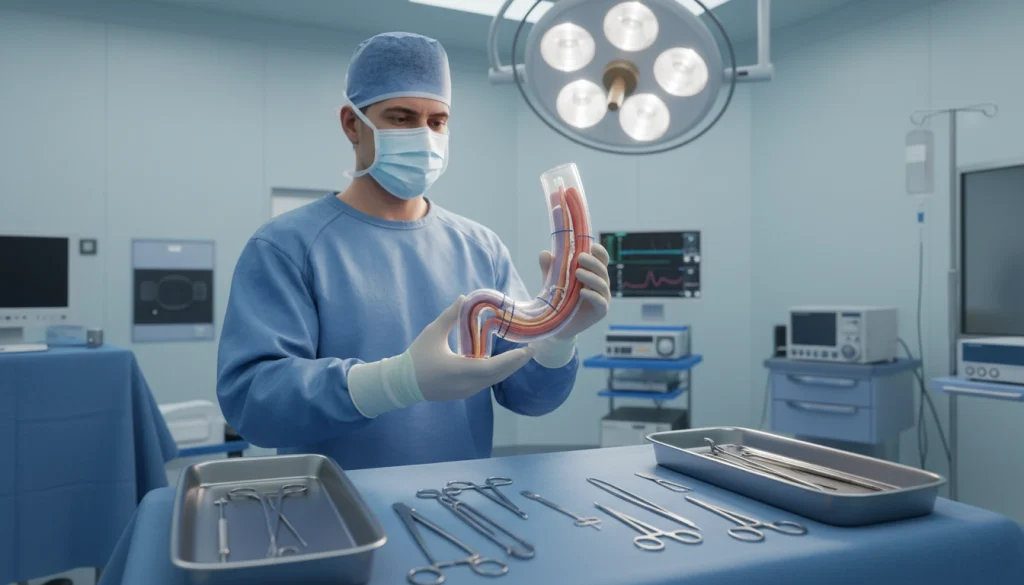
Surgical interventions for penis curvature offer a range of options tailored to individual patient needs. The choice of procedure depends on various factors, including the severity of the curvature, the presence of erectile dysfunction, and patient preference.
Emerging Treatments and Clinical Research
Advances in medical science are leading to new ways to manage penis curvature. Researchers are exploring various therapeutic options to tackle the complexities of this condition.
Stem Cell Therapy Developments
Stem cell therapy is gaining attention as a possible solution for penis curvature. Scientists are looking into how stem cells can repair damaged tissue and improve curvature.
- Early trials have shown promising results in tissue repair.
- Further research is needed to apply these findings in real-world treatments.
Shockwave Treatment Efficacy
Shockwave therapy, used for musculoskeletal issues, is being tested for penis curvature treatment. It aims to enhance tissue healing and lessen curvature.
- Studies are underway to confirm its safety and effectiveness.
- Initial results suggest it could help reduce curvature and alleviate symptoms.
Promising Clinical Trials
Several clinical trials are investigating new treatments for penis curvature. These include the study of novel drugs and minimally invasive methods.
- Trials are looking into the effectiveness of new oral medications.
- Research focuses on less invasive surgical techniques.
- Studies are enrolling patients to evaluate combination therapies.
These emerging treatments and ongoing research offer a glimmer of hope for managing penis curvature more effectively. They represent a significant step forward for those affected.
Living with Penis Curvature
Adapting to life with penis curvature requires a blend of medical treatment, lifestyle changes, and open dialogue with partners. This condition poses several challenges, yet there are effective strategies for managing its effects on daily life and sexual health.
Sexual Function Adaptations
For those with penis curvature, sexual function is a major concern. Fortunately, several adaptations can help. Trying different sexual positions can reduce discomfort or pain. Using lubricants also decreases friction, making sex more comfortable.
- Experimenting with different sexual positions to minimize discomfort
- Using lubricants to reduce friction
- Communicating openly with partners about comfort and pain
Partner Communication Strategies
Effective communication with sexual partners is key for those with penis curvature. Being open about the condition and its effects fosters a supportive relationship. Involving partners in treatment decisions is also beneficial.
- Discussing the condition and its implications openly
- Involving partners in treatment decisions when possible
- Seeking counseling together to address any relationship strain
Daily Management Techniques
Managing penis curvature daily involves medical treatments and lifestyle adjustments. This includes using traction devices as directed, maintaining a healthy lifestyle, and monitoring symptoms. These steps help manage the condition and improve overall penile health.
- Using traction devices as directed by a healthcare provider
- Maintaining a healthy lifestyle, including a balanced diet and regular exercise
- Regularly monitoring the condition and reporting any changes to a healthcare provider
By employing these strategies, individuals with penis curvature can effectively manage their condition. This approach helps mitigate its impact on their quality of life.
Psychological Impact and Support
The psychological impact of penis curvature is a critical aspect that needs to be addressed with care and understanding. Men with this condition often experience a range of emotional challenges. These challenges can significantly affect their quality of life.
Body Image and Self-Esteem Challenges
Penis curvature can significantly affect a man’s body image and self-esteem. The visible curvature can lead to feelings of embarrassment or shame. This impacts how men perceive themselves and their masculinity.
Some common issues include:
- Low self-esteem due to the appearance of the penis
- Anxiety about sexual performance and partner satisfaction
- Fear of being judged or ridiculed
Anxiety, Depression, and Sexual Confidence
The condition can also lead to anxiety and depression. Men struggle to cope with the emotional and psychological aspects of their condition. Sexual confidence is often compromised, further exacerbating feelings of inadequacy.
For more information on related conditions and their treatments, you can visit Acibadem International for insights into various urological conditions.

Therapeutic Support Options
Fortunately, there are therapeutic support options available to help men cope with the psychological impact of penis curvature.
Individual Counseling
Individual counseling can provide a safe space for men to discuss their feelings and concerns. It helps them develop coping strategies and improve their self-esteem.
Couples Therapy
Couples therapy is also beneficial. It allows partners to communicate openly about the condition and its effects. This fosters a supportive and understanding relationship.
By seeking professional help, men with penis curvature can better manage the psychological aspects of their condition. They can improve their overall well-being.
Prevention and Risk Reduction
Preventing penis curvature requires a mix of safe practices, early intervention, and a healthy lifestyle. Understanding the causes of penis curvature helps individuals take steps to lower their risk.
Injury Prevention During Sexual Activity
It’s vital to prevent injuries during sex. Safe sex practices and body awareness can greatly reduce the chance of penile injuries leading to curvature.
- Communicate with your partner about comfort levels.
- Avoid vigorous or forceful sexual activity.
- Use lubrication to reduce friction.
Early Intervention Strategies
Early action can stop penis curvature from getting worse. Spotting signs early and getting medical help quickly is key.
Monitoring for curvature or pain signs and getting a medical check if symptoms last is wise.
Lifestyle Modifications
Changing your lifestyle can boost penile health and lower curvature risk.
Exercise Considerations
Regular exercise improves health, including blood flow, which aids penile health.
Dietary Factors
Eating a balanced diet with key nutrients supports blood vessel health. This may lower the risk of conditions causing penis curvature.
When to Pursue Treatment for Penis Curvature
Choosing the right time for treatment of penis curvature depends on several factors. These include the degree of curvature and any symptoms present. The condition can greatly affect a man’s life, impacting both physical comfort and sexual function.
Functional Impairment Assessment
Assessing the impact of penis curvature on sexual function is key. If the curvature hinders sexual intercourse, treatment might be necessary. Pain during erection or intercourse also signals the need for medical help.
Healthcare providers evaluate the condition’s effects on daily life and sexual activity. They use various tools to measure the severity and its impact on well-being.
Pain Management Considerations
Pain from penis curvature is a major factor in treatment decisions. It can occur during erections, sexual activity, or even at rest. Effective pain management is critical for maintaining quality of life. Treatment options range from conservative strategies to more invasive methods.
Cosmetic Concerns vs. Medical Necessity
It’s important to differentiate between cosmetic and medical reasons for treatment. Some men seek treatment for appearance, while others face medical issues like significant curvature, pain, or functional impairment. Understanding the reasons helps healthcare providers offer tailored advice.
In summary, the decision to treat penis curvature should be based on a thorough assessment. Factors like functional impairment, pain, and the difference between cosmetic and medical reasons are key. This approach ensures men make informed decisions about their care.
Finding Specialized Medical Care
The journey to address penis curvature starts with finding specialized medical care. Urologists and men’s health experts are key. They handle not just symptoms but also the underlying causes and related health issues.
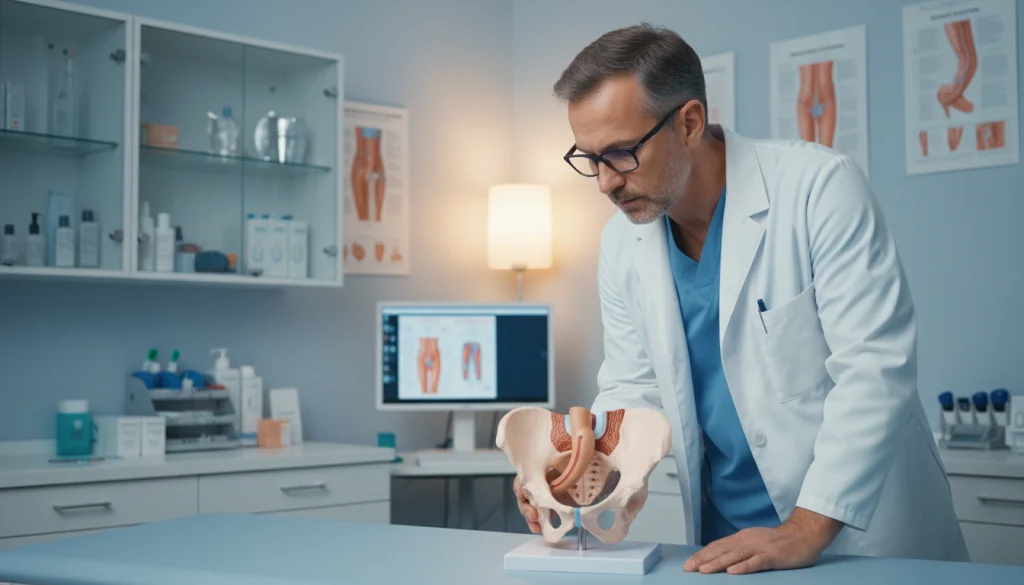
Urologists and Men’s Health Specialists
Urologists focus on the urinary tract and male reproductive system. They evaluate penis curvature and suggest treatments. Their expertise is vital for a proper diagnosis and treatment plan.
Men’s health specialists work alongside urologists. They offer insights into managing related health issues. This ensures a complete care approach.
Sexual Medicine Experts
Sexual medicine experts focus on sexual health issues, including penis curvature. They guide on the latest treatments, both non-surgical and surgical. Their specialized training is invaluable.
Essential Questions for Your Healthcare Provider
When discussing penis curvature with a healthcare provider, being prepared is key. Ask questions to ensure you get the best care. Some important questions include:
- What is the underlying cause of my penis curvature?
- What treatment options are available, and which are most suitable for my condition?
- Are there any non-surgical treatments that could be effective?
- What are the risks and benefits of the recommended treatments?
Seeking specialized medical care and being informed empowers men with penis curvature. It helps them make better decisions about their treatment, improving their quality of life.
Reclaiming Sexual Health and Confidence
Understanding Penis Curvature is key to reclaiming sexual health and confidence. This condition can stem from congenital issues, Peyronie’s disease, or injury. Knowing the causes and treatment options is vital for making informed care decisions.
Managing Penis Curvature involves various strategies. Non-surgical methods include oral medications and traction devices. For severe cases, surgery is necessary. New treatments like stem cell and shockwave therapy also show promise.
Seeking care from urologists or sexual medicine experts is essential. They can tailor treatment plans to individual needs. Proactive management of Penis Curvature boosts sexual function and overall well-being.
Reclaiming sexual health is a journey that demands patience, understanding, and support. With the right medical guidance, individuals can see significant improvements. This leads to a more fulfilling sexual life and better quality of life.
FAQ
Q: What is penis curvature?
A: Penis curvature, also known as Peyronie’s disease, is a condition where the penis bends or curves. This often causes discomfort or pain during erections.
Q: What are the common causes of penis curvature?
A: Common causes include congenital factors, Peyronie’s disease, and injury or trauma to the penis.
Q: How is penis curvature diagnosed?
A: Diagnosis starts with an initial consultation and physical examination. Advanced diagnostic techniques like ultrasound and MRI are used. Severity is assessed using specific scales.
Q: What are the treatment options for penis curvature?
A: Treatment options include non-surgical methods like oral medications, injectable therapies, and traction devices. Surgical interventions include plication procedures, grafting techniques, and penile prosthesis implantation.
Q: Can penis curvature be prevented?
A: Prevention is not complete, but injury prevention during sexual activity, early intervention, and lifestyle modifications can reduce risk.
Q: How does penis curvature affect sexual function?
A: It can cause discomfort, pain, or difficulty during sexual intercourse. Adaptations and treatments help maintain sexual function.
Q: What is the psychological impact of penis curvature?
A: It can lead to body image issues, anxiety, depression, and decreased sexual confidence. Therapeutic support options are available to manage these effects.
Q: When should I seek treatment for penis curvature?
A: Seek treatment if you experience functional impairment, persistent pain, or significant cosmetic concerns that affect your quality of life.
Q: How can I find specialized medical care for penis curvature?
A: Consult urologists, men’s health specialists, or sexual medicine experts. Prepare for your consultation by asking essential questions about your condition and treatment options.
Q: Are there emerging treatments for penis curvature?
A: Yes, emerging treatments include stem cell therapy, shockwave treatment, and other promising clinical trials that offer future solutions.