PPD Test: How the PPD Test Works
The Tuberculosis Skin Test, commonly referred to as the PPD Test, is a vital diagnostic tool for detecting tuberculosis infection. It involves injecting a small amount of tuberculin into the skin. The reaction is then measured after a few days. The PPD Test’s significance lies in its ability to identify those infected with tuberculosis. This allows for early treatment and prevents further transmission. In this article, we will dive into the PPD Test in detail. We will discuss its procedure, interpretation, and its importance in public health.
The PPD Test Explained
The PPD test has been a cornerstone in the diagnosis of tuberculosis for decades. It is a medical test used to assess if a person has been infected with Mycobacterium tuberculosis, the bacteria that causes tuberculosis (TB). The test involves injecting a small amount of purified protein derivative (PPD) into the skin, and the reaction is measured after a few days.
Definition and Medical Purpose
The PPD test, also known as the Mantoux test, is a diagnostic tool used to detect latent tuberculosis infection. It is not a test for active TB disease but an indicator of exposure to TB. The medical purpose of the PPD test is to identify individuals who have been infected with M. tuberculosis. This allows for early intervention and treatment to prevent the development of active TB.
- Detects latent TB infection
- Helps in the diagnosis of TB in individuals with symptoms
- Used for screening high-risk populations
Historical Development and Evolution
The PPD test has a rich history dating back to the early 20th century. It was developed by Charles Mantoux, who introduced the concept of using tuberculin (later purified into PPD) to test for TB infection. Over the years, the test has undergone significant improvements. These include the standardization of the PPD antigen and the development of more precise guidelines for interpreting test results.
- Early 20th century: Development of the tuberculin test by Charles Mantoux
- Mid-20th century: Standardization of PPD antigen
- Late 20th century: Guidelines for interpretation of test results were established
The Science Behind Tuberculosis Detection
To understand how tuberculosis is detected, we must explore the basics of Mycobacterium tuberculosis and the body’s immune response. Tuberculosis (TB) is a bacterial infection caused by Mycobacterium tuberculosis. It mainly affects the lungs but can also impact other parts of the body.
Mycobacterium Tuberculosis Basics
Mycobacterium tuberculosis is a slow-growing bacterium with a unique cell wall, rich in lipids. This makes it acid-fast, a characteristic used in diagnostic techniques like acid-fast bacilli (AFB) smear microscopy.
The bacterium spreads through the air when an infected person coughs, sneezes, or talks. Droplets containing M. tuberculosis are released, which can be inhaled and settle in the lungs, starting an infection.
Immune System Response to TB
The immune response to M. tuberculosis is complex, involving both innate and adaptive immunity. When infected, macrophages and other innate immune cells try to engulf and kill the bacteria.
In many cases, the immune system manages to keep the infection in check, leading to latent TB. This means the individual is not symptomatic but can reactivate the disease if their immunity weakens.
The adaptive immune response is key, with T cells playing a vital role in controlling TB infection. The production of interferon-gamma (IFN-γ) by T cells is essential for activating macrophages to destroy the bacteria.
How the PPD Test Works
Understanding the PPD test’s mechanism is key to diagnosing tuberculosis infection. This test, used for over a century, detects latent tuberculosis infection effectively.
Purified Protein Derivative Composition
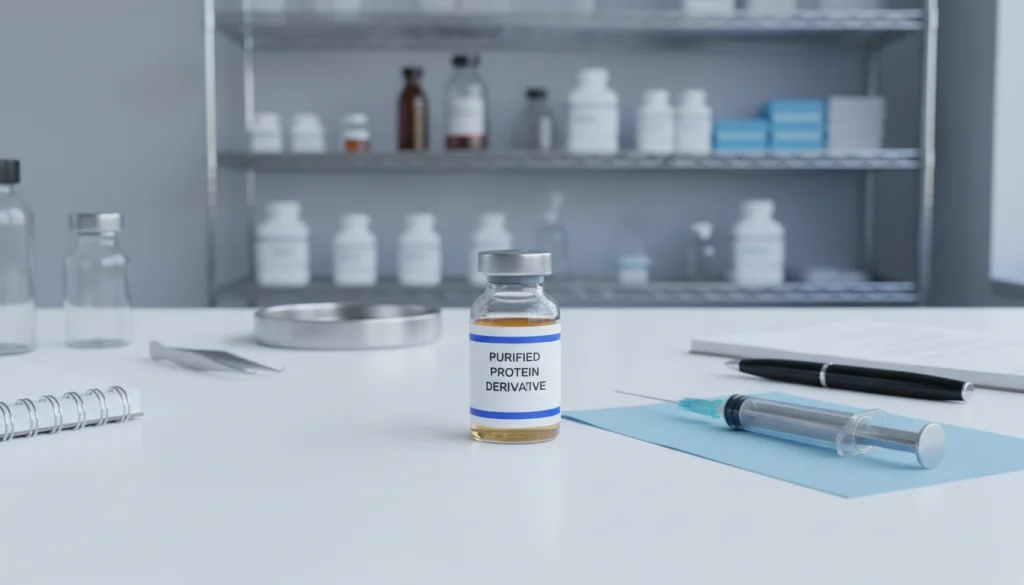
The PPD test utilizes Purified Protein Derivative (PPD), extracted from Mycobacterium tuberculosis. It’s a complex mix of proteins, polysaccharides, and other components from M. tuberculosis culture filtrate.
PPD’s composition is vital for its purpose. It contains various antigens that trigger an immune response in those exposed to M. tuberculosis.
Delayed-Type Hypersensitivity Reaction
The PPD test induces a Delayed-Type Hypersensitivity (DTH) reaction, a cell-mediated immune response. Injecting PPD into the skin triggers T-cells sensitized to M. tuberculosis antigens.
This recognition sparks an immune response. It leads to lymphocytes and macrophages gathering at the injection site. This causes induration, or skin swelling and hardening.
The induration’s size is measured 48-72 hours post-injection. It determines the test’s outcome.
Who Should Receive a PPD Test
Identifying who needs a PPD test is key to stopping TB spread and starting treatment early. It’s not for everyone, but for those at higher risk of getting TB or having it turn active.
High-Risk Populations and Demographics
Some groups face a higher risk of TB infection. These include:
- Individuals who have recently immigrated from countries with high TB prevalence
- People who have been in close contact with someone known to have active TB
- Those with compromised immune systems, such as HIV/AIDS patients or individuals on immunosuppressive therapy
- Healthcare workers and others who frequently come into contact with TB patients
- Residents and employees of high-risk congregate settings, such as prisons, nursing homes, and homeless shelters
These groups are more likely to have been exposed to TB or to develop active TB disease. This is due to various factors, including their living conditions, occupation, or health status.
Occupational Requirements
Certain jobs require regular PPD testing due to the increased risk of TB exposure. Healthcare workers, including doctors, nurses, and laboratory personnel, are among those who may need to undergo regular testing as part of their occupational health requirements.
Other occupations that may require PPD testing include:
- Workers in correctional facilities
- Employees in homeless shelters and other congregate living settings
- Laboratory personnel handling TB specimens
Travel-Related Testing
Travelers to areas with high TB prevalence may also be candidates for PPD testing. This is true for individuals who plan to stay in these areas for extended periods or engage in activities that increase their risk of exposure.
For example, healthcare workers traveling to high-risk areas to provide medical care may need to undergo PPD testing before and after their trip.
Preparing for Your PPD Test
Before you take a PPD test, it’s vital to know what to do to get accurate results and a hassle-free test. Understanding the necessary steps is key.
Pre-Test Instructions and Considerations
To get ready for your PPD test, follow these steps:
- Avoid applying lotions or creams on the forearm where the test will be administered.
- Wear clothing that allows easy access to your forearm.
- Inform your healthcare provider about any medications you’re currently taking.
- Discuss any concerns or previous test results with your healthcare provider.
It’s also important to know that some things can impact your test results. This includes recent vaccinations or existing medical conditions.
Important Information for Your Healthcare Provider
To ensure the PPD test is done right, share this information with your healthcare provider:
- Any history of tuberculosis exposure or previous positive PPD test results.
- Details about your current health status, including any recent illnesses or infections.
- A list of your current medications, including immunosuppressive drugs.
- Any known allergies or sensitivities to substances used in the PPD test.
By sharing this, you help your healthcare provider make better decisions for your care.
The PPD Test Procedure Step by Step
The PPD test procedure involves several steps that must be followed carefully to ensure reliable outcomes. This diagnostic test is critical for detecting tuberculosis infection. Its accuracy depends on proper administration and post-injection care.
Administration Process
A healthcare professional administers the PPD test. The process starts with preparing the purified protein derivative (PPD) solution. This solution is then injected intradermally into the forearm.
- The skin area is cleaned with an antiseptic solution before injection.
- A sterile needle and syringe are used to inject the PPD solution.
- The injection is given intradermally, creating a small wheal or bump on the skin.
Mantoux Technique Details
The Mantoux technique is the standard method for administering the PPD test. It involves injecting 0.1 mL of PPD solution into the forearm’s skin.
- The needle is inserted just beneath the skin’s surface, with the bevel facing upwards.
- The PPD solution is injected slowly to form a distinct wheal.
- The needle is then withdrawn, and the site is marked for later measurement.
Post-Injection Care Instructions
Proper care of the injection site is essential after the PPD test. Patients are advised to:
- Avoid scratching or rubbing the injection site.
- Keep the area clean and dry.
- Not cover the site with bandages or creams unless instructed by a healthcare provider.
Following these steps helps in obtaining a reliable result from the PPD test. The test is read 48 to 72 hours after administration. The size of the induration is measured to determine the outcome.
Reading and Interpreting PPD Test Results
Understanding the results of a PPD test is key to knowing if you’ve been exposed to tuberculosis. The process involves several steps to ensure accuracy. It’s important to grasp these steps fully.
Timing of Result Reading
PPD test results are usually read between 48 and 72 hours post-injection. It’s vital to return to your healthcare provider within this window for accurate results.
The Delayed-Type Hypersensitivity (DTH) reaction, which the PPD test measures, reaches its peak in 48 to 72 hours. Reading the results too early or late can cause inaccuracies.
Measurement Guidelines and Techniques
The reaction to the PPD test is gauged by the induration, a firm, raised area around the injection site. This is measured in millimeters with a ruler or calipers.
To measure accurately, the healthcare provider will palpate the area to find the induration’s edges. Then, they measure the diameter across the forearm’s long axis.
Classification of Results by Induration Size
The induration size is critical in interpreting PPD test results. The classification depends on the individual’s risk factors and clinical status.
- For individuals with HIV infection or recent contacts of a person with active TB, an induration of 5 mm or more is positive.
- For other high-risk groups, like those with certain medical conditions or immigrants from high TB prevalence countries, an induration of 10 mm or more is positive.
- For those with no risk factors, an induration of 15 mm or more is positive.
Understanding these guidelines is essential for accurately interpreting PPD test results and managing them properly.
Positive PPD Test Results: What Happens Next
A positive PPD test result means the person has been exposed to Mycobacterium tuberculosis. This could be a latent tuberculosis infection (LTBI) or active tuberculosis disease. Further evaluation is needed to understand the infection’s extent and presence.
What a Positive Result Indicates
A positive PPD test shows the immune system has reacted to Mycobacterium tuberculosis proteins. This reaction usually happens with a latent infection, not active disease. Yet, it’s vital to tell the difference between latent TB and active TB through more tests.
The positive PPD test alone isn’t enough to diagnose. It needs confirmation from chest X-rays, sputum tests, or molecular diagnostics. These tests help figure out if the person has active tuberculosis.
Follow-Up Testing Protocol
After a positive PPD test, several follow-up tests are done to check the person’s health. The first step is usually a chest X-ray to look for lung issues that might show active TB. If symptoms are there or the X-ray shows problems, more tests like sputum smear microscopy or culture might be needed.
Tests like interferon-gamma release assays (IGRAs) might also be used. This is true for people who have had a BCG vaccination. It helps confirm if they have a latent TB infection.
Consultation with Infectious Disease Specialists
Meeting with infectious disease specialists is key after a positive PPD test. They guide on what tests to do next, treatment for latent TB, and managing active TB if found.
These specialists work with the patient and their doctor to create a plan. It’s tailored to the person’s specific situation and needs.
Understanding Negative and Borderline Results
It’s vital to grasp the meaning behind negative or borderline PPD test results. The PPD test is a key tool for detecting Mycobacterium tuberculosis infection. The outcome of this test greatly affects treatment plans and preventive actions.
Interpreting Negative Results
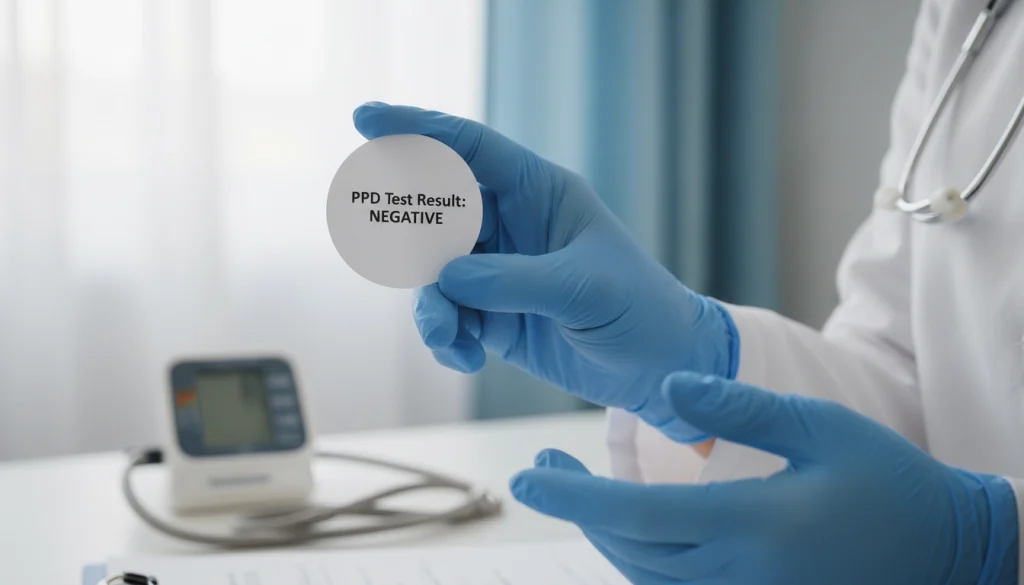
A negative PPD test suggests the immune system didn’t react to the tuberculin, indicating no TB infection. Yet, it’s important to look at the person’s risk factors and past exposures. Those with weakened immune systems, like HIV/AIDS patients, might get false-negative results.
It’s also important to consider the “window period” when reading negative results. This period is the time from TB exposure to when the immune system can be detected by the PPD test. Testing too soon can lead to false negatives.
Borderline Results and Two-Step Testing
Borderline results, with induration between 5-14 mm, are not always clear. In these cases, a two-step testing approach might be suggested. This involves a second PPD test, 1-3 weeks after the first, to enhance the immune response and confirm latent TB infection.
The two-step method is beneficial for those at high TB risk, like healthcare workers. It helps identify latent TB cases and ensures they get preventive treatment. This reduces the chance of active TB disease.
Potential Reactions and Side Effects
Understanding the possible reactions and side effects of the PPD test is vital for those undergoing it. The test is generally safe but carries risks. Knowing what to expect can ease concerns and prompt timely medical action if needed.
Common Local Reactions
Local reactions at the PPD test injection site are common and usually mild. These can include redness, swelling, or itching. Most of these reactions resolve on their own within a few days, without the need for specific treatment.
Some may experience a more intense local reaction, which can be uncomfortable but is generally not serious. Applying a cold compress or taking an antihistamine can help ease symptoms. It’s important to avoid scratching the area to prevent infection.
Rare Systemic Reactions
Systemic reactions to the PPD test are rare but can be severe. These reactions affect parts of the body away from the injection site and may include fever, fatigue, or a generalized rash. It’s important for patients to be aware of these possibilities.
In rare cases, a severe systemic reaction known as anaphylaxis can occur. This is a medical emergency characterized by difficulty breathing, rapid heartbeat, and a drop in blood pressure. Immediate medical attention is required in such cases.
When to Seek Immediate Medical Attention
While most reactions to the PPD test are not serious, there are situations that require immediate medical attention. If you experience increasing redness or swelling at the injection site, difficulty breathing, or symptoms like dizziness or fainting, seek help right away.
It’s also important to monitor for signs of infection, such as pus or increasing pain at the injection site. If you have a fever or feel unwell, contacting your healthcare provider for advice is prudent. Being vigilant about your body’s response and knowing when to seek help is key to managing any side effects of the PPD test.
Limitations and Accuracy Concerns
The PPD test is valuable for detecting tuberculosis infection but has several limitations. These can lead to misinterpretations, affecting patient care. It’s essential for healthcare providers to understand these concerns to make informed decisions.
False Positive Results: Causes and Implications
Several factors can cause false positive PPD test results. These include previous BCG vaccination, exposure to non-tuberculosis mycobacteria, and incorrect test administration or reading. A false positive can cause unnecessary anxiety, additional testing, and inappropriate treatment.
The consequences of false positives are substantial. They can lead to unnecessary treatment and side effects, as well as a waste of healthcare resources. Healthcare providers must consider the patient’s medical history and risk factors when interpreting PPD test results.
False Negative Results: Risk Factors and Considerations
False negative results are another major concern with the PPD test. Factors that increase the risk include immunosuppression, recent live virus vaccinations, and severe tuberculosis disease. Improper test storage or administration can also cause false negatives.
It’s vital to understand the risk factors for false negatives for accurate diagnosis. Healthcare providers must consider the patient’s overall health status and risk factors when interpreting a negative PPD test result. In some cases, additional testing or follow-up may be necessary to confirm the diagnosis.
Alternative TB Testing Methods
In recent years, several alternative TB testing methods have been developed. These aim to improve diagnostic accuracy and efficiency, addressing some of the limitations of the traditional PPD test.
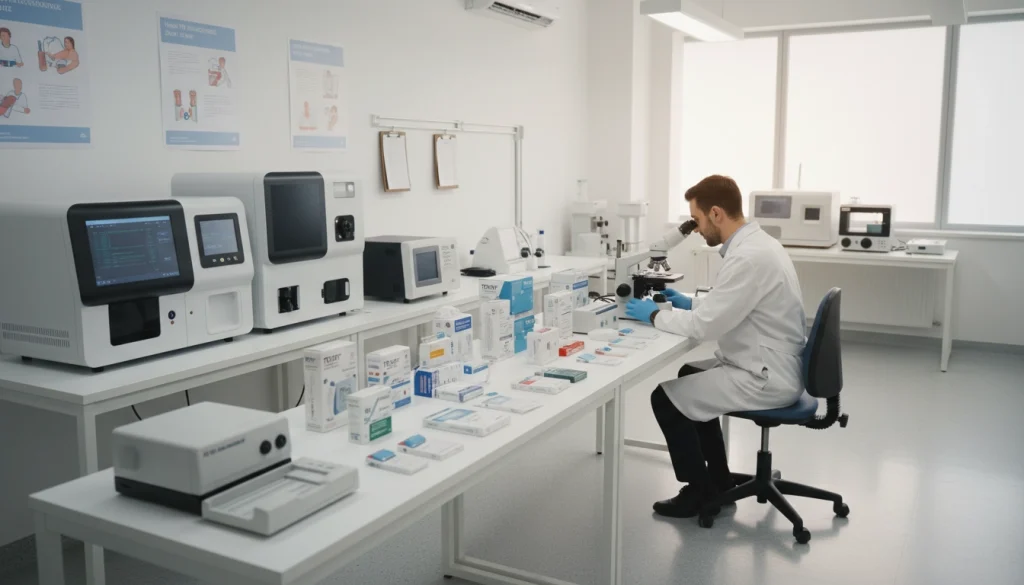
Interferon-Gamma Release Assays (IGRAs)
Interferon-Gamma Release Assays (IGRAs) are blood tests that measure the immune response to TB proteins. Unlike the PPD test, IGRAs are not affected by BCG vaccination, reducing the likelihood of false-positive results. They are useful for individuals who have received BCG vaccination or have been exposed to non-TB mycobacteria.
IGRAs involve drawing a blood sample, which is then exposed to TB-specific antigens. The test measures the release of interferon-gamma, a cytokine produced by T cells in response to the antigens. A positive result indicates that the individual has been infected with TB.
Chest X-rays and Radiological Assessment
Chest X-rays play a critical role in diagnosing and managing TB, identifying active pulmonary disease. Radiological assessment can detect characteristic patterns of TB infection, such as upper lobe infiltrates or cavitation.
While not a diagnostic test per se, chest X-rays are often used with other diagnostic methods. They assess the extent of disease and monitor treatment response. In some cases, additional imaging modalities like CT scans may be employed to further evaluate the extent of disease or detect complications.
Molecular Testing Approaches
Molecular testing approaches, including nucleic acid amplification tests (NAATs), have revolutionized TB diagnosis. These tests directly detect TB DNA or RNA in clinical specimens, providing high sensitivity and specificity.
NAATs can be performed on various sample types, including sputum, tissue, or other bodily fluids. They are useful for diagnosing TB in challenging cases, such as in patients with HIV co-infection or those with extrapulmonary TB.
Moving Forward After Your PPD Test
Receiving your PPD test results is a critical step in determining your tuberculosis status. If your result is positive, your healthcare provider will likely recommend further testing. This could include a chest X-ray to confirm the presence of active TB disease.
Understanding the implications of your results is key. A positive PPD test indicates you’ve been infected with Mycobacterium tuberculosis. Yet, it doesn’t mean you have active TB disease. Your healthcare provider will discuss the next steps. This may include consultation with infectious disease specialists and possible treatment options.
For individuals with negative results, it’s important to remember that a negative result doesn’t guarantee you’re not infected. False-negative results can happen, often in people with weakened immune systems. If you’re in a high-risk group or have been exposed to TB, your healthcare provider may recommend further testing or monitoring.
Understanding the outcome of your PPD test is vital for your health and the health of those around you. Your healthcare provider is the best resource for guidance on what to do next.
FAQ
Q: What is a PPD test?
A: The PPD test, also known as the Mantoux tuberculin skin test, is a diagnostic tool. It assesses if a person has been infected with Mycobacterium tuberculosis. This bacteria causes tuberculosis (TB).
Q: How is the PPD test administered?
A: The PPD test is administered by injecting a small amount of purified protein derivative (PPD) under the skin. This is done on the forearm using the Mantoux technique.
Q: What should I expect after the PPD test is administered?
A: After the test, you should return to your healthcare provider within 48 to 72 hours. The test result is determined by measuring the size of the induration at the injection site.
Q: What does a positive PPD test result mean?
A: A positive PPD test result indicates infection with Mycobacterium tuberculosis. It does not mean you have active TB disease. It could indicate latent TB infection.
Q: Can the PPD test produce false positive results?
A: Yes, the PPD test can produce false positive results. This can be due to previous BCG vaccination, infection with non-tuberculous mycobacteria, or incorrect interpretation of the test result.
Q: Can the PPD test produce false negative results?
A: Yes, the PPD test can produce false negative results. This is common in individuals with weakened immune systems. This includes those with HIV/AIDS or those taking immunosuppressive medications.
Q: Are there alternative tests to the PPD test?
A: Yes, there are alternative tests to the PPD test. Interferon-Gamma Release Assays (IGRAs) are blood tests. They measure the release of interferon-gamma in response to TB antigens.
Q: What are the common side effects of the PPD test?
A: Common side effects include local reactions like redness, swelling, and itching at the injection site. Rarely, more severe reactions can occur.
Q: Who should not receive a PPD test?
A: Individuals who have had a severe reaction to a previous PPD test should not receive it. Those with certain skin conditions may also be advised against it. It’s essential to discuss your medical history with your healthcare provider.