Psoriasis: The Immune System’s Role in Psoriasis
Psoriasis is a chronic condition that affects the skin, causing discomfort and impacting the quality of life for millions worldwide. It is characterized by an abnormal immune response, leading to excessive skin cell growth. Effective management of this skin condition involves understanding its causes, symptoms, and treatment options. By exploring the various aspects of Psoriasis, individuals can better navigate their condition and improve their overall well-being.
Management strategies range from topical treatments to systemic medications, and lifestyle adjustments. Understanding the condition and its management is key for those affected.
Understanding Psoriasis
To fully comprehend psoriasis, we must first define it and understand its underlying mechanisms. This chronic autoimmune condition is marked by an overproduction of skin cells. This leads to the formation of scales, dry patches, and other symptoms.
Definition and Pathophysiology
Psoriasis is a complex condition where the immune system and skin cells interact in an abnormal way. The exact cause is unknown, but it involves an immune system malfunction. This malfunction causes inflammation and rapid skin cell production, resulting in the characteristic plaques.
The pathophysiology of psoriasis is influenced by genetics, environmental factors, and immune system dysregulation. Grasping these factors is key to creating effective treatments.
Prevalence and Demographics
Psoriasis impacts about 2-3% of the global population, with varying prevalence worldwide. In the United States, it’s estimated that around 7.5 million people live with psoriasis.
It can affect anyone, but typically starts between 15 and 35 years old. Both men and women are equally at risk, though its impact on quality of life can differ across demographics.
The Immune System’s Role in Psoriasis
The immune system plays a complex and critical role in psoriasis. This condition is marked by an abnormal immune response. It leads to inflammation and the rapid growth of skin cells.
Autoimmune Mechanisms
Psoriasis is classified as an autoimmune disease. In this condition, the immune system mistakenly attacks healthy skin cells. T cells, a specific type of immune cell, are at the heart of this autoimmune response. They become activated and target the skin, causing inflammation and excessive skin cell production.
The activation of T cells triggers the release of various cytokines. These signaling molecules promote inflammation. In psoriasis, cytokines like TNF-alpha, IL-17, and IL-23 are key players in the disease process.
Inflammatory Processes
Inflammation is a defining feature of psoriasis, contributing to the formation of psoriatic plaques. The inflammatory process involves the recruitment of immune cells to the skin. This leads to the release of pro-inflammatory cytokines and the activation of various immune pathways.
Understanding the inflammatory processes in psoriasis is essential for developing effective treatments. Targeting specific cytokines and immune cells is a key strategy. Biologic therapies have shown significant benefits for many patients, making them a cornerstone in managing the condition.
Types of Psoriasis
Psoriasis is a complex condition with various forms, each with unique characteristics. Understanding these types is key for effective diagnosis and treatment.
Plaque Psoriasis
Plaque psoriasis is the most prevalent form, making up 80-90% of cases. It is marked by raised, red patches with a silvery white buildup of dead skin cells.
Characteristics and Presentation
The plaques in plaque psoriasis can be itchy and painful. They may crack and bleed, significantly impacting a person’s quality of life.
Common Locations
Plaque psoriasis typically appears on the elbows, knees, scalp, and lower back. It can, though, occur on any part of the body.
Guttate Psoriasis
Guttate psoriasis often appears in childhood or young adulthood. It is characterized by small, dot-like lesions on the skin, often following a streptococcal infection.
Inverse Psoriasis
Inverse psoriasis, also known as flexural psoriasis, occurs in the folds of the skin. It presents as smooth, red lesions without the typical scaling, found in areas like the armpits, groin, and under the breasts.
Pustular Psoriasis
Pustular psoriasis is a rare and severe form of psoriasis. It is characterized by pus-filled blisters. It can be localized to specific areas or widespread across the body.
Erythrodermic Psoriasis
Erythrodermic psoriasis is a rare but serious form of psoriasis. It involves widespread redness and scaling across the body. It can be life-threatening and requires immediate medical attention.
Each type of psoriasis has its unique characteristics and challenges. Accurate diagnosis and tailored treatment plans are essential for managing the condition effectively.
Recognizing Psoriasis Symptoms
Identifying the symptoms of psoriasis is key to managing it well. Symptoms can differ greatly among individuals, highlighting the need to know the various signs.
Physical Manifestations
Physical signs of psoriasis are the most obvious. These include various changes in the skin and nails.
Skin Changes
Skin changes are a defining feature of psoriasis. People often see red, scaly patches, or plaques, which can itch and hurt. These plaques usually pop up on elbows, knees, scalp, and lower back.
Nail changes are another common sign of psoriasis. Symptoms range from mild nail pitting or discoloration to severe thickening or loss. These changes can be upsetting and harm a person’s self-image.
Psychological Impact
The mental toll of psoriasis is significant. Dealing with a chronic condition that alters appearance can cause anxiety and depression. The visible symptoms can make people feel self-conscious, impacting their life and relationships.
It’s important to grasp the mental impact to offer full care. Support from healthcare, support groups, and loved ones is essential in managing the emotional side of psoriasis.
Causes and Triggers of Psoriasis
The exact cause of psoriasis is not fully understood. Yet, research has pinpointed several key contributors. Grasping these factors is vital for managing the condition effectively.
Genetic Factors
Genetic predisposition significantly influences the development of psoriasis. Those with a family history of the condition are more likely to develop it. Specific genetic markers have been identified, increasing the risk of psoriasis.
- Certain genetic variations affect the immune system’s function.
- These variations can lead to an abnormal immune response, contributing to psoriasis.
- Studies have shown that individuals with psoriasis often have a family history of the condition.
Environmental Triggers
Environmental factors can trigger or worsen psoriasis. Common triggers include:
- Infections, such as streptococcal infections, which can trigger guttate psoriasis.
- Certain medications, including lithium, beta-blockers, and antimalarial drugs.
- Skin injuries, such as cuts or scrapes, which can trigger psoriasis at the site of the injury.
Stress and Lifestyle Influences
Stress and lifestyle factors can impact the severity and frequency of psoriasis flares. Managing stress through techniques like meditation or yoga can help alleviate symptoms.
Lifestyle changes, such as maintaining a healthy diet and avoiding smoking, can also impact psoriasis management. A balanced diet rich in omega-3 fatty acids and antioxidants can help reduce inflammation.
Diagnosing Psoriasis
Diagnosing psoriasis involves a detailed process that includes clinical examination and sometimes additional tests. A healthcare professional will examine the skin lesions’ appearance and distribution. This helps determine if psoriasis is present.
Clinical Examination
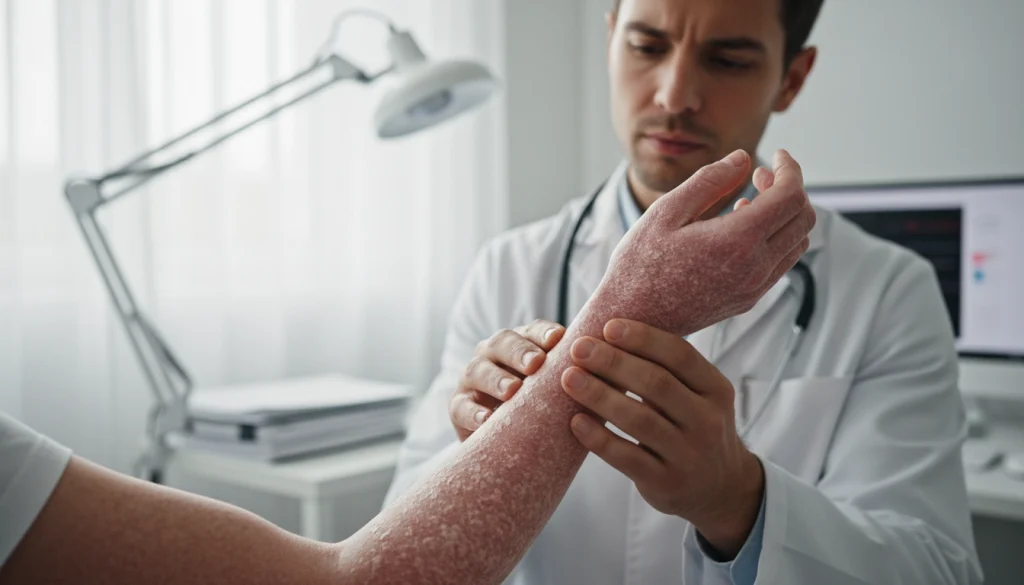
A clinical examination is the main method for diagnosing psoriasis. During this, a healthcare professional will look at the skin lesions. They search for signs like scaling, redness, and thickening. The way lesions spread across the body also gives clues.
Biopsy Procedures
In some cases, a biopsy is needed to confirm the diagnosis or rule out other conditions. A biopsy takes a small skin sample. It’s then examined under a microscope for signs of psoriasis, like thickened skin and more inflammatory cells.
Ruling Out Other Conditions
Differential diagnosis is key in diagnosing psoriasis. Several skin conditions can look similar to psoriasis. To rule out these conditions, a combination of clinical examination, biopsy, and other tests is used.
Topical Treatments for Psoriasis
Topical treatments are essential for managing mild to moderate psoriasis. They are applied directly to the skin to alleviate symptoms like scaling, inflammation, and thickening of skin plaques.
Corticosteroid Preparations
Corticosteroids are widely used for their anti-inflammatory properties. They help reduce redness and swelling caused by psoriasis. With various potencies available, they can be customized based on the condition’s severity and the affected area.
Vitamin D Derivatives
Vitamin D derivatives, like calcipotriene, slow down skin cell growth. They are often paired with corticosteroids to boost effectiveness and minimize side effects.
Retinoids and Coal Tar Products
Retinoids, derived from vitamin A, help normalize skin cell growth. Coal tar products, used for decades, reduce scaling and inflammation. Despite their effectiveness, they can have a strong odor and stain clothing.
Moisturizers and Barrier Repair
Moisturizers are vital in managing psoriasis by keeping the skin hydrated and maintaining its barrier function. They help reduce plaque appearance and improve skin comfort.
Understanding the various topical treatments available helps individuals with psoriasis collaborate with healthcare providers. Together, they can create a personalized treatment plan that meets specific needs.
Systemic Medications for Severe Psoriasis
Systemic medications have marked a significant leap in treating severe psoriasis, providing relief when topical treatments fall short. These treatments work throughout the body, reducing inflammation and slowing down the rapid skin cell growth seen in psoriasis.
Traditional Oral Medications
For years, traditional oral medications have been a cornerstone in treating severe psoriasis. Despite their effectiveness, they come with side effects that necessitate close monitoring.
Methotrexate
Methotrexate is a widely prescribed oral medication that suppresses the immune system. This action reduces inflammation and slows skin cell growth. Regular blood tests are essential to track its impact.
Cyclosporine
Cyclosporine is an immunosuppressive drug used for severe psoriasis. It’s effective for short-term use but long-term use is discouraged due to risks of kidney damage and other side effects.
Oral Retinoids
Derived from vitamin A, oral retinoids normalize skin cell growth. Though effective, they can cause severe side effects, including birth defects. They are used with caution, mainly in women of childbearing age.
Biologic Therapies
Biologic therapies have transformed the treatment of severe psoriasis by targeting specific inflammatory molecules. They offer a more precise approach compared to traditional oral medications.
TNF Inhibitors
TNF inhibitors, such as etanercept and adalimumab, block tumor necrosis factor-alpha (TNF-alpha). This cytokine plays a significant role in psoriasis inflammation.
IL-17 Inhibitors
IL-17 inhibitors, including secukinumab and ixekizumab, target interleukin-17. This cytokine is involved in psoriasis inflammation, providing significant relief for many patients.
IL-23 Inhibitors
IL-23 inhibitors, like ustekinumab, block interleukin-23, a key player in psoriasis pathogenesis. They have shown efficacy in clinical trials and are generally well-tolerated.
Both traditional oral medications and biologic therapies are vital in managing severe psoriasis. The choice between them hinges on the patient’s condition, medical history, and the likelihood of side effects.
Phototherapy for Psoriasis
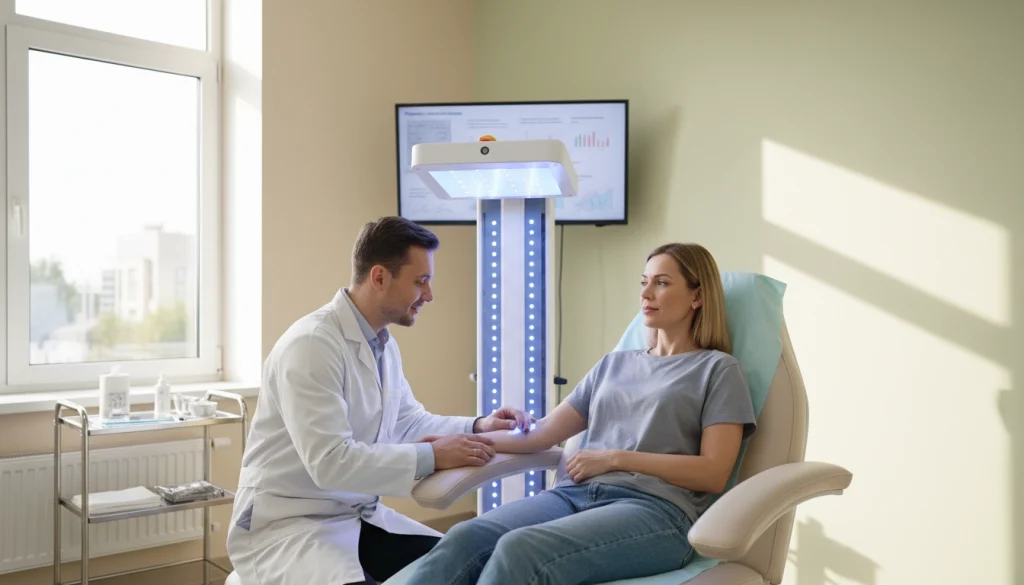
Phototherapy has proven to be a valuable treatment for moderate to severe psoriasis. It involves exposure to specific light wavelengths that help reduce psoriasis symptoms. Understanding the various phototherapy types helps patients make better treatment choices.
Narrowband UVB Treatment
Narrowband UVB treatment is a prevalent phototherapy option for psoriasis. It uses a specific UVB wavelength, which is safer than broader spectrum UVB. This treatment is given in a clinical setting, several times a week, and effectively clears psoriatic plaques.
Its benefits include a lower risk of skin cancer compared to broader spectrum UVB and its effectiveness on widespread psoriasis. Yet, it may need multiple sessions, and patients should watch out for side effects like redness and itching.
PUVA (Psoralen + UVA) Therapy
PUVA therapy combines psoralen, a light-sensitive medication, with UVA light. It’s used for severe psoriasis or when other treatments fail. This therapy effectively clears psoriatic lesions but requires careful monitoring due to side effects like skin cancer and cataracts.
PUVA therapy is administered in a controlled medical setting. The psoralen and UVA light dosage is carefully adjusted to maximize benefits while minimizing risks. Despite its effectiveness, PUVA therapy’s side effects mean it’s only suitable for selected patients under close monitoring.
Lifestyle Management Strategies
Managing psoriasis effectively requires a holistic approach. This includes adopting lifestyle changes that can alleviate symptoms and enhance overall health. By focusing on specific dietary habits, stress management, and regular exercise, individuals can potentially lessen the severity of their condition.
Anti-Inflammatory Diet Approaches
An anti-inflammatory diet, rich in fruits, vegetables, whole grains, and omega-3 fatty acids, can combat inflammation linked to psoriasis. Foods high in antioxidants, such as berries and leafy greens, are highly beneficial. It’s wise to limit or avoid pro-inflammatory foods like processed meats and refined sugars.
Integrating anti-inflammatory foods into your diet can be achieved by consuming fatty fish like salmon, nuts, and olive oil. These dietary changes not only support skin health but also contribute to overall wellness.
Stress Management Techniques
Stress is a known trigger for psoriasis flare-ups, making stress management a critical component of lifestyle management strategies. Techniques such as meditation, yoga, and deep breathing exercises can help mitigate stress. Regular practice of these techniques can lead to a reduction in psoriasis severity.
Engaging in hobbies and activities that bring joy can also help distract from stress and improve mental health. It’s essential for individuals with psoriasis to find healthy ways to cope with stress to manage their condition effectively.
Beneficial Exercise Routines
Regular exercise is beneficial for overall health and can help manage stress, a key factor in psoriasis management. Low-impact exercises like walking, swimming, or cycling are recommended as they are less likely to cause skin irritation. Exercise can also improve mental health and reduce the risk of comorbidities associated with psoriasis.
Choosing exercises that are comfortable and enjoyable is key to maintaining consistency. Consulting with a healthcare provider before starting any new exercise program is advisable, even more so for those with severe psoriasis or other health concerns.
Psoriasis and Associated Health Conditions
People with psoriasis face a higher risk of other health issues, highlighting the need for a holistic treatment strategy. This chronic autoimmune skin condition is connected to various comorbidities. These can greatly affect an individual’s health and quality of life.
Psoriatic Arthritis
Psoriatic arthritis (PsA) is a significant condition linked to psoriasis. It causes joint pain, stiffness, and swelling. If untreated, it can lead to permanent joint damage. The symptoms of PsA vary, making diagnosis and treatment complex.
- Joint pain and stiffness
- Swollen joints
- Reduced range of motion
Cardiovascular Disease Risk
Studies indicate that psoriasis patients are at a higher risk of cardiovascular disease. The chronic inflammation from psoriasis is thought to increase this risk. Smoking, obesity, and hypertension can worsen cardiovascular risk in these individuals.
- Manage inflammation through treatment
- Maintain a healthy lifestyle
- Monitor cardiovascular risk factors
Depression and Anxiety
The psychological effects of psoriasis are significant. Its visible symptoms can cause embarrassment, low self-esteem, and social isolation. These feelings can lead to depression and anxiety. Healthcare providers must address these mental health issues as part of a complete treatment plan.
Understanding the associated health conditions and adopting a multifaceted care approach can help individuals with psoriasis manage their symptoms. This can significantly improve their overall well-being.
Living with Psoriasis
Psoriasis is more than a skin condition; it’s a chronic disease that impacts daily life. Effective management requires a mix of medical treatment, lifestyle adjustments, and emotional support.
Preventing and Managing Flares
Preventing flares is key to managing psoriasis. This involves avoiding known triggers, sticking to a consistent treatment plan, and living a healthy lifestyle. Common triggers include stress, certain medications, and environmental factors.
- Identify and avoid personal triggers
- Adhere to prescribed treatments
- Maintain a balanced diet and regular exercise routine
Navigating Social Situations
Psoriasis can make social situations challenging. Openly discussing the condition can help reduce stigma and increase understanding. Support groups, whether online or in-person, offer a sense of community and connection.
Workplace Accommodations
Individuals with psoriasis may need workplace accommodations to manage their condition. This can include flexible work arrangements, ergonomic adjustments, or time off for medical appointments. Employers are often required to provide reasonable accommodations under relevant disability laws.
- Discuss needs with HR or management
- Explore available resources and support
- Document necessary accommodations
Emerging Treatments and Clinical Research
Psoriasis treatment is on the verge of a significant breakthrough with the advent of novel biologics and gene therapy. Ongoing clinical research is unveiling new, innovative methods to manage and potentially cure this chronic condition.
Novel Biologics in Development
Novel biologics are being developed to target specific aspects of the immune response that lead to psoriasis. These treatments promise better efficacy and safety compared to current options.
By focusing on the pathways involved in psoriasis, these biologics aim to offer more effective management for patients.
Gene Therapy Approaches
Gene therapy is a promising area in psoriasis treatment, aiming to tackle the genetic causes of the disease. By modifying or regulating genes linked to psoriasis, gene therapy could provide a more fundamental treatment approach.
Researchers are exploring various gene therapy techniques to address the genetic dysregulation that causes psoriasis.
The Future of Psoriasis Care
The future of psoriasis care is set for a major transformation, driven by ongoing research and new treatment options. As we learn more about psoriasis, new therapeutic targets are being discovered. This offers hope for better management and possibly a cure for this chronic condition.
Biologics and gene therapy are leading the way in these advancements. Biologic therapies target specific molecules in the inflammatory process, showing great promise in treating moderate to severe psoriasis. Gene therapy, on the other hand, aims to address the genetic factors behind the condition.
As research delves deeper into psoriasis, personalized treatment strategies are becoming more likely. This shift towards personalized medicine will allow for more targeted and effective treatments. It will significantly improve the lives of those living with psoriasis.
FAQ
Q: What is psoriasis?
A: Psoriasis is a chronic autoimmune condition affecting the skin. It results from an overproduction of skin cells, causing scales and dry patches. This leads to various symptoms.
Q: What are the different types of psoriasis?
A: Psoriasis comes in several forms. These include plaque, guttate, inverse, pustular, and erythrodermic psoriasis. Each type presents differently and can vary in severity.
Q: What causes psoriasis?
A: The exact cause of psoriasis is complex. It involves genetic predisposition, environmental factors, and lifestyle choices. The immune system’s dysfunction also plays a role.
Q: How is psoriasis diagnosed?
A: Diagnosing psoriasis involves a thorough clinical examination. Sometimes, a biopsy is needed to confirm the condition and rule out other skin issues.
Q: What are the treatment options for psoriasis?
A: Treatment for psoriasis varies based on severity and type. Options include topical treatments, systemic medications, phototherapy, and lifestyle adjustments. Each approach aims to manage symptoms effectively.
Q: What are the common symptoms of psoriasis?
A: Symptoms of psoriasis include red, scaly patches and nail changes. Itching is also common. These symptoms can vary in severity, impacting daily life significantly.
Q: Can psoriasis be cured?
A: There is no cure for psoriasis at present. Yet, treatments can manage symptoms, reduce flare-ups, and enhance quality of life.
Q: How can I manage psoriasis flares?
A: Managing psoriasis flares requires avoiding triggers and sticking to a treatment plan. Adopting an anti-inflammatory diet and stress management techniques are also beneficial.
Q: Is psoriasis associated with other health conditions?
A: Yes, psoriasis is linked to several health issues. These include psoriatic arthritis, cardiovascular disease, depression, and anxiety. Managing these conditions is essential for overall well-being.
Q: What lifestyle changes can help manage psoriasis?
A: Lifestyle adjustments can significantly help manage psoriasis. An anti-inflammatory diet, stress management, and regular exercise are key. These changes support overall health and symptom control.