Getting a diagnosis of retinal detachment can be scary. It makes you worry about your future vision. At Acibadem Health Group, we understand your fears and concerns. Our team is here to help you with compassion and the latest medical technology. Retinal detachment is a serious issue where the retina pulls away from the eye. It needs quick treatment to avoid losing your vision. Thanks to medical progress, we have effective treatments, like surgery. Our specialists at Acibadem Health Group use the newest methods to treat retinal detachment. This ensures you get the best care for your situation.
Understanding Retinal Detachment: A Sight-Threatening Condition
The retina is a layer at the back of the eye. It can detach, leading to a serious condition called retinal detachment. This can cause severe vision loss.
Rhegmatogenous Retinal Detachment
Rhegmatogenous retinal detachment is the most common type. It happens when a tear or hole in the retina lets fluid seep underneath. This causes the retina to detach.
Tractional Retinal Detachment
Tractional retinal detachment occurs when fibrovascular tissue on the retina contracts. This pulls the retina away from the underlying tissue. It’s often seen in diabetic retinopathy.
Exudative Retinal Detachment
Exudative retinal detachment is caused by fluid accumulation under the retina without tears or holes. It can be due to tumors, inflammatory disorders, or retinal vascular diseases.
| Type of Retinal Detachment | Causes | Characteristics |
|---|---|---|
| Rhegmatogenous | Retinal tear or hole | Fluid accumulation under the retina |
| Tractional | Fibrovascular tissue contraction | Associated with diabetic retinopathy |
| Exudative | Fluid accumulation without retinal break | Caused by tumors, inflammatory disorders, or vascular diseases |
Knowing the different types of retinal detachment is key for timely treatment. Quick medical care can greatly improve outcomes for those affected.
Causes and Risk Factors of Retinal Detachment
Retinal detachment risk comes from age, medical conditions, and eye surgeries. Knowing these can help spot who’s at risk and prevent it.
Age-Related Factors
With age, the eye’s vitreous gel changes. It shrinks and pulls away from the retina, called posterior vitreous detachment (PVD). This increases the risk of retinal detachment.
Medical Conditions
Some medical conditions raise the risk of retinal detachment. These include:
- Diabetes: Diabetic retinopathy can cause retinal detachment.
- Myopia (nearsightedness): High myopia stretches and thins the retina, making it more likely to detach.
Previous Eye Surgeries
People who’ve had cataract surgery or other eye surgeries face a higher risk. This risk is highest right after surgery.
| Risk Factor | Description | Risk Level |
|---|---|---|
| Age-related changes | Posterior vitreous detachment | Moderate |
| Diabetes | Diabetic retinopathy | High |
| Previous eye surgery | Cataract surgery or other surgeries | Moderate to High |
Understanding these causes and risk factors helps prevent retinal detachment. It also encourages seeking medical help if symptoms appear.
Recognizing the Warning Signs: Symptoms of Retinal Detachment
It’s important to spot the early signs of retinal detachment. This is because it can lead to serious vision problems if not treated quickly. The symptoms are often clear and can signal a serious issue. Flashes of light and an increase in floaters are common signs. Floaters are small spots that seem to float in your vision. They are more noticeable when you look at bright things, like the sky on a sunny day.
| Symptom | Description |
|---|---|
| Flashes of Light | Sudden, brief flashes of light in one or both eyes. |
| Floaters | Small, dark spots that appear to float in the field of vision. |
| Vision Loss | A curtain or shadow that moves across the field of vision. |
If you notice any of these symptoms, get medical help right away. Catching it early can make a big difference in treatment success.
The Connection Between Vitreous and Retinal Detachment
It’s important to know how vitreous detachment and retinal detachment are connected. The vitreous gel fills the eye’s center and sticks to the retina. As we get older, this gel shrinks and can detach from the retina. Most of the time, this detachment doesn’t cause harm. But, it can lead to a retinal tear if the gel pulls too hard. A tear can then cause the retina to detach completely from the eye’s tissue.
| Condition | Description | Potential Complication |
|---|---|---|
| Vitreous Detachment | The vitreous gel shrinks and pulls away from the retina. | Retinal Tear or Detachment |
| Retinal Tear | A break in the retina, often caused by vitreous detachment. | Retinal Detachment |
| Retinal Detachment | The retina separates from the underlying tissue. | Vision Loss |
Knowing about the link between vitreous and retinal detachment is key. It helps in catching these issues early. If you notice any odd vision changes, get help right away.
Macula Involvement in Retinal Detachment
Understanding the impact of macula involvement is key to managing retinal detachment well. The macula is vital for clear vision. When it detaches, recovery can be harder. Macula involvement makes treatment more complex and can lead to worse vision loss. Quick action is needed when the macula is affected. This can greatly affect the outcome.
| Macula Status | Visual Outcome | Urgency of Treatment |
|---|---|---|
| Macula Attached | Better visual prognosis | Less urgent, but prompt treatment needed |
| Macula Detached | Poorer visual prognosis | Highly urgent, immediate treatment necessary |
In conclusion, the macula’s status in retinal detachment greatly affects vision. Quick medical care and treatment are vital to prevent severe vision loss.
Diagnosis of Retinal Detachment at Acibadem Health Group
At Acibadem Health Group, diagnosing retinal detachment is a detailed process. They use the latest methods to get accurate results. This is key for choosing the right treatment.
Optical Coherence Tomography (OCT)
Optical Coherence Tomography (OCT) is a non-invasive test. It uses low-coherence interferometry to create detailed, three-dimensional images. These images help doctors see the retina’s layers and spot any detachment or issues.
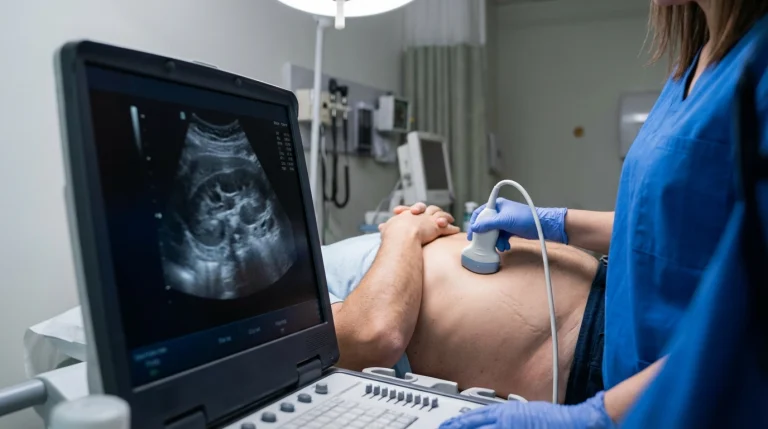
Ultrasound Imaging
Ultrasound imaging is used when it’s hard to see the retina. This could be due to cataracts or vitreous hemorrhage. It’s a valuable tool for diagnosing retinal detachment and planning treatment.
Wide-Field Retinal Imaging
Wide-field retinal imaging captures a large area of the retina at once. It gives a full view of the retina. This method is great for finding peripheral retinal lesions and detachments.
| Diagnostic Technique | Description | Advantages |
|---|---|---|
| Optical Coherence Tomography (OCT) | Non-invasive imaging using low-coherence interferometry | High-resolution images, detects retinal layers and detachment |
| Ultrasound Imaging | Used when media opacities obstruct retinal view | Assesses retinal detachment despite media opacities |
| Wide-Field Retinal Imaging | Captures a wide area of the retina in a single image | Comprehensive view, detects peripheral retinal lesions and detachments |
Acibadem Health Group uses these advanced techniques for accurate retinal detachment diagnosis. This ensures patients get the best treatment and care.
Treatment Options for Retinal Detachment
There are many ways to treat retinal detachment, each with its own benefits. The right treatment depends on the detachment’s size, location, and how long it’s been there. It also depends on the patient’s overall health.
Laser Photocoagulation
Laser photocoagulation is a non-invasive method. It uses laser burns around the tear to seal the retina. This stops fluid from leaking.
Cryopexy
Cryopexy, or cryotherapy, freezes the area around the tear. This causes inflammation that helps hold the retina in place.
Pneumatic Retinopexy
Pneumatic retinopexy is a minimally invasive surgery. It involves injecting a gas bubble to push the retina back. Then, laser or cryotherapy seals the tear.
Scleral Buckling
Scleral buckling is a surgical method. It places a flexible band around the eye to relieve traction on the retina. This method is used for complex detachments.
Vitrectomy
Vitrectomy removes the vitreous gel from the eye. It’s often used for detachments caused by vitreous traction. The space is then filled with gas or oil to hold the retina in place.
Each treatment has its own benefits and risks. The choice depends on the patient’s specific situation.
| Treatment Option | Indications | Benefits | Potential Risks |
|---|---|---|---|
| Laser Photocoagulation | Small retinal tears, early detachment | Non-invasive, quick recovery | Potential for new tears, limited to specific cases |
| Cryopexy | Retinal tears, specially in inferior locations | Effective for certain retinal tears | Inflammation, possible over-treatment |
| Pneumatic Retinopexy | Superior retinal detachments, small tears | Less invasive, faster recovery than vitrectomy | Risk of new breaks, gas-related complications |
| Scleral Buckling | Complex detachments, multiple tears | Effective for complex cases, long-term success | Surgical risks, discomfort from the buckle |
| Vitrectomy | Detachments with vitreous traction, failed other treatments | Effective for complex detachments, removes vitreous opacities | Cataract formation, infection, retinal detachment recurrence |
It’s important for patients to know about the different treatments for retinal detachment. Each treatment has its place, and the best one depends on the individual case.
Preventing Retinal Detachment: Protective Measures
Knowing the risks and taking steps early can help prevent retinal detachment. While some cases can’t be stopped, there are ways to lower the risk.
Getting regular eye exams is key for catching problems early. It’s also important to manage health issues like diabetes.
- Regular eye exams to monitor retinal health
- Managing underlying health conditions like diabetes
- Wearing protective eyewear during activities that could cause eye injury
- Maintaining a healthy lifestyle, including a balanced diet and not smoking
| Protective Measure | Benefit |
|---|---|
| Regular Eye Exams | Early detection of retinal issues |
| Managing Health Conditions | Reduces risk associated with diabetes and other conditions |
| Protective Eyewear | Prevents eye injuries |
By taking these steps, people can greatly lower their risk of retinal detachment. It’s all about being proactive and caring for your eye health.
Acibadem Health Group’s Approach to Retinal Detachment
Acibadem Health Group is known for its top-notch care in treating retinal detachment. They focus on expertise, modern facilities, and care that puts patients first. Their treatment for retinal detachment aims for the best results. They use advanced surgery and technology, like vitreoretinal surgery. This is done by skilled surgeons with lots of experience. They also care deeply about their patients. From the first visit to aftercare, patients are treated with kindness and respect. They are fully informed about their treatment and what to expect.
Some key parts of Acibadem Health Group’s approach include:
- Personalized treatment plans for each patient.
- Access to the latest medical technology and techniques.
- A team of healthcare professionals working together for complete care.
- Clear communication and education for patients and their families.
By combining medical skill with a focus on patients, Acibadem Health Group gives patients with retinal detachment the best chance for success and recovery.
Life After Retinal Detachment: Recovery, Vision Rehabilitation, and Support
Recovering from retinal detachment surgery takes time, patience, and support. At Acibadem Health Group, we guide patients through every step. This includes post-operative care and long-term vision rehabilitation. Patients might see changes in their vision, feel discomfort, or be sensitive to light. These symptoms usually go away with time and the right treatment. Vision rehabilitation helps patients adjust to vision changes, helping them live their lives fully again.
Our team at Acibadem Health Group offers personalized support. This includes counseling and rehabilitation programs made just for each patient. We focus on both physical and emotional recovery, helping patients heal and see better. With the right care, many people can see well again and do their daily activities. Acibadem Health Group is dedicated to patient care. We make sure those with retinal detachment get the support they need for a good recovery and vision rehabilitation.