Strawberry Leg: What Are Strawberry Legs?
Small, dark spots on the skin, known as “Strawberry Leg,” can worry many people. This condition shows as enlarged pores or ingrown hairs, mainly on the legs. It’s caused by bad shaving habits, tight clothes, and genetics. But, there are treatments and ways to prevent it. These can make your skin look better and stay healthy. The term “strawberry legs” describes a condition where the skin on the legs looks dotted due to visible pores or ingrown hairs. It’s not a disease but a cosmetic issue. It affects many, mainly those who shave or wax their legs often.
Definition and Appearance
Strawberry legs are marked by small, dark spots or dots on the skin, usually on the legs. These spots come from clogged pores or hair follicles that show under the skin. This gives the skin a speckled look, like a strawberry. The condition is more noticeable in people with dry skin or those who get ingrown hairs.
How They Differ from Other Skin Conditions
Strawberry legs are unique compared to other skin issues. Unlike keratosis pilaris, which causes rough, dry patches, strawberry legs are mainly about darkened pores or follicles. Knowing the differences is key for proper treatment and management.
Factors like shaving, waxing, and dry skin can make strawberry legs worse. So, it’s important to use the right skincare routines to reduce its look.
Understanding the Causes of Strawberry Legs
Grasping the causes of strawberry legs is key to crafting an effective treatment plan. This condition, marked by small, dark spots on the legs, stems from various factors. It’s essential to identify these causes to tackle the issue at its core.
Clogged Pores and Hair Follicles
Clogged pores and hair follicles are major culprits behind strawberry legs. Dead skin cells, dirt, and other debris can block pores, resulting in dark spots. Poor skin care and the wrong products can worsen this condition.
Shaving and Hair Removal Methods
Shaving and hair removal methods also play a role. Cutting hair close to the skin can cause irritation, ingrown hairs, and razor burn. These issues can lead to the characteristic strawberry legs look. Using a dull razor or shaving too closely increases these risks.
Dry Skin and Keratosis Pilaris
Dry skin and conditions like keratosis pilaris also contribute to strawberry legs. Keratosis pilaris causes keratin buildup, resulting in rough, dry patches. Dry, rough skin makes pores and hair follicles more visible, exacerbating the condition.
By understanding these causes, individuals can take proactive steps to prevent and treat strawberry legs. This approach can significantly improve skin appearance and health.
Common Risk Factors
Understanding the common risk factors for strawberry legs is key to prevention and treatment. Several factors can lead to this condition. Knowing them helps individuals take proactive steps.
Skin Type Considerations
Some skin types are more prone to strawberry legs. Dry or sensitive skin often experiences more irritation and ingrown hairs. Maintaining healthy skin through proper moisturizing and care can help mitigate these risks.
Hormonal Influences
Hormonal changes can significantly affect skin health, leading to strawberry legs. Hormonal shifts, like those during puberty, pregnancy, or menopause, increase oil production and clog pores. This makes the skin more susceptible to the condition.
Environmental Factors
Environmental factors, including climate and lifestyle, also impact strawberry legs. Shaving in dry conditions or using harsh products irritates the skin.
By understanding these risk factors, individuals can take steps to minimize their occurrence. This helps maintain healthier, smoother skin.
Diagnosing Strawberry Legs
Figuring out if you have strawberry legs is quite straightforward. It involves a simple self-check. This method helps spot the distinctive look and possible reasons behind it.
Self-Assessment Guide
To check for strawberry legs, look for small, dark spots or dots on your skin, usually on the legs. These spots often stem from ingrown hairs, clogged pores, or irritation from shaving. Also, see if your skin feels rough or bumpy, a common sign.
- Examine your skin after showering or bathing when pores are open.
- Look for redness or inflammation around the affected areas.
- Note if you experience itchiness or discomfort.
When to Consult a Dermatologist
If your self-check shows ongoing or severe symptoms, seeing a dermatologist is wise. They can give a clear diagnosis and suggest the best treatments. If you see signs of infection like more redness, swelling, or pus, get professional help.
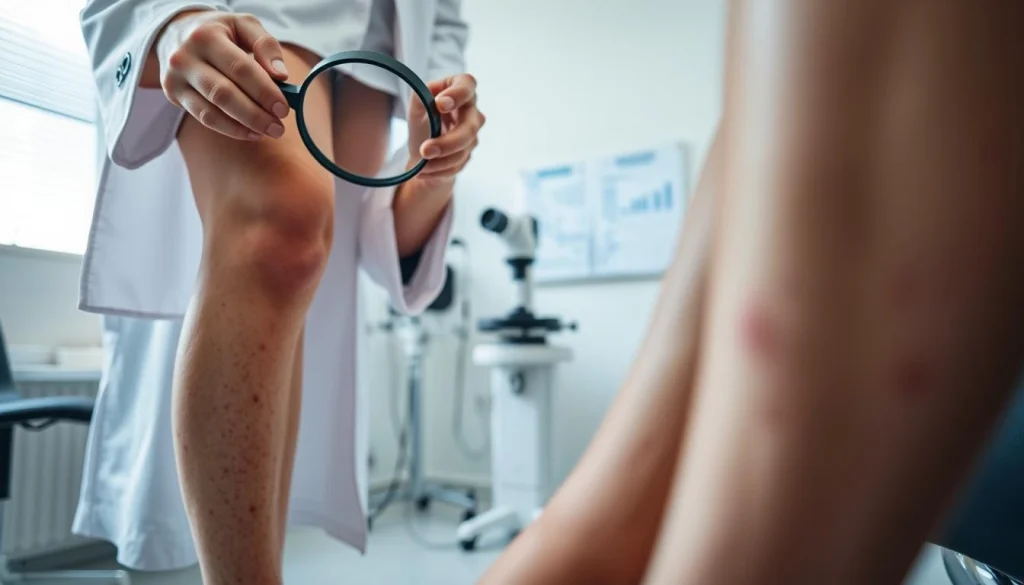
A dermatologist can also rule out other skin issues that might look like strawberry legs. This ensures you get the correct treatment for your skin problems.
Medical Treatments for Strawberry Legs
Several medical treatments are now available to help individuals manage and treat strawberry legs effectively. These treatments aim to address the underlying causes of the condition, such as clogged pores, ingrown hairs, and dry skin.
Laser Therapy
Laser therapy is a popular medical treatment for strawberry legs, providing a non-invasive solution. It reduces the appearance of dark spots and ingrown hairs.
Types of Laser Treatments
There are several types of laser treatments available, including Nd:YAG lasers and diode lasers. Each targets different aspects of strawberry legs. Nd:YAG lasers, for instance, are effective in reducing hair growth and addressing pigmentation issues.
Expected Results and Recovery
Patients can expect a reduction in the appearance of strawberry legs after a series of laser therapy sessions. Recovery time is typically minimal, with some temporary redness or irritation. This usually subsides within a few hours.
Chemical Peels
Chemical peels are another effective treatment for strawberry legs. They help exfoliate the skin, unclog pores, and improve skin texture. A solution is applied to remove the top layers of the skin, revealing smoother skin underneath.
Microdermabrasion
Microdermabrasion is a non-invasive exfoliating treatment. It helps remove dead skin cells, promoting cell turnover and improving the appearance of strawberry legs. It is a gentle procedure that can be repeated as needed to maintain results.
These medical treatments offer viable options for individuals seeking to address strawberry legs. Consulting with a dermatologist can help determine the most suitable treatment based on individual skin types and conditions.
Effective At-Home Treatments
At-home treatments can greatly enhance the look of strawberry legs. Simple skincare routines can diminish dark spots and ingrown hairs. This makes managing strawberry legs easier.
Exfoliation Methods
Exfoliation is key in tackling strawberry legs. It removes dead skin cells, clears pores, and enhances skin texture.
Physical Exfoliants
Physical exfoliants, like scrubs and brushes, manually remove dead skin. It’s vital to be gentle to avoid skin irritation.
- Use a gentle scrub with sugar or salt 1-2 times a week.
- Exfoliate in circular motions, focusing on areas with ingrown hairs or dark spots.
- Rinse well with warm water.
Chemical Exfoliants
Chemical exfoliants, with alpha-hydroxy acids (AHAs) or beta-hydroxy acids (BHAs), break down dead skin cells. They’re great for improving skin texture and reducing strawberry leg appearance.
- Look for products with glycolic acid or salicylic acid.
- Begin with a low concentration to test your skin’s sensitivity.
- Gradually increase frequency as your skin adapts.
Moisturizing Routines
Moisturizing is essential for healthy skin and reducing strawberry leg appearance. It keeps the skin hydrated, reducing irritation and ingrown hairs.
- Apply moisturizer immediately after showering or exfoliating.
- Choose a moisturizer rich in emollients and humectants.
- Consider a moisturizer with aloe vera or chamomile for soothing properties.
Over-the-Counter Products
Over-the-counter (OTC) products can help manage strawberry legs. Look for products with salicylic acid, tea tree oil, and retinoids.
- Salicylic acid exfoliates the skin and unclogs pores.
- Tea tree oil has antibacterial properties to prevent ingrown hairs.
- Retinoids promote cell turnover, improving skin texture.
By adding these at-home treatments to your skincare routine, you can manage strawberry legs effectively. This improves your skin’s overall appearance.
Key Ingredients That Combat Strawberry Legs
To tackle strawberry legs, it’s essential to know the key ingredients that can help. These spots or dots on the skin are often due to ingrown hairs, clogged pores, or dry skin. Using products with the right active ingredients can significantly improve your skin’s appearance.
Alpha Hydroxy Acids (AHAs)
Alpha Hydroxy Acids (AHAs) are compounds used in skincare for their exfoliating properties. They promote cell turnover, revealing smoother skin. AHAs, like glycolic acid and lactic acid, break down dead skin cells, reducing strawberry leg appearance.
- Glycolic acid: Known for its deep penetration into the skin, helping to unclog pores.
- Lactic acid: Provides moisturizing benefits while exfoliating the skin.
Beta Hydroxy Acids (BHAs)
Beta Hydroxy Acids (BHAs), like salicylic acid, penetrate deep into pores. They are effective against blackheads and whiteheads, which can cause strawberry legs. BHAs reduce inflammation and prevent ingrown hairs.
- Salicylic acid: Effective in unclogging pores and reducing inflammation.
- Anti-inflammatory properties: Help in soothing the skin and reducing redness.
Retinoids and Other Active Ingredients
Retinoids, derived from vitamin A, are powerful for cell turnover, preventing clogged pores, and reducing inflammation. Ingredients like niacinamide improve skin hyperpigmentation and enhance the skin’s barrier function.
- Retinoids: Promote cell turnover and prevent clogged pores.
- Niacinamide: Improves skin hyperpigmentation and enhances skin barrier function.
By adding these ingredients to your skincare routine, you can combat strawberry legs effectively. This will lead to smoother, healthier-looking skin.
Natural Remedies for Strawberry Legs
Strawberry legs can be a frustrating condition, but there are several natural remedies that can help alleviate its appearance. These remedies focus on soothing and smoothing the skin, reducing the appearance of dark spots and ingrown hairs.
DIY Scrubs and Masks
One effective way to manage strawberry legs is through the use of DIY scrubs and masks. Sugar scrubs, for instance, can help exfoliate the skin, removing dead skin cells and helping to unclog pores. A simple mixture of sugar and olive oil can be used as a scrub, while a mask made from honey and yogurt can provide moisturizing benefits.
Essential Oils and Their Benefits
Essential oils can also play a role in managing strawberry legs. Tea tree oil, known for its antibacterial properties, can help prevent ingrown hairs and reduce inflammation. Other oils like lavender and chamomile can soothe the skin, reducing irritation and promoting healing.
Dietary Considerations
Dietary adjustments can also impact the appearance of strawberry legs. Increasing intake of foods rich in omega-3 fatty acids, vitamins A and E, and antioxidants can help improve skin health. Staying hydrated by drinking plenty of water is also key for maintaining healthy, smooth skin.
By incorporating these natural remedies into one’s skincare routine, individuals can potentially reduce the appearance of strawberry legs and achieve smoother, healthier-looking skin.
Proper Shaving Techniques to Prevent Strawberry Legs
To avoid strawberry legs, it’s essential to use the right shaving methods. These dark spots or bumps are often caused by ingrown hairs, clogged pores, or razor burn. By employing effective shaving techniques, you can significantly reduce their occurrence.
Pre-Shave Preparation
Preparation before shaving is critical for a smooth experience. Exfoliating the skin removes dead cells, lowering the chance of ingrown hairs. Also, warming the skin with a towel or shower softens the hair, making shaving easier.
- Exfoliate the skin gently before shaving.
- Use a warm towel or shower to soften the hair.
Choosing the Right Razor
The razor you choose greatly affects your shaving experience. A razor with a sharp blade and a lubricating strip reduces friction and prevents burn. For those with sensitive skin, a razor made for sensitive areas is a good option.
- Opt for a razor with a sharp blade.
- Consider a razor with a lubricating strip for reduced friction.
Post-Shave Care
Proper care after shaving is vital in preventing strawberry legs. Applying a soothing aftershave or moisturizer calms the skin and reduces irritation. It’s also wise to avoid tight clothing that can cause friction on freshly shaved skin.
- Apply a soothing aftershave or moisturizer.
- Avoid tight clothing that can cause friction.
Alternative Hair Removal Methods
There are many hair removal methods beyond shaving to tackle strawberry legs. Options like waxing, sugaring, depilatory creams, and permanent hair removal are available. These alternatives can offer relief from the issue.
Waxing and Sugaring
Waxing and sugaring remove hair from the root. Waxing employs wax, while sugaring uses a sugar paste. Both are effective in removing hair and reducing ingrown hairs, common in strawberry legs.
Depilatory Creams
Depilatory creams dissolve hair at the skin’s surface, allowing for easy removal. They’re a good choice for those who dislike the irritation from shaving or waxing.
Permanent Hair Removal Options
For a lasting fix, consider laser hair removal or electrolysis. These methods gradually reduce hair growth, potentially lessening strawberry legs.
Exploring these alternatives can help find a hair removal method that not only gets rid of unwanted hair but also reduces strawberry legs.
Daily Skincare Routine for Prevention
To prevent strawberry legs, a consistent daily skincare routine is essential. It helps keep your skin healthy, reducing the visibility of strawberry legs. Your routine should include both morning and evening steps, along with weekly treatments suited to your skin type.
Morning Skincare Steps
Begin your day with a skincare routine that promotes healthy skin. Start with a gentle cleanser to clear out overnight impurities. Next, use a toner to adjust your skin’s pH level. Choose a lightweight moisturizer that matches your skin type. Lastly, apply sunscreen with at least SPF 30 to shield your skin from UV rays.
- Cleanse with a gentle, non-comedogenic cleanser
- Tone to balance skin pH
- Moisturize with a lightweight, suitable moisturizer
- Apply broad-spectrum sunscreen (SPF 30 or higher)
Evening Skincare Steps
The evening skincare routine is all about repair and nourishment. Start by removing makeup and cleansing your skin deeply. Exfoliate 1-2 times a week to get rid of dead skin cells. Then, apply a nourishing serum or treatment product. Finish with a moisturizer to seal in the benefits.
- Remove makeup and cleanse thoroughly
- Exfoliate 1-2 times a week
- Apply a nourishing serum or treatment
- Moisturize to lock in benefits
Weekly Treatments
Weekly treatments can boost your skincare routine. Use a chemical exfoliant or a physical exfoliant like a sugar or salt scrub to remove dead skin cells. Masks offer an intense dose of hydration or other benefits, depending on their ingredients.
- Use a chemical or physical exfoliant
- Apply a treatment mask
- Consider a body oil or serum for extra nourishment
Seasonal Care for Strawberry Legs
Adjusting your skincare routine with the seasons is key to tackling strawberry legs. Each season poses unique challenges for your skin. Knowing these can help you keep your legs looking smoother and healthier.
Summer Skincare Adjustments
Summer’s heat and humidity can worsen strawberry legs. To fight this, make these changes:
- Exfoliate often to clear dead skin and open pores.
- Choose light, oil-free moisturizers to hydrate without clogging pores.
- Apply sunscreen with at least SPF 30 to shield your skin from UV rays.
Winter Skincare Strategies
Winter’s dry air and cold can dry out your skin, highlighting strawberry legs. To counteract this, try these strategies:
- Moisturize more, using thick, hydrating creams to seal in moisture.
- Exfoliate gently to avoid drying out your skin further, and consider a humidifier to add moisture.
- Avoid harsh shaving to prevent drying out your skin even more.
By tailoring your skincare to the season, you can manage strawberry legs better. This way, you can enjoy smoother, healthier-looking skin all year.
Common Myths About Strawberry Legs
The myth surrounding strawberry legs is widespread, making it critical to distinguish truth from fiction. Many face this issue, and false beliefs can hinder effective treatments.
Debunking Misconceptions
Myths about strawberry legs abound, with some believing it’s a hygiene issue. Yet, it’s often due to clogged pores and ingrown hairs.
- Myth: Strawberry legs are caused by poor hygiene.
- Myth: Only people with dry skin get strawberry legs.
- Fact: Clogged pores and ingrown hairs are common causes.
Science-Based Facts
Grasping the science behind strawberry legs is key to finding the right treatments. Studies show that alpha-hydroxy acids (AHAs) and beta-hydroxy acids (BHAs) can help.
- AHAs help exfoliate the skin, reducing the appearance of strawberry legs.
- BHAs, like salicylic acid, can penetrate deep into pores to unclog them.
- Regular moisturizing can also help prevent dry skin, a contributing factor.
By understanding the facts and debunking common myths, individuals can better address strawberry legs. This leads to smoother, healthier-looking skin.
Living Confidently With Beautiful Skin
Beautiful skin is more than just a physical trait; it’s a key to our confidence. When our skin looks good, we feel more confident in our appearance. Strawberry Leg, with its dark spots or dots, can make many feel self-conscious.
Understanding the causes and using effective treatments can help us regain control over our skin. A consistent skincare routine, along with proper shaving and alternative hair removal, can greatly enhance skin appearance. This can significantly boost our confidence.
Adopting a lifestyle that supports healthy, beautiful skin can greatly enhance our self-esteem. With the right approach and treatments, achieving the confidence that comes with radiant skin is possible.
FAQ About Strawberry Leg
Q: What causes strawberry legs?
A: Strawberry legs stem from clogged pores, ingrown hairs, and dry skin. Shaving and hair removal methods exacerbate the issue.
Q: How can I prevent strawberry legs when shaving?
A: To dodge strawberry legs, use a sharp razor and shave with the grain. Regular exfoliation is key. Waxing or sugaring are viable alternatives to shaving.
Q: Are there any effective at-home treatments for strawberry legs?
A: Yes, at-home remedies include exfoliation, moisturizing, and products with alpha or beta hydroxy acids. These can significantly improve your skin.
Q: Can strawberry legs be a sign of an underlying medical condition?
A: Sometimes, strawberry legs hint at conditions like keratosis pilaris or eczema. If you’re worried, a dermatologist’s advice is invaluable.
Q: How can I get rid of strawberry legs?
A: Combining exfoliation, moisturizing, and hair removal methods is effective. Professional treatments like laser therapy or chemical peels can also help.
Q: Are there any natural remedies for strawberry legs?
A: Natural remedies include DIY scrubs, essential oils, and dietary changes. Sugar or salt scrubs, tea tree oil, and coconut oil can soothe and enhance your skin.
Q: Can I use any skincare products on my strawberry legs?
A: Not all skincare products are right for strawberry legs. Opt for those with AHAs, BHAs, or retinoids. Steer clear of harsh products that might irritate your skin.
Q: How long does it take to see results from treating strawberry legs?
A: Results vary based on treatment and skin type. With consistent effort and proper care, improvements can be seen in weeks to months.