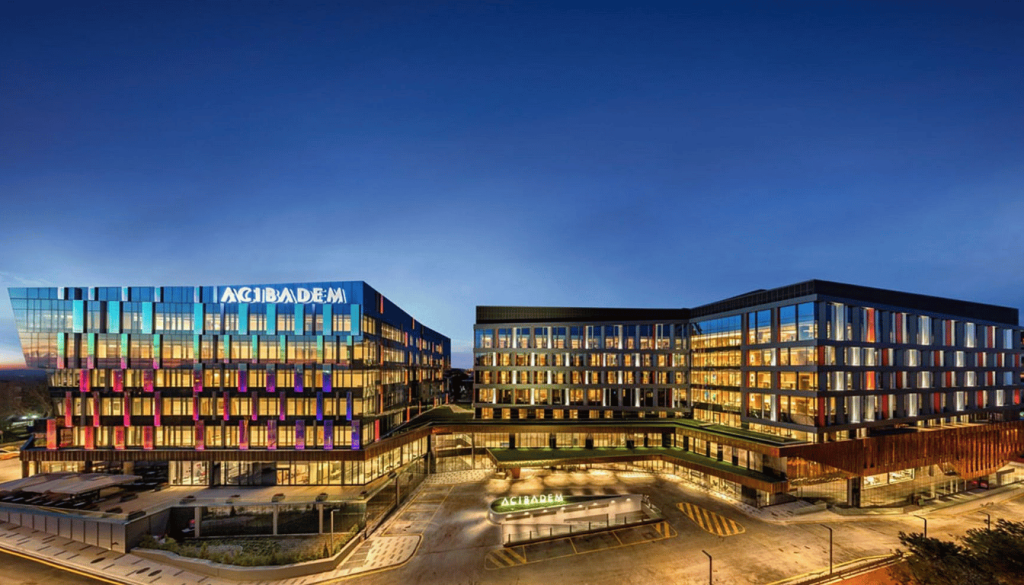
Robotic Rehabilitation enhances neuro-motor recovery and empowers patients with advanced technology-driven therapy, and our Robotic Rehabilitation teams design personalized high-precision programs while ensuring every patient receives comprehensive, effective functional treatment supported by expert Robotic Rehabilitation specialists.
World-Class Robotic Rehabilitation in Acıbadem
Muscular, skeletal and nervous system diseases caused by birth or trauma can cause pain and dysfunctions that limit people’s movements. Although most of them are tried to be treated with drugs and exercise, technology has come into play as a hope for patients who have become unable to do their daily activities. In addition to classical physical therapy and rehabilitation applications, robotic rehabilitation systems offered by developing technology are now conducive to people clinging to life.
Classical physical therapy and rehabilitation procedures apply a set of exercise programs that will strengthen muscle strength and bone structure. While trying to restore the old strength to the muscles, it is actually tried to prevent the regression of the existing nerve stimulation. However, some patients cannot move their muscles due to trauma or illness, or even if they do, they cannot use their organs as they should.
In order for the patients to regain their old functions, it is necessary to activate the silent nerve cells that have not lost their function yet. An opportunity offered by today’s technology for patients who cannot move is Robotic Rehabilitation systems.
Robotic Rehabilitation Doctors
Robotic rehabilitation improves motor recovery and strengthens functional gains for neurological and orthopedic conditions, and our Robotic Rehabilitation Doctors design personalized high-precision therapy programs while ensuring every patient receives comprehensive, effective treatment under the guidance of our expert Robotic Rehabilitation Doctors.
Robotic Rehabilitation Systems
Robotic Rehabilitation Systems are devices that help individuals diagnose and treat health conditions in the musculoskeletal and nervous system. They realize the reduction of the disorders that occur and the improvement of functions through the prevention or treatment of complications.
Robotic rehabilitation provides intensive and comprehensive neurorehabilitation of patients in the physical therapy process. It positively affects the reorganization of the nervous system, helping the patient regain functionality at the highest possible level.
Recent scientific studies suggest that there are reserve cells in the brain and that new tasks can be learned by reshaping them with a good rehabilitation program. It is necessary to start a comprehensive physical therapy and rehabilitation program immediately after the disease/trauma in order for the patients to return to a normal healthy life style and the damaged organ to function as closely as possible.
Including robotic rehabilitation in this physical therapy process is an important approach that will increase the effectiveness of treatment. Because in the robotic rehabilitation process, a treatment program that includes the latest treatment methods and current technology is applied to the patients. Thanks to the adjustable and programmable rehabilitation robots, a patient-specific treatment is designed.
For example, reinforced orthoses with computer-controlled motors to support joint movement in the robotic rehabilitation system improve joint range of motion by reducing joint resistance. The fact that the patient’s body movements towards the visual target created in the virtual environment are seen by the patient provides more sensitive feedback to the patient, thus accelerating the brain’s learning of movement.
The implementation of new graphical interfaces and more ecological scenarios, as well as more cognitively demanding tasks, allow active physical and cognitive involvement of patients during robotic therapy, keeping their motivation and desire high to participate in the treatment.
Robotic rehabilitation covers the rehabilitation and treatment of many different neurological and orthopedic diseases. Some of the diseases that we encounter most frequently and that we provide services in the field of rehabilitation are as follows:
Robot Assisted Walking Training
In pediatric and adult patients whose legs are completely paralyzed or severely affected, physiological (normal) gait training can be given by the body weight support system and the wearable orthoses that can be adjusted specifically for the patient. The walking robot combines technology and virtual reality to enable them to walk again and regain leg function much faster and more accurately than conventional types of physical therapy.
The robotic system lifts the patient up and then the robotic feet drive the patient with motor power. In walking, the patient does as much as she/he can, and the robot completes what she/he cannot do. Precise measurements with sensors on the knees and hip orthoses evaluate the patient’s effort and present each individual body’s response to a particular movement.
Arm Robot
It helps to restore functions in the affected arm, forearm and wrist in patients who have had a stroke or have impaired arm functions. It is an exoskeleton (wearable external skeleton) that supports the patient’s arm, reducing its weight and magnifying the active movement of the arm in 3D space.
With an adjustable suspension system for the upper extremity, it enables the patient to activate the existing strength, range of motion and coordination functions in order to relax the patient’s arm and complete the exercises in a fun way with virtual reality applications.
Advanced Gait and Balance Training
It is a training for gait and balance rehabilitation using a treadmill with a body weight support system and audio-visual feedback mechanisms, simulating daily life challenges through virtual reality. It helps neurological and orthopedic patients to regain mobility faster with repeated intensive treatment.
It is used for the evaluation and treatment of balance and gait compliance. The formation of a symmetrical walking pattern is supported by visual feedback mechanisms such as protrusions on the treadmill surface.
Request A Callback
If you’d like to book an online consultation just fill in your details below and one of our team will be in touch within 24 hours.