Disc Desiccation — Explained by Medical Evidence, Not Myths

Disc desiccation refers to loss of water in an intervertebral disc, which can reduce cushioning and flexibility. It is common with aging and does not always mean a person will have pain or nerve symptoms.
Key Takeaways
- Disc desiccation refers to loss of water in an intervertebral disc, which can reduce cushioning and flexibility.
- It is common with aging and does not always mean a person will have pain or nerve symptoms.
- Diagnosis is based on symptoms, physical examination, and imaging when needed, especially MRI.
- Treatment usually begins with exercise, posture changes, pain relief measures, and physical therapy.
- Medical review is important if pain is severe, persistent, or associated with weakness, numbness, or bowel or bladder changes.
Medically reviewed by the Acıbadem International Medical Board — July 23, 2026
Disc desiccation is the drying out of a spinal disc as it loses water content over time. It is a common imaging finding, often related to aging, and it may or may not cause symptoms such as back pain, neck pain, or stiffness.
What disc desiccation means
Disc desiccation means that one of the discs between the bones of the spine has lost part of its normal water content. These discs act like cushions and shock absorbers. When they become drier, they may be less flexible and less able to distribute load smoothly.
This finding is very common on spinal imaging, especially as people get older. In many cases, disc desiccation is part of the natural wear-related changes of the spine rather than a dangerous disease. Some people have no symptoms at all, while others develop pain, stiffness, or irritation of nearby nerves.
The term can sound more alarming than it is. It does not automatically mean a disc has slipped, ruptured, or that surgery is needed. Instead, it describes a structural change that doctors interpret together with a person’s symptoms, physical examination, and imaging results.
How spinal discs change over time
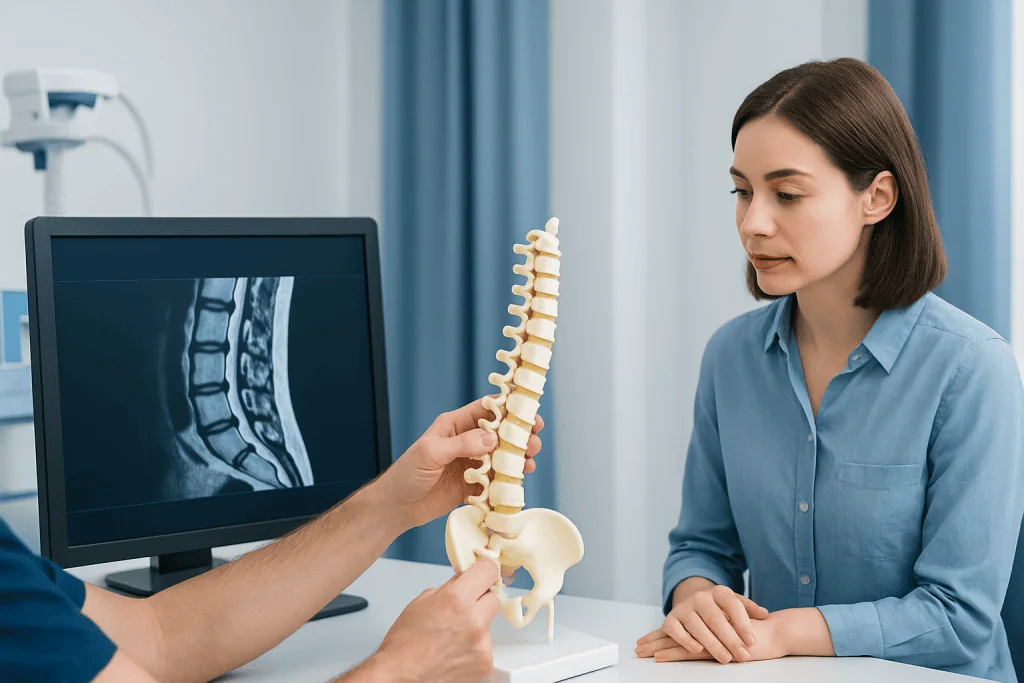
Spinal discs are made of a soft inner center and a stronger outer ring. In youth, discs contain a high amount of water, which helps them stay springy and resilient. Over time, normal aging, repeated mechanical stress, and reduced blood supply to nearby tissues can contribute to gradual dehydration.
As a disc dries out, it may become thinner and less effective at absorbing shock. This can alter how forces move through the spine and may place more strain on joints, ligaments, and muscles. In some people, these changes are linked with degenerative disc disease or with disc bulging and narrowing of spaces where nerves travel.
Even so, structural changes on scans do not always match the level of pain. A person can have significant desiccation with minimal symptoms, while another may have modest imaging changes but noticeable discomfort. This is one reason why doctors focus on the whole clinical picture rather than MRI findings alone.
Symptoms and possible effects

Disc desiccation itself is an imaging description, but it may be associated with symptoms if the disc change leads to inflammation, instability, muscle guarding, or pressure on nearby structures. The most common complaints are low back pain or neck pain, depending on which part of the spine is affected.
Symptoms can vary widely. Some people notice aching pain after sitting for long periods, bending, lifting, or twisting. Others describe morning stiffness, reduced flexibility, or pain that comes and goes. If a disc also bulges or narrows nerve spaces, pain may travel into the arm or leg and may occur with numbness, tingling, or weakness.
- Back or neck pain
- Stiffness or reduced range of motion
- Pain that worsens with sitting, lifting, or prolonged activity
- Muscle spasm or a feeling of spinal tightness
- Radiating pain, tingling, or numbness if a nerve is affected
If nerve compression develops, related conditions such as herniated disc or spinal canal narrowing may need separate evaluation. Symptoms that affect walking, balance, hand function, or bladder and bowel control need prompt medical assessment.
Causes and risk factors
The most common cause of disc desiccation is age-related degeneration. As the years pass, discs naturally lose some water and elasticity. This process can begin relatively early in adulthood and progresses at different rates from person to person.
Several factors may increase the likelihood of faster disc wear. Repetitive heavy lifting, vibration exposure, certain sports, smoking, excess body weight, poor conditioning, and prior spine injury can all place added stress on spinal structures. Genetics also appears to play an important role in how quickly disc changes develop.
Posture and daily habits can influence symptoms even if they do not fully explain the underlying disc change. Long periods of sitting, weak core support, limited hip mobility, and deconditioned back muscles may increase strain on the spine. In many people, symptoms improve when these mechanical contributors are addressed through a guided exercise plan.
How doctors diagnose disc desiccation
Diagnosis begins with a clinical history and physical examination. A doctor asks where the pain is felt, what makes it better or worse, whether it spreads into the arms or legs, and whether there are signs of nerve involvement. Examination may include posture, spinal movement, strength, reflexes, sensation, and tests that reproduce symptoms.
Imaging is not always needed right away, especially for short-term back pain without warning signs. When symptoms persist, are severe, or suggest nerve compression, MRI is often the most useful test because it shows disc hydration, bulging, inflammation, and soft tissues clearly. On MRI, a desiccated disc usually appears darker than a healthy, well-hydrated disc.
X-rays can show alignment and disc space narrowing but do not directly assess disc water content. CT scans may be used in selected cases, especially when bony detail is needed. If nerve-related symptoms are present, the doctor may also evaluate for related problems such as spinal stenosis or other causes of back and leg pain.
Treatment options and recovery
Treatment depends on symptoms rather than the scan finding alone. Most people with disc desiccation do not need surgery. First-line care usually includes activity modification, structured exercise, physical therapy, and short-term pain relief strategies. The aim is to reduce pain, improve function, and support the spine through stronger muscles and better movement patterns.
Doctors may recommend heat or ice, temporary use of pain-relieving medicines when appropriate, and a gradual return to normal activity. Bed rest is usually not advised beyond a very short period, because prolonged inactivity can worsen stiffness and weaken supportive muscles. Physical therapy may focus on core stability, posture, flexibility, and body mechanics for lifting and sitting.
If pain continues despite conservative treatment, other options may be considered based on the exact problem. These may include specialist evaluation, image-guided injections, or treatment for a disc that is pressing on a nerve. In selected cases, patients may benefit from physical therapy and rehabilitation, pain management, or spine surgery when there is a clear structural reason and symptoms remain significant.
Surgery is usually reserved for persistent disabling pain, progressive neurologic deficits, or conditions such as severe nerve compression. The decision is individualized and based on symptoms, exam findings, imaging, and response to non-surgical care.
Self-care, prevention, and daily habits
Although age-related disc changes cannot be completely prevented, daily habits can reduce strain on the spine and help control symptoms. Regular physical activity is one of the most effective steps. Walking, swimming, mobility work, and strengthening exercises can support spinal health when performed consistently and with good technique.
Weight management, avoiding tobacco, and learning safer lifting strategies may also help. For people who sit for long periods, changing position often, using supportive seating, and taking movement breaks can reduce stress on the lower back and neck. Sleep position and mattress comfort may matter for some individuals as well.
- Stay active with regular low-impact exercise
- Strengthen core and back-supporting muscles
- Practice posture awareness without becoming rigid
- Lift with the hips and knees rather than twisting through the spine
- Stop smoking if applicable and maintain a healthy weight
Self-care works best when it is realistic and sustainable. A clinician or therapist can help tailor a plan if pain keeps returning or if exercise feels difficult to start safely.
When to seek medical care
Medical evaluation is sensible if back or neck pain lasts more than a few weeks, keeps returning, or interferes with daily life, work, or sleep. A doctor should also review pain that follows an injury, becomes progressively worse, or does not improve with simple home measures.
Urgent assessment is important if symptoms include significant leg or arm weakness, increasing numbness, trouble walking, loss of coordination, fever, unexplained weight loss, or bowel or bladder changes. These features do not always mean a serious problem, but they should not be ignored.
For international patients who need coordinated spine assessment, Acibadem International’s multidisciplinary specialists in JCI-accredited hospitals diagnose and treat disc-related conditions using individualized plans based on symptoms, imaging, and functional needs.
Frequently asked questions
Is disc desiccation the same as a slipped disc?
No. Disc desiccation refers to loss of water content in a spinal disc, while a slipped or herniated disc means disc material has moved or bulged in a way that may irritate a nerve. A dried disc can exist without herniation, although the two can occur together.
Can disc desiccation heal or reverse?
The disc usually does not return fully to its earlier, youthful water content. However, symptoms often improve significantly with exercise, posture changes, physical therapy, and time. Many people feel better even if imaging changes remain visible.
Does disc desiccation always cause pain?
No. Many people have disc desiccation on MRI and do not have pain or neurologic symptoms. Doctors interpret the finding in context, because imaging changes alone do not always explain how a person feels.
What is the best exercise for disc desiccation?
There is no single best exercise for everyone. In general, low-impact aerobic activity, gentle mobility work, and core-strengthening exercises are often helpful. A physical therapist can adjust exercises to the location of symptoms, fitness level, and any nerve involvement.
When is surgery needed for disc desiccation?
Surgery is not usually needed for disc desiccation by itself. It may be considered when there is clear nerve compression, progressive weakness, or pain that remains severe despite appropriate non-surgical treatment. The decision depends on symptoms, examination findings, and imaging.
Is walking good for disc desiccation?
For many people, yes. Walking is a gentle, low-impact activity that can help maintain mobility, circulation, and general conditioning without putting excessive strain on the spine. It is best increased gradually and balanced with strengthening and flexibility work if symptoms allow.
References
- National Institute of Arthritis and Musculoskeletal and Skin Diseases
- American Academy of Orthopaedic Surgeons
- National Institute of Neurological Disorders and Stroke
- North American Spine Society
- World Health Organization
This article is for general information only and is not a substitute for professional medical advice. Please consult a qualified doctor about your individual situation.
Explore treatments in Turkey — costs, top hospitals & a free quote
JCI-accredited · board-certified surgeons · reply within 24h

More from the Health Library



Related Specialists

Ody. İrem Mürtekin
Audiology
Prof. Dr. Seyit Ali Gümüştaş
Orthopedic Surgery & Traumatology
Fzt. Sevim Korkmaz
Physical Medicine and Rehabilitation
Dyt. Bensu Enyüksek
Nutrition & Diet