Cardiac Stem Cell Therapy
Cardiac stem cell therapy is a regenerative treatment being studied to support heart muscle repair after damage. Eligibility depends on detailed cardiac assessment and individual clinical indications.

Quick answer
Cardiac stem cell therapy is a regenerative treatment that uses selected cells, usually taken from the patient's own bone marrow or blood, to support heart muscle damaged by a heart attack, coronary artery disease or heart failure. The prepared cells are delivered through a coronary artery catheter or injected into the heart muscle. It remains an evolving therapy used alongside, never instead of, standard cardiac treatment.
What Is Cardiac Stem Cell Therapy?
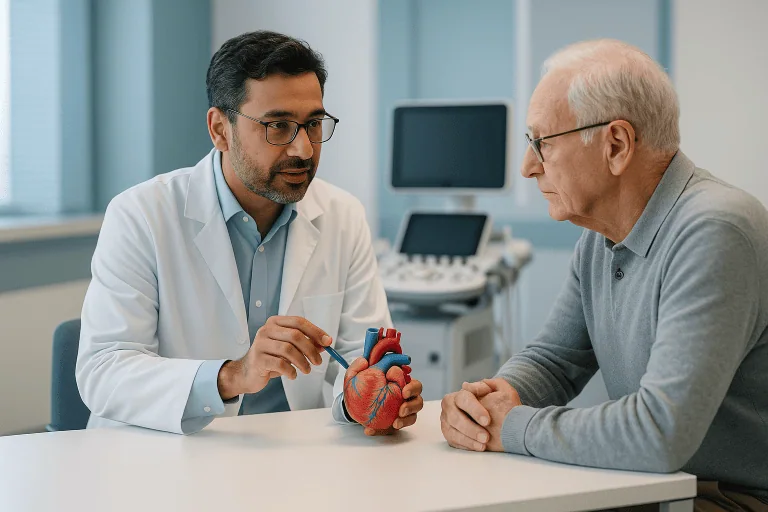
Cardiac stem cell therapy is a regenerative treatment approach that uses selected cells, most often taken from your own bone marrow or blood, to support heart muscle that has been damaged. The cells are prepared in a controlled laboratory and then delivered to the heart, usually through a catheter placed in a coronary artery or by injection directly into the muscle itself. It is studied mainly in people whose hearts have been weakened by a heart attack, long-standing coronary artery disease, cardiomyopathy or heart failure that persists despite standard treatment.
The aim goes beyond symptom control. Researchers want to know whether prepared cells can influence the environment inside injured heart tissue: calming inflammation, supporting the growth of small blood vessels, limiting harmful scar formation and helping the surviving muscle contract more effectively. Cardiac stem cell therapy sits within regenerative cardiology, one of the most closely watched fields in heart medicine. It is also one of the most misunderstood, which is why an honest description matters more here than in almost any other area of cardiac care.
Two points of realism belong at the start. First, cardiac stem cell therapy does not replace evidence-based treatment. Guideline-directed medication, coronary revascularisation, valve treatment, rhythm management, implanted devices and structured cardiac rehabilitation remain the foundation of care for a weakened heart. Any regenerative approach is considered alongside those treatments, never instead of them. Second, eligibility is narrow and depends on detailed assessment. The exact cell type, preparation method, delivery route and timing vary by clinical programme, regulatory framework and the individual patient’s condition, and in many situations this remains an investigational field rather than an established routine procedure.
It also helps to separate this treatment from a stem cell transplant used for blood cancers and bone marrow disease. That procedure replaces the blood-forming system, often after chemotherapy, and follows an entirely different medical pathway. Cardiac stem cell therapy targets heart muscle, uses different cell preparations, and is assessed by cardiology teams rather than haematologists. If you have read about stem cells in the context of cancer treatment, set that framework aside; the biology, the goals and the evidence base are different.
Can stem cell therapy be used to regenerate the heart?
Not in the way early headlines suggested. Initial research assumed that transplanted stem cells would transform directly into new, beating heart muscle cells and rebuild lost tissue. Current scientific understanding is more nuanced. Studies indicate that delivered cells rarely become lasting new heart muscle. Instead, much of any potential benefit appears to come from the signals the cells release. These signals may influence inflammation, scar development, small blood vessel formation, cellular stress responses and the local environment around injured tissue. Scientists often call this a paracrine effect: the cells act more like temporary messengers than permanent building blocks. That distinction matters for expectations. The therapy is better described as supporting the heart’s own repair environment than as regrowing a damaged heart.
Is stem cell therapy good for the heart?
The honest answer is that it depends, and the evidence is still developing. Clinical trials in this field have produced mixed results. Some suggest modest support for heart function or symptoms in carefully selected patients; others show little measurable change compared with standard care alone. What is clear is that outcomes vary with the underlying diagnosis, the amount and location of scar tissue, the timing of treatment and the quality of the cell preparation and delivery. This is why responsible programmes insist on rigorous patient selection, advanced imaging, risk stratification and specialist review before recommending treatment, and why any clinic promising certain improvement should be treated with caution.
Which cells are used in cardiac stem cell therapy?
Several cell types have been studied, and the choice depends on the protocol and regulatory context. Depending on the programme, cells may be obtained from your own body, such as bone marrow or peripheral blood, or may involve other carefully prepared cellular products used under approved medical frameworks. Bone marrow-derived preparations and mesenchymal stromal cells are among the most widely investigated in cardiac research. Each source involves different collection methods, processing steps and delivery considerations. No single cell type has been established as clearly superior, which is another reason the field remains under active study rather than settled practice.
Who May Be Considered for Cardiac Stem Cell Therapy
Patients who ask about cardiac stem cell therapy have usually already received standard cardiac care but continue to feel limited. Common experiences include shortness of breath with activity, fatigue, reduced exercise tolerance, swelling in the legs, chest discomfort or repeated hospital admissions for heart failure. Others feel relatively stable but carry imaging results that concern them: a reduced ejection fraction, enlarged heart chambers or scarred muscle left behind by a previous heart attack.
Symptoms alone do not determine candidacy. Some patients with severe symptoms need medication review, valve treatment, coronary intervention, rhythm control, cardiac resynchronisation therapy or advanced heart failure management rather than regenerative treatment. Conversely, some patients with modest symptoms have imaging findings that justify deeper evaluation. The central question is why the heart is weak, and whether there is recoverable, viable heart muscle that might respond to additional therapy. Answering that question takes structured assessment, not a symptom checklist.
Evaluation begins with a detailed history and a review of previous records. Physicians examine prior heart attacks, stent placements, bypass surgery, coronary angiograms, echocardiograms, cardiac MRI reports, CT scans, stress tests, blood tests, medication history, implanted devices and hospital admissions. A physical examination and updated testing then define the current condition of the heart and circulation, because a report from two years ago may no longer describe the heart you have today.
The diagnostic tools used are familiar from mainstream cardiology, applied with a specific purpose:
- Electrocardiography assesses rhythm and electrical conduction, and can point towards an underlying cardiac arrhythmia that needs its own treatment.
- Echocardiography evaluates pumping function, chamber size and valve disease.
- Cardiac MRI maps scar tissue and distinguishes viable muscle from tissue unlikely to recover.
- Coronary angiography or CT angiography shows whether restricted blood flow is still present and could be treated directly.
- Blood tests reflect heart strain, kidney function, inflammation and overall procedural risk.
- Exercise or functional capacity testing shows how symptoms actually limit daily life.
Cardiac stem cell therapy may then be discussed for patients with persistent heart muscle dysfunction despite appropriate treatment, particularly where there is evidence of previous ischaemic injury or chronic heart failure. It may also come up when conventional options have been exhausted, or when a patient wants an expert view on whether a regenerative approach could form part of a broader plan. Final eligibility always depends on clinical indications, safety considerations, institutional protocols and the regulatory requirements that govern cell-based treatment.
Conditions Cardiac Stem Cell Therapy May Address
The strongest research interest concentrates on a small group of conditions where heart muscle has been injured and standard care leaves room for improvement. Whether the therapy is reasonable in your case depends on the cause of the dysfunction, the extent of scarring, blood flow to the muscle, valve function, rhythm stability, kidney function and your overall health.
Heart muscle damage after myocardial infarction
Heart muscle damage after a myocardial infarction, commonly called a heart attack, is the most common reason patients explore this therapy. When a coronary artery is blocked, part of the heart muscle is deprived of oxygen. Even after blood flow is restored with a stent, medication or bypass surgery, some areas may remain scarred or weakened. Regenerative treatment is being studied to determine whether it can support repair in the border zones around scarred tissue and improve the function of the surviving muscle nearby. The biology of a recent injury differs from long-established scar, which is one reason trial protocols pay close attention to timing.
Ischaemic cardiomyopathy
Ischaemic cardiomyopathy describes a heart that has become weak because of reduced blood supply or prior coronary artery damage. These patients often have a low ejection fraction, enlarged chambers, reduced exercise capacity or recurrent heart failure symptoms. Stem cell therapy is considered only after coronary anatomy, myocardial viability and standard treatment options have been thoroughly reviewed, because restoring blood flow or optimising medication may achieve more than any cell-based approach.
Non-ischaemic cardiomyopathy
Non-ischaemic cardiomyopathy is heart muscle weakness that does not come from blocked arteries. Causes include genetic factors, viral injury, inflammation, toxins, metabolic disease, long-standing high blood pressure or unknown factors. Suitability for regenerative treatment here is more complex. Some causes have their own specific treatments that must come first: infiltrative disease such as cardiac amyloidosis and inflammatory disease such as cardiac sarcoidosis follow entirely different pathways, and treating them as generic “weak heart” cases would be a mistake. The degree of fibrosis, arrhythmia risk and the presence of any active, treatable process all shape the decision.
Chronic heart failure
Chronic heart failure patients often ask about stem cells when symptoms persist despite optimised medication. Decisions here demand particular care, because heart failure is not a single disease. It is a syndrome with many causes, and a patient with reduced ejection fraction, preserved ejection fraction, severe valve disease, pulmonary hypertension, an uncontrolled rhythm disturbance or advanced kidney disease may need very different care pathways. In selected settings, cardiac stem cell approaches may be evaluated alongside other interventions, such as coronary revascularisation, surgical procedures or catheter-based therapies. Timing matters: some patients are better served by restoring blood flow first; others need heart failure medication stabilised before any elective procedure. A multidisciplinary review helps determine whether regenerative therapy is appropriate, whether it should wait, or whether another treatment offers a clearer benefit.
How Cardiac Stem Cell Therapy Is Performed
The process begins well before the treatment day. If you are considering this therapy, expect a sequence rather than a single appointment. A typical pathway follows these steps:
- Comprehensive evaluation. A full cardiology assessment, review of your medical records and confirmation of the diagnosis. Reports, imaging files, procedure notes, medication lists and recent laboratory results are often reviewed in advance, with updated testing to verify current heart function and refine the plan.
- Optimisation check. Physicians confirm that standard therapies have been optimised: heart failure and coronary medication, blood pressure control, diabetes management, cholesterol treatment, antiplatelet or anticoagulant therapy and rhythm management. If significant coronary blockage, severe valve disease, uncontrolled arrhythmia, infection, active cancer or another risk-raising condition is found, the plan changes.
- Cell collection. If the therapy uses your own cells, collection comes first. Bone marrow collection is performed under sterile conditions with local anaesthesia and sedation when appropriate. Peripheral blood collection resembles a specialised blood draw, sometimes after medication that mobilises certain cells into the bloodstream.
- Laboratory preparation. The collected material is processed in a controlled laboratory to isolate, concentrate or prepare the relevant cell population according to the protocol. Quality checks may include sterility controls, cell counts, viability assessment and chain-of-custody documentation, all designed to reduce contamination risk and ensure the product matches the intended plan.
- Delivery to the heart. The cells are administered by the route chosen for your anatomy and condition, described below.
- Monitoring and discharge. Observation for rhythm changes, chest discomfort, access-site bleeding, allergic reactions, infection signs or blood pressure changes, followed by structured discharge instructions and a follow-up plan.
Intracoronary infusion
Intracoronary infusion delivers cells through a catheter into a coronary artery that supplies the affected area of the heart. It is performed in a catheterisation laboratory using imaging guidance, similar in some respects to coronary angiography. The approach suits patients whose target territory can be reached through the coronary circulation and whose vessels can safely accommodate the catheter work involved.
Intramyocardial injection
Intramyocardial injection places cells directly into targeted areas of the heart muscle. This may be performed with catheter-based mapping systems that identify the border zones around scar, or in some cases during a planned cardiac surgery, when the surgeon has direct access to the muscle. The safest and most appropriate route depends on coronary anatomy, scar location, procedural risk and the goals of treatment; neither route is universally better.
What happens during the procedure itself?
You are closely monitored throughout. Electrocardiographic monitoring tracks heart rhythm continuously, while blood pressure and oxygen levels are observed in real time. Imaging guidance helps physicians position catheters or delivery tools accurately. In patients with complex disease, anaesthesiology and intensive care teams are involved in planning and monitoring. The procedure itself may take a few hours, although the full treatment day is usually longer once preparation, cell processing, recovery observation and post-procedure testing are counted.
Technology supports every stage, not as a substitute for clinical judgement but as a way to make assessment and delivery more precise. Echocardiography measures function and valve performance. Cardiac MRI identifies scar, inflammation, viability and ventricular volumes. Coronary imaging defines blood flow and artery anatomy. Catheterisation laboratory imaging supports accurate delivery, and laboratory systems document the cellular product from collection to administration. Together these tools let the team tailor the approach to your actual heart structure and disease pattern rather than a generic template.
After treatment, most patients are observed in hospital; some stay overnight or longer, particularly with advanced heart disease or a need for closer monitoring. Discharge instructions typically cover activity, wound care for the catheter or bone marrow site, and a follow-up schedule. Decisions about cardiac medication remain with your treating doctor; the therapy does not change the need for your existing heart failure or coronary treatment plan. Recovery from the procedure itself is often measured in days, but assessment of any cardiac benefit takes far longer. Heart muscle remodelling, inflammatory changes and functional improvement, if they occur, are not immediate. Follow-up may include clinic visits, echocardiography, cardiac MRI when indicated, laboratory testing, medication review by your physician and cardiac rehabilitation.
How Is Cardiac Repair Shown in Stem Cell Therapy?
Cardiac repair after stem cell therapy is shown through measurable changes in heart structure, function and symptoms over months of follow-up, not through anything visible on the treatment day. Because delivered cells cannot be tracked by eye, doctors and researchers rely on objective before-and-after comparisons. Imaging is the backbone: echocardiography and cardiac MRI measure ejection fraction, ventricular volumes and wall motion, while MRI can also quantify scar size and tissue viability. A heart that pumps a greater share of its blood volume, holds smaller chamber volumes or shows less scar burden is demonstrating structural change. Functional testing adds the patient’s perspective in measurable form: exercise capacity, walking distance, symptom class and quality-of-life scores.
What markers show repair in cardiac stem cell therapy trials?
Trials typically combine several categories of marker, because no single measurement captures repair on its own. Imaging markers include left ventricular ejection fraction, end-systolic and end-diastolic volumes, regional wall motion and scar size on contrast-enhanced cardiac MRI. Blood markers include natriuretic peptides, which reflect the strain on the heart wall, and troponin, which reflects injury to heart muscle cells; movement in these values over time helps indicate whether the heart is under less stress. Clinical markers include heart failure symptom classification, exercise or walk-test performance, hospital admissions and patient-reported quality of life. When a programme discusses your potential results, it should be able to explain which of these measures will be tracked in your follow-up, at what intervals, and what a meaningful change would look like for your specific baseline.
Why Acting Early Matters
Heart muscle damage can progress silently. After a heart attack or years of coronary artery disease, the heart may compensate for a time, but ongoing strain can lead to chamber enlargement, worsening valve leakage, arrhythmias and shrinking exercise capacity. In heart failure, delay can allow a manageable condition to become more advanced, narrowing the range of future treatment choices.
Early evaluation does not mean rushing towards stem cell therapy. It means clarifying the cause and stage of heart disease before irreversible changes deepen. If blood flow is restricted, restoring circulation may be the priority. If medication is not optimised, guideline-directed therapy alone may bring significant improvement. If a rhythm problem is contributing to weakness, rhythm treatment may change the outlook entirely. And if regenerative treatment is on the table, earlier specialist assessment helps determine whether viable myocardium remains that could potentially respond; once muscle is replaced by dense scar, the window for meaningful support narrows.
Delaying evaluation also carries its own risks. Uncontrolled heart failure may lead to fluid overload, kidney dysfunction, liver congestion, pulmonary hypertension, hospitalisation or reduced tolerance for procedures. Untreated coronary disease can result in another heart attack, and electrical instability can produce dangerous rhythm disturbances.
Timely assessment gives you a clearer map. It separates urgent treatments from elective ones, identifies missing diagnostic information, and prevents time and resources being spent on an approach that was never suitable. It also gives the medical team room to build a safer plan if you are a candidate for cardiac stem cell therapy or another advanced cardiac intervention.
Potential Benefits of Cardiac Stem Cell Therapy
When the therapy is appropriate, its intended benefits are best understood as potential supportive effects within a comprehensive cardiac care plan, not as stand-alone results. None of them is assured for any individual patient.
| Benefit | What It Means for You |
|---|---|
| Support for damaged heart muscle | The therapy is designed to influence repair signals in areas affected by injury, particularly around scarred or weakened tissue. |
| Possible improvement in heart function | Some carefully selected patients may experience better pumping performance or ventricular remodelling, although results vary and are not immediate. |
| Potential symptom reduction | Patients who respond may notice improved stamina, less shortness of breath, or better tolerance of daily activities over time. |
| Adjunct to established cardiac care | Stem cell therapy may be considered as part of a broader plan that includes medications, rehabilitation, device therapy, or revascularisation when indicated. |
| Individualised treatment planning | Advanced imaging and cardiac assessment help determine whether your heart condition fits the indications for this approach. |
What Are the Downsides of Stem Cell Therapy?
The main downsides of stem cell therapy for the heart are procedural risk, uncertain benefit and the practical burden of an investigational treatment. Being clear about them is part of responsible care.
- Procedural risks. Catheter-based delivery carries the risks of any invasive cardiac procedure: bleeding or bruising at the vascular access site, vessel injury, rhythm disturbance during or after delivery, allergic reaction and infection. Bone marrow collection carries its own smaller set of risks, including discomfort and infection at the collection site. Patients with advanced heart disease tolerate procedures less well, which is exactly why risk stratification precedes any treatment decision.
- Uncertain benefit. Trial results in this field are mixed, and no responsible clinician can tell you in advance whether your heart will respond. Improvement, where it occurs, tends to be gradual and modest rather than dramatic.
- Opportunity cost. Time and resources spent pursuing regenerative treatment are wasted if a more effective conventional option, revascularisation, valve treatment, rhythm management or medication optimisation, was the real answer. A thorough evaluation protects against this.
- Unregulated providers. Some clinics worldwide market stem cell treatments for the heart outside recognised regulatory and scientific frameworks, with vague protocols and sweeping promises. Treatment without documented cell processing standards, clear delivery methods and structured follow-up adds risk without adding accountability.
- It changes nothing about ongoing care. The therapy does not remove the need for heart failure medication, risk factor control or follow-up. Anyone presenting it as a replacement for standard treatment is misrepresenting the field.
Recovery Timeline After Cardiac Stem Cell Therapy
Recovery depends on the delivery method, your baseline heart condition and whether other cardiac procedures are performed at the same time. The table below describes a typical pattern rather than a promise.
| Time Period | What Patients Can Expect |
|---|---|
| Day 1 | Monitoring focuses on heart rhythm, blood pressure, access site comfort, bleeding risk, and early symptoms such as chest discomfort or dizziness. |
| First Week | Most patients gradually resume light daily activities, following instructions about walking, wound care, medications, hydration, and travel readiness. |
| First Month | Follow-up may include clinical assessment, medication review, and cardiac rehabilitation planning. Any improvement in stamina is usually gradual. |
| Three to Six Months | Doctors may repeat echocardiography, cardiac MRI, laboratory testing, or functional assessment to evaluate heart structure and performance. |
| Longer Term | Ongoing heart failure or coronary disease management remains essential, including medication adherence, lifestyle changes, rehabilitation, and scheduled monitoring. |
Factors That Influence Outcomes
Outcomes after cardiac stem cell therapy vary because heart disease varies. The most important factor is the underlying diagnosis. A patient with a recent ischaemic injury, viable heart muscle and controlled risk factors has a different outlook from a patient with extensive scar tissue, advanced heart failure, severe valve disease or multiple organ involvement. Understanding the mechanism of heart dysfunction is central to deciding whether regenerative treatment is reasonable at all.
The amount and location of scar tissue matter enormously. Dense scar cannot contract like healthy muscle, and if too much of the ventricle is scarred, the potential for functional recovery may be limited regardless of what is delivered. Cardiac MRI and other imaging methods distinguish scarred, viable, hibernating and inflamed tissue, and that map guides whether treatment should target blood flow, rhythm, valves, medication, regenerative therapy or advanced heart failure options.
Timing can influence results. Some regenerative approaches have been studied after acute myocardial infarction, others in chronic heart failure, and the biology of early injury differs from long-established scarring. Earlier is not always better, though: you must be stable enough for treatment, and emergency cardiac problems are managed according to established protocols first.
Your overall health shapes procedural safety. Kidney disease, diabetes, anaemia, lung disease, active infection, bleeding risk, clotting disorders, frailty and medication such as anticoagulants all affect planning. Patients with complex arrhythmias or implanted cardiac devices may need electrophysiology input; those with advanced heart failure may need a dedicated heart failure team’s assessment before any decision is made.
The quality of cell preparation and delivery also matters: cell source, processing method, viability, sterility, dosing strategy and route of administration are all relevant, as is the experience of the team performing catheter-based or surgical delivery. A strong programme runs on documented protocols, careful monitoring and structured follow-up, and never treats stem cell therapy as a stand-alone procedure.
Finally, your own participation influences long-term results. Regenerative treatment cannot compensate for uncontrolled blood pressure, smoking, untreated diabetes, missed medication or absent rehabilitation. The best results generally follow full engagement with a comprehensive cardiac plan: nutrition, guided exercise, adherence to the medication your doctor prescribes, sleep management and follow-up imaging when recommended.
How much does heart stem cell therapy cost?
There is no single answer, and this page deliberately quotes no figure, because the cost of heart stem cell therapy depends on variables that differ from patient to patient. The main drivers are the cell source and the laboratory processing it requires, the delivery route (a catheterisation laboratory procedure and a surgical delivery involve different resources), the length of hospital stay, the imaging and testing performed before and after treatment, and whether any additional cardiac procedure is carried out at the same time. The regulatory setting matters too: where treatment is delivered within a formal clinical trial, the investigational component is often handled differently from routine care. Insurance coverage for investigational therapies varies widely between countries and policies. A written, itemised treatment plan from the institution assessing you is the only reliable basis for understanding what a specific pathway would involve.
How Acibadem Approaches Cardiac Stem Cell Therapy Evaluation
Patients considering cardiac stem cell therapy need more than a procedure appointment. They need a careful medical opinion, a transparent discussion of suitability, and coordinated care in a setting able to manage complex heart disease. At Acibadem, evaluation for regenerative cardiac treatment runs through detailed cardiology assessment and, when appropriate, multidisciplinary review involving specialists in interventional cardiology, cardiovascular surgery, heart failure, imaging, electrophysiology, anaesthesiology and intensive care.
That structure matters because the right answer may not be stem cell therapy. Some patients benefit more from coronary intervention, bypass surgery, valve repair or replacement, rhythm treatment, device therapy, medication optimisation or cardiac rehabilitation. Others may become candidates for a regenerative approach only after another issue is addressed. A specialist board can interpret complex records and align its recommendations with international, evidence-based treatment protocols rather than with a single test or a single opinion.
Acibadem hospitals bring advanced cardiac diagnostics, catheter-based procedures, surgical care, intensive monitoring and laboratory support together within one healthcare system. Because diagnostics, procedures and follow-up sit within one system, fragmentation is reduced: ejection fraction, myocardial viability, coronary anatomy, valve disease, rhythm status and procedural risk can all be assessed before any plan is recommended. Echocardiography shows whether chambers are dilated and valves are leaking; cardiac MRI maps scar and viability; coronary imaging determines whether restricted blood flow persists; catheterisation laboratory imaging guides delivery if treatment goes ahead; laboratory systems support safe handling and documentation of cellular material under the relevant protocol. Each tool feeds a more individualised decision.
Experienced physicians are equally essential for setting expectations. In regenerative cardiology, communication matters as much as technical capability. You should understand whether a proposed therapy is intended to support symptoms, improve function, slow progression or contribute to a broader plan, and you should understand the uncertainty. A responsible consultation explains potential benefits, risks, alternatives and the need for long-term follow-up without overstating what the treatment can achieve.
Treatment planning itself stays individual: a patient with ischaemic cardiomyopathy after a heart attack may need a different pathway from a patient with non-ischaemic cardiomyopathy, or from someone with prior bypass surgery and persistent heart failure. Care is coordinated so that medication timing, test scheduling and post-procedure follow-up fit together rather than running on separate tracks. The aim is always the safest, most medically appropriate plan for the individual, whether that includes cardiac stem cell therapy, another intervention, or continued management under the care of the patient’s own doctors with specialist recommendations in hand.
Preparing for an Evaluation
If you are weighing up cardiac stem cell therapy, the most useful preparation is a complete picture of your diagnosis and current heart function. The records that let a cardiology team assess suitability properly include your echocardiogram, cardiac MRI, coronary angiography, hospital discharge summaries, medication list, laboratory results and prior procedure reports. With that material, a team can determine whether regenerative treatment is worth considering, whether more testing is needed first, or whether another cardiac treatment should take priority.
For many patients, a structured second opinion brings clarity. It can confirm that current treatment is appropriate, identify overlooked options, or explain why a therapy seen online does not match the actual condition. Questions worth raising with any team that assesses you: What is the cause of my heart dysfunction, and is viable muscle still present? Have my conventional options been fully optimised? Which cell type, delivery route and protocol would apply to me, and under what regulatory framework? Which markers will be tracked in follow-up, and over what timeframe? What are the specific risks in my case, and what would we do if the treatment brings no measurable change?
Cardiac stem cell therapy is most meaningful when it is evaluated carefully, delivered responsibly and integrated into long-term heart care. Approached that way, with honest expectations, complete records and a multidisciplinary review, it becomes one option on a well-mapped path rather than a leap taken on hope alone.
Preparation
- Before cardiac stem cell therapy, patients undergo cardiology evaluation, imaging, blood tests, and review of previous heart procedures and medications. Blood thinners or certain drugs may need adjustment under medical supervision. Fasting may be required if the therapy is delivered through a catheter-based procedure.
Aftercare
- After treatment, patients are monitored for heart rhythm, blood pressure, and access-site healing. Strenuous activity is usually limited for several days, and medications should be taken exactly as prescribed. Follow-up visits and cardiac tests help assess recovery and treatment response.
Frequently Asked Questions
What affects the cost of cardiac stem cell therapy?
The main factors are eligibility testing, cardiac imaging, the delivery method, hospital monitoring needs, specialist team involvement and whether the therapy is offered through a private protocol or research pathway. Travel, interpreter support and follow-up planning can also affect the final quotation.
How can I get a personalised quote from Acibadem?
You can request a free consultation and share your medical records, imaging reports, medication list and previous cardiac procedure history. The cardiac team reviews suitability first, then the international patient team can prepare a personalised estimate based on the recommended plan.
Is cardiac stem cell therapy available for every patient with heart damage?
No. Eligibility depends on diagnosis, heart function, imaging findings, previous treatments, overall health and whether there is an appropriate clinical indication or protocol. A specialist must decide whether this approach is suitable.
What might be included in a treatment package in Turkey?
A package may include specialist consultations, record review, diagnostic coordination, procedure-related hospital services, interpreter assistance and international patient support. The exact inclusions should be confirmed in the written quote.
Will insurance cover cardiac stem cell therapy?
Coverage varies by insurer, country and whether the therapy is considered established, investigational or part of a research protocol. Patients should request written confirmation from their insurer before travelling.
Why is a fixed price not given before assessment?
The required tests, delivery route, hospital stay, monitoring level and additional cardiac treatments differ from patient to patient. A personalised quote is safer and more accurate after a cardiology review.
Medically reviewed by the Acıbadem International Medical Board August 30, 2026
See our medical review board →
Update history
- PublishedJune 5, 2026
- Medical review approvedAugust 30, 2026
- Last content updateAugust 30, 2026
References1
- Stem Cells medlineplus.gov