 Cardiology · Acibadem Kozyatagi Hospital, İstanbul
 Prof. Burak Pamukçu, MD
✓ Medically verified profileProf. Burak Pamukçu, MD
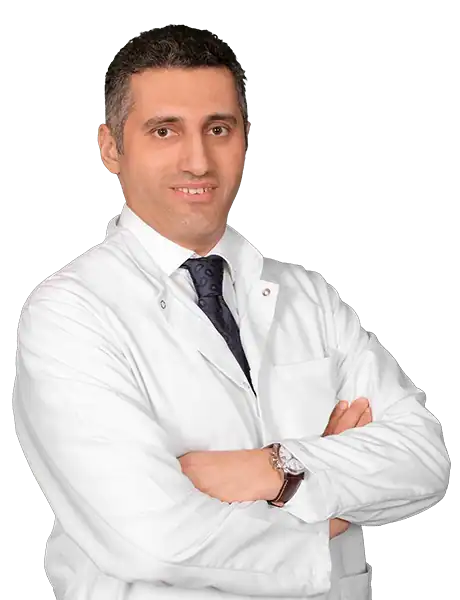
Prof. Burak Pamukçu, MD is a cardiologist in the Cardiology Department of Acibadem Kozyatagi Hospital in İstanbul, Turkey. He treats coronary artery disease, angina, myocardial infarction, heart failure, arrhythmias, hypertension, heart valve diseases including mitral valve regurgitation, rheumatic heart disease and myocarditis, and performs percutaneous coronary intervention. He consults in Turkish and English.
 Accepting international patients
About Prof. Burak Pamukçu, MD
Prof. Burak Pamukçu, MD is a cardiologist in the Cardiology Department of Acibadem Kozyatagi Hospital in İstanbul. He graduated from İstanbul University İstanbul Faculty of Medicine in 1999 and completed his cardiology training at the same faculty in 2005. Between 2005 and 2009 he worked as a chief assistant at İstanbul Faculty of Medicine, including its Department of Cardiology, and from 2006 to 2007 he served in the cardiology unit of Etimesgut Military Hospital. From 2009 to 2010 he was a research assistant at the University of Birmingham, Centre for Cardiovascular Sciences, City Hospital, Birmingham, UK. He received the title of Associate Professor in 2011.
After returning to Turkey, Dr. Pamukçu practised at Pendik Regional Hospital (2011–2012), Erdem Hospital (2012–2016) and İstanbul Surgical Hospital (2016–2017) before joining Acıbadem Healthcare Services in 2017, where he has since worked in the Cardiology Department of the hospital in Kozyatağı. He has more than 33 years in medicine. His memberships include the Turkish Cardiology Association, the European Association of Percutaneous Cardiovascular Interventions, the World Heart Failure Society, the European Society of Cardiology and its Working Group on Thrombosis and Working Group on Atherosclerosis and Vascular Biology, the European Atherosclerosis Society and the American Society of Echocardiography. His published research, partly conducted with colleagues at the University of Birmingham, addresses atrial fibrillation and its treatment, stroke and bleeding risk assessment in atrial fibrillation, platelet aggregation and antiplatelet therapy, monocyte subsets in coronary artery disease and myocardial infarction, and inflammatory pathways in atherosclerosis.
Clinical focus
Dr. Pamukçu’s clinical work covers a broad range of cardiovascular conditions. In coronary heart disease he assesses and manages coronary artery disease, atherosclerosis, angina and myocardial infarction, and he performs percutaneous coronary intervention where this is clinically indicated. He also treats patients with heart failure, arrhythmias and hypertension.
A further part of his practice concerns heart valve diseases, including mitral valve regurgitation and rheumatic heart disease, as well as inflammatory conditions of the heart muscle such as myocarditis. Diagnosis and management planning are based on the individual patient’s history, examination findings and existing test results, and the suitable options are discussed with the patient before any treatment decision is made.
How Dr. Pamukçu works with international patients
Dr. Pamukçu consults in Turkish and English, and interpreters can be arranged for patients who speak other languages. The international patient team coordinates the collection of prior reports and imaging, such as echocardiography or CT reports, laboratory results, operative notes and discharge summaries, arranges appointments and organises the hospital visit. A first consultation typically covers the patient’s history and symptoms, a review of existing imaging and previous treatments, a clinical examination and a discussion of the options. Video consultations are available for international patients who wish to discuss their case before or instead of travelling to İstanbul.
What Dr. Pamukçu treats and performs
Each item opens the condition or treatment page with the care pathway for international patients.
Conditions treated
Education, career and memberships
Education & training
Education
- 2011Associate Professor Doktor
- 2009–2010University of Birmingham / Research Assistant
- 2005İstanbul University İstanbul Faculty of Medicine Cardiology
- 1999İstanbul University İstanbul Faculty of Medicine
- 1993Saınt-Mıchel High School
Career
Professional Experience
- 2017Acıbadem Healthcare Services
- 2017Acıbadem Kozyatağı Hospital
- 2016–2017İstanbul Surgical Hospital
- 2012–2016Erdem Hospital
- 2011–2012Pendik Regional Hospital
- 2009–2010University of Birmingham, Centre for Cardiovascular Sciences, City Hospital, Birmingham, UK
- 2007–2009İstanbul Faculty of Medicine Department of Cardiology
- 2006–2007Etimesgut Military Hospital Cardiology
- 2005–2009İstanbul Faculty of Medicine / Chief Assistant
- 2005–2006İstanbul Faculty of Medicine Department of Cardiology
Memberships
Professional Memberships
- Turkish Cardiology Association
- European Association of Percutaneous Cardiovascular Interventions (European Association of Percutaneous Cardiovascular Interventions)
- World Heart Failure Society (World Heart Failure Society)
- Tromboz Çalışma Grubu
- Southern Medical Association
- Avrupa Ateroskleroz Association (European Atherosclerosis Society)
- Amerikan Ekokardiyografi Cemiyeti (American Society of Echocardiography)
- European Cardiology Association working group memberships
- Atherosclerosis and Vascular Biology Working Group (European Society of Cardiology Working Group on Thrombosis, Working Group on Atherosclerosis and Vascular Biology)
- European Cardiology Association (European Society of Cardiology)
Selected publications
Selected Publications
- Cardiotrophin-1: A new predictor of atrial fibrillation relapses after successful cardioversion Bosn J Basic Med Sci 2015;15(3):68-73. Altun I, Pamukcu B, Yildiz CE, Arkaya SC, Guz G, Yilmaz A, Bilge AK, Turkoglu UM, Adalet K.
- Monocyte subsets in coronary artery disease and their associations with markers of inflammation and fibrinolysis. Atherosclerosis 2014; 234(1): 4-10. Shantsila E, Tapp LD, Wrigley BJ, Pamukcu B, Apostolakis S, Montoro-García S, Lip GY.
- The CD14++CD16+ monocyte subset and monocyte-platelet interactions in patients with ST-elevation myocardial infarction J Thromb Haemost 2012; 10(7): 1231-41. Tapp LD, Shantsila E, Wrigley BJ, Pamukcu B, Lip GY.
- Antiplatelet Therapy in Atherothrombotic Cardiovascular Diseases for Primary and Secondary Prevention: A Focus on Old and New Antiplatelet Agents Curr Pharm Des 2012; 18(6): 850-60. Pamukcu B, Huber K, Lip GY.
- Dronedarone for the treatment of atrial fibrillation. Therapy 2011; 8(6): 681-9. Kuzniatsova N, Pamukcu B, Lip GY.
- Effect of cigarette smoking on platelet aggregation. Clin App Throm Haemost 2011; 17(6): E175-80. Pamukcu B, Oflaz H, Onur I, Cimen A, Nisanci Y
- The Nuclear Factor?Kappa B Pathway in Atherosclerosis: A Potential Therapeutic Target for Atherothrombotic Vascular Disease Thromb Res 2011; 128(2): 117-23. Pamukcu B, Lip GY, Shantsila E.
- Dronedarone as a new treatment option for atrial fibrillation patients : pharmacokinetics, pharmacodynamics and clinical practice. Expert Opin Pharmacother 2011; 12(1): 131-40. Pamukcu B, Lip GY.
- The CD40-CD40L system in cardiovascular disease. Ann Med 2011; 43(5): 331-40. Pamukcu B, Lip GYH, Snezhitskiy V, Shantsila E.
- The Assessment of stroke and bleeding risk in atrial fibrillation: where are we now? Expert Rev Cardiovasc Ther 2010; 8: 1703-10 Pamukcu B, Lane DA, Lip GY