Quick answer
Heart failure is a chronic condition in which the heart cannot pump enough blood to meet the body’s needs, causing symptoms such as shortness of breath, fatigue, and swelling. Treatment depends on the cause and severity and may include medication, lifestyle measures, minimally invasive procedures, device therapy, or surgery, with care focused on improving heart function and symptom control.
What is heart failure?
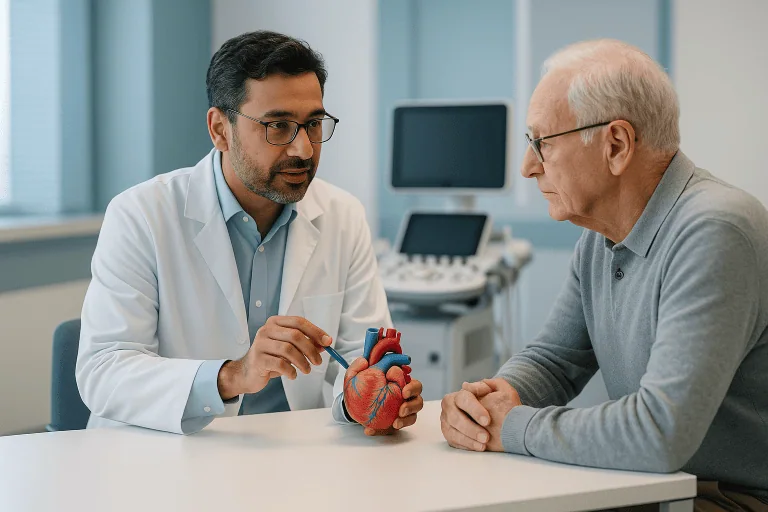
Heart failure is a long-term condition in which the heart cannot pump blood as well as the body needs. Despite the name, it does not mean the heart has stopped working. It means the heart muscle has become too weak or too stiff to fill with blood and push it out efficiently. When this happens, blood can back up in the lungs and other parts of the body, and organs may not receive enough oxygen-rich blood to work normally.
Understanding what is heart failure begins with understanding how the heart works. The heart has two lower chambers, called ventricles, that do most of the pumping. In some people, the left ventricle becomes weak and cannot squeeze forcefully enough; doctors call this heart failure with reduced ejection fraction. Ejection fraction is a measurement of how much blood the heart pushes out with each beat. In other people, the ventricle squeezes normally but has become stiff and cannot relax and fill properly; this is called heart failure with preserved ejection fraction. Both types cause similar problems for the patient, but they may be treated somewhat differently.
Heart failure is common worldwide, and it becomes more common with age. It affects millions of adults, most often people over 60, although younger people can develop it, particularly after a heart attack, a viral infection of the heart muscle, or because of an inherited heart condition. Heart failure is usually a chronic condition, meaning it lasts for the rest of a person’s life, but in many cases it can be managed well with treatment, and some people live for many years with a good quality of life.
Symptoms of heart failure
Heart failure symptoms develop because fluid builds up in the body and because organs and muscles receive less blood than they need. Symptoms often begin gradually and may be mistaken for normal aging or being out of shape. Common heart failure symptoms include:
- Shortness of breath, especially during activity, when lying flat, or waking you at night
- Fatigue and weakness, or feeling unusually tired after everyday tasks
- Swelling (called edema) in the ankles, feet, legs, or abdomen
- Rapid or irregular heartbeat, or a feeling of the heart racing or fluttering
- Persistent cough or wheezing, sometimes with white or pink-tinged mucus
- Sudden weight gain over a few days, caused by fluid retention
- Reduced ability to exercise or climb stairs
- Loss of appetite or nausea, often from fluid pressing on the digestive system
- Difficulty concentrating or confusion, particularly in older adults
Symptoms often vary by stage. In early heart failure, a person may feel fine at rest and only notice breathlessness during heavy exertion. As the condition progresses, everyday activities such as dressing or walking short distances can cause symptoms, and in advanced heart failure a person may feel breathless even while sitting still. Doctors often describe these stages using a scale from class I (no limitation) to class IV (symptoms at rest).
Symptoms can also differ by which side of the heart is most affected. When the left side is weak, fluid tends to build up in the lungs, causing breathlessness and cough. When the right side is affected, fluid tends to collect in the legs, abdomen, and liver, causing swelling and bloating. Many people eventually have features of both.
It is important to know that heart failure symptoms can flare up suddenly. A rapid worsening of breathlessness or swelling is called decompensation and often requires urgent medical care.
Causes and risk factors
Heart failure causes are usually conditions that damage or overwork the heart muscle over time. The most common underlying causes include:
- Coronary artery disease: narrowing of the arteries that supply the heart muscle with blood, which is the most frequent cause in many countries. A heart attack, in which part of the heart muscle is damaged by a blocked artery, can permanently weaken the heart.
- High blood pressure (hypertension): over years, the heart must work harder against high pressure, and the muscle can thicken, stiffen, and eventually weaken.
- Heart valve disease: valves that leak or do not open properly force the heart to pump harder than normal.
- Cardiomyopathy: disease of the heart muscle itself, which may be inherited, caused by infections, alcohol, certain drugs, or sometimes has no identifiable cause.
- Arrhythmias: abnormal heart rhythms, such as atrial fibrillation, that make the heart beat too fast or irregularly for long periods.
- Congenital heart defects: structural heart problems present from birth.
- Other conditions: diabetes, thyroid disorders, severe anemia, kidney disease, and certain cancer treatments can contribute to heart failure.
Risk factors that make heart failure more likely include older age, smoking, obesity, a diet high in salt and saturated fat, physical inactivity, heavy alcohol use, sleep apnea (repeated pauses in breathing during sleep), and a family history of heart disease. In many people, several factors act together over many years. Because some of these risk factors can be changed, treating high blood pressure, controlling diabetes, and stopping smoking can lower the risk of developing heart failure or slow its progression.
Diagnosis of heart failure
Heart failure diagnosis begins with a careful conversation about symptoms and a physical examination. A doctor will listen to the heart and lungs, check for swelling in the legs and abdomen, look at the veins in the neck, and ask about breathlessness, fatigue, and how symptoms affect daily life. Because these symptoms can also be caused by lung disease, anemia, or other conditions, tests are needed to confirm the diagnosis and find the cause. Commonly used tests include:
- Blood tests: a key test measures natriuretic peptides (often called BNP or NT-proBNP), which are substances the heart releases when it is under strain. Normal levels make heart failure less likely; raised levels support the diagnosis. Blood tests also check kidney function, liver function, thyroid function, and blood counts.
- Electrocardiogram (ECG): a recording of the heart’s electrical activity that can show rhythm problems, signs of a previous heart attack, or thickened heart muscle.
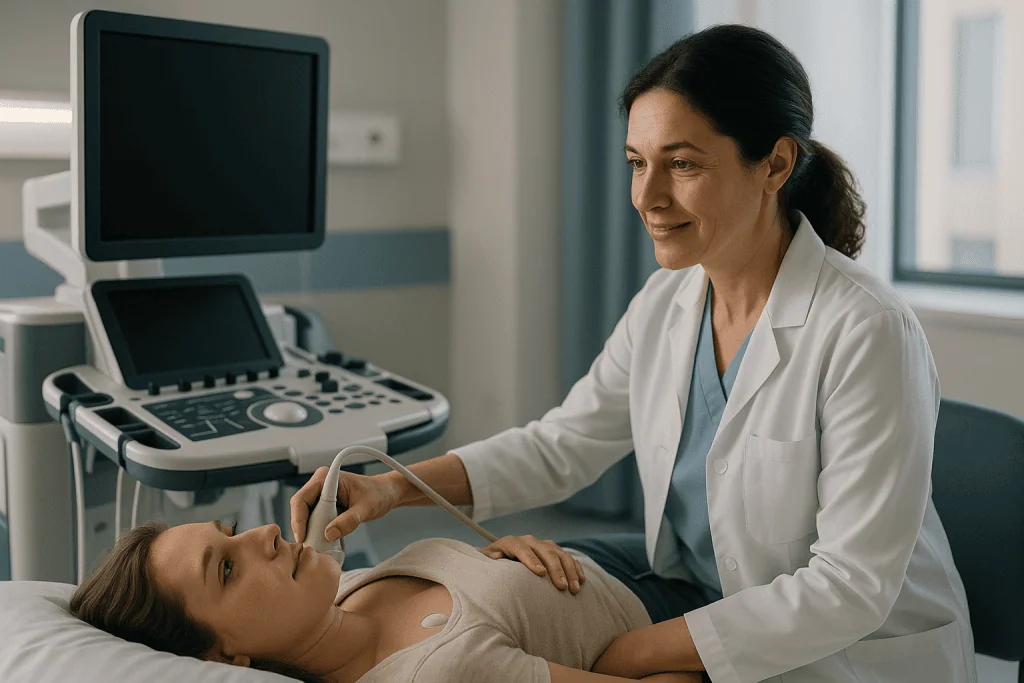
- Echocardiogram: an ultrasound scan of the heart and usually the most important test. It shows how well the heart pumps, measures the ejection fraction, and examines the valves and heart chambers. This test helps doctors decide which type of heart failure is present.
- Chest X-ray: can show an enlarged heart or fluid in the lungs.
- Further imaging: in some cases, doctors may order a cardiac MRI (a detailed magnetic scan of the heart), a CT scan, or a nuclear scan to look more closely at the heart muscle and blood supply.
- Coronary angiography: a test using a thin tube and contrast dye to view the heart’s arteries, often performed when coronary artery disease is suspected as the cause.
- Exercise or stress testing: to see how the heart performs during physical activity.
Doctors generally confirm heart failure when typical symptoms and examination findings are combined with objective evidence of heart dysfunction on tests such as the echocardiogram, often supported by raised natriuretic peptide levels. Identifying the underlying cause matters, because treating a problem such as a faulty valve or a blocked artery can sometimes significantly improve heart function.
Treatment options for heart failure
Heart failure treatment aims to relieve symptoms, slow or stop the condition from getting worse, reduce hospital admissions, and help people live longer and more comfortably. Treatment is tailored to the type of heart failure, its cause, and its severity, and it usually combines lifestyle changes with medication. At specialized centers, care for this condition is typically coordinated by a cardiology team; an overview of heart failure care and the cardiology department that manages it is available on the relevant Acibadem pages.
Lifestyle changes and monitoring
For everyone with heart failure, day-to-day self-care is part of treatment. Doctors commonly recommend reducing salt intake, limiting or avoiding alcohol, stopping smoking, staying physically active within safe limits, and weighing yourself regularly to detect fluid buildup early. In very mild or early cases, a doctor may recommend close monitoring alongside treatment of risk factors such as high blood pressure, rather than immediately adding multiple medications. Some patients benefit from structured cardiac rehabilitation, a supervised exercise and education program.
Medications
Medication is the foundation of heart failure treatment, particularly for heart failure with reduced ejection fraction. Doctors usually prescribe a combination of drugs, each working in a different way. Commonly used groups include:
- ACE inhibitors, ARBs, or ARNI drugs: medicines that relax blood vessels and reduce strain on the heart.
- Beta-blockers: medicines that slow the heart rate and protect the heart muscle over time.
- Mineralocorticoid receptor antagonists: drugs that block certain hormones which can worsen heart failure.
- SGLT2 inhibitors: medicines originally developed for diabetes that have been shown to benefit many people with heart failure, whether or not they have diabetes.
- Diuretics (water pills): medicines that help the body remove excess fluid, relieving breathlessness and swelling. They improve symptoms but do not change the underlying disease.
Doses are often started low and increased gradually, and regular blood tests are needed to monitor kidney function and salts in the blood. It is important not to stop these medicines without medical advice, even when you feel well, because they work partly by protecting the heart over the long term.
Devices and procedures
Some people benefit from implanted devices. An implantable cardioverter-defibrillator (ICD) is a small device placed under the skin that can correct dangerous heart rhythms. Cardiac resynchronization therapy (CRT) uses a special pacemaker to make the heart’s chambers beat in a better-coordinated way, which can improve pumping in selected patients. When a blocked artery or a faulty valve is causing or worsening heart failure, procedures such as angioplasty with stenting (opening a narrowed artery with a small balloon and mesh tube), bypass surgery, or valve repair or replacement may be recommended.
Advanced treatments
For a small number of people with severe heart failure that no longer responds to standard treatment, doctors may discuss advanced options such as a ventricular assist device (a mechanical pump that helps the heart) or heart transplantation. These are major interventions considered only after careful evaluation at specialized centers. For patients who are not candidates for such treatments, palliative care can focus on comfort and quality of life.
Living with heart failure and outlook
Heart failure is usually a lifelong condition, and its course varies widely from person to person. Some people remain stable for many years with treatment, while others experience gradual worsening or repeated flare-ups that require hospital care. The outlook depends on the cause, the type and stage of heart failure, other health conditions, and how consistently treatment is followed. Modern medication combinations have meaningfully improved survival and quality of life for many patients, although no treatment can guarantee a particular outcome.
Day-to-day management makes a real difference. People living with heart failure are often advised to weigh themselves daily and report sudden weight gain, take medicines exactly as prescribed, limit salt, keep vaccinations such as flu and pneumonia shots up to date, manage stress and sleep problems, and attend regular follow-up appointments. Family members and caregivers can help by learning the warning signs of worsening heart failure. Many people find that with a structured routine and good communication with their care team, they can continue to work, travel, and enjoy an active life within their limits. It is reasonable to ask your doctor openly about your individual prognosis and what to expect over time.
Frequently asked questions
What is heart failure in simple terms?
Heart failure means the heart has become too weak or too stiff to pump blood around the body as well as it should. It does not mean the heart has stopped. Because the body does not get enough blood flow, and fluid backs up in the lungs and tissues, people typically feel breathless, tired, and swollen. It is a chronic condition that usually requires long-term treatment and monitoring.
Can heart failure be cured?
In most cases heart failure cannot be completely cured, but it can often be controlled effectively. In some situations, treating the underlying cause, such as repairing a heart valve, opening a blocked artery, or controlling a fast heart rhythm, can allow heart function to improve substantially, and occasionally to return to near normal. Even when a cure is not possible, medications and lifestyle changes can relieve symptoms and help many people live longer.
How serious is heart failure?
Heart failure is a serious condition that should never be ignored, but its severity varies greatly. Some people have mild disease that stays stable for years, while others have advanced disease with frequent hospital stays. Early diagnosis and consistent treatment generally improve the outlook. Your own doctor is best placed to explain how serious your situation is, based on your test results and overall health.
What are the early warning signs of heart failure?
Early heart failure symptoms are often subtle: getting more breathless than usual during activity, feeling unusually tired, needing extra pillows to sleep comfortably, mild ankle swelling by the end of the day, or gaining weight quickly over a few days. Because these signs can have other causes, anyone who notices them, especially people with high blood pressure, diabetes, or a history of heart disease, should discuss them with a doctor.
How is heart failure diagnosed?
Heart failure diagnosis is based on symptoms, a physical examination, and tests. The most important tests are usually a blood test measuring natriuretic peptides (BNP or NT-proBNP) and an echocardiogram, an ultrasound of the heart that shows how well it pumps. Doctors may also use an ECG, chest X-ray, cardiac MRI, or angiography to find the underlying cause.
Can you live a long life with heart failure?
Many people live for years, sometimes decades, with heart failure, particularly when it is diagnosed early and treated consistently. Survival has improved with modern medication combinations and devices. Outcomes vary depending on the cause, stage, age, and other health conditions, so no one can promise a specific lifespan, but following the treatment plan, limiting salt, staying active as advised, and attending follow-up visits give the best chance of a long and stable course.
What should I avoid if I have heart failure?
People with heart failure are generally advised to avoid excess salt, heavy alcohol use, smoking, and becoming inactive. Some over-the-counter medicines, particularly certain anti-inflammatory painkillers, can worsen fluid retention, so it is wise to check with a doctor or pharmacist before taking new medicines or supplements. Drinking very large amounts of fluid may also need to be limited in some patients, depending on medical advice.
When to see a doctor
Anyone who notices persistent breathlessness, unusual fatigue, ankle swelling, or reduced ability to exercise should see a doctor for evaluation, especially if they have risk factors such as high blood pressure, diabetes, or previous heart problems. People already diagnosed with heart failure should contact their care team promptly if symptoms worsen or if they gain more than about two to three pounds (one kilogram) in a day or five pounds (two kilograms) in a week.
Seek emergency medical care immediately if you or someone near you experiences:
- Severe shortness of breath at rest, or breathlessness that comes on suddenly
- Chest pain or pressure that does not go away, which may signal a heart attack
- Coughing up pink, frothy mucus
- Fainting or near-fainting
- A very fast, pounding, or severely irregular heartbeat accompanied by dizziness or breathlessness
- Confusion or sudden difficulty thinking clearly
- Rapidly worsening swelling of the legs or abdomen
These red-flag signs can indicate acute heart failure or another medical emergency that needs immediate treatment. Acting quickly can be lifesaving. If you are ever unsure whether a symptom is urgent, it is safer to seek medical help than to wait.
Blood Pressure Calculator
Check your own numbers in seconds, free, instant and doctor-reviewed ranges.
From the Acibadem Blog

The BNP Blood Test: How One Number Helps Separate Heart from Lung Breathlessness
A BNP blood test measures B-type natriuretic peptide, a hormone the heart's pumping chambers release when they are stretched by pressure or fluid. In…
Medically reviewed by the Acıbadem International Medical Board September 2, 2026
See our medical review board →
Update history
- PublishedJune 14, 2026
- Medical review approvedSeptember 2, 2026
- Last content updateSeptember 2, 2026