Minimally Invasive
Minimally invasive surgery uses small incisions, cameras, and specialized instruments to treat many conditions with less tissue trauma. At Acibadem, options may include laparoscopic or robotic approaches.

Quick answer
Minimally invasive surgery treats disease through small incisions or natural body openings instead of one large cut. A thin camera shows the surgical field on a monitor while the surgeon works with fine instruments, laparoscopic, thoracoscopic, arthroscopic, endoscopic or robotic-assisted, depending on the condition. For suitable patients it can mean less tissue trauma, less blood loss, a shorter hospital stay and an earlier return to daily life.
Minimally Invasive Surgery: Care Built Around Smaller Incisions
Minimally invasive surgery treats disease through small incisions or natural body openings rather than one large cut. The surgeon works with a thin camera and long, fine instruments, following a magnified view on a monitor rather than looking directly into an open wound. It is used across most surgical specialties, from gallbladder removal and hernia repair to selected cancer, joint, spine and heart operations, whenever a condition can be reached and treated safely through smaller access points.
Being told you may need an operation usually raises two sets of questions at once. The medical ones come first: what exactly is wrong, and what is the safest way to treat it? Then come the practical and emotional ones: how much pain to expect, how long you will spend in hospital, how long you will be away from work or family, and how large the scar will be. If you are considering treatment in another country, the logistics of travel and follow-up add a further layer. Minimally invasive surgery was developed with both sets of questions in mind. It aims to treat complex conditions as effectively as open surgery while reducing the physical burden the operation itself places on your body.
In suitable patients, working through small openings can reduce tissue trauma, limit blood loss, shorten the hospital stay and support an earlier return to daily life compared with open surgery for the same condition. But the smaller incision is a means, not the goal. The goal is the safest and most complete treatment for your specific diagnosis, supported by careful assessment before surgery, an experienced surgical team during it, and structured care afterwards. At Acibadem, minimally invasive surgery may involve laparoscopic, thoracoscopic, endoscopic, arthroscopic or robotic-assisted techniques, chosen according to the organ system, the diagnosis and your overall health, not according to a single standard route applied to every patient.
A note on terminology before going further. If you have been reading about this online, you may have come across shortened or misspelled forms such as minvasive or laproscopic. The terms surgeons actually use are minimally invasive and laparoscopic. You may also see the phrase minimal invasive operation or the everyday label “keyhole surgery”; these all describe the same family of techniques. This page uses the standard medical terms and explains each one as it appears.
What Is Minimally Invasive Surgery?
Minimally invasive surgery is a group of surgical techniques that allow doctors to diagnose or treat disease through small incisions or through natural openings in the body. The surgeon inserts a thin camera, which sends magnified images to a monitor. Through separate small openings, specialised instruments are placed to cut, repair, remove, seal or reconstruct tissue. The internal operation is often identical to what would be done through a large incision, what changes is the route in and the amount of healthy tissue disturbed along the way.
What does minimally invasive mean?
“Minimally invasive” means the operation disturbs as little healthy tissue as possible on the way to the problem. Instead of dividing large areas of skin and muscle to expose an organ directly, the surgeon reaches it through openings that are often only a few millimetres to a few centimetres long. The term describes the access route, not the seriousness of the operation. A minimally invasive cancer operation is still major surgery; it simply arrives at the tumour through a smaller doorway. This distinction matters, because patients sometimes assume “minimally invasive” means “minor”. It does not. It means the surgical goals are pursued with less collateral disruption.
What is considered minimally invasive surgery?
An operation is considered minimally invasive when it is performed through small incisions or natural body openings using camera guidance and specialised instruments, rather than through one large open incision. The main families are laparoscopic surgery in the abdomen and pelvis, thoracoscopic surgery in the chest, arthroscopic surgery in the joints, endoscopic surgery through natural openings such as the mouth, nose, rectum or urinary tract, and robotic-assisted surgery, which applies the same principles with instruments controlled from a console. Some interventional procedures performed through blood vessels: the territory of invasive cardiology, for example, follow the same underlying idea: treat the problem while sparing the tissue around it.
Laparoscopic surgery
Laparoscopic surgery is the most widely used minimally invasive approach and is applied mainly in the abdomen and pelvis. A small amount of medical carbon dioxide gas is introduced to gently lift the abdominal wall and create working space, so the surgeon can see the organs clearly on the monitor. Instruments pass through narrow ports placed in the small incisions. Gallbladder removal is now most often performed laparoscopically, and the same approach is routine for many hernia repairs, appendix operations, reflux procedures and gynaecological operations. When people talk loosely about “keyhole surgery”, this is usually what they mean.
Thoracoscopic, arthroscopic and endoscopic surgery
Thoracoscopic surgery applies the same principles inside the chest. Because the lungs occupy that space, anaesthetic techniques are used to deflate one lung temporarily so the surgeon can work safely around it: an approach used for lung nodules, selected lung cancer operations, pleural disease and mediastinal masses. Arthroscopic surgery is the joint equivalent: the camera and instruments enter the knee, shoulder, hip or ankle through small punctures, and sterile fluid expands the joint to create a clear view. Endoscopic surgery uses natural body openings instead of incisions where anatomy allows, through the mouth for some digestive and airway procedures, through the urinary tract for many urological ones, or through the nose for selected skull-base operations. Each variant shares the same logic: reach the problem while sparing everything in between.
Robotic-assisted surgery
Robotic-assisted surgery is a form of minimally invasive surgery in which the surgeon controls articulated instruments from a console beside the patient. The system translates the surgeon’s hand movements into precise instrument movements inside the body, filtering out tremor. The visual field is magnified and three-dimensional, and the instrument tips can rotate through angles a human wrist cannot reach, which can be useful in narrow or anatomically complex spaces such as the deep pelvis or the chest. It is important to understand what robotic surgery is not: it is not autonomous. The robot performs no step on its own; the surgeon remains in control throughout the operation. You can read more about how these systems are used across specialties on our Robotic Surgery page.
Which approach is most appropriate depends on the diagnosis, your anatomy, any previous operations, the stage of disease and the surgeon’s assessment. In some situations a minimally invasive route is clearly preferable. In others, open surgery is safer or allows more complete treatment. A high-quality surgical plan names the intended approach and also states, in advance, what will happen if findings during the operation require a different one.
Who May Need Minimally Invasive Surgery
You may be considered for minimally invasive surgery when you have a condition that requires an operation and that condition can be safely reached and treated through smaller access points. This covers a wide territory: benign disease, cancer operations, emergency conditions, functional disorders and reconstructive procedures. The decision rests on three things, medical necessity, technical feasibility and the expected benefit for you as an individual, not on a preference for one technique over another.
The symptoms that lead people to surgical evaluation vary enormously. Some have abdominal pain, reflux, gallbladder attacks, hernia symptoms, abnormal bleeding, fertility concerns, urinary complaints, chest symptoms or joint pain. Others feel entirely well and have a finding picked up on screening or on imaging done for another reason: a colon lesion, a kidney mass, a uterine fibroid, a lung nodule. A third group has been managing a condition with medication and reaches the point where medical treatment no longer gives sufficient relief. All three routes can lead to the same question: is an operation needed, and if so, by which approach?
Answering that question starts with diagnosis, not technique. Evaluation usually begins with a detailed medical history, physical examination and review of your previous records. Imaging may include ultrasound, CT, MRI, X-ray, mammography, PET imaging or organ-specific scans. Depending on the condition, you may also need laboratory tests, pathology review, endoscopy, colonoscopy, bronchoscopy, urodynamic testing, cardiac evaluation or pulmonary function testing. For cancer, diagnosis and staging carry particular weight, because the surgical plan must be coordinated with oncology, radiology, pathology and, where needed, radiation oncology before anyone chooses an incision.
Broadly, you are a good candidate for a minimally invasive approach if three conditions hold: the disease can be treated completely through that approach, you can safely tolerate the anaesthesia it requires, and the expected benefits outweigh the risks in your specific case. Factors such as dense scar tissue from previous operations, advanced disease, unstable medical problems, significant obesity, bleeding disorders or unusual anatomy influence the strategy. None of these automatically rules out minimally invasive surgery, but each one requires honest, individual planning rather than a standard answer.
Conditions Minimally Invasive Surgery Can Treat
Minimally invasive techniques are used across most surgical specialties. The exact indications depend on the diagnosis, the surgeon’s expertise and the resources of the operating theatre. The sections below cover the main specialties, together with the candidacy questions patients ask most often.
What are some examples of minimally invasive surgery?
Common examples include laparoscopic gallbladder removal, laparoscopic hernia repair, appendectomy, reflux surgery, arthroscopic knee and shoulder operations, hysteroscopic and laparoscopic gynaecological procedures, endoscopic removal of digestive tract lesions, thoracoscopic lung procedures, robotic-assisted prostate and kidney surgery, and selected minimally invasive spine and heart operations. Bariatric procedures such as sleeve gastrectomy are also routinely performed through small incisions. The list keeps growing as instruments and imaging improve, but the principle behind each example is the same: the operation done inside the body matches the open version, while the access route is smaller.
General, colorectal and bariatric surgery
In general surgery, minimally invasive approaches are used for gallbladder removal, hernia repair, appendectomy, reflux surgery, adrenal and spleen operations, and selected liver, pancreas and gastrointestinal procedures. Colorectal surgeons use them for benign bowel disease, diverticular disease, complications of inflammatory bowel disease, rectal prolapse and selected colon or rectal cancers. In bariatric and metabolic surgery, small-incision techniques are the standard route for most weight-loss operations, which matters because reduced wound size lowers the strain of early mobilisation in patients whose weight already burdens breathing and circulation.
Gynaecology and urology
In gynaecology, minimally invasive surgery may be appropriate for ovarian cysts, endometriosis, uterine fibroids, hysterectomy, pelvic pain, abnormal bleeding, selected fertility-related conditions and selected gynaecological cancers. In urology, camera-guided and robotic techniques are used for kidney tumours, prostate surgery, urinary tract reconstruction, adrenal masses, ureteral conditions and some bladder procedures; the range of options is described in more detail on our minimally invasive urology page. In both fields, the deep, narrow pelvis is exactly the kind of space where magnified vision and fine instruments earn their place.
Thoracic surgery
Thoracic surgeons use small-incision, camera-guided surgery for lung nodules, selected lung cancer operations, pleural disease, mediastinal masses and some oesophageal conditions. Avoiding a large chest incision can be particularly meaningful here, because rib-spreading open approaches are among the more demanding recoveries in surgery. Whether a chest condition is suitable for a thoracoscopic route depends heavily on the size, position and stage of the disease, which is why thoracic cases are usually reviewed with radiology and, for cancer, with the wider oncology team before the approach is fixed.
Orthopaedic surgery and the knee
Orthopaedic surgeons use arthroscopy for meniscus tears, ligament injuries, shoulder impingement, rotator cuff disease, cartilage problems and certain hip or ankle disorders. Arthroscopy allows the surgeon to inspect, trim, repair or reconstruct structures inside the joint through small punctures rather than opening the joint widely.
Who is a candidate for minimally invasive knee replacement?
Candidates for minimally invasive knee replacement are typically patients who need a knee replacement for advanced arthritis and whose build, bone quality and joint alignment allow the implant to be placed accurately through a shorter incision with less muscle disruption. The operation itself is the same joint replacement, what changes is the exposure. Patients with severe deformity, significant obesity, very stiff knees, previous hardware around the joint or complex revision needs are often better served by a conventional exposure, because accurate implant positioning matters more for the long-term result than incision length. The honest answer, as with every technique on this page, is that candidacy is decided case by case: the surgeon weighs whether the smaller approach can deliver the same quality of reconstruction for your knee specifically.
What is minimally invasive spine surgery?
Minimally invasive spine surgery is a set of techniques that treat spinal problems through small incisions using tubular retractors, endoscopes or navigation, rather than stripping muscle away from the spine through a long midline incision. It is used for conditions such as disc herniation, spinal stenosis and certain stabilisation or fusion procedures. Because the back muscles are dilated apart rather than cut and detached, muscle disruption is reduced, which is the main rationale for the approach. These procedures are planned and performed within specialised spine and neurosurgery teams, and preoperative imaging plays an unusually large role, since the surgeon must know precisely where the problem sits before committing to a narrow corridor of access.
Who is a candidate for minimally invasive spine surgery?
Candidates for minimally invasive spine surgery are usually patients whose imaging shows a well-defined problem, such as a disc herniation or focal stenosis, that matches their symptoms, and who have not gained sufficient relief from non-surgical care such as physiotherapy or injections. Limited, one- or two-level disease is generally more suitable than extensive multilevel disease. Patients with major spinal deformity, widespread instability, tumours or infections that require broad exposure may need conventional open techniques, although hybrid strategies exist. Two things disqualify no one automatically but always require discussion: previous spine surgery, which creates scar tissue in the planned corridor, and unclear correlation between imaging findings and symptoms, because no technique, small or large, helps a patient operated on for the wrong reason.
Heart and bypass surgery
Selected cardiac operations can also be performed through smaller incisions, including some valve procedures and coronary bypass operations, within specialised cardiovascular surgery teams. Minimally invasive heart surgery avoids or limits the full division of the breastbone used in conventional open-heart operations, working instead through a small incision between the ribs, in some cases with robotic assistance.
Who is a candidate for minimally invasive bypass surgery?
Candidates for minimally invasive bypass surgery are typically patients whose coronary blockages are limited to vessels that can be reached through a small chest incision, most often disease involving one or two arteries on the front of the heart. Patients with extensive disease across multiple coronary territories, heavily calcified vessels, previous chest surgery or the need for combined procedures usually require the conventional approach, because complete revascularisation takes priority over incision size. The decision is made by a heart team that weighs your angiogram findings, heart function, lung function and overall health, and it often involves comparing surgical options against stenting or medical management. If a surgeon recommends the open route for you, that is not a lesser option: it is a judgement that your arteries need the exposure.
Not every condition, in any specialty, is best treated minimally invasively. Very large tumours, advanced infection, major trauma, extensive adhesions or operations requiring wide exposure may still need open surgery. A responsible recommendation is based on the safest route to complete treatment, not on the smallest possible incision.
How Minimally Invasive Surgery Is Performed
Preparation before surgery
Preparation begins with a complete evaluation of both the condition and your overall health. The surgical team reviews your imaging, test results, current medications, allergies, previous operations and medical conditions such as diabetes, heart disease, lung disease, kidney disease or clotting disorders. If you are travelling internationally, this review can often begin before you arrive, through shared medical records and remote consultation where appropriate, so that your time on site is used for confirmation and treatment rather than starting from zero.
Preoperative testing may include blood work, an electrocardiogram, chest imaging, an anaesthesia assessment and condition-specific investigations. If you take blood thinners, diabetes medication, immune-suppressing drugs or herbal supplements, your treating doctors will give you specific instructions about how to manage them around the operation: this is planned individually and is never a matter of general advice. Stopping smoking, improving nutrition, managing weight and stabilising chronic disease before surgery all support both the operation and the healing that follows it.
The surgical plan is then explained in detail: the intended minimally invasive approach, the expected incisions, the anaesthesia, the realistic risks, the estimated hospital stay and, importantly, the possibility of conversion to open surgery if that becomes the safer option during the operation. Conversion is not a failure. It is a judgement made in the operating theatre when a larger incision offers better control, better visibility or a more complete result. Knowing this in advance means it will not come as a shock if it happens.
Practically, you will usually be asked not to eat or drink for a specified period before surgery. Some procedures require bowel preparation, skin-cleansing protocols, antibiotics or measures to prevent blood clots. International patients also receive guidance on travel timing, companion arrangements, documents and the follow-up they will need after returning home.
What happens during the procedure
Most minimally invasive operations are performed under general anaesthesia, although some endoscopic or arthroscopic procedures use regional anaesthesia or sedation. A typical operation follows this sequence:
- 1. Positioning and preparation. Once anaesthesia is established, the team positions you carefully to protect nerves, joints, breathing and circulation. The skin is cleaned with antiseptic solution and sterile drapes are placed.
- 2. Access. The surgeon makes small incisions, usually from a few millimetres to a few centimetres depending on the operation. In laparoscopic abdominal surgery, carbon dioxide gas creates working space; in arthroscopy, fluid expands the joint; in thoracoscopy, one lung is temporarily deflated to open up the chest cavity.
- 3. Visualisation. A camera is inserted, projecting a magnified view of the surgical field onto monitors. Additional instruments pass through separate small ports.
- 4. The operation itself. Guided by the camera view, the surgeon separates tissue planes, seals blood vessels, removes diseased tissue, repairs defects, places sutures, reconstructs anatomy or takes biopsies: the same steps an open operation would involve.
- 5. Specimen removal and closure. Tissue that must be removed is often placed in a protective bag and extracted through one small incision, sometimes slightly enlarged for the purpose. If the specimen relates to cancer or suspected cancer, pathology evaluation becomes part of the treatment pathway. The ports are removed and the small incisions closed.
Robotic-assisted procedures follow the same sequence, with the surgeon controlling articulated instruments from a console. The magnified, three-dimensional view and the high dexterity of the instrument tips are most valuable in confined spaces, the pelvis, the deep abdomen, the chest, and in reconstructive steps where precise suturing matters.
Technology that supports precision and safety
Minimally invasive surgery relies on more than small instruments. High-definition camera systems let the surgeon see delicate anatomy clearly. Advanced imaging before surgery maps the position of tumours, blood vessels, ducts, nerves and organs. During the operation, intraoperative imaging, ultrasound, fluorescence guidance, navigation systems or endoscopic visualisation may support decision-making in real time. Energy devices seal blood vessels and divide tissue while limiting bleeding; specialised stapling and suturing tools create secure connections between organs and close internal defects. Anaesthesia monitoring supports careful control of breathing, blood pressure, oxygenation, temperature and pain. In appropriate cases, enhanced recovery protocols guide fluid management, nausea prevention, early mobilisation and nutrition from the first hours after surgery.
It is worth saying plainly: the value of technology depends entirely on how it is used. Equipment supports the surgeon’s plan, but judgement, training, teamwork and preparation remain the core of safe care. A well-planned laparoscopic operation with standard equipment serves you better than an ill-suited robotic one.
How long the operation and hospital stay take
The length of minimally invasive surgery varies widely. A straightforward diagnostic procedure or gallbladder operation may take a relatively short time, while cancer surgery, reconstructive surgery, bariatric surgery or complex endometriosis surgery can take several hours. Hospital stay depends on the operation and on how you respond to it: some procedures are done as day cases or with a single overnight stay, while more complex operations require several days of monitoring. Your surgeon can give you a realistic range for your specific procedure, treat any universal promise with suspicion, because no honest figure covers every patient.
After surgery, you are moved to a recovery area where nurses and physicians monitor breathing, circulation, pain, nausea and the incision sites. Early walking is usually encouraged to reduce the risk of blood clots and support lung function, and diet is restarted gradually where the operation allows. Pain after small incisions is often less intense than after a large one, but it is real: discomfort, shoulder-tip pain after laparoscopy (caused by the gas used during surgery), bloating, fatigue and soreness around the ports are all common in the first days. How pain is assessed and managed after operations at our hospitals is described in our guide on how we control pain after surgery and invasive procedures.
Recovery After Minimally Invasive Surgery
How long does it take to recover from minimally invasive surgery?
Recovery from minimally invasive surgery typically takes days to a few weeks for simpler procedures and longer for complex operations, noticeably faster, in most cases, than recovery from open surgery for the same condition, but still real surgical recovery. Your body needs time for internal healing, anaesthesia clearance, wound healing and the return of strength, regardless of how small the external scars are. The most reliable guide is the procedure-specific timeline your surgeon gives you, because “minimally invasive” covers everything from a short arthroscopy to a multi-hour cancer operation.
The table below gives a general sense of what many patients experience. It is a framework, not a schedule; your own course depends on the operation and your health.
| Time period | What patients can expect |
|---|---|
| Day 1 | Monitoring in the recovery area or hospital room, pain and nausea control, gradual walking, and instructions on breathing exercises or diet where appropriate. |
| First week | Improving mobility, mild to moderate soreness, wound care at home or at your accommodation, fatigue, and follow-up communication with the care team. |
| First month | Progressive return to routine activities, review of pathology if tissue was removed, medication adjustments, and planning for rehabilitation or additional treatment if needed. |
| Longer term | Continued internal healing, scar maturation, gradual return to exercise or physical work, and condition-specific follow-up with the surgeon or related specialists. |
You will usually be advised to avoid heavy lifting and strenuous exercise for a period determined by the operation. Driving may be restricted while you are taking strong pain medication or while movement remains limited. Return to work depends on both the procedure and the job: desk work generally resumes earlier than physically demanding work. If you are travelling home internationally, discuss the safest timing for flying with your surgeon: this matters particularly after abdominal, chest, orthopaedic or cancer surgery, and the answer differs by procedure.
Your discharge instructions will cover bathing, wound care, medications, activity restrictions, diet, bowel function and follow-up appointments, and your team will walk you through what a normal healing course looks like for your specific operation. Follow-up itself may include examination, suture or dressing review, pathology discussion, medication adjustment, rehabilitation planning or coordination with oncology and other specialties. For patients returning to another country, a written medical summary and a clear follow-up plan are essential for continuity of care with your local doctors.
Why Acting Early Matters and the Risks of Delay
When surgery is recommended, timing matters. Not every condition is urgent, and many patients can safely take time to gather information or seek a second opinion: a reasonable and often wise step. But delaying genuinely necessary surgery has costs of its own: symptoms can worsen, inflammation can deepen, organs can be damaged, and disease can progress to a stage that is harder to treat, sometimes closing the door on the minimally invasive option that was available earlier.
Concrete examples make the point. Recurrent gallbladder attacks can lead to infection, pancreatitis or emergency surgery. Hernias may enlarge or, in some cases, trap bowel. Endometriosis may cause ongoing pain and progressive scarring. Joint injuries may worsen while instability continues. Some tumours grow or spread, making treatment more complex. Obstruction, bleeding, infection and organ dysfunction all raise surgical risk when care is postponed too long.
Early evaluation does not mean immediate surgery. It means understanding the diagnosis, identifying the risks and making a plan before a manageable problem becomes an emergency. A planned operation allows better preparation, more complete assessment and a more controlled recovery than urgent surgery performed after complications have developed, and planned operations are far more often suitable for minimally invasive approaches than emergency ones.
Benefits of Minimally Invasive Surgery
When a minimally invasive approach is appropriate for your condition, it can offer several practical and medical advantages over traditional open surgery for the same problem. None of these is automatic, they depend on the operation, the disease and your health, but they explain why surgeons choose the smaller route whenever it can achieve the same result.
| Benefit | What it means for you |
|---|---|
| Smaller incisions | Less disruption of skin and muscle, often with smaller scars and easier wound care. |
| Reduced tissue trauma | Many patients experience less postoperative pain and need fewer strong pain medications. |
| Lower blood loss in many procedures | Careful visualisation and vessel-sealing tools may reduce bleeding, depending on the operation. |
| Shorter hospital stay for selected patients | Some procedures allow earlier discharge once pain, mobility, diet and vital signs are stable. |
| Faster return to daily activities | Walking, desk work and normal routines may resume sooner, guided by your surgeon’s advice. |
| Enhanced visualisation | Magnified camera views help surgeons see delicate anatomy clearly during complex steps. |
For patients travelling for treatment, some of these benefits carry extra weight: a shorter hospital stay and earlier mobility can simplify accommodation and the eventual journey home. Even so, the decision should never be driven by convenience. The right operation, done well, is the benefit that outlasts all the others.
Risks, Limitations and What Shapes a Good Result
What are the downsides of minimally invasive surgery?
The main downsides of minimally invasive surgery are that it is not suitable for every condition, it can take longer to perform than the open equivalent, and it may need to be converted to open surgery mid-operation if visibility or safety demands it. Working through small ports limits the surgeon’s tactile feedback, tissue cannot be felt directly by hand, and camera-based depth perception and instrument coordination are skills that must be built through specific training and case volume. The gas used in laparoscopy can cause temporary bloating and shoulder-tip pain afterwards. Robotic systems add setup time and are not available or appropriate for every procedure. And crucially, the smaller incision does not remove the fundamental risks of an operation: every invasive surgery, whether open or keyhole, involves anaesthesia, internal dissection and healing, and carries the possibility of complications.
Those possible complications include bleeding, infection, injury to nearby organs or blood vessels, blood clots, anaesthesia-related problems, leakage from internal connections, hernia at incision sites, or the need for a further procedure. Which of these matter most, and how likely they are, depends entirely on the specific operation and on you, which is why this conversation belongs with your surgeon rather than with a general page.
What influences the outcome
A good surgical outcome depends on far more than incision size. It begins with choosing the right treatment for the right patient at the right time: accurate diagnosis, careful staging where cancer is involved, sound anaesthesia planning and realistic expectations on both sides.
The nature of the condition is one of the strongest influences. A small, localised problem is easier to treat than advanced inflammation, widespread adhesions, deep infection or extensive cancer. Previous operations leave scar tissue that complicates minimally invasive access. Obesity, smoking, uncontrolled diabetes, heart or lung disease, immune suppression, anaemia and poor nutrition can all raise complication risk or slow healing, which is exactly why the preparation phase described earlier deserves to be taken seriously rather than rushed.
Surgeon experience with the specific procedure matters as well. Minimally invasive surgery demands a distinct skill set, and, just as important, the judgement to recognise when the technique is the wrong tool for a particular patient. Team experience counts equally: nurses, anaesthesiologists, surgical assistants, technicians and postoperative care teams all contribute to safety and recovery, and a theatre team that performs a given operation routinely handles the unexpected more smoothly than one that performs it rarely.
Your own participation is the final factor within reach. Following instructions on fasting, medications, walking, breathing exercises, wound care, hydration, nutrition and activity restrictions genuinely reduces complications, early mobilisation after abdominal surgery, for example, is one of the simplest protections against blood clots that exists.
For cancer surgery specifically, outcomes are shaped by tumour biology, stage, complete removal where possible, lymph node assessment where indicated, pathology findings and coordination with medical oncology and radiation oncology. Multidisciplinary review aligns the operation with the broader plan, chemotherapy, immunotherapy, targeted therapy, radiation, surveillance or rehabilitation as needed, so that the surgery serves the treatment strategy rather than standing apart from it.
How Acibadem Approaches Minimally Invasive Surgery
At Acibadem, minimally invasive surgery sits within structured diagnostic pathways and individualised treatment planning rather than a single standard route for every patient. That distinction matters in practice: it means the first question asked about your case is what treatment your condition needs, and only then which access route best delivers it.
Many surgical decisions are reviewed in multidisciplinary settings, particularly for cancer, complex gastrointestinal disease, thoracic conditions, gynaecological disorders, urological tumours, bariatric surgery and advanced reconstructive procedures. These reviews may bring together surgeons, radiologists, pathologists, medical oncologists, radiation oncologists, gastroenterologists, pulmonologists, anaesthesiologists, intensive care physicians and rehabilitation specialists as the case requires. This collaborative model means the operation is considered in the context of your whole diagnosis and long-term care, not in isolation.
Technology supports that pathway at multiple points. Preoperative imaging defines anatomy and shapes the plan. Modern operating theatres support laparoscopic, endoscopic, arthroscopic, thoracoscopic and robotic-assisted procedures where appropriate, with high-resolution visualisation, precision instruments, energy systems, intraoperative imaging options and careful anaesthesia monitoring. The specific equipment used depends on the hospital, department and procedure, and, as noted above, equipment serves judgement, never the other way round. A minimally invasive approach requires not only technical training but the discipline to explain why a method is recommended, what the alternatives are, and what the plan is if unexpected findings appear during surgery.
For international patients, medical care also depends on practical support. Acibadem International provides services in more than 20 languages, helping patients communicate with physicians, prepare medical documents, coordinate appointments and understand the steps of evaluation, surgery, discharge and follow-up. For anyone anxious about language, logistics or being far from home during treatment, that support is part of the care, not an accessory to it. Patients can expect clear communication about the proposed surgery, the expected hospital stay, recovery restrictions, travel considerations and follow-up needs, including a written summary that their doctors at home can work from.
Weighing Open Against Minimally Invasive Surgery
Minimally invasive surgery offers meaningful advantages for many patients, but the best results come from careful selection, accurate diagnosis and a team experienced in the specific condition being treated. Smaller incisions are one part of the story. The more important question, the one worth putting to any surgeon, anywhere, is whether the proposed approach can treat your problem safely, completely and in a way that supports your recovery and long-term health.
If you are weighing open, laparoscopic, endoscopic or robotic-assisted options, a few questions cut through the terminology. Can this approach achieve the same completeness of treatment as the open alternative in my case? What happens if the findings during surgery are different from expected? How experienced is the team with this specific operation? What does recovery realistically look like for someone with my health and my job? Your imaging, reports, medication list and previous surgical history are what allow a surgeon to answer these questions precisely rather than generically, which is why complete records matter more to your outcome than any single technology in the operating theatre.
Preparation
- Patients usually have a specialist consultation, imaging or laboratory tests, and anesthesia assessment before surgery. Blood thinners, smoking, and certain medications may need adjustment as advised. Fasting is typically required for several hours before the procedure.
Aftercare
- After surgery, patients are monitored for pain control, bleeding, infection, and safe mobility. Small incisions should be kept clean and dry, and activity is increased gradually. Follow-up visits confirm healing and review pathology or treatment results when relevant.
Frequently Asked Questions
What affects the cost of minimally invasive surgery?
The final cost depends on the diagnosis, procedure type, surgical approach, hospital stay, anesthesia, diagnostic tests, specialist consultations, consumables, medications and follow-up needs. Robotic-assisted procedures may involve different technology and operating room requirements than standard laparoscopic procedures.
How can I get a personalised quote from Acibadem?
You can request a free consultation by sharing your diagnosis, recent medical reports, imaging results and any previous treatment details. A specialist review is needed before a personalised treatment plan and quote can be prepared.
Does a package usually include travel and language support?
International patient packages may include services such as appointment coordination, translation support, airport transfers and assistance with accommodation planning. The exact inclusions should be confirmed in the written quote before travel.
Is robotic surgery always more appropriate than laparoscopic surgery?
No. Robotic-assisted surgery is useful for selected procedures, but laparoscopic, endoscopic, arthroscopic, thoracoscopic or open surgery may be more appropriate depending on the condition. Suitability is decided by a specialist after clinical evaluation.
Can the quoted cost change after arrival?
It can change if new findings appear during examination, imaging or laboratory testing, or if the surgical plan changes for safety reasons. Your care team should explain any recommended changes before treatment whenever possible.
Is this comparison medical or financial advice?
No. This information is educational and general. A free consultation with Acibadem can help you understand the most suitable clinical option and receive a personalised quote based on your medical records.
Medically reviewed by the Acıbadem International Medical Board September 13, 2026
See our medical review board →
Update history
- PublishedJune 8, 2026
- Medical review approvedSeptember 13, 2026
- Last content updateSeptember 12, 2026
References1
- Minimally Invasive Surgery my.clevelandclinic.org
Trusted care for international patients
From the Acibadem Blog

Does Minimally Invasive Mean Minor? Myths About Keyhole Surgery Patients Often Believe
No. Minimally invasive, or keyhole, surgery describes how a surgeon reaches the target, through small incisions guided by a camera, not how serious the…

The Camera, the Ports and the Gas: What Makes Minimally Invasive Surgery Possible
Minimally invasive surgery works by replacing one long incision with a few small ones. Surgeons pass a thin, lighted camera called a laparoscope and…
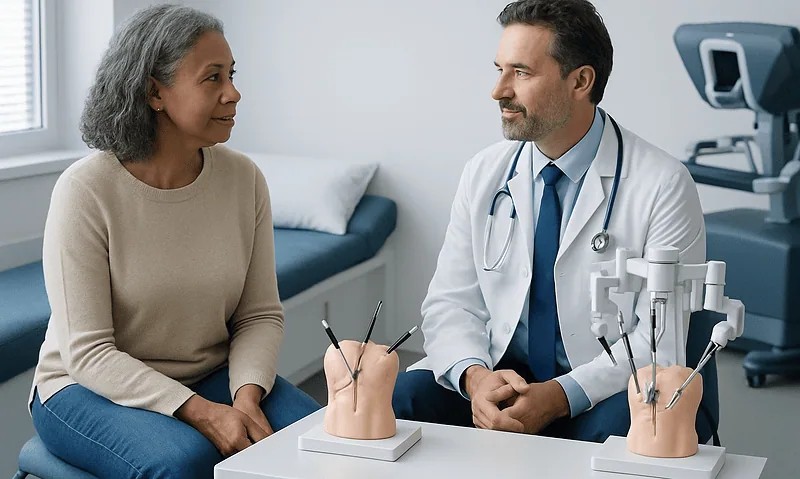
Laparoscopic vs Robotic Minimally Invasive Surgery: What Differs for the Patient on the Table
Laparoscopic and robotic surgery are both minimally invasive: the operation happens through several small cuts using a camera and long instruments. In laparoscopy the…

Is Everyone a Candidate for Minimally Invasive Surgery? When Surgeons Still Choose Open
Not everyone is a candidate for minimally invasive surgery. Surgeons weigh the specific operation, your heart and lung reserve, scar tissue from earlier surgery,…