Robotic Rehabilitation
Robotic rehabilitation uses advanced robotic devices to support repetitive, precise movement training that helps improve mobility, balance, strength, and function after neurological or musculoskeletal conditions.
Quick answer
Robotic rehabilitation, often called robot PT, uses robotic devices to guide, support or resist movement while you practise walking, standing, reaching or gripping. Supervised by therapists, the systems deliver high numbers of accurate, task-specific repetitions and measure progress objectively. It is used after stroke, spinal cord injury, brain injury and orthopaedic surgery, usually alongside conventional physiotherapy and occupational therapy.
What Is Robot PT? Robotic Rehabilitation Explained
Robot PT is physical therapy delivered with the help of robotic devices: an approach more formally known as robotic rehabilitation. Robotic systems guide, support or resist movement while you practise walking, standing, reaching or gripping, so your therapy team can deliver a high number of accurate, task-specific repetitions in every session. It is used after stroke, spinal cord injury, traumatic brain injury and major orthopaedic surgery, and in selected progressive neurological conditions, always under the supervision of trained rehabilitation professionals rather than as a self-operating machine.
The context matters. After a stroke, a spinal cord injury, an orthopaedic operation, a traumatic injury or the progression of a neurological condition, even familiar movements can suddenly feel difficult. Standing up, taking a step, reaching for a cup or keeping your balance may demand more effort, concentration and confidence than before. For many patients and families, the hardest part is not the diagnosis itself but the uncertainty that follows: will movement come back, how much function can improve, and how long will recovery take? Robotic rehabilitation is designed for exactly this stage of recovery.
It does not replace the expertise of physicians, physiatrists, physiotherapists, occupational therapists or rehabilitation nurses. Instead, it gives the team another way to deliver highly repetitive, carefully guided movement practice with measurable consistency. Recovery of movement depends heavily on repetition, timing, feedback and gradual progression. When practice can be delivered with precision and adapted to your abilities in real time, it may help the brain and body relearn skills more effectively than inconsistent, exhausting manual practice can.
A common worry is that robot PT sounds impersonal or overly technical. In practice, the opposite is usually true. The technology supports you; it does not distance you from care. Sessions are supervised by rehabilitation professionals who adjust the programme to your diagnosis, strength, endurance, pain level, balance and goals. For some patients the goal is walking more safely. For others it is regaining arm and hand use, improving posture and trunk control, reducing the sheer physical burden of movement practice, or building enough endurance to return to daily activities. The device changes from case to case; the clinical logic behind it does not.
What makes the approach genuinely useful is that it lets you practise movements that would otherwise be too difficult, too fatiguing or too inconsistent to repeat enough times in a standard session. A robotic system can provide support when you need it, resistance when you are ready for it, and feedback that shows you, objectively, how you are progressing. For people recovering from complex conditions, that combination can be meaningful. Programmes of this kind are normally delivered within a hospital physical medicine and rehabilitation department rather than as a stand-alone service, because the device is only one part of a much larger treatment plan.
How are robots used in rehabilitation?
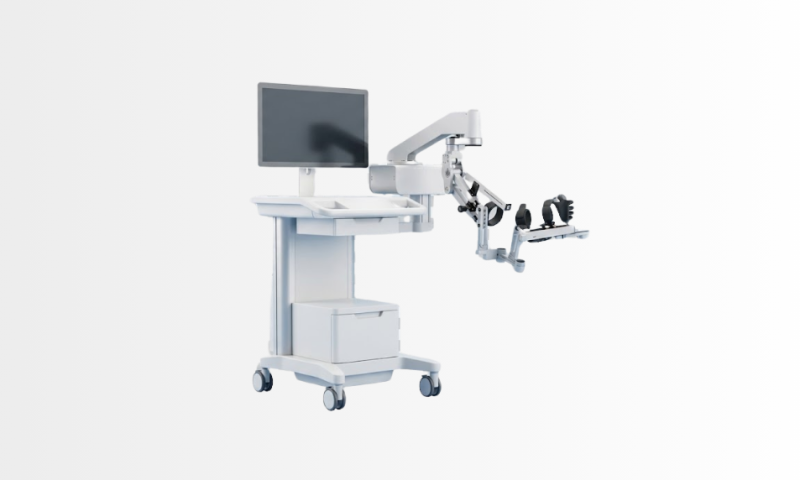
Robots are used in rehabilitation to move, support or resist a limb, or the whole body, while you practise a specific task, and to measure exactly how you perform it. In gait training, a robotic system may carry part of your body weight and guide your legs through repeated stepping patterns in a controlled environment. In upper limb work, a device may assist your shoulder, elbow, wrist or hand through structured exercises that encourage active effort and coordination. Built-in sensors record range of motion, symmetry, speed, force contribution and endurance, so the team can track change from one session to the next rather than relying on impression alone.
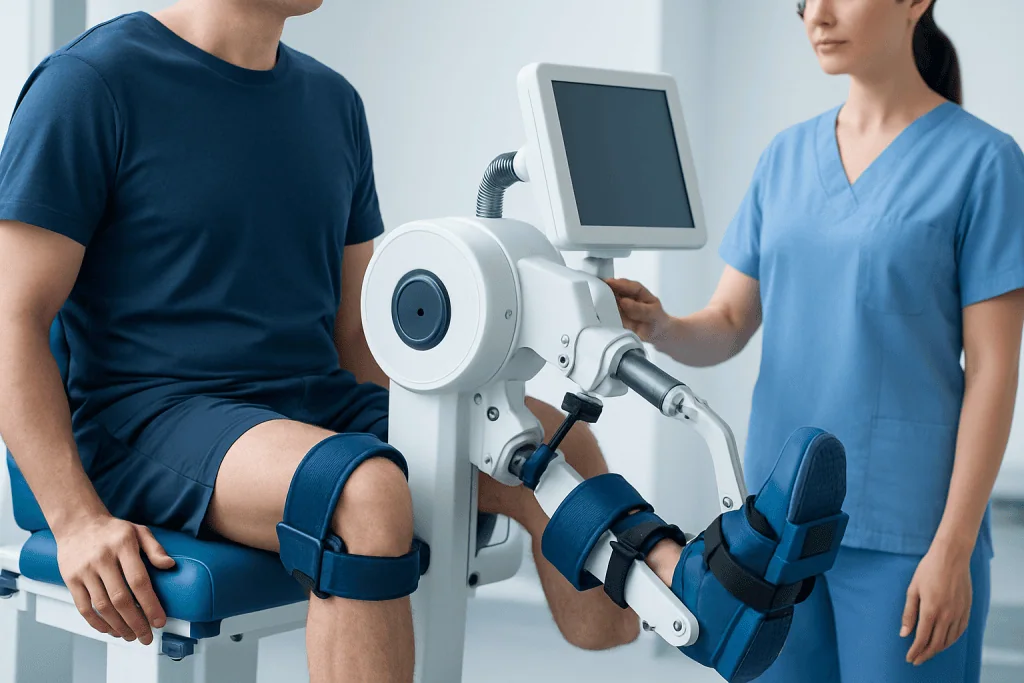
Two points are worth stating plainly. First, rehabilitation robots are not autonomous: a therapist selects the device, sets its parameters and supervises every session. Second, the robot delivers the repetitive mechanical component of training, which frees the therapist to concentrate on movement quality, cueing, posture, breathing and motivation. The therapy is therefore both technological and deeply clinical at the same time.
Rehab Robotics: The Main Types of Device
Rehab robotics covers several distinct families of device, and understanding the differences helps explain what a given programme can and cannot do for you. Some systems train walking, others train the arm and hand, others measure and challenge balance, and some exist mainly to record movement precisely so therapy can be adjusted with better information. The right device depends entirely on the clinical problem being treated, not on which machine looks most impressive.
Robotic gait trainers and body-weight support systems
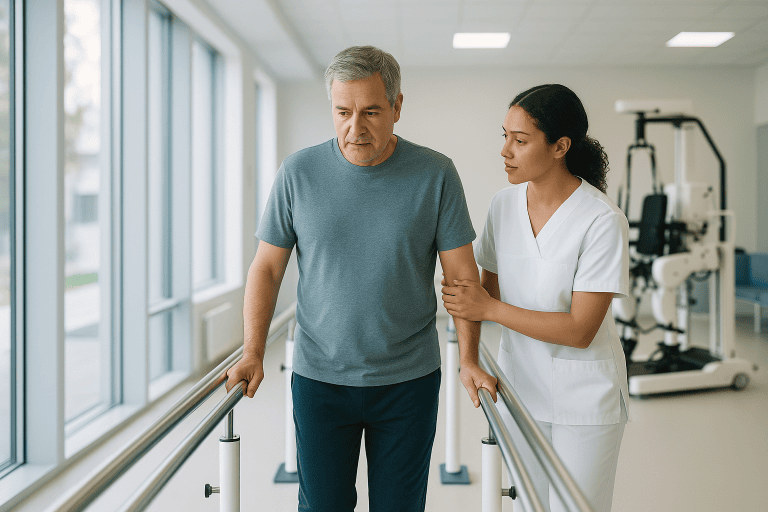
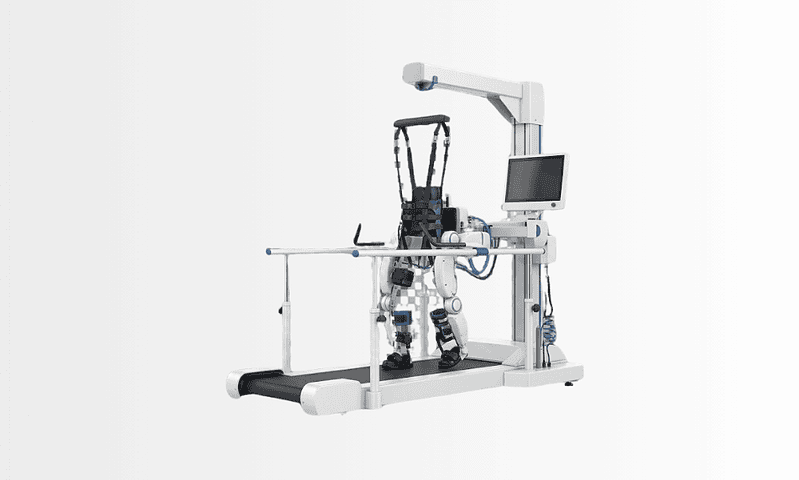
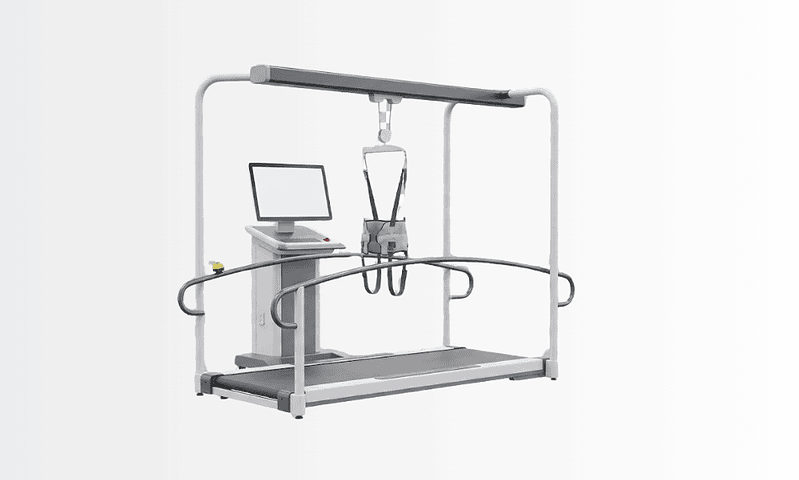
Robotic gait trainers help you practise stepping, weight shifting and balance when independent walking is not yet safe or efficient. Many combine a harness that supports a proportion of your body weight with guided leg motion over a treadmill or moving footplates, so you can complete far more steps in a session than would be possible overground with therapists physically supporting you. Body-weight support matters clinically: it allows walking practice to begin earlier in recovery, protects joints and skin, reduces fear of falling, and lets the team focus your effort on the pattern of movement rather than simply on staying upright. As control improves, support is reduced and practice shifts progressively towards overground walking, stairs and real-world surfaces.
What is a robotic arm for stroke patients?
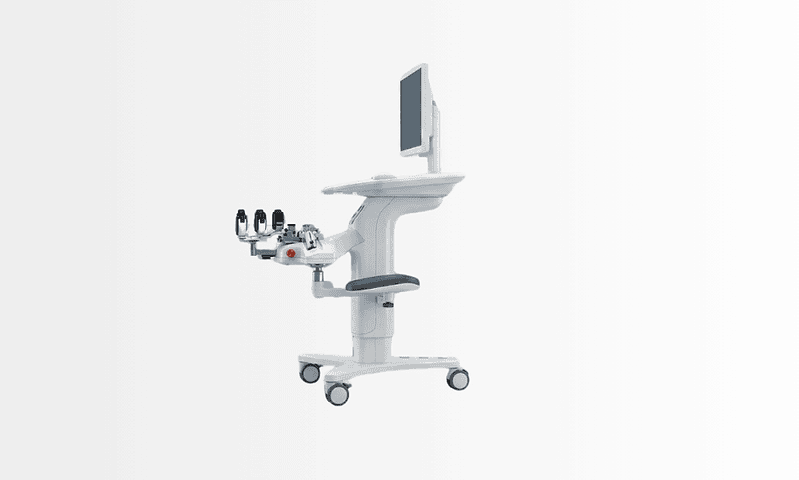
A robotic arm for stroke patients is an upper limb training device that supports or guides the affected shoulder, elbow, wrist or hand through repeated, goal-directed movements such as reaching, lifting and grasping. When weakness or poor coordination makes independent practice impossible, the device can help initiate and complete the movement; as active control returns, its assistance is scaled back so your own effort does more of the work. Most systems pair the mechanical training with on-screen tasks, which turns hundreds of repetitions into something purposeful rather than monotonous.
The research field here is broad. Published surveys of robotic devices for upper limb rehabilitation describe many designs, devices that hold the hand at a single contact point, exoskeletons that align with each joint, and newer experimental concepts such as soft robotic sleeves for shoulder rehabilitation. It is honest to say that some of these remain research tools rather than routine clinical equipment. What matters for you as a patient is not the specific model but whether an upper limb device is matched to your actual impairment and embedded in a supervised programme.
Robotic exoskeletons and end-effector systems
Robotic exoskeletons are frames that wrap around the limb or body, with motorised joints aligned to your own, so that movement can be assisted or resisted at each joint individually. End-effector systems take a different approach: they connect to the body at one point, typically the hand or foot, and guide the limb through space from that point. Exoskeletons offer finer joint-by-joint control; end-effector devices are often simpler to set up and adjust. Research groups have also developed exoskeletons designed primarily for assessment, using the robot’s sensors to map strength, range and coordination in detail. Neither category is universally better. A skilled rehabilitation team chooses based on your diagnosis, joint condition, skin integrity, spasticity and the specific function being retrained.
Brain robotics, sensors and interactive feedback
Brain robotics is a broad label for approaches that link robotic movement training to the brain’s capacity to reorganise after injury: a process sometimes described in the research literature as robot-aided sensorimotor stimulation. The underlying idea is well established in neurorehabilitation: when a movement is repeated many times with accurate sensory feedback, the nervous system has more opportunity to rebuild the pathways that control it. In practice, this means robotic sessions frequently combine guided movement with real-time visual feedback, screens showing symmetry, speed, force or task completion, and sometimes with virtual tasks that make the training goal-directed. For patients with neurological injury, this feedback loop may play a genuine role in motor relearning, and it also keeps long, repetitive sessions engaging enough to sustain effort.
Who May Benefit from Robotic Rehabilitation?
Robotic rehabilitation may be considered when mobility, coordination, strength, balance or functional independence has been affected by a neurological or musculoskeletal condition, and when the patient needs high-intensity, repetitive movement training with structured assistance or feedback. It is a tool for a specific job, intensive, measurable movement practice, not a default add-on for every rehabilitation patient.
Common limitations that lead teams to consider it include difficulty walking, weakness on one side of the body, impaired arm or hand use, poor balance, reduced endurance, spasticity-related movement challenges, post-surgical mobility restrictions, and loss of coordination after an injury or neurological event. Some patients can move independently but do so with poor mechanics, instability or compensatory patterns that store up problems for later. Others need significant assistance simply to begin practising basic movements safely, and for them, robotic support may be what makes early practice possible at all.
The decision starts with a detailed clinical assessment, not with the device. A rehabilitation physician, usually working closely with physical and occupational therapists, evaluates the underlying diagnosis, current level of function, muscle tone, joint mobility, pain, cardiovascular tolerance, cognition, motivation and therapy goals. Depending on the condition, the workup may include neurological examination, orthopaedic assessment, imaging studies, gait analysis, balance testing, muscle strength testing and standardised functional scales. Robotic therapy is also sometimes considered when progress has plateaued with standard therapy alone, when conventional training is too physically demanding for the patient or the therapist, or when objective performance tracking is particularly important.
Not every patient is a candidate, and it is better to know this early. Suitability depends on the type and severity of impairment, medical stability, weight-bearing status, skin condition, joint integrity, cognitive ability to participate and overall rehabilitation goals. Severe contractures, uncontrolled pain, unstable fractures, certain cardiovascular issues or untreated medical complications may mean another approach has to come first. This is precisely why individualised assessment matters more than the presence of any particular machine.
Conditions and Indications Robotic Rehabilitation Can Address
Robotic rehabilitation is used across a wide range of rehabilitation indications. The method is similar in principle, but the goals differ substantially depending on the diagnosis and the stage of recovery.
- Stroke rehabilitation: to improve walking, balance, upper limb function, coordination and motor recovery after ischaemic or haemorrhagic stroke, often within a wider neurological rehabilitation programme.
- Spinal cord injury: to support gait training, standing tolerance, stepping practice and lower limb activation in appropriately selected patients.
- Traumatic brain injury: to assist with relearning movement patterns, posture, balance and limb control.
- Multiple sclerosis and other neurological disorders: to help maintain mobility, address gait impairment, and support endurance and functional training in suitable patients.
- Parkinsonian movement difficulties: in some cases, to support gait rhythm, stride training, balance work and mobility practice as part of a larger programme.
- Cerebral palsy and paediatric neurorehabilitation in selected settings: to encourage repetitive motor training and gait practice under specialist supervision.
- Orthopaedic rehabilitation: after joint replacement, including robotic-assisted knee replacementcomplex fractures, ligament reconstruction or other surgery where retraining movement patterns is essential.
- Musculoskeletal deconditioning and impaired gait: when weakness, pain-related movement avoidance or prolonged immobility has eroded function. Patients whose endurance is also limited by heart disease may follow cardiac rehabilitation in parallel.
- Chronic pain with functional limitation: in selected cases, as part of a structured programme focused on restoring movement confidence and physical capacity.
The robotic component is not used the same way for each of these conditions. A patient relearning arm movement after stroke needs a different plan from someone rebuilding gait after knee surgery or improving trunk control after spinal injury. That distinction is important: effective robotic rehabilitation depends on matching the right technology and therapy intensity to the right clinical problem, at the right stage of recovery.
How Robotic Rehabilitation Is Performed
Evaluation and Preparation
Treatment begins with a comprehensive rehabilitation assessment. The team documents your diagnosis, current movement limitations, pain level, posture, balance, walking ability, upper limb function, endurance and safety considerations, and then defines functional goals with you. These might be walking longer distances, standing more steadily, climbing stairs, using the hand more effectively, transferring more independently, or returning to work and daily routines. Goals frame everything that follows, because they determine which devices, settings and progressions make sense.
Before the first session, you are fitted and positioned according to the type of robotic system being used. Harnesses, supports, braces, hand interfaces or limb attachments are adjusted carefully to your body size and comfort. Proper alignment matters: it allows the system to assist movement safely and accurately while reducing strain on joints and soft tissues. The team also reviews practical points such as skin protection, fatigue, blood pressure response, pain triggers, recent surgery precautions and whether you will need assistive devices before or after sessions. Preparation typically also includes reviewing prior medical records, operative notes and imaging, agreeing the planned frequency and expected duration of therapy, and coordinating with any other treatment already under way, so the programme starts from an accurate clinical picture rather than assumptions.
What Happens During a Session
A typical robotic rehabilitation session follows a recognisable sequence, whatever the device:
- Set-up and positioning: the therapist secures harnesses or limb attachments, checks alignment and confirms comfort before anything moves.
- Warm-up at high assistance: early repetitions are performed with generous support while the therapist observes tolerance, posture and pain response.
- Task-specific training: the main block of the session, repeated stepping, reaching, grasping or balance work, with assistance tuned to demand active effort from you.
- Progression or resistance: if you are managing well, support is reduced or resistance added so the movement stays challenging without becoming unrealistic.
- Review: the session’s data, repetitions, symmetry, speed, force contribution, is checked against previous sessions and used to plan the next one.
The adjustability is the point. If you cannot yet complete a movement independently, the device helps initiate and carry it through. As strength and control improve, assistance is dialled down; in some cases resistance is added to make the task harder. This keeps therapy in the productive zone, neither too easy to drive change nor so difficult that practice collapses into frustration or unsafe compensation.
Therapists remain actively involved throughout. They monitor fatigue, posture, pain, cardiovascular response and movement quality, and provide verbal cues, manual facilitation, breathing guidance and encouragement while the robot handles the repetitive mechanical load. Many systems add visual or interactive feedback during the session itself, real-time displays of symmetry, speed, force, range or task completion, which helps reinforce correct patterns and keeps engagement high through long blocks of repetition.
Advanced Rehab Technology Used in Therapy
Advanced rehab technology in a well-equipped rehabilitation unit typically includes robotic gait trainers, body-weight support systems, exoskeleton-type devices, upper limb robotic trainers, sensor-based movement analysis tools, balance platforms and software that tracks performance over time. Some programmes also integrate virtual tasks or screen-based exercises that make repetitive training more goal-directed. What this equipment offers is practical rather than abstract: support for body weight when standing is not yet fully safe, guidance towards more symmetrical movement patterns, measurement of changes too subtle to notice between sessions, and a reduction in therapist physical burden that makes genuinely intensive practice feasible. Above all, it creates structured opportunities for repetition, which is often the central ingredient of motor recovery.
How Long Sessions and Programmes Last
The duration of each session and the total number of sessions depend on your diagnosis, endurance and goals; there is no universal protocol. Some patients receive robotic rehabilitation as part of an inpatient programme after a major neurological event or operation. Others attend as outpatients several times a week over a period of weeks or months. Almost all treatment plans combine the robotic work with conventional physiotherapy, occupational therapy, stretching, strengthening, balance training and pain management techniques. Recovery is rarely linear: some patients notice early gains in confidence, endurance or quality of movement, while for others progress is gradual and only visible when measured across weeks. In neurological rehabilitation especially, the aim is to build function steadily through many repeated sessions rather than to expect a single dramatic change.
After the Session and Ongoing Recovery
After a session you may feel tired in a productive way, much as after focused exercise. Mild muscle soreness can occur, particularly early in the programme, but significant pain is never the aim, and you should report it to your therapy team. The team may recommend stretching, hydration, rest or home exercises between visits. Progress is reviewed regularly, and the plan is adjusted according to objective findings and, just as importantly, real-life functional change. As you improve, therapy typically shifts from assisted robotic work towards active overground walking, task-based upper limb practice, stair work, balance challenges, transfers and daily activity retraining. The robot supports recovery; the destination is always practical, everyday function.
Why Acting Early Matters
Timing matters in most rehabilitation conditions. After stroke, spinal injury, surgery or prolonged immobilisation, the body can quickly develop weakness, stiffness, poor movement habits, reduced endurance and balance loss. The nervous system can also adapt in unhelpful ways if abnormal movement patterns become established. Early, guided practice helps limit these secondary problems and may improve the opportunity for functional recovery while the system is most responsive.
Delay also affects confidence. Patients who become fearful of falling, movement or pain often begin to avoid activity, and that avoidance leads to further weakness and deconditioning: a cycle that is genuinely difficult to break once established. In orthopaedic recovery, delayed rehabilitation can contribute to joint stiffness, gait abnormalities and a slower return to independence. In neurological conditions, missed rehabilitation time may mean fewer opportunities to reinforce motor relearning during the period when the patient is recovering most actively.
Early does not mean rushed. It means beginning rehabilitation when medically appropriate, with the right level of support and supervision. For some patients, robotic rehabilitation is especially helpful early on, because it allows safe movement practice before full independent activity is possible. For others it becomes valuable later, when progress needs to be intensified, refined or restarted after a plateau. Where surgery is planned in advance, structured preparation, sometimes called prehabilitation, can also shorten the distance back to function afterwards.
Potential Benefits of Robotic Rehabilitation
The benefits depend on the condition being treated, your baseline level of function, and how well the robotic component is integrated into the broader programme.
| Benefit | What It Means for You |
|---|---|
| High-repetition movement training | Allows the body and nervous system to practise important movements many times in a structured session, which may support motor relearning and functional improvement. |
| More precise and consistent guidance | Helps reinforce safer, more efficient movement patterns, especially when weakness, poor coordination or fatigue make manual practice difficult to sustain. |
| Adjustable assistance and progression | Therapy meets you where you are, providing support at the beginning and gradually reducing it as strength and control improve. |
| Objective feedback and measurement | Your team can track changes in performance over time and use that information to refine the plan rather than guessing. |
| Potential improvement in confidence and independence | As walking, balance, arm function or endurance improve, many patients are better able to take part in daily activities and in rehabilitation overall. |
Recovery Timeline After Starting Robotic Rehabilitation
Recovery looks different for each patient, but this general timeline shows what many people can expect after beginning treatment.
| Time Period | What Patients Can Expect |
|---|---|
| Day 1 | Initial evaluation, goal setting, device fitting and a first supervised session focused on safety, comfort and finding the right level of assistance. |
| First week | Adaptation to the routine, monitoring of fatigue and tolerance, and early adjustments to the programme. Some patients notice improved confidence or movement awareness. |
| First month | More consistent training with gradual progression. Depending on the diagnosis, patients may begin to see changes in endurance, stepping quality, balance, arm use or transfer ability. |
| Longer term | Steady functional gains may continue with an individualised programme. The focus usually shifts towards real-life mobility, independence and maintaining progress through ongoing therapy or home exercise. |
What Influences Outcomes and a Good Result
Robotic rehabilitation can be highly valuable, but outcomes depend on several factors rather than the technology alone. The most important is the underlying diagnosis. Recovery after stroke differs from recovery after orthopaedic surgery, spinal cord injury or a progressive neurological disorder. The location and severity of injury, the extent of weakness or coordination loss, and the presence of spasticity, pain or sensory deficits all shape what improvement is realistic, and an honest team will discuss those limits with you rather than around them.
Timing matters, as discussed above: earlier intervention, when medically appropriate, helps reduce disuse, stiffness and maladaptive patterns, though patients who start later can still benefit if the programme is well designed. Intensity and consistency are equally central. Functional change requires repeated practice over time, and patients who attend regularly, participate actively and continue prescribed exercises outside the clinic generally make stronger progress than those whose therapy is interrupted.
Personalisation is the other pillar. A good result is more likely when robotic rehabilitation is chosen for a clear clinical reason and matched to your actual impairment, device, settings, progression and companion therapies all reflecting your needs rather than a one-size-fits-all protocol. Motivation, cognition, family support and the management of other medical issues matter too. Fatigue, low mood, sleep disturbance, uncontrolled pain or untreated spasticity can all interfere with progress if left unaddressed. In strong programmes these are not treated as side issues; they are recognised as part of the recovery process itself.
Does robotic precision therapy work?
Robotic therapy can work as part of a comprehensive rehabilitation programme: that is the honest, evidence-informed answer. Clinical research and systematic reviews in rehabilitation robotics support its use for delivering high-intensity, repetitive, task-specific training, particularly in neurological recovery, where repetition is a key driver of motor relearning. What the evidence does not support is treating any robotic device as a stand-alone fix: results vary by diagnosis, severity, timing and programme quality, and robotic sessions are most useful when combined with conventional physiotherapy, occupational therapy and good medical management. If a clinic presents a machine as the treatment rather than a tool within one, treat that claim with caution.
What is the best robotic walking assistance device for the elderly?
There is no single best robotic walking device for older adults: the right choice depends on the person’s diagnosis, standing tolerance, joint condition, skin integrity, cognition and goals. Treadmill-based gait trainers with body-weight support suit people who need substantial help to practise stepping safely; wearable exoskeleton-type devices suit selected patients working towards overground walking; simpler sensor-based tools may be enough for those refining an existing gait pattern. A supervised assessment by a rehabilitation physician and physiotherapist is the reliable way to match device to patient. Be sceptical of any recommendation for a specific machine made before anyone has examined the person who will use it.
Is robotic rehabilitation the same as robotic surgery?
No: they are entirely different fields that happen to share a word. Robotic surgery uses robotic instruments controlled by a surgeon to perform operations; robotic rehabilitation uses devices to support exercise and movement retraining, with no cutting, anaesthesia or operative risk involved. Public debate about robotic surgery, questions about cost, surgeon learning curves and reduced tactile feedback, does not transfer to rehabilitation robots, where the therapist retains direct control throughout and the intervention is supervised exercise. Insurance and funding questions, such as whether a national scheme covers robot-assisted procedures, also belong to the surgical context and vary by country and policy; for rehabilitation, coverage depends on your insurer and the structure of your programme, and is worth clarifying before treatment begins.
Robotic Rehabilitation at Acibadem
Advanced rehabilitation technology is only as good as the clinical system around it. The quality of a robotic programme depends on accurate diagnosis, physician oversight, experienced therapists and coordination across specialties, especially in complex neurological and musculoskeletal recovery, where plans often need input from rehabilitation physicians, neurologists, neurosurgeons, orthopaedic specialists, pain medicine experts, radiologists and therapists working together.
At Acibadem, robotic rehabilitation is delivered within a broader rehabilitation pathway rather than as a stand-alone service. Patients are evaluated by a multidisciplinary team, and technology-assisted therapy is combined with conventional rehabilitation, pain management, imaging and specialist consultations where needed. Therapy plans are reviewed regularly by the treating physician and therapists, and adjusted as objective measurements and day-to-day function change rather than being fixed at the outset. Just as importantly, the teams understand when robotic therapy is appropriate, when conventional therapy should lead, and how to combine the two, because good programmes are defined by clinical judgement, not by the devices on the floor.
Questions Worth Asking Before Starting Robot PT
If you are weighing up robot PT for yourself or a family member, the most useful question is not whether a robotic device is available, but whether it is the right tool for the specific diagnosis, stage of recovery and goals in front of you. These questions help any treating team show its reasoning:
- Why is robotic therapy recommended for this particular impairment, and what would the alternative programme look like without it?
- Which type of device would be used, gait trainer, upper limb system, exoskeleton, and why that one?
- How will progress be measured, and how often will the plan be reviewed against those measurements?
- How does the robotic work fit alongside conventional physiotherapy, occupational therapy and any medical treatment already under way?
- What is a realistic range of outcomes for this diagnosis and this starting point, and what would suggest the plan needs to change?
A rehabilitation team that answers these questions specifically, with reference to your own assessment findings rather than to the technology in general, is a team using robotics the way it is meant to be used: as one precise instrument inside a carefully reasoned recovery plan.
Our Specialists Explain
 Regaining Movement with Robotic Rehabilitation | Neurorehabilitation Patient Story
Preparation
- Before robotic rehabilitation, patients usually have a detailed assessment of strength, mobility, balance, and functional goals. The rehabilitation team creates a personalized program based on the diagnosis, current ability, and recovery stage. Comfortable clothing and supportive footwear are typically recommended for sessions.
Aftercare
- After each session, patients may be advised to rest briefly, stay hydrated, and continue prescribed home exercises. Progress is monitored regularly, and the therapy plan is adjusted as strength, coordination, and endurance improve. Consistent attendance is important for the best functional outcomes.
Frequently Asked Questions
What is robotic rehabilitation and how does it work?
Robotic rehabilitation uses computer-guided devices to support repetitive, precise movements during therapy. These systems can help with walking, arm and hand training, balance, and posture, depending on your condition. Sensors measure your movement and allow the therapist to adjust intensity, range, and support in real time. The goal is to improve function, confidence, and independence while making therapy more targeted. At Acibadem, specialists create a personalized rehabilitation plan based on your needs and recovery goals.
Who can benefit from robotic rehabilitation treatment?
Robotic rehabilitation may help adults and children with movement limitations caused by stroke, spinal cord injury, brain injury, multiple sclerosis, Parkinson’s disease, orthopedic surgery, chronic pain, or prolonged immobility. It is often used when a patient needs intensive, repetitive training to rebuild strength, coordination, and mobility. Not everyone is a suitable candidate, so a detailed medical and functional assessment is important. Acibadem specialists evaluate your diagnosis, current abilities, and treatment goals before recommending the most appropriate program.
Is robotic rehabilitation better than traditional physiotherapy?
Robotic rehabilitation is not usually a replacement for traditional physiotherapy, but it can be a powerful addition. Robotic systems allow highly repetitive, consistent training and detailed measurement of progress, while hands-on therapy addresses flexibility, pain, daily activities, and individualized movement strategies. Many patients benefit from combining both approaches in one program. The right balance depends on your condition, stage of recovery, and goals. At Acibadem, rehabilitation experts design a personalized plan that may include robotic and conventional therapies together.
What conditions are commonly treated with robotic rehabilitation?
Robotic rehabilitation is commonly used for neurological and musculoskeletal conditions that affect movement. These include stroke-related weakness, spinal cord injury, traumatic brain injury, cerebral palsy, Parkinson’s disease, multiple sclerosis, gait disorders, balance problems, and recovery after joint replacement or other orthopedic procedures. It may also support pain management by helping patients move more safely and efficiently. Because every case is different, Acibadem specialists perform a personalized assessment to determine whether robotic therapy is appropriate for your diagnosis and rehabilitation goals.
What happens during a robotic rehabilitation session?
A typical robotic rehabilitation session begins with a therapist review of your symptoms, function, and goals for the day. You may then be positioned in a robotic device for gait training, arm therapy, hand exercises, or balance work. The machine assists or resists movement based on your needs while collecting performance data. Sessions are supervised closely for safety and comfort. Depending on your plan, therapy may also include stretching, strengthening, pain management, and functional training alongside robotic exercises.
How long does robotic rehabilitation take and when will I see results?
The length of robotic rehabilitation varies according to your diagnosis, severity of symptoms, general health, and how long the problem has been present. Some patients attend several sessions per week for a few weeks, while others need a longer program. Improvement may be gradual, especially in neurological recovery, but regular therapy often helps build mobility, endurance, and confidence over time. Your progress is monitored throughout treatment, and Acibadem specialists adjust the program based on your response and goals.
Is robotic rehabilitation painful or uncomfortable?
Robotic rehabilitation is generally designed to be safe and well tolerated. Most patients describe it as effortful rather than painful, because the devices support controlled movement within planned limits. You may feel muscle fatigue, stretching, or mild soreness after sessions, especially early in treatment, but therapists monitor this closely. If you have pain, stiffness, or fear of movement, the program can be adapted. At Acibadem, your comfort and safety are carefully considered during each session and throughout the rehabilitation process.
Can international patients travel to Turkey for robotic rehabilitation?
Yes, many international patients travel to Turkey for robotic rehabilitation, especially when they want access to advanced technology and coordinated specialist care. Before travel, it is helpful to share your medical records, imaging, and previous treatment history so the team can review your case. Program length depends on your condition and goals, so planning accommodation and support in advance is important. Acibadem can provide a personalized assessment to help you understand the likely treatment pathway before you arrive.
How much does robotic rehabilitation cost in Turkey?
The cost of robotic rehabilitation in Turkey depends on several factors, including your diagnosis, the number of sessions needed, whether you need inpatient or outpatient care, and what other therapies are included in your program. Because treatment is tailored, costs can vary significantly from one patient to another. The most accurate approach is to request a medical review and treatment plan first. Acibadem specialists can assess your needs and provide guidance based on your personalized rehabilitation program.
How do I know if I am a good candidate for robotic rehabilitation?
The best way to know if you are a good candidate is to have a comprehensive rehabilitation evaluation. Your doctor and rehabilitation team will look at your diagnosis, muscle strength, balance, cognition, pain level, range of motion, and overall medical stability. They will also consider your ability to participate actively and what you hope to achieve. Some patients benefit greatly, while others may need different therapies first. At Acibadem, specialists provide a personalized assessment to recommend the safest and most effective option.
Medically reviewed by the Acıbadem International Medical Board September 14, 2026
See our medical review board →
Update history
- PublishedJuly 19, 2026
- Medical review approvedSeptember 14, 2026
- Last content updateSeptember 14, 2026