Neurological Rehabilitation
Neurological rehabilitation is a personalized therapy program to improve movement, balance, speech, cognition and daily function after neurological illness or injury, delivered by a multidisciplinary team.
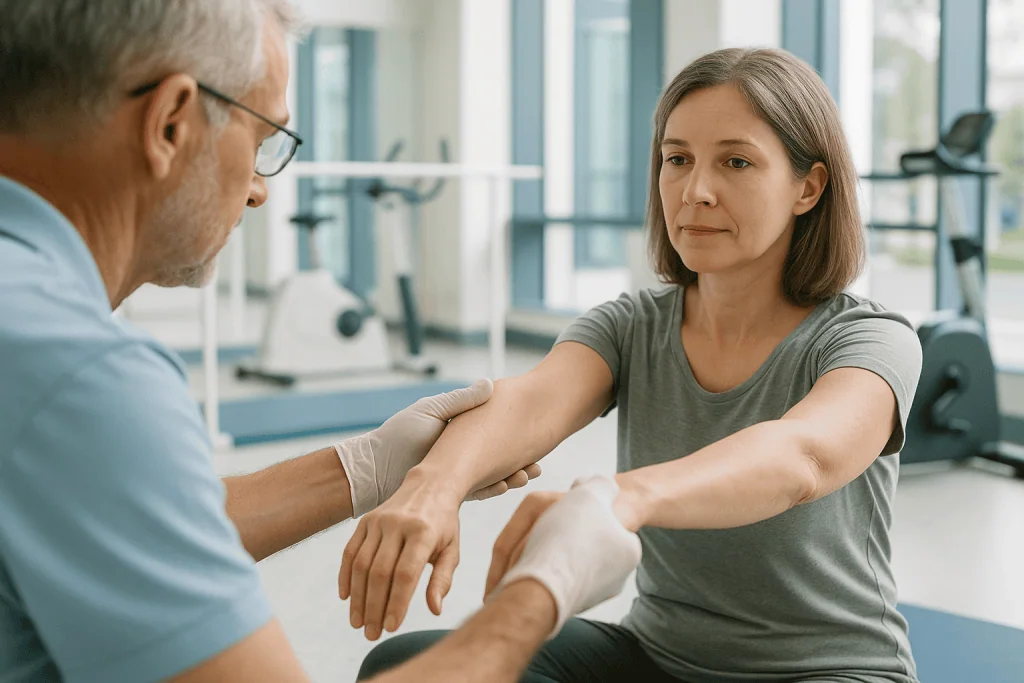
Quick answer
Neurological rehabilitation is a medically guided therapy programme for people whose movement, speech, swallowing, thinking or daily independence has been affected by a condition of the brain, spinal cord or nerves, such as stroke, brain injury, Parkinson's disease or multiple sclerosis. It combines physical, occupational, speech and cognitive therapies around measurable goals, in inpatient or outpatient settings, with the duration adjusted to each person's condition and progress.
Neurological Rehabilitation: Rebuilding Function After Illness or Injury
Neurological rehabilitation is a medically guided therapy programme that helps you regain movement, balance, speech, swallowing, thinking skills and everyday independence after an illness or injury affecting the brain, spinal cord or nerves. It is not one treatment but a coordinated plan, delivered by rehabilitation physicians, therapists and nurses working together around measurable goals. It is used after stroke, brain and spinal cord injury, and in conditions such as Parkinson’s disease, multiple sclerosis, nerve injury and recovery after brain tumour treatment.
A neurological diagnosis can change daily life suddenly. A stroke may affect speech or the use of one side of the body. Parkinson’s disease may make movement slower and balance less reliable. A spinal cord injury, brain trauma or nerve damage may alter walking, coordination, memory, swallowing, continence, mood or independence. For many patients and families, the most difficult questions are practical and deeply personal: Will I walk again? Will I be able to speak clearly? Can I return to work? How much help will I need at home? Is there still time to improve?
Neurological rehabilitation is designed for exactly this stage of care. It is not a single exercise plan or a short course of physiotherapy. It is a structured, personalised programme that helps the brain, spinal cord, nerves and muscles work together as effectively as possible after neurological illness or injury. Where some limitations remain, it teaches safer, more efficient ways to perform daily activities, which is often just as important as the exercises themselves.
Recovery after a neurological condition is rarely a straight line. Some patients make rapid progress in the first weeks; others improve gradually over months. Fatigue, pain, stiffness, memory changes, emotional distress and fear of falling can all slow progress, and families often feel overwhelmed by new responsibilities. A well-run neurological rehabilitation programme addresses these realities in a coordinated way rather than leaving each problem to a separate appointment.
At Acibadem, neurological rehabilitation is planned around the individual patient: the diagnosis, the severity of impairment, the time since injury or illness, other medical conditions, personal priorities and the support available after discharge.
What is neurologic rehabilitation?
Neurologic rehabilitation is the American English name for the same field: a structured programme that restores, or compensates for, function lost to a nervous-system disorder. You will see both spellings used by hospitals, insurers and medical journals, and they describe an identical approach, careful assessment first, then targeted therapy, then measured review. Nothing about the treatment itself changes with the spelling, so you can read sources using either term with confidence.
What Is Neurological Rehabilitation?
Neurological rehabilitation is a medically supervised therapy programme for people who have lost or reduced function because of a disorder affecting the brain, spinal cord, peripheral nerves or neuromuscular system. Its purpose is to improve movement, balance, strength, speech, swallowing, cognition, emotional adjustment and the ability to perform everyday tasks such as dressing, walking, eating, writing, working and communicating with the people around you.
The foundation of neurological rehabilitation is neuroplasticitythe nervous system’s ability to reorganise and form new connections. After a stroke, brain injury or other neurological event, repeated, task-specific practice can help surviving nerve pathways take on new roles. In progressive conditions, rehabilitation may help preserve function, reduce complications and support independence for as long as possible. In spinal cord or nerve conditions, therapy may focus on strengthening what is preserved, preventing secondary problems and teaching safe compensatory strategies. The common thread is repetition of meaningful tasks, guided and progressed by professionals who know what the nervous system can be asked to do at each stage.
What does neurological rehabilitation include?
Neurological rehabilitation includes physical therapy, occupational therapy, speech and swallowing therapy, cognitive rehabilitation, spasticity and pain management, assistive-device training and structured education for you and your family. Which elements you receive depends on the assessment, not on a fixed menu. A typical programme draws on:
- Physical therapy to improve walking, balance, transfers, strength, endurance, coordination and postural control.
- Occupational therapy to support daily activities such as bathing, dressing, meal preparation, writing, hand function and home or workplace adaptation.
- Speech and language therapy for speech clarity, language, voice, communication, swallowing and cognitive-communication skills.
- Neuropsychological and cognitive rehabilitation for attention, memory, planning, problem-solving and behavioural changes.
- Swallowing assessment and therapy to reduce aspiration risk and improve nutrition and safety while eating.
- Spasticity and pain management through medication planning by the treating physician, injections when appropriate, positioning, stretching and therapy techniques.
- Assistive device training for canes, walkers, wheelchairs, braces, orthoses and adaptive equipment.
- Patient and family education to support safe care at home, reduce complications and encourage long-term progress.
The programme may be provided in an inpatient rehabilitation setting, an outpatient clinic, after surgery or intensive care, or as part of a longer follow-up plan. The right setting depends on medical stability, therapy tolerance, safety needs and recovery goals, not on preference alone.
Neurorehabilitation, neuro rehab and other names for the same field
Neurorehabilitation is simply the shorter name for neurological rehabilitation; clinicians use the two interchangeably. You may also come across neuro rehab in clinic names, the common misspelling newrorehab in online searches, and non-English forms such as the Hungarian neuro rehabilitáció. Searches for neurologist rehabilitation usually mean rehabilitation planned together with a neurologist, which is how well-organised programmes work in practice, since the doctor managing the underlying condition and the team managing recovery need to stay aligned. Whatever the label, the substance is the same: assessment, goal-setting, therapy and regular review.
Who May Need Neurological Rehabilitation?
You may need neurological rehabilitation when a neurological illness or injury affects movement, sensation, balance, communication, swallowing, thinking, behaviour or daily independence. Some people enter rehabilitation shortly after hospitalisation. Others seek a structured programme later, because recovery has slowed, symptoms have changed or they returned home without a clear plan and now want one.
Common problems that lead to neurological rehabilitation include weakness on one side of the body, difficulty walking, poor coordination, tremor, stiffness, spasticity, numbness, unsteady balance, frequent falls, dizziness, facial weakness, unclear speech, difficulty finding words, swallowing problems, changes in memory or concentration, fatigue, nerve pain and loss of independence in daily activities. Emotional symptoms such as anxiety, depression, irritability or reduced motivation are also common after neurological illness, and they can influence recovery as much as the physical deficits do.
Assessment begins with understanding the underlying condition and the functional problems it has caused. The medical team reviews previous hospital records, imaging studies, surgery reports, medication lists and therapy notes. A neurological examination evaluates strength, reflexes, sensation, tone, coordination, balance, walking pattern, vision and cranial nerve function. Therapists then perform functional assessments to measure what you can do safely and where assistance is needed, which is often more informative than the diagnosis alone.
Depending on the condition, additional tests may be recommended before or during rehabilitation: brain or spine imaging, electrodiagnostic studies of nerve and muscle function, swallowing studies, gait and balance assessments, cognitive testing, laboratory tests or cardiopulmonary evaluation when endurance is a concern. The goal is not only to label the diagnosis but to identify barriers that can be treated, uncontrolled pain, poorly managed spasticity, low blood pressure on standing, dizziness, sleep problems, medication side effects, depression, nutritional issues or unsafe swallowing. Rehabilitation is generally appropriate for patients who are medically stable enough to participate and who have functional goals a structured programme can address. It also helps families understand what level of recovery is realistic, what equipment may be needed and how to continue progress after formal therapy ends.
Is neurological rehabilitation necessary after brain hemorrhage?
After a brain hemorrhage, neurological rehabilitation is usually recommended whenever the bleed has left measurable problems with movement, speech, swallowing, thinking or daily activities, and that is common. The timing and setting are decided by the treating team, because they depend on medical stability, the location and size of the bleed and how activity is tolerated in the early days. Rehabilitation cannot reverse the bleed itself; it works on the function the brain can rebuild through repetition and on safe strategies for what remains limited. Where deficits are minimal, a brief assessment and a supervised home programme may be all that is needed, but that judgement should come from an examination, not from how things feel in the first weeks, when fatigue can mask both problems and potential.
What are the disabilities associated with chronic neurological conditions?
Chronic neurological conditions are most often associated with limited mobility, muscle weakness, spasticity, impaired balance and falls, persistent fatigue, chronic pain, speech and swallowing difficulty, bladder and bowel problems, changes in memory and concentration, and mood changes such as depression and anxiety. In progressive diseases like Parkinson’s disease or multiple sclerosis, these problems may fluctuate or slowly increase over time. That is why rehabilitation in chronic conditions looks different from post-stroke rehabilitation: the emphasis shifts towards maintaining function, preventing complications such as contractures and pressure injuries, conserving energy, adapting the home and revisiting the plan as needs change, rather than a single, one-off course of therapy.
Conditions and Indications Addressed by Neurological Rehabilitation
Neurological rehabilitation is used for a broad range of conditions, and the programme is adapted to the diagnosis, the stage of recovery and your personal goals. A person recovering from a recent stroke may need intensive gait training and speech therapy. A patient with Parkinson’s disease may need balance strategies, posture training and cueing techniques. Someone after spinal surgery or spinal cord injury may require strengthening, bladder and bowel education, wheelchair skills and prevention of pressure injuries.
Common indications include:
- Stroke and transient ischaemic attack after-effects, including weakness, speech and language problems, swallowing difficulty, neglect, cognitive changes and balance problems.
- Traumatic brain injury, with problems such as impaired coordination, memory changes, fatigue, behavioural symptoms, dizziness or reduced executive function.
- Spinal cord injury and spinal cord disease, including weakness, sensory loss, spasticity, walking difficulty, bladder and bowel challenges and pressure injury risk.
- Parkinson’s disease and movement disorders, including bradykinesia, rigidity, tremor, freezing of gait, posture changes and fall risk.
- Multiple sclerosis, with fatigue, weakness, balance impairment, sensory symptoms, spasticity and mobility changes.
- Brain and spinal tumours, before or after surgery, chemotherapy or radiation when neurological function is affected.
- Peripheral nerve injuries and neuropathies, including weakness, sensory loss, foot drop, hand dysfunction and pain.
- Neuromuscular disorders, where therapy focuses on safe strengthening, energy conservation, mobility and respiratory or swallowing considerations.
- Post-neurosurgical recovery, including rehabilitation after brain, spine or nerve procedures.
- Balance and vestibular disorders related to neurological disease, dizziness or impaired sensory integration.
Not every patient has the same rehabilitation potential, and not every symptom can be fully reversed. That is worth saying plainly. What well-planned rehabilitation can often do is reduce disability, improve safety, prevent complications and help you use the abilities you have more effectively. For many people, those changes are what determine whether daily life works.
How Neurological Rehabilitation Is Performed
Neurological rehabilitation begins with a detailed evaluation and a clear treatment plan. The process is collaborative: the rehabilitation physician, nurses, physiotherapists, occupational therapists, speech and language therapists, psychologists, dietitians and other specialists contribute according to your needs. When the underlying condition is complex, input from neurologists, neurosurgeons, orthopaedic specialists, pain specialists, cardiologists or pulmonologists is added rather than handled separately.
Preparation and Initial Assessment
Before therapy begins, the team reviews your medical history and current stability. Blood pressure, heart rhythm, oxygen levels, swallowing safety, skin condition, pain level, medication schedule and fall risk are all checked, because each one can limit what therapy can safely ask of you. The team also reviews recent imaging, discharge summaries, operative reports, laboratory results and a current medication list, together, these determine whether inpatient or outpatient rehabilitation is the right starting point.
Therapists then establish a baseline using standardised functional measures and direct observation. They may assess how you sit, stand, transfer from bed to chair, walk, use your hands, speak, swallow, follow instructions and solve practical problems. Family members or caregivers may be asked about the home environment, stairs, bathroom setup, work demands and your previous level of independence. This information is what turns generic therapy into goals that are meaningful and measurable for your life specifically.
Designing the Rehabilitation Plan
A personalised plan usually sets both short-term and long-term goals. Short-term goals may include sitting safely, standing with assistance, improving swallowing safety, reducing shoulder pain, increasing walking distance or learning to transfer from bed to wheelchair. Longer-term goals may include independent walking, preparing for work, a driving evaluation where appropriate, managing home activities or returning to family and social life.
Progress is tracked with standardised outcome measures rather than impressions alone. Depending on the condition, the team may use timed walking tests, balance scales, arm-function assessments, swallowing gradings or structured measures of independence in daily activities. Repeating the same measures at set intervals shows whether the plan is working, when a goal has been achieved and when the approach needs to change. It also gives you something concrete to hold on to: watching a walking distance grow, or a transfer become independent, is often more motivating than any general reassurance.
Therapy intensity is adjusted to your endurance and medical condition. Some patients benefit from several therapy sessions per day in an inpatient setting; others do better with outpatient sessions several times per week plus a home exercise programme. The plan is reviewed regularly and modified as you improve or as new issues appear: a plan that never changes is usually a plan nobody is checking.
Neurological Physical Therapy for Movement, Balance and Walking
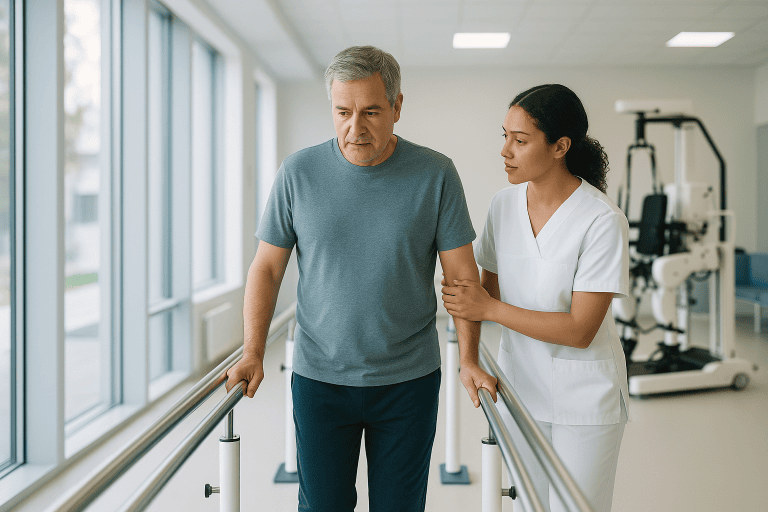
Neurological physical therapy, often shortened to neuro physical therapy, is the branch of physiotherapy that retrains movement after nervous-system damage, and it usually forms the core of the programme. Treatment may include strengthening, flexibility work, balance exercises, coordination training, gait practice, endurance training, posture work and fall-prevention strategies. You may practise standing, stepping, climbing stairs, changing direction, walking on different surfaces and recovering balance after a small, controlled loss of stability, because falls in real life rarely happen on flat, predictable ground.
When appropriate, technology-assisted therapy adds repetition and feedback that hands alone cannot provide: body-weight support systems, robotic or electromechanical gait training, sensor-based balance platforms, functional electrical stimulation, interactive exercise environments and instrumented gait analysis. These tools do not replace therapists; they let the team deliver high-repetition, safer practice for selected patients. A structured physical therapy programme combines these elements around your specific movement goals rather than applying them by default.
For arm and hand recovery, therapists may also use approaches such as constraint-induced movement therapy, where the stronger arm is deliberately restrained for parts of the day so the weaker arm is drawn into intensive, structured practice, and mirror therapy, where the reflection of the moving, unaffected hand is used to stimulate the brain regions that control the affected side. Both are selected case by case; they suit some patterns of weakness far better than others, which is another reason assessment comes before technique.
What are some common exercises used in neurological rehabilitation?
Common exercises in neurological rehabilitation include sit-to-stand practice, weight-shifting and balance drills, task-specific walking practice, repetitive reaching and grasping for a weakened arm, stretching for tight or spastic muscles, core and postural work, and dual-task training that combines movement with attention. In more detail:
- Sit-to-stand repetitions build leg strength and train the single most-used transfer in daily life.
- Weight-shifting and balance drills retrain the ability to stay upright while reaching, turning or being gently challenged.
- Task-specific gait practicewalking itself, at increasing distance, speed and surface difficulty, because walking improves by walking.
- Repetitive arm and hand tasks such as reaching, grasping, releasing and manipulating everyday objects, sometimes with the stronger hand deliberately restrained.
- Stretching and positioning to manage spasticity and prevent muscles from shortening.
- Core and postural exercises to give the limbs a stable base to work from.
- Dual-task trainingwalking while counting or carrying, which mirrors how real environments actually demand attention.
- Breathing and endurance work where fatigue or respiratory weakness limits everything else.
The specific selection, dose and progression matter more than the list. Exercises are chosen by the therapist for your deficits and advanced as you improve; the same movement can be productive for one patient and unsafe for another.
Occupational Therapy for Daily Independence
Occupational therapy addresses the skills daily life actually requires: dressing, bathing, grooming, eating, handwriting, using a phone, cooking, managing medications, returning to hobbies and adapting work tasks. For hand weakness or poor coordination, therapy focuses on fine motor control, grip, reach, using both hands together and sensory retraining.
Occupational therapists also recommend practical adaptations, bathroom safety equipment, splints, adaptive utensils, fatigue-management strategies, home layout changes or techniques for performing tasks with one hand. The aim is independence with lower risk: fewer falls, fewer injuries and less strain on the people caring for you.
Speech, Swallowing and Cognitive Therapy
Speech and language therapy helps with communication and swallowing disorders. After stroke or brain injury you may have aphasia, which affects understanding or producing language; dysarthria, which affects speech clarity; apraxia of speech, which affects the planning of speech movements; or voice changes. Therapy combines structured exercises with real-life communication practice, and introduces communication aids where they help.
Swallowing therapy becomes essential when there is coughing during meals, weight loss, recurrent chest infections or aspiration risk. The therapist may recommend texture modifications, swallowing exercises, posture adjustments or an instrumental swallowing evaluation. Cognitive therapy addresses attention, memory, planning, problem-solving, visual scanning and strategies for managing complex daily tasks, often the least visible deficits, and among the most disruptive at work and at home. After some strokes, therapy also targets unilateral neglect, reduced awareness of one side of space, using scanning training, cues and structured feedback, because untreated neglect increases fall risk and can make otherwise good motor recovery difficult to use in daily life.
How is neurologic music therapy used in motor rehabilitation?
Neurologic music therapy uses rhythm as an external timing cue for movement: a steady beat, delivered live or by metronome, gives the motor system a predictable signal to organise steps or arm movements around. The best-known technique, rhythmic auditory stimulation, is used in gait training after stroke and in Parkinson’s disease, where walking to a beat can help with step timing and freezing episodes. Related techniques pair melody with speech practice in some language disorders. Music-based methods are an adjunct, they support, rather than replace, physical and speech therapy, and whether they suit your case depends on the team’s assessment and on availability within the programme.
Medical Management During Rehabilitation
Rehabilitation works best when medical issues are actively managed alongside therapy. Spasticity may be treated by the physician with stretching, positioning, splints, oral medications or targeted injections in selected cases. Pain may require a medication review by the treating doctor, physical modalities, nerve-related pain management or posture correction. Bladder and bowel concerns, sleep disturbance, nutrition, mood symptoms, seizures, dizziness and cardiovascular endurance may all need attention, which is why rehabilitation teams stay connected to neurology and, after operations, to neurosurgery.
The team also watches for complications: pressure injuries, aspiration pneumonia, deep vein thrombosis, falls, shoulder subluxation after stroke, contractures and deconditioning. Prevention is a major part of neurological rehabilitation, particularly for patients with limited mobility or reduced sensation, who may not feel a problem developing until it is established.
How long does neurological rehabilitation usually take?
There is no fixed duration: a focused outpatient programme may last several weeks, while complex inpatient rehabilitation after a severe stroke or spinal cord injury takes considerably longer and is usually followed by outpatient therapy or a structured home programme. Length depends on the diagnosis, severity, medical stability, therapy tolerance, actual progress and your goals, and the honest answer is that the plan is reviewed and extended or shortened as those factors become clear, rather than being set once at the start.
Discharge planning begins early, not at the end. The team considers whether you can return home safely, what caregiver support is needed, which equipment is appropriate and how therapy should continue afterwards. The setting itself is revisited as you progress: some patients step down from inpatient rehabilitation to outpatient sessions, while others move from outpatient therapy to a supervised home programme once their goals are met and safety at home is established.
Between and after formal sessions, a written home programme keeps recovery moving: a small number of exercises practised daily, clear safety rules and instructions on when to progress. In some situations, therapists follow up remotely, reviewing technique by video and adjusting the programme without a clinic visit. What matters is that practice continues in the environment where the skills are actually needed, your own home, stairs, kitchen and street, because that is where independence is ultimately tested.
Why Acting Early Matters
Neurological rehabilitation can be valuable at different stages, but early assessment improves the chance of preventing avoidable complications. After stroke, brain injury, spinal cord injury or major neurosurgery, the nervous system and body begin adapting immediately, with or without guidance. Without it, patients may develop unsafe movement patterns, joint stiffness, muscle shortening, pressure injuries, swallowing-related complications, severe deconditioning or a fear-based avoidance of movement that becomes its own disability.
Early assessment also uncovers hidden barriers. A patient who appears unmotivated may actually have depression, fatigue, pain, medication side effects or impaired attention. A patient who struggles to walk may have untreated spasticity, foot drop, poor vision, vestibular dysfunction or blood pressure that drops on standing. Finding and addressing these issues early makes every subsequent therapy hour more productive.
Delay does not mean improvement is impossible. Many patients continue to make gains months or even years after a neurological event, especially when therapy targets specific functional problems rather than general fitness. But postponing assessment allows preventable limitations to become established. Acting early gives the team more room to protect mobility, maintain flexibility, support communication and guide families before unsafe habits become routine.
Benefits of Neurological Rehabilitation
The benefits depend on your condition and starting point, but the goals are consistently practical: safer movement, better function and greater participation in daily life.
| Benefit | What It Means for You |
|---|---|
| Improved mobility and balance | Therapy may help you sit, stand, transfer, walk or use a wheelchair more safely and efficiently, with reduced risk of falls. |
| Greater independence in daily activities | Occupational therapy can make tasks such as dressing, bathing, eating and writing easier through retraining, adaptation and equipment when needed. |
| Better communication and swallowing safety | Speech and swallowing therapy may support clearer communication, safer eating and more confident participation in family and social life. |
| Reduced complications | Guided rehabilitation helps lower the risk of stiffness, pressure injuries, aspiration, severe deconditioning and unsafe movement habits. |
| Personalised long-term planning | You and your family receive practical guidance on home safety, ongoing therapy, assistive devices, caregiver support and realistic next steps. |
Recovery Timeline: What Patients Can Expect
Recovery is individual, but the following timeline describes common stages in neurological rehabilitation and the kinds of progress the care team monitors at each point.
| Time Period | What Patients Can Expect |
|---|---|
| Day 1 | The team reviews medical history, evaluates function, checks safety risks and begins setting therapy goals. Early sessions may focus on positioning, transfers, swallowing safety, sitting balance or basic mobility. |
| First week | Therapy becomes more structured as endurance allows. You may practise walking, hand use, communication, swallowing exercises and daily activities, while caregivers begin training. The plan is adjusted based on response. |
| First month | Most work centres on increasing independence, stamina and consistency. The team may refine assistive devices, manage spasticity or pain, and prepare for home or outpatient follow-up. |
| Longer term | Progress may continue with ongoing practice, outpatient therapy and home exercises. Goals often shift towards community participation, work, hobbies, fitness and preventing future complications. |
Factors That Influence Outcomes
Outcomes in neurological rehabilitation are shaped by many factors, and the underlying diagnosis is only one of them. The location and severity of a stroke, the extent of a spinal cord injury, the pattern of a brain injury, the stage of Parkinson’s disease or multiple sclerosis, and the presence of other medical conditions all affect what the recovery plan can realistically target.
Time since the neurological event matters too. Earlier rehabilitation helps prevent complications and works with the active phases of recovery. Yet later rehabilitation can still be worthwhile, when progress has plateaued, when goals have changed, after new surgery or medication adjustments by the treating doctor, or when a patient gains access to more specialised therapy for the first time. A careful reassessment often reveals opportunities that were previously missed.
Participation and repetition are central. Neurological recovery requires frequent practice of meaningful tasks; someone who practises standing, stepping, reaching or speaking only during therapy sessions will usually progress more slowly than someone who also follows a safe home programme. At the same time, excessive fatigue reduces learning and increases risk. A skilled team balances intensity against recovery, pushing, but not past the point where practice stops being useful.
Medical stability is another key factor. Pain, spasticity, seizures, dizziness, heart or lung disease, sleep problems, infection, poor nutrition and depression can each interfere with therapy, and managing them improves tolerance and consistency. Medication review by the treating physician is often important, particularly for drugs that affect alertness, balance, blood pressure or muscle tone.
Family and caregiver involvement can change daily outcomes significantly. Caregivers may need to learn safe transfer techniques, communication strategies, swallowing precautions, skin checks, equipment use and ways to encourage independence without increasing risk. When families understand the plan, therapy continues beyond the clinic or hospital room, which is where most of a patient’s hours are actually spent.
Finally, a good result is not always a return to exactly how things were before. For some patients, success means walking without assistance. For others, it means transferring safely, eating with fewer restrictions, communicating basic needs, falling less often, returning to work part time or reducing the burden on a caregiver. The best rehabilitation goals are realistic, meaningful and revisited as you change.
How to find a physical therapist specializing in neurological rehabilitation
To find a physical therapist specializing in neurological rehabilitation, look for three things: regular, recent experience with your specific diagnosis; postgraduate training in neurological treatment methods; and a working connection to a wider rehabilitation team. Useful questions include how often the therapist treats your condition, whether standardised outcome measures are used to track progress, what equipment is available for gait and balance work, and how the therapist communicates with your doctors. A therapist who treats stroke daily is not automatically the right fit for a vestibular disorder, and vice versa, condition-specific experience matters. Hospital departments of physical medicine and rehabilitation bring these elements together in one place, which becomes important whenever your case needs medical input, spasticity management, pain treatment, swallowing evaluation, alongside the therapy itself.
Neurological Rehabilitation at Acibadem
At Acibadem hospitals, neurological rehabilitation sits inside a broader hospital system rather than operating as a standalone therapy service. That structure matters for complex conditions, because rehabilitation and medical decision-making stay connected: a patient recovering from stroke may need neurologist input for secondary prevention and medication adjustment; a patient after brain or spine surgery may need neurosurgical follow-up; someone with swallowing difficulty may require imaging-based assessment and nutritional planning; a person with spasticity may need evaluation by rehabilitation physicians and relevant specialists. Therapy then addresses the whole clinical picture rather than isolated symptoms.
Programmes are developed from the diagnosis, functional status and goals of the individual patient, with progress reviewed over time. Where neurological rehabilitation is part of a larger treatment pathway, stroke care, neurosurgery, oncology or complex spine care, patients may be discussed in multidisciplinary meetings so that therapy and medical treatment move in the same direction.
Rehabilitation technology is incorporated when it is clinically useful rather than by default. Depending on need and setting, this may include gait and balance systems, robotic or electromechanical training, body-weight support, functional electrical stimulation, computerised cognitive tools, swallowing assessment technology and imaging or electrodiagnostic testing. The value of these tools lies in how they are selected and integrated: technology provides repetition, feedback and objective measurement, but the therapist’s judgement and your goals remain central.
Second opinions have a specific value in this field. In neurological rehabilitation, an independent reassessment can clarify whether current symptoms are being addressed effectively, whether additional medical evaluation is needed, whether assistive devices are appropriate and what level of progress is reasonable to expect with continued therapy. Patients who feel their recovery has stalled often discover that the barrier is treatable, untreated spasticity, an unaddressed mood problem, the wrong device, rather than a limit of the nervous system itself.
Moving Forward With a Clear Plan
Neurological rehabilitation is a process of rebuilding: movement, communication, confidence, safety and independence. It requires medical knowledge, skilled therapy, patience and a great deal of repetition. It also requires a plan that respects the person behind the diagnosis: their family role, work, culture and the life they hope to return to.
You do not need to know in advance which therapies you require. The first step is always an assessment that establishes what has changed, what can be improved, what risks should be addressed and which setting, inpatient, outpatient or a structured home programme, fits your situation. From there, the plan is built around measurable goals and revised as you progress.
What rehabilitation cannot honestly promise is a fixed outcome on a fixed date. What it can offer is structure: a team that measures where you are, targets what can change, manages what interferes and adjusts as your recovery unfolds. For most people living with the after-effects of a neurological condition, that structure is the difference between hoping for improvement and working towards it.
Preparation
- Before starting neurological rehabilitation, patients usually undergo a detailed medical and functional assessment. The team reviews imaging, neurological findings, medications and mobility level to set safe, realistic goals. Comfortable clothing and any braces, walking aids or previous reports should be brought to the first session.
Aftercare
- After each session, patients may receive home exercises and guidance for safe daily activities. Progress is monitored regularly, and the therapy plan is adjusted according to strength, balance, coordination and independence. Family education may be included to support recovery at home.
Frequently Asked Questions
What affects the cost of neurological rehabilitation?
The main factors are the diagnosis, severity of disability, inpatient or outpatient setting, therapy intensity, medical supervision, nursing needs, diagnostics, assistive devices, interpreter support and the expected duration of the program.
How can I get a personalized quote?
You can request a free consultation by sharing medical reports, imaging summaries, discharge notes and current functional information. A specialist team can review suitability and propose a rehabilitation plan with a personalized cost estimate.
Is a fixed package possible for neurological rehabilitation?
Some services can be packaged, but neurological rehabilitation often changes according to progress, medical needs and therapy goals. The final plan may be adjusted after the first assessment and ongoing team reviews.
Does the quote usually include travel and accommodation?
This depends on the provider and package. Medical services, therapy sessions, hospital stay, interpreter support, transfers and companion accommodation may be listed separately, so it is important to confirm what is included.
Which rehabilitation option is best for me or my family member?
The most suitable option depends on medical stability, mobility, cognition, swallowing safety, care needs and rehabilitation goals. A rehabilitation specialist should decide after reviewing records and assessing the patient.
Medically reviewed by the Acıbadem International Medical Board September 14, 2026
See our medical review board →
Update history
- PublishedJune 8, 2026
- Medical review approvedSeptember 14, 2026
- Last content updateSeptember 14, 2026
References2
- Rehabilitation who.int
- Rehabilitation medlineplus.gov
Trusted care for international patients
From the Acibadem Blog

The First Neurological Rehabilitation Assessment: What the Team Measures and Why It Sets Goals
A neurological rehabilitation assessment is the structured first evaluation a rehabilitation team makes after a stroke, brain or spinal cord injury, or a progressive…
What a Neurological Rehabilitation Program Includes: Movement, Speech, Swallowing and Thinking
A neurological rehabilitation program is coordinated therapy for people whose brain, spinal cord or nerves have been injured by stroke, trauma, multiple sclerosis, Parkinson's…

How Long Does Neurological Rehabilitation Take? Milestones From Sitting to Stairs
Neurological rehabilitation has no fixed length. After a stroke, the fastest gains usually happen in the first three to six months, and structured therapy…