

How Long Does Neurological Rehabilitation Take? Milestones From Sitting to Stairs

Key Takeaways
- Stroke rehabilitation typically begins within 24 to 48 hours of the event, once the person is medically stable, and the fastest gains usually occur in the first weeks to months.
- Most people recover the greatest share of their abilities in the first few months after stroke, but measurable improvement continues with practice well beyond six months.
- Moderate and severe traumatic brain injury often requires months to years of rehabilitation, with cognitive and behavioral recovery frequently lagging behind physical recovery.
- Mobility milestones tend to arrive in a predictable order, from sitting balance through transfers and indoor walking to stairs, though the pace varies widely between people.
- A plateau around the second or third month usually means gains have become smaller and need measurement to see, not that recovery has ended.
- Learned non-use is a real risk: a brain that spends weeks compensating with the strong side learns that pattern, which is why therapists involve the affected side early.
Neurological rehabilitation has no fixed length. After a stroke, the fastest gains usually happen in the first three to six months, and structured therapy often runs from a few weeks to many months, then continues as home practice. Brain injury, spinal cord injury and progressive conditions follow different timelines. Your rehabilitation team sets goals, reviews progress and decides how long formal therapy continues.
The first thing a daughter noticed, three days after her father’s stroke, was not the weak arm. It was the way he leaned to the left in the chair and did not seem to know it. A physiotherapist knelt beside him, placed a hand on his shoulder, and asked him to find the middle. That small correction was rehabilitation, and it had already begun.
Families in that room ask one question above all others: how long does neurological rehabilitation take? They want a number to plan around, a date to circle. Clinicians answer honestly, which means they answer with a range and a set of milestones rather than a finish line.
This explainer walks through those milestones, from sitting upright to climbing a flight of stairs, and explains what the evidence says about pace, plateaus and the factors that stretch or shorten the journey.
How long does neurological rehabilitation take? The honest range
Ask three rehabilitation physicians and you will get the same answer in three different accents: it depends on what was injured, how badly, and what the person needs to get back to. That is not evasion. The nervous system does not heal on a schedule the way a broken wrist does.
For stroke, the most studied condition, the pattern is fairly consistent. Recovery is fastest in the first weeks, and most people regain the greatest share of their abilities within the first few months, according to the NHS. Mayo Clinic notes that rehabilitation typically begins within 24 to 48 hours of a stroke, once the person is medically stable, and that the duration depends on the severity of the stroke and related complications. Some people finish structured therapy within weeks; others continue for many months, then shift to a home program that runs indefinitely.
Traumatic brain injury follows a longer and more variable arc. The National Institute of Neurological Disorders and Stroke describes recovery from moderate or severe injury as continuing over months to years, with the steepest gains early on. Spinal cord injury, multiple sclerosis and Parkinson’s disease each have their own clock, covered later in this article.
Two ideas help make sense of all this. First, “rehabilitation” is not one block of time. It is a sequence of settings: the acute ward, an inpatient unit, outpatient clinics and finally the living room. Second, the end of formal therapy is not the end of recovery. The brain keeps adapting to practice long after the last scheduled appointment, which is why therapists spend so much effort teaching people to become their own coaches.
What do they do in neuro rehab? A plain-language walkthrough
A neurological rehabilitation session looks less like a gym class and more like a series of puzzles designed for one person. The underlying method is the same in every discipline: identify a skill the nervous system has lost, break it into components, and practice those components thousands of times in ways that gradually approach real life.
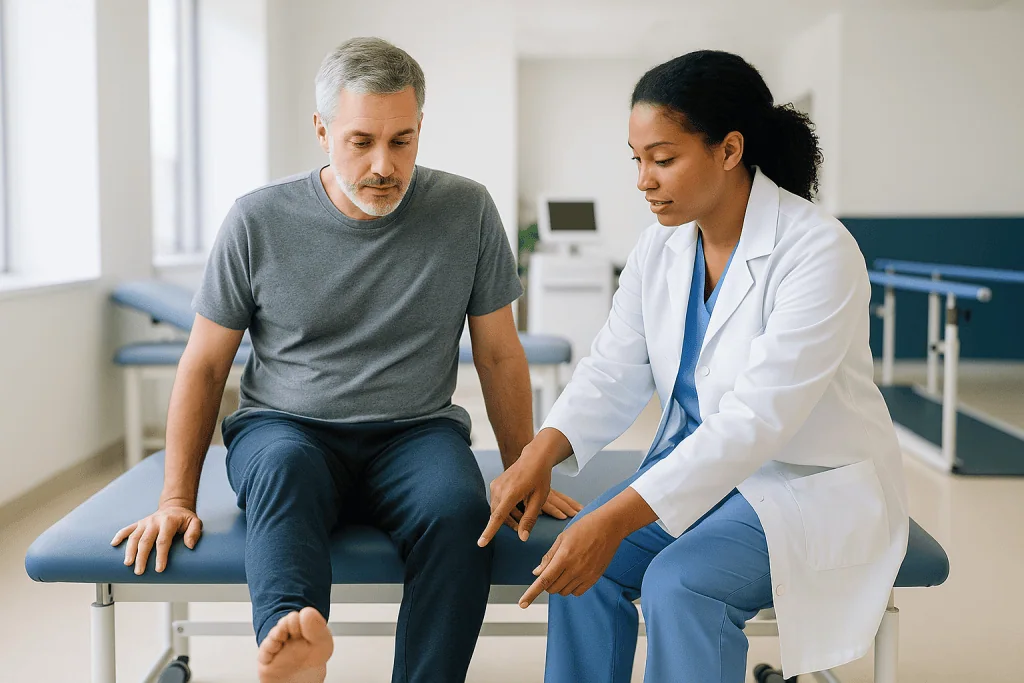
Physiotherapy (physical therapy in the US) works on movement: balance, weight-bearing, transfers from bed to chair, walking, stairs. Occupational therapy focuses on the tasks of daily living, such as dressing, cooking, managing a bathroom and, later, returning to work or driving assessments. Speech and language therapy addresses two separate problems: communication difficulties such as aphasia (trouble producing or understanding language after brain damage) and dysphagia (difficulty swallowing safely). Neuropsychology assesses memory, attention and mood, and teaches strategies for both. Rehabilitation nurses handle continence, skin, medication routines and the practical business of a hospital day.
Johns Hopkins Medicine describes this coordinated, multidisciplinary approach as the core of neurological rehabilitation, with the goal of restoring function, reducing symptoms and improving overall well-being. The American Stroke Association lists the same disciplines and emphasizes that therapy is tailored to each person’s deficits and goals.
What the session feels like from the inside is repetition with feedback. A person relearning to stand might rise from a chair 40 times in an hour, each time with a slightly different cue: weight through the heels, nose over toes, look ahead. Progress is measured, not guessed. Standardized scales for balance, walking speed and independence in daily tasks are scored at intervals so the team can see whether the plan is working and adjust it if it is not.
Why the first weeks matter: neuroplasticity in everyday terms
Neuroplasticity is the brain’s ability to reorganize its connections in response to experience. Every time a skill is practiced, the circuits involved fire together and strengthen. After injury, this same property lets surviving regions take on work that damaged regions used to do.
The catch is timing. In the weeks after a stroke, the injured brain enters a state of heightened plasticity. Swelling subsides, blood flow stabilizes in the surrounding tissue, and growth-related processes switch on. Practice during this window appears to produce larger and faster gains than the same practice delivered later. This is the biological reason rehabilitation teams push to start early, within a day or two of the event when the person is stable, as Mayo Clinic notes.
Early does not mean aggressive. Research on very high-intensity mobilization in the first 24 hours has not shown a benefit and may carry risk, which is why teams calibrate the first sessions carefully. Sitting on the edge of the bed, shifting weight, following a therapist’s finger with the eyes: these are legitimate first steps.
Plasticity is also indifferent to what it learns. If a person compensates by doing everything with the strong hand for six weeks, the brain learns that pattern just as readily as it would learn to use the weak hand. Therapists call this learned non-use, and preventing it is one reason they insist on involving the affected side even when it seems futile early on.
The window does not slam shut. People continue to improve with practice months and years later, especially in tasks they rehearse deliberately. The slope simply flattens, which is exactly what the milestone chart in this article is designed to show.
Who neurological rehabilitation is for, and who is usually asked to wait
Referral to neurological rehabilitation is usually offered to anyone whose nervous system injury or condition has changed how they move, communicate, think or manage daily tasks, and who can participate in therapy to some degree. That last clause matters more than people expect.
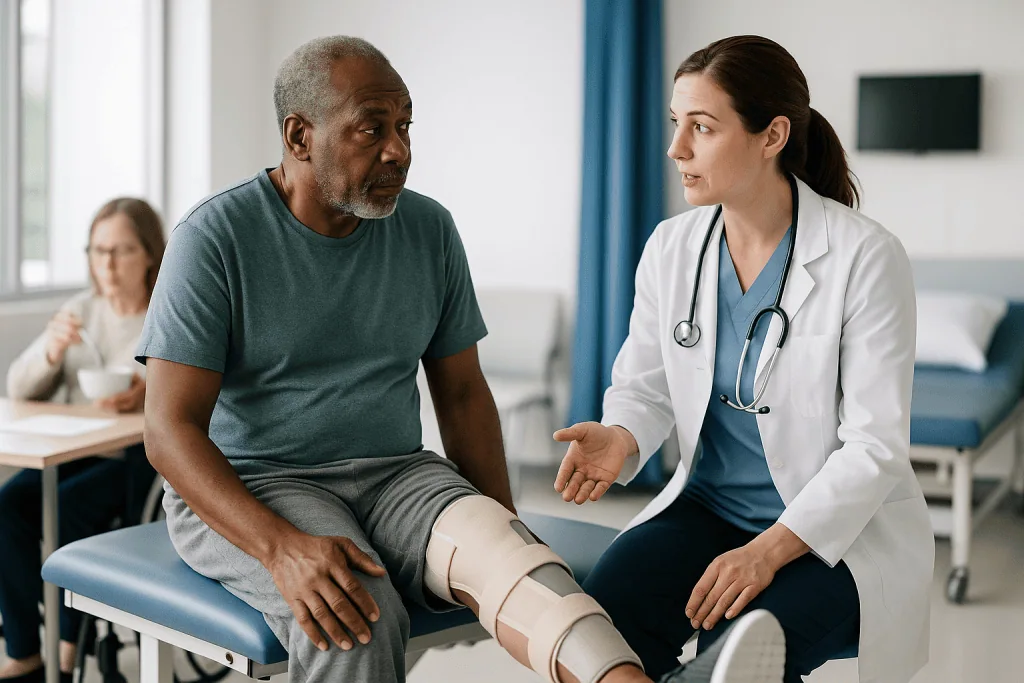
The common reasons for referral include stroke, traumatic brain injury, spinal cord injury, multiple sclerosis, Parkinson’s disease, Guillain-Barré syndrome (an immune attack on peripheral nerves), brain tumors after surgery, and cerebral palsy. Johns Hopkins Medicine and MedlinePlus both list these among the conditions that neurological rehabilitation commonly addresses.
Some people are asked to wait, and the reasons are protective rather than dismissive. A person who is not yet medically stable, with uncontrolled blood pressure, an active infection, or a heart rhythm that has not settled, is generally kept on the acute ward until the risk of exercise falls. Someone with severely reduced consciousness cannot yet follow the instructions that active therapy requires, though passive positioning, joint range work and stimulation programs still take place. After brain surgery, the surgical team sets the timing.
A different kind of waiting applies to intensive inpatient rehabilitation units. These units usually require that a person can tolerate several hours of therapy a day and has realistic goals that need that intensity. Someone who is already walking independently may be better served by outpatient therapy; someone who cannot yet sit for ten minutes may need a slower-paced setting first.
None of these decisions are permanent. Teams reassess weekly, sometimes daily. A person turned down for an inpatient unit this week may qualify next week once they can sit upright long enough to work.
Neuro rehab milestones from sitting to stairs
Milestones give shape to a process that can otherwise feel formless. The order below reflects the typical progression in mobility rehabilitation after a stroke or brain injury. The pace varies enormously between people, so the table describes sequence and meaning rather than fixed weeks.
| Milestone | What it actually requires | Why it matters for the next step |
|---|---|---|
| Sitting unsupported | Trunk control, awareness of midline, tolerance of being upright | Everything else is built on a stable trunk; it also allows safer swallowing and breathing |
| Sit to stand | Weight shift forward, leg strength on both sides, timing | Opens the door to transfers and reduces reliance on lifting equipment |
| Transfers (bed to chair, chair to toilet) | Standing balance for a few seconds, pivoting, coordination with a helper | Often the threshold for going home with family support |
| Standing balance | Holding still, then shifting weight, then reaching | Prerequisite for walking without a frame |
| Walking indoors | Stepping through with the affected leg, clearing the foot, turning | The milestone most people name as their goal |
| Walking outdoors | Uneven ground, curbs, crowds, dual tasks like talking while walking | Restores community participation and reduces isolation |
| Stairs | Single-leg strength, controlled lowering, hand-rail use, confidence | Frequently the last barrier to full access at home |
Parallel tracks run alongside mobility. Hand and arm recovery has its own ladder, from shoulder control to grasp to fine manipulation. Communication, swallowing and cognition each have theirs. The NHS notes that many people continue to make progress in these areas long after leaving hospital, with therapy continuing in the community.
A person may reach stairs quickly and still struggle to button a shirt, or speak fluently while needing a wheelchair. Rehabilitation teams track all the ladders at once, which is why the honest answer to “how far along am I?” is usually several answers.
Stroke rehabilitation timeline: what the days, weeks and months usually look like
The first 48 hours belong to the acute team. Once a stroke is confirmed and treated, and blood pressure, heart rhythm and swallowing safety are assessed, rehabilitation begins at the bedside. Mayo Clinic describes this early start, typically within 24 to 48 hours, as standard practice when the person is stable. Sessions are brief: sitting up, positioning the weak limbs, practicing safe swallowing with speech therapy.
The first two weeks are about foundations. Sitting balance, early standing with support, and transfers dominate physiotherapy. Occupational therapy begins with washing and dressing, often in a hospital bathroom that mimics a home. The team also screens for problems that slow everything down: depression, fatigue, shoulder pain, neglect of one side of space.
Weeks two to twelve are usually the period of most visible change. The American Stroke Association notes that recovery tends to be fastest in the first months, and the NHS says most people regain the majority of their abilities in this period. Depending on needs, this phase happens in an inpatient rehabilitation unit, an early supported discharge program at home, or outpatient clinics. Walking indoors, then outdoors, and beginning stairs are typical goals.
Months three to six see the curve flatten. Gains continue, particularly in fine hand function, speech and higher-level tasks like cooking a full meal or returning to work, but they come more slowly and require more deliberate practice. Many people transition to less frequent therapy with a structured home program.
Beyond six months, improvement is still possible and still documented, especially when people keep practicing specific tasks. The NHS describes rehabilitation as continuing for as long as it is needed, with reviews to check that goals remain appropriate.
Why brain injury, spinal cord injury, MS and Parkinson's run on different clocks
Stroke gives clinicians a relatively clean starting point: one event, one region, one moment to measure from. Other neurological conditions do not.
Traumatic brain injury is often diffuse, affecting many regions at once, and frequently comes with a period of reduced consciousness. The National Institute of Neurological Disorders and Stroke notes that recovery from mild TBI, including concussion, usually happens over days to weeks, while moderate and severe injury may require months to years of rehabilitation, with the fastest improvement early on. Cognitive and behavioral recovery often lags behind physical recovery, so someone may be walking within weeks yet still working on attention and memory a year later.
Spinal cord injury shifts the emphasis from recovery to adaptation. When the cord is severed or severely damaged, therapy focuses on maximizing the function of unaffected muscles, learning wheelchair skills, protecting skin and bladder, and adapting the home. When damage is partial, some return of movement below the injury is possible over months, and therapy targets it. Rehabilitation length is typically measured in months for the initial phase, followed by lifelong follow-up.
Multiple sclerosis is relapsing or progressive, so rehabilitation is episodic. A block of therapy after a relapse aims to regain lost function; maintenance programs between relapses aim to preserve strength, balance and energy.
Parkinson’s disease is slowly progressive. Here rehabilitation is less a course with an end date and more a long-term relationship: exercise to maintain gait and balance, speech therapy for voice volume, occupational therapy for handwriting and daily tasks. Johns Hopkins Medicine lists both MS and Parkinson’s among conditions where ongoing rehabilitation helps manage symptoms and maintain independence.
What shapes how long neurological rehabilitation takes for each person
Two people with what looks like the same stroke on a scan can travel very different roads. Clinicians have a reasonable understanding of why.
Severity and location come first. A small stroke in a region with plenty of redundancy may leave few lasting deficits. A larger one, or one in a location with little backup such as the brainstem, tends to mean a longer road. The NHS notes that how much someone recovers depends largely on how much of the brain was affected.
Age and prior health matter, but less rigidly than people assume. Older adults recover more slowly on average and may have heart, lung or joint conditions that limit exercise tolerance. Yet motivated older people frequently outperform predictions, and teams are careful not to let age alone set expectations.
Cognition and mood act as multipliers. Attention and memory are needed to learn from practice. Depression, which the American Stroke Association notes is common after stroke, drains the energy that rehabilitation requires. Treating it, with talking therapies and sometimes medicine chosen by the prescribing clinician, is part of rehabilitation rather than a distraction from it.
Complications lengthen timelines. Pneumonia, urinary infections, falls, shoulder pain and pressure injuries each cost days or weeks. Much of the nursing work on a rehabilitation unit exists to prevent them.
Finally, there is the environment. Someone with a partner who can supervise practice at home, a ground-floor bathroom and a therapy program they understand tends to progress faster once discharged than someone isolated in a walk-up apartment. Good discharge planning is not paperwork; it is part of the treatment.
Inpatient, outpatient or home: how the setting changes the pace
Where rehabilitation happens shapes how much of it happens, and therefore how quickly milestones arrive.
Inpatient rehabilitation units are designed for intensity. People live on the unit and receive daily therapy from several disciplines, often for several hours a day. Nurses reinforce what therapists teach: the transfer practiced at 10 a.m. is repeated every time the person goes to the bathroom. This setting suits people with significant deficits who can tolerate the workload and who need round-the-clock care while they relearn basics. Stays are typically measured in weeks, and the team sets discharge criteria at admission.
Early supported discharge, where a community team visits the home daily in the first weeks after leaving hospital, has been widely adopted for stroke. The NHS describes rehabilitation continuing at home or in outpatient settings after discharge, with the aim of keeping the intensity up while the person practices in their real environment. A kitchen is a better classroom for cooking than a mock kitchen.
Outpatient clinics provide sessions one or more times a week. The intensity is lower, so the person’s own practice between visits does most of the work. This is where the shift from patient to self-coach becomes explicit.
Telehealth has expanded the options, particularly for speech therapy and cognitive rehabilitation, and for people who live far from a clinic.
No setting is inherently better. The right one is the one that matches the person’s current needs, and most people move through two or three of them. What matters throughout is the total amount of meaningful practice, because that is what the nervous system responds to.
Plateaus, fatigue and setbacks: the middle stretch nobody warns you about
Around the second or third month, many people describe the same thing: the improvements they could see from week to week seem to stop. Therapists call it a plateau. Families sometimes call it giving up, which is unfair and inaccurate.
A plateau is usually a change in slope, not a stop. Gains become smaller and harder to notice without measurement. This is where standardized scores earn their keep: a walking speed that improved by a tenth of a meter per second may not feel like much, but it can be the difference between crossing a street safely and not. Teams also use plateaus as a prompt to change the task. A brain that has stopped responding to one exercise often responds to a new one that demands slightly more.
Fatigue is a separate and underestimated problem. Post-stroke fatigue and fatigue after brain injury are not ordinary tiredness; they are a neurological symptom that can arrive without exertion and persist for months. The NHS lists fatigue among the common long-term effects of stroke. Pacing, protected rest and realistic scheduling are part of the plan, not a sign of weakness.
Setbacks happen. A chest infection, a fall, a new stroke, a relapse of multiple sclerosis: each can undo weeks of progress. Teams expect this and rebuild. Most of the lost ground returns faster the second time because the pathways have been laid once already.
Emotionally, this stretch is often the hardest. The urgency of the acute phase has passed, visitors have thinned out, and the finish line has not appeared. Psychological support, peer groups and honest conversations about goals matter as much here as any exercise.
Is neuro rehab worth it? What the evidence actually shows
The question sounds cynical, but it is a fair one. Rehabilitation asks a great deal of exhausted people, and they deserve to know it is grounded in evidence.
For stroke, the evidence base is broad and consistent. Organized, multidisciplinary rehabilitation is a core component of stroke care in every major guideline, and the American Heart Association and American Stroke Association describe it as essential to recovery. Systematic reviews of specialized stroke unit care, which includes early rehabilitation, have repeatedly shown that people treated in these units are more likely to survive, return home and regain independence than those treated on general wards. Task-specific training, in which people practice the actual activities they want to regain, has strong support for improving walking and arm function.
For traumatic brain injury, controlled trials are harder to run because injuries vary so widely, but the National Institute of Neurological Disorders and Stroke identifies rehabilitation as a central part of care after moderate and severe injury.
For progressive conditions, the goal shifts and so does the evidence. In Parkinson’s disease, exercise-based rehabilitation has good evidence for improving gait, balance and quality of life, even though it does not change the underlying disease. In multiple sclerosis, rehabilitation improves function and participation after relapses.
The World Health Organization frames rehabilitation as one of the essential health services, estimating that 2.4 billion people worldwide live with a condition that would benefit from it. The honest summary: rehabilitation cannot undo damage that has already happened, and no clinician should promise a specific outcome. What it reliably does is help people get more function out of the nervous system they have, and the earlier and more consistently it is delivered, the larger that effect tends to be.
What people often get wrong about neurological rehabilitation timelines
Myths about recovery can do real harm, because they change how people behave during the months that matter most.
The first is the six-month wall: the belief that whatever has not returned by six months is gone. This idea grew out of the fact that the recovery curve flattens around then. It is not the same as stopping. People continue to improve with deliberate practice well beyond six months, particularly in speech, hand function and complex tasks. The NHS describes rehabilitation continuing for as long as it is needed rather than ending at a fixed point.
The second is that rest heals the brain. Rest is essential in the first hours and days, and fatigue must be respected throughout. Beyond that, the brain reorganizes in response to use. Weeks of inactivity teach it to do without the affected side.
The third is that more therapy is always better. Intensity helps up to a point, but very high-intensity mobilization in the first day after stroke has not shown benefit, and overloading an exhausted person produces poor-quality practice. Teams aim for the largest amount of good repetitions the person can tolerate, which is a different target from the largest amount of time.
The fourth is that one hundred percent recovery is the only success. After a serious brain injury, most people are left with some change, whether in stamina, memory, mood or fine movement. Adapting to that change while maximizing everything else is a legitimate and common outcome, not a failure.
The fifth is that recovery is the therapist’s job. Therapists design and coach; the person and their family deliver the hours. That reframing, more than any technique, tends to determine how far someone gets.
Questions to ask your care team
Rehabilitation runs better when people understand the plan. Bringing written questions to a goal-setting meeting is normal, and teams generally welcome it.
- What are my specific goals for the next two weeks, and how will we measure whether I am reaching them?
- Which of my current problems do you expect to improve, which do you expect to stay, and how confident are you about each?
- How many hours of therapy will I get each week, and what should I be practicing between sessions?
- What is the plan for discharge from this setting, what are the criteria, and where will I go next?
- How will my fatigue, mood and sleep be monitored, and who do I tell if they get worse?
- What equipment or home changes might I need, and who arranges them?
- If I hit a plateau, how will the plan change?
- Who is my point of contact once I leave, and how long will community therapy continue?
- What are the warning signs that mean I should stop an exercise or call someone?
- Are there peer support groups or family training sessions I can join?
Ask, too, about the medicines you are taking. After a stroke, most people are prescribed drugs to lower the risk of another one, such as antiplatelet or anticoagulant medicines, blood pressure treatments and statins. Understanding what each is for, and how it might interact with exercise, dizziness or bleeding risk from falls, is part of rehabilitation. Any change to those medicines is a decision for the prescribing clinician.
Family members should feel free to ask about their own role, including how to help with transfers safely and how to encourage practice without taking over. Carer training reduces injuries on both sides.
When to call your doctor
Rehabilitation is a period of increased activity in a body that has recently been through a serious event, so knowing the red flags matters.
Call emergency services immediately, do not wait for a scheduled appointment, if you notice any sign of a new stroke. The American Stroke Association’s FAST warning signs are face drooping on one side, arm weakness or numbness, speech that is slurred or strange, and the reminder that time is critical. The CDC adds sudden severe headache with no known cause, sudden confusion, sudden trouble seeing, and sudden difficulty walking or loss of balance. Any of these appearing suddenly, or an abrupt worsening of existing deficits, needs urgent assessment.
Seek same-day medical help for chest pain or pressure, new shortness of breath, a swollen, painful or warm calf (a possible blood clot, a known risk when mobility is reduced), a fall with a head strike or new pain, a seizure, fever with a cough or a burning sensation when passing urine, or a new area of red or broken skin over a bony point.
Contact your rehabilitation team or doctor within a day or two for persistent new shoulder or joint pain, dizziness or fainting when standing, a marked drop in mood or thoughts of self-harm, worsening swallowing with coughing during meals, or new confusion that comes and goes.
None of these should lead anyone to stop a prescribed medicine or exercise program on their own. Report the symptom and let the team decide. The instinct to push through is admirable in rehabilitation; in this list, it is the wrong instinct.
Frequently asked questions
What do they do in neuro rehab on a typical day?
A typical day combines several disciplines working on one person’s specific goals. Physiotherapy practices balance, transfers, walking and stairs; occupational therapy works on dressing, kitchen tasks and hand function; speech therapy addresses communication and swallowing; and psychology supports memory, attention and mood. Sessions rely on hundreds of repetitions with feedback, and nurses reinforce the skills between sessions. Progress is scored with standardized scales so the plan can be adjusted.
What is a realistic stroke rehabilitation timeline?
Rehabilitation usually starts within a day or two of the stroke, once the person is stable. The first two weeks build sitting, standing and transfers; weeks two to twelve typically bring the most visible progress in walking and daily tasks; and gains slow but continue from three to six months and beyond. Formal therapy may run weeks to many months, then continue as a home program. Severity, complications and mood all shift the pace.
Is neuro rehab worth it if my progress has slowed?
Yes, in most cases, because a slowdown is a change in slope rather than an end. Organized rehabilitation after stroke is supported by consistent evidence for improving independence, and task-specific practice continues to produce gains beyond six months. When progress stalls, teams typically change the task, address fatigue or mood, or adjust goals rather than stop. Discuss any doubts with your rehabilitation team, who can show you measured progress you may not feel.
Can you recover 100% from a TBI?
Some people with mild traumatic brain injury, including concussion, recover fully over days to weeks. After moderate or severe injury, complete recovery is less common; many people regain a great deal of function but are left with some change in stamina, memory, mood or fine movement. Recovery can continue over months to years, with the fastest gains early. No clinician can promise a specific outcome, and adapting well to residual change is itself a meaningful result.
What is the number one most common neurological disorder?
Headache disorders, particularly migraine and tension-type headache, are generally considered the most common neurological conditions worldwide, though they rarely require rehabilitation. Stroke is the neurological condition most often responsible for referral to rehabilitation and is a leading cause of adult disability. Other frequent reasons for rehabilitation include traumatic brain injury, Parkinson’s disease, multiple sclerosis and spinal cord injury, each with a different expected timeline.
What are the neuro rehab milestones after a stroke?
Mobility milestones typically arrive in sequence: sitting unsupported, sit-to-stand, transfers between bed, chair and toilet, standing balance, walking indoors, walking outdoors on uneven ground, and finally stairs. Hand and arm function, speech, swallowing and cognition each follow their own ladder at the same time. People often reach some milestones quickly while others take much longer, so the team tracks all of them together.
How long does neurological rehabilitation take after a spinal cord injury?
The initial rehabilitation phase after spinal cord injury is usually measured in months, followed by lifelong follow-up. When the cord is completely damaged, therapy focuses on maximizing the function of unaffected muscles, wheelchair skills, and protecting skin and bladder. When damage is partial, some return of movement below the injury may occur over months, and therapy targets it. Timelines vary with the level and completeness of injury.
Does neurological rehabilitation help in Parkinson's disease if the condition is progressive?
Yes. Exercise-based rehabilitation has good evidence for improving gait, balance and quality of life in Parkinson’s disease, even though it does not alter the underlying disease process. Speech therapy helps voice volume and swallowing, and occupational therapy supports handwriting and daily tasks. Because the condition progresses, rehabilitation works best as an ongoing program reviewed over time rather than a single course with an end date.
Why do I feel so tired during rehabilitation, and does it mean I am not recovering?
Fatigue after stroke or brain injury is a neurological symptom, not ordinary tiredness, and it does not mean recovery has stopped. It can arrive without exertion and persist for months. Teams manage it with pacing, protected rest and realistic scheduling, and they check for contributors such as poor sleep, low mood, infection or medicine effects. Tell your team if fatigue is worsening or preventing you from practicing.
When should I call the doctor during neurological rehabilitation?
Call emergency services immediately for sudden face drooping, arm weakness, slurred speech, sudden severe headache, sudden confusion, vision loss or a sudden worsening of existing deficits, since these may signal a new stroke. Seek same-day help for chest pain, breathlessness, a swollen painful calf, a seizure, a fall with head strike or fever. Contact your team within a day or two for new joint pain, dizziness on standing, coughing during meals or a marked drop in mood.
References
- NHS: Stroke, Recovery
- NIH National Institute of Neurological Disorders and Stroke: Traumatic Brain Injury (TBI)
- World Health Organization: Rehabilitation fact sheet
This article is for general information only and is not a substitute for professional medical advice. Please consult a qualified doctor about your individual situation.

More from the Blog
Family Support During Spinal Cord Injury Rehabilitation: Transfers, Home Set-Up and Rest
Family support during spinal cord injury rehabilitation means learning safe transfer techniques from the therapy team, preparing the home for wheelchair access and pressure-relief…

Before Your First Vestibular Rehabilitation Visit: Symptom Diary, Hearing Tests and Medicines
Before a vestibular rehabilitation first appointment, most teams ask for three things: a short symptom diary recording when dizziness happens, how long it lasts…

Skin Checks and Pressure Relief After Spinal Cord Injury Rehabilitation: A Daily Routine
Pressure sore prevention after spinal cord injury rests on a daily routine: inspect skin over bony areas at least once or twice a day,…

What a Pulmonary Rehabilitation Session Involves: Exercise, Breathing Training and Education
Pulmonary rehabilitation is a supervised program for people with chronic lung disease that combines exercise training, breathing techniques and education. A typical session includes…
Daily Life After Vision Rehabilitation: Practicing Contrast Strategies and Orientation Skills
Living with low vision after rehabilitation works best when contrast and orientation skills become daily habits: use dark-on-light or light-on-dark pairings for food, stairs,…
Shockwave Therapy for Plantar Fasciitis: What the Trials Show
Shockwave therapy shows moderate evidence of benefit for chronic plantar fasciitis. Randomized trials and meta-analyses find it relieves heel pain better than sham treatment…