

After Discharge in Turkey: How to Manage Wound Care, Dressings, and Red Flags

After discharge in Turkey, your discharge summary is the reference for everything: dressing schedules, showering rules, medicine timings and follow-up dates. Keep the wound clean, dry and protected, check it once or twice daily in good light, and track the direction of change. Healing wounds gradually settle; spreading redness, thick discharge, odour, fever or worsening pain are not part of normal healing.
Will you know what to do if the dressing gets wet on your second night in the hotel? Most patients leaving hospital in Turkey carry some version of that question with them. The first days after discharge in Turkey are usually quiet and uneventful, but they go far better when you know what your wound should look like, what your dressing schedule actually says, and which changes are not part of normal healing.
This guide explains how wound care works after discharge in Turkey: dressings, showering, movement, the difference between ordinary healing and changes that need review, and the practical records that make your follow-up more useful. It does not replace your own discharge instructions. Those were written for your procedure and your wound, and they take priority over anything general written here.
At a glance
- Best for: International patients recovering in a hotel, apartment or local home after a procedure in Turkey
- Main goal: Keep the wound clean, dry and protected, and watch the direction of change rather than single moments
- Your reference document: The discharge summary: it sets your dressing schedule, showering rules, medicine timings and follow-up dates
- Not typical of healing: Fever, worsening pain, spreading redness, odour, thick discharge, wound edges opening, bleeding that continues
- Daily routine: One or two wound checks in good light, medicines on schedule, gentle movement, a short written or photo log
What recovery looks like after discharge in Turkey
Once you leave the ward, most of your recovery happens somewhere ordinary: a hotel room, a serviced apartment, or a relative’s home if you are staying locally. Feeling tired, stiff and slightly cautious is normal in the first days after discharge in Turkey. So is second-guessing the wound, wondering whether that shade of pink was there yesterday, or whether a spot of old blood on the dressing means anything. Most of the time it does not, and this guide will help you tell the difference.
Your discharge summary is the document that answers most day-to-day questions. It typically covers when and how you may shower, how long the dressing stays in place, which medicines to take and when, what activity to avoid, and when your follow-up review is scheduled. Read it before you leave the ward, while the team who wrote it is still in front of you. Anything vague, showering, drains, stitches, travel timing, is far easier to clarify in the hospital than from a hotel room two days later.
Practical logistics matter as much as the medical detail. Keep your dressing supplies, prescribed medicines, a thermometer, water, phone charger and your discharge paperwork together in one place within easy reach. Acibadem’s international patient coordinators help with the surrounding arrangements, interpreter support, follow-up scheduling and paperwork, so that the medical instructions themselves stay clear. If arranging professional dressing changes at your accommodation is part of your plan, home nursing support after hospital discharge explains how that usually works.
How to care for your wound and dressing day to day
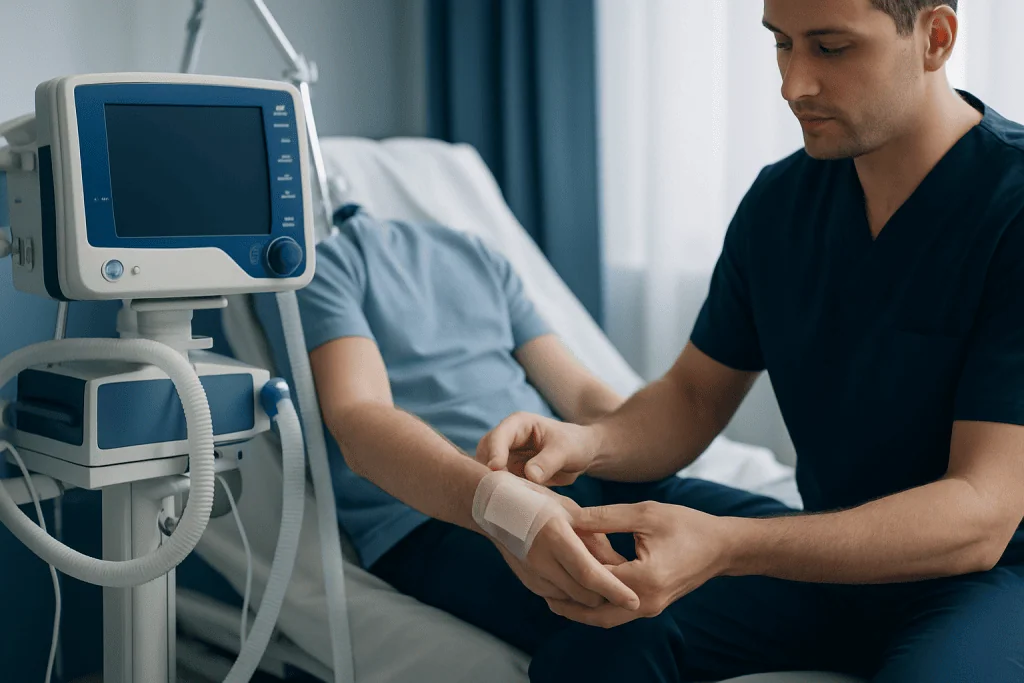
The single most important rule: follow the advice written for your wound, not a general rule from the internet. Dressings vary widely. Some are designed to stay in place untouched for several days. Others need changing sooner if they become wet, loose or soiled. Adhesive strips, sutures, staples, drains and specialised coverings each have their own timelines, and removing them early undoes the protection they provide. If your papers say leave it alone, leave it alone: a dressing that looks slightly untidy but is doing its job is better than a fresh one applied with unwashed hands on a hotel bathroom counter. Our guide to wound dressing changes after surgery in Turkey covers the change technique itself in more detail.
When you do handle the area, preparation does most of the work. Wash your hands thoroughly with soap and water and dry them on a clean towel or fresh tissue. Lay out everything you need on a clean surface before you start, so you are not searching for tape halfway through with the wound exposed. If a nurse demonstrated your dressing change before discharge, copy those steps exactly: the order matters more than speed.
Between changes, the routine is simple: keep the wound clean and dry, avoid rubbing or scratching, and wear loose clothing that does not press or drag on the site. If you were told to clean the area, use only the solution named in your instructions. Do not add creams, powders, antiseptics or herbal products on your own initiative. Extra products irritate healing skin, and they also make the wound harder to assess: a surgeon looking at a photo cannot tell whether that discolouration is discharge or yesterday’s ointment.
- Check the dressing once or twice a day for leakage, odour or lifting edges.
- Look at the skin around the wound for spreading redness, new swelling or fresh bruising.
- Track the trend in pain over hours and days, not one momentary twinge when you move.
- Keep pets, dust and unwashed hands away from the dressing area.
Showering, movement, and practical recovery tips

Showering is the most common practical question after discharge in Turkey, and there is no universal answer. It depends on the procedure, the dressing type, and whether you have drains, staples or sutures in place. Some patients can shower within a short period with the dressing protected; others must keep the area completely dry for longer. Your discharge summary should state the rule for you. If it does not, that is one of the questions worth settling before you leave the ward: a soaked dressing is an avoidable problem.
Balance rest with gentle movement. Short, regular walks around your room or the hotel corridor support circulation and ease stiffness, and most surgical teams encourage them from early on unless you were told otherwise. Overdoing it is the opposite mistake: too much activity too soon tends to increase swelling, discomfort and the chance of bleeding at the wound site. If you were told to avoid stretching, lifting, bending or certain sleeping positions, those limits exist to keep tension off the wound while it closes.
A simple daily rhythm makes everything easier: meals, water, medicines on schedule, and a wound check at the same time each day. Do the check in good light, hotel bathrooms are often better lit than bedrooms. A daily photo taken from the same distance in the same lighting turns a vague worry (“is it redder?”) into an answerable question. If your wound is somewhere you cannot see well, the back, scalp or the back of a leg, ask a companion to do the looking. And remember that the first days can also bring effects from the anaesthetic itself, quite separate from the wound; post-anaesthesia side effects after discharge in Turkey explains what tends to appear and fade in that window.
What is normal healing and what is not
Some mild symptoms are simply healing at work. Tenderness around the incision, light swelling, itching as the skin repairs, and a faint pink line close to the wound edge are all common. A few spots of old, dark blood on a dressing, especially after movement, are also unremarkable, provided the amount does not keep increasing.
The most useful question is not “does this look perfect?” but “which direction is this moving?” Normal healing has a direction: pain gradually settles, swelling stabilises and then improves, and the wound stays closed, clean and dry. Changes that intensify, spread outward, or appear suddenly after a stable period run against that direction, and those are the changes surgical teams ask patients to report during follow-up.
| Usually part of healing | Not typical of healing |
|---|---|
| Mild tenderness that eases day by day | Pain that worsens instead of settling |
| Faint pinkness close to the incision line | Redness that spreads outward or feels hot |
| Light swelling that stabilises, then improves | New or increasing swelling after a stable period |
| Itching as skin repairs | Thick yellow or green discharge, or a bad smell |
| A few spots of old blood on the dressing | Bleeding that continues or soaks the dressing |
| Wound edges staying closed and dry | Wound edges opening or gaping |
Some symptoms sit outside wound care altogether. Fever and chills, shortness of breath, chest pain, confusion or severe weakness are not features of routine recovery from any procedure: they belong to a different category of medical attention entirely, and the clinical notice above this page covers how that works. For the wound itself, the honest summary is this: a healing wound is boring. It improves slowly and does very little. Anything dramatic, spreading or worsening is by definition not the boring kind.
Medicines, records, and photo logs
Your medicine schedule is part of the treatment, not an optional extra. Pain relief, antibiotics where prescribed, and anything you were told to pause or restart all follow the plan your treating doctor set. Decisions about stopping, changing or adding anything, including over-the-counter medicines and supplements, some of which affect bleeding or interact with prescriptions, belong to that doctor, not to a hotel-room judgement call. Setting phone alarms for each dose in the first days is worth the small effort: consistent timing keeps discomfort predictable, and predictable discomfort is much easier to distinguish from a genuinely new problem. How prescriptions, timings and adjustments are handled around a procedure is covered in how we manage your medicines before and after treatment.
A short recovery log makes your follow-up review sharper. Note your temperature if you were advised to check it, your pain level, when you changed the dressing, what the wound looked like, and anything new. It takes two minutes a day and replaces “I think it was worse on Tuesday” with an actual record.
Photos work the same way. Taken daily, in the same light, from the same distance, with the date recorded, they let your surgeon’s team compare like with like and judge whether a change is real or a trick of lighting. If photo review is part of your follow-up arrangement, useful context alongside each image includes when the change began, whether it is worsening, whether you have a fever, and the state of the dressing. Precise information gets precise answers.
Travel plans, follow-up, and going home
If you plan to travel onward or fly home shortly after discharge, the timeline your doctor set is the one that counts. Long travel days magnify swelling, discomfort and fatigue, and some procedures require a review before you are cleared to fly at all. Know whether your dressing needs changing before departure, and keep dressing supplies, medicines and your discharge papers in your hand luggage, never in checked baggage. Managing the wound through airports and a flight has its own small logistics, covered in wound care during the journey home.
Before leaving Turkey, make sure three things are settled. First, your named contact route: your discharge summary states who handles questions during office hours and who covers the out-of-hours period, and it is worth confirming those details are legible and saved in your phone before you go. Second, your documents: copies of the discharge summary, medication list, relevant imaging or test results, and wound care instructions in a format a doctor at home can read. Third, your follow-up plan, both any review still due in Turkey and what continues after you land. The broader sequence of leaving hospital, final reviews and fitness to fly is laid out in after treatment in Turkey: discharge, follow-up and flying home.
None of this needs to be complicated. A wound that is behaving, a medicine schedule that is being kept, a folder of documents, and a saved contact route cover the great majority of what recovery after discharge in Turkey actually requires.
Step by step
- Read your discharge instructions before you leave the ward. Go through the paperwork while the team is still available and settle anything vague, showering rules, dressing schedule, medicine timings, activity limits, follow-up dates. Ten quiet minutes in the hospital save days of guessing later.
- Set up a clean recovery space. Keep dressings, prescribed medicines, a thermometer, water and your paperwork together in one reachable place. This cuts unnecessary movement and makes it harder to miss a dose or improvise a dressing change in a rush.
- Check the wound at the same time each day. Use good light and look for the trend: redness, swelling, discharge, odour, wound edges. A regular check reveals patterns; a panicked midnight glance reveals nothing.
- Change or protect the dressing exactly as instructed. No improvised creams, tapes or home remedies. Wash and dry your hands first, prepare everything before you expose the wound, and copy the technique you were shown.
- Keep medicines on the schedule your doctor set. Alarms help in the first days. Consistent timing keeps expected discomfort predictable, which is exactly what makes a genuinely new symptom stand out.
- Keep a short log and, if arranged, daily photos. Same light, same distance, dated. This is the difference between telling your follow-up review “I think it changed” and showing it.
- Confirm follow-up and travel plans before departure. Know your review dates, whether you are cleared to fly, and where your documents and contact details are saved. Hand luggage carries the medical kit; checked baggage does not.
Your checklist
- Discharge summary and wound care instructions saved on your phone and printed
- Prescribed medicines collected and the dosing schedule understood
- Enough dressing supplies for your stay and the journey home
- Thermometer available if you were advised to monitor for fever
- Office-hours and out-of-hours contact details from your papers stored in your phone
- Loose, comfortable clothing that will not rub the wound
- Daily photo or written symptom log started on day one
- Travel clearance and follow-up appointments confirmed before departure
Key takeaways
- Your own discharge instructions come first, dressing and showering rules genuinely vary by procedure and wound type.
- Judge the direction of change: healing wounds settle gradually, while worsening pain, spreading redness, discharge or fever run against that direction.
- Keep the wound clean, dry and protected, and add nothing to it that was not prescribed.
- A simple daily rhythm, medicines on schedule, one good-light wound check, gentle movement, a short log, covers most of what recovery asks of you.
- Before leaving Turkey, have your documents, contact details, travel clearance and follow-up plan settled, with supplies in your hand luggage.
Frequently asked questions
How often should I change my dressing after discharge in Turkey?
There is no schedule that fits every wound. Some dressings are designed to stay untouched for several days; others need earlier attention if they become wet, loose or soiled. The schedule in your discharge summary is the one written for your wound type, and it takes priority over any general rule.
Can I shower with my wound dressing on?
Sometimes, but only if your surgeon or nurse said so. Some dressings are water resistant; others must stay completely dry, particularly where drains, staples or a fresh incision are involved. Your discharge summary should state the rule for you, and this is worth confirming before you leave the ward rather than after.
What does a normal healing wound look like?
Usually rather boring: mild tenderness, light swelling, some itching, and a faint pink line close to the incision, all easing gradually over days. The defining feature is direction: a healing wound slowly improves, stays closed, and produces little to no discharge.
When is redness or discharge not part of normal healing?
Stable, faint pinkness near the wound edge is common. Redness that spreads outward, feels hot, or arrives with increasing pain runs against the normal direction of healing, as does thick yellow or green discharge or a bad smell. Fever alongside any of these is likewise not a feature of routine recovery.
Is it useful to keep photos of the wound?
Yes, if photo review is part of your follow-up arrangement. Photos taken daily in the same light, from the same distance and with the date recorded let your surgeon’s team compare like with like. Noting when a change began, whether it is worsening, and the state of the dressing gives each image useful context.
Can I fly home soon after surgery if the wound seems fine?
Travel timing depends on the procedure, your overall condition and your doctor’s assessment, not only on how the wound looks. Some procedures require a review before you are cleared to fly. Whatever the timeline, dressings, medicines and discharge papers travel in your hand luggage, not the hold.
What are the common diseases in Turkey that travellers ask about?
This guide covers surgical recovery, which is a separate topic from general travel health. For visitors, the usual travel-health themes apply to Turkey as to much of the region: food and water hygiene, seasonal respiratory infections, and keeping routine vaccinations current. The CDC’s destination page for Turkey, listed in the references, is the standard source for up-to-date travel health information.
What supplies should I keep with me during recovery in Turkey?
Enough dressing supplies for your stay and the journey home, your prescribed medicines with the schedule visible, a thermometer if you were advised to monitor temperature, your printed and digital discharge documents, and the contact details from your papers saved in your phone. Keeping them together in one place removes friction from every daily task.
Add us as a Preferred Source to see more of our trusted health content across Google Search, AI Overviews and Discover.

Update history
- PublishedAugust 4, 2026
- Medical review approvedSeptember 1, 2026
- Last content updateAugust 31, 2026
References3
- Surgical wound care - closed (MedlinePlus) medlineplus.gov
- After Surgery (MedlinePlus) medlineplus.gov
- CDC Travelers' Health: Turkey wwwnc.cdc.gov
More Patient Guides

Septoplasty Recovery: Week by Week
Learn what to expect after deviated septum surgery: a week-by-week septoplasty recovery timeline, when it is usually safe to fly home, and…

Gallbladder Surgery Recovery: Week by Week
Learn what to expect after gallbladder surgery: a week-by-week recovery timeline, pain, diet, wound care, when it is safe to fly home…
Robotic Hysterectomy Recovery: Week by Week
Recovery from robotic hysterectomy week by week: pain, lifting, wounds, driving, flying home safely, warning signs and questions to ask before you…
Breast Reconstruction Recovery: Week by Week
DIEP flap recovery week by week: hospital stay, drains, pain, walking, showering, driving, when it is usually safe to fly home, and…