

Home Nursing Support in Turkey After Hospital Discharge

Home nursing support in Turkey is short-term, doctor-directed help, medication timing, wound observation, mobility assistance and basic monitoring, delivered in your hotel, apartment or temporary residence after discharge. Arrange it before you leave the ward, ideally 24-48 hours ahead, so the visit plan matches your written discharge instructions. It supports recovery; it is not a substitute for emergency care.
Who changes your dressing, checks your temperature, or keeps your tablet schedule on track when you are recovering in a hotel room 2,000 kilometres from home? If you are staying in Turkey for days or weeks after leaving hospital, home nursing support can bridge the gap between the ward and full independence. This guide explains what that support actually involves, how to arrange it before discharge, what the cost depends on, and where its limits are.
At a glance
- Best arranged: Before you leave the ward, ideally 24-48 hours in advance
- Common support: Medication timing, wound observation, mobility help, basic vital sign checks, catheter or drain care where prescribed
- Who coordinates: Your treating doctor, the discharge team, international patient services, and the home care provider
- Where it happens: Hotel, serviced apartment, rental home, or a relative’s residence
- Language: Ask for interpreter support and written instructions in a language you understand
- Limits: Home nursing is not emergency care and does not replace your treating doctor
What home nursing support in Turkey after hospital discharge actually covers
Home nursing support in Turkey after hospital discharge is practical, short-term assistance delivered where you are staying, once your doctor has agreed you are ready to leave the ward. For international patients that setting is usually a hotel, serviced apartment or rental home rather than a family house. The purpose is narrow and useful: to help you follow your discharge plan safely in an unfamiliar environment, not to continue hospital treatment in a different room.
What a visiting nurse can do depends entirely on what your treating doctor has authorised. Typical tasks include helping you keep to your medication schedule, observing a wound and changing a dressing where that has been prescribed, checking temperature, pulse and blood pressure, supporting safe movement between bed, chair and bathroom, and reminding you which warning signs need urgent review. Some patients with a drain, urinary catheter or PICC line receive specific care for that device, if that applies to you, read our guide to travelling with a PICC line or port as well.
It is worth being equally clear about what home nursing does not cover. A nurse cannot change your treatment plan, adjust medication doses, or make diagnostic decisions: those belong to your treating doctor. Home nursing is also not a hospital admission in disguise: if you still need continuous monitoring, your doctor should keep you as an inpatient rather than discharge you with visits. Understanding this boundary before you agree to leave the ward prevents disappointment later.
Some patients need a single visit for reassurance and instruction. Others benefit from daily visits for several days, particularly after surgery, a long admission, or when travelling alone. There is no standard package that suits everyone, which is why the planning conversation matters more than the label.
When you may need support after leaving the hospital
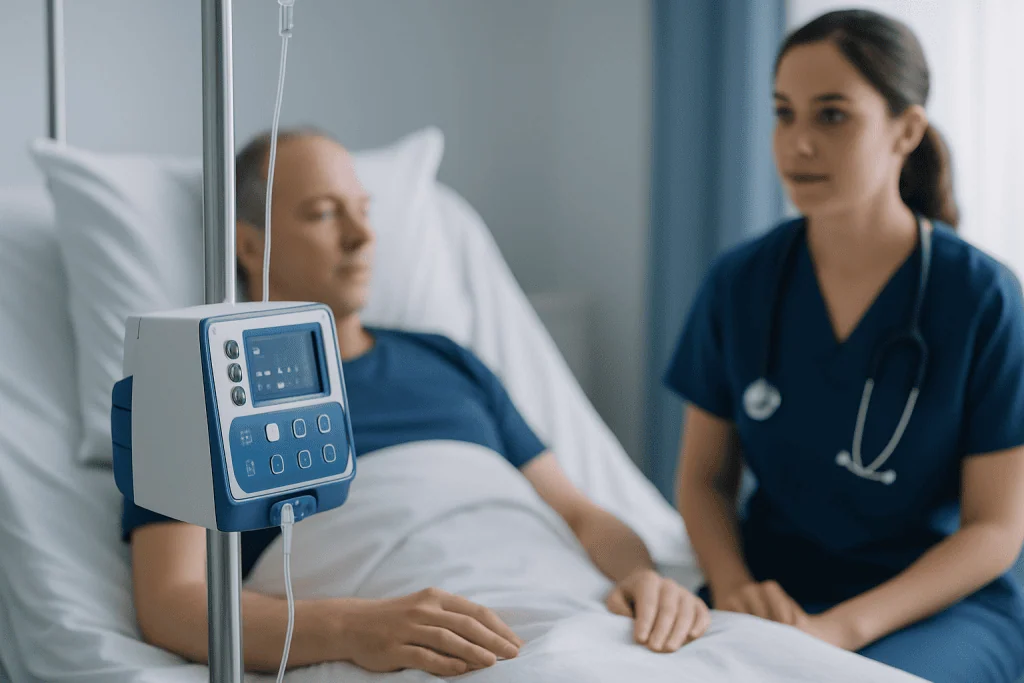
The honest test is simple: are you medically ready to leave hospital but not yet practically ready to manage every recovery task alone? That gap is common for international patients. At home you would have your own doctor, a familiar pharmacy, and people who know your routines. In Turkey you are managing medications, mobility limits and follow-up appointments in a new city, possibly in a second language, possibly while still tired from anaesthesia or a long procedure.
Home nursing support in Turkey after hospital discharge tends to be most useful when one or more of these applies:
- You have a dressing that must be checked or changed on a schedule
- Your mobility is temporarily limited and transfers feel unsafe
- You are managing a drain, catheter or other device with a specific care plan
- Your medication schedule is complex, or you are worried about missing doses
- You are travelling alone, or your companion is willing but untrained
- Fatigue, dizziness or post-anaesthesia effects make daily tasks harder than expected
Companions deserve a mention here. A spouse or friend can prepare meals, organise the room and offer encouragement, but they are not trained in safe patient handling, wound observation or recognising early complications. A few nursing visits can teach a companion what to watch for and how to help without harm, which often matters as much as the visits themselves.
What about elderly patients?
Discharge is often harder for older patients. Recovery of strength takes longer, the risk of falls in an unfamiliar room is higher, and medication schedules are frequently more complex. If you are arranging care for an elderly relative discharged in Turkey, ask the ward team specifically about fall precautions, whether a raised toilet seat or walking aid is recommended, how confusion or reduced appetite should be reported, and whether visits should be more frequent in the first days. Ask, too, whether the discharge plan assumes someone is present overnight. If it does and no one can be, say so before discharge: the plan may need to change, not your honesty.
One firm rule applies at any age: home nursing is not a substitute for urgent review. If severe symptoms develop, chest pain, breathing difficulty, heavy bleeding, fainting, sudden severe pain, call your local emergency number or go to the nearest emergency department now. In Turkey, the national emergency number is 112.
How to arrange home nursing before discharge
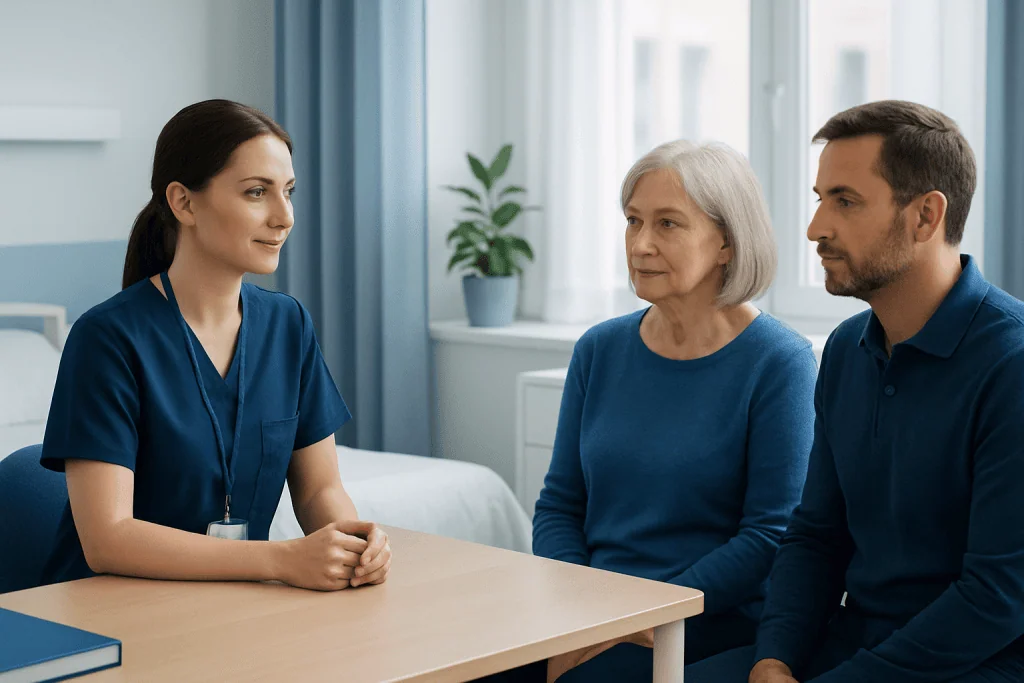
Raise the question on the ward, not from your hotel. The discharge team needs time to confirm what type of support is suitable for your condition, which tasks the nurse should perform, and whether supplies, dressings, gloves, a thermometer, a medication organiser, need to be arranged. At Acibadem, discharge planning typically involves the medical team and international patient services working together, so tell your coordinator early that you want home nursing considered. A day or two of notice makes the difference between an organised plan and an improvised one.
Before you leave, insist on written instructions covering your medications, wound or dressing care, activity limits, diet guidance, follow-up appointments and warning signs. If English is not your first language, ask whether interpreter support or a translated summary is available. Written material matters because the first days after discharge are exactly when tiredness and medication effects make verbal instructions easy to forget. For a full list of what your paperwork should contain, see what your discharge summary should include before you fly home.
Details worth confirming in writing:
- How many visits are planned, over how many days, and at what times
- Exactly which tasks the nurse is authorised to perform
- What supplies you need at your accommodation, and who provides them
- Who to call for routine questions, and who to call for urgent concerns
- Whether your companion should be present during visits
- How the nursing visits connect to your follow-up appointments
How fast can care start?
If you ask before discharge, the first visit can often be aligned with your first day out of hospital, which is usually when you need it most. If you ask after you have already checked into your hotel, expect a delay while the provider confirms your discharge plan with the treating team, nurses should not work from a patient’s verbal summary alone. This is another reason to plan on the ward: the handover between hospital and home care is a document trail, not a phone call, and documents take time to prepare.
What home nursing costs depend on
This guide will not quote figures, because there is no single honest number. What you pay for home nursing depends on the frequency and length of visits, the tasks involved (a brief medication check is different from a full dressing change with device care), whether visits fall at night or on public holidays, the distance between the provider and your accommodation, and the supplies used. A written quote should itemise these elements so you can see what you are agreeing to.
Two practical points. First, ask for the quote before discharge, through your international patient coordinator, so you can compare it against alternatives such as staying an extra night near the hospital. Second, check your travel or health insurance policy: some policies cover post-discharge nursing abroad, some cover it only when a doctor documents that it is medically necessary, and some exclude it entirely. Get any insurer confirmation in writing before care starts, not after.
On the related question many visitors ask, whether medical care in Turkey is free for tourists, the honest answer is no, not in general. Emergency departments will assess and stabilise anyone who arrives, but tourists are normally charged for treatment, and planned or follow-on care such as home nursing is a paid service. Travel insurance with medical cover is the sensible protection, and you should carry your policy details throughout your stay.
Preparing your hotel or apartment for safe recovery
Your recovery space should be calm, clean and easy to move through. Before discharge, check that your accommodation has lift access if stairs are difficult, space to move around the bed, reliable heating or air conditioning, and a bathroom you can use safely: a walk-in shower is easier than a bathtub after most procedures. If you are staying in Istanbul or another large city, factor traffic time to the hospital into your choice; a follow-up appointment across the city can take far longer than the map suggests.
Set the room up before you arrive, or ask your companion to. Keep within arm’s reach of the bed: water, your medication schedule, phone and charger, discharge documents, hand sanitiser, tissues, and a card with your emergency contacts. If your mobility is limited, remove hazards, loose rugs, trailing cables, cluttered walkways, and avoid very low beds or sofas that are hard to rise from. If your discharge plan says you should not be alone in the first hours, take that seriously; it exists because problems in the first day are easier to catch with someone present.
If a nurse will visit, give the provider the full address, room number, reception instructions and a phone number that is actually answered. Hotels may want to know a healthcare professional is expected, and that is fine, but you do not owe reception any private medical detail. “A nurse will visit me” is a complete sentence. Acibadem’s international patient services can advise on accommodation practicalities for the recovery period if you are unsure what to book.
Communication, interpreters, and knowing who to call
Most aftercare problems are communication problems in disguise. Before discharge, make sure you know the roles and numbers of your key contacts: the treating department, your international patient coordinator, the home nursing contact if one is arranged, and the urgent pathway for out-of-hours concerns. Save them in your phone and keep a printed copy in your discharge folder, phones run out of battery at inconvenient moments.
If you do not speak Turkish, ask exactly how interpretation will work during nursing visits, not just during hospital appointments. Some instructions tolerate imprecision; medication timing, dressing technique and warning signs do not. Ask for repetition, ask for written versions, and ask the nurse to confirm you have understood. No competent professional is offended by that request.
Keep a simple daily recovery log: temperature if you have been asked to check it, pain levels, medication times, appetite, how far you walked, what the wound looked like, and questions for your next appointment. A log turns your follow-up consultations from guesswork into evidence, and it is exactly the kind of record that helps if you later need to contact your Turkey care team about a possible complication.
Know the escalation ladder and use it in order. Routine questions go to the nurse or coordinator during working hours. Concerning changes, a wound looking worse, new swelling, fever, go to the treating team promptly rather than waiting for the next scheduled visit; our guide to wound care, dressings and red flags after discharge covers what to watch for. And for severe symptoms such as chest pain, breathing difficulty, heavy bleeding or collapse, do not phone the nurse first: call your local emergency number or go to the nearest emergency department now.
Planning your return home after temporary care in Turkey
Home nursing is usually one stage in a longer sequence: hospital, local recovery, a follow-up check, then travel home. Do not book or change flights until your doctor has confirmed when travel is appropriate for your specific situation: the answer depends on your procedure, wound condition, mobility, individual risk factors and whether a final review is needed before departure. Our guide on when it is safe to fly home after surgery in Turkey explains what shapes that decision.
Before leaving Turkey, collect your discharge summary, medication list, relevant imaging or laboratory reports, and written follow-up recommendations. Ask what information your doctor at home should receive, and carry documents in both printed and digital form, airports are unkind to single copies. If you travel with medical supplies or medicines, keep them in hand luggage where possible, along with prescriptions or a medical letter explaining them.
For long flights, ask your doctor about movement during the journey, hydration, compression garments if they have been prescribed, and any precautions specific to your procedure. The broader logistics, follow-up scheduling, remote check-ins, transferring care to your home doctor, are covered in our guide to discharge, follow-up and flying home. The goal is a departure that feels organised rather than rushed.
Step by step
- Raise home nursing early. Tell your doctor, ward nurse or international patient coordinator before discharge day that you want support considered. The team needs time to decide what is appropriate and to prepare the handover documents a visiting nurse works from.
- Leave with written instructions. Medications, wound care, activity limits, diet, follow-up appointments and warning signs, all on paper, in a language you understand. Ask for interpreter help with anything unclear.
- Confirm the care plan in writing. Number of visits, days, times, authorised tasks, whether your companion should be present, and who to call if a visit must change.
- Get the quote and check insurance. Ask for an itemised quote before discharge and confirm in writing whether your travel or health insurance will contribute.
- Prepare the recovery space. Lift access, a safe bathroom, hazards removed, and documents, medications, water and phone numbers within reach of the bed.
- Keep a daily log. Medication times, pain, temperature if instructed, appetite, mobility and wound observations. Share it at every visit and appointment.
- Know the urgent warning signs for your condition. Ask the discharge team to list them explicitly. For severe symptoms, call your local emergency number or go to the nearest emergency department now, do not wait for the next visit.
- Plan travel home with your doctor, not around your original booking. Confirm timing, collect your documents, and keep medicines and paperwork in hand luggage.
Your checklist
- Written discharge summary and medication list
- Follow-up appointment dates, times and locations
- Phone numbers for the hospital, coordinator, home care provider and emergency services (112 in Turkey)
- Interpreter or language support plan for nursing visits
- Itemised care quote and written insurance confirmation, if applicable
- Accommodation address, room number and access instructions given to the provider
- Medication organiser or a clear written dosing schedule
- Supplies recommended by the discharge team
- Comfortable clothing and safe footwear
- Passport, insurance documents and payment method
- Printed and digital copies of all medical documents
Key takeaways
- Home nursing support in Turkey after hospital discharge covers doctor-authorised practical tasks, medication timing, wound observation, mobility help, basic monitoring, in your temporary accommodation.
- Arrange it on the ward, 24-48 hours before discharge, so the visit plan matches your written instructions and can start when you actually need it.
- Costs depend on visit frequency, tasks, timing and supplies; ask for an itemised quote and check your insurance in writing before care begins.
- Medical care in Turkey is not generally free for tourists; travel insurance with medical cover is the realistic safeguard.
- Elderly patients usually need more frequent visits, fall precautions and clear reporting rules, ask about these specifically.
- Home nursing is not emergency care. For severe symptoms, call your local emergency number or go to the nearest emergency department now.
- Book your flight home only after your doctor confirms travel is appropriate.
Frequently asked questions
What kind of care is available after hospital discharge?
Depending on your doctor’s instructions, post-discharge care in Turkey can include visiting nurse support for medication timing, wound and dressing care, mobility assistance and basic vital sign checks, plus scheduled follow-up appointments at the hospital and coordination help from international patient services. What is appropriate for you is decided by your treating team, not chosen from a menu.
Is medical care free in Turkey for tourists?
In general, no. Emergency departments will assess and stabilise anyone who arrives, but tourists are normally charged for treatment, and planned services such as home nursing are paid. Travel insurance with medical cover is the sensible protection; check what your policy covers for post-discharge care abroad and get any confirmation in writing before care starts.
What happens when an elderly person is discharged from the hospital?
The principles are the same but the margins are smaller: recovery is often slower, fall risk is higher, and medication schedules are frequently more complex. Ask the discharge team about fall precautions, walking aids, how confusion or poor appetite should be reported, whether someone must be present overnight, and whether more frequent nursing visits are advisable in the first days.
Can I receive home nursing support if I am staying in a hotel in Turkey?
In many cases, yes. Nursing visits can be arranged for a hotel or serviced apartment if that suits your discharge plan. Provide the exact address, room number and reception instructions, and confirm the hotel will admit a visiting healthcare professional without delay. You do not need to share medical details with hotel staff.
How long will I need nursing support after discharge?
It varies. Some patients need a single visit for instruction and reassurance; others need daily visits for several days. Duration depends on your procedure, wound care needs, mobility, medication schedule and whether you have a capable companion. Ask your medical team to estimate a reasonable plan before discharge, and expect it to be adjusted as you improve.
What if I do not speak Turkish?
Ask before discharge how language support will work during aftercare, not just during hospital appointments. Acibadem supports many international patients with coordination and interpreter assistance, and you should request written instructions in a language you understand. For medication schedules and warning signs, insist on precision, repetition and written confirmation are reasonable requests, not rudeness.
Is home nursing the same as staying longer in hospital?
No. Home nursing is for patients who are medically ready to leave but need practical support while recovering outside the hospital. If you still require continuous monitoring or hospital-level treatment, your doctor should recommend continued inpatient care or prompt reassessment instead. If you feel unsafe about being discharged, say so before you leave the ward.
When should I seek urgent help instead of waiting for a nurse visit?
For severe or worsening symptoms, chest pain, breathing difficulty, heavy bleeding, fainting, confusion, sudden severe swelling, or fever with a worsening wound, call your local emergency number or go to the nearest emergency department now. Turkey’s emergency number is 112. Your discharge instructions should also list warning signs specific to your condition; if a symptom is on that list, treat it as urgent.
Add us as a Preferred Source to see more of our trusted health content across Google Search, AI Overviews and Discover.

Update history
- PublishedJune 8, 2026
- Medical review approvedSeptember 13, 2026
- Last content updateSeptember 12, 2026
References2
- Home Care Services: MedlinePlus medlineplus.gov
- After Surgery: MedlinePlus medlineplus.gov
More Patient Guides
Septoplasty Recovery: Week by Week
Learn what to expect after deviated septum surgery: a week-by-week septoplasty recovery timeline, when it is usually safe to fly home, and…

Gallbladder Surgery Recovery: Week by Week
Learn what to expect after gallbladder surgery: a week-by-week recovery timeline, pain, diet, wound care, when it is safe to fly home…
Robotic Hysterectomy Recovery: Week by Week
Recovery from robotic hysterectomy week by week: pain, lifting, wounds, driving, flying home safely, warning signs and questions to ask before you…
Breast Reconstruction Recovery: Week by Week
DIEP flap recovery week by week: hospital stay, drains, pain, walking, showering, driving, when it is usually safe to fly home, and…