Parkinson’s Disease
Quick answer
Parkinson’s disease is a progressive neurological disorder that affects movement, often causing tremor, stiffness, slowed movement, and balance problems. Treatment focuses on controlling symptoms and may include medication, rehabilitation, and in selected cases surgical options such as deep brain stimulation, with care in Turkey at Acibadem planned by a multidisciplinary neurology team.
What is parkinson’s disease?
Parkinson’s disease (classified in medical records under the code ICD-10 G20) is a progressive disorder of the brain and nervous system. “Progressive” means that symptoms usually begin gradually and slowly become more noticeable over time. The condition mainly affects movement, but it can also influence mood, sleep, thinking, and other functions of the body.
To understand what parkinsons disease is, it helps to know a little about how the brain controls movement. Deep inside the brain is a region called the substantia nigra, which produces a chemical messenger called dopamine. Dopamine helps brain cells communicate so that movements are smooth and coordinated. In parkinsons disease, the nerve cells that make dopamine gradually stop working or die. As dopamine levels fall, the brain has more difficulty controlling movement, and the characteristic symptoms of the disease appear.
Parkinsons disease most often develops in people over the age of 60, and the risk increases with age. However, in a smaller number of cases it begins earlier in adult life; when symptoms start before roughly age 50, doctors may describe it as young-onset or early-onset parkinsons disease. The condition affects people of all backgrounds and occurs slightly more often in men than in women. It is one of the most common movement disorders worldwide, and because populations are aging, the number of people living with parkinsons disease is expected to grow.
It is important to distinguish parkinsons disease from “parkinsonism.” Parkinsonism is a general term for the group of movement symptoms, slowness, stiffness, and tremor, that can have many different causes, including certain medications, repeated head injuries, and other neurological conditions. Parkinsons disease is the most common cause of parkinsonism, but not the only one, which is one reason careful diagnosis matters.
Symptoms of parkinson’s disease
Parkinsons disease symptoms vary widely from person to person. They usually begin subtly, often on one side of the body, and progress at different rates in different people. Doctors traditionally group the symptoms into motor symptoms (those affecting movement) and non-motor symptoms (those affecting other functions of the body and mind).
Common motor symptoms
- Tremor: a rhythmic shaking, most often in a hand or fingers, that typically occurs when the limb is at rest and lessens with purposeful movement. A classic example is a “pill-rolling” motion between the thumb and forefinger. Not everyone with parkinsons disease has a tremor.
- Bradykinesia (slowness of movement): everyday actions such as walking, dressing, or getting out of a chair take longer and require more effort. Steps may become shorter and shuffling.
- Muscle rigidity (stiffness): muscles feel tight or resistant to movement, which can limit range of motion and cause aching or discomfort.
- Postural instability (balance problems): difficulty maintaining balance, which increases the risk of falls, usually in the later stages of the disease.
- Changes in facial expression: the face may appear less animated, sometimes described as a “masked” expression.
- Changes in speech and writing: the voice may become softer or more monotone, and handwriting often becomes smaller and more cramped (a sign called micrographia).
Common non-motor symptoms
- Loss or reduction of the sense of smell, which can appear years before movement problems.
- Sleep disturbances, including vivid dreams, acting out dreams during sleep (REM sleep behavior disorder), and daytime sleepiness.
- Constipation and other digestive changes.
- Mood changes, such as depression, anxiety, or apathy (loss of motivation).
- Cognitive changes, including slower thinking, difficulty concentrating, and, in later stages for some people, dementia (a decline in memory and thinking severe enough to affect daily life).
- Dizziness on standing due to drops in blood pressure, fatigue, pain, and urinary problems.
How symptoms change by stage
In the early stage, parkinsons disease symptoms are usually mild and often limited to one side of the body, for example, a slight tremor in one hand or a subtle change in how one arm swings while walking. In the middle stages, symptoms typically affect both sides, movement slows further, and balance may begin to be affected, although many people remain independent. In advanced stages, walking may become difficult without assistance, falls become more likely, and non-motor symptoms such as cognitive changes may become more prominent. The speed of progression varies greatly; some people experience only mild disability for many years, while others progress more quickly. Tremor-dominant forms of the disease often progress more slowly than forms in which stiffness, slowness, and balance problems predominate, although this is a general pattern rather than a rule.
Causes and risk factors
The exact parkinsons disease causes are not fully understood. Researchers know that the symptoms result from the loss of dopamine-producing nerve cells and from the buildup of abnormal clumps of a protein called alpha-synuclein inside brain cells; these clumps are known as Lewy bodies. What triggers this process in most people remains unclear, and in the majority of cases no single cause can be identified. Current evidence suggests that parkinsons disease usually results from a combination of genetic susceptibility and environmental influences.
Known and suspected risk factors
- Age: the strongest risk factor. Most people are diagnosed after age 60, and risk rises with advancing age.
- Genetics: most cases are not directly inherited, but changes in certain genes can increase risk, and a small proportion of cases, particularly those with young onset, run in families. Having a close relative with parkinsons disease modestly increases risk.
- Sex: men are affected somewhat more often than women.
- Environmental exposures: long-term exposure to certain pesticides, herbicides, and some industrial chemicals has been associated with a higher risk in research studies, although exposure does not mean a person will develop the disease.
- Head injury: repeated or significant head trauma has been linked to an increased risk of parkinsonism in some studies.
It is equally important to say what does not cause parkinsons disease: it is not contagious, it is not caused by anything a person did wrong, and ordinary lifestyle choices are not known to cause it directly. Some medications, particularly certain drugs used to treat nausea or psychiatric conditions, can produce symptoms that resemble parkinsons disease; this drug-induced parkinsonism often improves when the medication is adjusted, which is another reason a thorough medical review is essential.
Diagnosis
There is no single laboratory test that confirms parkinsons disease diagnosis. Instead, doctors, usually neurologists, physicians who specialize in disorders of the brain and nervous system, make the diagnosis clinically, meaning it is based on the medical history, a detailed physical and neurological examination, and the pattern of symptoms over time. At hospital groups such as Acibadem, this evaluation is typically carried out within the neurology department.
What the evaluation usually involves
- Medical history: the doctor asks when symptoms began, how they have changed, which medications the person takes, and whether relatives have had similar conditions.
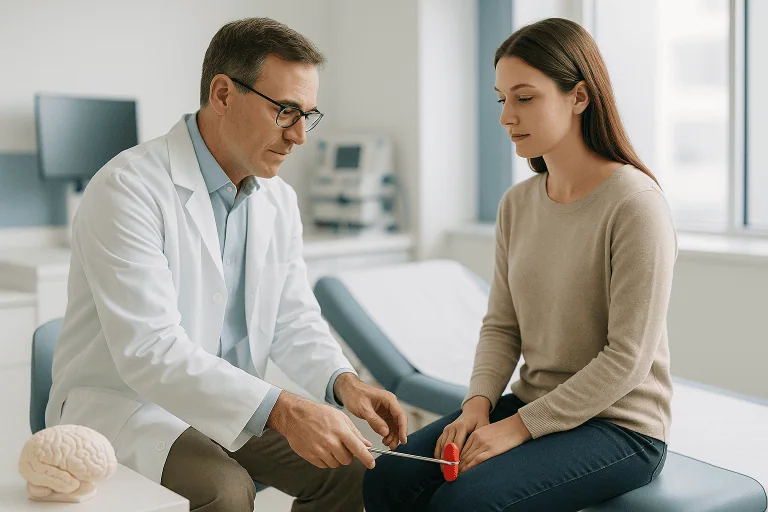
- Neurological examination: the doctor observes walking, balance, facial expression, speech, and handwriting, and tests muscle tone, reflexes, coordination, and the speed of repeated movements.
- Diagnostic criteria: internationally accepted clinical criteria generally require bradykinesia (slowness of movement) together with tremor at rest or rigidity, plus supporting features and the absence of signs that point to another condition.
- Response to medication: a clear and sustained improvement with dopamine-replacing medication (levodopa) strongly supports the diagnosis. In some cases, doctors observe the response to treatment as part of confirming the condition.
Tests and imaging
Imaging and laboratory tests are used mainly to rule out other conditions rather than to confirm parkinsons disease itself. A magnetic resonance imaging (MRI) scan of the brain is often normal in parkinsons disease, but it can help exclude strokes, tumors, or other structural problems. In selected cases, a specialized nuclear-medicine scan of the dopamine system (often called a DaT scan) may be used to help distinguish parkinsons disease from conditions such as essential tremor; however, this scan cannot reliably separate parkinsons disease from some related disorders. Blood tests may be ordered to exclude other causes of similar symptoms.
Because early symptoms can be subtle and can overlap with other conditions, including atypical parkinsonian syndromes, drug-induced parkinsonism, and essential tremor: the diagnosis is sometimes revised as the illness evolves. Regular follow-up with a neurologist helps confirm the diagnosis over time and adjust care accordingly.
Treatment options
There is currently no cure for parkinsons disease, and no treatment has been proven to stop or reverse the underlying loss of nerve cells. However, parkinsons disease treatment can substantially reduce symptoms and help many people maintain independence and quality of life for years. Treatment plans are individualized and usually adjusted many times over the course of the illness.
Watchful waiting and supportive care
When symptoms are very mild and do not interfere with daily life, a doctor may recommend monitoring rather than starting medication immediately. Even at this stage, regular physical activity, physiotherapy, and attention to sleep, mood, and nutrition are considered important parts of care. Exercise is widely encouraged for people with parkinsons disease, as it may help maintain mobility, balance, and general well-being.
Medication
- Levodopa: the most effective and most commonly used medication. It is converted into dopamine in the brain and is usually combined with another drug (such as carbidopa) that reduces side effects like nausea. Over years of use, many people experience fluctuations, periods when the medication works well (“on” times) and periods when symptoms return (“off” times), as well as involuntary movements called dyskinesias, which may require dose adjustments.
- Dopamine agonists: medications that mimic the action of dopamine. They may be used alone in earlier stages or alongside levodopa. Possible side effects include sleepiness and, in some people, impulse-control problems such as compulsive shopping or gambling, which should be reported to the doctor.
- MAO-B inhibitors and COMT inhibitors: drugs that slow the breakdown of dopamine in the brain, helping levodopa work longer or providing modest symptom relief on their own.
- Other medications: additional drugs may be used for tremor, for “off” periods, or for non-motor symptoms such as depression, sleep problems, or constipation.
Procedures and surgery
When medication no longer controls symptoms adequately, or when side effects become limiting, a doctor may discuss procedural options. The most established is deep brain stimulation (DBS), a surgical treatment in which thin electrodes are placed in specific areas of the brain and connected to a small pulse generator implanted under the skin of the chest. The device delivers electrical impulses that help regulate abnormal brain activity. DBS does not cure parkinsons disease, but in carefully selected patients it can reduce tremor, stiffness, and medication-related fluctuations. Candidacy is assessed by a specialized team, because DBS is not suitable for everyone.
Other options in advanced disease may include pump-based therapies that deliver medication continuously, for example, a gel form of levodopa infused directly into the small intestine, or continuous infusion of a dopamine agonist under the skin. Availability of these treatments varies, and their suitability depends on the individual case.
Rehabilitation and allied therapies
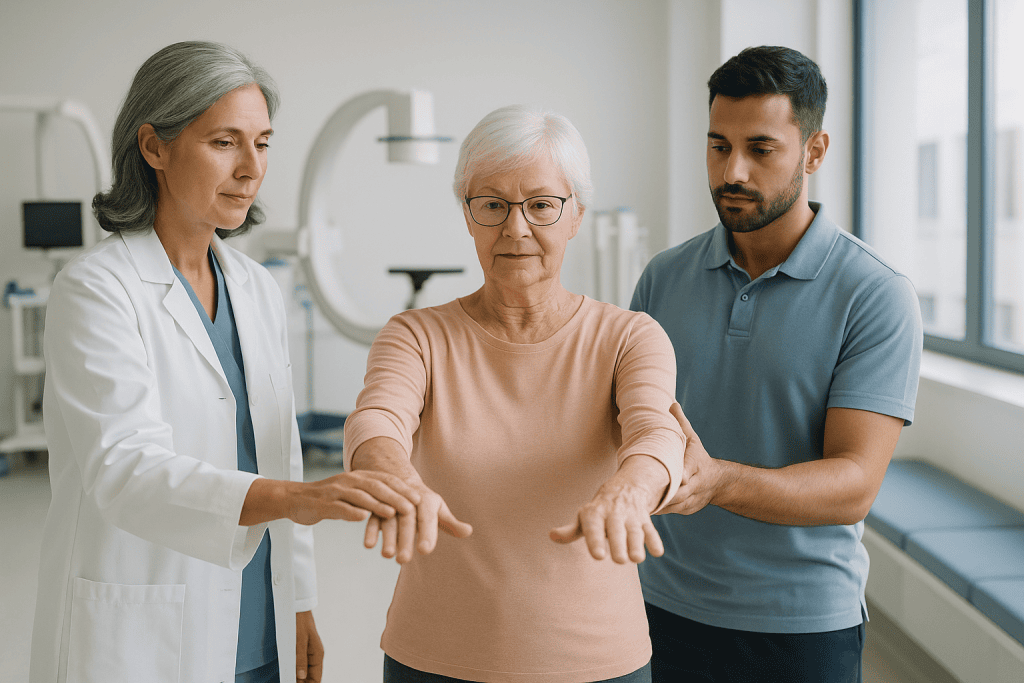
- Physiotherapy to improve walking, flexibility, and balance and to reduce fall risk.
- Occupational therapy to adapt daily tasks and the home environment.
- Speech and language therapy for soft speech and swallowing difficulties.
- Dietary guidance, since protein intake timing can affect levodopa absorption in some people, and constipation often needs active management.
Living with parkinson’s disease and outlook
Parkinsons disease is a long-term condition, and living well with it usually means building a routine of ongoing care rather than seeking a one-time fix. Most people continue to work, travel, and enjoy family life for many years after diagnosis, especially when symptoms respond well to treatment. Regular follow-up appointments allow medications to be fine-tuned as the disease changes.
The outlook varies considerably. Parkinsons disease itself is generally not considered a directly fatal condition, but advanced disease can lead to complications, particularly falls, swallowing difficulties, and pneumoniathat affect health and life expectancy. Many people with parkinsons disease live for decades after diagnosis, and average life expectancy for people with the condition is often close to that of the general population, although individual outcomes cannot be predicted or guaranteed.
Practical steps that many care teams recommend include staying physically active within safe limits, making the home safer to reduce fall risk, keeping a consistent medication schedule, addressing mood and sleep problems early, and involving family members or caregivers in appointments. Support groups and counseling can help both patients and caregivers cope with the emotional aspects of a chronic illness. In hospital settings, care is typically coordinated by neurology, with input from rehabilitation, psychiatry, and other specialties as needed; at Acibadem, for example, multidisciplinary teams are involved in managing both the motor and non-motor aspects of the condition.
Frequently asked questions
What is parkinsons disease in simple terms?
Parkinsons disease is a brain condition in which the cells that produce dopamine, a chemical the brain uses to control movement, gradually stop working. As dopamine levels fall, movements become slower and stiffer, and many people develop a tremor. The condition also affects sleep, mood, digestion, and sometimes thinking. It develops slowly, usually in people over 60, and progresses at different rates in different individuals.
Can parkinsons disease be cured or reversed?
At present there is no cure for parkinsons disease, and no treatment is proven to reverse the underlying loss of nerve cells. However, this does not mean nothing can be done. Medications, rehabilitation, and in some cases surgery can control symptoms effectively for many years, and research into disease-modifying treatments is ongoing. Anyone offering a guaranteed cure should be treated with caution.
How serious is parkinsons disease?
Parkinsons disease is a serious, lifelong condition, but its impact varies widely. Many people manage mild to moderate symptoms with medication for years and remain independent. In advanced stages, mobility, balance, and sometimes thinking can be significantly affected, and complications such as falls or swallowing problems may arise. Regular medical follow-up helps manage risks as the condition changes.
What are the first parkinsons disease symptoms people usually notice?
Early signs often include a slight tremor in one hand at rest, smaller or more cramped handwriting, a softer voice, reduced arm swing on one side while walking, stiffness, or general slowing of movement. Non-motor changes such as loss of smell, constipation, or acting out dreams during sleep can appear even earlier. Having one of these signs does not mean a person has parkinsons disease, but persistent symptoms deserve medical evaluation.
Is parkinsons disease hereditary?
In most cases, parkinsons disease is not directly inherited. Having a close relative with the condition raises risk only modestly, and most family members of affected people never develop it. A small proportion of cases, especially those beginning at a younger age, are linked to specific gene changes. If several family members are affected or symptoms began early, a doctor may discuss whether genetic counseling is appropriate.
How is parkinsons disease diagnosed if there is no single test?
Doctors diagnose parkinsons disease clinically, by taking a careful history, performing a neurological examination, and applying established diagnostic criteria that focus on slowness of movement together with tremor or stiffness. Brain imaging such as MRI is mainly used to rule out other conditions, and in selected cases a specialized dopamine scan may help. A clear improvement with dopamine-replacing medication also supports the diagnosis.
Can people recover normal movement with treatment?
Many people experience substantial improvement in movement once treatment, most often levodopa, is started, and in earlier stages symptoms may be well controlled for years. However, treatment manages symptoms rather than curing the disease, and its effect can fluctuate over time, requiring dose adjustments. The degree of improvement varies from person to person and cannot be guaranteed in advance.
When to see a doctor
If you or someone close to you has persistent tremor, slowness of movement, stiffness, or changes in walking, balance, handwriting, or speech, it is sensible to arrange a medical evaluation. Early assessment by a neurologist helps clarify the cause, which may or may not be parkinsons disease, and allows treatment and support to begin sooner if needed.
Seek prompt or urgent medical attention if any of the following occur:
- Sudden onset of weakness, slurred speech, facial drooping, or confusionthese are not typical of parkinsons disease and may indicate a stroke, which is a medical emergency.
- A serious fall, especially with a head injury, loss of consciousness, or inability to get up.
- Difficulty swallowing, choking on food or liquids, or signs of a chest infection such as fever with cough, which can signal aspiration (food or liquid entering the airway).
- Sudden worsening of symptoms, severe stiffness with high fever, or marked confusion, particularly if parkinsons medications have been stopped or missed, which can be dangerous and should never be done without medical guidance.
- New hallucinations, severe confusion, or significant changes in behavior or mood, including thoughts of self-harm.
- Fainting or repeated dizziness on standing, which may reflect blood pressure problems that need adjustment of treatment.
For anyone already living with parkinsons disease, regular follow-up visits are important even when symptoms feel stable, because timely adjustments to treatment often work better than waiting until problems become severe.
Medically reviewed by the Acıbadem International Medical Board September 3, 2026
See our medical review board →
Update history
- PublishedJune 14, 2026
- Medical review approvedSeptember 3, 2026
- Last content updateSeptember 2, 2026