Physical Therapy Program
Physical Therapy Program uses personalized exercises, manual techniques, and rehabilitation methods to reduce pain, restore mobility, and improve daily function for musculoskeletal and neurological conditions.
Quick answer
A physical therapy program is a physician-directed, therapist-delivered rehabilitation plan built around your diagnosis and goals. It combines assessment, therapeutic exercise, manual techniques, balance and gait training, and education to restore strength, mobility and function after injury, surgery or illness. Sessions commonly last between 30 and 60 minutes, and the plan progresses as you improve, from a few sessions for minor problems to several months for complex recovery.
What Is a Physical Therapy Program?
A physical therapy program is a structured, medically guided rehabilitation plan designed and delivered by a physical therapist, usually under the direction of a rehabilitation physician. It uses targeted exercise, hands-on techniques, movement retraining and education to restore strength, flexibility, balance and everyday function. It is intended for people whose movement has become painful, weak, stiff or unreliable, after an injury, an operation, an illness or a neurological event.
Pain, weakness, stiffness, dizziness, poor balance or loss of mobility can change everyday life in ways that are easy to underestimate until they begin affecting work, sleep, independence and confidence. Some people seek help after an injury or surgery. Others have been living with back pain, neck pain, joint problems, a sports injury or a neurological condition that makes once-simple activities feel uncertain. Often the hardest part is not knowing whether symptoms will settle on their own, whether exercise will make things worse, or how long recovery may take.
A structured physical therapy program is designed to answer those questions with a plan rather than guesswork. Physical therapy is not simply a set of exercises handed over on a sheet of paper. It is a personalised rehabilitation process that begins with careful assessment and then uses targeted movement, hands-on techniques, pain-modulating methods and function-based training to rebuild strength, flexibility, coordination, endurance and confidence. The aim is practical: to help the body move better, and to help you return as safely as possible to daily activities, work, sport or recovery after illness.
Whether the problem is recent or long-standing, timing matters, because the body adapts to pain and immobility. Joints become stiffer, muscles weaker, balance less reliable, and movement patterns more protective and less efficient over time. Early, well-designed rehabilitation can often limit these effects and improve the chances of regaining comfortable, confident movement.
At its core, a program works by helping the body relearn efficient movement. Pain and injury often produce compensation patterns: one muscle group overworks, another becomes inhibited, and movement becomes guarded. After surgery or a neurological illness, there may also be weakness, reduced control, sensory changes or fatigue. A well-structured program identifies these patterns and treats the underlying mechanical or functional problem, rather than addressing symptoms alone.
Depending on your needs, treatment typically combines therapeutic exercise, manual therapy, stretching and mobility work, neuromuscular re-education, balance and coordination training, posture and movement retraining and, where appropriate, pain-modulating physical modalities. For some patients, respiratory exercises, pelvic floor rehabilitation, lymphoedema-related support, or specialised neurological and vestibular rehabilitation also form part of the plan.
The program is usually time-limited but progressive. It may last a few sessions for a minor issue, or continue over several weeks or months for postoperative rehabilitation, complex pain conditions, stroke recovery, spinal disorders or advanced neurological disease. The plan changes as you improve. That stepwise progression is one of the reasons physical therapy can work across very different conditions: treatment evolves based on how your body responds, not on a fixed template.
What exactly do physical therapists do?
A physical therapist assesses how you move, identifies what is limiting that movement, and then treats the limitation with exercise, hands-on techniques and structured retraining. In British and international usage the same professional is often called a physiotherapist; the role is the same. In a single course of care, a physical therapist may measure joint range and muscle strength, analyse your gait and posture, mobilise stiff joints and soft tissue, prescribe and progress exercises, retrain balance and coordination, teach you how to move safely during healing, and coach you through a home program. Just as importantly, a physical therapist monitors your response between sessions and adjusts the plan when progress is faster or slower than expected. In hospital settings, physical therapists work alongside rehabilitation physicians, orthopaedic surgeons, neurologists and pain specialists, so that therapy stays consistent with the wider medical picture rather than running in isolation.
Who May Need a Physical Therapy Program
Physical therapy can benefit people of many ages and activity levels. Some patients are highly active and want to return to running, tennis or gym training after an injury. Others want to walk without pain, recover from an operation, reduce their risk of falling, or regain the ability to manage stairs, dressing, work duties or household tasks. The common factor is that movement has become painful, limited, weak, unstable or less coordinated than it should be.
Typical symptoms that lead people to a physical therapy program include persistent back or neck pain, shoulder pain, knee pain, hip pain, swelling, stiffness, reduced range of motion, muscle weakness, numbness-related movement difficulty, poor posture, recurring sprains, difficulty walking, balance problems, dizziness associated with head movement, or slower-than-expected recovery after surgery or a hospital stay. Some patients seek care because symptoms interfere with sleep or work. Others come because pain keeps returning and they want the cause treated, not just the symptom.
Diagnosis usually begins with clinical evaluation. A rehabilitation physician or relevant specialist reviews your medical history, symptoms, prior treatment, imaging, surgical history, medications and goals. This is followed by a physical examination that may assess joint movement, muscle strength, flexibility, balance, gait, coordination, posture, reflexes, pain triggers and functional limitations. Where needed, the team reviews imaging studies such as X-rays, MRI, CT, ultrasound or electrodiagnostic testing already performed by your referring physician, or ordered within a broader diagnostic pathway.
Patients arrive at physical therapy by several different routes:
- After orthopaedic surgery such as joint replacement, ligament reconstruction, fracture fixation or spine procedures
- After a sports injury involving muscles, tendons, ligaments or overuse syndromes
- With chronic musculoskeletal pain that has not improved enough with rest, medication or injections alone
- After stroke, neurological illness, spinal cord involvement or nerve-related weakness
- After prolonged hospitalisation, deconditioning or major illness that has reduced physical capacity
- With age-related changes in balance, mobility and strength that increase the risk of falls
In many cases, the need for therapy becomes clear when symptoms persist longer than expected, or when normal activities remain difficult despite initial treatment. A good program does not start with assumptions. It starts by identifying what is actually limiting recovery, then builds the plan around that finding.
Conditions a Physical Therapy Program Can Address
Because physical therapy is individualised, it is used across a wide range of conditions rather than for one single diagnosis. In rehabilitation and pain medicine, the main indications fall into four broad groups: musculoskeletal disorders, recovery after surgery, neurological rehabilitation, and functional restoration after illness or prolonged inactivity.
Musculoskeletal indications commonly include low back pain, neck pain, disc-related symptoms, postural strain, scoliosis-related discomfort, shoulder impingement, rotator cuff problems, frozen shoulder, tennis elbow, wrist pain, hip pain, knee osteoarthritis, meniscus-related symptoms, patellofemoral pain, ankle instability, plantar fasciitis, Achilles problems, and general joint stiffness after immobilisation or injury. Physical therapy is also used frequently for myofascial pain, tendon disorders, repetitive strain injuries and chronic pain syndromes in which movement has become limited or fearful.
Postoperative rehabilitation is another major area. Many patients benefit from structured therapy after joint replacement, arthroscopy, ligament repair, tendon surgery, fracture treatment, hand surgery, spine surgery or other procedures that affect movement. The goals may include protecting the surgical repair, controlling swelling, restoring range of motion, rebuilding strength, and returning to function through a safe, staged progression agreed with the surgical team.
Neurological rehabilitation may be appropriate after stroke, traumatic brain injury, spinal conditions, peripheral nerve injury, Parkinsonian movement disorders, multiple sclerosis, balance disorders and other conditions affecting coordination, gait or motor control. Here, therapy focuses not only on strength but on motor relearning, balance strategies, task-specific practice and maximising independence in daily life.
Specialised programs can also support patients with vestibular disorders that cause dizziness, older adults with frailty or fall risk, people who have been inactive for long periods and need gradual reconditioning, and patients whose mobility or endurance has been affected by cancer treatment such as chemotherapy or radiation therapy. The exact structure of treatment differs case by case, but the central principle is constant: identify what function has been lost or disrupted, then use targeted rehabilitation to rebuild it.
How a Physical Therapy Program Is Performed
A physical therapy program usually begins with a detailed initial consultation and assessment. This first step matters more than anything that follows, because two patients with the same diagnosis may need very different plans. One person with knee pain may need mobility work and load modification; another may need balance retraining and hip strengthening to correct movement mechanics. The treatment plan is built around those distinctions, not around the diagnostic label alone.
Preparation and Evaluation
Before treatment starts, the care team reviews the medical diagnosis, surgical history where relevant, imaging findings, previous therapies and current symptoms. The physical therapist then evaluates pain levels, range of motion, muscle strength, flexibility, posture, gait, balance, coordination, and functional abilities such as standing from a chair, walking, reaching, climbing stairs or performing sport-specific tasks. In neurological patients, muscle tone, motor control, sensory changes and endurance may also be assessed. Clear goals are agreed with you at this stage, short-term goals such as reducing pain while walking, and longer-term goals such as returning to travel, work or sport. In hospital-based care this evaluation typically sits within a physical medicine and rehabilitation department, where a rehabilitation physician oversees the medical side of the plan.
Practical preparation for the first session is simple but worth knowing. Comfortable clothing that allows the affected area to be examined and moved freely makes assessment easier, shorts for a knee or hip problem, a vest or loose top for a shoulder problem, and supportive footwear for gait and balance testing. Bringing existing imaging reports, operation notes, a list of current medications and any braces, splints or walking aids you already use helps the team build an accurate picture from the first visit rather than over several appointments.
The Treatment Plan
Most programs follow a recognisable sequence, even though the content differs from patient to patient:
- Step 1: Assessment and goal setting: the findings of the evaluation are turned into specific, measurable goals.
- Step 2: Symptom control and protection: early treatment focuses on reducing pain, swelling and guarding so that active work becomes tolerable.
- Step 3: Restoring mobility and activation: stiff joints and tissues are mobilised, and weak or inhibited muscles are re-engaged with controlled exercise.
- Step 4: Strength, endurance and control: loading is increased progressively, and movement quality is retrained under supervision.
- Step 5: Function and return to activity: training becomes task-specific, walking distance, stairs, lifting, work duties or sport, with a maintenance plan for the long term.
Therapeutic exercise is usually the foundation throughout. Exercises may be prescribed to increase joint mobility, improve muscle activation, strengthen weak areas, build endurance or retrain movement patterns. At first they may be gentle and highly controlled; as you improve, they become more functional and demanding, so that gains made in the clinic transfer to real life.
Manual therapy is added where appropriate. This can include joint mobilisation, soft tissue techniques, guided stretching or other hands-on approaches intended to reduce stiffness, improve tissue mobility and support better movement. Manual therapy does not solve a problem on its own, but in the right setting it makes exercise more effective by helping you move with less pain or restriction.
Neuromuscular re-education is particularly important when the issue is not just weakness but poor control. This work retrains timing, coordination, posture, gait and body awareness. It is often central after injury, surgery, prolonged pain or neurological conditions, where the nervous system needs structured, repeated practice to rebuild efficient movement.
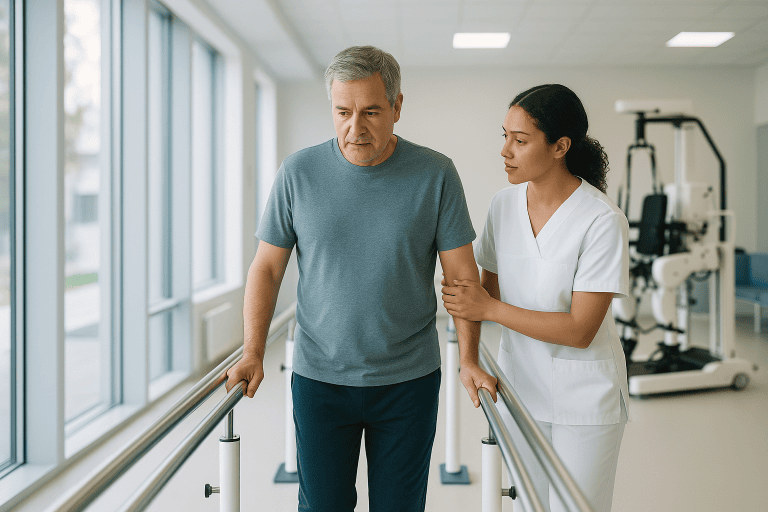
Balance and gait training may lead the program for older adults, vestibular patients and people recovering from stroke or orthopaedic surgery. The goal is stability, confidence and safety while walking or changing position. For some patients this includes supervised use of assistive devices and practice on stairs or uneven surfaces before those situations are faced alone.
Physical modalities can support symptom control alongside active treatment. Depending on your needs, this may involve supervised use of heat, cold, therapeutic electrical stimulation, ultrasound-based therapy or other non-invasive methods that can help reduce pain, muscle spasm or swelling and make active rehabilitation easier to tolerate. These tools are adjuncts, not substitutes: lasting improvement comes from the active components of the program.
Technology Used in Rehabilitation
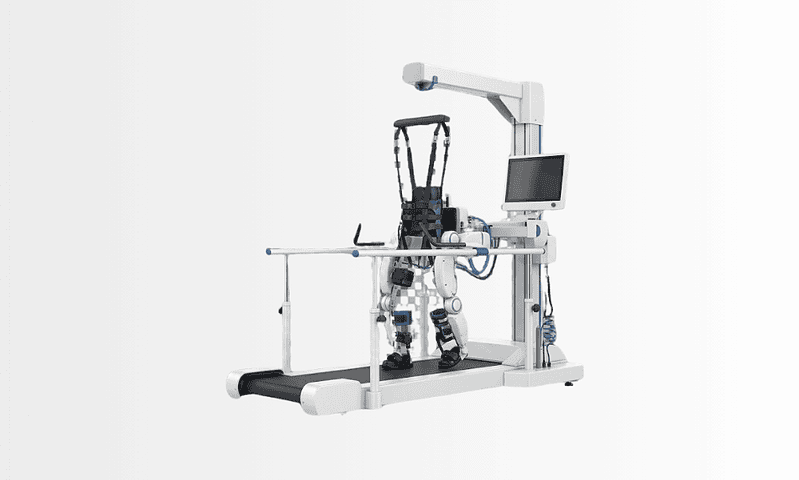
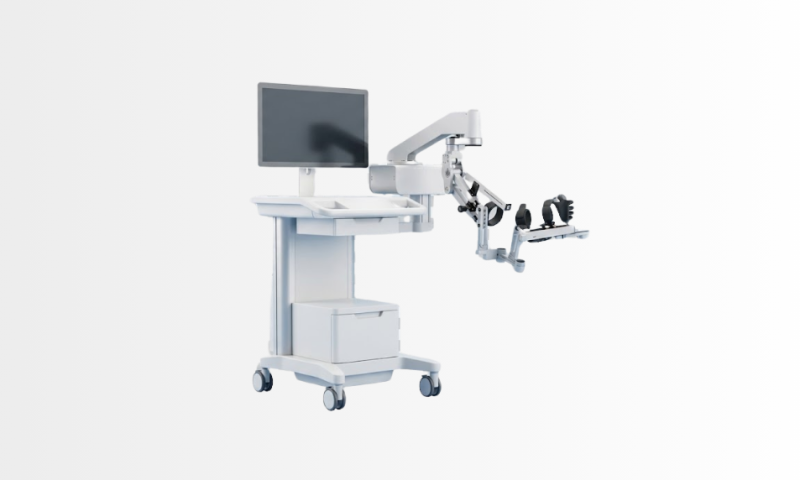
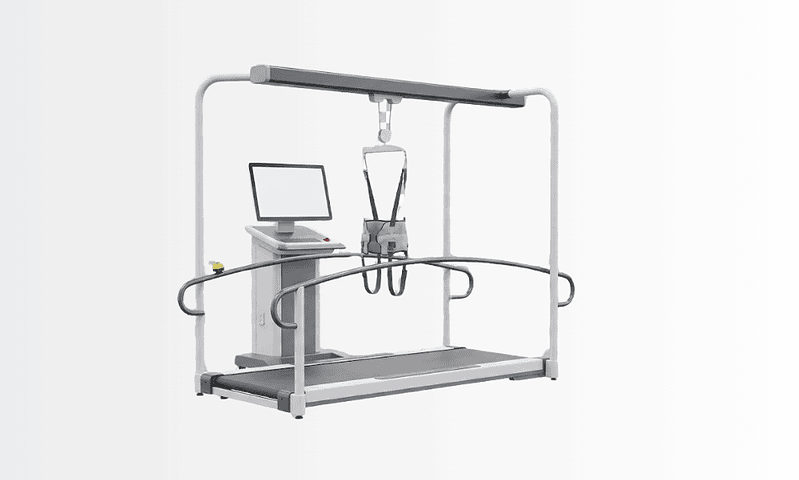
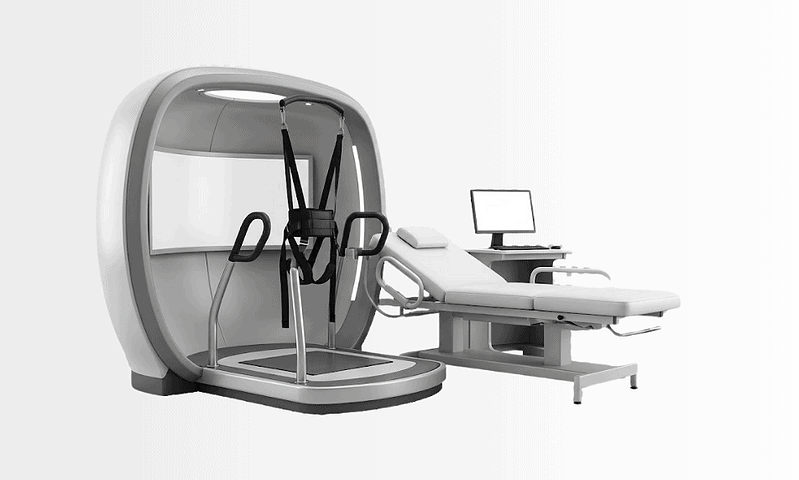
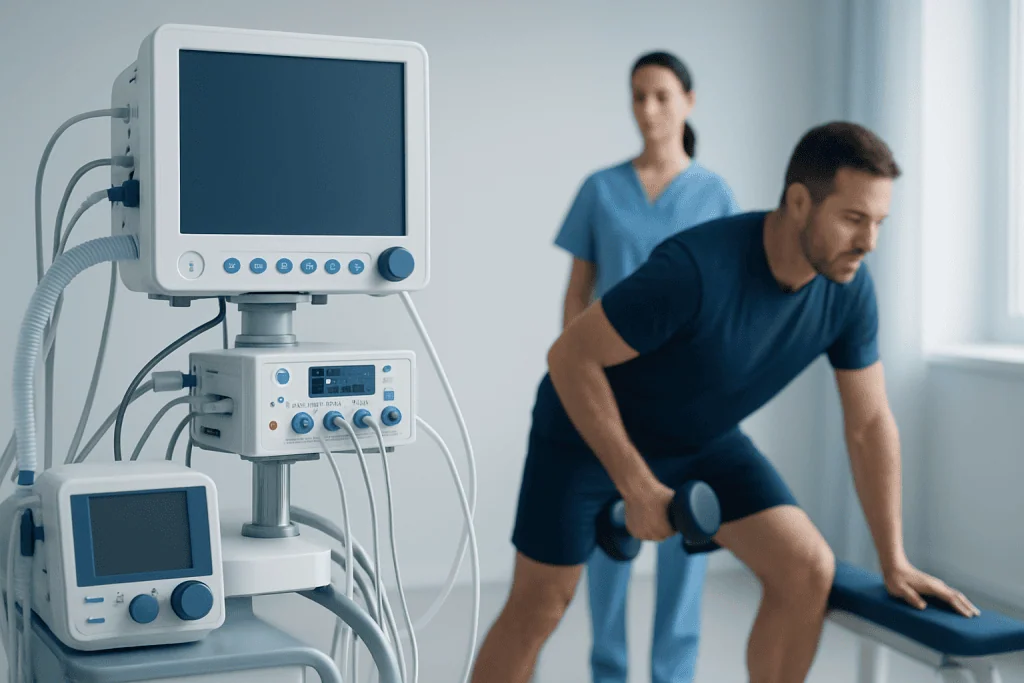
Modern rehabilitation departments may use a range of technologies to assess movement and guide treatment. These include digital tools for measuring strength and range of motion, gait and posture analysis systems, balance platforms, biofeedback-based training, and technology-assisted exercise devices that help patients perform movements more accurately or safely. In neurological rehabilitation, structured task-based equipment can support the high-repetition practice that motor recovery requires. The value of these technologies is precision: objective tracking of progress, and finer tailoring of treatment intensity over time. They inform the plan; they do not replace the clinical judgement of the physical therapist and physician.
How long is a physical therapy program?
There is no single answer: a program may last a few sessions for a minor problem, or continue for several weeks to several months after major surgery, stroke or a complex pain condition. Individual sessions commonly last between 30 and 60 minutes, depending on the condition and the treatment components involved. Some patients attend a few times a week at the beginning, especially after surgery or during intensive rehabilitation phases, while others attend less frequently and rely on a strong home program between visits. The overall duration depends on the diagnosis, how long symptoms have been present, your baseline fitness, your age, any associated medical conditions, and how consistently the program is followed. A responsible team will give you an honest working estimate at the first assessment and then refine it as your response to treatment becomes clear, rather than promising a fixed finish date on day one.
Home Exercise and Ongoing Review
A successful program almost always includes a home exercise plan. This is what carries progress between visits and builds long-term self-management, so exercises are chosen to be realistic, safe and directly linked to your goals, not a generic list. At follow-up sessions, the physical therapist reassesses symptoms and function, adjusts the plan, and progresses or modifies exercises as needed. This progression is essential: a program that never evolves rarely produces the best functional gains. For patients who live far from where they were treated, structured continuation at home matters just as much; Acibadem describes how this is coordinated in its guide to arranging remote follow-up with your local doctor.
Recovery During the Program
Recovery in physical therapy is usually gradual rather than immediate. Many patients first notice small changes, less stiffness, slightly better range of motion, more confidence with movement. Pain may fluctuate during the process, particularly when strength or mobility is being rebuilt after a long period of inactivity. Fluctuation does not necessarily mean treatment is failing. What matters is whether symptoms and function are trending in the right direction under professional supervision. The team monitors this closely and adapts the program if pain remains disproportionate or progress stalls, and escalates back to the physician when the clinical picture suggests something beyond a therapy problem.
Why Acting Early Matters
Many movement-related conditions become harder to treat when rehabilitation is delayed. Pain leads people to avoid certain motions, reduce activity or shift weight away from the affected area. Over time this protective behaviour causes secondary problems: weakness, stiffness, reduced endurance, poor posture, altered gait and loss of confidence. A minor injury can become a broader functional problem simply because the body has adapted in an inefficient way.
Early physical therapy can be especially important after surgery, fracture management, immobilisation, sports injury or neurological events such as stroke. When medically appropriate, timely rehabilitation helps maintain joint movement, limit deconditioning, support circulation and promote more effective motor recovery. It also teaches you how to move safely during healing, instead of relying on fear or guesswork.
Delaying treatment may prolong pain, raise the risk of recurrent injury, and slow the return to work, exercise or independent daily life. It also allows compensatory patterns to become more established. Not every condition requires urgent intervention, but persistent symptoms, worsening mobility, repeated falls, or prolonged limitation after an injury or procedure generally respond better to structured assessment and early rehabilitation than to waiting indefinitely.
Potential Benefits of a Physical Therapy Program
The benefits depend on the diagnosis and the individual plan, but patients commonly work towards improvements in the following areas:
- Pain reduction: less discomfort during daily activities, better tolerance for movement, and often less reliance on short-term symptom-relief strategies alone.
- Improved mobility and flexibility: greater ease with walking, bending, reaching, turning, climbing stairs, or getting in and out of bed or a car.
- Better strength and endurance: improved capacity for work tasks, exercise, travel and routine activities without tiring as quickly.
- Enhanced balance and coordination: safer movement, lower fall risk in appropriate patients, and more confidence when standing or walking.
- Structured support after surgery or injury: a clear path to regaining function while protecting healing tissues and progressing at an appropriate pace.
- Longer-term self-management: a working understanding of posture, movement habits, home exercises and strategies that help prevent recurrence.
None of these outcomes can be promised in advance, rehabilitation results vary with the condition, its duration and the individual. What a good program does promise is method: assessment before treatment, progression based on response, and honest reassessment when something is not working.
What Recovery Usually Looks Like
Recovery is different for every patient, but this general timeline reflects what many people experience during a structured program:
| Time Period | What Patients Can Expect |
|---|---|
| Day 1 | Comprehensive assessment, goal setting and a personalised treatment plan. Some patients begin gentle exercises and symptom-relief techniques on the first visit. |
| First Week | Introduction to key exercises, education on safe movement, and early work on pain control, mobility, posture or gait depending on the condition. |
| First Month | Gradual progression of strengthening, mobility, balance and functional training. Many patients notice meaningful changes in movement quality and daily tolerance. |
| Longer Term | Further gains in endurance, confidence and function, along with a refined home program or maintenance strategy to support lasting results. |
Treat this as orientation, not a schedule. Postoperative protocols, neurological recovery and chronic pain conditions each move at their own pace, and your team will map your milestones against your diagnosis rather than against a generic calendar.
What Influences a Good Result
The success of a physical therapy program depends on several factors working together. The first is the accuracy of the diagnosis. Pain in one area can originate elsewhere, and not all movement limitations share the same cause. A careful evaluation ensures that treatment addresses the true driver of symptoms, not just the place where they are felt.
The second factor is timing. In many conditions, beginning rehabilitation at the appropriate stage of recovery improves mobility and limits secondary problems such as weakness and stiffness. That said, patients with long-standing conditions can still benefit; they may simply need a more gradual program and more realistic functional milestones.
The third factor is individualised planning. Good physical therapy is not generic. The most effective programs consider age, baseline fitness, pain sensitivity, work demands, sport goals, body mechanics, prior surgeries and other medical conditions. A patient recovering from a knee replacement needs a different pace and emphasis than a young athlete returning after an ankle injury, or a patient relearning gait after a stroke.
Consistency is critical. Progress usually depends on attending scheduled sessions, performing home exercises correctly, and allowing enough time for tissues and movement patterns to adapt. Rehabilitation is active care: manual techniques and symptom-relief modalities help, but sustained improvement comes from repeated, structured practice.
Finally, communication matters. The therapy team needs to know how symptoms respond between sessions, which activities trigger setbacks, and whether your goals are changing. Good outcomes are supported by regular reassessment and a willingness to modify the plan when recovery runs slower or faster than expected. In complex cases, coordination with orthopaedic surgeons, neurologists, neurosurgeons, pain medicine specialists or rheumatologists helps refine treatment, persistent pain or mobility loss is not always a therapy-only problem, and sometimes imaging, surgical healing, nerve involvement or inflammatory disease needs re-evaluation before the exercise plan can succeed.
Who Treats You: The Training Behind the Title
When you place your recovery in someone’s hands, it is reasonable to ask what stands behind the title on the door. The questions below are among the most commonly searched about the profession, and the answers explain why a qualified physical therapist is a clinician, not a fitness instructor.
How to Become a Physical Therapist
How to become a physical therapist varies by country, but the sequence is broadly similar: a recognised university degree in physical therapy or physiotherapy, supervised clinical training, and a national licence or registration before independent practice. In the United States, this means completing an accredited professional doctorate and passing a national licensing examination. In the United Kingdom and much of Europe, entry is typically through a physiotherapy degree followed by professional registration; in many other countries, physiotherapists complete an equivalent university degree in physiotherapy and rehabilitation, with postgraduate specialisation available. Whatever the route, licensure and continuing education are what separate regulated clinical practice from informal exercise coaching.
DPT Meaning: The Doctor of Physical Therapy Degree
The DPT meaning is simple: Doctor of Physical Therapy, the professional doctorate that is now the standard entry-level qualification for physical therapists in the United States. A DPT curriculum covers anatomy, physiology, biomechanics, neuroscience, pharmacology basics, differential screening and extensive supervised clinical placements. A clinician holding a DPT is a doctor of physical therapy: a clinical doctorate comparable in structure to other professional health degrees, rather than a medical doctor, and works within a defined scope of practice alongside physicians.
When did physical therapy become a doctorate program?
Physical therapy became a doctorate-level profession in the United States gradually: the first Doctor of Physical Therapy programs appeared in the early 1990s, and the professional body’s Vision 2020 statement, adopted in 2000, set the doctorate as the goal for entry-level education. Over the following two decades, accredited US programs converted from bachelor’s and master’s degrees to the DPT, which is now the standard entry point. Many other countries continue to train physiotherapists at bachelor’s or master’s level; the degree title differs, but the regulated clinical role is equivalent.
How long does it take to be a PT?
In the United States, becoming a licensed physical therapist typically takes around seven years: a four-year bachelor’s degree followed by a DPT program that usually runs about three years, then the national licensing examination. In countries where physiotherapy is a direct undergraduate degree, the pathway is commonly three to four years of university study plus registration requirements. Post-qualification, many clinicians add residencies or certifications in areas such as orthopaedic, neurological, sports or vestibular rehabilitation.
What is PTCAS?
PTCAS is the Physical Therapist Centralized Application Service, the common application system through which candidates apply to most Doctor of Physical Therapy programs in the United States. It standardises transcripts, references and observation-hours documentation so that applicants can apply to several programs at once. It is relevant to prospective students rather than to patients, but it illustrates how formalised entry into the profession has become.
How long is a physical therapy assistant program?
A physical therapy assistant program in the United States typically takes about two years and leads to an associate degree, followed by a licensing examination. Physical therapist assistants work under the supervision of a licensed physical therapist, delivering elements of the treatment plan; they do not perform initial evaluations or redesign the plan themselves. In a well-run department, this supervision structure is explicit, so you always know who is directing your care.
What colleges offer physical therapy programs?
Hundreds of universities worldwide offer accredited physical therapy or physiotherapy degrees, so the practical answer is to check the accreditation register in the relevant country rather than any single list. In the United States, the Commission on Accreditation in Physical Therapy Education (CAPTE) maintains the directory of accredited DPT and assistant programs; other countries have equivalent regulators. For a patient, the useful takeaway is this: accreditation and licensure are verifiable, and a credible hospital will employ therapists whose qualifications meet the national standard.
Is PT harder than nursing?
There is no objective answer: the two professions are demanding in different ways. Physical therapy training concentrates deeply on movement science, biomechanics and rehabilitation across long clinical placements, while nursing covers a broader sweep of acute medical care, pharmacology and patient management, often under greater shift pressure. Which is “harder” depends on the person; both are regulated clinical professions with substantial academic and practical requirements.
Physical Therapy at Acibadem
At Acibadem, physical therapy programs sit inside a broader physical medicine and rehabilitation framework, with access to relevant specialists when symptoms involve orthopaedic, neurological, spine-related or postoperative issues. Patients are evaluated by rehabilitation physicians and, when needed, their cases are discussed collaboratively with other specialists. This matters because persistent pain or mobility loss sometimes requires re-examining imaging, surgical healing or nerve involvement before the exercise plan can move forward, and a multidisciplinary structure keeps that review close at hand.
Rehabilitation technologies are used to assess movement objectively and support precise progression, while therapists tailor treatment to the diagnosis and functional goals rather than applying a one-size-fits-all routine. Treatment plans are shaped around circumstances as well as diagnoses: some patients complete an intensive supervised phase and then continue with a detailed home plan, while others need postoperative rehabilitation coordinated closely with their surgical team over a longer period. In every case the aim is the same: a medically grounded program that is realistic, progressive and centred on meaningful functional improvement.
What a Good Rehabilitation Plan Should Tell You
Whoever provides your care, a well-designed physical therapy program should be able to explain four things clearly: what is causing your limitation, what can reasonably be expected to improve, how treatment will progress from session to session, and what you can do between sessions to support recovery. If a plan cannot answer those questions, it is a routine, not a program. Rehabilitation rewards structure and honesty: an accurate diagnosis, realistic milestones, regular reassessment, and a plan that changes as you do. For most people whose movement has been limited by pain, injury, surgery or illness, that structure is the difference between waiting for symptoms to settle and actively working towards moving with less pain and greater confidence again.
Preparation
- Before starting, the rehabilitation specialist evaluates your symptoms, medical history, mobility, strength, and treatment goals. Your program is then tailored to your diagnosis, pain level, and functional needs. Wear comfortable clothing and bring any relevant imaging or previous medical reports.
Aftercare
- After each session, patients are usually advised to continue home exercises and follow activity recommendations to support progress. Mild muscle soreness can occur, especially early in treatment. Regular attendance and follow-up assessments help optimize pain relief, strength, balance, and mobility.
Frequently Asked Questions
What is a physical therapy program and who can benefit from it?
A physical therapy program is a personalized rehabilitation plan designed to reduce pain, improve movement, restore function, and support recovery after injury, surgery, or illness. It can benefit people with back or neck pain, sports injuries, joint problems, stroke-related weakness, neurological conditions, and mobility limitations. At Acibadem, rehabilitation and pain medicine specialists assess your condition, goals, and daily challenges to create a program tailored to your needs and pace.
How do I know if I need physical therapy instead of surgery or medication?
Physical therapy is often recommended when pain, stiffness, weakness, balance issues, or reduced mobility affect daily life. In many cases, it can help before or after surgery, and it may reduce the need for long-term medication by addressing the underlying movement problem. The right choice depends on your diagnosis, symptoms, imaging results, and overall health. Acibadem specialists provide a personalized assessment to determine whether physical therapy should be your main treatment or part of a wider care plan.
What conditions are commonly treated in a physical therapy program?
Physical therapy programs commonly treat back pain, neck pain, shoulder injuries, knee problems, arthritis, sports injuries, post-surgical stiffness, posture problems, nerve compression, balance disorders, and rehabilitation after stroke or orthopedic procedures. It can also support recovery from chronic pain, muscle weakness, and reduced flexibility. Because each condition affects movement differently, the program is adjusted to your diagnosis and goals. At Acibadem, specialists combine evaluation, exercise, and modern rehabilitation techniques to support safe and effective recovery.
What happens during my first physical therapy appointment?
Your first appointment usually includes a detailed review of your medical history, symptoms, imaging or test results, lifestyle, and treatment goals. The therapist will assess your posture, range of motion, strength, pain levels, balance, walking pattern, and functional abilities. Based on this evaluation, a treatment plan is created that may include exercises, hands-on therapy, pain-relief methods, and home recommendations. At Acibadem, international patients can expect a structured assessment designed to match their diagnosis and travel schedule.
How long does a physical therapy program usually take?
The length of a physical therapy program depends on your diagnosis, how long symptoms have been present, your age, general health, and how your body responds to treatment. Some people need only a short course for a mild injury, while others benefit from several weeks of structured rehabilitation after surgery, stroke, or chronic pain. Progress is reviewed regularly, and the plan may be adjusted. Acibadem specialists create a personalized timeline based on realistic goals and functional improvement.
What treatments are included in a physical therapy program?
A physical therapy program may include therapeutic exercises, stretching, posture training, balance work, gait training, manual therapy, soft tissue techniques, joint mobilization, and pain-relief methods such as heat, cold, ultrasound, or electrical stimulation when appropriate. Some patients also need breathing exercises, neurological rehabilitation, or sports-specific recovery training. The exact combination depends on your condition and goals. At Acibadem, the program is personalized to improve mobility, reduce discomfort, and help you return to daily activities more confidently.
Is physical therapy painful, and is it safe?
Physical therapy should be safe and carefully adapted to your tolerance level. Some exercises or manual techniques may cause mild temporary discomfort, especially if you are recovering from surgery, injury, or stiffness, but treatment should not feel harmful. Your therapist monitors your response and adjusts intensity as needed. Clear communication is important, especially if pain increases or symptoms change. At Acibadem, patient safety, comfort, and steady progress are central to every rehabilitation plan.
Can I travel to Turkey for a physical therapy program as an international patient?
Yes, many international patients travel to Turkey for physical therapy, especially for post-operative rehabilitation, chronic pain management, neurological recovery, or sports injury treatment. Before planning your trip, your medical records, imaging, and previous treatments should be reviewed to determine the right program and expected duration. Some patients need daily sessions for a period of time, while others combine in-person treatment with home guidance. Acibadem teams can provide a personalized assessment for your rehabilitation needs.
Will I need exercises to do at home during or after physical therapy?
In most cases, yes. Home exercises are an important part of physical therapy because they help maintain progress between sessions, improve strength and flexibility, and support long-term recovery. Your therapist will usually recommend a simple routine based on your condition, energy level, and daily schedule. Following the home plan consistently can make rehabilitation more effective and help prevent recurrence. At Acibadem, home guidance is typically integrated into the overall program to support continued improvement after treatment.
How should I prepare for a physical therapy program at Acibadem?
Before starting, it is helpful to bring your medical reports, imaging results, medication list, and any previous treatment details. Wear comfortable clothing that allows easy movement, and be ready to discuss your symptoms, daily limitations, and goals. If you are traveling from abroad, sharing records in advance can help the team plan your evaluation and schedule efficiently. Acibadem rehabilitation and pain medicine specialists use this information to provide a personalized assessment and a treatment plan suited to you.
Medically reviewed by the Acıbadem International Medical Board September 13, 2026
See our medical review board →
Update history
- PublishedJuly 19, 2026
- Medical review approvedSeptember 13, 2026
- Last content updateSeptember 12, 2026
From the Acibadem Blog
Physical Therapy Myths: No Pain No Gain, Machines Do the Work and Other Misconceptions
Physical therapy myths often come from a kernel of truth stretched too far. Some effort and mild, short-lived soreness can be part of rehabilitation,…

What Happens at a Physical Therapy Evaluation and How It Shapes Your Program
A physical therapy evaluation is the first, longer appointment where a physical therapist interviews you about your problem, health history and goals, then examines…
How Long Does Physical Therapy Take? Honest Timelines by Condition
Most people attend physical therapy for about 6 to 12 weeks, usually one to three sessions per week, but timelines vary widely by condition.…