

Remote Follow-Up with Your Doctor in Turkey
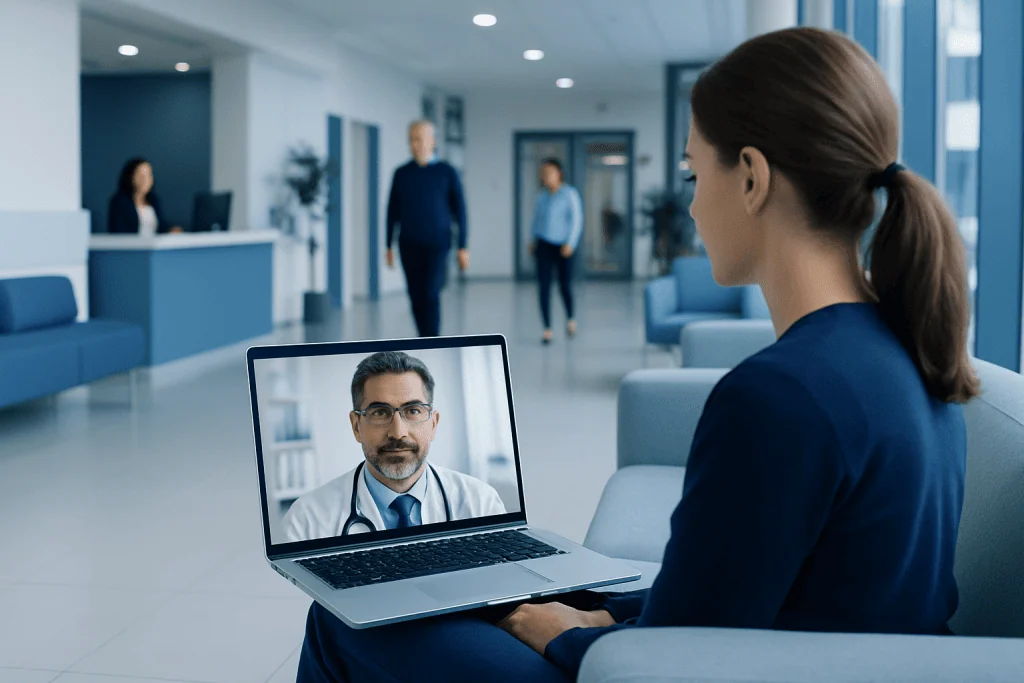
Yes, you can usually continue care remotely after returning home. Remote follow-up with your doctor in Turkey is a planned video or phone consultation to review your recovery, results, and next steps. It works best when arranged before you leave, with your discharge documents and test results shared in advance. It supports your recovery but never replaces emergency care or hands-on local examination.
You are home, the flight is behind you, and a new question appears: is this normal, or should someone look at it? That is exactly what remote follow-up is for. It keeps you connected to your care team in Turkey after you return, so questions, reports and recovery concerns are handled in an organised way rather than left to guesswork.
This guide explains how remote follow-up with your doctor in Turkey works in practice: what to arrange before departure, what to send before each appointment, how fees and quotes are handled, and where the honest limits of remote care sit.
At a glance
- Best for: Patients returning home after diagnosis, treatment, surgery or check-ups in Turkey
- Main tools: Video calls, phone calls, secure messaging, medical reports, imaging files and lab results
- Key preparation: Discharge summary, medication list, test results, photos if requested, and a written list of questions
- Support available: International patient coordination, interpreters, scheduling help and guidance on sharing documents securely
- Fees: Depend on the doctor, specialty and scope of the review, always ask for a written quote before booking
- Important limit: Remote follow-up never replaces emergency care or hands-on local assessment when those are needed
What remote follow-up with your doctor in Turkey actually means
Remote follow-up with your doctor in Turkey is a planned consultation, usually by video, sometimes by phone or secure message, that takes place after you have returned to your home country. It may be used to review your recovery, discuss symptoms, check how you are tolerating medication, explain new test results, or decide whether you need a local doctor visit, further tests, or another trip to Turkey.
The word planned matters. The most useful remote follow-up is arranged before you leave the hospital, not improvised weeks later when a question arises. Your discharge documents can state what needs monitoring, when reports should be sent, and which warning signs require urgent local attention. That gives you a clear bridge between hospital-based care in Turkey and day-to-day recovery at home. Our guide on follow-up questions to ask before leaving Turkey covers exactly what to raise at discharge.
At Acibadem, remote follow-up may involve your treating specialist, the international patient services team, interpreters, and sometimes more than one department. This coordination is especially helpful if your care included surgery, oncology, cardiology, complex diagnostics or multidisciplinary planning, where several people may need to review your file before you get a considered answer.
When remote follow-up is helpful, and when it is not enough
Remote follow-up handles non-emergency questions well: routine progress checks, report review, medication questions and care planning. You might want to confirm whether a wound looks as expected, ask how a medication schedule should progress, review blood tests done at a local laboratory, or understand the next step your specialist in Turkey has recommended. For a fuller picture of the typical rhythm of these check-ins, see what patients should expect from remote follow-up after treatment in Turkey.
But be clear-eyed about the limits. A doctor cannot examine you through a screen. Some symptoms need same-day, hands-on evaluation in your own country, and no international video appointment should delay that. If you have chest pain, difficulty breathing, sudden weakness or facial drooping, heavy bleeding, confusion, fainting, or any symptom that feels severe or is worsening fast, call your local emergency number or go to the nearest emergency department now. Update your team in Turkey afterwards, when it is safe to do so.
There is a second, less obvious limit: regulations differ by country. Prescription rules, available medications and testing standards are not the same everywhere. Your doctor in Turkey can guide you clinically, but a local physician or pharmacist will often need to handle prescriptions, wound care, injections, rehabilitation and physical examination on the ground.
How to prepare before you leave Turkey
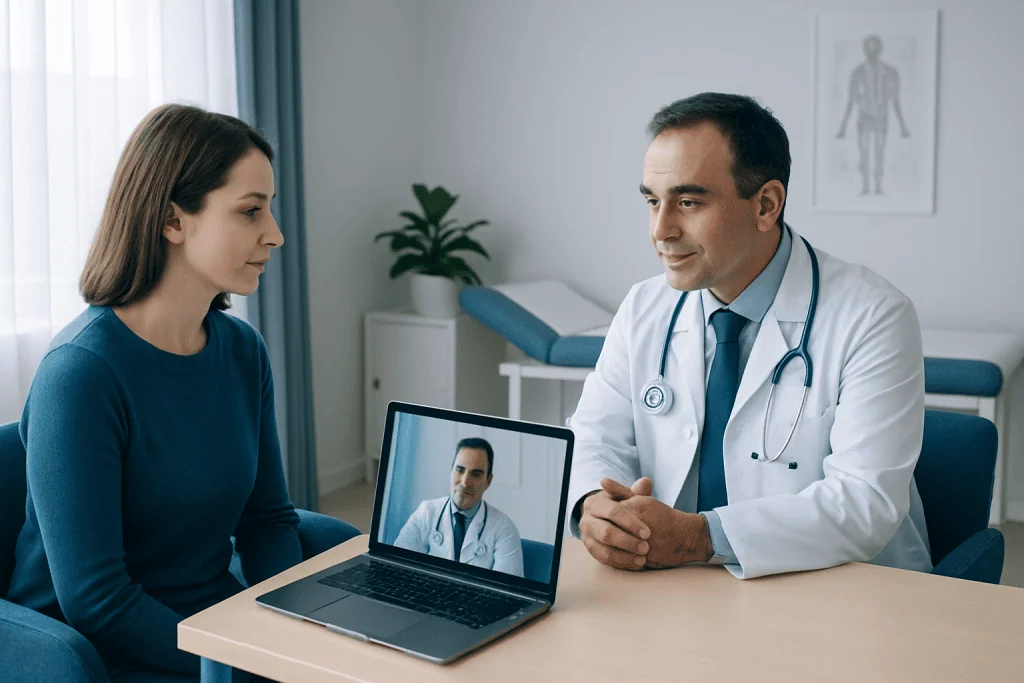
The smoothest remote follow-up starts before departure. Ask your hospital team what your follow-up schedule should look like, which tests should be done at home and when, and how results should reach your doctor. If you are travelling with a companion, include them in the discharge discussion so two people hear the plan.
Before leaving, make sure you hold copies of the documents you may need later: your discharge summary, operative report if relevant, pathology and imaging reports, medication list, allergy information, implant or device details, and written instructions on activity, diet, wound care and warning signs. Ask for these in English if your local doctors do not read Turkish. For imaging, request the actual image files on disc or via a download link, screenshots of scans are rarely enough for a meaningful review.
Finally, pin down the practical details of future contact: which email address or platform to use, whether files need translation, how to request an interpreter, and how far ahead to book a video appointment. These small logistics cause most of the friction once you are back in a different time zone, so settle them while you are still in the building. The guide on discharge, follow-up and flying home walks through the full departure sequence.
What to send before your online appointment
A remote appointment is only as good as the information your doctor receives beforehand. Send documents as clearly labelled files, date and test type in the file name, and send them days ahead, not minutes before the call. If your local clinic issues results in a language other than English or Turkish, ask in advance whether a translation is needed.
Depending on your situation, your team may ask for laboratory results, imaging files, wound or skin photos taken in good light, blood pressure or glucose logs, temperature records, rehabilitation notes, or an updated medication list. If you are unsure which tests are worth repeating at home, the guide on when you may need imaging or labs after treatment in Turkey explains how these decisions are usually made.
Add a short written update in your own words: when you arrived home, how you have felt since, which symptoms improved or worsened and when, what medicines you are currently taking, and your top three questions in order of priority. A structured half-page summary lets your doctor spend the appointment on decisions rather than reconstruction.
Making the video call work across borders
Yes, telehealth works internationally, most video platforms function across borders without difficulty. The real obstacles are usually time zones, language and preparation, not technology. Confirm the appointment time in both Turkish time and your home time zone, in writing, so there is no ambiguity. Test your internet connection, camera, microphone and the meeting link the day before.
Choose a quiet, private place where you can speak openly. Keep your medication boxes, discharge papers, recent results and a notebook within reach. If a family member should join, ask in advance whether they can participate from your room or by a separate link, and be sure you are comfortable with them hearing your medical details.
If you need an interpreter, request one when you book, not during the call. Acibadem’s international patient services team can often coordinate language support, but advance notice keeps the appointment focused on medicine rather than logistics. One caution worth repeating: video consultations are not for emergencies. If something feels urgent while you wait for an appointment, seek local care first.
Coordinating with your local doctor at home
Remote follow-up with your doctor in Turkey works best when it is connected to safe local care, not used instead of it. Your local doctor can examine you, order tests to local standards, prescribe medicines available in your country, and respond quickly if something changes. This matters most after surgery, cancer treatment, cardiac procedures, complex medication changes, or if you live with chronic conditions.
Ask your Turkish care team which documents should go to your local physician, typically the discharge summary, treatment plan, medication list and follow-up recommendations. Practical advice on formats, translations and what local doctors actually need is covered in sharing Turkish medical reports with your local doctor. If a specific test is requested, confirm its exact type and timing so the result is genuinely comparable for your specialist in Turkey.
Occasionally your local doctor and your doctor in Turkey will give different advice. This is usually not a conflict but a difference in information: one has examined you in person, the other knows your treatment history in detail, and each may follow different national guidelines. Do not feel caught in the middle. Ask both to explain the reasoning behind their recommendation, request written notes from each, and let the two positions be compared calmly. Prescriptions in particular belong with the treating doctor in each country, never start, stop or adjust a medicine on your own initiative between two opinions.
Fees and quotes: how the money side works
People often ask what a remote consultation, a follow-up visit or a full check-up in Turkey costs. There is no single honest number, because the fee depends on several variables: the specialty involved, whether one doctor or a multidisciplinary team reviews your case, how much material must be examined (a quick results discussion is different from re-reading a full imaging series), whether interpreter support is needed, and whether a formal written report is issued afterwards. Check-up programmes vary the same way: the scope of the blood panel, the imaging included and the specialties involved all shape the quote.
What you can control is transparency. Before booking any remote follow-up, ask the international patient services team for a written quote that states what is included, what would cost extra, and how payment is taken across borders. Ask whether an initial post-treatment review is handled differently from later consultations, and get that in writing too. The guide on follow-up visit fees after treatment in Turkey explains the fee structures in more detail.
Can foreigners use hospitals in Turkey?
Yes. Foreign nationals can be treated at private hospitals in Turkey, and international patients routinely travel there for diagnosis, treatment and check-ups. Private hospital groups such as Acibadem run dedicated international patient departments that handle correspondence in multiple languages, coordinate appointments, arrange interpreters and manage document sharing before and after your stay. Remote follow-up is simply the continuation of that same relationship after you fly home: the file, the team and the point of contact stay the same. If you are planning a return visit rather than a video call, ask your coordinator about timing when you book, so travel dates and appointments line up sensibly.
Privacy, records and realistic expectations
Share medical information through secure, agreed channels. Avoid posting reports, wound photos or personal details in informal group chats or public platforms. If you are unsure how to send a file safely, ask the international patient services team for the preferred method before you send anything.
Keep expectations practical on timing, too. Remote follow-up may not produce an instant answer to every question. Your doctor may need time to review imaging properly, compare results against earlier ones, or consult a colleague. In multidisciplinary cases, the most responsible answer often comes after several team members have looked at your file: a slower reply can mean a more careful one.
And keep the boundary firm in your own mind: remote follow-up guides your next steps and supports continuity, but it does not replace emergency services, physical examination or hospital admission when those are necessary. A written plan covering office hours, after-hours contact and emergencies is what actually gives you confidence at home.
Step by step
- Confirm your follow-up plan before departure. Ask when the first remote appointment should happen and what it will cover. Make sure you know which symptoms are expected, which are warning signs, and who to contact for non-urgent questions.
- Collect your medical documents. Keep digital and printed copies of your discharge summary, test and imaging reports, medication list and procedure notes in one folder, ready to share with either team.
- Arrange local support at home. Identify a local doctor or clinic before you need one, particularly if wound checks, blood tests, prescriptions or physiotherapy may be required.
- Ask for a written fee quote. Before booking, confirm in writing what the remote consultation includes and how payment works across borders.
- Send updates and results in advance. Upload requested reports days before the call, with dated file names and a short written summary of how you have been since discharge.
- Prepare and prioritise your questions. Write them in order of importance, including practical topics: travel, return to work, exercise, diet, medication timing, wound care and when the next test is due.
- Join ready to take notes. Keep a notebook open or ask a companion to help you record instructions. At the end, repeat the plan back to the doctor to confirm you understood it correctly.
- Follow the plan, and act locally if anything urgent appears. Book recommended tests promptly. If severe symptoms develop, seek local emergency care rather than waiting for the next remote appointment.
Your checklist
- Discharge summary and treatment notes saved as digital copies
- Current medication list with doses, timing and any allergies
- Recent lab, imaging or pathology reports if requested
- Actual imaging files, not just screenshots, where relevant
- Clear symptom timeline since returning home
- Prioritised list of questions for your doctor in Turkey
- Written fee quote for the remote consultation
- Local doctor or clinic contact details
- Emergency contact number in your home country
- Appointment time confirmed in both time zones
- Interpreter requested in advance if needed
- Stable internet, working camera and microphone, private space
Key takeaways
- Remote follow-up with your doctor in Turkey works best when it is planned before you leave, not improvised afterwards.
- Send reports, imaging files, medication lists and a short symptom summary before the appointment, not during it.
- Fees vary by specialty and scope, always request a written quote before booking.
- A local doctor remains essential for examination, prescriptions and urgent care; remote follow-up complements, never replaces, local medicine.
- Interpreters, scheduling help and secure document sharing can all be arranged in advance through international patient services.
Frequently asked questions
Can I do telehealth internationally with my doctor in Turkey?
In most cases, yes. Video and phone consultations work across borders, and international patient teams routinely coordinate them across time zones and languages. Suitability depends on your medical situation: some concerns can be handled remotely, while others need physical examination. Ask before departure so the first appointment is planned rather than improvised.
How much does a remote follow-up or check-up in Turkey cost?
There is no single figure, because fees depend on the specialty, whether one doctor or a team reviews your case, how much material must be examined, and whether interpreter support or a written report is included. Check-up programmes vary by the tests and specialties they cover. Request a written quote stating what is included before you book.
Can foreigners go to hospital in Turkey?
Yes. Foreign nationals can be treated at private hospitals in Turkey, and international patient departments handle multilingual communication, appointments, interpreters and document sharing. Remote follow-up continues that same relationship after you return home, with the same file and point of contact.
What information should I send before the appointment?
Send whatever your doctor requested, blood tests, imaging reports and files, wound photos, medication lists or local doctor notes, with dates and test types in the file names. Add a short written update on your symptoms, recovery and top questions. Sending everything a few days early lets the doctor review it properly before the call.
Can my doctor in Turkey prescribe medication for me at home?
Prescription rules differ between countries, and a prescription issued in Turkey may not be accepted where you live. Your doctor in Turkey can give clinical guidance, but a local physician usually needs to issue or adjust prescriptions under local regulations. Never start, stop or change a medicine without confirming with the treating doctor responsible for it.
What if my local doctor gives different advice?
Differences usually reflect different information: your local doctor can examine you in person, while your doctor in Turkey knows the treatment history in detail, and each may follow different national guidelines. Ask both to explain their reasoning, share the relevant reports with each, and request written notes so the decision can be made calmly.
Is remote follow-up suitable after surgery?
It can be useful for reviewing recovery, discussing symptoms and looking at wound photos if your team requests them. However, fever, increasing pain, swelling, bleeding or possible infection may need prompt local examination, and severe or rapidly worsening symptoms mean you should call your local emergency number or go to the nearest emergency department now. Your discharge plan should list the warning signs.
What should I do if I miss my online appointment?
Contact the international patient services team or your coordinator as soon as possible to reschedule. If you have time-sensitive results or symptoms, say so clearly in your message so the new appointment is prioritised appropriately. For urgent or severe symptoms, seek local medical care immediately rather than waiting for a new remote slot.
Add us as a Preferred Source to see more of our trusted health content across Google Search, AI Overviews and Discover.

Update history
- PublishedJune 9, 2026
- Medical review approvedSeptember 13, 2026
- Last content updateSeptember 12, 2026
References2
- Telehealth: MedlinePlus medlineplus.gov
- Getting Health Care During Travel: CDC Travelers' Health wwwnc.cdc.gov
More Patient Guides

Flying After a C-Section: Timing for New Mothers
A C-section is real abdominal surgery that happens to come with a newborn attached, so the flying question has two clocks…

When Can You Drive After Anesthesia or Sedation?
You feel fine an hour after the procedure. You are chatting, you walked to the car unaided, you could obviously drive it.…

Flying After Hip Replacement: When Is It Safe?
Hip replacement recovers famously well, many patients walk further at three weeks than they had in three years. Flying is part…
Flying After Knee Replacement: When Is It Safe?
The knee is new, the physio is going well, and there is a boarding pass with your name on it. Flying after…