

Remote Follow-Up After Treatment in Turkey: What Patients Should Expect
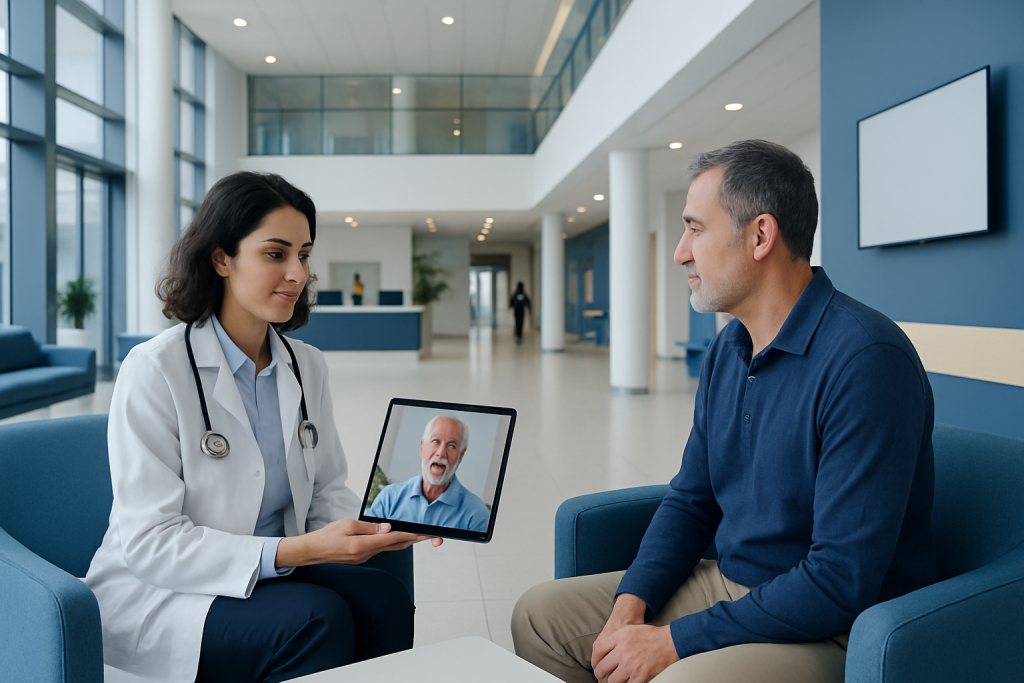
Remote follow-up after treatment in Turkey is structured contact with your treating team once you are home: scheduled calls or video reviews, photo checks of healing, review of locally performed tests, and guidance on activity and recovery. It is planned before you travel, has clear limits, and works alongside, not instead of, in-person care available in your own country.
You are home. The flight is behind you, the discharge papers are in a drawer, and on day four a question surfaces: is this swelling normal? Remote follow-up exists to answer exactly that kind of question, without another flight.
This guide explains how remote follow-up after treatment in Turkey usually works for international patients: what it includes, how it is arranged before you travel, what a video call or a photograph can genuinely assess, and where remote review reaches its limits. It also covers the practical side, documents, travel-clearance timing, and how the scope of follow-up is defined before treatment. For a companion guide focused on the weeks after you land, see remote follow-up after returning home from Turkey.
At a glance
- Procedure type: Aftercare pathway, structured remote medical follow-up, not a procedure in itself
- Purpose: To monitor recovery once you are home, review symptoms and healing, and clarify next steps
- Anaesthesia: Not applicable
- Hospital stay: None additional; follow-up begins after discharge from your main treatment
- Estimated recovery: Set by your original treatment and general health, not by the follow-up itself
- Return to daily life: Varies by procedure; remote check-ins help you time it with your doctor rather than guess
- Final result timeline: Some results appear within weeks; others take months and continued review
- Suitable department: International Patient Services working with the specialty team that treated you
- International patient support: Interpreters, care coordination, secure document and image sharing, discharge planning
What is remote follow-up after treatment in Turkey?
Remote follow-up after treatment in Turkey is a planned way for your treating team to stay involved in your recovery once you have flown home. It is not a separate operation and it is not an emergency service. It typically combines scheduled phone or video consultations, secure sharing of photographs and test results, and written guidance on wounds, activity, diet and the timing of further checks.
It matters more for international patients than for local ones, for a simple reason: healing continues long after discharge, and the doctor who knows your case best may be two thousand kilometres away. A well-structured remote pathway means routine questions, is this bruising expected, when can I lift my child, when should the stitches be looked at, reach the people who performed the treatment, rather than being guessed at.
At Acibadem, remote follow-up is coordinated between International Patient Services and your specialty team. Before you leave, you should know who your contact is, which channel is used, and what kinds of questions suit remote review versus a local examination.
When is it recommended?
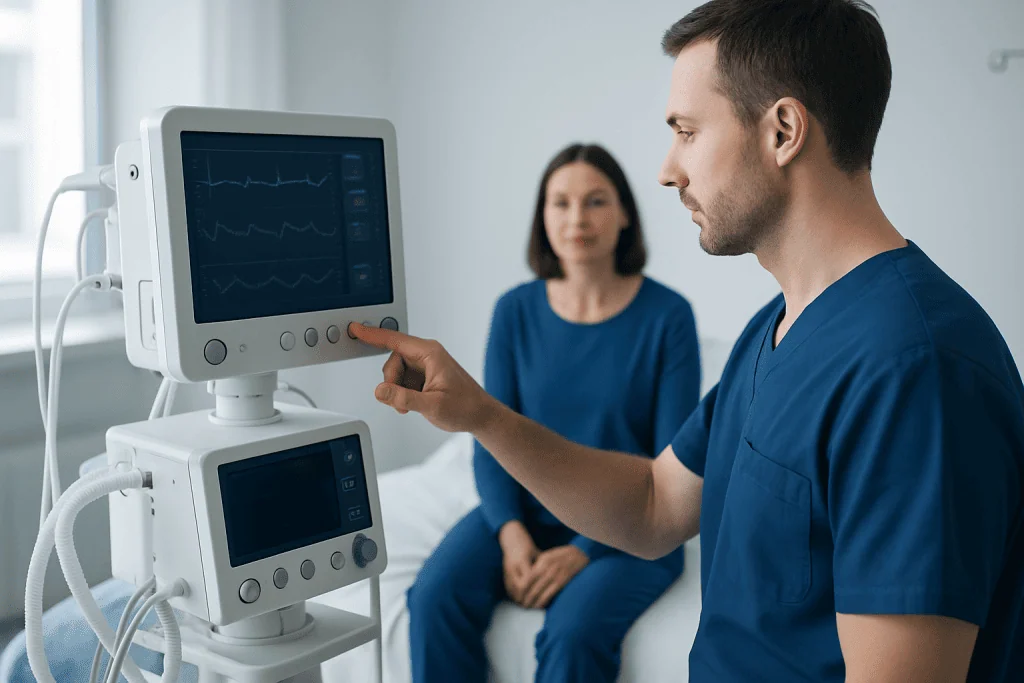
Remote follow-up is commonly built into aftercare for surgery, dental treatment, fertility care, orthopaedic procedures, bariatric treatment, cosmetic procedures, oncology care and cardiology interventions, essentially any treatment where recovery outlasts the trip. It is particularly useful when the plan includes wound observation, symptom review, pathology or imaging discussion, or graded return to activity.
It is also recommended simply because questions arise. Many patients feel well enough to fly home yet still want a professional view on swelling, dressings, scar care, sleep, energy, bowel habits or the right moment to restart exercise. Remote contact turns those uncertainties into short, practical conversations. Related questions about discomfort in this period are covered in our guide to pain control after treatment in Turkey.
Even an uneventful recovery benefits from a defined pathway. Knowing in advance how a concern would be reviewed removes the worst part of recovering abroad: not knowing whether something is normal.
Who is a good candidate?
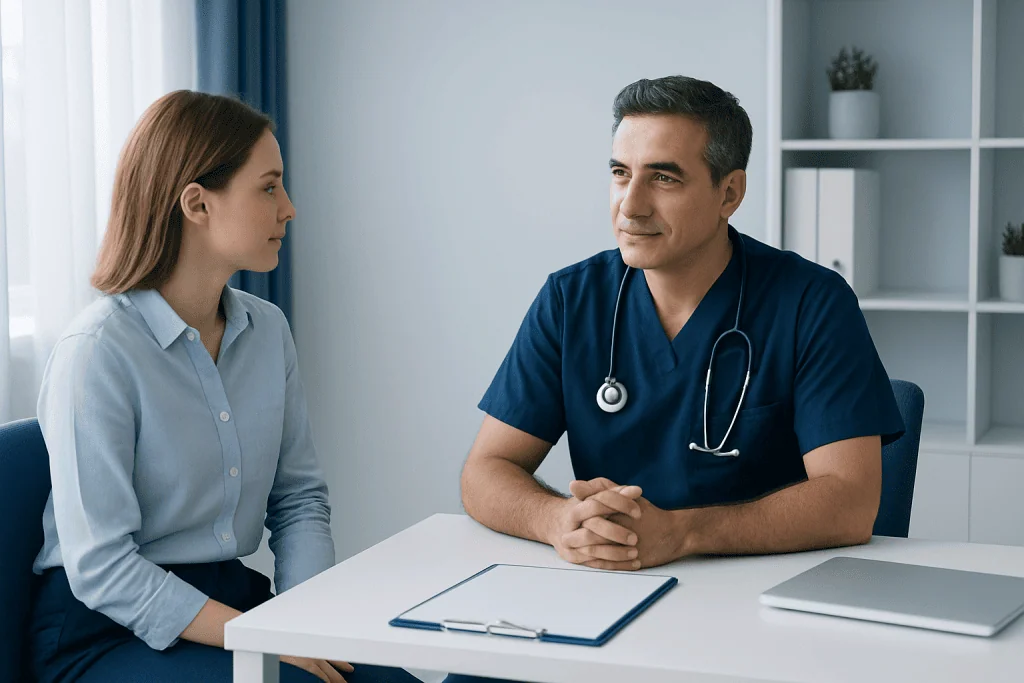
Remote follow-up suits you if your treating team considers you stable for discharge and travel, your early recovery was uncomplicated, and your condition can be reasonably monitored without frequent physical examination. It helps if you can describe symptoms clearly, take photographs when asked, keep scheduled online appointments, and arrange local tests if your team requests them.
A companion at home is a practical advantage, for photographing a wound on your back, for example, or for joining a call if you are tired or your English is limited. Interpreter support can be arranged for the calls themselves, but day-to-day help still makes things easier.
Remote review works less well as the only form of follow-up if your recovery is high-risk, your wound care is complex, your symptoms are unstable, or your condition needs hands-on assessment. In those cases the usual arrangement is dual: a local doctor near your home for examination, and remote contact with your team in Turkey for continuity. That is a strength of the model, not a failure of it.
Treatment options: the formats follow-up can take
Remote follow-up is not one format. Some patients need a single routine check-in; others need a structured schedule over months. The design depends on what your team must actually see or hear to judge your progress.
- Routine check-ins by phone or message for uncomplicated recovery
- Video consultations where visible healing, movement or general condition needs assessment
- Photo-based review of incisions, swelling, bruising or grafts, usually against instructions on lighting and angle
- Local test reviewblood work, imaging or pathology performed near your home and shared for interpretation
- Combined follow-up, where your home-country doctor examines you and your team in Turkey reviews the findings
If your treatment was surgical, expect requests for specifics: incision photographs, temperature readings, drainage descriptions, mobility updates, how your pain trend compares with the discharge briefing. Vague reassurance helps no one; the more concrete the information you send, the more useful the answer you get back.
Online evaluation before travel
The follow-up plan should be discussed before you ever board a plane. Sensible questions to raise during pre-travel review: how many remote check-ins are typical for this treatment, which platform is used, whether interpreter support is available for calls, and which kinds of problems can be handled remotely versus those that need a doctor in the room.
Clarify, too, how long you are expected to stay in Turkey before flying home. This window depends on the treatment, your early recovery and your doctor’s assessment, and it directly affects your flights, accommodation and time off work. Building a margin into your return date is cheaper than changing it under pressure.
Your team can also tell you which documents to keep after discharge: operation notes, pathology summaries, medication instructions, implant details where relevant, and copies of imaging. Having these organised is what makes remote communication fast instead of frustrating.
Before the treatment
Prepare for the period after discharge as carefully as for the procedure itself. Know who coordinates your follow-up, how the team is reached, and how time-zone differences will affect response patterns once you are home.
Keep digital and printed copies of your passport, diagnosis details, previous reports, medication list and allergies. If your recovery is likely to need local wound checks, blood tests, imaging or physiotherapy, ask before you travel, then you can identify suitable providers near home in advance rather than searching mid-recovery. The assessments done before your procedure also feed the follow-up plan; our guide to pre-op tests in Turkey explains what to expect there.
Ask the practical questions early: when you can fly, shower, drive, work, exercise and lift. If drains, compression garments, braces or a special diet are part of the plan, get written instructions before discharge, so remote follow-up can track progress instead of untangling confusion.
What happens during the treatment
Your remote pathway is shaped while you are still in hospital. During your stay, the team monitors your immediate recovery and establishes the baseline against which everything later is compared, how the wound looked at discharge, what your pain level was, what your mobility allowed. A photograph on day ten means far more when there is a day-three photograph to set beside it.
Before discharge you should receive instructions covering medications, wound care, bathing, diet, activity limits and the timing of your first follow-up contact. You may be told which photographs to take, which symptoms to track and whether local tests should be arranged after you return.
Complex treatments often involve more than one specialty. In that case your surgeon or physician coordinates with nursing staff, rehabilitation specialists, dietitians and international patient coordinators, so the handover from ward to remote follow-up is one plan, not several fragments.
Hospital stay and discharge
There is no additional hospital stay for remote follow-up itself. It begins when your treating team judges you medically fit for discharge: a decision based on your procedure, pain control, mobility, oral intake where relevant, and wound status.
At discharge you should hold a treatment summary, medication instructions and travel guidance. You should also know whether a first control visit happens before you leave Turkey and how contact continues afterwards. If any of that is unclear, the time to ask is before you leave the building, not from an airport lounge.
For the days between discharge and your flight, it helps to know how out-of-hours questions are handled locally; our guide to after-hours medical help in Turkey covers that period. A safe discharge is not just leaving hospital: it is leaving with a clear picture of what normal recovery looks like.
Recovery timeline
Your timeline is set by the treatment you had, your age, your general health and whether complications arise. Remote follow-up does not speed healing; it makes the process better informed. The framework below is general: your own doctor’s advice always takes priority.
| Timeframe | What to expect |
|---|---|
| First 24 hours home | Rest after travel, reviewing medication instructions, and settling into the monitoring routine your discharge notes describe for your procedure. |
| First week | Swelling, discomfort, bruising, fatigue or movement limits may persist. The first remote check often falls here: photos, symptom review, confirmation of wound care and activity guidance. |
| Weeks 2–4 | Daily activity usually increases gradually while healing continues. Local dressing changes, blood tests, imaging or specialist review may be advised depending on the treatment. |
| Months 1–3 | Function and comfort typically improve further. Some treatments need longer review of scars, mobility, pathology results, rehabilitation or nutrition. |
| Final result | Depends on the original treatment. Some outcomes are clear within weeks; others take months and occasional in-person review. |
Recovery is rarely linear. A strong day followed by a tired, sore one is common. Remote follow-up works best when you report changes honestly and early, rather than waiting to see whether a small concern grows.
What to avoid after treatment
The first rule: do not classify your own symptoms as normal or abnormal by comparing yourself with other patients. Aftercare differs enormously between treatments, and the instructions written for your case are the ones that apply.
In general, avoid flying before your medical clearance date, restarting strenuous exercise ahead of schedule, improvising dressing changes, and neglecting the hydration and nutrition guidance you were given. Do not alter how you take prescribed medication on your own, any change belongs with your treating doctor, and check before adding supplements or over-the-counter products, since some interfere with healing or interact with prescriptions. If you smoke, your team will likely have discussed this before treatment: smoking impairs healing.
Finally, avoid sitting on uncertainty. A short message about a small concern on day five is far more useful than a long message about a large one on day twelve.
Risks and possible complications
Remote follow-up is useful, and it has honest limits. The central one: some problems cannot be assessed without a physical examination, vital signs, laboratory tests or imaging. A video call shows a great deal; it does not show everything, and no responsible team will pretend otherwise.
Communication itself carries risk. Symptoms can be misjudged when descriptions are incomplete, photographs are poorly lit, records are missing or language gets in the way. This is why interpreter support, clear discharge documents and a single reliable contact channel matter so much for international patients.
Complications after the original treatment vary widely and can include infection, bleeding, delayed healing, medication side effects, wound problems, clot-related issues or recurrence of the original condition. Remote review helps surface concerns early, but it does not remove the possibility that in-person assessment, local urgent care or a return visit becomes necessary. A good remote pathway is one that recognises quickly when it is no longer the right tool.
Where remote review ends
Your discharge summary will list the warning signs specific to your treatment: the changes your team wants reported, and the situations that need in-person assessment where you are rather than a message across time zones. Those instructions are written for your case and take precedence over anything general.
What can be said generally is this: remote follow-up is a continuity tool, not an emergency channel. Urgent problems are assessed in person, wherever the patient happens to be, and remote review resumes afterwards. Records from any local assessment can be shared with your team in Turkey so that both sides of your care stay informed. Understanding that boundary before you travel, and asking your doctor to spell out which signs apply to your procedure, is one of the most useful things you can do at discharge.
Results and expectations
A good remote plan makes recovery at home calmer and better informed. Keep the expectations proportionate: remote follow-up supports recovery, but it does not guarantee a particular result, prevent every complication or replace all in-person care that may become necessary.
Your experience depends on the treatment, your own healing pattern and how well the aftercare plan fits your circumstances. Some patients need only reassurance and routine advice; others need local tests, rehabilitation input or referral for examination. Healing is individual, swelling, fatigue, scar maturation, appetite changes and emotional ups and downs all shape how recovery feels from the inside. If further treatment is ever discussed, that decision requires proper physician evaluation, not conclusions drawn from early recovery alone.
International patient travel planning
Plan the return-home phase as deliberately as the arrival. Before booking, ask how long you may need to remain in Turkey after treatment, whether a companion is advisable, and whether a first control visit is expected before flying. These answers differ significantly by procedure.
Keep flexibility in your return travel where possible, especially for treatments where swelling, drains, dressings or mobility can affect discharge timing. Review your travel insurance terms, airline assistance options, seat comfort for a longer flight, and carry extra medication in hand luggage in case of delays.
Once home, keep your phone reachable, watch the channel your care team uses, and store discharge documents in one place. Coordination, interpreters and remote contact can be organised from the Turkish side, but you should also know, in advance, where in-person medical help is available in your own country.
Cost and package information
This guide does not quote figures, because there is no honest single figure to quote. What can be explained is structure. The scope of follow-up-related costs depends on the original procedure, the complexity of recovery, the number of planned remote reviews, whether multiple specialties are involved, and whether additional tests, imaging, rehabilitation or medications are needed after discharge.
Many international treatment pathways include core elements in the initial arrangement, in-hospital care, discharge planning, medical reports and a defined period of routine remote contact. What counts as “defined” varies by specialty, so ask for it in writing.
Items often not included unless specifically stated: local doctor visits in your home country, care received outside Turkey, locally performed tests, medications bought after discharge, extended accommodation, flight changes and any later procedures. The clean way to avoid surprises is a written breakdown before travel: our guide to the estimated quote versus final invoice explains how that process normally works.
Why choose Acibadem
For international patients, much of the reassurance lies in knowing support does not stop at the hospital exit. Acibadem pairs specialist medical teams with international patient coordination, which keeps communication clearer before treatment, during your stay and after you return home.
When treatment involves more than one specialty, a multidisciplinary structure matters: your surgeon or physician, nursing guidance, imaging review and rehabilitation planning can work from the same record rather than in parallel. And the practical layer, interpreters, transfer coordination, accommodation guidance, remote follow-up channels, reduces friction for you and your family. No hospital can promise a perfect recovery. A well-organised aftercare pathway can make the process more manageable and more transparent, and that is the claim worth making.
Medical review and disclaimer
This guide has been medically reviewed by the Acibadem International medical team. It is written to help you understand how remote follow-up after treatment in Turkey typically works and which practical points to consider before and after travel.
The information here is general and educational. It does not replace a consultation, examination, diagnosis or personalised treatment plan. Recovery needs, travel timing and follow-up requirements vary widely with your condition, the treatment performed and your overall health. Fitness for discharge, travel clearance and any further treatment decisions rest with a qualified physician who knows your case.
Step by step
- Initial enquiry. The pathway typically begins with a written enquiry about a planned treatment, including questions about recovery and what follow-up support exists after returning home.
- Medical record and photo submission. Diagnosis details, reports, medication lists, previous results and relevant images are shared so the team can understand the case.
- Preliminary medical review. The relevant specialty team reviews the information and considers suitability, expected recovery and likely follow-up needs.
- Treatment plan and quotation. A preliminary plan sets out the proposed treatment, expected hospital stay, recovery milestones and what follow-up is usually included, in writing.
- Travel planning. Flights, accommodation and companion arrangements are made, with the expected in-Turkey stay confirmed before booking.
- Arrival. Transfer and coordination services help you settle in ahead of consultations and the treatment schedule.
- In-person consultation. You meet your doctor for examination, final planning and realistic counselling on treatment, recovery and travel timing.
- Pre-operative tests. Blood tests, imaging, anaesthesia review or other assessments are completed where the treatment requires them.
- Treatment. The main treatment is performed and the hospital team monitors immediate recovery while discharge planning begins.
- Hospital stay. Doctors and nurses assess pain control, wound status, mobility and stability for discharge and later travel.
- First control. A first review often happens before leaving Turkey, checking early healing and setting the remote schedule.
- Discharge and travel clearance. You receive discharge documents, medication instructions, your treatment-specific warning signs and guidance on when flying is appropriate.
- Remote follow-up. Once home, you attend scheduled online or phone check-ins, share updates or local test results, and receive guidance on recovery and next steps.
Your checklist
- Passport copy and travel details
- Medical history summary
- Current medication list
- Known allergies
- Previous surgeries or major treatments
- Current symptoms and diagnosis details
- Relevant blood tests, pathology or imaging reports
- Photos or imaging files where relevant
- Contact details for your local doctor, if available
- Emergency contact information
- Questions about travel timing, recovery and follow-up
- Copies of discharge and insurance documents if applicable
Key takeaways
- Remote follow-up is planned continuity of care for patients who return home after treatment in Turkey, agreed before travel, not improvised afterwards.
- The format depends on the treatment: routine check-ins, video reviews, photo-based wound checks or review of locally performed tests.
- Before you travel, establish who your contact is, which channel is used and how documents and images will be shared.
- Remote review has honest limits; some situations need examination, tests or urgent in-person care where you are, with records shared afterwards for continuity.
- Keeping discharge papers, medication lists and results organised in one place makes every remote conversation faster and more useful.
Frequently asked questions
What does remote follow-up after treatment in Turkey usually include?
Planned contact after discharge: phone or video check-ins, review of symptoms and photographs, and guidance on medications, activity, wound care or test results. The exact format depends on the treatment and on what your doctor needs to monitor.
Is remote follow-up enough on its own after I go home?
For routine recovery, often yes. But some situations need examination, tests, imaging or urgent treatment in person, and remote review cannot substitute for that. Many patients use a combined model: a local doctor for hands-on checks, remote contact with the team in Turkey for continuity.
How long should I stay in Turkey before flying home?
It depends entirely on your treatment, how early recovery progresses and your doctor’s travel-clearance advice. Some patients can fly relatively soon; others stay longer for observation or a first control visit. Confirm the expected window before booking return flights, and keep some flexibility if you can.
What medical procedures are done in Turkey?
Hospitals in Turkey provide a broad range of specialties for international patients, including cardiology and cardiac surgery, oncology, orthopaedics, fertility treatment, ophthalmology, dental care, bariatric surgery and plastic or reconstructive procedures. Remote follow-up arrangements exist across most of these, adjusted to what each recovery requires.
Do tourists get free healthcare in Turkey?
No. Turkey’s state health insurance covers people who live and are registered in the country. Visitors are treated as private patients and pay for care directly or through insurance. Emergency departments assess anyone who arrives, but treatment is still billed, so it is worth checking what your travel insurance covers before you fly.
How much does it cost to see a doctor in Turkey?
There is no single figure. Consultation fees vary by hospital, specialty and whether tests or imaging are included. For international patients, the usual practice is a written quote before travel that sets out what a consultation and treatment plan covers, so ask for the scope in writing rather than relying on averages.
Can interpreters help during remote follow-up?
Interpreter support is often available through international patient services, depending on the follow-up arrangement. If language support matters to you, clarify it before treatment so that communication after you return home is arranged from the start rather than added later.
What if I need tests after I return to my country?
Your treating team may advise local blood tests, imaging, wound review, rehabilitation or specialist follow-up depending on your case. A local clinician performs the test or examination, and the results can usually be shared remotely for review, which is exactly the combined model remote follow-up is designed to support.
Add us as a Preferred Source to see more of our trusted health content across Google Search, AI Overviews and Discover.

Update history
- PublishedJune 22, 2026
- Medical review approvedSeptember 13, 2026
- Last content updateSeptember 12, 2026
References2
- Telehealth medlineplus.gov
- Medical Tourism: Travel to Another Country for Medical Care wwwnc.cdc.gov
More Patient Guides

HoLEP in Turkey: How It Compares With TURP and What Recovery Involves
HoLEP in Turkey treats enlarged prostate tissue with laser enucleation; learn how it compares with TURP, recovery, travel and follow-up.
Porcelain Veneers in Turkey: Who Is Suitable and How Many Visits Are Needed?
Porcelain veneers in Turkey can enhance tooth shape and colour in two visits for suitable patients after a personalised dental assessment.
How to Prepare for a Sedation Procedure in Turkey
Prepare safely for a sedation procedure in Turkey with guidance on fasting, medicines, travel, recovery and follow-up.
Treatment Delays in Turkey: What Happens If Tests or Recovery Change Your Schedule
Treatment delays in Turkey can happen if tests or recovery change your plan. Learn how to manage appointments, travel, accommodation and follow-up.