

How Much Are Pre-Treatment Tests in Turkey?

There is no single flat fee. Pre-treatment tests in Turkey are priced according to what your case actually requires: basic bloodwork sits at one end, advanced imaging and specialist pathology review at the other. The most reliable estimate comes after a specialist has reviewed your records, so ask for an itemised, case-based quote rather than a general price list before you travel.
You have found a treatment price, booked nothing yet, and now you want to know what the tests before it will add. So, how much are pre-treatment tests in Turkey? The honest answer is that there is no single flat fee: they are priced according to the tests you actually need, and two patients booked for the same procedure can leave with different totals.
That does not mean you cannot budget sensibly. It means you budget differently. Instead of hunting for one number, you learn which tests are commonly requested, what moves the total up or down, and how to get a written, case-based estimate before you book flights. This guide walks you through all three.
At a glance
- Best for: International patients budgeting for treatment and the diagnostic tests that come before it
- How tests are priced: By the tests actually ordered, not usually as one standard fee for all patients
- Main cost factors: Type and number of tests, imaging needs, specialist reviews, urgency, and whether prior results can be reused
- When quotes are clearest: After your medical records have been reviewed by the care team
- What may be included: Bloodwork, imaging, cardiology checks, pathology review, and doctor assessment, depending on your case
- Good to ask about: Package inclusions, same-day testing, interpreter support, and when payment is due
Why there is no single price for pre-treatment tests in Turkey
When people search for how much are pre-treatment tests in Turkey, they usually expect a menu: one price for “tests”, perhaps a second for “scans”. Hospitals do not work that way, in Turkey or anywhere else. Pre-treatment tests are the checks your team needs before confirming or starting a treatment plan, and the list is built around your diagnosis, your age, your general health, and the procedure being planned.
At the simple end, that might be a small panel of blood tests, a urine test, and an ECG before a minor planned procedure. At the more detailed end, it can include MRI, CT, ultrasound, echocardiography, endoscopy, biopsy or pathology review, and consultations with more than one specialist. A patient preparing for major surgery, cancer treatment, or a cardiac procedure will usually need a broader workup than someone coming for a short, low-risk intervention, and the cost follows the list, not the label.
It helps to reframe the question. Rather than “what do tests cost in Turkey”, the useful version is “what will testing cost in my case, and how do I find out before I travel”. Everything below is aimed at answering that second question. If you want a fuller picture of what the tests themselves involve, the guide to pre-op tests in Turkey for international patients covers the medical side in more depth.
What affects the cost of pre-treatment tests in Turkey
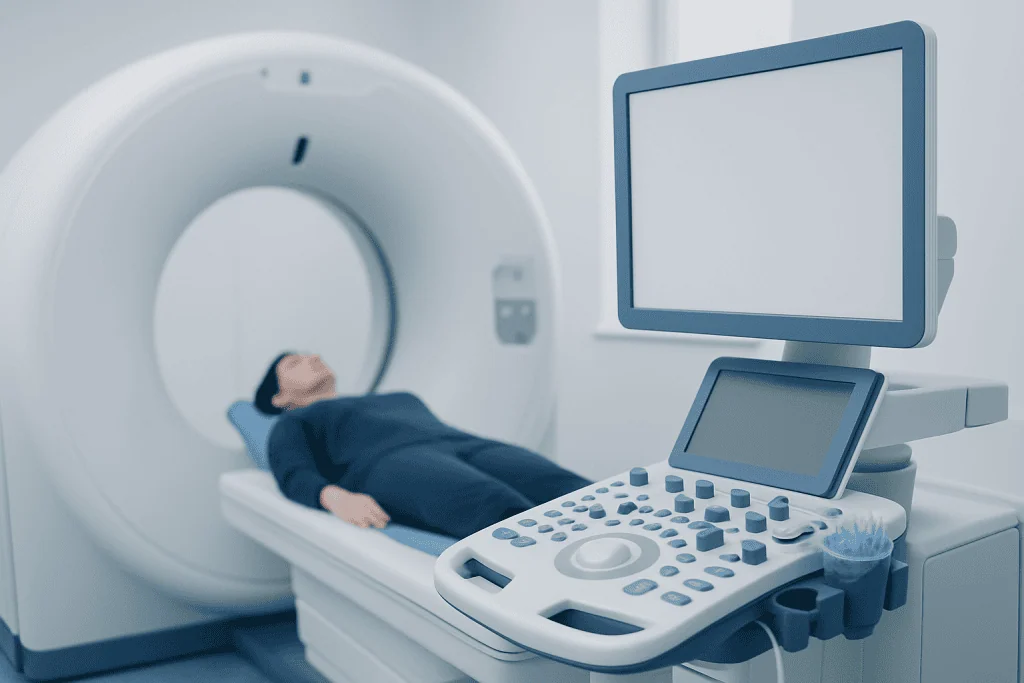
The biggest driver is the type and number of tests ordered. Routine laboratory work sits in a very different bracket from advanced imaging or specialised pathology analysis. If your plan requires anaesthesia clearance, cardiology review, hormone studies, genetic testing, or repeated scans, your total will naturally be higher than a straightforward pre-operative panel. The main variables look like this:
| Factor | How it moves the total |
|---|---|
| Type of test | Basic labs are simpler and cheaper to run than MRI, CT, PET-CT, or endoscopy |
| Number of tests | A broad safety workup costs more than a short routine panel |
| Specialist review | Anaesthesia assessment, cardiology clearance, or second opinions may be billed as separate consultations |
| Reuse of prior results | Accepted home-country results can shrink the list; outdated or unclear ones lead to repeats |
| Urgency and reporting | Same-day scheduling or urgent reporting can affect what is charged |
| New findings | An unexpected result may add tests that were not in the original estimate |
The second major factor is whether your existing results from home can be accepted. Recent reports, scans, and blood results are sometimes sufficient if they meet the hospital’s standards and are still medically valid. In other cases your specialist will recommend repeating tests in Turkey, because timing matters, because image quality varies between machines, or because results need to sit in the same system before treatment can proceed. This is common and rarely a comment on the quality of your home care; the guide on why blood tests and scans may be repeated before treatment in Turkey explains the reasoning.
Finally, logistics play a part. Compressed same-day schedules, urgent reporting, and multidisciplinary review across several departments all shape the final figure. Large hospital groups can often coordinate appointments efficiently for international patients, but the total still reflects the exact services used, not a universal fee.
Which tests are commonly requested before treatment

For many treatment pathways, the baseline is similar: routine bloodwork, urine testing, ECG, chest imaging where indicated, and a consultation to review your medical history and current medications. These checks help the team assess general fitness for treatment, identify infection risks, and plan anaesthesia or surgery safely.
Beyond that baseline, testing becomes condition-specific. Depending on your diagnosis you may be asked for ultrasound, mammography, endoscopy, CT, MRI, PET-CT, pulmonary function tests, hormone panels, biopsy review, or cardiac imaging. Cancer care, fertility treatment, bariatric surgery, orthopaedics, neurology, and cardiac care each tend to carry their own typical workups, which is precisely why a generic price list tells you so little.
A useful question to put to your coordinator is whether a given test is routine, conditional, or only ordered if something in your history suggests it. That distinction shapes both your budget and your schedule:
- Routine tests are scheduled for most patients in the same pathway and are the most predictable part of any estimate.
- Condition-specific tests are ordered according to your diagnosis and findings, and vary between patients.
- Repeat tests may be needed if prior results are outdated, incomplete, or not up to the standard the treating team requires.
- Review of outside materialscans on disc, pathology slides, may be billed as a separate specialist service.
If new findings appear once testing starts, the list can grow. That is not unusual and it does not automatically signal a problem; the guide on how unexpected tests affect timing and cost in Turkey explains how hospitals typically handle additions to the plan.
How check-up packages and other costs are actually priced
Because so many searches around this topic ask about full body check-ups, cancer treatment, or cosmetic procedures, it is worth explaining how each is structured, without pretending a single figure exists for any of them.
Full body health check-ups
Check-up packages are one of the few areas where hospitals do publish set contents, because the tests are standardised rather than tailored: a defined panel of labs, imaging, and consultations offered at a fixed scope. The price of a package depends on how deep it goes: a basic screening panel differs from an extended package with advanced imaging and multiple specialist reviews. A check-up package is not the same thing as pre-treatment testing, though. A package screens broadly; pre-treatment testing answers a specific question about whether a specific treatment is safe and well timed for you. Buying a package rarely replaces the tests your treating doctor will order.
Cancer treatment and other major care
The cost of cancer care is even more individual than the cost of testing. It depends on the diagnosis, the stage, the modalities involved, surgery, systemic therapy, radiotherapyand the length of treatment. No serious hospital can quote it before a specialist has reviewed the diagnostic picture, which is exactly why pre-treatment testing comes first: it defines the plan, and the plan defines the cost.
Cosmetic procedures such as Botox
Many people travel to Turkey for cosmetic treatments and find the overall costs compare favourably with their home country, but the same logic applies here as everywhere else on this page: the price depends on the product used, the amount required, the practitioner, and the clinic. Compare like with like, and always ask what pre-procedure assessment is included.
Do tourists get free healthcare in Turkey?
No. Turkey’s public health insurance covers people enrolled in the national system, which visitors generally are not. As an international patient you should expect to pay for consultations, tests, and treatment, and to arrange travel or medical insurance separately if you want cover for unrelated illness during your stay. This is another reason to insist on written estimates before you travel: there is no public safety net that will absorb your testing costs.
How to get a realistic quote before you travel
The most accurate estimates come after a specialist has reviewed your records. In practice, that means gathering recent reports, test results, a medication list, your diagnosis if known, and any imaging on disc or through a secure upload, and sharing them with the hospital’s international patient team before you commit to flights. Once a doctor has looked at the file, the hospital can usually tell you which tests are likely, which are conditional, and roughly how the estimate is built.
When you receive a quote, separate the conversation into three parts and ask for each in writing:
- Definitely included: the tests and consultations that will happen for every patient in your pathway.
- Added if medically necessary: tests your doctor may order based on your history or first assessment.
- Triggered by new findings: what happens, and how you are told, if something in the first results changes the plan.
This structure also lets you compare hospitals fairly. One quote may include the initial consultation and basic labs; another may not. Without an itemised breakdown, a lower headline figure can simply mean fewer things counted.
Most large hospitals have international patient teams that handle document collection, interpreter arrangements, and the testing-and-treatment timeline for overseas patients. Even with that support, ask for a written outline so you know what has been estimated and what remains subject to doctor review after arrival.
Payments, packages, and timing
Package terms vary more than most patients expect. Some treatment packages include routine pre-operative tests; others bill the treatment fee and diagnostics separately, particularly where detailed imaging or reviews from multiple departments are involved. Never assume tests are included unless it is written down.
Ask when payment is due, too. Hospitals may request payment before testing, at registration, or before the procedure itself. If there is a realistic chance your test plan will expand after the first in-person assessment, ask how additional charges are approved and whether you will be informed before they are incurred. A good hospital will have a clear answer.
Timing is the third piece. If several tests are needed across one or two days, you may need to land in Turkey earlier than your treatment date suggests. Coordinated scheduling can compress appointments, but it depends on department availability, the urgency of your case, and how quickly results are reported. The guide on arriving early for tests in Turkey covers how to build this buffer into your itinerary.
Practical ways to avoid surprise costs and delays
The simplest cost control is complete, recent documentation. Bring passport details, prior reports, operation notes if you have them, pathology reports, imaging files rather than written summaries alone, and a clear list of your medications and allergies. Missing records are the most common reason for repeated consultations and duplicated tests, which cost both money and days.
Budget for the fact that not everything can be confirmed remotely. A doctor reviewing your file from abroad can often give only a provisional testing plan; after the in-person examination, the list may be refined based on findings from the first tests. That is responsible medical planning, not a sign that something has gone wrong. If the plan does grow, the guide on what happens if you need extra tests after arriving in Turkey explains what to expect from the process.
Preparation on the day matters as well. Some blood tests and imaging require fasting or medication timing adjustments confirmed by your treating doctor, and turning up unprepared can mean a rescheduled, and sometimes re-billed, appointment. The fasting before tests and procedures guide covers the practicalities. Finally, if you are travelling with a companion, ask whether they can help manage paperwork and payments; smooth logistics are often as valuable as the medical schedule itself.
Step by step
- Share your medical records early. Recent reports, imaging, lab results, diagnosis details, and a medication list give the specialist a real basis for estimating which pre-treatment tests in Turkey you will actually need.
- Ask for an itemised estimate. A breakdown showing consultations, labs, imaging, and likely specialist reviews is far more useful than a single total, and shows what is fixed versus what could change.
- Check whether your existing tests can be used. Ask if home-country results are acceptable and how recent they must be. Reusing valid results can shorten the list, but the final call rests on medical relevance and hospital standards.
- Clarify package versus non-package items. If your treatment is quoted as a package, confirm in writing whether routine pre-treatment tests are inside it and which items would be billed separately.
- Plan your arrival around the testing schedule. You may need to arrive one or more days before treatment, especially if several departments are involved. Ask how long testing and reporting are expected to take before you book flights.
- Confirm payment timing and method. Ask when payment is collected and which methods are accepted, particularly useful if additional tests may be recommended after your first in-person review.
- Keep room for medical changes. Even a careful quote can change if new findings appear. Build flexibility into your budget and travel dates so medically necessary additions do not derail the trip.
Your checklist
- Recent medical reports, translated into English if possible
- Imaging files and reports, not just written summaries
- List of all current medications, supplements, and allergies
- Questions about which tests are mandatory and which are conditional
- Written confirmation of what is included in your estimate
- Confirmation of payment timing and accepted payment methods
- Travel or medical insurance arrangements for your stay
- A flexible travel plan in case testing takes longer than expected
- Passport and registration documents for hospital admission
Key takeaways
- Pre-treatment tests in Turkey are priced according to your medical needs, not as one standard fee.
- The type and number of tests, imaging requirements, and specialist reviews are the biggest cost drivers.
- A record review before travel is the most reliable route to a realistic estimate.
- Check-up packages have fixed contents, but they are not a substitute for the tests your treating doctor orders.
- Visitors pay for healthcare in Turkey, so written estimates and insurance arrangements matter.
- Always confirm whether tests sit inside a treatment package or are billed separately, and when payment is due.
Frequently asked questions
How much does a full body health check-up cost in Turkey?
There is no single figure, because packages vary in depth. A basic screening panel of labs and a consultation is priced very differently from an extended package with advanced imaging and multiple specialist reviews. Ask each hospital for the exact contents of the package, then compare like with like rather than comparing headline totals.
How much does cancer treatment typically cost in Turkey?
Cancer care cannot be honestly priced before a specialist reviews the diagnosis, stage, and planned modalities, because those factors define the treatment itself. Pre-treatment testing is what makes an accurate quote possible: it shapes the plan, and the plan shapes the cost. Ask for an itemised estimate after your records have been reviewed.
Do tourists get free healthcare in Turkey?
No. Turkey’s public health insurance covers people enrolled in the national system, which short-term visitors generally are not. International patients should expect to pay for consultations, tests, and treatment, and should arrange travel or medical insurance separately for anything unrelated to their planned care.
Are pre-treatment tests included in the treatment price?
Sometimes, but not always. Some packages include routine pre-operative checks, while advanced diagnostics or extra specialist reviews are often billed separately. Ask for written confirmation of exactly what your quote covers before you travel.
Can I use test results from my home country?
Often yes, if the results are recent, clearly reported, and medically relevant to the planned treatment. Your doctor in Turkey may still recommend repeating some tests where timing, image quality, or safety requirements make that necessary: a common and normal part of planning.
How much are pre-treatment tests in Turkey if there is no fixed price?
The total depends on your diagnosis, age, medical history, and the treatment being planned, because those factors decide which tests are ordered. Two patients booked for the same procedure can need different workups. Hospitals give the most useful estimate after reviewing your records, not from a generic list.
Is it cheaper to get Botox in Turkey?
Many people find cosmetic treatment costs in Turkey compare favourably with their home country, but the price of any injectable depends on the product used, the amount required, the practitioner, and the clinic. Ask exactly what a quote includes, including any assessment beforehand, and compare on that basis rather than on a headline figure.
Do I need to arrive in Turkey before my treatment date for testing?
Often yes, particularly if several tests or specialist consultations come first. Some patients finish everything quickly; others need extra time for imaging, pathology review, or anaesthesia clearance. Confirm the expected testing and reporting timeline before you finalise flights.
Add us as a Preferred Source to see more of our trusted health content across Google Search, AI Overviews and Discover.

Update history
- PublishedJune 25, 2026
- Medical review approvedSeptember 13, 2026
- Last content updateSeptember 12, 2026
References1
- CDC Travelers' Health: Medical Tourism wwwnc.cdc.gov
More Patient Guides

Private MRI, CT and Check-Up Costs in Turkey: How Scans Are Priced
How private MRI, CT, PET-CT and full check-up packages are priced in Turkey, modality, region, contrast, reporting, and what a…

Cataract Surgery Cost in Turkey: Per-Eye Prices and Lens Options
Cataract surgery in Turkey is priced per eye and the lens decides the quote. Biometry, both eyes on one trip, and what…

Lip Filler Cost in Turkey: Per-ml Prices Explained
Lip filler in Turkey is priced per millilitre with licensed hyaluronic acid brands and physician injectors. Volume, product, dissolving, safety and what…

Botox Cost in Turkey: Per-Area and Per-Unit Prices
How Botox is priced in Turkey, per area or per unit, brand, physician injectors, medical indications, and what a serious…