

What Happens If You Need Extra Tests After Arriving in Turkey

If your specialist recommends extra tests after you arrive in Turkey, the usual sequence is straightforward: the test is scheduled, you follow any preparation instructions, the result is reviewed, and your treatment plan is confirmed or adjusted. Some tests fit into the same day; others shift your treatment by a day or more. Extra tests are usually a safety and planning step, not a sign that something has gone wrong.
You have flown in, your bags are at the hotel, and then you hear that a few more tests are needed before treatment goes ahead. It is a deflating moment, and a common one. In most cases it means your care team is confirming that the plan made from your records is still the safest plan for you today.
This guide explains what happens if you need extra tests after arriving in Turkey: why they come up, what kinds are most common, how they affect your schedule and your stay, how paying for them usually works, and what you can do to keep a changed plan manageable.
At a glance
- Most important point: Extra tests after arrival are usually a routine step in confirming your treatment plan, not a sign that something has gone wrong.
- Why they happen: Your specialist has now examined you in person, and some earlier results may be too old, incomplete, or done to a different protocol.
- What may change: Your treatment date, the order of appointments, or the length of your stay may shift by hours or days.
- Cost: Extra tests may sit outside an original quote. What you pay depends on the test, the department, and how your quote was structured.
- Who helps coordinate: International patient services can help with scheduling, interpretation, transport, and practical updates.
- What you can do: Bring all your reports, follow preparation instructions exactly, and keep flexibility in your return travel until the plan is confirmed.
What happens if you need extra tests after arriving in Turkey
The short answer to what happens if you need extra tests after arriving in Turkey is: a defined sequence, not a crisis. Your specialist explains what is needed and why, the test is scheduled, often within the same hospital, sometimes the same day, you follow any preparation instructions, the result is reported, and your doctor reviews it before confirming or adjusting the plan. The uncertainty usually lasts hours or a small number of days, not weeks.
Why does it happen at all, when you sent your records in advance? The most common reason is the in-person examination. Once your specialist sees you, your mobility, pain level, vital signs, wound or healing history, they may notice details that were not fully clear from records alone. That does not mean the remote review was careless. Some things simply cannot be judged from a report or a scan sent by email.
Timing is the second common reason. Certain blood tests, imaging studies, heart assessments, and anaesthesia checks must be recent enough to be reliable for treatment planning. If your previous results are too old, incomplete, done using a different protocol, or missing a key measurement, the team will usually repeat or add tests locally rather than plan around a gap. If you want the fuller picture of what teams typically ask for before treatment begins, see our guide on when extra tests are needed before treatment in Turkey.
The third reason is change. Symptoms evolve, medications change, and a condition scanned three months ago may not look the same today. Knowing what happens if you need extra tests after arriving in Turkey mostly comes down to understanding this: the team is checking that the plan still matches the patient in front of them.
What kinds of extra tests might be needed
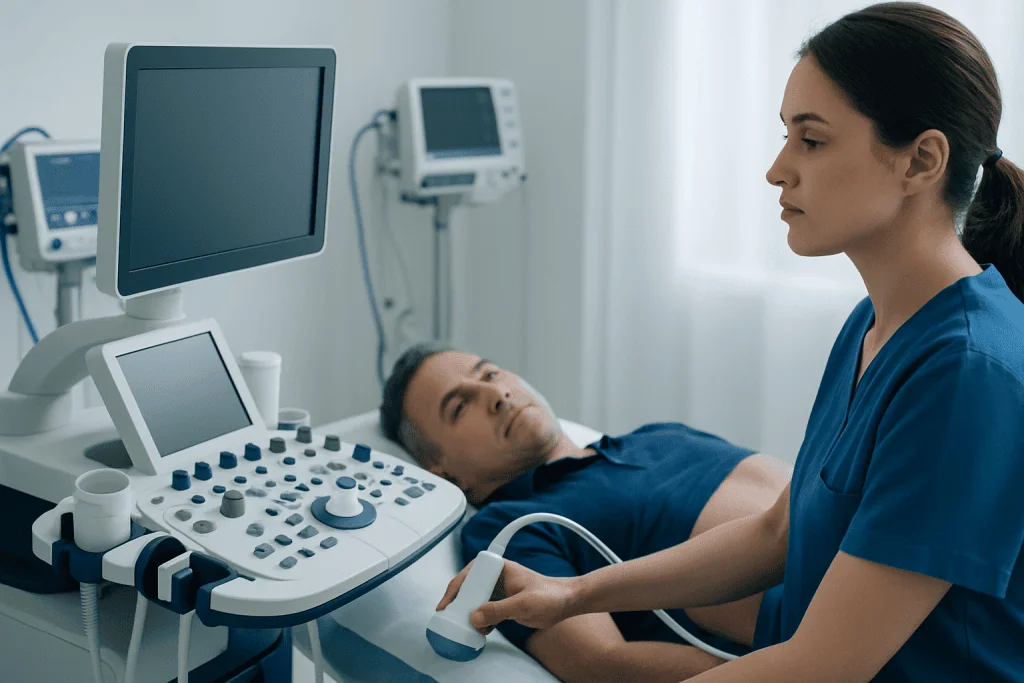
The type of test depends on your condition and the planned treatment. Commonly requested tests include blood work, urine tests, ECG, echocardiography, chest imaging, ultrasound, MRI, CT, endoscopy, pathology review, and anaesthesia assessment. Sometimes the extra step is not a new test at all but a repeat or more detailed version of one you have already had.
A scan sent from home may not include the specific views or sequences your surgeon needs. A biopsy sample may need review by the hospital’s own pathology department before a treatment decision is made: a standard step in many hospitals worldwide, because treatment choices often rest directly on that report. Before anaesthesia, your team may request tests to confirm fitness for the procedure, rule out infection, or check how your heart, kidneys, and clotting are functioning on the day.
In a large hospital group such as Acibadem, imaging, laboratory work, and specialist opinions can be coordinated across departments, and one doctor’s review sometimes leads to a useful additional test from another specialty. That is generally a strength: it means questions get answered before treatment, not during it.
- Blood testsinfection markers, anaemia, clotting, kidney and liver function
- Cardiac checksECG or echocardiography before anaesthesia or major surgery
- Updated imagingwhen earlier scans are outdated, incomplete, or done to a different protocol
- Pathology or biopsy reviewto confirm the diagnosis the treatment rests on
- Specialist consultationswhen your wider medical history raises a question another department should answer
How extra tests can affect your schedule and stay

The biggest practical impact is timing. A simple blood test may fit into the same morning and be reported within hours. An MRI with a specific protocol, a pathology review, or a test that requires fasting or a specialist’s interpretation can shift your treatment by a day or more. Where several specialists need to review findings together, the reporting time and the meeting time both matter. It is slower, and it is also better than proceeding with an unanswered question.
Extra tests can also change small but important logistics. If a test requires fasting, your meal plans move. If sedation is used, or contrast is given for imaging, you may need someone with you afterwards and may need to delay eating and driving arrangements: our guide on when you need someone with you after sedation or anaesthesia covers this in detail. Hotel nights, transfers, and a companion’s own plans may all need a small adjustment.
Occasionally, a test result changes not just the date but the shape of the stay: a different procedure, extra monitoring, or more recovery time before you fly. If that possibility is on your mind, it helps to read about when you may need extra recovery time in Turkey before flying home so a longer stay, if it happens, is a plan rather than a shock.
If you are being supported by Acibadem’s international patient services, coordinators can help you understand the sequence of appointments, arrange interpretation, organise transport between your hotel and the hospital, and tell you whether your doctor’s review will happen on the same day as the test or after the report is ready. Having one coordination point makes sudden schedule changes far easier to absorb.
How paying for extra tests usually works
An honest point that many guides skip: extra tests may not be included in the quote you received before travel. Whether they are depends on how your quote was structured. Some quotes cover a defined set of pre-treatment tests and treat anything additional as a separate item; others are built around the procedure alone, with all diagnostics billed as they occur.
What an extra test costs depends on the type of test, whether contrast, sedation, or a specialist’s interpretation is involved, and whether it is a single test or part of a wider work-up. You are entitled to ask, before the test is done, whether it falls inside or outside your existing quote and how it will be billed. A clear answer at that point prevents surprises at discharge.
Two of our guides go deeper on this: paying for extra tests in Turkey when your plan changes explains how billing typically works, and how to budget for extra tests after you arrive covers building a sensible buffer into your travel budget so a changed plan does not become a financial problem.
What to ask your care team so you know what comes next
When a new test is recommended, ask direct practical questions. You do not need to understand every technical detail, but you should know why the test is being done, whether it is urgent, and how it might change the plan. That knowledge lets you prepare logistically and emotionally instead of waiting in vague uncertainty.
Useful questions include:
- Is my treatment date likely to change, and by roughly how long?
- How long do results for this test usually take?
- Do I need to fast, and are there instructions about my regular medicines? (Any medication decision belongs to your treating doctor, never adjust doses on your own.)
- Will I be sedated or given contrast, and do I need someone with me afterwards?
- Who will explain the result to me, and when?
- Is this test inside or outside my existing quote?
It is also entirely reasonable to ask whether the test is mainly confirmatory or whether it could substantially change the diagnosis or approach. Sometimes the honest answer is that the team is double-checking safety before proceeding. Other times, the result may influence the type of procedure, the specialists involved, the level of monitoring needed, or whether treatment should start later than first planned. If English is not your first language, ask for interpreter support for both the instructions and the result discussion. Coordination matters most when plans are moving quickly.
How to prepare practically if your plan changes
Keep some flexibility in your travel arrangements wherever you can. If you are still at the assessment stage, avoid locking non-refundable onward travel tightly around your original procedure date. A buffer of even a day or two reduces pressure if an imaging slot, pathology review, or anaesthesia clearance takes longer than expected.
Keep your medical documents easy to reach, digitally and, where possible, in print. That means medication lists with doses, allergy details, previous operation notes, scan reports with the images themselves (discs or upload links, not just the written report), pathology slides or reports if requested, and contact details for your doctors at home. The faster missing information can be checked, the smoother rescheduling tends to be. A report without its images is one of the most common reasons a scan gets repeated.
Think about the small practicalities too: phone charging, meals planned around fasting rules, comfortable clothing for imaging appointments, and support for the person travelling with you: a disrupted day is tiring for companions as well. If you are staying near an Acibadem hospital, the international patient team can usually help with local transport, hotel communication, and updated appointment timing. These details are what turn a disrupted day into a merely rearranged one.
When extra testing matters most for safety
There are situations where added testing is particularly valuable and is best read as protective rather than inconvenient. Extra checks are commonly part of planning when a patient has heart or lung disease, diabetes, kidney problems, a history of clotting or bleeding disorders, a recent infection, new or changed symptoms, or takes medicines such as blood thinners. In these situations, treatment often needs careful tailoring, and up-to-date results are what make that tailoring possible.
The same applies when the treatment itself carries more weight: major surgery, cancer care, fertility treatment, imaging with contrast, or any procedure involving anaesthesia. Even complete-looking home-country records describe the past; your condition on the day is what the team must plan around. Current checks help them reduce avoidable risks and choose the right setting for your care.
Very occasionally, a test result leads to a genuine change of plan rather than a short delay. Hospitals have established processes for that situation too: our guide on what happens if you need unexpected extra treatment at Acibadem explains how a changed plan is handled and communicated.
Step by step
- Attend your first in-person review. Your specialist examines you, reviews your records, and compares your current condition with the information sent before travel. This appointment usually determines whether your original plan proceeds as scheduled or whether something needs clarifying first.
- Understand why the extra test is being requested. Ask whether it is routine, confirmatory, or ordered because something specific needs closer review. Knowing the purpose helps you judge whether the change is administrative, safety-related, or likely to affect treatment decisions.
- Follow preparation instructions exactly. Some tests require fasting, hydration, or arrival at a specific time, and your doctor may give instructions about your regular medicines. If anything is unclear, ask again rather than guessing, and never change a medication dose without your treating doctor’s instruction.
- Check how the test affects your timeline. Before leaving the clinic, ask when the result will be ready and when your doctor will review it with you. This lets you plan hotel nights, companion arrangements, and whether to expect same-day decisions or a revised schedule.
- Confirm how the test will be billed. Ask whether it sits inside or outside your existing quote. A clear answer before the test avoids surprises later.
- Use interpreter and coordination support. Ask for interpretation for both the test instructions and the result discussion if language is a concern. Coordinators can connect appointments, transport, and updates so you are not managing everything alone.
- Keep travel plans flexible until the plan is confirmed. Where possible, wait to finalise return travel until your team confirms that treatment and immediate follow-up are complete. A little flexibility absorbs a short delay far better than a rigid itinerary does.
Your checklist
- Passport and hospital registration documents
- Full medication list, including doses and any blood thinners
- Allergy information and major medical history
- Previous test reports, scan discs or upload links, and pathology reports if available
- Contact details for your doctors at home
- A phone charger and a way to receive appointment updates
- Snacks or meal planning for after fasting ends
- Comfortable clothing for hospital visits and imaging
- A notepad or phone notes for questions, instructions, and billing answers
Key takeaways
- Extra tests after arriving in Turkey are often a routine safety and planning step, following a defined sequence: order, prepare, test, report, review, decide.
- The most common triggers are the in-person examination, results that are too old or incomplete, and changes in your condition since the remote review.
- Some tests fit into the same day; others shift treatment by a day or more. Build flexibility into your stay and return travel.
- Extra tests may be billed outside your original quote, ask before the test how it will be charged.
- Clear questions, interpreter support, and one coordination point through international patient services make a changed plan much easier to manage.
Frequently asked questions
Does needing extra tests mean my original diagnosis was wrong?
Not necessarily. Often it means your team wants more current or more detailed information before treatment starts. The test may confirm the original plan, fine-tune it, or occasionally show that a different approach would be more appropriate. In all three cases, the point is to decide on today’s information rather than last quarter’s.
Will extra tests always delay my treatment?
Not always. Some tests are completed and reviewed the same day; others take longer because of preparation, reporting time, or the need for several specialists to review the findings together. Ask your coordinator or doctor for a realistic timeline for your specific test: the answer varies widely between a blood panel and, say, a pathology review.
Will extra tests add to the cost of my treatment?
They can, depending on how your quote was structured. Some quotes include a defined set of pre-treatment tests; others cover the procedure alone. Ask before the test whether it falls inside or outside your existing quote and how it will be billed, so nothing surprises you at discharge.
Can I refuse an extra test and continue with the planned treatment?
You can always ask why a test is needed and discuss your concerns, consent is yours to give or withhold. However, if the team believes the test is important for safety or for confirming the right treatment, they may advise against proceeding without it. Understand the reason fully before deciding.
What if I already had the same test in my home country?
Bring the report and, where relevant, the images or pathology materials themselves, not just the written summary. Your doctor may still recommend repeating the test if the earlier version is too old, incomplete, done with a different protocol, or not detailed enough for the exact decision being made now. A report without its images is a frequent reason for a repeat scan.
Should I change my return flight before I know the test result?
Usually not, unless your team has already told you the treatment date will move. First ask when the result will be reviewed and whether the rest of the plan is likely to change. If your itinerary is very tight, tell your coordinator early so scheduling can take it into account.
Who helps me manage logistics if my schedule changes?
International patient services can help with appointment coordination, interpretation, local transport, and communication with your hotel during schedule changes. At Acibadem, this support is most useful when several departments are involved and your timetable needs updating quickly, one coordination point keeps the moving parts in order.
Add us as a Preferred Source to see more of our trusted health content across Google Search, AI Overviews and Discover.

Update history
- PublishedAugust 6, 2026
- Medical review approvedSeptember 1, 2026
- Last content updateSeptember 1, 2026
References2
- Tests and visits before surgery: MedlinePlus medlineplus.gov
- Having an operation (surgery): preparation: NHS nhs.uk
More Patient Guides

When a Hospital Stay in Turkey Becomes Longer Than Planned: What to Arrange
If your hospital stay in Turkey is longer than planned, arrange medical updates, accommodation, travel changes, insurance and support for your companion.

Waiting for Test Results in Turkey: How to Use Time Between Appointments
Waiting for test results in Turkey is easier with a clear plan for appointments, rest, records, questions and support in Istanbul.

Unexpected ICU Stay in Turkey: What Patients and Families Should Expect
Unexpected ICU stay in Turkey: learn what patients and families can expect, from communication and visiting to care updates and travel support.

How to Manage Special Diets During Medical Travel in Turkey
Special diets during medical travel in Turkey are easier to manage when you share your needs early, confirm meals and carry safe…