

When Extra Tests Are Needed Before Treatment in Turkey

Extra tests are needed before treatment in Turkey when your medical team must confirm a diagnosis, check your current health, or plan anaesthesia safely. Common additions include fresh blood work, updated imaging, cardiology checks and pathology review. Many are completed within a day or two on site; sending complete, dated records before you travel is the single best way to reduce them.
You have booked the flight, arranged time off work and paid for the hotel, and then your doctor says a few more tests are needed before treatment can start. It is an unsettling moment. In most cases it means one thing: your team wants the clearest and safest plan before anything irreversible happens.
This guide explains why extra tests are needed before treatment in Turkey, which tests are most commonly added, how they affect your timing and budget, and the practical steps that make the process smoother. It is written for international patients, so it covers the travel side as well as the medical side.
At a glance
- Why tests are added: to confirm a diagnosis, check your current health, and plan treatment and anaesthesia safely
- Common additions: fresh blood work, updated imaging, cardiology or respiratory checks, pathology review, specialist consultations
- Impact on schedule: some treatments proceed as planned; others shift by hours or days, occasionally longer
- Impact on cost: extra tests can change a quote; how this is handled should be agreed in writing before you travel
- What reduces them: complete, dated, recent records sent before you fly
- What to bring: previous scans, reports, medication and allergy list, passport, insurance documents if relevant
Why extra tests are needed before treatment in Turkey
Needing more tests can feel frustrating when you have already arranged travel, time off work and accommodation. In most cases, though, extra testing is not a sign that something has gone wrong. It usually means your medical team wants to confirm the diagnosis, understand your health as it is today, or choose the safest timing and method for your care.
Three practical realities drive most requests.
First, records travel badly. Doctors in Turkey often receive files from different hospitals, countries and imaging systems. Sometimes those records are perfectly usable. Sometimes they are incomplete, undated, taken with a different protocol than the one your specialist needs, or simply too old to plan from. A repeated scan or a fresh blood test removes guesswork. If you want the detail on this specific issue, see why blood tests and scans may be repeated in Turkey.
Second, your body may have changed. Weeks or months usually pass between your first enquiry and your arrival. New symptoms, an infection, changes in blood pressure, blood sugar, heart rhythm or medication use can all affect whether a procedure should go ahead as planned. Extra tests let your team decide based on your situation now, not only on past reports.
Third, the plan itself may need sharpening. At large hospital groups such as Acibadem, specialists from different departments commonly review findings together. That multidisciplinary review sometimes generates one or two additional requests, a cardiology opinion before anaesthesia, for example, because a more precise plan is a safer plan.
Understanding these reasons matters, because it changes how the request feels. When extra tests are needed before treatment in Turkey, they are almost always part of treatment planning rather than an obstacle to it.
Which tests you may be asked to have
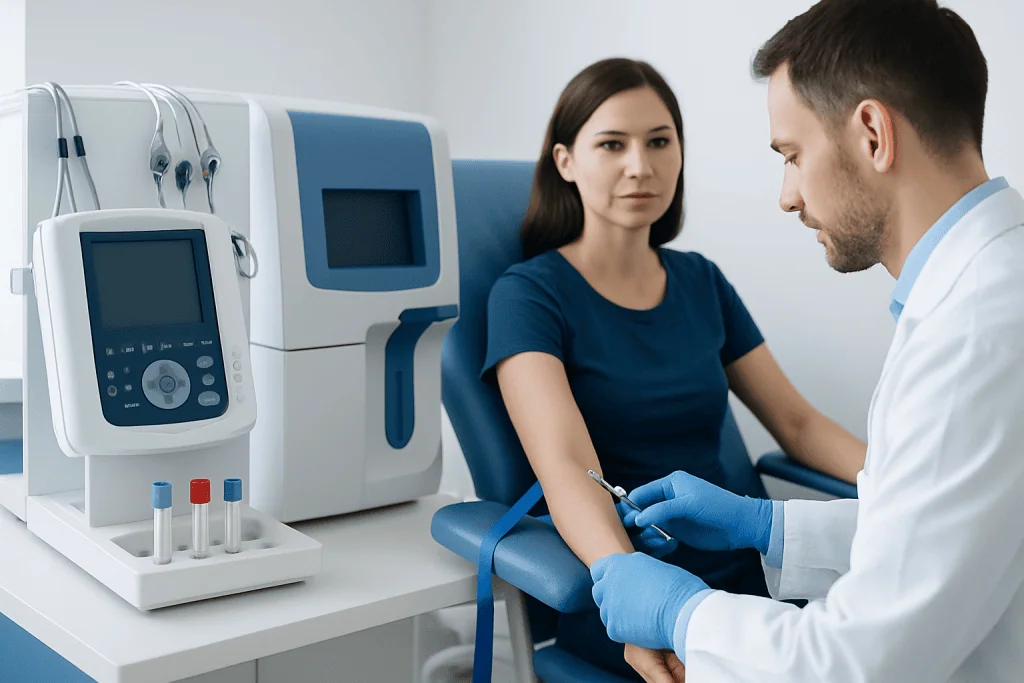
The exact tests depend on your planned treatment, your age, your symptoms and your medical history. There is no universal list, but the requests fall into recognisable groups.
Baseline checks
Many patients are asked to have pre-treatment blood tests, urine tests, an ECG or chest imaging. These establish that basic systems, infection markers, kidney and liver function, clotting, are within a range that makes treatment sensible. If you are having surgery, anaesthesia clearance may require specific checks on your heart, lungs and current medications.
Condition-specific imaging
If your condition involves a tumour, chronic illness, spine problem, fertility issue or cardiovascular concern, your team may need more detailed imaging: MRI, CT, ultrasound, mammography, PET-related evaluation or Doppler studies. The goal is usually to pin down location, size or stage precisely enough to choose between techniques.
Reviews rather than machines
Sometimes the added step is not a scan but another pair of eyes. Pathology slides or biopsy material from your home country may need a second review before treatment starts. Your surgeon may ask for a cardiology review, an endocrinology opinion, an infectious disease assessment or an anaesthesia consultation. These often confirm the plan rather than change it.
- Fresh blood tests to check infection, kidney function, liver function or clotting
- Imaging to clarify the exact location, size or stage of a condition
- Cardiac or respiratory checks before anaesthesia or major procedures
- Pathology review if previous biopsy results need confirmation
- Medication review if you take blood thinners, insulin or immune-suppressing drugs, any adjustment is your treating doctor’s decision, never something to do on your own
Some of these can be done at home before you fly; others only make sense on site. For the ones you can complete in advance, see which medical tests to complete before flying to Turkey.
How extra tests can affect your timeline

The most common worry for international patients is delay. Sometimes extra tests do delay treatment, but not always. Large hospitals with on-site laboratories, imaging units and multiple specialist teams can often turn results around quickly. In some cases treatment still happens the same day or the next day after the results are reviewed.
Delays become more likely in four situations:
- The test needs preparation, fasting, contrast dye, or a medication pause your doctor must approve
- The result needs a specialist report before your main doctor can act on it
- The result reveals something that should be managed first, such as uncontrolled blood pressure, an active infection or abnormal clotting
- The test can only be scheduled on certain days, or a companion or interpreter needs to be present
It helps to think of extra tests as part of treatment planning, not a separate problem. A short delay can prevent bigger disruptions later: a cancellation on the morning of a procedure, or an approach that has to change after it has already started. When extra tests are needed before treatment in Turkey and the timeline shifts, the shift is usually measured in hours or days rather than weeks, but you should never build an itinerary that assumes zero slack.
If you are travelling to Istanbul or another city, ask your coordinator early whether buffer days make sense for your treatment type. Buffer days at the end of a trip matter too, in case recovery takes longer than expected before you fly home.
How extra tests affect cost, and how quotes work
People searching this topic often really want to know what testing and treatment cost in Turkey. This guide does not quote figures, because honest figures do not exist in the abstract: the amount depends on variables only your own case defines. What can be explained is the structure.
A quote for treatment abroad is typically built from the procedure itself, anaesthesia, hospital stay, and any tests the plan already assumes. Extra tests sit outside that assumption, which is why they can change the total. The variables that move the number are the type of test (a blood panel and an MRI are very different undertakings), whether contrast or sedation is involved, whether a specialist report is required, and whether the result changes the treatment itself.
The practical protection is not a number: it is clarity before you travel. Ask three questions in writing:
- Which tests are already included in the quote I have received?
- If additional tests are requested after I arrive, how will I be informed of the charge before the test is done?
- If a test result changes the treatment plan, what happens to the original quote?
A provider that answers those questions plainly is telling you something useful about how it works. Acibadem sets out its own approach in how possible extra costs are explained before treatment starts, and there is a practical companion piece on paying for extra tests if your plan changes.
The same structural logic applies to full health checks. Their scope varies enormously, a basic screen and an extensive executive programme are different products, so the sensible question is never a headline price but a written breakdown of exactly which tests a package contains.
What you can do before you travel
The single best way to reduce repeat testing is to make sure the hospital has complete medical information before you arrive. That means recent reports, imaging discs or secure digital files, pathology results, medication lists, allergy information, and a summary of previous operations. If a document is not in English or Turkish, ask whether a translation or a brief summary would help.
Give every report a date. A scan from several months ago may still be usable, but your doctor needs to know exactly when it was taken and why. If you have had the same test more than once, share the most recent version and any older report that shows change over time: the comparison is often more valuable than either scan alone.
Check the practical details that affect testing:
- Whether you should arrive fasting: the specifics are covered in the guide to fasting before tests and procedures in Turkey
- Whether contrast dye is likely to be used
- Whether your treating doctor wants any medication adjusted beforehand: this is always their call, not yours
- Whether a companion should come with you on testing day
Mention in advance if you have diabetes, kidney disease, a pacemaker, claustrophobia, a possible pregnancy or implanted metal devices, because each of these can change imaging plans. Coordinators and interpreters at international patient departments, including at Acibadem, exist precisely to organise document review, appointment flow and logistics so that you know what to expect before you leave home.
What the testing day is usually like
Testing days are busy but structured. You typically start with registration and document review, then move through blood work, imaging and one or more specialist consultations. Wear comfortable clothing, carry your passport, and keep your reports and medication list in one folder or a single phone file.
Bring a charger, water if permitted, and a light snack for later if you may need to fast beforehand. Some imaging appointments involve waiting periods, preparation time, or a separate radiologist review before the final result reaches your main doctor. Even a straightforward testing day can take several hours, and that is normal rather than a sign of a problem.
If you do not speak Turkish, ask in advance about interpreter support. International hospitals in Turkey commonly arrange language assistance for consultations, consent discussions and directions within the building. When a lot of information arrives quickly, this makes a real difference to how much you actually absorb.
Expect to feel tired by the end of the day, physically and emotionally. If possible, avoid scheduling sightseeing, long transfers or important work calls immediately afterwards. A quiet evening makes the next appointment easier.
If results change the original treatment plan
Sometimes extra tests confirm that everything can proceed exactly as planned. Other times they lead to a different recommendation: another technique, a further specialist review, a more conservative approach, a staged plan, or a short postponement while another health issue is managed first.
This can be genuinely disappointing when you arrived expecting a fixed date. But a changed plan usually means your doctors are responding responsibly to new information. It is better to adjust before treatment than to discover mid-course that a finding was ignored.
Ask your doctor to explain the change in plain terms: what the test showed, what risk it changes, and what the next step is. In a large network, same-network input from other specialties can often be arranged, which saves time compared with outside referrals. Before you leave the appointment, make sure you know whether the next step happens on this trip or after you return home, who will contact you, how results will be shared, and whether any travel dates should move. The practical mechanics are covered in what happens if you need extra tests after arriving in Turkey.
Step by step
- Share your records before travel. Provide your latest reports, scans, pathology results and medication list to the treating hospital as early as possible, so the team can review what exists and spot likely gaps before you arrive.
- Confirm what is required on arrival. Ask whether blood tests, imaging or specialist clearance will be needed before treatment is finalised, and confirm practical instructions such as fasting or bringing previous scan discs.
- Get the cost rules in writing. Know which tests your quote includes and how any addition will be communicated before it is performed.
- Keep extra time in your itinerary. Build flexibility into your travel dates. Even efficient hospitals schedule more easily when you are not racing a departure flight.
- Attend testing with documents ready. Passport, appointment details, medical files, and a written list of medicines and allergies, all in one place.
- Review the results with your doctor. Leave time for the follow-up discussion, not just the tests. This is where you learn whether the plan stays, shifts slightly, or should wait.
- Clarify the next plan before you leave. Ask for a clear summary of what happens next, who contacts whom, and whether travel or accommodation changes are sensible.
Your checklist
- Passport and hospital registration details
- Recent medical reports with dates
- Imaging discs or secure digital image files
- Pathology or biopsy reports if relevant
- Current medication and allergy list
- Notes about implants, pacemaker, possible pregnancy or kidney disease
- Written confirmation of which tests your quote includes
- Questions about fasting or medication timing for your doctor
- An extra day or two in your travel plan if possible
Key takeaways
- Additional tests before treatment in Turkey are common and usually exist to confirm the safest plan.
- Repeat testing tends to happen when outside records are outdated, incomplete or in the wrong format.
- Sending complete, dated records early is the most effective way to reduce unnecessary testing.
- Many test-related delays are short and allow treatment to continue within the same trip.
- Extra tests can affect cost; the protection is written clarity about what a quote includes, not guesswork about figures.
- Interpreters, coordinators and buffer days make the whole process considerably easier.
Frequently asked questions
Does needing extra tests mean my original diagnosis was wrong?
Not necessarily. Very often it means your doctor wants current, locally reviewed information before starting treatment. Records from another country may still be useful, but the team may need to confirm details in a way that matches their own planning process: a different imaging protocol, a fresher blood panel, or a second pathology review.
Will extra tests delay my treatment in Turkey?
They can, but the delay is often short. Hospitals with on-site laboratories and imaging can complete blood work, scans and consultations quickly, and treatment sometimes proceeds the same or the next day. Longer delays usually arise when a test needs preparation, a specialist report is required, or the result shows something that should be managed first.
Can I use scans and reports from my home country?
Often yes, and you should bring them or send them in advance with dates attached. Your specialist may still request repeat imaging or updated blood tests if the originals are too old, incomplete or taken with a different protocol, but everything you already have remains genuinely useful, especially older results that show change over time.
How much does a full health check cost in Turkey?
There is no single answer, because health-check programmes vary enormously in scope, from a basic blood and imaging screen to extensive multi-day packages. The cost depends on which tests are included, whether specialist consultations are part of the package, and the facility. The useful step is to request a written breakdown of exactly what a specific programme contains before comparing anything.
How much does medical treatment cost in Turkey?
It depends on the procedure, the technique chosen, anaesthesia, length of hospital stay, and which tests and follow-up the quote includes. Extra tests requested after arrival can change a total, which is why it is worth confirming in writing which tests are included and how any additions will be communicated before they are performed.
Is it safe to go to Turkey for medical procedures?
Safety depends far more on the specific hospital, the treating team and your own preparation than on the country as a label. Thorough pre-treatment testing is itself part of safe practice: it is how a team confirms you are fit for the planned procedure. Choose a provider that explains its testing, consent and follow-up processes clearly, and treat vague answers as a warning sign.
What are the most popular medical procedures in Turkey?
International patients commonly travel to Turkey for dental treatment, eye surgery, aesthetic and reconstructive procedures, orthopaedic surgery, cardiac care, oncology, fertility treatment and comprehensive health checks. The pre-treatment testing described in this guide applies across all of them, though the specific tests differ by field.
Should I plan extra days in Istanbul in case of testing?
If you can, yes. A small buffer makes the trip much less stressful if an extra scan, pathology review or specialist consultation is needed, and it is especially useful when your treatment depends on same-week results. Flexibility at the end of the trip matters too, in case recovery takes longer than expected before you fly home.
Add us as a Preferred Source to see more of our trusted health content across Google Search, AI Overviews and Discover.

Update history
- PublishedAugust 21, 2026
- Medical review approvedSeptember 13, 2026
- Last content updateSeptember 12, 2026
References2
- Tests and visits before surgery: MedlinePlus medlineplus.gov
- Medical Tourism: Travel to Another Country for Medical Care: CDC wwwnc.cdc.gov
More Patient Guides
Sleep Apnea Testing in Turkey: What Happens During Your Evaluation
Sleep apnea testing in Turkey may include a consultation, overnight sleep study or home test, and a clear review of your results…

How to Organize Your Test Results Before Traveling to Turkey
Organize your test results before traveling to Turkey by sorting records, images, medicines and timelines so your Istanbul care team can review…

At Acibadem, How to Prepare for Blood Tests, Scans, and Pre-Op Checks
Blood tests, scans, and pre-op checks at Acibadem in Turkey help confirm you are ready for treatment and avoid delays on the…

Medical Test Results in Turkey: How to Understand the Next Step in Your Plan
Medical test results in Turkey usually lead to a clear next-step plan: review findings, confirm urgency, ask for copies, and arrange follow-up…