Eye Surgery
Eye surgery includes procedures to correct vision, treat cataracts, manage glaucoma, repair retina problems, or restore eye health using modern ophthalmic techniques.
Quick answer
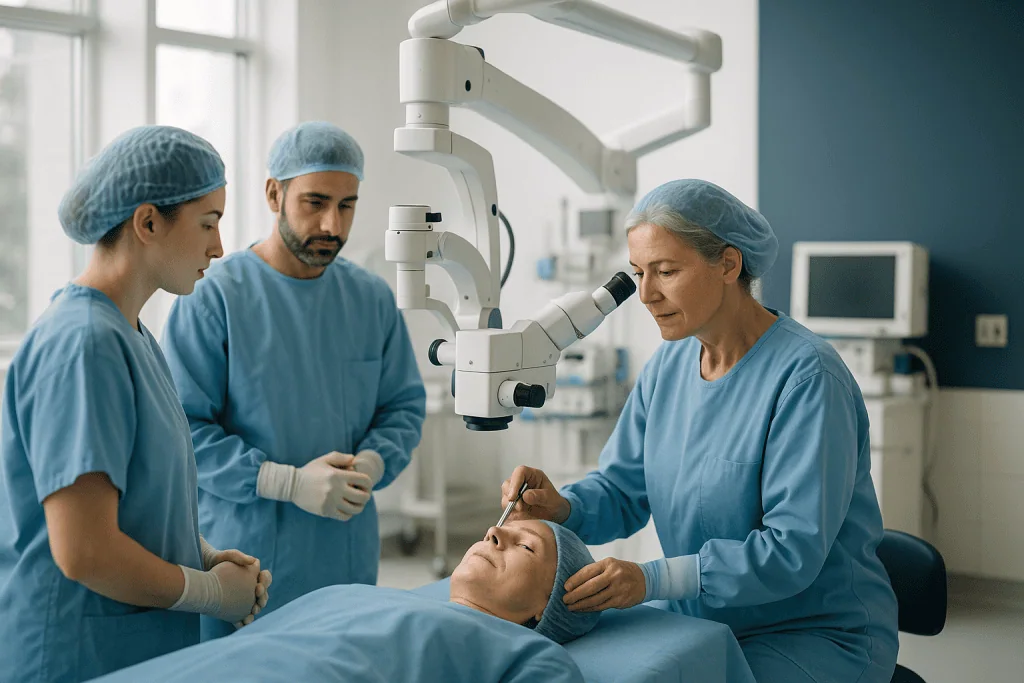
Eye surgery covers procedures that improve or preserve vision, including cataract surgery, laser vision correction such as LASIK, glaucoma surgery, retinal repair and corneal transplantation. Most are day procedures performed under local anaesthetic with microscopic precision; complex retinal or reconstructive operations may need general anaesthesia and closer follow-up. The right procedure depends on an accurate diagnosis and detailed measurements of your eye.
What Is Eye Surgery?
Eye surgery is the group of medical and surgical procedures performed on the eye or its surrounding structures to improve vision, preserve vision, relieve symptoms or treat disease. The most frequently performed operation in the field worldwide is cataract surgery, which removes the eye’s clouded natural lens and replaces it with a clear artificial one. Other major branches include laser vision correction, glaucoma surgery, retinal surgery, corneal procedures and eyelid or reconstructive operations. Which of these applies to you depends entirely on your diagnosis, and getting that diagnosis right is the single most important step in the whole process.
If you are reading this page, you are probably weighing up a specific procedure, or trying to understand why one has been recommended. Many international patients consider having eye surgery in Turkey, most often for cataract surgery or laser vision correction, and part of making that decision well is understanding what each operation actually does, who it suits, and what it cannot do. The eye is a delicate optical and neurological organ. Modern ophthalmic surgery therefore relies on detailed imaging, microscopic visualisation, precise instruments and a surgical plan built around your individual anatomy rather than a standard template.
The technique used follows the diagnosis. Some procedures are performed with lasers. Others involve tiny incisions and microsurgical instruments finer than a human hair. Many eye operations are day procedures: you can usually return to your hotel or home the same day, with follow-up visits arranged according to the complexity of the operation. More complex retinal, glaucoma or reconstructive procedures may require closer monitoring and a longer stay near the hospital.
One caution before anything else. Although many eye operations are performed in very large numbers, no operation is routine for the individual patient. Your eye’s anatomy, the severity of disease, your general health, age, previous surgery, current medications and personal vision goals all shape the plan. A high-quality ophthalmic programme puts diagnosis first, then selects the safest appropriate option, which is sometimes no surgery at all.
When Eye Surgery Becomes a Decision About Vision and Independence
Choosing eye surgery is rarely just a medical decision. For most people it is tied to something concrete: reading comfortably, driving safely at night, recognising faces across a room, working with confidence, or protecting the remaining vision in an eye already affected by disease. It is also an emotional decision. Vision is deeply personal, and the idea of an operation on the eye naturally raises questions. Will it hurt? How long will recovery take? Is the diagnosis correct? What happens if I wait? Which procedure is actually right for my condition?
These questions deserve straight answers, and this page tries to give them. The honest starting point is that eye surgery is not a single operation but a broad field: procedures to correct refractive errors, remove cataracts, lower eye pressure in glaucoma, repair retinal disease, treat corneal problems, manage injuries and restore eyelid or orbital function. Some take minutes and use only anaesthetic drops. Others are highly specialised microsurgery requiring a coordinated plan across retina, cornea, glaucoma, neuro-ophthalmology, anaesthesia or internal medicine specialists.
Timing matters because many eye conditions are progressive. Cataracts usually worsen over time. Glaucoma can damage the optic nerve silently, long before you notice any symptom. Retinal tears, diabetic eye disease and macular problems may need timely treatment to reduce the risk of permanent vision loss. Even entirely elective vision correction requires careful screening, because a good result depends on choosing the right procedure for the right eye, not on performing surgery quickly.
The Main Types of Eye Surgery
The sections below describe the major categories in the order most patients encounter them. Each has its own candidacy criteria, its own recovery pattern and its own limits.
What happens during cataract surgery?
Cataract surgery, which many people type into a search box as surgery cataract removal, takes out the eye’s clouded natural lens and replaces it with a clear artificial intraocular lens. A cataract forms when the natural lens loses its transparency, producing blurred vision, glare from headlights, faded colours and difficulty seeing at night. During the operation, the surgeon typically creates a very small incision, opens the thin capsule surrounding the lens, breaks the cataract into tiny fragments using ultrasound energy, removes the fragments and places the new lens inside the same capsule. The incision is usually self-sealing, though this depends on the individual case.
The artificial lens is chosen before surgery using detailed measurements of your eye. Options may include lenses designed for clear distance vision, lenses that correct astigmatism, or lenses offering a broader range of focus in suitable eyes. No lens choice is right for everyone; your visual habits, the health of your retina and your tolerance for glasses all feed into the decision. You can read a full description of the operation on our dedicated cataract surgery page.
A practical point worth knowing early: cataract surgery improves vision that is limited by lens clouding. It cannot reverse damage to the retina or optic nerve. That is why a thorough retinal examination is part of proper cataract assessment: it tells you in advance what the operation can realistically achieve for your eye.
What is LASIK eye surgery?
LASIK eye surgery is a laser procedure that reshapes the cornea, the clear front window of the eye, to correct nearsightedness, farsightedness or astigmatism, reducing your dependence on glasses or contact lenses. The surgeon creates a thin flap in the cornea, lifts it, applies an excimer laser to the tissue beneath according to a plan calculated from your prescription and corneal map, and then repositions the flap, which adheres without stitches. The laser treatment itself typically takes seconds per eye.
LASIK is elective surgery on a healthy eye, which is why screening matters more here than almost anywhere else in ophthalmology. Corneal thickness, corneal shape, dry eye, pupil size, prescription stability and retinal health are all checked before anyone should confirm you as a candidate. A responsible surgeon declines to operate on unsuitable corneas, because the safest LASIK result is sometimes the one that never happens. If you are planning treatment abroad, our LASIK eye surgery in Turkey treatment guide walks through the assessment and travel pathway step by step.
How does a laser operation for eyesight actually work?
A laser operation for eyesight works by changing how light focuses on the retina: the excimer laser removes microscopic amounts of corneal tissue in a precisely calculated pattern, flattening, steepening or smoothing the cornea so that images land in focus. LASIK is the best-known technique, but it is not the only one. Surface treatments such as PRK reshape the cornea without creating a flap, which may suit thinner corneas or certain lifestyles, at the cost of a slower early recovery. Lenticule-based keyhole techniques remove a thin disc of tissue through a small opening. For eyes that are not suitable for corneal reshaping at all, implantable lenses placed inside the eye may be an alternative. Which of these options fits a given eye, and why one is chosen over another, comes down to corneal thickness and shape, the prescription being corrected, the health of the ocular surface and the expected healing profile, not to preference or fashion.
Vision laser treatment beyond refractive correction
Vision laser treatment is not limited to correcting glasses prescriptions. Lasers are used across ophthalmology for quite different purposes. A YAG laser can open a clouded lens capsule that sometimes develops months or years after cataract surgery, restoring clarity in a brief outpatient procedure. Retinal lasers seal retinal tears, treat areas of diabetic retinopathy and manage certain vascular conditions of the retina. Selective laser trabeculoplasty lowers eye pressure in some forms of glaucoma. If a clinic proposes “laser treatment”, it is worth asking precisely which laser, for which structure of the eye, and with which goal: the word covers procedures that have almost nothing in common beyond the light source.
Glaucoma surgery
Glaucoma surgery lowers intraocular pressure when eye drops and laser treatment are not enough, when side effects are hard to tolerate, or when the risk of progression is high. Glaucoma is a group of diseases that damage the optic nerve, often, though not always, in association with elevated eye pressure. Surgical techniques range from minimally invasive procedures performed inside the eye, through established filtration operations, to drainage implants. The choice depends on your glaucoma type, its severity, previous operations and the target pressure your surgeon sets. One limit must be stated plainly: glaucoma surgery aims to protect the vision you still have. It does not restore vision already lost to optic nerve damage.
Retina surgery
Retina surgery treats conditions of the light-sensitive tissue at the back of the eye: retinal detachment, macular hole, epiretinal membrane, vitreous haemorrhage, complications of diabetic retinopathy and retinal tears. The central operation is vitrectomy, in which the surgeon removes the vitreous gel inside the eye to reach the retina, then works with fine instruments, internal illumination and microscopic viewing systems to peel membranes, clear bleeding, seal tears or reattach detached retina. In selected cases a gas bubble, air bubble or silicone oil is placed in the eye to support the retina while it heals, and you may need to hold specific head positions for a period afterwards. This detail has a direct travel consequence: you must not fly with a gas bubble in the eye, because pressure changes in the cabin can be dangerous. Your surgeon confirms when air travel is permitted.
Corneal surgery
Corneal surgery addresses disease of the eye’s front window: scarring, swelling, infection, keratoconus and inherited corneal disorders. Options include corneal cross-linking, which stiffens a progressively thinning cornea in selected patients, and corneal transplantation. Modern transplantation can replace only the diseased layers of the cornea rather than its full thickness in suitable eyes: a tissue-selective approach that may support better healing and reduce certain risks, though it is not appropriate for every patient. Corneal decisions depend heavily on the depth and pattern of damage, which is why high-resolution corneal imaging comes before any surgical recommendation.
Eyelid, tear duct and reconstructive surgery
Eyelid and reconstructive procedures restore eyelid position, remove abnormal tissue, repair trauma or improve tear drainage. Drooping eyelids can obstruct vision; inward- or outward-turning eyelids can damage the ocular surface; blocked tear ducts cause persistent watering; eyelid tumours require careful removal with reconstruction. These operations sit at the border of function and appearance, and good ones respect both: the eyelid must protect the eye and blink normally, not merely look natural. Eye trauma may involve the cornea, lens, retina, eyelids or orbit, and surgical care may be urgent, staged over time, and coordinated with imaging and other specialties when facial or neurological injury is suspected.
Who May Need Eye Surgery?
You may be advised to consider eye surgery when vision problems interfere with daily life, when an eye disease is progressing, or when non-surgical treatment is unlikely to give adequate control. Some people seek care because they can no longer read, drive at night or work comfortably. Others have no symptoms at all and are referred after a routine examination reveals glaucoma, retinal disease or another condition that could threaten future vision. Both paths are common, and the second is a reminder of why regular eye examinations matter.
Typical findings that lead to an ophthalmology evaluation include blurry or cloudy vision, glare from lights, difficulty seeing at night, double vision, distorted straight lines, floaters, flashes of light, sudden vision loss, eye pain, redness, a pressure sensation, frequent changes in glasses prescription, loss of side vision or reduced ability to read small print. In children, warning signs may include squinting, eye misalignment, an abnormal light reflex in photographs, poor visual attention or delayed visual development.
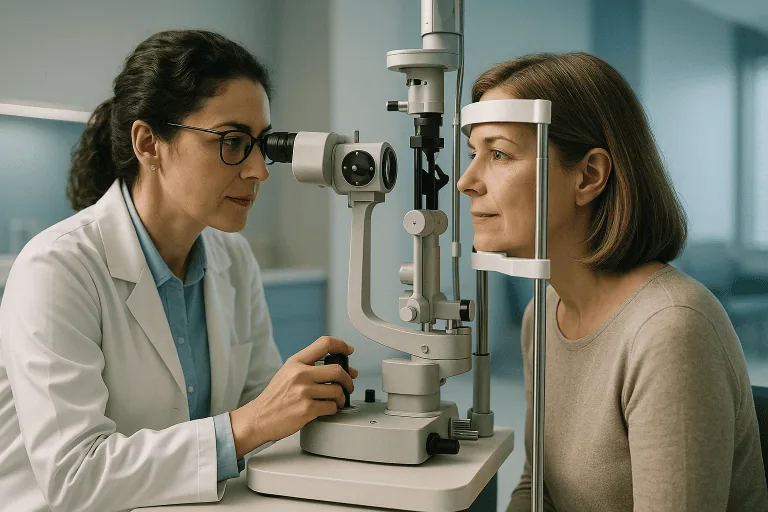
Diagnosis begins with a detailed eye examination: visual acuity, refraction, eye pressure measurement, slit-lamp examination, dilated retinal examination and assessment of the optic nerve. Depending on the suspected condition, further tests follow, corneal mapping, optical coherence tomography of the retina or optic nerve, ultrasound imaging, visual field testing, retinal photography, angiographic imaging of retinal blood vessels, biometry measurements for cataract surgery, tear film evaluation or specialised scans of the front and back of the eye.
If you are considering treatment abroad, previous test results, medication lists, surgical history and recent imaging are genuinely useful to have organised before you travel, because they let an ophthalmology team assess the likely treatment pathway and identify what additional investigations will be needed after arrival. Final surgical planning, however, almost always requires an in-person examination. Small anatomical details: a fraction of a millimetre of corneal thickness, the exact position of a retinal tear, can change the choice of procedure entirely.
Conditions and Indications: When Does a Diagnosis Become an Operation?
The indication for surgery is rarely the diagnosis alone. It is the diagnosis combined with severity, progression, symptoms and your visual needs. A mild cataract may simply be monitored; a cataract that spoils night driving or reading may be ready for surgery. Early glaucoma is usually managed with drops or laser; advanced or uncontrolled glaucoma may need surgical pressure reduction. A stable refractive error in a suitable candidate can be treated electively; the same prescription in an unstable or unhealthy eye should wait.
Common situations that lead to eye surgery include cataracts that limit everyday activities, glaucoma that remains uncontrolled despite medication or laser treatment, refractive errors in carefully screened candidates who want less dependence on glasses, retinal tears or detachments requiring urgent repair, complications of diabetes affecting the retina, corneal scarring or progressive thinning, eyelid problems that obstruct vision, and injuries needing reconstruction or stabilisation.
Two patients with identical-sounding symptoms can need entirely different treatment. Blurry vision alone can come from cataract, corneal irregularity, macular disease, dry eye, glaucoma or a neurological condition. This is why a credible surgical recommendation always rests on examination findings you can see explained in your own records, not on symptoms described over a form.
How Eye Surgery Is Performed
Preparation and preoperative planning
Everything starts with a precise diagnosis. Before surgery, you undergo a comprehensive ophthalmic assessment in which the surgeon reviews your symptoms, previous eye conditions, contact lens use, medications, allergies, general medical history and, importantly, your expectations. For international patients this review may begin remotely with existing records, but the final decision is made after in-person testing.
Preparation varies by procedure. Before cataract surgery, optical biometry measurements calculate the power of the intraocular lens, and the surgeon discusses lens options with you. For refractive surgery, corneal shape and thickness are analysed to confirm the cornea is suitable. For glaucoma, pressure history, optic nerve status and visual field results guide the plan. For retinal surgery, high-resolution imaging maps the location and extent of disease.
You may be asked to stop wearing contact lenses for a period before certain measurements, because lenses temporarily alter corneal shape. Some medications, including blood thinners and certain drugs that affect pupil behaviour during surgery, need to be reviewed with your treating physician, who decides whether any adjustment is appropriate; never change medication on your own initiative. If you have diabetes, hypertension, autoimmune disease or a heart condition, coordination with other specialists may be arranged before surgery. The aim throughout is to remove avoidable risk and make the day of surgery predictable.
Anaesthesia and the operation itself
Most eye surgery takes place in a specialised operating room using sterile technique, magnification and instruments designed for microsurgery. Many procedures use local anaesthesia with numbing drops or an injection around the eye, often with light sedation to keep you relaxed. General anaesthesia is reserved for children, complex trauma, certain retinal procedures, longer reconstructive operations and patients who cannot comfortably remain still. Being awake sounds alarming to many patients; in practice you see light and movement rather than detail, and the surgical team talks you through what is happening.
The operative steps themselves are those described in the type-by-type sections above: fragmenting and replacing the lens in cataract surgery, reshaping the cornea in laser vision correction, improving fluid drainage in glaucoma surgery, working inside the vitreous cavity in retinal surgery, replacing tissue layers in corneal transplantation, and restoring structure in eyelid and reconstructive work. What they share is scale, movements measured in fractions of a millimetre, and dependence on preoperative planning done properly.
Technology used in modern eye surgery
Technology supports diagnosis, planning and precision at every stage. High-resolution imaging shows microscopic layers of the retina, optic nerve and cornea. Corneal topography and tomography evaluate corneal shape for refractive and corneal procedures. Optical biometry underpins intraocular lens calculations. Visual field testing quantifies glaucoma damage. During surgery, operating microscopes, microsurgical instruments, controlled fluid systems, laser platforms, ultrasound lens-removal systems, retinal illumination and image-guided planning tools are used according to the procedure. A word of perspective: these technologies do not replace surgical judgement. Their value is in helping the ophthalmologist see delicate structures clearly, plan accurately and perform controlled movements in very small spaces. A well-equipped theatre with a poorly screened patient is still a bad plan.
How long does the operation take, and what happens immediately afterwards?
Many eye procedures last less than an hour, some considerably less, although preparation and recovery time at the hospital make the visit longer. Complex retinal, glaucoma, corneal or reconstructive operations take more time. Afterwards you are monitored while any sedation wears off, and the team reviews your medication schedule, eye protection, activity restrictions and follow-up appointments.
You will usually be prescribed eye drops to reduce inflammation, prevent infection or control pressure. Do not rub the eye, swim, expose the eye to dust or resume strenuous activity until your surgeon clears you. Expect blurry, fluctuating vision at first. This is normal healing, not a sign of failure: the eye needs time, and the expected pattern differs by procedure.
Why Acting Early Matters
Timing in eye care splits into two categories, and knowing which one you are in is part of expert evaluation. Some conditions are elective and can be scheduled after unhurried planning. Others are time-sensitive, where delay allows irreversible damage.
Cataracts sit mostly in the first category. Delaying surgery is reasonable while symptoms are mild. But very advanced cataracts become more technically challenging to remove and can block the view of the retina, making it harder to monitor other diseases behind the lens. If cataracts are causing falls, driving difficulty or loss of independence, earlier treatment is usually the sensible course.
Glaucoma is different, because vision lost to optic nerve damage does not come back. Peripheral vision can decline so gradually that many patients notice nothing until the disease is advanced. While pressure remains uncontrolled, the nerve remains at risk. Surgery cannot restore what is gone, but it can help protect what remains.
Retinal conditions can be genuinely urgent. Ophthalmologists treat new flashes, a sudden shower of floaters, a curtain-like shadow across the vision, sudden distortion or sudden vision loss as time-sensitive findings, because a retinal tear can progress to detachment, and macular and diabetic complications can worsen without prompt treatment. In these situations, waiting to see whether symptoms settle on their own is the risk, not the safe option.
Refractive surgery sits at the opposite end: there is no urgency at all, and proper timing means waiting. Surgery should be postponed if the prescription is unstable, the ocular surface is unhealthy or other eye disease is present. A careful surgeon recommends treatment only when the eye is suitable and expectations are realistic.
Benefits of Eye Surgery
The potential benefits depend on the diagnosis and the procedure, but when surgery is carefully indicated it can improve vision, protect eye health and support daily independence. The table below summarises what each type of benefit means in practice.
| Benefit | What It Means for You |
|---|---|
| Improved visual clarity | Procedures such as cataract surgery or selected refractive surgery may make vision sharper and reduce blur, glare or dependence on corrective lenses. |
| Protection of remaining vision | Glaucoma and retinal surgeries are often performed to slow progression, stabilise the eye or reduce the risk of further vision loss. |
| Better daily function | Clearer or more stable vision can make reading, driving, working, walking safely and recognising faces easier. |
| Reduced treatment burden in selected cases | Some glaucoma procedures may reduce the need for multiple daily eye drops, although ongoing monitoring remains essential. |
| Relief from discomfort or structural problems | Eyelid, corneal or tear drainage surgery may improve irritation, exposure, watering or visual obstruction caused by anatomical issues. |
| More accurate long-term eye care | Removing a cataract or other media opacity restores the examiner’s view, allowing better monitoring of the retina and optic nerve. |
Recovery Timeline After Eye Surgery
Recovery varies widely by procedure, LASIK and retinal detachment repair are worlds apart, but the timeline below gives a general sense of what many patients experience after common ophthalmic operations. Your surgeon’s instructions for your specific procedure override any general guide.
| Time Period | What You Can Expect |
|---|---|
| Day 1 | The eye may feel scratchy, watery or light-sensitive. Vision is often blurry. You begin prescribed drops and attend an early review visit if one is scheduled. |
| First week | Gradual improvement is typical, though fluctuation is common. Heavy lifting, eye rubbing, swimming and dusty environments are usually avoided. |
| First month | Inflammation continues to settle. Vision often stabilises after cataract or refractive procedures. Retina, glaucoma and corneal surgeries need closer monitoring. |
| Longer term | Final healing depends on the operation and the underlying disease. Some patients need updated glasses, ongoing drops, retinal monitoring or planned staged treatment. |
One recovery question matters more to international patients than any other: when can you fly home? The answer differs sharply by procedure, refractive laser treatment, retinal laser and cataract surgery each carry different considerations, and eyes containing a gas bubble must not fly at all until the surgeon confirms the bubble has resorbed. Our guide comparing flying after LASIK, retinal laser and cataract surgery covers this in detail, and your own clearance always comes from your surgeon, not from a general rule.
Factors That Influence Outcomes
A good outcome begins with the right diagnosis, because surgery is most effective when it targets the true source of the problem. Beyond that, several factors consistently shape results, and it is worth understanding them before you commit.
Your eye’s anatomy. Corneal thickness and shape decide refractive candidacy. Pupil size, astigmatism, retinal health and biometry affect cataract lens planning. The degree of existing optic nerve damage frames what glaucoma surgery can preserve. The location and duration of a retinal detachment influence how much vision returns. Previous surgery, inflammation, trauma or scarring add complexity.
The stage of disease. Earlier treatment tends to preserve more function in glaucoma and some retinal diseases. Cataract surgery is more predictable when the cataract is not excessively advanced and the rest of the eye is healthy. In corneal disease, the depth and pattern of damage determine which technique is even possible.
Your general health. Diabetes, autoimmune disease, uncontrolled hypertension, bleeding disorders and immune suppression can alter surgical planning and follow-up. Good blood sugar control matters particularly in diabetic eye disease. Your full medication list, including blood thinners, prostate medications, steroids and immune-modifying drugs, should be reviewed by the surgical team, who will coordinate any decisions with your treating doctors.
Your participation. Drops must be used as prescribed. Follow-up visits should not be skipped, especially after glaucoma, retinal and corneal procedures. Positioning instructions after certain retina operations, activity limits and hygiene rules exist for anatomical reasons, not caution for its own sake. If you are travelling for treatment, plan enough time in Turkey for the early postoperative checks before flying home, especially after complex surgery.
Your expectations. Cataract surgery improves vision limited by lens clouding but cannot reverse severe retinal or optic nerve damage. Glaucoma surgery lowers pressure but does not restore lost visual field. Retina surgery may stabilise the eye and improve its anatomy, yet visual recovery can be gradual and depends on how long the retina or macula was affected. Refractive surgery reduces dependence on glasses, but some patients still need them for certain tasks or later in life. The best surgical plan is not the most advanced-sounding option; it is the one that fits your diagnosis, anatomy, safety profile and daily visual needs. An honest account of what can go wrong belongs in every consultation: our guide to laser eye surgery risks, side effects and safety sets out the questions worth asking before any refractive procedure.
What happens 10 years after LASIK?
For most suitably screened patients, the corneal reshaping performed in LASIK is stable over the long term, but the eye around it keeps ageing. Presbyopia, the normal age-related loss of near focus, arrives regardless of LASIK, so reading glasses typically become necessary in middle age even after successful distance correction. Some eyes experience gradual regression of effect over the years, and a small amount of prescription can return; enhancement treatment is possible in selected cases. Cataracts can still develop later in life, and prior LASIK makes the lens calculations for future cataract surgery more complex, one reason to keep copies of your pre-LASIK measurements permanently. Dry eye symptoms, common in the first months, settle for most patients but persist in some. None of this makes LASIK a temporary fix; it means the procedure corrects today’s prescription, not tomorrow’s ageing.
How Much Does Eye Surgery Cost?
There is no single honest answer, because “eye surgery” spans procedures with completely different requirements. What determines any individual quote is the procedure itself, the technology involved, the type of anaesthesia, whether one or both eyes are treated, the choice of implant or lens where one is used, the complexity of your case, and the extent of preoperative testing and postoperative follow-up included. A meaningful quote is one issued after your own eyes have been assessed: a price named before anyone has examined you is a marketing figure, not a medical one.
How much is LASIK eye surgery?
LASIK has no universal price, and asking how much laser eye surgery costs without an examination is like asking how much a suit costs without a fitting. The main cost drivers are the laser platform and technique used, the surgeon’s assessment and planning work, the depth of preoperative screening (corneal tomography, tear film analysis, pupil measurement), whether both eyes are treated in one session, and what follow-up is bundled in. Be cautious with quotes that look dramatically cheaper than others for the “same” procedure: the difference usually sits in what has been left out, screening depth, technology generation or aftercare, rather than in generosity.
Can LASIK eye surgery be covered by insurance?
Usually not. LASIK is classed as an elective procedure by most health insurers and national health systems, because glasses and contact lenses are considered adequate correction, so refractive surgery is typically paid out of pocket. Some private policies and employer benefit schemes offer partial contributions or discounted rates, and rules differ between countries and insurers, so check your specific policy wording. Medically necessary eye surgery is a different matter: cataract surgery, glaucoma surgery and retinal repair are commonly covered where a policy or health system covers surgical treatment at all, though coverage for treatment abroad depends entirely on your insurer’s terms.
How much does eye surgery cost in Turkey?
The same principle applies: the figure depends on the procedure, the technology, the implant or lens, the complexity of your eyes and what the quoted package actually contains. When comparing quotes for treatment in Turkey, the most useful question is not the headline number but the scope: which examinations are included, which surgeon performs the operation, how many follow-up visits are covered, what happens if additional treatment is needed, and whether interpreting, transfers and accommodation coordination are part of the arrangement. Our guide to what is included in a cataract surgery package in Turkey shows how to read a package description line by line.
Coming to Turkey for Eye Surgery: How International Patients Plan It
Eye surgery rewards preparation more than most treatments a patient travels for, because the decisive examinations happen in person and the early follow-up visits are not optional. A typical care pathway for an international patient runs in stages. First, a remote review of your existing records, recent eye examinations, imaging, prescriptions, surgical history and medication lists, establishes whether the treatment you are considering is plausible for your eyes and what additional testing will be needed. Second, after arrival, the full in-person assessment takes place: this is where candidacy is confirmed or revised, and it is normal for the plan to be refined at this point. Third comes the operation itself, followed by the scheduled early postoperative checks before you are cleared to travel home.
Build your itinerary around the medicine, not the other way round. Cataract surgery and laser vision correction usually require a stay covering the assessment, the procedure and at least the first review; treating both eyes, staged procedures or complex surgery extends this. Retinal surgery involving a gas bubble makes the return flight date dependent on healing rather than on your booking. Practical points worth arranging in advance: someone to accompany you on surgery day if sedation is used, sunglasses for light sensitivity, and no contact lens wear in the run-up to measurements if your team has asked you to pause them. Detailed procedure-specific pathways are set out in our cataract surgery in Turkey treatment guide.
Aftercare continues once you are home. A responsible plan names the follow-up schedule, identifies who will monitor you locally, particularly after glaucoma, retinal and corneal surgery, which need long-term surveillance, and documents your operation thoroughly enough for any ophthalmologist to take over: the procedure performed, the implant or lens used with its specifications, the medication schedule and the findings at discharge. Ask for these documents before you leave; they are part of the treatment, not an optional extra.
Is it safe to get eye surgery in Turkey?
Safety is a property of the specific hospital, surgeon and process, not of a country. Turkey has large, well-equipped hospital groups with experienced ophthalmic surgeons and modern diagnostic and surgical technology, alongside providers that compete mainly on price. The way to judge any provider, in any country, is the same: whether a full in-person examination happens before surgery is confirmed, whether the surgeon is named and their experience with your specific procedure is verifiable, whether unsuitable candidates are declined, whether risks are explained without being minimised, and whether the follow-up plan extends beyond your flight home. A provider that promises certainty, skips screening or treats the operation date as fixed before examining you is signalling its priorities clearly enough.
What country is best for eye surgery?
No country is “best” for eye surgery, and any list claiming otherwise is selling something. Excellent and poor ophthalmic care exist in every healthcare system. What varies between countries is average cost structure, waiting times and regulatory environment; what determines your outcome is the individual surgeon’s experience with your procedure, the quality of the preoperative assessment, the technology actually used on your eye and the follow-up arrangements. Choose a provider, not a flag, and weigh the practical question of follow-up: complex eye conditions need monitoring for years, so how care will be handed over to an ophthalmologist near your home belongs in the decision from the start.
How Acibadem Approaches Eye Surgery for International Patients
International patients usually arrive with the same underlying need: clarity. A thorough diagnosis, a treatment plan explained in plain language, and coordinated care in an unfamiliar country. Acibadem’s approach to ophthalmology is built around that need, identify the cause of the vision problem precisely, recommend the least invasive effective treatment where possible, and support recovery with structured follow-up.
Ophthalmology care is supported by modern diagnostic pathways, surgical facilities designed for delicate procedures and access to related specialties when an eye condition connects to broader health issues. Diabetic eye disease may involve endocrinology; inflammatory eye disease may involve rheumatology; eye trauma may require imaging and reconstructive expertise; patients with complex anaesthesia needs are evaluated by anaesthesiology and internal medicine before surgery.
Multidisciplinary decision-making matters most in complicated cases. Collaborative review means the treatment plan is not based on a narrow view of the eye alone: retina, glaucoma, cornea, oculoplastic and general ophthalmology specialists contribute according to the diagnosis. This is particularly valuable for patients who have received differing recommendations elsewhere and want the reasoning examined rather than repeated.
Logistics are treated as part of medical care rather than an afterthought. Acibadem International provides dedicated services for patients travelling from abroad, including assistance in more than 20 languages, appointment coordination, medical record transfer, hospital admission support and communication with care teams, so that examinations, surgery and follow-up fit into a realistic travel schedule rather than a hopeful one.
Treatment planning is individual. A patient with cataracts needs a genuine discussion of lens options and whether both eyes should be treated during one trip or staged. A glaucoma patient needs pressure targets, a medication plan and long-term monitoring arranged with an ophthalmologist at home. A retinal patient needs the flying question answered before the operation, not after. And experienced physicians recognise when surgery is not the right first step at all: some patients are better served by medical treatment, laser therapy, observation, updated glasses, dry eye treatment or control of a systemic disease first. A responsible recommendation always includes the alternatives, the risks, the expected recovery and the consequences of waiting.
Making the Decision Well
The strongest position you can be in, whatever you decide, is to understand your own diagnosis clearly and to know which options genuinely fit your eyes. A thorough evaluation produces answers you can verify: the name of the condition, the evidence for it in your test results, the procedure proposed, the anaesthesia approach, the realistic range of outcomes, the recovery timeline, the follow-up schedule and the warning signs that would need urgent attention afterwards. If any of those elements is missing from a recommendation, anywhere in the world, the evaluation is not finished.
Vision care works best when it is timely, precise and individualised. Whether the question in front of you is cataract surgery, laser vision correction, glaucoma treatment, retinal repair or a second opinion on a complex condition, careful evaluation and honest information make the decision smaller than it first appears: not “should I have eye surgery?” in the abstract, but “is this specific procedure right for this specific eye, now?” That is a question with an answer.
Preparation
- A detailed eye examination, vision testing, and imaging may be performed to plan the safest approach. Patients should inform the ophthalmologist about medications, allergies, and previous eye conditions. Contact lenses may need to be stopped before surgery, and fasting may be required if sedation is planned.
Aftercare
- Patients usually use prescribed eye drops and should avoid rubbing the eye, swimming, heavy lifting, and dusty environments during early healing. Follow-up visits are important to monitor vision, eye pressure, and wound healing. Seek urgent care for severe pain, sudden vision loss, or increasing redness.
Frequently Asked Questions
What affects the cost of eye surgery?
The final cost depends on the diagnosis, procedure type, surgical technology, implant or lens choice, diagnostic tests, hospital setting, surgeon experience, anesthesia needs, and follow-up plan. Travel and accommodation may also affect the overall budget for international patients.
How can I get a personalised quote from Acibadem?
You can request a free consultation by sharing your eye diagnosis, recent test results, prescriptions, imaging reports, and any previous treatment details. An ophthalmology team can review your information and provide a personalised treatment plan and quote.
Are diagnostics included in an eye surgery package?
Package content varies by procedure and patient needs. A package may include consultation, eye measurements, imaging, surgery, hospital coordination, interpreter support, and follow-up planning, but this should always be confirmed before travel.
Why do costs differ between cataract, laser, glaucoma, and retina surgery?
Each procedure uses different technology, operating time, specialist expertise, devices, and follow-up requirements. Retina and glaucoma procedures may involve more complex disease monitoring, while cataract and refractive procedures may be influenced by lens or laser selection.
Will I know the total cost before travelling?
A provisional quote can usually be prepared after medical review, but the final plan may change after in-person examination and diagnostic testing. The care team should explain what is included and what could create additional costs.
Is this comparison medical or financial advice?
No. This information is educational and general. An ophthalmology specialist must decide suitability for treatment, and a personalised quote should be requested through a free consultation before making travel or financial decisions.
Medically reviewed by the Acıbadem International Medical Board August 31, 2026
See our medical review board →
Update history
- PublishedJune 8, 2026
- Medical review approvedAugust 31, 2026
- Last content updateAugust 31, 2026
References1
- Cataract surgery nhs.uk
Trusted care for international patients
From the Acibadem Blog

Eye Surgery in Older Adults With Heart Disease or Diabetes: How the Plan Is Adjusted
Eye surgery in older adults with heart disease or diabetes is usually still possible, but the plan changes. Most procedures, especially cataract surgery, are…

Why Do Most Eye Surgeries Share the Same Rules? Drops, No Rubbing, No Swimming, No Lifting
Most eye surgeries share the same recovery rules because they protect the same three vulnerabilities: a fresh wound in or on the eye, a…
Eye Surgery Prep Checklist: Medication Lists, Allergies, Fasting Rules and the Drop Plan
To prepare for eye surgery, bring your care team a complete written list of every medicine, supplement and allergy, follow the fasting rules given…
Which Eye Surgery Treats Which Problem? Cataract, Laser, Glaucoma, Retina and Cornea Explained
Different eye surgeries treat different parts of the eye. Cataract surgery replaces a clouded natural lens; laser vision correction reshapes the cornea to reduce…