

Cataract Surgery in Turkey: Treatment Guide
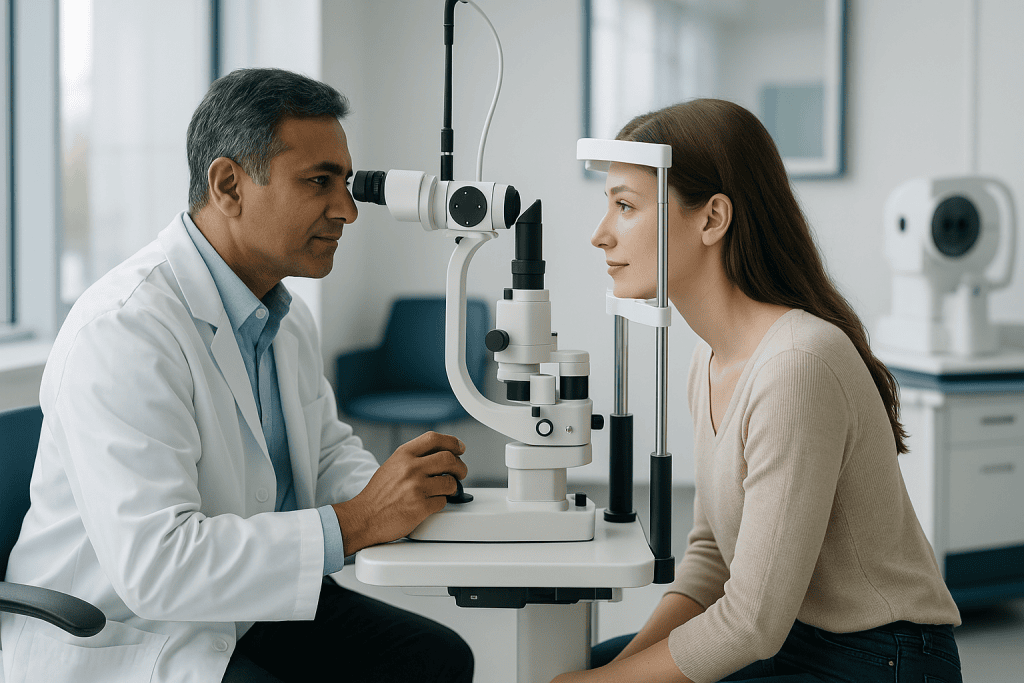
Cataract surgery replaces the eye's cloudy natural lens with a clear artificial one, usually through a small incision under local anaesthetic drops, as a day procedure. For international patients in Turkey, the realistic plan includes an in-person examination, eye measurements, the operation, and at least one follow-up check before flying home. Lens choice and travel timing are decided individually by the ophthalmologist.
Cataract surgery has a strange public image problem: everyone knows it exists, almost nobody knows how good it has become. The operation takes minutes, the recovery is measured in days rather than weeks, and the artificial lens implanted during it can correct not just the cloudiness but, with the premium options, decades of glasses-dependence too. This guide covers what patients actually search for: the honest recovery timeline, the lens decision that shapes the rest of your visual life, and the aftercare that protects a nearly-always-excellent result.
The operation in one paragraph: a cataract is the eye’s natural lens turned cloudy with age; surgery removes it through a tiny incision using ultrasound (phacoemulsification), and a folded artificial lens, the IOL, unfurls permanently in its place. No stitches in routine cases, drops instead of patches in modern practice, one eye at a time typically a week or two apart.
The single most consequential sentence on this page: the surgery is standardised; the lens choice is not, and it deserves more of your attention than everything else combined.
The lens decision: monofocal, toric, multifocal, EDOF
Monofocal lenses, the standard tier, deliver superb clarity at one distance, usually far; reading glasses remain part of life. Toric lenses correct astigmatism, and if your prescription carries meaningful astigmatism, skipping toric correction throws away result quality that no later adjustment recovers cheaply. Multifocal and trifocal lenses split light between distances, genuine glasses-independence for most tasks, purchased at the price of halos and glare around night lights that most (not all) brains learn to filter. EDOF designs stretch focus continuously with milder night phenomena and less near-range punch.
The honest matching logic: night drivers and perfection-sensitive personalities often do better with monofocal or EDOF; readers and glasses-haters with healthy maculas are the multifocal candidates; everyone with real astigmatism should hear the toric conversation. And the decision is measured, not chosen from a menu, biometry maps your eye and the recommendation follows. A unit whose lens counselling starts from your measurements and lifestyle rather than its price list is the unit to trust; the sibling decision for clear-lens patients lives in our smart lens guide.
Recovery: the honest timeline
Day one: vision already improved for many, often hazy like a steamed window; a shield protects the eye overnight; drops begin on schedule. Days two to seven: sharpness builds; most desk work resumes within days; the rules are no rubbing, no swimming, no heavy lifting or dusty environments, with showers managed to keep water out of the eye. Weeks two to four: vision stabilises toward its endpoint; the drop schedule tapers per protocol; the second eye (where planned) typically happens within this window, and the brain enjoys the upgrade to matched optics.
Weeks four to six: final refraction, any residual glasses prescription is measured once the eye settles. Premium-lens patients continue neuroadaptation: halos and glare fade for most across weeks to months as the brain recalibrates. The complete-recovery statement most surgeons stand behind: routine cases are functionally recovered within days and optically final within four to six weeks.
Aftercare that actually protects the result
The drop schedule is the treatment’s second half: anti-inflammatory and antibiotic drops on written schedule, tapered as instructed, no improvisation. The protective shield earns its nights for the first week. And the red-flag list deserves memorisation rather than filing: significant pain, sudden vision loss, worsening redness or a curtain across vision are same-day calls to the unit, not wait-and-see events, serious complications are rare precisely because they are treated as emergencies when they whisper.
One honest later chapter: months or years after surgery, some patients notice cloudiness returning, posterior capsule opacification, the membrane behind the implant frosting over. It is not the cataract returning and not a failure; a five-minute YAG laser clears it permanently in clinic. Knowing this in advance converts a future scare into a scheduled errand.
When to have surgery, and how the trip works
The modern indication is functional: when the cataract degrades what you need to do, driving (especially at night), reading, working, recognising faces, surgery is due; there is no virtue in waiting for “ripeness”, a retired concept. Both eyes affected means staged surgery a week or two apart in standard practice. Pre-existing eye conditions (macular disease, glaucoma) do not necessarily block surgery but reshape expectations: the assessment maps this honestly.
For international patients the calendar is friendly: biometry and assessment, first-eye surgery, review, and either the second eye within the same stay or a planned return, with commonly seven to ten days covering a both-eyes trip. The choosing-a-unit checks, surgical volume, biometry-led lens counselling, transparent per-lens pricing, sit with the market comparison on our cataract surgery hospitals in Turkey page.
Frequently asked questions
How long is recovery after cataract surgery?
Functionally: days, many see better within twenty-four hours and work at screens within the week. Optically: four to six weeks to the final, stable prescription. Premium-lens neuroadaptation can continue refining for months.
What are the restrictions after surgery?
For the early weeks: no eye-rubbing, no swimming, no heavy lifting or dusty environments, showers managed to keep water out, and the shield worn at night in week one. The drops schedule is non-negotiable; everything else returns quickly.
Which lens should I choose?
The measured one: biometry plus your lifestyle drives it. Monofocal for uncompromised clarity with reading glasses; toric wherever real astigmatism exists; multifocal or EDOF for glasses-independence with honest night-light trade-offs. Insist on counselling that starts from your measurements.
Is cataract surgery painful?
No, anaesthetic drops numb the eye, the procedure lasts minutes, and the aftermath is gritty rather than painful for a day or two. Significant pain afterwards is a call-the-clinic sign, not a normal stage.
When can I drive after cataract surgery?
Once you meet the legal vision standard and feel confident, often within days of the first eye, more comfortably after the second. Night driving with multifocal lenses deserves a personal trial period as adaptation settles.
Can a cataract come back?
No, but the capsule behind the implant can frost over months or years later (posterior capsule opacification), dimming vision similarly. A five-minute YAG laser treatment clears it permanently; it is a scheduled errand, not a recurrence.
Both eyes at once or separately?
Standard practice stages the eyes one to two weeks apart, letting the first settle and its refraction inform the second. For travelling patients, both eyes typically fit within a seven-to-ten-day stay.
What if I have astigmatism?
Then the toric conversation is mandatory: correcting astigmatism at surgery costs a lens-tier upgrade and pays back every waking hour. Uncorrected meaningful astigmatism is the most common avoidable disappointment in this field.
What are the warning signs after surgery?
Significant pain, sudden vision drop, worsening redness, flashes and floaters in showers, or a curtain over vision, all same-day calls to your unit. Rare problems stay rare because they are treated urgently.
How much does cataract surgery cost in Turkey?
A fraction of Western self-pay pricing, with the lens tier as the main variable, monofocal to trifocal quoted per eye. The honest figure follows biometry; the unit-choosing checks live on our cataract hospitals comparison.
Add us as a Preferred Source to see more of our trusted health content across Google Search, AI Overviews and Discover.

Update history
- PublishedJune 9, 2026
- Medical review approvedSeptember 1, 2026
- Last content updateSeptember 2, 2026
References2
- Cataract surgery: NHS nhs.uk
- Cataract: MedlinePlus medlineplus.gov
More Patient Guides

HoLEP in Turkey: How It Compares With TURP and What Recovery Involves
HoLEP in Turkey treats enlarged prostate tissue with laser enucleation; learn how it compares with TURP, recovery, travel and follow-up.

Porcelain Veneers in Turkey: Who Is Suitable and How Many Visits Are Needed?
Porcelain veneers in Turkey can enhance tooth shape and colour in two visits for suitable patients after a personalised dental assessment.

How to Prepare for a Sedation Procedure in Turkey
Prepare safely for a sedation procedure in Turkey with guidance on fasting, medicines, travel, recovery and follow-up.

Treatment Delays in Turkey: What Happens If Tests or Recovery Change Your Schedule
Treatment delays in Turkey can happen if tests or recovery change your plan. Learn how to manage appointments, travel, accommodation and follow-up.