

Smart Lens Surgery in Turkey: Treatment Guide

Smart lens surgery replaces your eye's natural lens with a premium intraocular lens, trifocal, multifocal, extended-depth-of-focus or toric, to reduce dependence on glasses and treat cataract where present. In Turkey it is usually a day procedure under anaesthetic drops. Suitability depends entirely on in-person eye measurements, so plan travel around testing, surgery and at least one follow-up visit.
Two questions come up before almost anything else: how long will I need to stay in Turkey, and are my eyes even suitable for a smart lens? Both deserve straight answers before you book a flight, and this guide gives you the honest version of each.
Here is what smart lens surgery in Turkey actually involves for an international patient: who the procedure suits, the lens types you may be offered, the tests that decide everything, what the operation and recovery feel like, and how travel fits around follow-up visits. Read it before your consultation and you will know which questions to ask, and which answers deserve a second look.
At a glance
- Procedure type: Lens replacement surgery using a premium intraocular lens (trifocal, multifocal, extended-depth-of-focus or toric)
- Purpose: To reduce dependence on glasses for distance, intermediate and near vision, and to treat cataract when present
- Anaesthesia: Usually anaesthetic eye drops; mild sedation may be considered where appropriate
- Hospital stay: Typically same-day discharge; an overnight stay is rarely needed
- Estimated recovery: Vision often clears within days; adaptation continues over several weeks
- Return to daily life: Light activities often resume within a few days, depending on your surgeon’s advice
- Final result timeline: Visual stabilisation and brain adaptation commonly progress over one to three months; individual results vary
- Suitable department: Ophthalmology / Eye Diseases
- International patient support: Interpreter assistance, appointment coordination, transfer planning, accommodation guidance and remote follow-up support
What smart lens surgery involves
“Smart lens” is not one product. It is the everyday name for a family of premium intraocular lenses, trifocal, multifocal, extended-depth-of-focus and toric designs, implanted after your eye’s natural lens is removed. The surgical technique is essentially the same as modern cataract surgery: a very small incision, removal of the natural lens, and placement of an artificial lens chosen and calculated for your eye.
Smart lens surgery in Turkey is performed either as cataract surgery, when the natural lens has become cloudy, or as refractive lens exchange, when the lens is still clear but you want to reduce dependence on glasses and laser vision correction is not a good fit. The operation is the same; the reason for doing it differs, and that distinction matters for how your suitability is judged.
One honesty point up front: no implanted lens autofocuses the way a young natural lens does. A well-chosen smart lens gives you a useful range of vision at several distances; it does not restore youthful eyesight. You can read more about how the procedure is organised on the smart lens treatment page, but the version of the plan that matters is the one written after your own eyes are measured.
When is it considered?
Smart lens surgery is most commonly considered in three situations. The first is cataract: the natural lens has clouded, vision must be restored surgically anyway, and a premium lens is chosen to reduce glasses dependence at the same time. The second is presbyopia, the age-related loss of near focus that makes reading glasses or varifocals a daily necessity. The third is a strong refractive error, high hyperopia, myopia or astigmatism, in someone whose corneas or prescription make laser surgery unsuitable.
Wanting to be free of glasses is not, by itself, a medical indication. A responsible recommendation depends on the whole eye: significant dry eye, an irregular cornea, advanced glaucoma, macular disease or diabetes-related retinal changes can all limit what a premium lens can deliver, and sometimes rule it out. Lifestyle counts too. If you drive long distances at night or work in visually demanding conditions, the trade-offs between lens designs, particularly halos and glare, need a frank discussion before anything is decided.
Who is a good candidate?
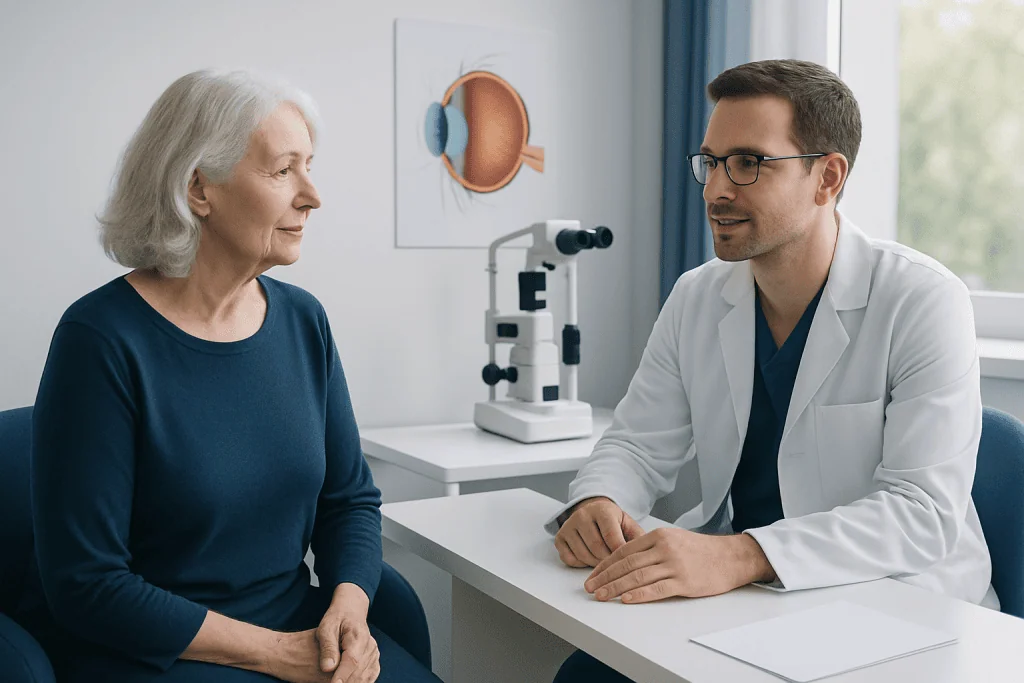
A good candidate usually has otherwise healthy eyes, a stable prescription, suitable corneal and retinal findings, and, just as important, realistic expectations about what a multifocal optical system can and cannot do. Cataract, presbyopia or a refractive error unsuited to laser correction are the typical starting points. Stable general health and the ability to follow post-operative drop schedules and hygiene instructions matter as well.
Before any decision, the ophthalmologist examines the cornea, natural lens, retina, optic nerve, tear film and eye pressure, and takes precise optical measurements (biometry) to calculate lens power. These tests determine whether a smart lens is likely to meet your needs, which design fits your anatomy, and whether one or both eyes should be treated on this trip. In many practices the two eyes are operated on separate days, though the schedule is the surgeon’s decision.
You may not be a suitable candidate if you have an active eye infection, severe uncontrolled dry eye, significant corneal irregularity, untreated retinal problems, or another condition that would compromise visual quality after surgery. Where another eye treatment needs to come first, the safest sequence is set out during the consultation.
Lens types and treatment options
Several lens strategies may be on the table, and the differences are real rather than cosmetic:
- Trifocal lenses aim to support distance, intermediate and near vision, walking outdoors, using a computer, reading a menu. They offer the widest range but carry the most noticeable risk of halos around lights at night.
- Multifocal lenses provide more than one focal point, with the balance between distances depending on the design.
- Extended-depth-of-focus (EDOF) lenses stretch a single focus into a smoother range. Night-vision side effects are often milder, but very fine near work may still need reading glasses.
- Toric versions of these lenses correct astigmatism at the same time, where your corneal measurements call for it.
- Monofocal strategiesincluding monovision and enhanced monofocal lenses, remain the better answer for some patients, particularly those with sensitive night vision or eye conditions that limit multifocal performance.
There is no universally “best” lens, and a clinic that names one before measuring your eyes is selling, not planning. The right choice comes from your corneal shape, pupil size, retinal health, occupation and tolerance for optical side effects, weighed together, in that order of evidence.
Remote review before you travel
Acibadem International offers a preliminary remote review before travel. The team typically looks at your age, current glasses prescription, previous eye diagnoses and surgery, medication list, and any recent examination or imaging reports. Cataract gradings and retinal scans, where they exist, make this stage considerably more useful.
Be clear about what this review can and cannot do. It helps the medical team judge whether smart lens surgery is worth exploring in person and lets you plan a realistic trip. It cannot replace biometry, corneal mapping, retinal examination and pressure measurement performed on ophthalmic devices, so no lens choice, and no surgery decision, is final until you have been examined in Turkey. Any itinerary built on the assumption that surgery is certain is built on sand.
Before the operation
Your in-person consultation covers your medical history, visual goals and daily habits, night driving, reading, screen work, followed by the full diagnostic set: visual acuity, refraction, eye pressure, corneal topography, biometry, pupil evaluation and retinal examination.
If you wear contact lenses, you may be asked to leave them out for a period before measurements, because lenses temporarily change corneal shape and can distort the calculations. Tell the team about blood thinners, diabetes medication, allergies, previous eye surgery or trauma, and dry eye treatment. Decisions about pausing or adjusting any medication belong to your treating doctors, not to a checklist.
Once the plan is set, your surgeon explains the chosen lens, the anaesthetic approach, whether one or both eyes will be treated during this trip, and the practical instructions: drop schedules, fasting if sedation is planned, hygiene, arrival time and whether a companion is advisable.
What happens on the day
The operation takes place in a sterile operating room. The eye is numbed with anaesthetic drops; mild sedation may be added where suitable. Most patients are awake and describe pressure, light and a sensation of water rather than pain.
The surgeon makes a very small incision, removes the natural lens with microsurgical techniques, and places the calculated intraocular lens inside the eye. The incision is usually self-sealing. The procedure for one eye is brief, but allow additional time at the hospital for preparation and observation afterwards.
Where both eyes need treatment, the second eye is often scheduled on a separate day so the team can check the first eye’s early response: a safety habit, not a scheduling inconvenience. Vision may seem brighter almost immediately, and it may also fluctuate in the first days. Both are normal parts of early healing.
Hospital stay and discharge
This is typically a day procedure: after a short observation period and a check of the eye, most patients go home, or back to their hotel, the same day. You should not drive yourself afterwards; a companion or arranged transfer covers the journey.
Before discharge you receive written instructions on eye drops, the protective shield, hygiene and activity restrictions. Follow them exactly, even if the eye feels fine. Mild watering, a gritty sensation, light sensitivity and blurred vision are common in the first day and usually settle gradually; your surgeon will explain what is expected in your specific case, and the discharge paperwork sets out which changes the team wants examined promptly.
A first control visit is scheduled soon after surgery to check eye pressure, incision healing and lens position. Do not plan to leave Turkey before your surgeon confirms it is safe to travel: this single visit is the reason a too-tight return flight is a false economy.
Recovery timeline
Recovery is progressive. The eye heals over weeks, and the brain needs its own time to learn the new optical system: a process called neuroadaptation, which matters most with multifocal and trifocal designs.
| Timeframe | What to expect |
|---|---|
| First 24 hours | Vision may be cloudy or fluctuating. Mild discomfort, watering, light sensitivity or a gritty feeling can occur. Rest, and use the prescribed drops exactly as instructed. |
| First week | Light daily activities often resume. Vision usually sharpens, though glare, halos or dryness may be noticeable. The first control visit falls in this period. |
| Weeks 2–4 | Comfort and clarity typically keep improving. More activities may resume with the surgeon’s approval. Avoid eye rubbing and follow hygiene guidance. |
| Months 1–3 | Visual stability and neuroadaptation progress. Night-vision effects lessen for many patients, though some effects can persist depending on the eye and the lens design. |
| Final result | The outcome is assessed after healing and adaptation are complete. Some patients still use glasses for specific tasks, and additional treatment is occasionally considered. |
Dry eye, retinal disease, glaucoma, diabetes-related eye changes or previous eye surgery can all alter this timeline. The schedule that applies to you is the one your surgeon gives after examining your eye, not the one in a table.
What to avoid while healing
Do not rub or press on the operated eye. Keep water, soap and cosmetics away from it during early healing, and use the protective shield or glasses as instructed. Swimming pools, saunas, hot tubs and dusty environments stay off-limits until your surgeon clears them.
Heavy lifting, straining, intense exercise and contact sports wait for explicit permission. Reading, television and phone use are usually possible soon after surgery, take breaks if the eye tires. Driving resumes only when your doctor confirms your vision meets the legal and practical standard.
Keep to the prescribed drop schedule without improvising. If you fly home shortly after the control visit, carry the drops and your written instructions in hand luggage rather than checked baggage.
Risks and limitations
Smart lens surgery is widely performed, but it is still intraocular surgery, and it carries real risks: infection, inflammation, raised eye pressure, bleeding, corneal swelling, retinal problems, lens positioning issues, dry eye symptoms and delayed healing. Serious complications are uncommon, but because they can affect vision, careful candidate selection, sterile technique and disciplined follow-up are not optional extras: they are the treatment.
Premium lenses add their own category of trade-offs: halos around lights, glare, reduced contrast sensitivity or a slow adaptation period, particularly in low light. Some patients continue to need glasses for fine print or prolonged near work. In selected cases, later procedures, laser enhancement, lens repositioning, lens exchange, or treatment of posterior capsule clouding (a common, treatable haze that can develop months or years after any lens surgery), may be considered once healing is complete.
Your individual risk profile depends on your anatomy, general health and lens choice, and it is discussed openly at consultation. After you return home, any new or changing eye symptom is assessed by local eye services in the normal way; your surgical records can be shared with the doctors treating you there.
Results and realistic expectations
The goal is a wider useful range of vision and less day-to-day dependence on glasses. Many patients value being able to manage routine activities without correction, especially when the lens choice genuinely matched their lifestyle. But no intraocular lens replicates a young eye, and outcomes differ from person to person.
Expect the possibility of glasses for specific tasks, very small print, long reading sessions, detailed close work or demanding night driving. Expect an adaptation period in which halos or contrast changes are noticeable before they fade or become ignorable. And expect your surgeon to describe, in advance, how your particular lens is likely to behave at distance, intermediate and near, because a satisfied patient is usually one whose expectations were set honestly before the operation, not adjusted after it.
Planning travel to Turkey
Build your trip around the medical sequence: consultation and diagnostics, surgery, the first control visit, and travel clearance. If both eyes are treated on separate days, the stay lengthens accordingly. The safest approach is a flexible or refundable return booking until the treatment plan is confirmed after your in-person examination.
Bring your passport, previous eye reports, glasses prescriptions, medication list and relevant medical records. A companion is useful for transport and comfort on the day of surgery. Flying home is often possible once early healing is confirmed, but clearance is individual: it depends on your eye, not on an average.
How costs and quotes work
This guide gives no price figures, because any honest figure depends on decisions that have not been made yet. What the cost of smart lens surgery in Turkey depends on is knowable now: the lens type (toric, trifocal, multifocal and EDOF lenses sit in different cost brackets), whether one or both eyes are treated, the diagnostic tests your eyes require, surgical complexity, and the follow-up schedule. Additional treatment for dry eye, retinal findings or other conditions changes the plan and therefore the quote.
An international patient package typically covers consultation coordination, pre-operative measurements, the operation itself, standard hospital services around it, early control visits and interpreter support where available. Items commonly outside a package include flights, accommodation, companion expenses, tests requested after examination, extended medication and treatment of unrelated conditions. Acibadem International issues a personalised written quotation after medical review, itemising what is included.
When comparing clinics, in Turkey or anywhere, compare the itemised inclusions, the named lens model and the follow-up plan, never the headline number alone. The cheapest headline figure frequently excludes exactly the items that matter after surgery.
Choosing a country, and a hospital
Patients often ask which country is best for lens replacement, or whether eye surgery in Turkey is safe. The honest answer to both is that safety and quality attach to institutions and surgeons, not to flags. What determines your outcome is the accuracy of the diagnostics, the surgeon’s experience with the specific lens being implanted, the sterility standards of the operating environment, and the discipline of follow-up. Those factors vary within every country, including yours.
Turkey has become a major destination for ophthalmic surgery among international patients, and its established hospital groups run full-scale ophthalmology departments with modern diagnostic equipment. That is a reason to evaluate a Turkish hospital seriously, not a reason to skip the evaluation. Ask any provider, anywhere, the same questions: which lens model, chosen on what measurements, implanted by whom, with what follow-up, and what happens if an enhancement is needed later.
Care at Acibadem
At Acibadem, smart lens surgery is planned by ophthalmology specialists on the basis of detailed diagnostic measurements, corneal mapping, biometry, retinal and pressure assessment, rather than on the lens alone. The stated goal is the right lens strategy for your eyes and your daily life, explained with its limitations as well as its benefits.
Because Acibadem is a multi-specialty hospital group, opinions from other departments can be coordinated where your history requires it, for example, input from the Cardiovascular Surgery team if you have significant heart disease, or from General Surgery where a separate condition needs assessment during the same visit. International patient services handle the practical layer: interpreters, appointment coordination, transfer planning, accommodation guidance and remote follow-up communication. All medical decisions rest on physician evaluation.
Medical review and disclaimer
This guide has been reviewed by the Acibadem International medical team. It is general information for international patients considering smart lens surgery; it is not a diagnosis, medical advice, or a substitute for consultation with a qualified ophthalmologist. Your suitability, lens selection, timing, risks and expected results can only be determined after an in-person examination, and the instructions of your treating doctor take precedence over anything written here.
Step by step
- First contact. The process begins when you share your main vision concerns, preferred travel dates and any existing diagnosis such as cataract or presbyopia.
- Medical record submission. Available eye reports, glasses prescriptions, medication lists and imaging results are gathered. Photographs are not sufficient for eye surgery planning; reports from your own ophthalmologist are far more useful.
- Preliminary medical review. The ophthalmology team assesses whether smart lens surgery is worth exploring in person. This review is preliminary and does not replace device-based testing.
- Treatment outline and quotation. If the treatment appears suitable to explore, you receive an outline of the proposed process and a personalised quotation for the expected services. Final decisions wait for the in-person examination.
- Travel planning. Appointments, expected length of stay, transfers and accommodation are coordinated. A flexible return booking is strongly advisable until medical clearance is confirmed.
- Arrival. The international patient team supports your hospital visit, interpreter arrangements and appointment schedule in Turkey.
- In-person consultation. The ophthalmologist examines your eyes in detail and discusses goals, lifestyle and expectations, then confirms whether smart lens surgery is suitable for you.
- Pre-operative tests. Refraction, biometry, corneal mapping, pressure testing and retinal evaluation are completed to calculate lens power and select the lens design.
- Surgery. The natural lens is removed and the planned intraocular lens implanted under sterile conditions, usually with anaesthetic drops.
- Observation and discharge. After a short observation period you are usually discharged the same day, with drop instructions, protective guidance and activity restrictions.
- First control visit. Early healing, eye pressure, vision and lens position are checked. This visit anchors the rest of your travel plan.
- Travel clearance. Your ophthalmologist confirms when it is safe to fly home, and you receive written instructions for ongoing care.
- Remote follow-up. After you return, planned follow-up questions can be handled remotely, and your surgical records can be shared with local doctors where needed.
Your checklist
- Passport and travel documents
- Recent glasses or contact lens prescription
- Previous ophthalmology reports and eye test results
- Retinal imaging, corneal topography or biometry reports if available
- List of current medications, including eye drops and blood thinners
- Allergy information, especially medication or antiseptic allergies
- History of previous eye surgery, laser procedures, trauma or infections
- General medical history, including diabetes, hypertension, autoimmune disease or bleeding disorders
- Current symptoms such as glare, halos, blurred vision, dryness or night driving difficulty
- Contact lens use history and lens type
- Questions about your visual goals, work needs, hobbies and expectations
- Companion contact information, if someone will travel with you
Key takeaways
- Smart lens surgery may suit patients with cataract, presbyopia or refractive errors unsuited to laser correction, but eligibility is decided only by in-person eye measurements.
- Lens choice is personalised: trifocal, multifocal, EDOF, toric and monofocal strategies each carry different trade-offs, and no single lens is best for everyone.
- Plan your stay in Turkey around diagnostics, surgery, the first control visit and travel clearance, not around a fixed return flight.
- Recovery is usually straightforward, but drop schedules, hygiene rules and follow-up visits are part of the treatment, not optional extras.
- Halos, glare and the possibility of still needing glasses for some tasks should be discussed honestly before surgery; results vary and further treatment is sometimes needed.
Frequently asked questions
How much does lens replacement surgery cost in Turkey?
There is no single figure, because the price depends on the lens model, whether one or both eyes are treated, the diagnostic tests your eyes need, surgical complexity and the follow-up plan. Reputable providers issue an itemised written quotation after medical review. Compare quotes on what they include, the lens model, control visits, hospital services, rather than on the headline number.
What country is best for lens replacement surgery?
No country holds that title. Outcomes depend on the accuracy of pre-operative measurements, the surgeon’s experience with the specific lens, operating standards and follow-up discipline, all of which vary within every country. Turkey has established hospital groups with full ophthalmology departments, which makes it worth evaluating seriously, but the sensible comparison is always hospital to hospital, not flag to flag.
Is it safe to have eye surgery in Turkey?
Safety attaches to the institution, not the destination. Turkey’s larger hospital groups operate modern ophthalmic diagnostics and sterile surgical facilities to international standards; smaller operators vary, as they do everywhere. Judge any provider by the same tests: named surgeons, device-based measurements before any lens decision, transparent risk discussion, and a structured follow-up plan before you fly home.
Is smart lens surgery the same as cataract surgery?
The technique is essentially the same: the natural lens is removed and an artificial lens implanted. In cataract surgery the lens is cloudy and removal restores clarity. In refractive lens exchange the lens is still clear but is replaced to reduce dependence on glasses. The reason for surgery changes how suitability is weighed, not how the operation is performed.
Will I be completely free from glasses?
No surgeon can promise complete freedom from glasses, and you should be wary of any who does. Smart lenses substantially reduce glasses dependence for many daily activities, but some patients still use glasses for fine print, long reading sessions, detailed close work or night driving. Realistic expectations, set before surgery, are the strongest predictor of satisfaction afterwards.
Can both eyes be treated on the same day?
Scheduling depends on your surgeon’s protocol, your eye health and your travel plan. Many surgeons prefer separate days so the first eye’s early response can be checked before the second operation. Build your itinerary around your surgeon’s recommended schedule rather than the shortest theoretical stay.
How long should I stay in Turkey?
Long enough for consultation, diagnostic testing, surgery, the first control visit and travel clearance, longer if both eyes are treated on separate days. The exact stay is estimated after the preliminary remote review and confirmed after your in-person examination, which is why a flexible return booking is the safest choice.
What are halos and glare after smart lens surgery?
They are optical effects, rings or scatter around light sources, most noticeable at night, that arise from how premium lenses divide or extend focus. Many patients adapt over weeks to months as the brain adjusts; some continue to notice them. Their likelihood differs between lens designs, which is exactly why they belong in the lens-selection conversation before surgery.
Add us as a Preferred Source to see more of our trusted health content across Google Search, AI Overviews and Discover.

Update history
- PublishedJune 9, 2026
- Medical review approvedAugust 30, 2026
- Last content updateAugust 30, 2026
References2
- Cataract surgery: NHS nhs.uk
- Cataract removal: MedlinePlus Medical Encyclopedia medlineplus.gov
More Patient Guides

HoLEP in Turkey: How It Compares With TURP and What Recovery Involves
HoLEP in Turkey treats enlarged prostate tissue with laser enucleation; learn how it compares with TURP, recovery, travel and follow-up.

Porcelain Veneers in Turkey: Who Is Suitable and How Many Visits Are Needed?
Porcelain veneers in Turkey can enhance tooth shape and colour in two visits for suitable patients after a personalised dental assessment.

How to Prepare for a Sedation Procedure in Turkey
Prepare safely for a sedation procedure in Turkey with guidance on fasting, medicines, travel, recovery and follow-up.

Treatment Delays in Turkey: What Happens If Tests or Recovery Change Your Schedule
Treatment delays in Turkey can happen if tests or recovery change your plan. Learn how to manage appointments, travel, accommodation and follow-up.