Quick answer
Glaucoma is a group of eye diseases that damages the optic nerve, often due to increased pressure inside the eye, and can lead to gradual, permanent vision loss if untreated. Management focuses on lowering eye pressure and may include eye drops, laser procedures, or surgery after detailed ophthalmic evaluation and ongoing follow-up.
What is glaucoma?
Glaucoma is the name for a group of eye conditions that damage the optic nerve, the bundle of nerve fibers that carries visual information from the eye to the brain. In most cases, this damage is linked to raised pressure inside the eye, known as intraocular pressure. When the optic nerve is injured, parts of the visual field, the total area a person can see, are gradually lost. If glaucoma is not detected and treated, this loss of vision can become severe and, in advanced cases, may lead to blindness. Vision that has already been lost to glaucoma cannot be restored, which is why early detection matters so much.
To answer the common question “what is glaucoma” in the simplest terms: it is progressive damage to the optic nerve, usually related to eye pressure, that slowly steals sight, often without the person noticing at first.
Glaucoma is one of the leading causes of irreversible vision loss worldwide. It can affect anyone, but it becomes more common with age, particularly after the age of 60. People with a family history of glaucoma, people of African, Hispanic, or Asian ancestry, and people with certain medical conditions such as diabetes are at higher risk. There are several types of glaucoma. The most common form, called primary open-angle glaucoma, develops slowly over years. A less common but more dramatic form, called acute angle-closure glaucoma, can develop suddenly and is a medical emergency. Glaucoma can also occur in babies and children (congenital or childhood glaucoma), although this is rare.
Symptoms
One of the most important things to understand about glaucoma symptoms is that the most common type often causes no symptoms at all in its early stages. Open-angle glaucoma usually develops painlessly and slowly. Because the disease tends to affect peripheral (side) vision first, and because the brain is good at filling in missing areas, many people do not notice anything is wrong until significant, permanent damage has already occurred. This is why glaucoma is sometimes called the “silent thief of sight,” and why regular eye examinations are so important, especially for people with risk factors.
Symptoms of open-angle glaucoma (the most common type)
- No symptoms at all in the early stages, in many cases
- Gradual loss of peripheral (side) vision, usually in both eyes
- Patchy blind spots in the side or central vision, often noticed late
- In advanced disease, “tunnel vision”: the sense of looking through a narrow tube
- Difficulty adjusting to dim light or noticing objects to the side
Symptoms of acute angle-closure glaucoma (a medical emergency)
- Sudden, severe eye pain, often with headache
- Sudden blurred vision or rapid loss of vision
- Seeing halos or colored rings around lights
- A red, tender eye
- Nausea and vomiting alongside the eye pain
- A pupil that may appear fixed or mid-dilated
The difference between these two patterns matters. In open-angle glaucoma, the drainage system of the eye works poorly over time, so pressure rises gradually and symptoms appear late, if at all. In angle-closure glaucoma, the drainage angle of the eye becomes blocked suddenly, pressure rises quickly, and severe symptoms appear within hours. Sudden eye pain with vision changes should always be treated as an emergency, because rapid treatment can protect vision.
In babies and young children, possible signs of glaucoma include unusually large or cloudy eyes, excessive tearing, and sensitivity to light. Any of these signs should prompt an urgent eye examination.
Causes and risk factors
Glaucoma causes are closely tied to the fluid system inside the eye. The front part of the eye is filled with a clear fluid called aqueous humor, which is constantly produced and drained away. When this fluid drains too slowly, or when the drainage channels become blocked, pressure inside the eye builds up. Over time, elevated pressure can compress and damage the delicate fibers of the optic nerve.
Importantly, glaucoma is not always caused by high eye pressure alone. Some people develop optic nerve damage even with pressure in the normal range: a form called normal-tension glaucoma. Others have raised eye pressure for years without developing nerve damage. Doctors therefore look at the whole picture, not just a pressure reading.
Common risk factors
- Age: risk increases significantly after age 60, and earlier in some populations
- Family history: having a parent or sibling with glaucoma raises your risk considerably
- Ethnicity: people of African ancestry have a higher risk of open-angle glaucoma; people of East Asian ancestry have a higher risk of angle-closure glaucoma
- High intraocular pressure (ocular hypertension), even before any nerve damage
- Medical conditions: diabetes, high blood pressure, and some circulation problems
- Severe nearsightedness or farsightedness
- Thin corneas (the clear front surface of the eye), which are associated with higher risk
- Long-term use of corticosteroid medicines, particularly steroid eye drops
- Previous eye injury or certain eye surgeries
Secondary glaucoma is the term used when raised eye pressure results from another identifiable problem, such as inflammation inside the eye, an injury, an advanced cataract, or steroid use. Congenital glaucoma in infants is usually caused by abnormal development of the eye’s drainage system before birth.
It is not currently possible to prevent glaucoma in most cases, but knowing your risk factors helps you and your eye doctor decide how often you should be examined.
Diagnosis
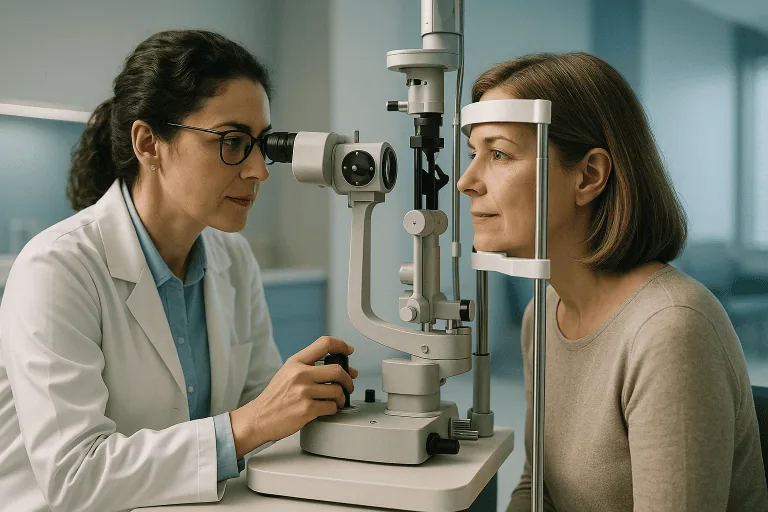
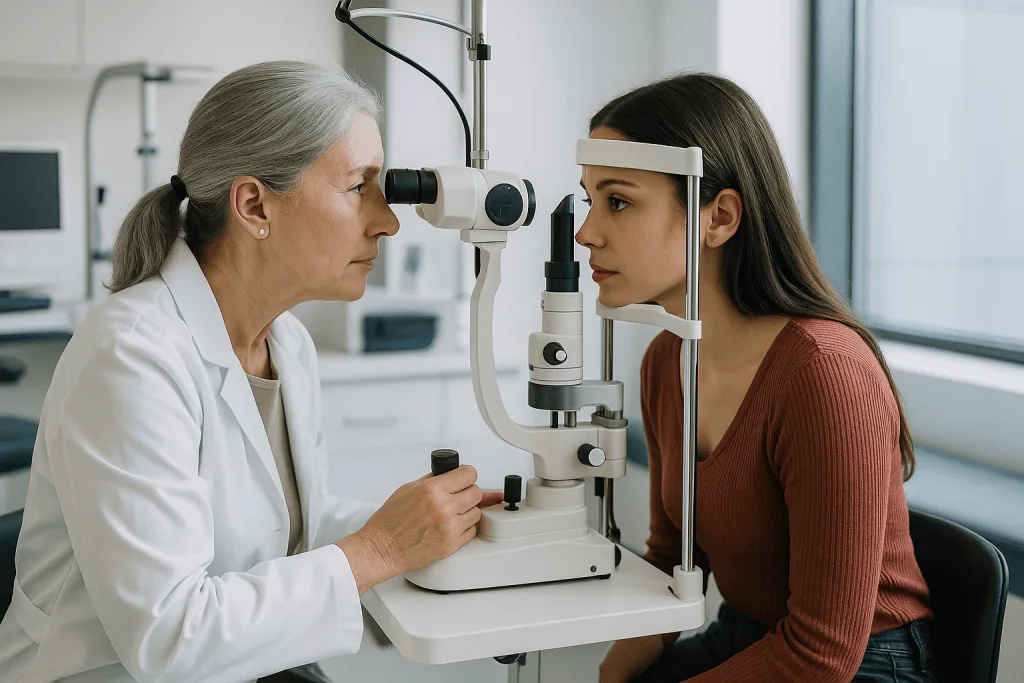
Glaucoma diagnosis is not based on a single test. Because the disease can exist with or without high eye pressure, eye doctors (ophthalmologists) confirm it by combining several examinations that look at pressure, the optic nerve itself, the drainage angle, and how well you actually see across your visual field. A comprehensive dilated eye examination is the foundation of this process.
Tests commonly used to diagnose glaucoma
- Tonometry: a painless measurement of the pressure inside the eye, done with a small probe or a puff of air. Raised pressure raises suspicion but does not by itself confirm glaucoma.
- Ophthalmoscopy (optic nerve examination): the doctor dilates the pupil with drops and examines the optic nerve head for signs of damage, such as “cupping”: an enlarged central depression in the nerve.
- Visual field testing (perimetry): you respond to small lights appearing at different points while looking straight ahead. This maps any blind spots and shows the pattern of vision loss typical of glaucoma.
- Optical coherence tomography (OCT): a noninvasive imaging scan that measures the thickness of the nerve fiber layer around the optic nerve. Thinning of this layer can reveal damage before vision changes are noticeable.
- Gonioscopy: a special contact lens is placed gently on the eye to view the drainage angle. This determines whether the glaucoma is open-angle or angle-closure, which directly affects treatment choices.
- Pachymetry: a measurement of corneal thickness, which helps the doctor interpret pressure readings accurately, since thin or thick corneas can distort the numbers.
Doctors typically diagnose glaucoma when they find characteristic optic nerve damage together with corresponding visual field loss, taking pressure readings and imaging into account. Because early glaucoma can be subtle, your doctor may ask you to return for repeat testing over time to see whether measurements are stable or changing. Some people are labeled “glaucoma suspects”, meaning they have features that raise concern, such as high pressure or an unusual-looking optic nerve, but no confirmed damage yet, and are monitored regularly rather than treated immediately.
Treatment options
Glaucoma treatment cannot reverse damage that has already occurred, but it can usually slow or stop further damage. Every currently accepted treatment works the same fundamental way: by lowering the pressure inside the eye. Your doctor will set a target pressure based on how advanced the disease is and how quickly it appears to be progressing, then choose treatments to reach and maintain that target. Care for glaucoma is typically managed by an ophthalmology department, where specialists can perform the full range of tests and procedures described below. Further details about how the condition is managed can be found on the glaucoma treatment page.
Monitoring (watchful waiting)
For people with mildly raised eye pressure but no evidence of optic nerve damage, or for glaucoma suspects, doctors may recommend careful monitoring rather than immediate treatment. This involves regular pressure checks, optic nerve imaging, and visual field tests. If signs of damage or worsening appear, treatment is started promptly.
Eye drops and other medications
Prescription eye drops are the most common first treatment for open-angle glaucoma. Different classes of drops lower pressure in different ways, some reduce the amount of fluid the eye produces, while others improve fluid drainage. Common categories include prostaglandin analogs, beta-blockers, alpha agonists, and carbonic anhydrase inhibitors; sometimes more than one type is used together. Drops must be used every day, usually for life, even when the eye feels completely normal, because glaucoma often causes no symptoms, it is easy to underestimate the importance of consistent use. All eye drops can have side effects, ranging from stinging and redness to effects on heart rate or breathing with certain classes, so it is important to tell your doctor about your other health conditions and medications. Oral medicines that lower eye pressure are sometimes used, most often for short periods or in urgent situations.
Laser procedures
Laser treatment is often used either alongside or instead of eye drops. For open-angle glaucoma, a procedure called laser trabeculoplasty uses a focused light beam to improve fluid outflow through the eye’s natural drainage tissue. It is usually performed in an outpatient setting and takes only minutes; its effect may lessen over years and can sometimes be repeated. For angle-closure glaucoma, or eyes at risk of it, a procedure called laser iridotomy creates a tiny opening in the iris (the colored part of the eye) so fluid can flow more freely and the drainage angle is less likely to block. In acute angle-closure attacks, laser treatment is often performed urgently after medicines have brought the pressure down.
Surgery
When drops and laser treatment do not control pressure adequately, or when the disease is advanced, surgery may be recommended. Options include:
- Trabeculectomy: the surgeon creates a small new drainage channel so fluid can leave the eye and be absorbed under the surface tissue, forming a small reservoir called a bleb.
- Drainage implants (tube shunts): a tiny tube is placed in the eye to divert fluid to a small plate positioned on the outside wall of the eye, under the eyelid.
- Minimally invasive glaucoma surgery (MIGS): a group of newer procedures using microscopic stents or devices to improve fluid outflow with smaller incisions. These are often combined with cataract surgery and generally suit milder disease, though they may lower pressure less than traditional surgery.
All surgery carries risks, including infection, bleeding, pressure that is too low or too high, and the possible need for further procedures. Your doctor will weigh these risks against the risk of ongoing vision loss when recommending an approach. Childhood glaucoma is usually treated surgically as the primary approach, because drops alone are rarely sufficient in infants.
Whatever treatment path is chosen, lifelong follow-up is essential. Glaucoma is a chronic condition, and pressure control can drift over time even after successful surgery.
Living with glaucoma / outlook
A glaucoma diagnosis understandably causes worry, but the outlook for most people who are diagnosed early and treated consistently is reassuring: in many cases, useful vision is preserved for life. The key factors are catching the disease before major damage occurs, keeping eye pressure at the target level, attending all follow-up appointments, and using medications exactly as prescribed.
Vision already lost to glaucoma does not return, so honest expectations matter. Treatment is about protecting the vision you still have, not restoring what is gone. For people with significant visual field loss, low-vision services can help with practical adjustments, better lighting, magnifiers, contrast improvements at home, and mobility strategies. Depending on the degree of vision loss and local regulations, driving may need to be reassessed with your doctor.
Day to day, most people with well-controlled glaucoma live normally. Some practical points often discussed with patients include:
- Use your eye drops on schedule every day, even when your eyes feel fine
- Tell every doctor and pharmacist you see that you have glaucoma, since some medicines (including certain steroids and some cold or bladder medicines) can affect eye pressure
- Protect your eyes from injury during sports and manual work
- Encourage close relatives to have regular eye examinations, since glaucoma runs in families
- Maintain general health habits, regular moderate exercise and managing conditions like diabetes and blood pressure support overall eye health, though they do not replace treatment
Glaucoma progresses at different speeds in different people, and no doctor can guarantee a specific outcome. What is well established is that regular monitoring and consistent treatment substantially reduce the risk of serious vision loss in most cases.
Frequently asked questions
What is glaucoma in simple terms?
Glaucoma is damage to the optic nerve, the cable connecting the eye to the brain, usually related to raised pressure inside the eye. Because the nerve carries everything you see, this damage causes gradual, permanent loss of vision, typically starting at the edges of your visual field. The most common form develops slowly and painlessly, which is why many people do not know they have it until an eye examination detects it.
Can glaucoma be cured or can lost vision come back?
There is currently no cure for glaucoma, and vision that has been lost cannot be restored, because damaged optic nerve fibers do not regenerate. However, glaucoma can usually be controlled. With eye drops, laser procedures, or surgery to lower eye pressure, further damage can often be slowed dramatically or stopped, allowing most people who are treated early to keep useful vision throughout their lives.
What are the first glaucoma symptoms I might notice?
In the most common form, often nothing, early open-angle glaucoma typically has no symptoms. The first noticeable changes tend to be missing patches in your side vision, difficulty seeing in dim light, or bumping into things you did not see. In the rarer acute angle-closure form, symptoms are sudden and severe: intense eye pain, blurred vision, halos around lights, and nausea. Because early symptoms are so often absent, regular eye examinations are the most reliable way to catch glaucoma in time.
How serious is glaucoma?
Untreated glaucoma is serious: it is one of the leading causes of irreversible blindness worldwide. That said, the outlook changes greatly with treatment. When glaucoma is detected early and eye pressure is kept under control, most people retain functional vision for life. The seriousness in an individual case depends on how advanced the disease is at diagnosis, how well pressure is controlled, and how consistently treatment and follow-up are maintained.
Will I need to use eye drops forever?
In many cases, yes, glaucoma is a chronic condition, and drops only work while you keep using them. Stopping treatment usually allows pressure to rise again, even though you feel no difference. Some people are later able to reduce or stop drops after successful laser treatment or surgery, but that decision should only ever be made by your eye doctor based on repeated pressure measurements and monitoring.
How is glaucoma diagnosed if there are no symptoms?
Doctors detect glaucoma during a comprehensive eye examination, often before any symptoms exist. They measure eye pressure (tonometry), examine and photograph the optic nerve, scan the nerve fiber layer with imaging such as OCT, test your side vision with a visual field test, and inspect the eye’s drainage angle. A diagnosis is made when characteristic nerve damage and matching visual field changes are found, sometimes only after repeated tests over time.
Is glaucoma surgery risky, and what is recovery like?
All eye surgery carries some risk, including infection, bleeding, and pressure that ends up too high or too low, and further procedures are sometimes needed. Recovery varies by procedure: laser treatments usually allow a return to normal activities within a day or so, while traditional surgery such as trabeculectomy typically requires several weeks of healing, temporary activity restrictions, and frequent follow-up visits. Your surgeon will explain the specific risks and recovery plan for the procedure recommended in your case.
When to see a doctor
Because glaucoma often develops silently, routine comprehensive eye examinations are the most important step, especially if you are over 40, have a family history of glaucoma, have diabetes, or belong to a higher-risk group. Ask your eye doctor how often you should be checked. Beyond routine screening, some warning signs need urgent attention.
Seek emergency medical care immediately if you experience:
- Sudden, severe eye pain, especially with headache, nausea, or vomiting
- Sudden blurred vision or sudden loss of vision in one or both eyes
- Halos or rainbow-colored rings around lights, particularly with eye pain or redness
- A red, hard, painful eye
- Any rapid change in vision after an eye injury or eye surgery
These can be signs of an acute angle-closure attack or another eye emergency, where hours matter for saving sight. You should also arrange a prompt (non-emergency) appointment if you notice gradual changes in side vision, increasing difficulty seeing in low light, new blind spots, or if you have been told you have high eye pressure and have missed follow-up visits. Conditions of this kind are evaluated and managed by ophthalmology specialists, including at centers such as Acibadem, where the full range of diagnostic testing and treatment described on this page is available. Early evaluation offers the best chance of protecting your vision.
Medically reviewed by the Acıbadem International Medical Board September 2, 2026
See our medical review board →
Update history
- PublishedJune 14, 2026
- Medical review approvedSeptember 2, 2026
- Last content updateSeptember 2, 2026