Laser Treatments
Laser treatments use focused light energy to correct or manage selected eye conditions, including refractive errors and some retinal or glaucoma problems. They are usually outpatient procedures with rapid recovery.
Quick answer
Laser treatments use a focused beam of light to alter tissue with high precision. In medicine, lasers reshape the cornea, seal retinal tears, resurface sun-damaged skin, reduce unwanted hair and clear cloudy membranes after cataract surgery. Most are outpatient procedures performed under numbing drops or cream, and suitability always depends on a detailed assessment of the individual patient.
What Laser Treatments Are
Laser treatments use a tightly focused beam of light to change body tissue in a precise, controlled way. Depending on the wavelength, energy and pulse duration, a medical laser can reshape the clear front surface of the eye, seal a tear in the retina, remove a sun-damaged outer layer of skin, disable a hair follicle at its root or open a cloudy membrane behind an artificial lens. Laser treatments are now routine in ophthalmology, dermatology, dentistry and several surgical fields, and most are performed as outpatient procedures under anaesthetic drops or numbing cream, without an overnight hospital stay.
The word laser covers many different procedures, and that is the first thing worth understanding. A laser is a tool, not a treatment in itself. The laser used to correct short-sightedness has nothing in common with the laser used to reduce leg hair, beyond the physics of focused light. Before any laser procedure, the meaningful questions are the same ones you would ask about any treatment: what is the diagnosis, what is the goal, what are the alternatives, and what are the limits. This page explains how medical lasers work, what the main laser treatments involve, and what shapes results, starting with the questions people ask most often about the word itself.
What does laser mean?
Laser is an acronym: Light Amplification by Stimulated Emission of Radiation. Ordinary light, from the sun or a lamp, spreads in every direction and contains many wavelengths mixed together. A laser produces light of a single wavelength, with all its waves moving in step, concentrated into a narrow beam. That is what makes it medically useful. Because the energy can be delivered to a spot smaller than a fraction of a millimetre, a clinician can affect one tissue layer while leaving its neighbours largely untouched. The acronym has long since become an ordinary noun, which is why it is written in lower case rather than as LASER.
Is it spelled laser or lazer?
Laser is the correct spelling; lazer is a common misspelling. The confusion is understandable, because the word is pronounced with a z-sound in English. But since laser is an acronym, the letters are fixed by the phrase they stand for: the s comes from “stimulated emission”. Any clinic, device or publication using “lazer” is simply spelling the word incorrectly.
What are the two types of lasers?
When people ask about the two types of lasers, they usually mean one of two classifications. In engineering terms, lasers are divided into continuous-wave lasers, which emit a steady beam, and pulsed lasers, which deliver energy in extremely short bursts. In treatment terms, especially in skin work, the more useful division is between ablative lasers, which remove tissue by vaporising it, and non-ablative lasers, which heat deeper layers to stimulate change while leaving the surface intact. Ablative treatments tend to produce stronger effects with longer recovery; non-ablative treatments are gentler but often need more sessions. Neither type is universally better. The right choice depends on the problem being treated and on your skin, eye or tissue characteristics.
What makes a laser different from ordinary light?
A laser differs from ordinary light in three ways: it contains a single wavelength, its waves are coherent (in step with each other), and the beam stays narrow over distance instead of spreading. In medicine, the single wavelength matters most. Different structures in the body absorb different wavelengths: the pigment melanin, the haemoglobin in blood vessels and the water inside cells each absorb light selectively. By choosing a wavelength matched to the target, a clinician can heat a hair follicle, close a tiny blood vessel or vaporise a thin layer of skin while sparing the tissue around it. This principle of selective absorption is the foundation of almost every medical laser procedure.
What is laser therapy?
Laser therapy is an umbrella term for any treatment that uses focused light energy, from surgical lasers that cut or vaporise tissue to low-level lasers used at much weaker settings to influence healing or discomfort. The term is used loosely, which can be misleading: a retinal laser procedure, a cosmetic resurfacing session and a low-level laser device applied to a joint are entirely different interventions with different evidence behind them. If you are offered “laser therapy”, it is reasonable to ask exactly which device, which setting and which clinical purpose is meant.
The Main Types of Laser Treatments
Laser treatments in modern hospitals fall into several broad groups, each with its own specialists, equipment and follow-up pathway.
- Eye laser proceduresrefractive correction to reduce dependence on glasses or contact lenses, plus medical lasers for the retina, glaucoma and clouding after cataract surgery. These are covered in depth further down this page, and the dedicated eye laser page describes refractive techniques in more detail.
- Skin lasersresurfacing for wrinkles, scarring and sun damage, and targeted lasers for pigmentation and visible blood vessels. See the section on laser resurfacing below.
- Hair reduction lasersrepeated sessions that target the pigment in hair follicles to reduce unwanted growth, described on the laser hair therapy page and in the questions answered below.
- Dental lasersused in laser dentistry for selected gum treatments, decay removal and soft-tissue procedures, often with less bleeding than conventional instruments.
- Surgical and interventional laserslasers are one of several energy sources used to destroy abnormal tissue in ablation therapy, alongside heat, cold and radiofrequency techniques, and appear in urology, ear-nose-throat surgery and vascular procedures.
Across all of these fields, the same rule applies: the laser does not decide anything. Accurate diagnosis, honest patient selection and skilled application determine whether a laser treatment helps, does nothing, or causes harm. That is why every credible laser treatment begins with an examination rather than a booking.
Laser Skin Resurfacing
Laser skin resurfacing uses controlled light energy to remove or remodel the damaged outer layers of the skin and stimulate the production of new collagen underneath. It is used for fine lines and wrinkles, sun damage, acne scarring, uneven texture and certain pigmentation problems, most often on the face. The result develops gradually as the skin heals and rebuilds, resurfacing is not an instant change but a healing response that the laser sets in motion. A detailed description of candidacy and technique is available on the dedicated laser resurfacing treatment page.
What is CO2 laser resurfacing?
CO2 laser resurfacing uses a carbon dioxide laser, an ablative laser whose wavelength is strongly absorbed by the water inside skin cells, to vaporise thin layers of damaged skin with high precision. It is one of the deeper-acting resurfacing options, which makes it effective for more pronounced wrinkles and scars but also means a more visible healing period, typically involving redness, swelling and peeling for days to weeks. Many modern CO2 systems are fractional: instead of treating the whole surface, they create microscopic columns of treatment surrounded by untouched skin, which speeds healing while still triggering collagen renewal. Whether a fractional or full-field approach suits you depends on your skin type, the depth of the problem and how much downtime you can accommodate.
What does a resurface laser treatment involve?
A resurface laser treatment follows a structured sequence, whatever the specific device:
- Assessment. The clinician examines your skin type, the depth and cause of the changes you want treated, your history of scarring or pigmentation problems, and any medical factors that affect healing.
- Preparation. You may be asked to protect your skin from the sun and to follow a short pre-treatment skincare routine; your doctor will explain anything that needs adjusting beforehand.
- Anaesthesia. Numbing cream is standard for lighter treatments; deeper ablative work may involve local anaesthetic injections or, occasionally, sedation.
- Treatment. The laser is passed over the planned area in a controlled pattern. Sessions typically last from a few minutes to under an hour, depending on the area and depth.
- Aftercare. The treated skin is protected with dressings or ointments. You receive written instructions on cleansing, moisturising and strict sun protection while the new skin forms.
- Review. Follow-up visits check healing and decide whether additional sessions are useful. Deeper treatments usually need fewer sessions; gentler ones need more.
One caution matters more than any cosmetic consideration. A pigmented spot, changing mole or new skin lesion must be medically diagnosed before any laser touches it. Lasering an undiagnosed lesion can delay the detection of skin cancer. A reputable clinic will always examine and, where necessary, biopsy a suspicious lesion first.
Laser Hair Removal: Your Questions Answered
Laser hair reduction is one of the most frequently performed laser treatments worldwide, and it generates the most search questions. The dedicated laser hair therapy page covers the treatment pathway in detail; the honest answers to the most common questions are below.
How does hair laser treatment work?
Laser hair treatment works by targeting the melanin pigment in the hair shaft: the laser light is absorbed by the pigment, converts to heat, and that heat damages the follicle that produces the hair. Because the laser needs pigment to find its target, it works best on hair that is darker than the surrounding skin. It also only affects follicles in their active growth phase, and at any moment only a portion of your hair is in that phase. This is why a course of multiple sessions, spaced weeks apart, is always needed: a single session cannot reach follicles that are resting.
Does laser hair treatment hurt?
Most people describe the sensation as a series of quick snaps, like an elastic band flicked against the skin, rather than pain that needs medication. Sensitivity varies with the body area, the upper lip and bikini line are more sensitive than the legs, and with your skin, hair thickness and the device used. Modern systems use cooling tips or air cooling to take the edge off each pulse, and numbing cream can be used for sensitive areas. Discomfort during a session is brief; treated skin may feel warm or look slightly red for a few hours afterwards.
How long does hair laser treatment last?
After a completed course, hair reduction is long-lasting: many treated follicles stop producing hair, and hair that does regrow is usually finer, lighter and slower. It is more accurate to call the result long-term reduction than permanent removal. Hormonal changes, pregnancy, menopause, conditions such as polycystic ovary syndrome, can stimulate new growth over time, and many people choose occasional maintenance sessions. Anyone promising that every hair will be gone forever is overstating what the biology allows.
Is hair laser treatment safe?
Laser hair treatment is generally safe when the device, wavelength and settings are matched to your skin type and the treatment is delivered with proper medical oversight. The known risks are mostly temporary: redness, swelling around the follicles and mild irritation. Less commonly, the skin can darken or lighten in the treated area, and incorrect settings can cause burns or, rarely, scarring. Darker skin needs specific wavelengths and conservative settings, which is exactly why a pre-treatment skin assessment and a test patch matter. Eye protection is worn throughout every session, by you and by the operator.
How much is hair laser treatment?
There is no single answer, because the cost of laser hair treatment depends on the size of the area, the number of sessions your hair and skin type require, the device used and the setting in which treatment is delivered. Small areas such as the upper lip cost less per session than large areas such as the back or legs, and a full course is what determines the real total, not the price of one session. This page deliberately quotes no figures: a meaningful quote can only follow an assessment of your skin, your hair and the areas you want treated.
Laser Eye Treatment: Where Most Questions Begin
When your vision is changing, or when you have been told that an eye condition may need laser treatment, it is natural to feel both hopeful and cautious. Many people associate eye lasers with freedom from glasses or contact lenses. Others hear the word laser after a diagnosis such as diabetic eye disease, a retinal tear, glaucoma or clouding after cataract surgery, and wonder whether the procedure will be painful, urgent or risky.
Laser treatments in ophthalmology are among the most frequently performed outpatient eye procedures. They use focused light energy to reshape tissue, seal or stabilise delicate retinal areas, open tiny drainage pathways or clear a cloudy membrane inside the eye. In many cases the treatment takes only minutes, requires no hospital stay, and lets you return to many normal activities quickly. But laser eye treatment is not one single procedure. The right approach depends on the diagnosis, the structure of your eye, the condition of the cornea, retina and optic nerve, and your general health.
Whichever route brings you to a laser discussion, the same questions matter: Is my condition suitable for laser treatment? Will I need one eye or both eyes treated? How quickly should treatment happen? Who follows me up afterwards? At Acibadem, laser treatments are planned through a diagnostic pathway designed to answer these questions clearly before treatment begins. Ophthalmologists evaluate the eye in detail, explain realistic goals, and select the safest option based on evidence-based protocols and your individual findings.
The purpose of laser treatment is not to use advanced technology for its own sake. It is to apply the right type of light energy, with precision, at the right depth, in the right patient. When carefully selected and performed, laser eye procedures can improve vision, protect existing sight, reduce the need for medication in selected cases, or slow the progression of certain eye diseases.
What Laser Eye Treatment Is
Laser eye treatment uses concentrated light energy to create a controlled effect in specific eye tissues. Unlike ordinary light, laser energy is highly focused, which lets an ophthalmologist target microscopic areas of the eye with a precision that standard instruments alone cannot match.
Different lasers serve different purposes. In refractive laser surgery, the laser reshapes the cornea, the clear front surface of the eye, so that light focuses more accurately on the retina. In suitably selected patients, this reduces dependence on glasses or contact lenses for myopia, hyperopia and astigmatism.
In retinal laser procedures, the laser may seal a retinal tear, treat abnormal or leaking blood vessels, or reduce the risk of vision-threatening complications in conditions such as diabetic retinopathy. In glaucoma care, selected laser procedures help fluid drain more effectively or create a small opening that reduces pressure-related risk in specific anatomical situations. After cataract surgery, a laser can clear a cloudy posterior capsule: a common cause of blurred vision months or years after lens implantation.
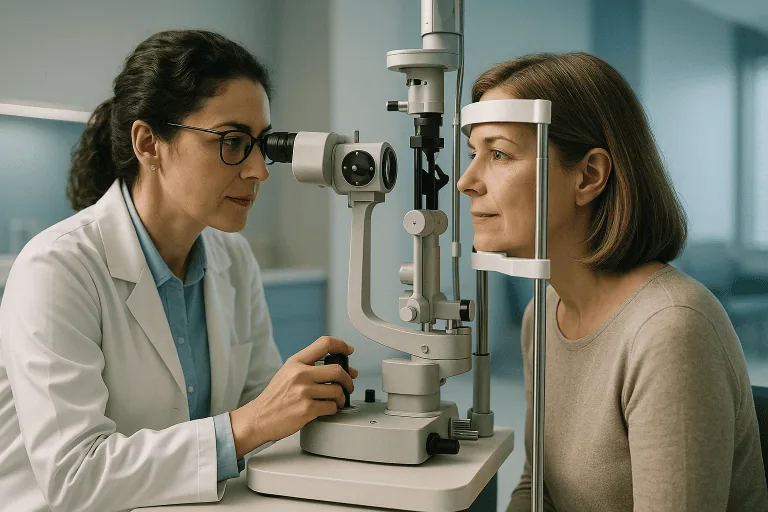
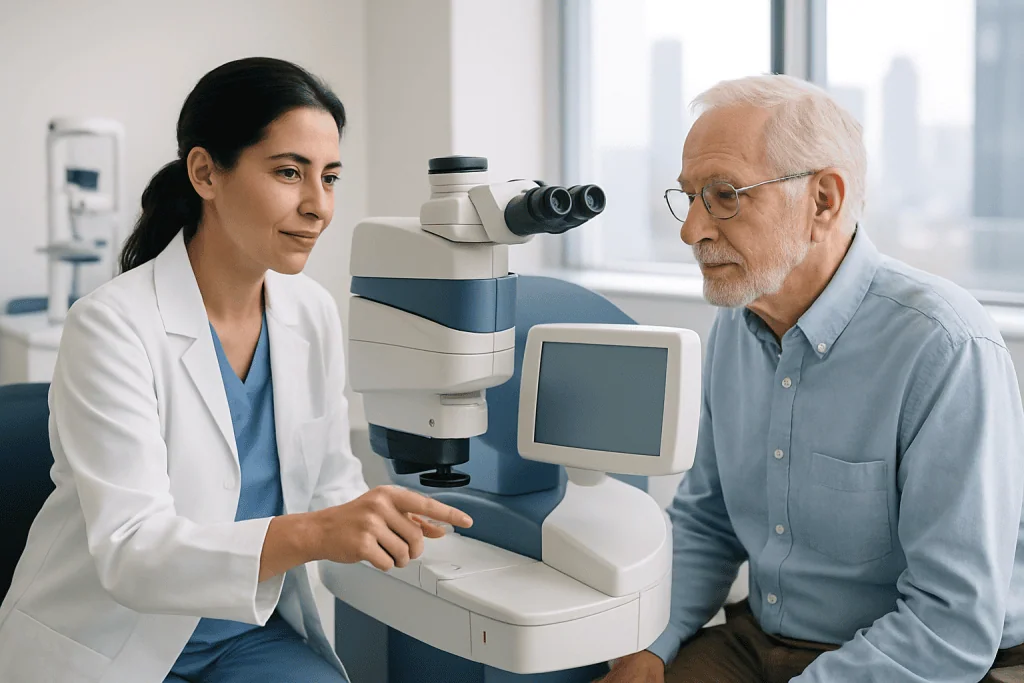
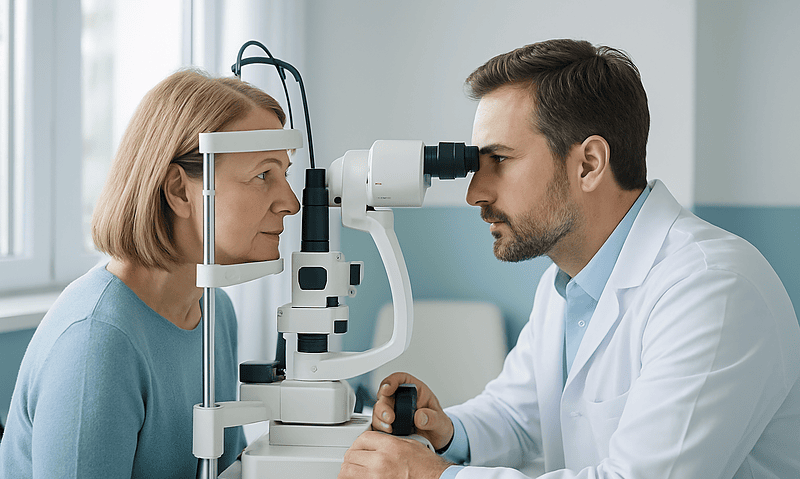
Because these procedures have different goals, the experience varies. Some treatments are performed while you sit at a microscope-like device in the clinic. Others take place in an operating theatre or dedicated laser suite. Many require only anaesthetic eye drops. Some involve a special contact lens placed gently on the eye to focus the laser. Most are outpatient procedures, so you return home the same day.
The key point: laser treatment is a tool, not a diagnosis. Its value depends on accurate assessment. Before recommending any laser procedure, the ophthalmologist must understand the cause of the problem, the anatomy of your eye, the potential benefit and the possible limitations. That matters most for patients with complex histories, previous eye surgery, systemic diseases such as diabetes, or progressive conditions that need long-term monitoring.
Who May Need Laser Eye Treatment
People come to laser eye treatment by two very different routes. Some seek elective refractive correction because they want less dependence on glasses or contact lenses. Others are referred after an eye examination reveals a condition that may threaten vision if left untreated. The urgency, the testing and the treatment plan differ accordingly.
For refractive laser procedures, typical candidates are adults with a stable prescription, healthy corneas and realistic expectations, whether the underlying error is short-sightedness, long-sightedness, astigmatism or a combination. A detailed evaluation is essential, because not everyone who wants laser vision correction is a suitable candidate. Thin corneas, an irregular corneal shape, severe dry eye, an unstable prescription, certain autoimmune conditions, pregnancy-related vision changes and some retinal or optic nerve diseases can all affect eligibility.
For retinal laser treatment, patients may notice sudden floaters, flashes of light, a shadow in the visual field, blurred central vision or reduced night vision. Others have no symptoms at all and are diagnosed during a routine examination, particularly people with diabetes, high myopia, vascular disease or a family history of retinal problems. Retinal laser is considered when the ophthalmologist identifies retinal thinning, tears, abnormal blood vessels, leakage or swelling that laser energy can treat.
For glaucoma-related laser procedures, the indication is usually raised intraocular pressure, a narrow drainage angle or progressive optic nerve change. Some patients are diagnosed at screening; others notice peripheral vision loss only after the disease has advanced. Laser can form part of pressure management, sometimes alongside eye drops or surgery depending on severity.
Patients who have had cataract surgery may later develop posterior capsule opacification, often described as a “secondary cataract”. This is not the cataract returning. It is clouding of the membrane behind the implanted lens, and it can cause blurred vision, glare, halos around lights or difficulty reading. A laser capsulotomy can often restore clarity when the capsule is the cause.
Diagnosis begins with a comprehensive eye examination. Depending on the suspected condition, testing may include visual acuity and refraction, intraocular pressure measurement, slit-lamp examination, corneal mapping, tear film assessment, dilated retinal examination, retinal imaging, optical coherence tomography, visual field testing and optic nerve scans. Together these tests establish whether laser treatment is appropriate, which type is needed, and whether another treatment would be safer or more effective.
How much does laser eye treatment cost?
The cost of laser eye treatment depends on which procedure you actually need, and the range across procedures is wide. A brief capsulotomy is a different undertaking from bilateral refractive surgery, which in turn differs from a staged programme of retinal laser sessions. Within any one procedure, the main cost drivers are the technique and technology used, whether one or both eyes are treated, how much diagnostic testing your case requires, and how much follow-up is included. No responsible figure can be quoted before an examination, because the examination determines the procedure, and sometimes it determines that laser is not the right treatment at all.
Conditions Treated with Laser Eye Procedures
Laser treatments are used across several areas of ophthalmology. The conditions are not interchangeable, and each demands a different technique, energy setting and follow-up plan.
Refractive errors are the most common reason for elective laser eye treatment: myopia, hyperopia and astigmatism. In suitable patients, laser vision correction changes the curvature of the cornea to improve how light enters the eye. The goal is to reduce dependence on corrective lenses, though some patients still need glasses for certain tasks, especially as presbyopia develops with age.
Diabetic retinopathy may need laser treatment when abnormal retinal blood vessels or areas of poor blood supply raise the risk of bleeding, scarring or vision loss. The laser may treat specific leaking points or broader retinal zones, depending on the disease pattern. In some patients, laser is combined with injections or surgery as part of a longer retinal care plan.
Retinal tears and selected retinal holes can sometimes be surrounded with laser spots to create a protective seal, reducing the chance that fluid passes through the tear and causes a retinal detachment. Whether treatment is needed depends on the type, location, symptoms and associated retinal findings.
Glaucoma and narrow-angle conditions may be treated with lasers that help fluid move through the eye’s drainage structures or that create a small opening in the iris. Laser can lower pressure or reduce the risk of an acute pressure episode in selected patients, but it does not remove the underlying disease, and ongoing monitoring remains essential.
Posterior capsule opacification after cataract surgery is commonly treated with a laser that makes a small opening in the cloudy membrane behind the artificial lens. The procedure is usually brief and can improve vision when the capsule is genuinely responsible for the blurring.
Other selected eye disorders can also be managed with lasers, including certain vascular retinal conditions, peripheral retinal degeneration and small areas of retinal leakage. In complex cases, laser may be one part of a broader strategy that includes medication, injections, microsurgery or careful observation.
How Laser Eye Treatment Is Performed
The experience depends on the reason for treatment, but most procedures follow the same structured pathway: evaluation, preparation, treatment, immediate observation, follow-up. The pathway exists to confirm the diagnosis, reduce avoidable risk and make sure you know what to expect before and after.
Preparation Before Treatment
Preparation begins with a detailed consultation. The ophthalmologist reviews your symptoms, prescription history, previous eye procedures, medical conditions, medications, allergies and lifestyle needs. The team also considers timing, when follow-up visits will be needed and who will carry them out.
Before refractive laser measurements, you are usually asked to stop wearing contact lenses for a period, because lenses temporarily alter the shape of the cornea; the exact timing depends on the lens type. Diagnostic testing then evaluates corneal thickness and curvature, pupil size, tear quality, eye dominance, prescription stability and retinal health. These measurements determine whether you are suitable for laser vision correction and which technique fits your anatomy.
Before retinal, glaucoma or capsulotomy lasers, preparation may include dilating drops, pressure-lowering drops, anaesthetic drops, imaging or a repeat examination of the affected area. Your doctor explains whether to eat normally, how your routine medicines should be handled on the day, and why you should arrange transport, vision is often blurry after dilation or treatment, so you should not plan to drive yourself immediately afterwards.
During the Procedure
Most laser eye treatments are performed under local anaesthesia using numbing eye drops. Sedation is not usually required, though additional support can be arranged if you are very anxious or if the laser is part of a more complex plan. You are positioned at the laser system or under a surgical microscope, depending on the procedure.
In refractive laser correction, the eye is held open gently and you are asked to look at a fixation light. The laser delivers pre-programmed pulses based on your measurements. Some techniques create a thin corneal flap; others treat the surface or create a small lens-shaped change within the cornea. The surgeon selects the method based on corneal anatomy, prescription, eye surface health, occupational needs and safety. The laser application itself is typically very brief, though the full appointment takes longer because of preparation and post-treatment checks.
In retinal laser treatment, the ophthalmologist may place a special contact lens on the numbed eye to focus the laser and steady the view. You may see flashes of light. The treatment can feel mildly uncomfortable, particularly when the peripheral retina is treated, but it is generally well tolerated. The number of laser spots and the duration depend on the condition.
In glaucoma laser procedures, laser energy is applied to the drainage angle or the iris, often through a contact lens for precision. Pressure may be checked afterwards, and temporary drops may be prescribed to manage inflammation or short-term pressure changes.
In laser capsulotomy after cataract surgery, the laser creates an opening in the cloudy capsule behind the intraocular lens. The procedure is usually quick. You may notice floaters afterwards; these often become less noticeable over time and are reviewed at follow-up.
Technology Used in Laser Eye Care
Modern laser eye care relies as much on diagnostic and planning systems as on the laser itself. Corneal imaging maps the shape and thickness of the cornea in fine detail. Optical coherence tomography produces cross-sectional images of the retina and optic nerve. Digital retinal imaging documents change over time. Visual field testing evaluates glaucoma-related peripheral vision loss, while pressure measurement and angle assessment guide glaucoma decisions.
During treatment, laser systems deliver controlled energy to specific tissue planes. In refractive procedures, planning software translates your prescription and corneal measurements into a treatment pattern. In retinal procedures, magnified visualisation lets the physician apply treatment to selected areas. In glaucoma and capsulotomy work, focusing systems allow the ophthalmologist to target very small internal structures without a traditional incision.
Technology improves precision, but clinical judgement remains central. The same test result can lead to different recommendations in two patients, because age, symptoms, anatomy, occupation, eye surface health, systemic disease and long-term risk all weigh on the decision.
Typical Duration and Immediate Recovery
Many laser eye procedures take only a short time once you are positioned, though the full visit may last one to several hours across registration, examination, dilation, preparation, treatment and observation. Refractive patients spend extra time on preoperative confirmation and post-procedure instructions; retinal and glaucoma patients may need pressure checks or repeat imaging. Plan your schedule around the specific procedure and your ophthalmologist’s follow-up recommendations rather than a generic timetable.
Afterwards, vision may be blurry, hazy or light-sensitive. Mild irritation, watering, a foreign-body sensation or temporary glare can occur, particularly after refractive surface procedures. Retinal laser can cause temporary dimness or reduced peripheral sensitivity in treated zones. Glaucoma laser may cause mild inflammation or short-term pressure fluctuation. Capsulotomy patients may notice floaters. The medical team provides instructions on eye drops, activity restrictions, warning symptoms and follow-up timing.
Recovery is usually rapid for many laser treatments, but rapid does not mean identical for everyone. Some patients see improvement within hours or days; others need weeks for vision to stabilise or for the treated condition to respond. For medical retina and glaucoma conditions, the goal may be disease control rather than immediate visual improvement, and that distinction is worth understanding before treatment, not after.
Why Acting Early Matters
In eye care, timing can be critical. Some conditions progress quietly before you notice major symptoms. Diabetic retinopathy, glaucoma and certain retinal changes can cause irreversible damage when treatment comes too late. Early evaluation lets the ophthalmologist detect structural change before vision is severely affected and recommend treatment at a stage when intervention is more protective.
With retinal tears, delay increases the risk of retinal detachment: a more serious condition that may require surgery and can threaten sight permanently. This is why symptoms such as sudden flashes, a shower of new floaters or a curtain-like shadow across the visual field are treated by ophthalmologists as time-sensitive findings rather than something to watch and wait on. With glaucoma, uncontrolled eye pressure damages the optic nerve gradually, and visual field lost to glaucoma generally cannot be restored; the realistic goal is to slow or prevent further loss. With diabetic eye disease, timely laser and related treatments can reduce the risk of severe bleeding, scarring and vision decline in selected patients, but the earlier the disease is found, the more options remain open.
Early assessment matters even for elective refractive correction. A pre-treatment examination may uncover dry eye, an unstable refraction, early corneal irregularity or retinal findings that need attention first. Finding those factors before surgery protects you from a procedure that would not have been right for your eyes.
Benefits of Laser Treatments
The potential benefits depend entirely on the condition being treated, but laser procedures share a common pattern: targeted treatment with limited interruption to daily life.
| Benefit | What It Means for You |
|---|---|
| Targeted treatment | Laser energy is directed to precise structures, treating the problem while limiting unnecessary impact on surrounding tissue. |
| Outpatient care | Most laser procedures need no overnight hospital stay, which keeps disruption to work and daily life limited. |
| Rapid return to routine | Many patients resume light daily activities quickly, though reading, screen use, exercise, swimming or flying may be restricted briefly depending on the procedure. |
| Vision improvement or preservation | Some eye lasers improve visual clarity; others aim to protect existing sight by reducing the risk of disease progression. |
| Reduced dependence on medication or glasses in selected cases | Refractive laser may reduce the need for corrective lenses, and certain glaucoma lasers may reduce medication burden for some patients, though monitoring usually continues. |
| Compatibility with broader care plans | Laser treatment can be combined with medication, injections, surgery or observation when a condition needs more than one approach. |
Recovery Timeline After Laser Eye Treatment
Recovery varies by procedure and condition, but the following timeline reflects common expectations for many outpatient eye laser treatments.
| Time Period | What You Can Expect |
|---|---|
| Day 1 | Vision may be blurry or light-sensitive. Mild discomfort, watering or a foreign-body sensation can occur. You use prescribed drops and avoid rubbing the eyes. |
| First week | Many patients return to light routines. Follow-up may check healing, eye pressure, retinal response or visual clarity. Some procedures carry temporary limits on exercise, swimming or eye make-up. |
| First month | Vision often stabilises after refractive procedures, though dryness or night glare may persist temporarily. Retinal or glaucoma patients may need repeat checks to confirm the treatment effect. |
| Longer term | Some patients need periodic monitoring, additional laser sessions, medication or other treatments depending on the underlying disease. Routine eye examinations remain important even when symptoms improve. |
Factors That Influence Outcomes
A good result after any laser treatment depends on both the procedure and your individual characteristics. The first factor is accurate diagnosis. Blurred vision, for example, may be caused by a refractive error, a cataract, dry eye, retinal disease, corneal irregularity, optic nerve disease, or several of these at once. Laser treatment works only when it addresses the correct cause.
For refractive laser procedures, the important factors are prescription stability, corneal thickness and shape, tear film quality, pupil characteristics, age, occupational demands and expectations. Patients with very high prescriptions, thin or irregular corneas, untreated dry eye or early corneal weakening may need alternatives. Some people are better served by lens-based procedures, contact lenses or continued glasses than by corneal laser surgery, and hearing that plainly at consultation is a mark of a careful clinic, not a failure.
For retinal laser procedures, outcomes are shaped by the stage of disease at treatment, the location of the problem, whether the macula is involved, blood sugar and blood pressure control, and the presence of bleeding or scarring. In diabetic eye disease, laser is only one part of care; systemic disease control is essential. Patients who maintain regular diabetic care and ophthalmic follow-up generally have better opportunities to preserve vision than those treated only when symptoms become severe.
For glaucoma laser treatments, baseline pressure, glaucoma type, angle anatomy, existing optic nerve damage, medication adherence and follow-up schedule all matter. Laser may reduce pressure in selected cases, but the effect varies between patients and can change over time. Some people still need drops, repeat laser or surgery afterwards.
For capsulotomy after cataract surgery, outcomes are often favourable when posterior capsule opacification is the main cause of blurring. But if retinal disease, glaucoma, corneal disease or macular degeneration is also present, vision may not improve as much as hoped, which is exactly why a full eye examination comes before the laser, not after it.
Your own participation matters too. Using drops as prescribed, avoiding eye rubbing, attending follow-up, managing systemic conditions and reporting warning symptoms promptly all contribute to safer healing. You should leave with written instructions you can understand and a clear plan for who reviews you next. The same principle applies to skin and hair laser treatments: sun protection, aftercare and completing the planned course have as much influence on the result as the device itself.
Risks and Side Effects of Laser Treatments
No laser treatment is free of risk, and a trustworthy discussion covers the downsides as openly as the benefits. The specific risks depend on the tissue treated, the depth of treatment and your individual healing, but they fall into recognisable patterns for each field.
Refractive eye laser procedures most commonly cause temporary dry eye, which can last weeks or months and usually improves with lubricating drops and time. Some patients notice glare, halos or starbursts around lights at night, particularly early in recovery. Vision can end up slightly under- or over-corrected, and some patients need an enhancement procedure later. Rarer risks include flap-related complications with techniques that create a corneal flap, infection, and, very rarely, progressive corneal weakening, which is precisely what detailed pre-operative corneal imaging is designed to screen out.
Retinal and glaucoma lasers are generally well tolerated, but retinal treatment over large areas can cause lasting changes in peripheral or night vision, and any retinal laser can cause temporary blurring. Glaucoma laser procedures can trigger short-term inflammation or a temporary rise in eye pressure, which is why pressure is often checked before you leave the clinic; the pressure-lowering effect of some glaucoma lasers also fades over time, so monitoring never stops. After laser capsulotomy, new floaters are common and usually settle, and a small change in retinal risk is one of the reasons ophthalmologists ask specifically about new flashes or shadows at follow-up visits.
Skin laser treatments reliably cause redness, swelling and, with ablative resurfacing, crusting and peeling as the old surface sheds. The more consequential risks are pigmentary: treated skin can darken or lighten, sometimes for months, and darker skin types are more prone to both, which is why device choice, conservative settings and a test patch matter so much. Infection is uncommon but possible on healing skin, facial resurfacing can reactivate cold sores in people who carry the virus, and aggressive treatment can, rarely, scar. Strict sun protection before and after treatment is not cosmetic advice; it is the single most important factor you control in preventing pigment problems.
Hair reduction lasers share the skin risks in milder form: redness and follicular swelling that settle within hours to days, occasional pigment change, and burns when settings are wrong for the skin type. Paradoxical hair growth, new fine hair appearing near the treated area, is an uncommon but recognised effect, seen more often on the face.
Two safety habits apply to every laser treatment. First, protective eyewear is mandatory for everyone in the room during skin and hair laser work, and eye protection or careful shielding is built into every ophthalmic procedure, laser light that helps one tissue can permanently damage an unprotected retina. Second, full disclosure reduces risk: the treating clinician needs to know about all medicines you take, previous scarring or keloids, cold sores, recent tanning, pregnancy, autoimmune conditions and any earlier laser or surgical treatment in the same area. None of these automatically rules out treatment, but each can change the timing, the settings or the choice of device, and a clinician who asks about them is showing the level of care the treatment deserves.
Making a Sound Decision About Laser Treatment
Laser treatments play a genuine role in modern medicine. For some patients they mean clearer vision and less dependence on corrective lenses. For others they protect sight from retinal disease, glaucoma-related damage or post-cataract clouding. For others still they mean smoother skin after resurfacing or long-term reduction of unwanted hair. In every case, the most important step is the same: choosing the right treatment for the right reason, based on a thorough examination and a realistic discussion of benefits, limitations and follow-up.
Whatever laser treatment you are considering, and wherever you are considering it, a few habits make the process safer. Bring previous records, prescriptions, imaging, medication lists, surgical history, to any consultation, because they change what a specialist can tell you. Ask which device and technique is proposed and why it fits your anatomy. Ask what the alternatives are, including doing nothing for now. And treat any answer that sounds like certainty with the same caution a careful clinician would. Precision is what a laser offers; honesty about its limits is what a good laser treatment plan is built on.
Preparation
- A detailed eye examination is performed to assess vision, corneal thickness, eye pressure and retinal health. Contact lenses may need to be stopped before evaluation, and patients should share current medications and eye disease history. The ophthalmologist explains the laser type, expected benefits, risks and aftercare plan.
Aftercare
- Patients may receive protective eyewear and prescribed eye drops to reduce inflammation and infection risk. Rubbing the eyes, swimming and dusty environments should be avoided for the period advised by the doctor. Follow-up visits are important to monitor healing and treatment response.
Frequently Asked Questions
What affects the cost of laser eye treatment?
Cost depends on the diagnosis, laser technique, diagnostic tests, surgeon assessment, hospital setting, medications, follow-up plan and whether travel support or translation services are included. A personalised quote is only possible after specialist evaluation.
How can I get a personalised quote from Acibadem International?
You can request a free consultation by sharing your eye diagnosis, recent examination results and any imaging or prescription details. The international patient team can then guide you on the likely pathway and prepare a tailored estimate after medical review.
Are laser treatments usually outpatient procedures?
Many laser eye procedures are performed on an outpatient basis, but preparation, observation and follow-up requirements vary by condition and technique. Your ophthalmologist will explain what to expect for your specific case.
Is the cheapest laser option always the best choice?
No. The appropriate option should be based on eye health, safety, expected benefit, technology suitability and follow-up needs, not price alone. Suitability is decided by a specialist after diagnostic testing.
What should an international patient check before accepting a quote?
Ask what is included, such as consultation, diagnostic tests, the laser procedure, standard medications, follow-up visits, translation support and any travel-related assistance. Also confirm what may require extra billing if the treatment plan changes.
Medically reviewed by the Acıbadem International Medical Board August 31, 2026
See our medical review board →
Update history
- PublishedJune 8, 2026
- Medical review approvedAugust 31, 2026
- Last content updateAugust 31, 2026
References1
Trusted care for international patients
From the Acibadem Blog
What Happens During an Eye Laser Treatment: Drops, the Lens on Your Eye and the Flashes
During an in-office eye laser treatment, a clinician places numbing drops (and sometimes dilating or pressure-lowering drops) in your eye, rests a small contact…