Ablation Therapy
Ablation therapy uses targeted energy to destroy abnormal tissue, commonly for heart rhythm disorders. It is typically performed with catheter-based techniques and imaging guidance.
Quick answer
Ablation therapy uses precisely targeted energy, most often radiofrequency heat or freezing, to destroy or isolate a small area of abnormal tissue. In cardiac care, thin catheters are guided through a blood vessel to the heart, where the energy blocks the faulty electrical signals behind an arrhythmia. Most procedures are catheter-based rather than open surgery, and many patients go home the same day or after one night.
What Is Ablation Therapy?
Ablation therapy is a minimally invasive treatment that uses targeted energy to destroy or isolate small areas of abnormal tissue. In cardiac care, ablation is most commonly used to treat heart rhythm disorders, arrhythmias, which occur when the heart’s electrical system sends signals too quickly, too slowly or in an irregular pattern. It is typically considered for patients whose arrhythmia causes symptoms, carries risk, or does not respond well enough to medication.
Most cardiac ablation procedures are performed with thin, flexible tubes called catheters. These are inserted through a blood vessel, usually in the groin, and guided to the heart. Once the specialist identifies the tissue responsible for the abnormal rhythm, energy is delivered through the catheter tip to create a very small, controlled scar. That scar blocks or interrupts the problematic electrical signal at its source, rather than only suppressing it with drugs.
Ablation is not one single procedure. It is a family of techniques tailored to the electrical problem being treated. A patient with a simple supraventricular tachycardia needs a different strategy from a patient with atrial fibrillation, atrial flutter or a complex ventricular arrhythmia. The planning depends on detailed electrical mapping, imaging guidance and the patient’s overall heart health.
What is heart ablation therapy?
Heart ablation therapy is the catheter-based treatment of an arrhythmia by scarring the specific spot of heart tissue where the faulty signal starts or travels. The electrophysiologist first maps the heart’s electrical activity from the inside, confirms the abnormal pathway, circuit or trigger site, then applies energy to that exact location. The rest of the heart muscle is left untouched. That precision is the reason the procedure works: the target is usually a few millimetres of tissue, not the heart as a whole.
Ablation meaning: one word, several different treatments
The ablation meaning in medicine is simply the deliberate destruction of abnormal tissue with targeted energy: the word is not limited to the heart. Ablative techniques are also used elsewhere: androgen ablation is a form of hormone therapy that suppresses testosterone in prostate cancer care, endovenous ablation closes faulty leg veins, and freezing-based cryotherapy can ablate abnormal tissue in several organs. This page is about catheter-based cardiac ablation for rhythm disorders, which is what most people mean when they search for the term in a heart context.
Radiofrequency ablation and cryoablation: the two main energy types
Radiofrequency ablation uses heat delivered through the catheter tip to create a controlled lesion; cryoablation freezes the target tissue instead. Both aim at the same result: a small scar that no longer conducts the abnormal signal. The choice between heat and cold depends on the arrhythmia type, where the abnormal tissue sits, the patient’s anatomy and the electrophysiologist’s treatment plan. Neither is universally better; each has situations where it is the more sensible tool.
 Dr. Lanya Qadir KhayatMDBoard Commentary
Clinical outcomes in catheter ablation depend on accurate electrophysiological mapping, appropriate patient selection and the experience of the electrophysiology team. In a published study involving the Acıbadem City Clinic Cardiovascular Center, pulmonary vein isolation was achieved in all 50 patients undergoing ablation-index-guided high-power radiofrequency ablation for atrial fibrillation, with 96% remaining free from clinical atrial fibrillation or atrial tachycardia recurrence at preliminary six-month follow-up. Acıbadem-affiliated physicians have also published successful ablation of complex ventricular arrhythmias originating from uncommon anatomical sites, highlighting the importance of advanced mapping in challenging cases.
When a Heart Rhythm Problem Begins to Shape Daily Life
A heart rhythm disorder can feel unpredictable. Some people experience brief episodes of fluttering or racing in the chest. Others have dizziness, shortness of breath, chest discomfort, fatigue, or a sudden sense that the heart is “out of control.” For many patients, the hardest part is not the symptom itself but the uncertainty: Will it happen again? Is it dangerous? Do I need lifelong medication? Is there a more definitive option?
Ablation enters the picture when an abnormal electrical pathway or irritated area of heart tissue is driving the arrhythmia. For selected patients, treating that source can bring meaningful symptom relief, reduce reliance on certain medications and lower the chance of recurrent rhythm episodes. It is not the right answer for everyone, and part of an honest evaluation is establishing whether it is the right answer for you.
Who May Need Ablation Therapy?
Ablation may be recommended when an arrhythmia causes symptoms, increases health risk, does not respond well to medication, or calls for a strategy beyond long-term drug therapy. It is also considered when rhythm-control medication causes side effects, is unsuitable because of other medical conditions, or fails to prevent recurrent episodes.
Common symptoms that lead people to seek evaluation include palpitations, rapid heartbeat, skipped beats, chest pressure, breathlessness, dizziness, near-fainting, fainting, reduced exercise tolerance and unusual fatigue. Some patients notice episodes after caffeine, alcohol, stress, poor sleep or exercise. Others have no obvious trigger. In atrial fibrillation, symptoms may be intermittent or persistent, and some people are diagnosed only after a routine electrocardiogram or an assessment for something else entirely.
How is the diagnosis confirmed before ablation?
Diagnosis begins with a careful history and physical examination, followed by rhythm documentation, because the success of ablation depends on treating the right arrhythmia. The cardiology team will ask when symptoms started, how long they last, what triggers them, whether they stop suddenly or gradually, and whether there is a history of heart disease, thyroid disease, sleep apnoea, high blood pressure, stroke or family rhythm disorders. A standard electrocardiogram may capture the rhythm if it is present during the test. If episodes are intermittent, longer monitoring may be needed: a Holter monitor, event recorder, patch monitor or, in selected cases, an implantable monitor.
Additional tests may include echocardiography to assess heart structure and pumping function, blood tests to check contributing factors, stress testing when exercise-related symptoms or coronary artery disease are suspected, and advanced imaging when anatomy needs clarifying. In some cases an electrophysiology study is performed: an invasive diagnostic procedure in which catheters record the heart’s electrical activity from the inside and help pinpoint the arrhythmia’s origin.
Ablation is most appropriate when the expected benefit of controlling the arrhythmia outweighs the procedural risk. That judgement is individual. Age alone does not decide suitability. The team weighs the specific rhythm disorder, symptom burden, heart structure, prior treatments, stroke risk, bleeding risk, other conditions and the patient’s own goals.
Conditions Cardiac Ablation Treats
Cardiac ablation can treat several distinct rhythm disorders, and the technique, expected recovery and likelihood of needing repeat treatment vary with each one.
Atrial fibrillation is one of the most common reasons for ablation. Electrical signals in the upper chambers become chaotic, often involving triggers near the pulmonary veins. Ablation for atrial fibrillation typically aims to electrically isolate these trigger areas. It may be considered for patients with symptomatic atrial fibrillation despite medication, patients who cannot tolerate rhythm drugs, or selected patients for whom early rhythm control is clinically appropriate.
Atrial flutter is a more organised circuit in the upper chambers. Typical atrial flutter often responds well to a defined ablation line that interrupts the circuit. Some patients have both flutter and fibrillation, which shapes the treatment plan.
Supraventricular tachycardia, including atrioventricular nodal re-entrant tachycardia and accessory pathway-related tachycardia, causes sudden episodes of rapid heartbeat. Because the abnormal pathway or circuit is usually well defined, ablation is often a good fit for these rhythms.
Wolff-Parkinson-White syndrome involves an extra electrical pathway between the upper and lower chambers. In some patients this pathway can create very rapid rhythms. Ablation may be recommended when symptoms occur or when testing suggests higher-risk pathway properties.
Premature ventricular contractions may be treated with ablation when they are frequent, symptomatic or associated with weakened heart function. Treatment focuses on the site where the abnormal beats originate.
Ventricular tachycardia is a potentially serious rhythm from the lower chambers. It may occur after a heart attack, or with cardiomyopathy, inherited rhythm conditions or structural heart disease. Here, ablation is often one part of a broader plan that can include medication, implantable defibrillator therapy and management of the underlying disease.
How the Procedure Is Performed
The process begins well before procedure day. A pre-treatment evaluation confirms the diagnosis, defines the target and flags safety considerations. Patients may undergo electrocardiography, rhythm monitoring, echocardiography, blood tests and, for atrial fibrillation or complex arrhythmias, cardiac computed tomography or magnetic resonance imaging to map the anatomy of the heart and nearby structures.
Your medication plan is reviewed in detail. Some rhythm medications may need adjusting beforehand so the arrhythmia can be mapped more accurately, and blood thinners may be continued or altered depending on the arrhythmia, stroke risk and procedural plan. All of these decisions sit with your treating physician; no medicine should change without that direction.
Before ablation, patients are usually asked not to eat or drink for a defined period. The anaesthesia team then decides between local anaesthesia with sedation and general anaesthesia. Many ablations require the patient to be comfortable and still for several hours, especially when detailed mapping is needed, so the approach is chosen around the arrhythmia type, patient health and procedural complexity.
What happens during an ablation?
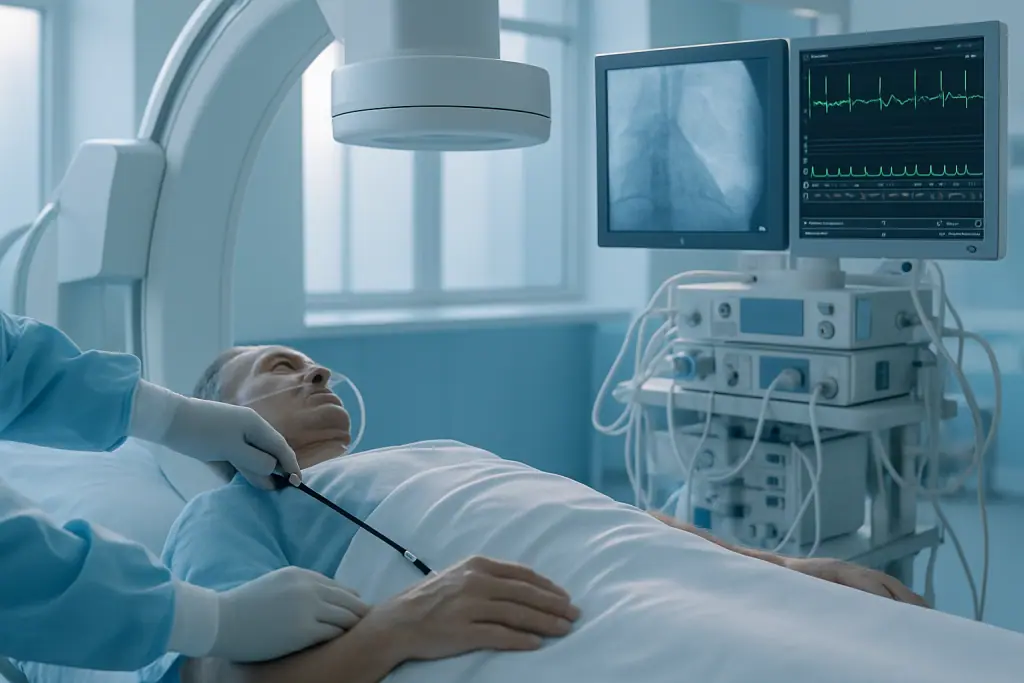
During an ablation, catheters are guided to the heart, the electrical problem is mapped, and energy is applied to the precise spot causing it. The typical sequence runs as follows:
- An intravenous line is placed, monitoring equipment is attached, and the access area, usually the groin, is cleaned and numbed.
- The physician inserts catheters through a vein and advances them toward the heart under imaging guidance. Depending on the target, access through the neck, shoulder area or an artery may be used instead.
- The electrophysiologist maps the heart’s electrical activity. Mapping systems build a three-dimensional representation of the cardiac chambers and their signals, reducing reliance on continuous X-ray. Fluoroscopy, ultrasound and intracardiac echo may also guide catheter position.
- For atrial fibrillation, catheters are often guided into the left atrium through a carefully controlled puncture in the wall between the atria, transseptal access, to reach the areas around the pulmonary veins. For supraventricular tachycardia, the team locates the abnormal pathway or circuit. For ventricular arrhythmias, mapping may involve both activation patterns and scar-related circuits.
- Once the target is confirmed, energy is applied: radiofrequency heat or cryoablation freezing, creating the controlled lesion.
- The physician tests the rhythm repeatedly to confirm the abnormal signal has been eliminated or the circuit can no longer be induced. Sometimes medication is given during the procedure to provoke the arrhythmia and prove the target has been dealt with.
- Catheters are removed and pressure is applied to the access sites to prevent bleeding. Some patients need to lie flat for several hours afterwards.
Procedure length varies. A straightforward supraventricular tachycardia ablation may finish relatively quickly, while atrial fibrillation or ventricular tachycardia ablation can take several hours. Time also depends on anatomy, the number of targets, whether the arrhythmia is present during the procedure, and how much mapping is required.
Is ablation a serious surgery?
Ablation surgery, as patients often call it, is in most cases not open surgery at all: it is a catheter-based procedure performed through a blood vessel, without opening the chest. It is still an invasive medical procedure carried out inside the heart, so it carries real risks that your electrophysiologist will discuss with you, including bleeding or bruising at the access site and rarer complications related to the heart and surrounding structures. But compared with open procedures such as heart bypass surgery, hospital stays are typically shorter and the return to normal activity faster for many patients. Whether it is “serious” for you depends on the arrhythmia being treated, your heart’s structure and your overall health, which is exactly what the pre-procedure evaluation weighs.
How painful is ablation surgery?
Most patients do not feel significant pain during the procedure, because it is performed under sedation or general anaesthesia and the access site is numbed. Some people notice pressure at the groin, brief chest discomfort or a burning sensation during energy delivery when sedation rather than general anaesthesia is used; the team adjusts comfort levels throughout. Afterwards, mild soreness or bruising where the catheters entered is common and usually settles within days. Discomfort varies from person to person, and the anaesthesia plan is chosen partly to manage it.
Recovery After Ablation Therapy
Monitoring continues in the recovery area or hospital room, where the team watches heart rhythm, blood pressure, oxygen level, access-site healing and symptoms. Many patients go home the same day or after an overnight stay, depending on the type of ablation and their overall condition.
How long does it take to recover from an ablation?
Most patients resume light daily activities within the first week, though the full picture, especially after atrial fibrillation ablation, plays out over about three months while the treated tissue heals. Mild soreness or bruising at the insertion site is common, and some tiredness in the first days is normal. After atrial fibrillation ablation, brief palpitations may occur during the healing period and do not always mean the procedure has failed; medications may continue temporarily, and follow-up rhythm monitoring determines the longer-term result.
| Time Period | What Patients Can Expect |
|---|---|
| Day 1 | Monitoring continues after the procedure. Patients may need to lie flat for several hours. Mild groin soreness, bruising or fatigue is common. Some go home the same day; others stay overnight. |
| First week | Most patients resume light daily activities. Heavy lifting, strenuous exercise and long periods of standing may be restricted for several days. The access site should be watched for swelling, bleeding, increasing pain or redness. |
| First month | Energy levels usually improve gradually. Some palpitations may occur, especially after atrial fibrillation ablation. Medications may continue while the heart heals. Follow-up planning and rhythm monitoring matter here. |
| First three months | Often treated as a healing or observation period after atrial fibrillation ablation. Doctors assess symptom changes, rhythm recordings, medication needs and whether further treatment is necessary. |
| Longer term | Patients may return to normal exercise and travel when cleared by their physician. Ongoing management can include blood pressure control, sleep apnoea treatment, weight management, anticoagulation decisions and periodic rhythm follow-up. |
Why Acting Early Matters
Not every arrhythmia needs ablation, and some rhythm disturbances can safely be monitored. But when an arrhythmia is frequent, symptomatic, sustained or linked to structural heart disease, timely evaluation matters. Delay can allow symptoms to become more disruptive and may increase the chance of emergency visits, medication escalation or complications related to the rhythm itself.
In atrial fibrillation, ongoing irregular rhythm can contribute to fatigue, reduced exercise capacity, worsening heart failure in susceptible patients, and an increased risk of stroke. Stroke prevention needs its own assessment and may involve anticoagulant medication, regardless of whether ablation is planned. Early rhythm evaluation helps determine whether ablation, medication, lifestyle treatment or a combined approach fits best.
Some fast rhythms can weaken the heart muscle if they occur very frequently or continue for long periods. This is sometimes reversible once the rhythm is controlled, but earlier recognition improves the chance of protecting heart function. Ventricular arrhythmias demand especially careful assessment because they may signal serious underlying heart disease.
Acting early also protects the diagnosis itself. Palpitations have many causes: benign extra beats, anxiety-related symptoms, thyroid imbalance, anaemia, medication effects, stimulant use, structural heart disease. A precise diagnosis prevents unnecessary treatment and identifies the patients most likely to benefit from ablation.
Benefits of Ablation Therapy
The potential benefits depend on the rhythm disorder, the state of the heart, and the accuracy of diagnosis and mapping. In broad terms:
| Benefit | What It Means for You |
|---|---|
| Targeted treatment of the rhythm source | Ablation addresses the abnormal electrical pathway, circuit or trigger area rather than only suppressing symptoms with medication. |
| Reduction in arrhythmia episodes | Many patients experience fewer episodes, shorter episodes or improved rhythm stability after a successful procedure. |
| Improved quality of life | Better rhythm control may reduce palpitations, fatigue, dizziness, breathlessness and the anxiety that comes with unpredictable symptoms. |
| Potential reduction in long-term medication burden | Some patients may be able to reduce or stop certain rhythm-control medicines under physician supervision, depending on their condition. |
| Protection of heart function in selected cases | Controlling frequent or sustained abnormal rhythms can reduce strain on the heart and may support recovery of pumping function when rhythm is a contributing factor. |
| Minimally invasive approach | Most cardiac ablations are performed through catheter access rather than open surgery, allowing a shorter hospital stay and faster return to normal activity for many patients. |
What Influences a Good Result?
A good result begins with the right diagnosis. Success depends heavily on identifying the exact rhythm disorder and understanding how it behaves. A brief palpitation from occasional benign extra beats needs a different approach from sustained supraventricular tachycardia, atrial fibrillation or ventricular tachycardia. High-quality rhythm documentation before treatment removes guesswork.
The type of arrhythmia is one of the strongest outcome factors. Many well-defined supraventricular tachycardias respond very well to ablation, and typical atrial flutter often has favourable results when the circuit is clearly identified. Atrial fibrillation is more variable: outcomes are influenced by triggers, atrial size, how long the condition has existed, scarring, inflammation, age, blood pressure, sleep apnoea, obesity, alcohol use and other medical conditions. Persistent atrial fibrillation is generally more complex to treat than intermittent atrial fibrillation.
Heart structure matters. Patients with normal heart size and function have different expectations from those with cardiomyopathy, valve disease, prior heart attack, congenital heart disease or significant atrial enlargement. When ventricular arrhythmias occur in a scarred or weakened heart, ablation may reduce rhythm episodes but is usually only one part of a broader management plan.
Timing can influence results too. In some patients, earlier rhythm control may help prevent arrhythmia patterns from progressing and reduce remodelling of heart tissue. That does not mean every patient should undergo ablation immediately, but it does argue for careful evaluation before symptoms become frequent or the rhythm becomes persistent.
Medication management remains part of the picture. Anticoagulants, antiarrhythmic drugs, blood pressure medicines and heart failure therapies may continue before or after ablation. Importantly, ablation does not automatically remove the need for blood thinners: in atrial fibrillation, anticoagulation decisions rest on stroke risk factors and physician assessment, not on whether the rhythm feels better.
Lifestyle and related conditions affect recurrence. Treating sleep apnoea, controlling blood pressure, reducing excess weight where appropriate, limiting alcohol, managing diabetes, improving conditioning and addressing thyroid disease all support rhythm stability. These measures are not substitutes for ablation when ablation is indicated, but they strengthen the overall plan.
Finally, operator experience, procedural planning, mapping quality and follow-up all matter. Ablation is a technical procedure, but it is also a clinical decision. The best outcomes come when electrophysiology expertise is combined with careful patient selection, appropriate technology, clear communication and ongoing care afterwards.
How Ablation Care Is Organised at Acibadem
Patients considering ablation usually want more than a procedure. They want confidence that the diagnosis is reliable, that the recommendation is personal rather than generic, and that communication will hold up before, during and after treatment. Acibadem’s approach to arrhythmia care is built around those needs.
Care sits within a broader cardiac programme: cardiologists, electrophysiologists, anaesthesiology teams, imaging specialists, intensive care and rehabilitation resources when needed. Complex cases can be reviewed in multidisciplinary discussion, particularly when arrhythmia care overlaps with heart failure, structural or valve disease, coronary disease, congenital conditions or stroke prevention, situations where the cardiovascular surgery team may also be involved in planning.
The evaluation follows evidence-based international treatment principles. Patients are assessed not only on whether ablation can be performed, but on whether it is the right treatment at the right time. That means reviewing previous electrocardiograms, rhythm monitor reports, echocardiography, angiography or imaging results where available, medication history, anticoagulation status and any prior ablation procedures. For patients seeking a second opinion, this kind of review clarifies whether ablation is appropriate, whether more testing is needed, and what the pathway would realistically involve.
Electrophysiology laboratories use mapping, imaging and monitoring systems to guide catheter placement and define the electrical source of the arrhythmia. Three-dimensional mapping reconstructs the heart chamber and localises abnormal signals; imaging guidance supports safe access and navigation; continuous monitoring lets the team respond quickly to changes during the procedure. The point of this technology is not sophistication for its own sake: it is precision, less unnecessary tissue injury, and treatment tailored to the individual anatomy and rhythm pattern.
Expectations are handled plainly. Ablation works well for many rhythm disorders, but outcomes vary. Some patients need a repeat ablation. Some continue medication for a period, or longer. Some require ongoing anticoagulation regardless of how the rhythm feels. A responsible treatment plan sets this out before the procedure, so decisions rest on realistic information rather than simple promises.
What a Specialist Evaluation Involves
An accurate diagnosis, followed by a realistic discussion of whether ablation fits the specific rhythm disorder, is the foundation of any treatment decision, particularly when palpitations, rapid heartbeat, dizziness, fainting or recurrent atrial fibrillation persist despite medication.
An electrophysiology review typically draws on the material that already exists: prior electrocardiograms, rhythm monitoring results, echocardiography and other imaging reports, a current medication list, and notes from any previous procedures. From that starting point, the specialist can confirm or refine the diagnosis, recommend any additional testing, and set out the options, which may be ablation, continued medication, lifestyle treatment, watchful monitoring, or a combination. Understanding what each path involves, including the possibility of repeat treatment and ongoing anticoagulation, is what allows a genuinely informed decision about treatment.
Preparation
- Before ablation therapy, patients usually undergo blood tests, ECG or imaging studies, and a detailed medication review. Blood thinners or rhythm medications may need adjustment as advised by the physician. Patients are typically asked to fast for several hours before the procedure.
Aftercare
- After the procedure, patients are monitored for heart rhythm, bleeding, or access-site complications. Mild soreness or bruising at the catheter site can occur and usually resolves quickly. Follow-up visits and rhythm checks help assess treatment response and guide medications.
Frequently Asked Questions
What affects the cost of ablation therapy?
The main factors are the type of arrhythmia, the complexity of mapping, the catheter and energy technology used, anaesthesia needs, hospital stay, specialist fees, and whether additional diagnostics or follow-up are included.
How can I get a personalised quote for ablation therapy in Turkey?
You can request a free consultation by sharing your medical records, rhythm reports, test results, current medications, and any previous treatment history. A specialist review is needed before a personalised treatment plan and quote can be prepared.
What is usually included in an international patient package?
Packages may include medical review, specialist consultation, pre-procedure testing, the ablation procedure, hospital stay, interpreter support, care coordination, and follow-up planning. Inclusions and exclusions should always be confirmed before travel.
Can the final cost change after arrival?
Yes. If additional tests reveal a more complex rhythm problem, if a different ablation method is recommended, or if a longer hospital observation is needed, the treatment plan and cost may change. The care team should explain any changes before proceeding.
Is ablation therapy suitable for every heart rhythm disorder?
No. Suitability depends on the arrhythmia type, symptoms, heart structure, previous treatments, and overall health. An electrophysiology specialist decides whether ablation, medication, device therapy, or another approach is most appropriate.
Medically reviewed by the Acıbadem International Medical Board August 30, 2026
See our medical review board →
Update history
- PublishedJune 5, 2026
- Medical review approvedAugust 30, 2026
- Board commentary addedAugust 30, 2026
- Last content updateAugust 30, 2026
References2
- ESC Guidelines 2024 escardio.org
- pubmed.ncbi.nlm.nih.gov
Trusted care for international patients
From the Acibadem Blog

Ablation Therapy or Long-Term Rhythm Medicines: How Cardiologists Weigh the Two Paths
Catheter ablation and long-term rhythm medicines are both accepted, guideline-supported ways to manage many arrhythmias, and neither is universally better. Randomized trials show ablation…