LASIK
LASIK is a laser vision correction procedure that reshapes the cornea to reduce dependence on glasses or contact lenses for nearsightedness, farsightedness, or astigmatism.
Quick answer
LASIK is a laser vision correction procedure that reshapes the cornea so light focuses accurately on the retina. A thin corneal flap is created, an excimer laser removes microscopic amounts of tissue underneath, and the flap is repositioned without stitches. It treats myopia, hyperopia and astigmatism in adults with a stable prescription, and vision often improves within a day or two.
LASIK: What It Is, What It Does, and Who It Suits
LASIK is a laser vision correction procedure that reshapes the cornea, the clear front surface of the eye, so that light focuses accurately on the retina. It treats short-sightedness (myopia), long-sightedness (hyperopia) and astigmatism in adults whose prescription has stopped changing. The aim is to reduce your dependence on glasses and contact lenses, not to promise you will never need eyewear again.
For most people considering LASIK, glasses and lenses are a daily inconvenience rather than a medical crisis. You may be tired of reaching for glasses first thing in the morning, managing dry or irritated contact lenses, packing lens supplies for every trip, or feeling limited during sport, work or family life. You may also be cautious, and rightly so. Eye surgery is not something to approach lightly. It is natural to ask whether LASIK is safe, whether the result will hold, whether it will hurt, and whether your eyes are actually suitable.
The most important thing to understand before anything else: LASIK is not a one-size-fits-all procedure. A good outcome starts with careful evaluation, not with the laser. Your corneal thickness, corneal shape, tear film, prescription stability, pupil size, age, occupation and expectations all matter. Some people are excellent candidates. Others are better served by a different type of laser correction, a lens-based procedure, or by staying with glasses. A responsible LASIK programme does not ask whether you want surgery. It asks whether LASIK is the right procedure for your eyes, and it is prepared to say no.
LASIK is also one of the procedures international patients most often travel for, and Turkey has a large, well-established refractive surgery sector. At Acibadem, LASIK evaluation and treatment follow a structured ophthalmology pathway: detailed diagnostic testing, experienced surgical assessment, modern laser planning and coordinated support for patients arriving from abroad. A dedicated section further down this page explains how the pathway works when you are travelling to Turkey for treatment, including timing, follow-up and the practicalities of flying home.
What Is LASIK Eye Surgery and How Does It Work?
LASIK eye surgery: the name stands for laser-assisted in situ keratomileusisis a refractive procedure, meaning it changes the way your eye bends, or refracts, light. The cornea provides much of the eye’s focusing power. In a well-focused eye, light passing through the cornea and lens lands directly on the retina. When you have a refractive error, light focuses in front of the retina, behind it, or unevenly across it, and the result is blurred vision at distance, near, or both.
LASIK corrects this by reshaping the cornea with a highly precise excimer laser. The procedure involves creating a thin corneal flap, gently lifting it, applying the laser treatment to the tissue underneath, and then repositioning the flap so it adheres naturally as it heals. No stitches are needed. Because the surface layer of the cornea is largely preserved, visual recovery tends to be faster than with surface-based laser techniques such as PRK. Many patients notice clearer vision within the first day or two, although healing and stabilisation continue for weeks and sometimes months afterwards.
One honest limit belongs in the definition, not the small print: LASIK does not stop the eye from ageing. Most people develop presbyopia, the age-related need for reading glasses, from their 40s onwards. LASIK can sharpen your distance vision, but if you are approaching presbyopia you may still need reading glasses later, or you may discuss strategies such as monovision with your surgeon where medically suitable.
How does a laser operation for eyesight change your focus?
A laser operation for eyesight works on a simple optical principle: change the curvature of the cornea and you change where light comes to a focus inside the eye. In myopia, the cornea is flattened slightly so the focal point moves back onto the retina. In hyperopia, the central cornea is steepened to increase focusing power. In astigmatism, an uneven curvature is smoothed into a more regular shape. The excimer laser removes tissue in microscopic amounts, and the pattern of removal is calculated from your individual measurements, corneal maps, thickness readings, pupil size and refraction, rather than from your glasses prescription alone. In selected patients, wavefront-guided or customised profiles address subtle optical irregularities that matter for night vision and visual sharpness.
What is Femto-LASIK?
Femto-LASIK is LASIK in which the corneal flap is created with a femtosecond laser rather than a mechanical blade. The femtosecond laser lets the surgeon plan the flap’s depth, diameter and edge profile with precision before it is made. It is worth being clear about what this changes and what it does not: the flap-creation step is different, but the corneal reshaping itself is still performed with the excimer laser in both approaches. Your surgeon will explain which method is planned for your eyes and why.
Is every laser for eyes treatment the same?
No, what people often search for as laser for eyes treatment is a family of procedures, not a single operation. LASIK is the flap-based technique described on this page. PRK and LASEK work on the corneal surface without a flap, which can be preferable for thinner corneas or certain occupations, at the cost of a slower early recovery. SMILE removes a small lens-shaped piece of tissue through a keyhole incision. Beyond lasers, phakic intraocular lenses and refractive lens exchange treat prescriptions or eye anatomies that laser reshaping cannot safely address. Medical lasers are used across many fields: our overview of laser surgery explains the broader landscape, but in refractive care the choice between these techniques should follow your measurements, not a marketing preference.
Who Is a Candidate? Vision Laser Treatment Suitability
Vision laser treatment begins with candidacy, and candidacy is a clinical question. You may be a suitable LASIK candidate if you are an adult with a stable glasses or contact lens prescription, generally healthy eyes, adequate corneal thickness, a regular corneal shape, a reasonably healthy tear film, and no active eye disease that would interfere with healing. You also need realistic expectations: LASIK is designed to improve unaided vision, not to create perfect eyesight in every condition or to remove every possible future need for eyewear.
The reasons people seek evaluation are usually practical. Difficulty tolerating contact lenses. Dryness or irritation from lens wear. The inconvenience of glasses during travel, sport or outdoor work. Occupational settings where glasses get in the way, masks, protective eyewear, operating theatres, aviation-related environments. None of these reasons makes you a candidate by itself, but they are legitimate motivations, and a proper assessment will tell you whether your eyes can safely support the procedure.
Candidacy assessment is more detailed than a routine glasses appointment. If you wear contact lenses, you will likely be asked to leave them out for a period before the final measurements, because lenses temporarily mould the corneal surface and can distort the readings the treatment plan depends on. How long depends on the lens type and your physician’s advice.
Who should not have LASIK?
LASIK is generally not advised for people with thin or irregular corneas, suspected or confirmed keratoconus, an unstable or still-changing prescription, significant untreated dry eye disease, active eye inflammation or infection, certain corneal disorders, uncontrolled autoimmune conditions, or prescription changes related to pregnancy. Unrealistic expectations are also a genuine contraindication, if the result you are hoping for is not achievable, surgery is the wrong answer. In these situations, alternatives such as PRK, phakic intraocular lenses, refractive lens exchange, or simply continuing with glasses and contact lenses are discussed, depending on your age, prescription and anatomy.
Is LASIK worth it over 40?
It can be, but the trade-offs change and deserve a franker conversation. From the mid-40s onwards, presbyopia reduces the eye’s natural focusing flexibility, and LASIK does not restore it. If both eyes are corrected for distance, you should expect to use reading glasses for near tasks. Some patients over 40 consider monovision, one eye corrected more for distance, the other more for near, and a contact lens trial before surgery is often recommended so you can experience that balance before committing to it. An over-40 evaluation should also look for early lens changes: if the natural lens is beginning to cloud, a lens-based procedure may be more logical than reshaping the cornea. Whether LASIK is worth it at this age is ultimately a personal calculation, and the honest answer depends on your near-vision demands, your measurements and your tolerance for compromise.
Conditions and Vision Problems LASIK Can Address
LASIK treats refractive errors, which are focusing problems rather than diseases. A refractive error affects how sharply you see; it does not necessarily mean the eye is unhealthy. When your measurements support safe treatment, LASIK may be used for:
- Myopia (short-sightedness): distant objects blur because light focuses in front of the retina. LASIK flattens the cornea slightly to move the focus back.
- Hyperopia (long-sightedness): near vision blurs, and distance vision can also suffer as focusing ability declines with age. LASIK steepens the central cornea to increase focusing power.
- Astigmatism: vision appears blurred, shadowed or distorted at multiple distances because the cornea’s curvature is uneven. LASIK regularises the corneal shape.
- Mixed refractive errors: many people have myopia or hyperopia combined with astigmatism. The treatment plan accounts for the whole prescription, not one component of it.
- Contact lens intolerance: not a refractive error in itself, but a common and reasonable motivation when the prescription and anatomy are otherwise suitable.
Just as important is what LASIK does not treat. It does not treat cataracts, glaucoma, macular degeneration, diabetic retinopathy or retinal tears. If you have one of these conditions alongside a refractive error, that condition must be evaluated and managed appropriately, and in some cases it takes priority over any refractive plan. Nor does LASIK treat presbyopia itself; it corrects the refractive error, and the age-related loss of near focus continues on its own schedule.
Preparing for Eye Surgery: Evaluation and Planning
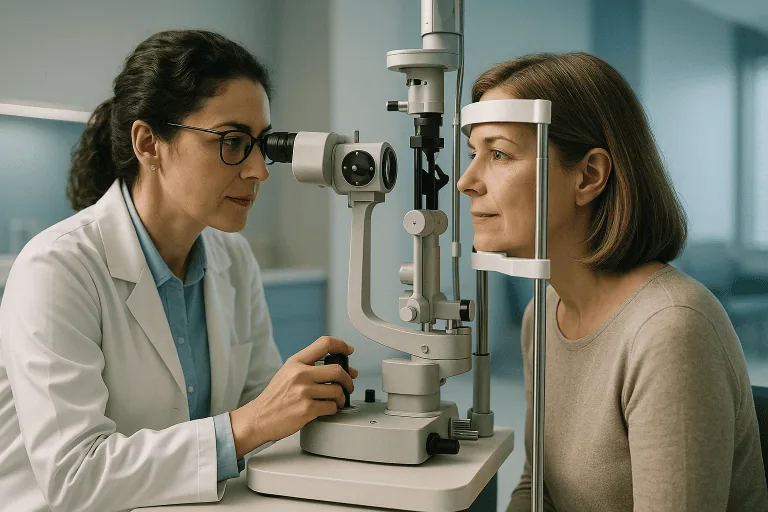
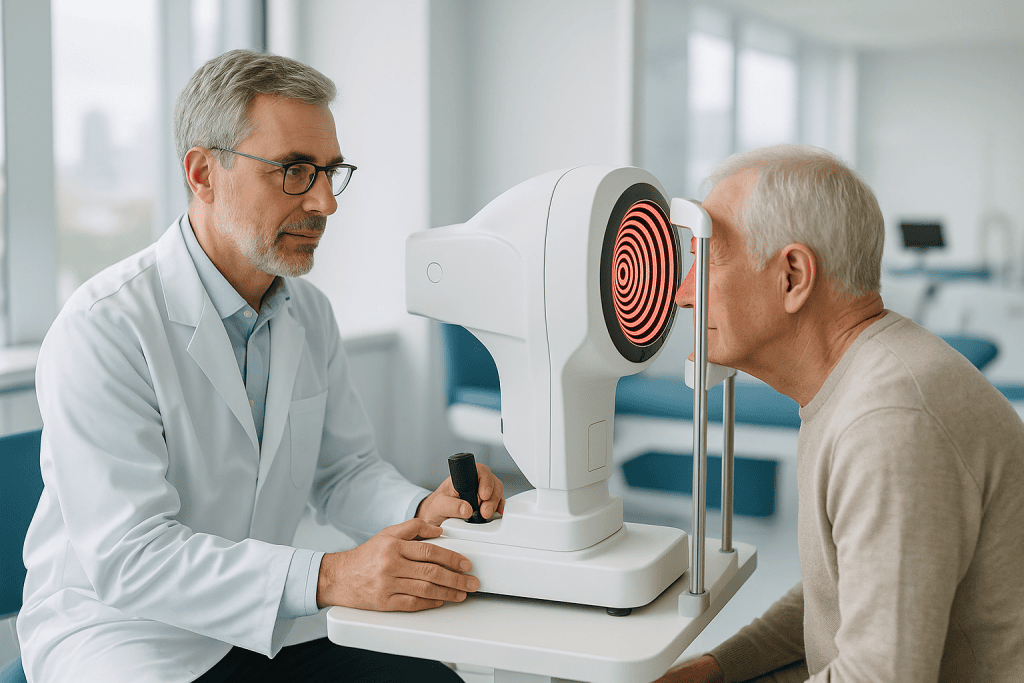
Eye surgery of any kind begins well before the operating room, and with LASIK the preparatory testing carries most of the weight of the decision. Your consultation covers your medical history, eye history, medications, allergies, previous eye infections or injuries, and, critically, what you actually want your vision to do for you. If you wear soft or rigid contact lenses, you may be asked to leave them out before the final measurements so the cornea can return to its natural shape.
The diagnostic work-up typically includes:
- a precise refraction to measure your prescription
- corneal topography or tomography to map the corneal shape
- pachymetry to measure corneal thickness
- pupil measurement, relevant to night-vision planning
- tear film assessment to detect dry eye disease
- eye pressure measurement
- a detailed examination of the cornea, lens, retina and optic nerve
This pathway is designed to catch subtle risk factors before surgery, not after. An irregular corneal map can signal a higher risk of corneal weakening after LASIK even in someone who sees perfectly well with glasses. Tear film testing can reveal dry eye that should be treated before any laser procedure. Retinal examination can pick up peripheral changes that need attention regardless of your refractive plans, particularly in high myopia.
If you are travelling from another country, your records can often be reviewed before you arrive: your glasses prescription, contact lens history, previous eye reports and any relevant scans. But final LASIK candidacy always depends on in-person testing, because small measurement differences can change the plan, or change the recommendation entirely.
How LASIK Is Performed, Step by Step
LASIK is an outpatient procedure performed with numbing drops; general anaesthesia is not required for most patients. On the day itself, do not wear eye makeup, creams around the eyes or perfume, because particles and vapours can interfere with the sterile field and the laser. Your care team confirms your identity, treatment plan, medications and consent before anything begins. The sequence then runs as follows:
- 1. Numbing and positioning. Anaesthetic drops are placed in the eye and a small device holds the eyelids open, so you do not need to worry about blinking.
- 2. Flap creation. A thin corneal flap is made, in many modern practices with a femtosecond laser, which allows depth and dimensions to be planned precisely.
- 3. Reshaping. The flap is lifted and the excimer laser reshapes the corneal tissue underneath according to your individual treatment plan. Eye-tracking technology follows small eye movements during delivery.
- 4. Repositioning. The flap is laid back into place, where it settles naturally without stitches.
- 5. Observation. The laser portion of each eye is brief; most of your time at the clinic goes on preparation and a short observation period afterwards.
What does it feel like? You stay awake but the eye is numbed. You may feel pressure for a short time during part of the procedure, and your vision may dim briefly. Patients often describe the experience as strange rather than distressing. The surgical team talks you through each step and helps you stay focused on the fixation light; if anxiety is significant, your physician may discuss options for mild relaxation medication where appropriate.
What technology supports LASIK?
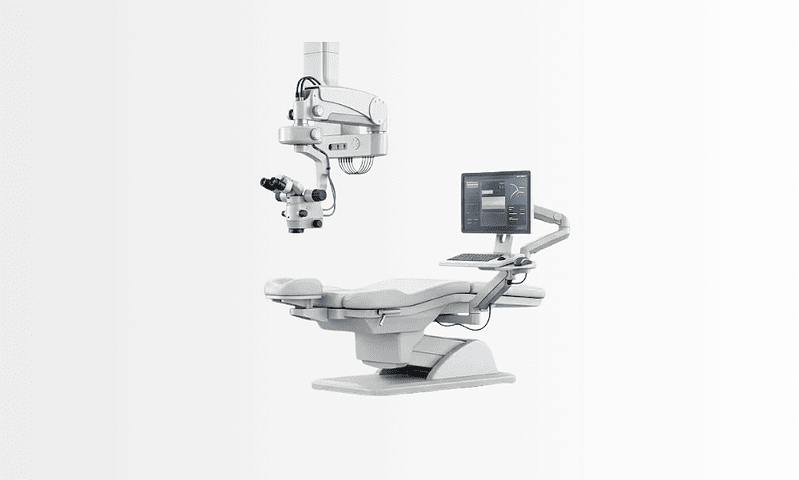
Technology matters at every stage, not only during the laser itself. Diagnostic imaging maps the cornea in detail and shows whether its shape is regular and stable. Thickness measurement determines whether enough tissue will remain after reshaping. Tear film evaluation reduces the risk of postoperative discomfort from dryness. Planning software calculates the tissue-removal pattern for your correction. During treatment, femtosecond lasers create the flap, excimer lasers perform the reshaping, and eye-tracking systems keep the laser aligned. In selected patients, wavefront-guided planning addresses higher-order optical imperfections a standard prescription cannot capture.
State this plainly: technology is necessary but not sufficient. Safe LASIK is the combination of accurate diagnostics, appropriate patient selection, surgical experience, careful planning and disciplined follow-up. A sophisticated laser cannot make an unsuitable eye suitable. The decision-making process matters as much as the machine.
Recovery After LASIK
In the first hours after LASIK, expect your vision to be blurry, hazy, watery or fluctuating. Burning, tearing, light sensitivity and a gritty sensation are common on day one. You will be given eye drops with instructions, usually antibiotic and anti-inflammatory drops plus lubricants, and your surgeon’s regimen should be followed exactly as prescribed. Arrange transport home or to your hotel, avoid rubbing your eyes, and plan to rest with your eyes closed for several hours. A follow-up examination, often the next day, checks the flap position, early healing and vision.
Most people return to routine activities quickly, depending on occupation and their physician’s guidance. Computer use, reading and travel are resumed gradually; frequent lubrication and screen breaks help. Swimming, hot tubs, eye makeup, dusty environments and contact sports are restricted for a period to protect the healing flap and reduce infection risk. Vision commonly improves fast but can fluctuate during early healing, dryness, glare and halos around lights are most noticeable in the first weeks and often settle as the cornea and tear film stabilise. Your surgeon will explain what is expected at each stage and what counts as normal healing for your eyes.
| Time Period | What Patients Can Expect |
|---|---|
| Day 1 | Blurred or hazy vision, tearing, light sensitivity and mild irritation are common. A postoperative check is usually performed to assess early healing. |
| First week | Vision often becomes clearer, though fluctuations continue. Drops are used as directed; no eye rubbing, swimming or eye makeup. |
| First month | Dryness, glare or halos gradually improve for most people. Routine work and daily activities are typically resumed, depending on the job and physician guidance. |
| Three to six months | Vision and tear film stability continue to mature. Follow-up visits confirm stability and address any lingering symptoms. |
| Longer term | Results are generally stable when the preoperative prescription was stable, but natural ageing, presbyopia, and eventually cataract, can still change vision later in life. |
How Long Does LASIK Last?
For most suitable candidates, the corneal reshaping achieved by LASIK is permanent: the tissue removed by the laser does not grow back. What changes over the years is not usually the LASIK correction but the eye around it. If your prescription was genuinely stable before surgery, the correction tends to hold; if it was still drifting, some of that drift can continue afterwards, which is exactly why candidacy assessment insists on stability. Separately, presbyopia arrives on its own timetable from the 40s, and cataract can develop decades later, each changing vision for reasons unrelated to the laser.
What happens 10 years after LASIK?
Ten years on, most people who were well selected still have a stable corneal correction. The changes patients notice a decade later usually reflect natural ageing, the arrival of reading glasses, or early lens changes, rather than the LASIK “wearing off”. A minority develop residual or returning refractive error and consider an enhancement procedure. Enhancement is not automatic: it depends on how much corneal tissue remains, the condition of the original flap, tear film health and the overall state of the eye, and not every patient is a candidate. If you had surgery years ago and your vision has changed, a fresh, full evaluation is the right starting point; our guide on when to consider a second opinion on revision surgery explains how that assessment differs from a first-time work-up.
Risks and Side Effects of Laser Eye Surgery
Laser eye surgery is a well-established procedure, but no operation is free of risk, and you should hear the honest list before you decide. The most common issue after LASIK is dry eye, because corneal nerves involved in tear regulation are affected during flap creation and healing; it is usually temporary but can persist in some patients, and pre-existing dryness makes it more likely. Glare, halos and night-vision symptoms occur in the early weeks and typically improve as healing progresses, though not always completely. Under-correction or over-correction can leave residual refractive error, sometimes addressed with an enhancement where safe. Flap-related complications, infection and significant inflammation are uncommon but real, which is why follow-up appointments are not optional extras. For a fuller, plain-language discussion of what can go wrong and how risks are managed, read our guide to laser eye surgery risks, side effects and safety.
Benefits of LASIK Treatment
The potential benefits are best understood in practical terms, what improved unaided vision may change in an ordinary day.
| Benefit | What It Means for You |
|---|---|
| Reduced dependence on glasses or contacts | Many patients manage daily activities with less need for corrective lenses, particularly for distance vision. |
| Rapid visual recovery | Vision often improves within the first day or two, although stabilisation continues over weeks and sometimes longer. |
| Comfort for contact lens users | Patients who struggle with lens dryness, irritation or daily maintenance gain an alternative to routine lens wear. |
| Convenience during travel and activity | Sport, swimming once your surgeon confirms healing, outdoor activities and travel become easier without constant lens or glasses management. |
| Individualised correction | Advanced measurements let the treatment plan reflect your prescription, corneal shape, anatomy and visual needs, not a generic template. |
Factors That Influence Your Result
Outcomes depend on much more than the laser. The first and largest factor is candidacy: a healthy, regular cornea with sufficient thickness, a stable prescription and a well-managed tear film is the safest foundation. If the cornea is thin or irregular, a different procedure is safer, and a good surgeon will say so.
Prescription range matters. Mild to moderate refractive errors tend to behave more predictably than very high prescriptions. Higher degrees of myopia, hyperopia or astigmatism demand particularly careful tissue calculations and a more candid conversation about what unaided vision will realistically look like. In some of these cases, lens-based procedures or surface laser treatment are the better recommendation.
Dry eye deserves its own paragraph. LASIK can temporarily worsen dryness, so patients who already have symptoms may need treatment before surgery, lubricating drops, eyelid hygiene, anti-inflammatory therapy or other measures recommended by the ophthalmologist. Managing the tear film before and after LASIK improves both comfort and visual quality, and skipping this step to save time is a false economy.
Age and near-vision needs shape the plan. A patient in their early 30s with stable myopia has different goals from a patient in their late 40s who reads all day and is beginning to notice presbyopia. Monovision can be planned in selected cases, but its trade-offs must be genuinely understood, ideally experienced through a contact lens trial, before surgery.
Pupil size, night-driving habits, occupational demands and hobbies all feed into planning. Some people are especially sensitive to glare, halos or contrast changes; modern planning has reduced many of the optical side effects associated with earlier generations of laser surgery, but they remain part of a truthful consent discussion. Healing biology varies too: most corneas heal predictably, but individual differences influence dryness, inflammation and how quickly vision settles. Using your drops correctly, attending every follow-up and not rubbing your eyes are the parts of the outcome you control.
Finally, a good result depends on aligned expectations. LASIK works well for appropriately selected patients, but it is still surgery. Enhancement may be possible if residual error remains after healing, but not for everyone. Your surgeon should explain both the likely benefit and the honest limits of what LASIK can achieve in your specific eyes, before you consent, not after.
How Much Does LASIK Cost?
There is no single price for LASIK, and this page deliberately quotes no figures, because a number without context misleads more than it informs. What actually drives the cost of LASIK is fairly consistent everywhere: the flap-creation method (femtosecond laser versus mechanical), whether the treatment is standard or wavefront-guided, the depth of the diagnostic work-up, the surgeon’s experience, and, most often overlooked, what the quoted price actually includes. Two quotes that look far apart can describe very different packages. When you compare offers, compare the contents: does the price cover the full preoperative evaluation, both eyes, all prescribed drops, every scheduled follow-up visit, and the clinic’s policy on enhancement if residual error remains? A headline figure that excludes follow-up care is not cheaper; it is incomplete. Ask any clinic to itemise its quote before you decide.
Is LASIK covered by insurance?
Usually not. Most health insurers classify LASIK as an elective procedure, a lifestyle choice rather than a medical necessity, and exclude it from standard cover. There are exceptions: some employer benefit schemes and vision plans offer partial contributions or negotiated arrangements, and in rare, specific medical circumstances a case for necessity can exist. The only reliable answer is your own policy wording, so check it, or ask your insurer directly, before building cover into your budget. If you are travelling abroad for treatment, also confirm how your insurer treats planned procedures performed outside your home country.
LASIK in Turkey: What International Patients Should Plan For
Thousands of international patients consider LASIK in Turkey every year, and the pathway works best when it is planned around medicine rather than around flights. A sensible sequence looks like this: your recent records, glasses prescription, contact lens history, any previous eye reports, are reviewed before travel; your contact-lens-free period is timed so it finishes before your measurements; in-person diagnostics are performed on arrival; surgery follows only if the testing confirms candidacy; a next-day review checks early healing; and at least one further check happens before you fly home. Build buffer days into your itinerary. If the evaluation finds something that needs treating first, dry eye is the usual candidate, a rushed schedule forces a bad choice, and an unhurried one does not.
A typical care pathway for a travelling patient covers the full preoperative evaluation, the procedure for both eyes, prescribed drops, the scheduled early follow-ups, and coordination support: appointment scheduling, medical record transfer, interpretation and hospital navigation. Practicalities worth packing for: sunglasses for light sensitivity, preservative-free lubricating drops for the dry cabin air on the way home, and no plans involving pools, saunas or dusty environments during your stay. Cabin air itself is a comfort issue rather than a danger for a healed flap, but the timing of your flight should follow your surgeon’s clearance: our comparison of flying after LASIK, retinal laser and cataract surgery explains why the rules differ between procedures. For a fuller planning walkthrough, see our LASIK eye surgery in Turkey treatment guide.
Follow-up does not end at the airport. Before you leave, agree how later checks will happen: some can be done remotely with reports shared between teams, and others are best performed by an ophthalmologist or optometrist near your home. Leaving with your measurements, your operative details and a clear follow-up schedule in writing makes continuity of care straightforward wherever you live.
Is it safe to get LASIK in Turkey?
Safety does not belong to a country; it belongs to the individual clinic, the quality of its evaluation, and its willingness to turn unsuitable patients away. Turkey has a large and experienced ophthalmology sector with high procedure volumes, and the same questions you would ask a clinic at home apply identically here: How thorough is the diagnostic work-up? Who performs the surgery, and who sees me afterwards? What happens if I am not a candidate? What is the plan if healing does not go to script? A clinic that answers these questions specifically, and that sometimes says no, is telling you something more useful than any advertisement can.
How Acibadem approaches LASIK for international patients
Acibadem treats LASIK as a medical decision inside a hospital system, not as a consumer transaction. Diagnostics sit at the centre of the process: detailed corneal imaging, refraction, tear film evaluation and full eye health examination separate the patients who can safely proceed from those who should consider another option. When findings are complex, ophthalmologists coordinate with other specialists, relevant if retinal disease, corneal disease, cataract, glaucoma risk, diabetes-related eye concerns or systemic conditions are part of your history. Because care takes place within a broad hospital network, patients with medical histories that need extra attention, diabetes, autoimmune conditions, previous eye trauma, complex medication use, can be evaluated in a coordinated way rather than in isolation. International patients are supported with appointment coordination, record transfer, interpretation and help navigating the hospital. And the counselling principle is fixed: you should expect careful explanation, not pressure. If LASIK is not the safest or most suitable choice for your eyes, the recommendation will say so, for many patients, that honesty is the most reliable marker of quality they encounter.
Why Timing Matters, and What Delay Actually Risks
LASIK is elective, so “acting early” does not mean rushing into surgery. It means getting evaluated before years of contact lens intolerance, untreated dry eye or progressive corneal changes complicate the picture. For some people, delay simply means more years of glasses: a perfectly reasonable outcome. For others, delay lets modifiable problems worsen: chronic lens irritation can contribute to inflammation, dryness and corneal surface changes; unrecognised dry eye becomes more symptomatic and can affect both candidacy and postoperative comfort; and patients with high myopia benefit from retinal assessment regardless of any surgical plans, because certain peripheral retinal findings need monitoring or treatment in their own right.
Age changes the conversation too. An excellent candidate in their 20s or 30s may later face presbyopia, lens changes or cataract that shift the discussion toward different procedures. That does not mean LASIK must be done young: it means timing deserves a deliberate discussion rather than drift. For international patients there is a further practical reason: a timely evaluation gives you room to plan travel, recovery days, follow-up arrangements and return-to-work timing without compressing the medical steps that protect the result.
Making the Decision
LASIK is a meaningful option if you want clearer unaided vision and less dependence on glasses or contact lenses, and if your measurements support it. For the right candidate, recovery is often quick and the effect on daily life substantial. The decision itself should rest on three things: thorough diagnostics rather than assumptions, individualised planning rather than a standard package, and a realistic understanding of benefits, limits, risks and alternatives. The strongest sign you are in the right hands is a team that examines first, explains plainly, and is visibly prepared to tell you that LASIK, or any eye surgery, is not the right choice for you. That is the standard this page has tried to hold itself to, and it is the standard worth demanding wherever you choose to be treated.
Preparation
- A detailed eye examination checks corneal thickness, refraction, tear film, and overall eye health. Contact lenses may need to be stopped before testing and surgery as advised by the ophthalmologist. Patients should avoid eye makeup, lotions, and perfumes on the day of the procedure.
Aftercare
- Mild burning, watering, light sensitivity, or blurred vision can occur during the first hours after LASIK. Prescribed eye drops should be used as directed, and rubbing the eyes must be avoided. Follow-up visits are important to monitor healing and visual recovery.
Frequently Asked Questions
What affects the cost of LASIK?
The final cost depends on your prescription, corneal measurements, whether one or both eyes are treated, the recommended laser technique, surgeon experience, diagnostic testing, follow-up care, and any travel or international patient services included.
How can I get a personalised LASIK quote from Acibadem?
You can request a free consultation and share your current glasses or contact lens prescription, previous eye reports if available, and any relevant medical history. A specialist assessment is needed before confirming suitability and preparing a personalised quote.
Is the lowest LASIK price always the best option?
Not necessarily. LASIK planning should include detailed diagnostics, surgeon evaluation, appropriate technology, informed consent, and follow-up care. A low headline fee may not include all services or may not reflect whether the method is suitable for your eyes.
What is usually included in an international LASIK package?
Inclusions vary by provider, but a package may include ophthalmic examinations, treatment planning, the laser procedure, short-term follow-up, interpretation support, and coordination for appointments. Travel, accommodation, medications, or additional tests may be handled separately depending on the plan.
Can I combine consultation, testing, and LASIK during one trip?
This may be possible for suitable patients, but it depends on eye measurements, stability of prescription, ocular surface health, and specialist approval. The care team can advise on timing after reviewing your information and examination results.
Medically reviewed by the Acıbadem International Medical Board September 8, 2026
See our medical review board →
Update history
- PublishedJune 8, 2026
- Medical review approvedSeptember 8, 2026
- Last content updateSeptember 8, 2026
References1
- Laser eye surgery medlineplus.gov
Read this treatment guide in your language
Planning this treatment in Turkey
Our English guides for international patients: costs, timelines, safety and travel.
Planning tools for this treatment
Indicative figures for orientation only: your written plan and quote follow a free medical review.
Trusted care for international patients
Compare options, costs and recovery
Laser eye surgery costsledger-based guide ranges, or browse the full Turkey Medical Price Index.
From the Acibadem Blog
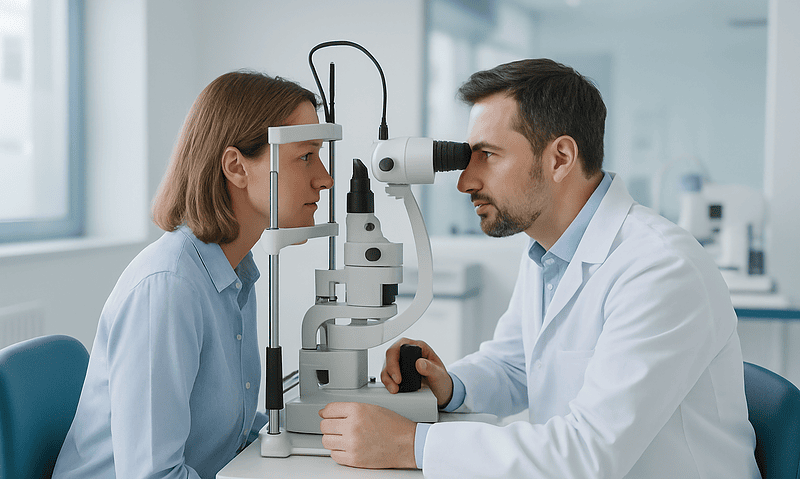
Is There an Age Limit for LASIK? Prescription Stability, Presbyopia and Older Eyes
There is no fixed upper age limit for LASIK. In the United States the lasers are approved for adults 18 and older, and surgeons…
LASIK vs PRK: Same Laser, Different Surface, and How Recovery and Candidacy Diverge
LASIK and PRK use the same excimer laser to reshape the cornea and treat similar prescriptions. LASIK works beneath a thin hinged flap, so…
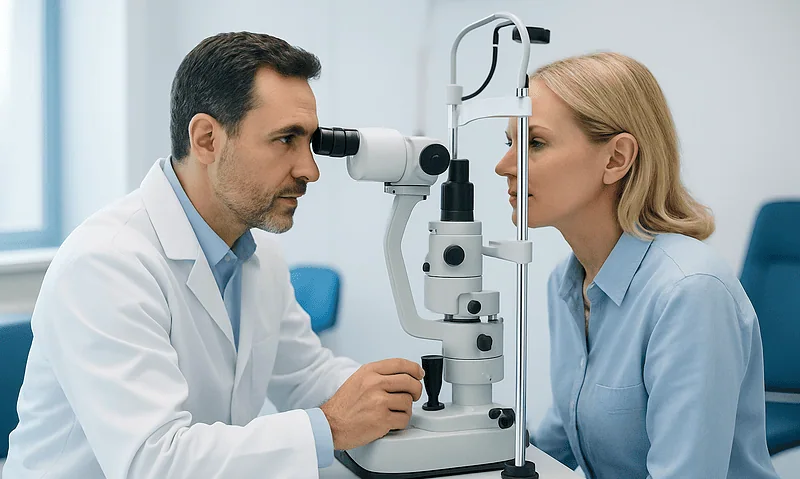
How Long Do LASIK Results Last? Aging Eyes, Reading Glasses and Realistic Expectations
LASIK permanently reshapes the cornea, and for most people the correction of nearsightedness, farsightedness or astigmatism holds for decades. What changes is the rest…