

Laser Eye Surgery in Turkey: LASIK, Suitability and Cost

Laser eye surgery in Turkey attracts adults from the United Kingdom, Ireland, the United States, Canada and Australia who want to reduce their dependence on glasses or contact lenses and who are weighing up a hospital-based pathway in Istanbul against self-pay treatment at home. This guide sets out what LASIK involves, who it suits, how the process works within a hospital group, what recovery looks like, and how to judge safety and cost on a like-for-like basis.
It is written by a medical editor rather than a sales team, and it is deliberately cautious. Laser vision correction is elective surgery on healthy eyes, and the decision deserves the same care you would give any other operation. Nothing here replaces the advice of an ophthalmologist who has examined your eyes, and a verified UK, US and Türkiye price band appears below the sections for those comparing cost.
What laser eye surgery is and who it suits
LASIK is a laser vision correction procedure that reshapes the cornea, the clear front surface of the eye, so that light focuses more accurately on the retina. Its purpose is to reduce dependence on glasses or contact lenses for nearsightedness (myopia), farsightedness (hyperopia) or astigmatism. It is a surgical procedure, performed under local anaesthesia, and it is chosen rather than needed: most people who have it could continue to see well with corrective lenses.
Who is usually a candidate
- Adults whose spectacle prescription has been stable, as confirmed by recent records.
- People with sufficient corneal thickness for the planned correction, measured at the pre-operative examination.
- Those with healthy eyes and no active eye disease, and with realistic expectations about what reduced dependence on glasses means in daily life.
- Patients who can attend follow-up visits and use prescribed eye drops as directed.
Who should think twice or is usually advised against it
An ophthalmologist may decline to operate, or suggest an alternative, where the cornea is too thin or irregular, where the prescription is still changing, where there is significant dry eye, keratoconus, uncontrolled diabetes, certain autoimmune conditions, active infection, pregnancy or breastfeeding, or where a person's expectations cannot reasonably be met. Age alone is not a barrier, but changes in the lens later in life may mean that other procedures are more appropriate than laser reshaping of the cornea.
The honest position is that suitability is decided by examination, not by enquiry. A good pathway is one in which a sizeable proportion of people are told, kindly and clearly, that LASIK is not the right choice for them.
Why patients from the UK and the US travel to Turkey for eye surgery
Patients researching eye surgery in Turkey are usually motivated by a combination of factors rather than by cost alone. The first is access. Laser vision correction is not available on the NHS for refractive error, and in the United States it is almost always self-funded, so the usual route at home is a private clinic with its own waiting times and consultation fees. In Istanbul there is no waiting list for an elective procedure of this kind; the timetable is set around the pre-operative examination and your travel plans.
The second is the setting. Acıbadem performs laser vision correction within full-service hospitals rather than stand-alone laser shops. Seven of the group's hospitals, within a network of more than 20, hold Joint Commission International (JCI) accreditation, an internationally recognised standard covering patient safety, infection control, medication management and clinical governance. Ophthalmology departments sit alongside anaesthesia, intensive care, imaging and laboratory services in the same building, which matters most on the rare occasion when something unexpected arises.
The third is experience with international patients. The group's 3,300+ physicians treat people from many countries, and the international patient service is structured around remote review, interpreters, coordinators and written aftercare instructions in English. Istanbul is also practical: roughly four hours by air from London and about ten from New York, with visa-free entry for UK, Irish, US, Canadian and Australian passport holders for up to 90 days.
Cost is part of the picture, and it is addressed later on this page and in the price band below, but a hospital-based pathway is the reason many patients choose Türkiye over other destinations.
How laser eye surgery in Istanbul works with Acıbadem, step by step
The process is designed so that the clinical decisions are made before you travel, and confirmed in person before anything irreversible happens.
- Remote medical review. You send your most recent eye test results, spectacle or contact lens prescription, relevant medical history and a note of your goals. An ophthalmologist reviews them and indicates whether you appear to be a candidate for LASIK, whether another approach is more likely to suit you, or whether more information is needed. This review is free of charge and carries no obligation.
- Personal plan and quote. If the review is favourable, you receive a personal plan setting out the proposed procedure, the required tests, the length of stay and a quote based on your case. The plan is provisional until the in-person examination.
- Arrival and coordinator. A patient coordinator meets you, arranges transfers between the airport, your accommodation and the hospital, and remains your contact throughout.
- Consultation and pre-operative tests. A detailed eye examination checks corneal thickness, refraction, tear film and overall eye health. You may be asked to stop wearing contact lenses for a period beforehand, as advised by the ophthalmologist, because lenses alter the shape of the cornea and can distort measurements.
- The procedure. If the examination confirms suitability, LASIK is performed as an outpatient under local anaesthesia, typically within 10 to 30 minutes. At Acıbadem Fulya Hospital, for example, this takes place within the ophthalmology department of a general hospital.
- Recovery in Istanbul. You rest, use prescribed drops and return for early follow-up before flying home.
- Follow-up after returning home. Remote check-ins with the treating team and a written summary for your GP or optometrist complete the pathway.
The LASIK procedure: technique, anaesthesia and duration
LASIK reshapes the cornea with a laser to correct the way the eye focuses light. The aim is a lasting change in corneal curvature that reduces the refractive error responsible for nearsightedness, farsightedness or astigmatism. Your surgeon explains the specific technique planned for your eyes at the consultation; the details below are the general features of the procedure as described on the treatment page.
Anaesthesia
The procedure is performed under local anaesthesia. You remain awake, and the eye is numbed so that you feel pressure or touch rather than pain. Because no general anaesthetic is involved, there is no need to fast in the way you would before a general anaesthetic, although the team gives you specific instructions.
Duration
The treatment itself takes around 10 to 30 minutes. The laser portion is brief; much of the time is spent positioning, checking measurements and confirming the plan for each eye. You should allow considerably longer for the whole visit, including checks before and after.
Hospital stay
LASIK is an outpatient procedure. There is no overnight stay, and you return to your accommodation the same day, accompanied by your companion or coordinator, as your vision is likely to be blurred and light-sensitive for the first hours.
Preparation on the day
- Follow the ophthalmologist's advice on when to stop wearing contact lenses before testing and surgery.
- Avoid eye make-up, lotions and perfumes on the day of the procedure.
- Bring sunglasses and arrange for someone to accompany you.
Any variation from this outline, including alternative laser techniques, is a matter for discussion with your surgeon on the basis of your own measurements.
Recovery and aftercare timeline
Recovery from LASIK is short compared with most surgery, but it is not instant, and the first days call for discipline with drops and a light hand around the eyes.
The first hours
Mild burning, watering, light sensitivity or blurred vision can occur in the hours after the procedure. Most patients find rest with closed eyes in a dim room the most comfortable way to spend the afternoon. Rubbing the eyes must be avoided, and protective shields may be advised for sleep.
Days one to seven
Prescribed eye drops should be used exactly as directed; they typically include an anti-inflammatory and an antibiotic, plus lubricating drops for comfort. Vision usually improves noticeably within the first day or two, though it may fluctuate. Most everyday activities can be resumed within one to seven days, depending on the individual and the surgeon's advice. Screen work is generally possible in short spells; swimming, dusty environments, eye make-up and contact sports are usually deferred, and you should ask for a specific timetable.
Weeks two to four
Vision stabilises over roughly two to four weeks. Some dryness or glare, particularly at night, can persist during this period and generally settles with time and lubrication. This is also the window in which a follow-up examination confirms that the cornea is healing as expected.
Follow-up
Follow-up visits are important to monitor healing and visual recovery. The early check takes place in Istanbul before you fly; later checks can be arranged remotely and with your own optometrist or GP at home. Any sudden pain, marked deterioration in vision or increasing redness should be reported promptly rather than waiting for a scheduled appointment.
Safety and risks
The question of whether laser eye surgery in Turkey is safe deserves a specific answer rather than reassurance. Safety depends far less on the country than on who examines you, what they decline to do, where the procedure is performed and what happens afterwards.
Who is not suitable
The most important safety step is patient selection. Thin or irregular corneas, an unstable prescription, significant dry eye, keratoconus or a family history of it, active eye disease, certain systemic and autoimmune conditions, pregnancy and unrealistic expectations are all reasons an ophthalmologist may decline. A pathway that operates on almost everyone who arrives is a warning sign in any country.
Complications
LASIK is an established procedure, but it carries risks that your surgeon must discuss with you. These include dry eye that may last for months, glare, halos or starbursts at night, under- or over-correction that may need glasses or an enhancement procedure, regression of the effect over time, flap-related problems, infection, inflammation and, rarely, a significant loss of vision. Some people also find that reading glasses become necessary earlier or later in life regardless of surgery, because that change occurs in the lens rather than the cornea.
What cases that go wrong abroad usually share
Reports of poor outcomes after treatment abroad, in any specialty, tend to have common features: planning compressed into a single day with no time for measurements to be rechecked, a stand-alone clinic with no hospital backup if an infection or inflammatory reaction develops, and no structured follow-up once the patient has flown home. Language barriers and pressure to proceed because the flight is booked add to the risk.
How a hospital setting changes that
Within a JCI-accredited hospital, the examination and the procedure are separated by a genuine decision point, sterile processing and infection control are audited, on-call ophthalmology and emergency services are in the same building, and follow-up is written into the plan rather than left to chance. None of this removes the inherent risks of surgery, but it addresses the avoidable ones.
UK and US vs Türkiye: how the pathway and the cost differ
Comparing laser eye surgery cost in Turkey with the UK or US only makes sense once the pathways are laid side by side.
The pathway at home
In the United Kingdom, LASIK for refractive error is not funded by the NHS, so patients use private clinics, typically with a consultation, a separate treatment day and a follow-up programme, sometimes spread over weeks. In the United States the arrangement is similar and almost always self-pay, since standard health insurance rarely covers elective refractive surgery. Aftercare is local and convenient, which is a genuine advantage of treatment at home.
The pathway in Türkiye
In Istanbul the examination, decision, procedure and first follow-up are compressed into a single trip of several days, with no waiting list. The trade-off is travel and the need for remote follow-up thereafter, supported by your own optometrist or GP.
What the lower cost does and does not mean
Prices in Türkiye are generally lower, and the verified band for the UK, US and Türkiye appears in the Price Index below. The difference reflects lower salaries, property and operating overheads in the local economy, and a favourable exchange rate for sterling and dollar earners. It does not mean different lasers or consumables: the equipment and single-use materials come from the same international manufacturers used in the UK and US, and hospital accreditation standards are assessed by the same body. Lower cost is also not a reason to skip anything; a quote that omits the examination or follow-up is not comparable.
What to compare like for like
- Whether the pre-operative examination and all measurements are included.
- Whether the quote covers both eyes and all prescribed drops.
- What follow-up is included, in person and remote.
- What happens, and what it costs, if an enhancement is needed.
- Your flights, accommodation and a companion's costs.
A personal quote follows the free medical review, once your own measurements are known.
Planning the trip: packages, stay length and what to bring
Laser eye surgery packages for Turkey are best understood as a bundle of hospital services plus logistics, not as a discount scheme. At Acıbadem a plan typically covers the consultation and examination, the procedure, prescribed drops, early follow-up, airport and hospital transfers and coordinator support. Accommodation may be arranged for you or left to your preference; check exactly what is and is not included in writing before you book flights.
Passport and entry
UK, Irish, US, Canadian and Australian passport holders enter Türkiye visa-free for up to 90 days. Check the current rules and your passport's validity period before travelling, as requirements can change.
How long to stay
Allow enough time for the examination, a possible day between examination and procedure, the procedure itself and at least one follow-up check before flying. Several days is usual; your coordinator confirms the exact schedule for your case. Do not book a return flight that depends on everything going to plan on day one.
Companion
Bring a companion if you can. Your vision is blurred and light-sensitive after the procedure, and you should not travel alone from the hospital or handle luggage and navigation on your own that day.
Travel insurance
Standard travel insurance usually excludes planned medical treatment and its complications. Look for a policy that specifically covers elective treatment abroad, or a medical travel policy, and read the exclusions.
What to bring
- Your current glasses and, if relevant, a copy of your prescription and recent eye test.
- A list of medicines and any allergies.
- Sunglasses, and no eye make-up, lotions or perfume on the day of surgery.
- Comfortable clothing and something to listen to rather than watch during the first hours.
Back home: follow-up, records and your own doctor
The pathway does not end at Istanbul airport. Vision stabilises over two to four weeks, and follow-up visits are important to monitor healing and visual recovery, so arrangements for the weeks after your return are part of the plan rather than an afterthought.
Follow-up with your GP, optometrist or own doctor
Before you leave, you receive a written summary of the examination findings, the procedure performed, the drops prescribed and the follow-up schedule. Share this with your GP and your regular optometrist. Remote check-ins with the treating team can be scheduled, and a local eye examination at the interval your surgeon recommends provides an in-person check that healing is on track.
When to seek help
Contact the treating team, your GP or an emergency eye service promptly if you experience sudden or worsening pain, a marked drop in vision, increasing redness, discharge or a sensation that something is in the eye that does not settle. Do not wait for a scheduled appointment in these circumstances.
Insurance, NHS and your own doctor
Private medical insurance in the UK and Ireland rarely covers elective treatment abroad, and many policies also exclude complications arising from it; confirm this with your provider before travelling. The NHS treats complications as it would for any other patient presenting with an eye problem, but it does not fund the original procedure or routine post-operative checks for treatment obtained privately. For US readers, health savings and flexible spending accounts may or may not be usable for treatment abroad depending on the plan administrator, and travel-medical policies vary widely in whether they cover planned procedures. Check the terms in writing rather than relying on assumptions.
Questions to ask before deciding on LASIK in Turkey
A careful decision rests on answers you can compare. Take this list to any provider, at home or abroad, and expect clear replies in writing.
About suitability
- What measurements decide whether I am a candidate, and what would make you decline to operate?
- How stable does my prescription need to be, and for how long?
- Is LASIK the right laser technique for my eyes, or would you recommend a different approach?
About the procedure and the team
- Who performs the procedure, and who examines me beforehand and afterwards?
- Is the procedure performed in a hospital with on-site emergency and ophthalmology cover?
- Which accreditation does the facility hold, and when was it last assessed?
About risks and outcomes
- What complications are possible in my particular case, and how are they managed?
- What happens if I am under- or over-corrected, and is an enhancement included?
- How likely is it that I still need glasses for some tasks afterwards?
About logistics and aftercare
- How many days should I plan to stay, and how is the follow-up arranged once I am home?
- What exactly is included in the plan and quote, and what is not?
- Whom do I contact, and how quickly, if a problem arises after my return?
If any of these questions is met with pressure to book rather than a direct answer, treat that as information in itself. Whether LASIK is appropriate for you is determined by a physician's evaluation of your eyes, not by the availability of a flight or a date.
Is laser eye surgery in Turkey safe?
Safety depends on patient selection, the setting and the follow-up rather than the country. Within a JCI-accredited hospital, a detailed examination precedes any decision to operate, infection control is audited, and emergency and ophthalmology services are on site. LASIK carries inherent risks wherever it is performed, including dry eye, night-time glare and the possibility of needing an enhancement, and these should be discussed openly with your surgeon.
How much does laser eye surgery cost in Turkey compared with the UK or US?
A verified price band for the UK, US and Türkiye is shown in the Price Index below this article. Lower cost in Türkiye reflects lower salaries and overheads rather than different equipment or consumables. A personal quote follows a free remote medical review, and it should be compared like for like, including examination, both eyes, drops and follow-up.
What is included in laser eye surgery packages for Turkey?
At Acıbadem a plan typically covers the consultation and pre-operative examination, the LASIK procedure under local anaesthesia, prescribed drops, early follow-up in Istanbul and transfers with coordinator support. Accommodation and flights may or may not be included, so confirm the details in writing before booking travel.
How long does LASIK take and do I stay in hospital?
The procedure itself takes around 10 to 30 minutes and is performed under local anaesthesia. It is an outpatient treatment with no overnight stay; you return to your accommodation the same day, ideally with a companion because your vision is blurred and light-sensitive for the first hours.
How long should I stay in Istanbul after LASIK?
You need time for the examination, the procedure and at least one follow-up check before flying, which usually means several days in total. Your coordinator confirms the schedule for your case, and it is wise not to book a return flight that depends on everything happening on day one.
Do I need to stop wearing contact lenses before laser eye surgery?
Yes, in most cases. Contact lenses alter the shape of the cornea and can distort the measurements that determine your suitability and treatment plan. The ophthalmologist advises how long before testing and surgery you should stop, depending on the type of lens you wear.
Who is not suitable for LASIK?
People with thin or irregular corneas, an unstable prescription, significant dry eye, keratoconus, active eye disease, certain autoimmune or uncontrolled systemic conditions, or who are pregnant or breastfeeding are usually advised against it. Unrealistic expectations are also a reason a surgeon may decline. Suitability is decided at the detailed pre-operative examination.
What follow-up do I need after returning to the UK or US?
You receive a written summary of your treatment and drop schedule to share with your GP and optometrist, and remote check-ins with the treating team can be arranged. A local eye examination at the interval your surgeon recommends confirms healing. Any sudden pain, loss of vision or increasing redness should be reported immediately rather than waiting for a scheduled visit.
Your care team
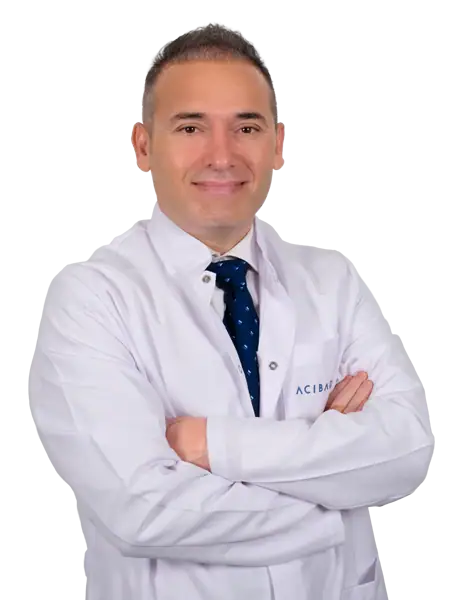
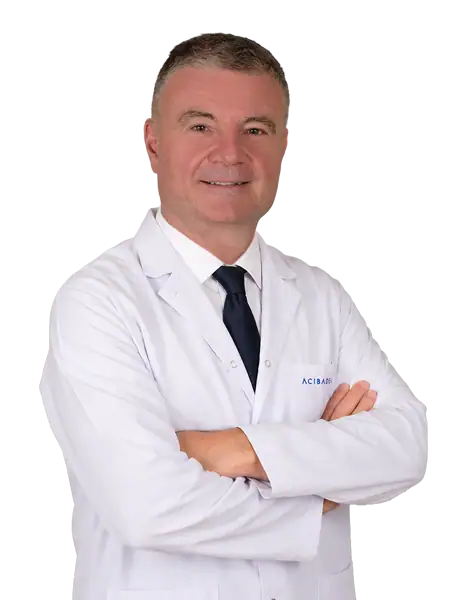
Physicians of the Acıbadem network who perform this treatment in Istanbul.
 Where it is performed Acibadem Maslak Hospital İstanbul · JCI-accredited hospitals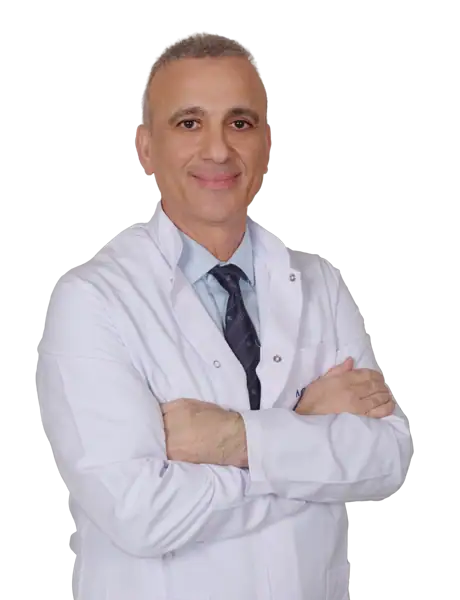
Clinical guide & data
The evidence-based pages behind this guide.
Read this treatment guide in your language
Planning tools for this treatment
Indicative figures for orientation only: your written plan and quote follow a free medical review.