

Brow Lift in Turkey: Techniques, Recovery and Cost Explained
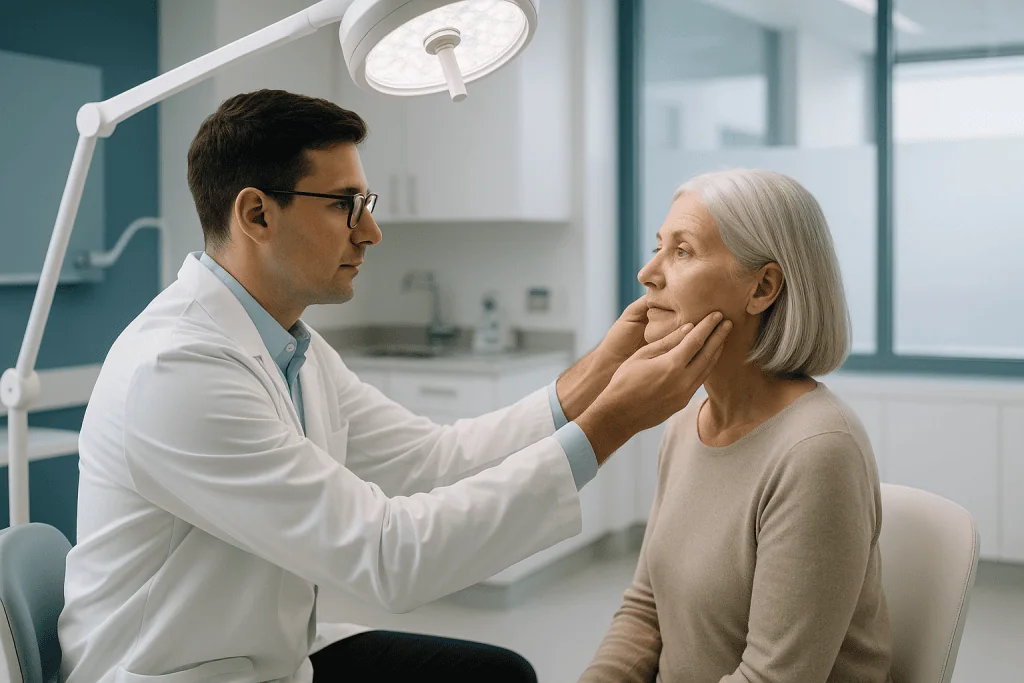
A brow lift in Turkey attracts adults from the United Kingdom and the United States who have noticed heavy, low-set eyebrows, a tired look around the eyes or deep horizontal lines across the forehead, and who want a surgical answer delivered in a hospital rather than a stand-alone clinic. The procedure, also called a forehead lift, repositions the brow to a more rested position and softens the lines that have formed above it.
This guide explains what the surgery involves, the differences between the endoscopic, temporal and traditional approaches, how a brow lift compares with eyelid surgery, what recovery looks like week by week and how the pathway differs from private treatment at home. It also sets out, without figures, what the cost of a brow lift in Turkey does and does not include, so that you can read the verified price band below with the right context.
What a brow lift is and who it suits
A brow lift raises sagging eyebrows and smooths forehead lines to create a more rested, youthful upper-face appearance. Over time the soft tissue of the forehead loses support, the eyebrows drift downwards and the skin above the eyes can appear heavy or crowded. A brow lift addresses the position of the brow itself, which is why it is often considered when the problem sits above the eye rather than in the eyelid.
Techniques may include endoscopic, temporal or traditional surgical approaches. The choice depends on your anatomy, your hairline, the degree of descent and the result you and your surgeon agree on.
Who is usually a candidate
- Adults in good general health with drooping or asymmetrical eyebrows.
- People whose forehead lines or frown lines are established rather than fleeting.
- Those who feel the upper face looks tired or stern despite feeling well rested.
- Non-smokers, or smokers willing to stop for the period their surgeon advises.
- People with realistic expectations who understand this is a refinement, not a transformation.
Who should not have it, or should wait
- Anyone with an uncontrolled medical condition, a bleeding disorder or an active infection.
- People taking blood-thinning medicines or supplements that cannot safely be paused.
- Patients whose main concern is loose eyelid skin rather than brow position; eyelid surgery may be more appropriate.
- Anyone unable to commit to the recovery period or to follow-up appointments.
Suitability is never decided from photographs alone. The plastic surgeon evaluates facial anatomy, eyebrow position, skin quality and aesthetic goals before recommending any technique, and may advise against surgery if the expected benefit does not justify the risks.
Why patients from the UK and the US travel to Türkiye for a brow lift
A brow lift is an elective cosmetic operation, so in the UK it is almost never available through the NHS and in the US it is rarely covered by insurance. Patients therefore pay privately wherever they are treated, and many begin comparing what private treatment in Türkiye involves.
The practical reasons people give tend to fall into a few groups.
- Hospital medicine rather than clinic medicine. At Acıbadem the operation takes place inside a hospital that also runs emergency, anaesthesia, intensive care, laboratory and imaging services. If a question arises during or after surgery, the answer is on the same site.
- Independent accreditation. Seven hospitals in the network hold Joint Commission International accreditation, the same standard applied to hospitals in the United States, within a group of more than 20 hospitals and 3,300+ physicians.
- Experience with international patients. Interpreters, coordinators and medical records in English are routine rather than exceptional, and the pathway for a patient arriving from London or New York is well rehearsed.
- No waiting list. Consultation, pre-operative tests and surgery can be scheduled within a single, planned visit once the remote review is complete.
- Distance. Istanbul is roughly 4 hours by air from London and roughly 10 hours from New York, close enough for a companion to travel with you and for a follow-up visit if one is needed.
Cost is also part of the decision, and it is addressed honestly later on this page. The point to hold on to is that a lower price band reflects the local economy, not a different standard of surgical materials or a shortened process. A free medical review comes first, and a personal quote follows only once a surgeon has assessed you.
How a brow lift in Turkey works with Acıbadem, step by step
The pathway is designed so that most of the thinking happens before you board a plane, and so that no decision is made in a hurry.
- Remote medical review. You send a short medical history, current medicines and photographs of your face at rest and animated. A plastic surgeon reviews them and indicates whether a brow lift is likely to help, which technique seems suitable and whether another procedure, such as eyelid surgery, should be discussed instead.
- Personal plan. You receive a written plan covering the proposed approach, anaesthesia, expected hospital stay, recommended length of stay in Istanbul and a personal quote. Nothing is booked until your questions have been answered.
- Arrival and coordinator. An international patient coordinator meets you, manages appointments, interpreting and hospital transfers, and remains your single point of contact throughout the stay.
- Consultation and pre-operative tests. You meet the surgeon in person for a full facial assessment. Blood tests and an anaesthesia assessment are carried out in the hospital, and the surgeon confirms or adjusts the plan with you before consent is signed.
- The operation. Surgery takes place under general anaesthesia and usually lasts 1 to 2 hours. Depending on the technique and your recovery, you go home to your hotel the same day or stay one night on the ward.
- Recovery in Istanbul. You attend a wound check and, if needed, suture removal, and remain in the city until the surgeon is satisfied it is safe to fly.
- Follow-up after returning home. Remote check-ins continue at agreed intervals, and you receive a full discharge summary to share with your GP or own doctor.
At every stage you may pause or withdraw. The remote review costs nothing and creates no obligation.
Endoscopic, temporal and traditional brow lift: the procedure
A brow lift is a surgical procedure performed under general anaesthesia. The operation typically takes 1 to 2 hours, and the hospital stay is either same day or one night. The technique is chosen during consultation, and the differences below are the ones patients most often ask about.
Endoscopic brow lift
The endoscopic approach uses a small camera and instruments introduced through short incisions hidden within the hair. The surgeon releases and repositions the tissues that hold the brow, then secures them at the new height. It is frequently chosen when the aim is a natural elevation of the whole brow with limited visible scarring.
Temporal brow lift
A temporal lift concentrates on the outer third of the eyebrow, the part that tends to descend first and give a hooded appearance to the outer eye. Incisions sit within the hair at the temples. It suits patients whose central forehead is satisfactory but whose brow tails have dropped.
Traditional surgical approach
The traditional approach, often described as a coronal lift, uses a longer incision behind or along the hairline and allows the surgeon to remove excess skin directly. It may be considered where descent is pronounced or where skin quality means a more direct correction is appropriate.
Brow lift vs eyelid surgery
The two procedures address neighbouring problems. A brow lift changes the height and shape of the eyebrow and the forehead lines above it; upper eyelid surgery removes excess skin from the lid itself. If a low brow is pushing skin onto the lid, lifting the brow may resolve much of the heaviness, whereas true eyelid excess needs eyelid surgery. Your surgeon assesses which is responsible, and sometimes both are discussed.
Recovery and aftercare timeline
Recovery from a brow lift usually takes 1 to 2 weeks before you can return to ordinary daily routines, although the final settling of swelling continues beyond that. The timeline below is typical; your surgeon will adjust it to your operation.
The first 48 hours
Swelling, bruising and mild tightness around the forehead are expected. You are asked to keep your head elevated, including while sleeping, and to rest. Discomfort is usually managed with the medicines you are given at discharge. You should avoid bending, lifting and anything that raises blood pressure in the head.
Days 3 to 7
Bruising often migrates towards the eyes before it fades, which can look worse than it feels. Wound care instructions must be followed closely, and you attend a check with your surgeon. Any sutures that need removing are dealt with at this visit or shortly afterwards. Most patients are cleared to fly home towards the end of the first week, once the surgeon is content.
Weeks 2 to 4
Most visible bruising resolves and you can return to desk-based work and light social activity. Numbness or tingling in the scalp is common while small nerves recover. Strenuous activity, heavy exercise and contact sports remain off the list until your surgeon lifts the restriction.
Beyond one month
Residual swelling continues to reduce and the new brow position settles. Scars within the hair soften over the following months. Follow-up visits, whether remote or in person, are important to monitor healing and to catch any concern early.
Throughout recovery you should not smoke, should protect the area from sun and should contact the team about anything unexpected rather than waiting for the next scheduled check.
Safety and risks
A brow lift is an established operation, but it is surgery under general anaesthesia and carries real risks. A calm reading of them is part of deciding well.
Who is not suitable
People with uncontrolled diabetes, hypertension or heart disease, bleeding disorders, active skin infection of the scalp, or those unable to stop blood-thinning medicines are generally advised against surgery until the issue is addressed. Smokers are asked to stop, because smoking impairs wound healing and blood supply to the skin.
Complications that can occur
- Bleeding or a collection of blood under the skin that may need draining.
- Infection at the incision sites.
- Numbness or altered sensation of the scalp and forehead, usually temporary but occasionally lasting.
- Weakness of forehead movement if a nerve branch is bruised or injured.
- Hair loss along incisions or a visible scar.
- Asymmetry of the brows, or a result that appears over- or under-corrected.
- Risks related to general anaesthesia, which the anaesthetist discusses beforehand.
What cases that go wrong abroad tend to share
When treatment abroad ends badly, the story is rarely about the country. It is usually about rushed planning, with surgery booked before a doctor has seen the patient; about operating in a facility with no hospital behind it, so that a bleed or an anaesthetic problem has nowhere to go; and about the absence of any organised follow-up once the patient leaves.
How a hospital setting changes that
In a JCI-accredited hospital the anaesthesia is delivered by a consultant anaesthetist, intensive care is on the same site, blood products and imaging are available around the clock, and infection control is audited. The remote review and in-person consultation are separated deliberately so that you can withdraw, and follow-up is planned before surgery rather than improvised afterwards. None of this removes risk; it means risk is managed in the way you would expect at home.
UK and US vs Türkiye: how the pathway and the cost differ
Because a brow lift is cosmetic, the route in the UK and the US is almost always self-pay. In the UK the NHS does not fund it, and private consultation and surgery typically involve separate appointments spread over weeks or months. In the US insurers rarely cover it, and hospital, surgeon and anaesthesia fees are often billed separately.
What differs in Türkiye
- Timing. Consultation, tests and surgery are compressed into one planned visit, with no waiting list.
- Travel. You spend about a week in Istanbul and need a companion, flights and accommodation, which belong in any honest comparison.
- Aftercare. The early checks happen in Istanbul; later follow-up is remote unless you choose to return. In-person aftercare at home depends on your own doctor.
What the lower cost of a brow lift in Turkey does and does not mean
The price band below is lower than comparable private treatment in London or New York because salaries, property and administrative overheads in Türkiye are lower. It does not mean different implants, sutures or anaesthetic agents; these are the same internationally sourced materials used in Western hospitals. It does not mean shorter theatre time or fewer staff in the room. Equally, it does not mean surgery is trivial or that corners can be cut on recovery.
Compare like for like
When you set a UK or US quote against a Turkish one, make sure both include the surgeon fee, anaesthetist fee, theatre and hospital stay, pre-operative tests, medicines, follow-up visits and the cost of treating early complications. Then add your travel and accommodation to the Turkish figure. Only when both columns are complete does the Price Index tell you anything useful, and your personal quote after the free medical review is the figure to rely on.
Planning the trip to Istanbul
Once your surgeon has confirmed the plan, the logistics are straightforward, and your coordinator handles most of them. A few points are worth settling early.
- Passport and entry. UK, Irish, US, Canadian and Australian passport holders enter Türkiye visa-free for up to 90 days. Check the current rules before travel, and make sure your passport is valid for the whole stay with time to spare.
- How long to stay. Plan for about a week: a day or two before surgery for consultation and tests, the operation itself, and several days for the first wound check and, where needed, suture removal before you are cleared to fly. Your surgeon may lengthen this if your recovery calls for it.
- Companion. You will be under general anaesthesia and will have bruising around the eyes; a companion for at least the first few days is strongly advised. Coordinators can help arrange accommodation for two.
- Travel insurance. Ordinary holiday policies exclude planned medical treatment. Look for a policy that specifically covers elective treatment abroad, including complications and repatriation, and read the exclusions.
- Flights. Istanbul is around 4 hours from London and around 10 hours from New York. Book a flexible return so that a delayed clearance to fly does not become a financial problem.
- What to bring. Your medicines in original packaging, a list of allergies, your GP or family doctor contact details, loose button-front tops and a wide-brimmed hat or soft cap to shield the forehead from sun on the way home.
Tell the team about any medicines or supplements you take, including herbal products, as some must be paused before surgery.
Back home: follow-up, records and your own doctor
Recovery does not end at the airport. Before discharge you receive a written summary of your operation, the technique used, medicines given and instructions for the coming weeks. Share it with your GP or own doctor as soon as you are home so that there is a record on your file.
Scheduled follow-up
Remote check-ins with your surgical team continue at agreed points, usually with photographs. You can raise questions between these points through your coordinator. If a concern needs hands-on assessment, the team will advise whether to see your own doctor locally or to return.
When to seek help without waiting
- Increasing pain, redness or heat around the incisions.
- Fever, or discharge from a wound.
- Sudden new swelling on one side, which may indicate bleeding.
- Any change in vision, or difficulty closing the eyes.
- Shortness of breath or calf pain after the flight.
Contact your local urgent care or emergency service for anything acute, and inform your Acıbadem team afterwards.
Insurance, NHS and your own doctor
Private medical insurance in the UK and elsewhere rarely covers elective treatment abroad, and many policies exclude complications of cosmetic surgery wherever it is performed; check your policy wording. The NHS will treat a complication as it would for any patient, but it does not provide cosmetic revision, so discuss with your surgeon what revision cover is included in your plan. For US readers, HSA and FSA rules on cosmetic procedures and travel-medical policies vary considerably, and it is worth confirming with your administrator and insurer before committing. Keeping your own doctor informed throughout protects you.
Questions to ask before deciding on a brow lift in Turkey
Whether you are considering Istanbul, London or anywhere else, the same questions separate a well-planned operation from a hasty one. Take this list into your consultation.
- Which technique do you recommend for me, endoscopic, temporal or traditional, and why that one rather than the others?
- Would eyelid surgery address my concern better, or should both be considered?
- Who will give my anaesthetic, and is there an intensive care unit on the same site?
- Is the hospital independently accredited, and may I see the evidence?
- How long will I be in hospital, and how long should I stay in Istanbul before flying?
- What complications have you seen with this operation, and how are they handled?
- What is included in my quote, and what happens if a complication needs treatment?
- How is follow-up organised once I am home, and who do I contact if something worries me?
- What must I stop taking, and when should I stop smoking, before surgery?
- May I have a written plan and time to consider it before I book anything?
Clear answers to these questions, in writing where possible, are a reasonable expectation of any surgical team. Your own GP or doctor is also a valuable second opinion and should be kept informed rather than bypassed.
Whether a brow lift is right for you, and which technique is appropriate, is determined by a physician’s evaluation of your anatomy, health and goals.
How much does a brow lift cost in Turkey?
The verified UK, US and Türkiye price band appears in the Price Index below this article. A personal quote is provided only after a free remote medical review by a plastic surgeon, because the technique and hospital stay affect the figure. When comparing, include travel, accommodation and follow-up in every column.
What is the difference between an endoscopic brow lift and a forehead lift?
Forehead lift is simply another name for a brow lift. Endoscopic refers to one way of performing it, using a small camera and short incisions hidden in the hair. Temporal and traditional approaches are the other techniques, and the surgeon chooses based on your anatomy.
Is a brow lift done under general anaesthesia?
Yes. The procedure is performed under general anaesthesia, given by an anaesthetist in the hospital. An anaesthesia assessment forms part of the pre-operative tests before surgery.
How long does the operation take and will I stay in hospital?
A brow lift usually takes 1 to 2 hours. Depending on the technique and how you recover from anaesthesia, you either go back to your hotel the same day or stay one night in hospital.
How long do I need to stay in Istanbul after a brow lift?
Most patients plan about a week, covering the consultation, tests, surgery and the first wound check or suture removal. Your surgeon confirms when it is safe to fly, so book a flexible return.
Should I have a brow lift or eyelid surgery?
It depends on where the heaviness comes from. A low brow pushing skin onto the lid is treated with a brow lift, whereas true excess eyelid skin needs eyelid surgery. Some patients are suitable for both, and the surgeon assesses this in consultation.
What are the risks of a brow lift?
Possible complications include bleeding, infection, scalp numbness, temporary weakness of forehead movement, hair loss along incisions, visible scarring and asymmetry, as well as the general risks of anaesthesia. Performing the surgery in a hospital with intensive care on site allows these to be managed promptly.
Will my GP or the NHS look after me if something goes wrong at home?
The NHS treats complications as it would for any patient, but it does not provide cosmetic revision. Share your discharge summary with your GP on return, and check with your insurer, as private policies rarely cover elective treatment abroad. Your Acıbadem team also remains available remotely.
Your care team
Physicians of the Acıbadem network who perform this treatment in Istanbul.
 Where it is performed Acibadem Maslak Hospital İstanbul · JCI-accredited hospitals
Clinical guide & data
The evidence-based pages behind this guide.