Why Vision Fluctuates in the First Days After Farsightedness Laser Treatment
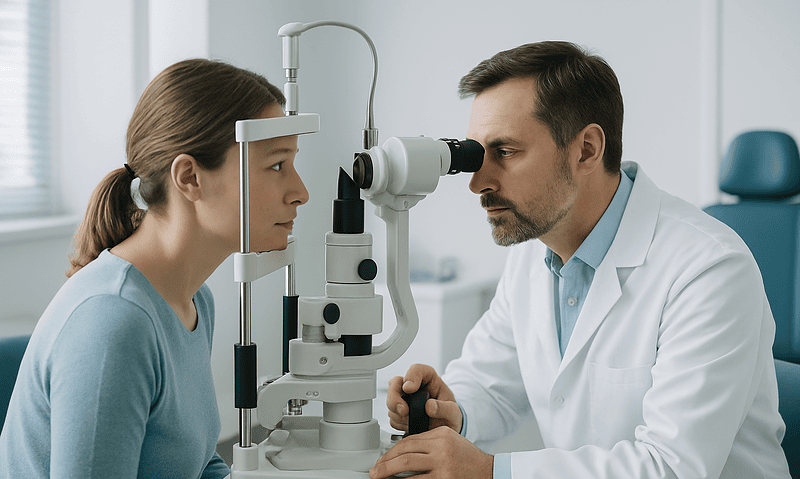
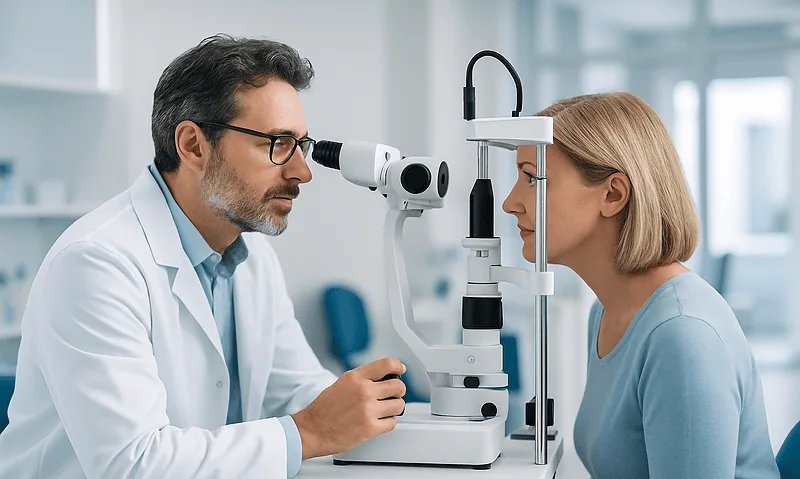
Vision fluctuates in the first days after farsightedness laser treatment because several parts of the eye settle at different speeds: the corneal surface layer…
Articles on eye health: vision changes, cataract, glaucoma, dry eye and laser vision correction. Sudden vision loss, flashes or severe eye pain are emergencies; these articles say so clearly.
Vision fluctuates in the first days after farsightedness laser treatment because several parts of the eye settle at different speeds: the corneal surface layer…
A cataract is usually considered ready for surgery when the cloudiness interferes with daily life, driving, reading, work, or safety, and glasses…
A second opinion before eye surgery is reasonable whenever the operation is elective, the diagnosis is unclear, the proposed lens or technique has lasting…
Standard cataract surgery does not place a gas bubble in the eye, so cabin pressure itself is not the main concern when flying afterward.…
Living with diabetic retinopathy means managing a long-term eye complication of diabetes rather than facing a fixed outcome. The retina's damaged vessels respond to…
After dacryocystorhinostomy (DCR), most people are asked not to blow the nose while the new drainage opening heals, to use prescribed eye drops, nasal…
Cataracts need surgery when the clouding interferes with daily life, not when they reach a particular age or grade. Eye specialists usually recommend the…
A cataract eye exam typically combines three kinds of information: vision testing (how sharply you see, often with glare and contrast checks), a slit-lamp…
DCR surgery (dacryocystorhinostomy) treats a blocked tear duct by creating a new opening between the tear sac at the inner corner of the eye…
Living with glaucoma means protecting the sight you still have, because vision already lost to the disease does not return. In practice that comes…
Most people do not need to stop blood thinners for routine cataract surgery, because the operation uses a small incision and usually topical anesthetic,…
Eye angiography is done in three stages. First, drops widen the pupils so the camera can see the back of the eye. Next, a…
Super LASIK is a marketing label some providers use for wavefront-guided LASIK. An instrument called an aberrometer measures how light is distorted as it…
LASIK usually takes about 30 minutes or less for both eyes, and the excimer laser reshapes each cornea in well under a minute. Most…
Irregular astigmatism happens when the cornea is warped unevenly, most often from keratoconus, scarring, or earlier eye surgery, so ordinary glasses cannot fully sharpen…
LASIK complications are uncommon but real. The most frequent are dry eye, which often improves over several months, and night-vision changes such as glare…
Dry, gritty eyes, glare or halos around lights at night, and vision that shifts through the day are common ILASIK side effects, and they…
Laser surgery corrects astigmatism by reshaping the front surface of the eye, the cornea, so that it curves more evenly. A computer-guided excimer laser…
Choose which cookies you allow. Essential cookies are always on because the site cannot work without them.