

Porcelain Veneers in Turkey: Who Is Suitable and How Many Visits Are Needed?
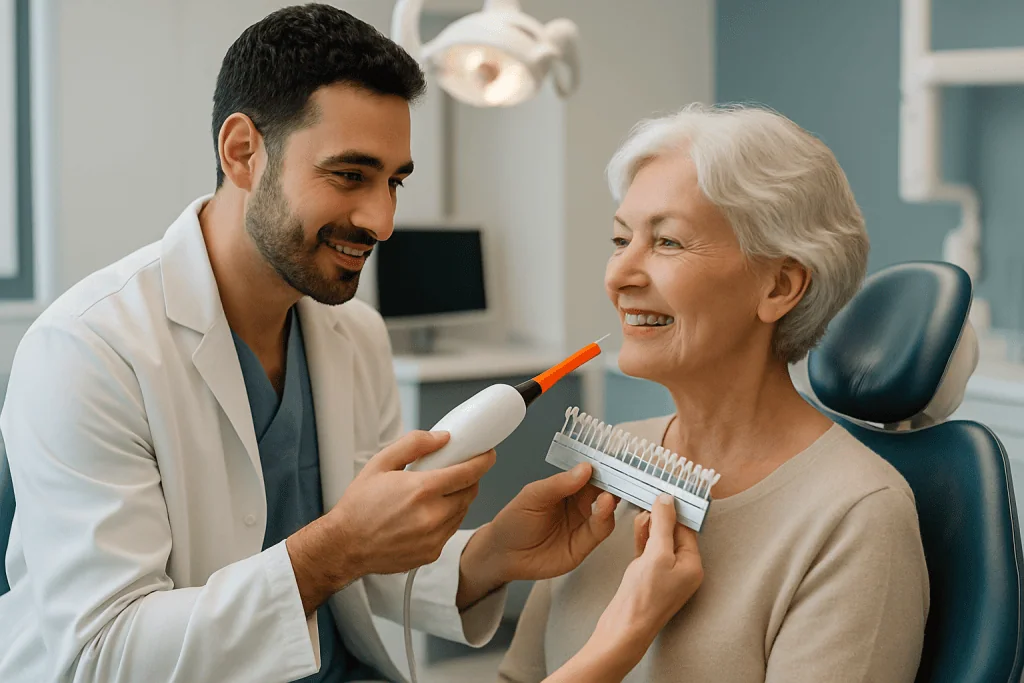
Porcelain veneers suit people with healthy teeth and gums whose concerns are mainly cosmetic, colour, shape, small chips or gaps, and who accept that enamel preparation is usually irreversible. Most cases need at least two clinical visits: one for assessment, preparation and records, and one for fitting and bonding after laboratory work, often followed by a review. Complex cases need more.
This guide explains who may be suitable for porcelain veneers in Turkey, how treatment is planned, how many visits the process usually takes, and what recovery, longevity and travel planning look like in practice. It also clarifies how veneers differ from dentist implants in Turkey, how quotations are built, and what informal terms like the 4-8-10 rule actually mean.
At a glance
- Procedure type: Cosmetic and restorative dental treatment, performed as outpatient dentistry
- Purpose: To improve the visible colour, shape, length, proportion or minor alignment appearance of teeth
- Anaesthesia: Usually local anaesthesia when enamel preparation is required
- Hospital stay: None; appointments take place in an outpatient dental setting
- Typical visit count: At least two clinical visits, preparation and records, then fitting and bonding, with laboratory time in between
- Recovery: Any sensitivity or gum tenderness usually settles within days
- Return to daily life: Often the same day, with short-term food and cleaning adjustments
- Final result: Visible after bonding and bite adjustment, often within one to two weeks of starting
- Relevant departments: Prosthodontics, restorative dentistry and cosmetic dentistry
- International patient support: Pre-travel coordination, interpreters, transfer support, accommodation guidance and remote follow-up communication
What is this treatment?
Porcelain veneers are thin, custom-made ceramic shells bonded to the front surfaces of selected teeth. They change what you see, colour, shape, length, symmetry, small gaps, minor irregularities, while leaving most of the tooth intact. A well-planned veneer works with your smile, lips and facial features rather than imposing a template on them.
One point deserves emphasis before anything else. Depending on your starting position, a veneer may need minimal enamel adjustment or something more substantial. Once enamel has been reshaped, that change is permanent. Conventional porcelain veneers are therefore generally irreversible, and a careful dentist will discuss conservative alternatives before preparing anything.
It is also worth being clear about what this page covers. Much of the research that leads people here starts with searches for dentist implants in Turkey, and implants are a different treatment for a different problem. Veneers reshape teeth you still have; implants replace teeth you have lost. The next section explains the distinction, because it changes the number of visits, the timeline and the whole shape of your travel plan.
Veneers or implants: which are you actually researching?
Interest in dentist implants in Turkey usually comes from people with missing teeth, failing teeth or loose dentures. A dental implant is a titanium post placed in the jawbone to carry a replacement tooth. It involves a surgical stage, a healing period while the bone integrates with the implant, and then a restorative stage, which typically means either a longer stay or two separate trips spaced months apart.
Veneers sit at the other end of the spectrum. There is no surgery, no bone healing, and the interval between visits is measured in days of laboratory work rather than months of integration. If your teeth are present and structurally sound but you dislike how they look, veneers or a related cosmetic option are the relevant conversation. If teeth are missing or cannot be saved, no veneer will solve that, and implants or another replacement option come first.
Some patients need both, in sequence: replacement of missing teeth, then cosmetic refinement of the visible ones. That is exactly the kind of case where a single advertised smile package tells you very little, and a proper examination tells you everything. Anyone weighing up dentist implants in Turkey alongside veneers should expect the two treatments to be planned on different timelines, even when the same team provides both.
When is it recommended?
Porcelain veneers may be recommended for discolouration that whitening is unlikely to improve sufficiently, worn or chipped edges, uneven tooth shape, small spaces between teeth, minor visible crowding, or front teeth that simply do not match each other. Treatment can involve one tooth or several, depending on the concern.
Veneers are also considered when old bonding or restorations no longer match the appearance you want. In every case the dentist needs to confirm that the underlying tooth is healthy and can support the veneer predictably: a veneer bonded over a compromised tooth is a short-lived result.
They are not the first choice for every cosmetic concern. Orthodontics for position, whitening for colour alone, composite bonding for smaller changes, gum treatment for the frame around the teeth, or crowns for heavily damaged teeth may each be the better answer. Sound treatment starts from your diagnosis, not from a standard smile design applied to whoever walks in.
Who is a good candidate?

You may be a good candidate if your teeth and gums are generally healthy, you have enough enamel for reliable bonding, your oral hygiene is stable, and your expectations match what thin ceramic shells can realistically change. You should also be genuinely comfortable with the permanence of any enamel preparation.
The assessment covers decay, gum inflammation, cracks, existing fillings and crowns, alignment, enamel quality and how your teeth meet when you bite. Each of these can change whether veneers are appropriate and whether other treatment needs to happen first.
Clenching and grinding deserve honest discussion. Veneers may still be possible in selected cases, but bite management matters and a protective night guard is often advised. Severe crowding, active periodontal disease, untreated infection, extensive tooth loss or an unstable bite generally need to be addressed before elective cosmetic work is sensible.
Treatment options and the 4-8-10 question
Porcelain veneers are one option within a broader cosmetic and restorative toolkit. Conventional porcelain offers strong colour stability and fine aesthetic detail. Minimal-preparation or no-preparation veneers can work when there is enough natural space and the added contour will not look bulky. Composite bonding suits smaller changes and is more easily adjusted; the trade-offs are set out in our comparison of porcelain versus composite veneers in Turkey. Teeth with extensive damage may need porcelain crowns rather than veneers, because a crown protects the whole tooth rather than one surface.
What is the 4-8-10 rule? It is an informal cosmetic-dentistry shorthand, not a clinical standard. It refers to treating four, eight or ten visible upper front teeth depending on how broadly your smile shows. The right number for you is individual: it depends on your smile width, the shade of the untreated teeth, your lower teeth and your facial proportions. A dentist who recommends a number before examining you is quoting a formula, not planning your treatment.
It is also common, and often wise, to treat only selected teeth rather than a full arch, if that achieves a balanced result while preserving more natural tooth structure.
About the phrase “Turkish teeth”
You will find search results for turkey veneers, veneers turkey and the more loaded phrase “Turkish teeth”, social-media shorthand for very white, very uniform smiles produced abroad. It helps to know that many of those dramatic transformations are actually full crowns on heavily cut-down teeth, not veneers at all. The phrase turkey teeth veneers blurs a distinction that matters clinically, because crowns remove far more tooth structure than a conservatively planned veneer.
So-called Turkish veneers are made from the same ceramic families used in laboratories anywhere in the world. What varies is not the country but the diagnosis, the amount of tooth removed, the laboratory standard and the bite planning. A conservative plan that treats only what needs treating is the best protection against the outcomes the slang phrase is mocking, and that principle holds wherever your dentist works.
Online evaluation before travel
For international patients, treatment planning usually begins with a remote review. The dental team typically works from clear photographs of the smile from the front and sides, any previous X-rays or scans, information about existing crowns or implants, and details of sensitivity, grinding or gum bleeding.
A remote review is useful for preliminary planning and for setting a realistic visit schedule. It cannot replace an in-person examination, and the diagnosis, scope and suitability can all change once a dentist checks your teeth, gums, bite and restorations directly. The practical consequence: avoid booking non-refundable travel around a final treatment promise until the clinical plan is confirmed face to face.
Before the treatment
Before any preparation, the dentist reviews your medical and dental history, medication use, allergies, previous dental work and aesthetic goals. Photographs, X-rays or digital scans assess tooth health, roots, bone support, gum condition and bite.
Active decay, infection or gum disease is generally treated first. Some patients also need professional cleaning, replacement of failing restorations or a grinding assessment before elective veneers are planned. This sequencing is not padding, bonding ceramic to an unhealthy foundation shortens the life of the work.
Use the planning discussion to understand the expected amount of preparation, the shade selection process, the number of teeth involved, the temporary veneer plan, the limits of the proposed design and the maintenance it will need. A good plan leaves you time to consider changes that cannot be undone.
What happens during the treatment
At the preparation appointment, local anaesthesia is usually used for comfort. Where needed, a small amount of enamel is reshaped, then impressions or digital scans are taken so the laboratory can build veneers to the planned design. Many clinics now use digital dentistry workflows, intraoral scanning and on-screen smile design, which can make the planned result easier to preview and discuss before anything is bonded.
Temporary restorations may be placed while the final veneers are made, particularly when preparation is more extensive. Temporaries protect the prepared teeth but are more fragile than the final ceramic, so specific food and cleaning guidance applies.
At the fitting appointment, each veneer is checked for shade, shape, margins, contact points and bite, first as a trial, then bonded with dental adhesive once you and the dentist approve. Polishing and bite adjustment follow. Cases involving several teeth, or bite changes, may need an additional review appointment, and a night guard may be recommended where there are signs of clenching or grinding.
How many visits will you need?
Most porcelain veneer cases need at least two main clinical visits: one for examination, preparation and records, and one for fitting and bonding after the laboratory has produced the veneers. The gap between them is set by laboratory work and quality checks, commonly within the range of a single trip of one to two weeks.
Additional appointments are needed when the case calls for them: a separate planning and trial-design visit, gum treatment before preparation, a temporary-restoration check, or a final bite review after bonding. Treating more teeth generally means more chair time, not necessarily more trips, but pre-existing dental problems can add stages that no itinerary should compress.
This is one of the clearest contrasts with implant treatment. Veneer visits are separated by days; implant stages are often separated by months of healing. If your research spans both veneers and implants, plan them as different journeys with different calendars.
Hospital stay and discharge
Veneers are outpatient dental treatment. There is no hospital admission; you leave after each appointment and can usually continue light daily activities, allowing for short-lived numbness after local anaesthesia.
Before you leave after final bonding, the dentist checks bite, comfort and veneer margins, and provides instructions on brushing, flossing and food choices. For visitors, the sensible pattern is to keep at least a day or two in the city after bonding for a final review, rather than boarding a flight straight from the dental chair.
Recovery timeline
Recovery is usually straightforward. Temporary sensitivity to temperature or pressure can follow enamel preparation, and gums may feel mildly tender after fitting. The general pattern is that symptoms settle rather than build.
| Timeframe | What to expect |
|---|---|
| First 24 hours | Numbness fades as local anaesthesia wears off. Minor gum sensitivity and awareness of the new tooth surfaces are common. Softer food choices help. |
| First week | Mild sensitivity or bite awareness typically settles. A bite that feels high on one tooth is a routine matter that the treating dentist adjusts at review. |
| Weeks 2–4 | Most people adapt fully to the new contours. A planned review confirms comfort, gum response and bite stability. |
| Months 1–3 | Routine oral hygiene continues, along with any advised follow-up with a local dentist. A night guard becomes part of the routine for those who clench or grind. |
| Long term | The aesthetic result is visible from bonding; how it holds depends on gum health, bite stability, hygiene and regular dental care. |
What to avoid after treatment
In the first days, avoid biting directly into very hard foods with the front teeth, chewing ice, opening packages with your teeth or biting pens. These habits damage natural teeth and restorations alike, so the advice is worth keeping permanently, not just for a week.
Porcelain itself resists staining well, but bonding margins and untreated neighbouring teeth do not share that resistance. Careful hygiene and regular professional cleaning keep the colour relationship between treated and untreated teeth stable over time.
Temporary veneers need extra caution with sticky foods, and a prescribed night guard should stay in use for as long as the dentist advises: it exists to protect an investment that grinding can otherwise chip or debond.
Risks and possible complications
Veneers are widely used, but no dental treatment is without risk. Recognised issues include temporary or persistent sensitivity, gum irritation, colour mismatch with surrounding teeth, bite discomfort, chipping, cracking, debonding, and dissatisfaction with shape or shade.
Because enamel preparation is usually irreversible, a prepared tooth is committed to a restoration of some kind for life. A tooth can later need more extensive work, such as a crown, particularly where there is underlying structural weakness or a problem unrelated to the veneer. The teeth, fillings and gums around the veneers continue to need routine care, exactly as before.
Grinding, trauma, poor hygiene, untreated gum disease and hard-object habits all raise the chance of complications. In clinical practice, a loose or fractured veneer, a bite that stays uncomfortable, or pain that worsens rather than settles are treated as matters for professional assessment rather than home management, which is one reason follow-up arrangements belong in the plan from the start. Careful diagnosis, conservative preparation, good laboratory work and a stable bite reduce avoidable risk; nothing eliminates it.
Results and expectations
Well-planned veneers can meaningfully improve colour, proportion and smile harmony. The best result looks appropriate for your face, gum line and preferences, not identical to anyone else’s.
How long do veneers last? Longevity depends on material, bonding quality, the amount of preparation, bite forces, gum health, hygiene and habits such as grinding. Well-maintained porcelain veneers can serve for many years, but they are not permanent and may eventually need repair or replacement. Durability is determined by the clinical work and the aftercare, not by the country where the work was done.
Natural teeth change over time, and untreated teeth may drift in colour differently from porcelain. Some patients need adjustments or replacements in later years. A responsible dentist sets out achievable outcomes and limitations before any irreversible step is taken.
International patient travel planning
Is travelling to Turkey for veneers a good idea? It can be reasonable when the team is properly qualified, the assessment is thorough, you understand the proposed plan, and the itinerary leaves genuine room for clinical appointments and review. Travel pressure should never be the reason an irreversible procedure gets rushed or a plan skips oral-health basics.
Build your schedule around the two core visits, preparation and records, then fitting and bonding, plus any planning, gum-care or review appointments your case requires. Keep dates flexible where you can, avoid departing immediately after final bonding, and arrange a local dentist for routine ongoing care at home. Our guide to aftercare appointments in Turkey explains how follow-up is typically structured for patients who live abroad, including what can be handled remotely.
Cost and package information
This guide gives no figures, because an honest veneer price only exists after assessment. What can be explained is the structure. A quotation reflects the number of veneers, the ceramic and laboratory design, the degree of preparation, whether temporaries are needed, treatment of any decay or gum disease, imaging and digital planning, bite-related work, replacement of old restorations and the overall complexity of the smile plan.
A useful written quotation states the treatment scope and whether it includes consultations, diagnostics, digital planning, temporaries, laboratory fees, final fitting, bite adjustments and scheduled reviews. If the plan changes after in-person examination, which is legitimate and common, the change should be explained clearly before additional work begins. Flights, accommodation, meals, travel insurance, treatment of unrelated dental problems and future maintenance are normally separate unless a document says otherwise.
Quotes for veneers are also built differently from quotes for dentist implants in Turkey, where surgical stages, implant components and bone-related procedures drive the structure. Comparing a veneer quote against an implant package tells you nothing useful; compare each against a clearly itemised alternative for the same treatment.
Why choose Acibadem
Acibadem International coordinates care for patients travelling from abroad through a structured process that brings together dental specialists, diagnostic services and international patient support. Planning is based on direct clinical assessment of your individual dental health, not a one-size-fits-all cosmetic package.
A multidisciplinary hospital environment is particularly relevant when you have medical conditions, complex dental needs or care that spans prosthodontic, restorative, periodontal or surgical expertise. International patient services provide language support, appointment coordination, transfer and accommodation guidance, and communication channels after you return home. Their role is practical; clinical decisions remain with the treating dentist.
Medical review and disclaimer
This guide has been reviewed by the Acibadem International medical team and is intended as general information about porcelain veneers and international treatment planning. It is not a personal diagnosis, a treatment recommendation or a substitute for consultation with a qualified dentist.
Suitability for veneers requires individual evaluation of your teeth, gums, bite, medical history and expectations. The final plan, visit count, materials and aftercare advice may differ from what is described here. All dental procedures carry risk and results vary from person to person; discuss questions, existing conditions and medications directly with your treating dental team before making travel or treatment decisions.
Step by step
- Initial contact. The process typically begins with a first enquiry outlining smile concerns, a preferred travel timeframe and any questions about porcelain veneers.
- Medical record / photo submission. Smile photographs, dental X-rays or scans where available, previous treatment details and relevant medical information form the basis of the remote review.
- Preliminary medical review. The dental team reviews this information and indicates whether an in-person veneer assessment may be appropriate.
- Treatment plan and quotation. A preliminary outline of possible treatment, expected appointments and a transparent quotation framework follows, subject to in-person assessment.
- Travel planning. The itinerary allows enough time for examination, preparation, laboratory work, fitting and a final check, with flexible dates where possible.
- Arrival. International patient services assist with practical coordination, including interpreter support and transfer guidance where arranged.
- In-person consultation. The dentist examines teeth, gums and bite, discusses goals and alternatives, and confirms whether veneers are suitable.
- Pre-operative tests. Photographs, scans, impressions and X-rays are taken as clinically required, and any active dental disease is addressed first.
- Treatment. Teeth are prepared conservatively where indicated, records go to the laboratory and temporary restorations may be placed.
- Hospital stay. None is normally needed; the whole pathway runs through outpatient dental appointments.
- First control. At fitting, the dentist checks shade, shape, comfort and bite before final bonding, with adjustments as needed.
- Discharge / travel clearance. After final checks, the dentist provides oral-care instructions and advice on when travel is appropriate.
- Remote follow-up. After the return home, the international patient team supports follow-up communication and coordination with a local dentist where appropriate.
Your checklist
- Passport and travel details
- Complete medical history, including chronic conditions
- Current medication list and known allergies
- Details of previous dental treatment, crowns, implants, root canal treatment or orthodontics
- Information about teeth grinding, jaw pain, clenching or night guard use
- Current symptoms such as tooth pain, sensitivity, gum bleeding, swelling or loose teeth
- Recent dental X-rays, scans or test results, if available
- Clear photographs of your smile, front teeth and side teeth as requested
- Details of previous surgeries or relevant medical procedures
- Travel insurance and contact details for your regular dentist at home
Key takeaways
- Porcelain veneers may suit you if your teeth and gums are healthy and your concerns are mainly cosmetic; they do not replace missing teeth: that is implant territory.
- Most cases need at least two clinical visits, separated by laboratory time, and complex plans need more; visit spacing for veneers is days, not the months implant healing requires.
- Enamel preparation is usually irreversible, so conservative planning and honest discussion of alternatives matter more than any advertised design.
- Untreated decay, active gum disease and unstable bites are dealt with before cosmetic work, not around it.
- Stay long enough for preparation, trial fitting, bonding and a bite review rather than flying out straight after the final appointment.
- Judge a quotation by its itemised scope, materials, preparation, laboratory standard, bite planning, aftercare, never by a headline figure alone.
Frequently asked questions
How much do porcelain veneers cost in Turkey?
There is no single honest figure, because every plan differs. The total depends on the number of teeth treated, the ceramic and laboratory work, the amount of preparation, temporary veneers, gum health, any existing dental treatment needed first and the diagnostics involved. A meaningful quotation is written, itemised and issued after assessment, stating clearly what it includes and excludes.
Who is suitable for porcelain veneers?
People with healthy teeth and gums, sufficient enamel for bonding, stable oral hygiene and cosmetic concerns such as colour, shape, small gaps or chips. Suitability also depends on the bite, existing restorations and habits like grinding. Active decay, gum disease or significant alignment problems generally need treatment first.
How many visits are needed for porcelain veneers in Turkey?
At least two main clinical visits in most cases: one for assessment, preparation and records, and one for fitting and bonding after laboratory work. Some plans add a planning visit, gum treatment, a temporary-restoration check or a final bite review. The realistic schedule is confirmed after in-person examination.
How long should I stay in Turkey for veneers?
Long enough for the initial assessment, preparation, laboratory production, final fitting and a review, often achievable within a single stay of one to two weeks, though the exact duration depends on the number of veneers and case complexity. Avoid scheduling your return flight immediately after final bonding.
What is the 4-8-10 rule for veneers?
An informal way of describing whether four, eight or ten upper front teeth are included in a cosmetic design, based on how broadly a smile shows. It is not a clinical rule. The right number is individual, decided from your smile width, tooth shade, lower teeth and facial proportions after examination.
How long do porcelain veneers last?
Well-planned and well-maintained porcelain veneers can serve for many years, but they are not permanent. Lifespan depends on bonding quality, bite forces, gum health, grinding, diet and home care, factors set by the clinical work and your habits, not by the country where the veneers were made.
Will porcelain veneers damage my natural teeth?
Most veneer designs require some enamel removal, which is generally irreversible, though the amount varies and conservative or no-preparation approaches exist for suitable cases. A responsible dentist explains exactly how each tooth would be altered, why, and whether whitening, bonding or orthodontics could achieve your goal with less alteration.
Can I get veneers if I grind my teeth?
Possibly, in selected cases, but grinding raises the risk of chipping, cracking and debonding. The dentist assesses how severe the grinding is and whether the bite is stable enough. A custom night guard and management of contributing factors are often part of the plan to protect both teeth and restorations.
Add us as a Preferred Source to see more of our trusted health content across Google Search, AI Overviews and Discover.

Update history
- PublishedAugust 27, 2026
- Medical review approvedSeptember 13, 2026
- Last content updateSeptember 12, 2026
References3
- Dental Veneers: Cleveland Clinic my.clevelandclinic.org
- Medical Tourism: Travel to Another Country for Medical Care: CDC Travelers' Health wwwnc.cdc.gov
- Dental Health: MedlinePlus medlineplus.gov
More Patient Guides

HoLEP in Turkey: How It Compares With TURP and What Recovery Involves
HoLEP in Turkey treats enlarged prostate tissue with laser enucleation; learn how it compares with TURP, recovery, travel and follow-up.

How to Prepare for a Sedation Procedure in Turkey
Prepare safely for a sedation procedure in Turkey with guidance on fasting, medicines, travel, recovery and follow-up.

Treatment Delays in Turkey: What Happens If Tests or Recovery Change Your Schedule
Treatment delays in Turkey can happen if tests or recovery change your plan. Learn how to manage appointments, travel, accommodation and follow-up.

Can You Travel to Turkey Alone for Treatment?
You can travel to Turkey alone for treatment when your care team confirms it is suitable and you plan support, transport and…