

Can You Travel to Turkey Alone for Treatment?

Often, yes. Many international patients travel to Turkey alone for treatment, especially for consultations, diagnostics, outpatient care and procedures with a straightforward recovery. Whether it is suitable for you depends on the treatment planned, whether sedation or anaesthesia is involved, your mobility afterwards, and the practical support you arrange in advance. Your treating team should confirm before you book flights.
Wondering whether you can make this trip on your own, without a friend or relative in the seat next to you? For many patients the answer is yes. You can often travel to Turkey alone for treatment, provided your medical needs, recovery plan and day-to-day support are worked out before you leave home rather than improvised on arrival.
The difference between a stressful solo trip and a calm one is almost always planning. This guide takes you through the whole journey: deciding whether solo travel suits your treatment, checking the general safety picture, arranging arrival and accommodation, managing treatment day without a companion, and getting home with the right documents in hand.
At a glance
- Can you travel alone?: Often yes, if your treating clinician agrees and your procedure does not require a companion for discharge or recovery.
- What decides it: The treatment itself, anaesthesia or sedation, your mobility afterwards, and your general health, not the destination.
- When a companion is usually needed: After sedation, general anaesthesia, major surgery, or any treatment that limits movement or requires close observation.
- Key preparations: Pre-booked transfers, accommodation suited to recovery, a home check-in plan and a clear discharge transport arrangement.
- Support available: International patient teams coordinate appointments, interpreters and practical travel arrangements for patients travelling solo.
Can you travel to Turkey alone for treatment?
Yes, in many cases. International patients travel to Turkey alone for treatment every day, particularly for consultations, diagnostic tests, dental work, outpatient procedures and treatments with a predictable, mobile recovery. The question is rarely whether solo travel is possible in principle. It is whether it is appropriate for your specific treatment and your specific health.
Three factors matter more than anything else. First, the procedure: anything involving sedation or general anaesthesia usually comes with a requirement that a responsible adult accompanies you at discharge or stays with you afterwards. Second, your recovery: if you will struggle to walk, carry a bag, shower or manage stairs in the first days, being alone in a hotel room becomes genuinely difficult. Third, your baseline health: complex medical conditions, a high risk of falls, or cognitive, visual, hearing or significant anxiety-related needs all change the calculation.
Before you book flights, ask your treating team directly whether solo travel is appropriate for the treatment you are planning. A good answer will consider your mobility, medical history, language needs, expected length of stay, pain management, wound care and fitness to fly, not just the procedure name. The final call on solo travel should always rest with the clinicians responsible for your care.
Is it safe to travel alone to Turkey?
Turkey is one of the most visited countries in the world, and its major cities receive millions of solo travellers each year, including large numbers of international patients. Istanbul, Ankara and İzmir have the infrastructure that solo travel depends on: international airports, extensive public transport, licensed taxi systems and hotels accustomed to foreign guests. The everyday precautions are the ones you would apply in any large city, use pre-arranged or licensed transport, keep documents and valuables secure, and avoid carrying everything of value in one bag.
Some patients ask about regional security, including tensions involving Iran and the wider Middle East. The honest answer is that security situations change, and no hospital guide can give you a current assessment. Check your own government’s official travel advice shortly before you travel: the UK Foreign Office and the US State Department both publish country pages for Turkey that distinguish between regions. Their guidance has typically differed sharply between the areas near the Syrian border in the south-east and the western cities where international treatment actually takes place, which are many hundreds of kilometres from those border regions. Read the current advisory for yourself rather than relying on headlines, and confirm that your travel insurance remains valid under whatever advisory level applies when you fly.
Solo female patients often raise safety separately. The same principles apply: pre-booked transfers rather than street pickups, accommodation with staffed reception, a check-in routine with someone at home, and the hospital and hotel addresses saved in Turkish as well as English. None of this is specific to Turkey; it is simply what careful solo travel looks like anywhere when you may be tired, medicated or recovering.
Decide whether solo travel suits your care plan
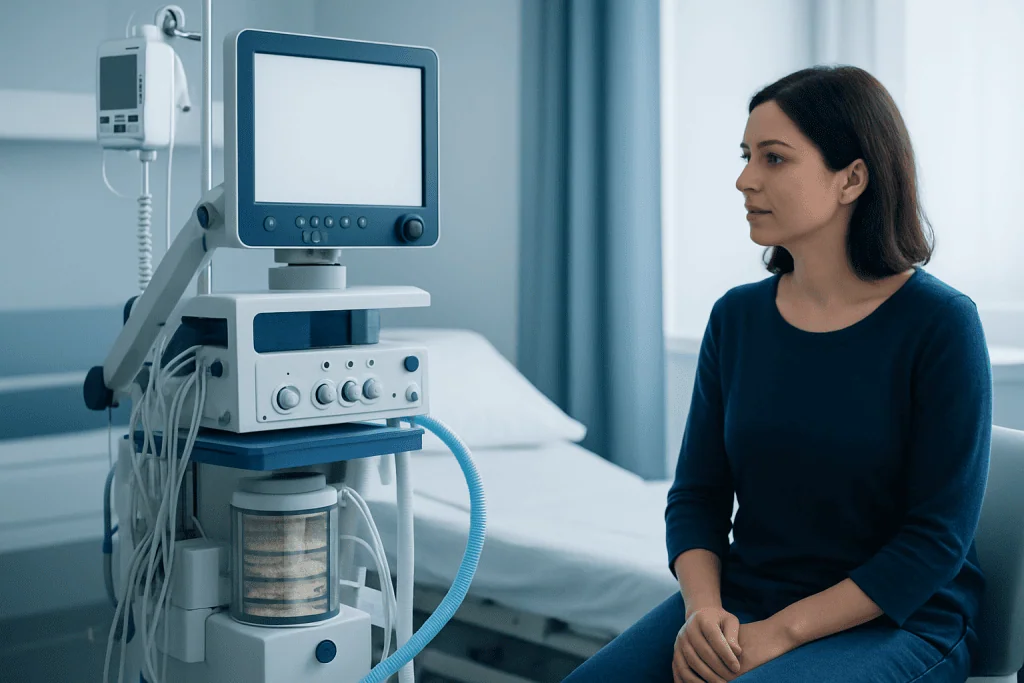
A solo trip is usually manageable when you can walk safely, take your regular medicines without help, communicate your needs, use a phone independently and make decisions without immediate assistance. It also helps to be honest with yourself about the emotional side. Being away from your usual support network is easy on a good day; it is harder when a schedule changes unexpectedly or the first night after a procedure is uncomfortable.
Clinicians commonly advise against travelling alone when a patient is likely to be drowsy after anaesthesia, needs help getting in and out of bed, has a raised risk of falls, requires frequent monitoring, or is managing complex conditions alongside the treatment itself. There is a fuller breakdown of these situations in our guide on which patients should not travel alone.
Do not assume a short procedure means no support is needed. Even day treatment can leave you temporarily tired or disorientated, and hospitals set discharge requirements precisely because of this. The questions worth asking before you book anything:
- Will I receive sedation, anaesthesia or medicines that affect alertness?
- How long should I stay in Turkey after treatment, including follow-up reviews?
- What are the limits on lifting, stairs, walking distances and showering after discharge?
- Does the discharge policy require a responsible adult with me, and for how long?
Hair transplants, rhinoplasty and other cosmetic procedures alone
Two of the most common searches behind this question involve hair transplants and rhinoplasty, so it is worth addressing them plainly.
Hair transplantation is generally performed under local anaesthesia, which is one reason many patients do travel for it alone. That does not make it trivial. You will typically need to protect the treated area, sleep in a particular position, follow washing instructions precisely and return for at least one review before flying. Whether the trip is safe depends far less on being alone than on choosing a properly regulated medical setting, understanding the aftercare before you arrive, and building enough days into the trip for the early healing phase and any scheduled checks.
Rhinoplasty is a different proposition. It is surgery under general anaesthesia, usually with swelling, congestion and activity restrictions in the first days, and a splint or dressings to manage. Most surgical teams will expect a responsible adult at discharge and will set a minimum stay before you are cleared to fly. Whether it is a good idea to have a nose job in Turkey is not a question anyone can answer generically: it depends on a proper surgical assessment of your anatomy and goals, a frank discussion of risks and limitations, and the quality of the institution treating you. Be sceptical of anyone who answers it without examining you. What can be said is that if you plan this procedure as a solo trip, you should plan the companion or local-support question explicitly rather than hoping it resolves itself at discharge.
Plan your journey from home to hospital

When you travel to Turkey alone for treatment, the goal on travel day is to have as few decisions to make as possible. Choose flights with manageable connections. Request airport assistance from your airline if your mobility is reduced: this must usually be booked in advance, not requested at the gate. Keep the essentials in your cabin bag: passport, visa or e-visa confirmation where required, your treatment schedule, medical summaries, prescriptions, regular medicines and emergency contacts. Medicines belong in hand luggage in their original packaging; our guide on travelling with regular prescriptions covers the documentation in detail.
Arrange your arrival transfer before you fly rather than negotiating transport while tired at the airport. Confirm the meeting point, how you will reach the driver, the exact destination and what happens if your flight is delayed. Save the hospital address and your appointment details on your phone and on paper before you land.
Choose accommodation for recovery, not just for price or views. The things that matter after treatment are mundane: distance to the hospital, a lift, a walk-in shower, food and a pharmacy within easy reach, reliable internet, and a reception desk or host you can actually reach if you need something. If your treatment may limit mobility, avoid anywhere with long staircases or a difficult route from the entrance to your room. Staying in one place for the whole trip beats changing hotels mid-recovery.
Build a support network before you leave
Travelling alone does not mean managing alone. Before departure, choose at least two people at home who know your full itinerary, hospital details, accommodation address and planned return date. Agree fixed check-in times, particularly on treatment day and during the first days of recovery, and agree what they should do if a check-in is missed. Share copies of important documents securely rather than carrying the only copy.
Save the key numbers in more than one place: your patient coordinator, the hospital, your hotel, your insurer’s assistance line, your airline, the local emergency number (112 in Turkey) and your contacts at home. Keep a short medical summary on your phone and on paper: allergies, regular medicines, significant diagnoses and your home doctor’s details.
Language support matters more when there is no one beside you to fill gaps. Hospitals that regularly treat international patients provide interpreters throughout the hospital journey, but it still pays to learn a few basic phrases, download offline maps and a translation app, and carry the hospital address written in Turkish. For a broader picture of what help exists at each stage, see support options for patients travelling alone.
Prepare for treatment day and discharge
On treatment day, bring only what you need: identification, relevant medical documents, payment or insurance paperwork where applicable, phone and charger, glasses or hearing aids, and your medication list. Follow fasting, medication and arrival instructions exactly as given. Hospitals also expect to be told about changes before a procedure, a new illness, a new medicine, a delayed flight, because the plan may need adjusting; your appointment confirmation will say how such changes are handled.
Before treatment begins, make sure you understand the aftercare plan. When can you eat and drink? Can you walk independently? What pain relief is expected? When can you shower? How does follow-up work? If an instruction is unclear, ask for it to be repeated or written down. This matters more when you have no companion to catch what you missed.
Do not leave the hospital until the route back to your accommodation is settled. Depending on the procedure, that may mean a pre-arranged driver, a trusted taxi service, or a responsible adult required by the discharge policy. If the team recommends observation, an overnight stay or a companion, treat that as part of the care plan, not an optional extra.
Make recovery abroad easier
Give yourself more recovery time than the minimum schedule allows. Build in quiet days without sightseeing, shopping or long walks. Keep water, simple food, prescribed medicines, chargers and anything you use daily within reach in your room, so the first days involve as few errands as possible.
Follow your discharge instructions on activity, wound care, medication timing and review appointments, and attend every scheduled review even if you feel well. Those reviews are how the clinical team confirms your recovery is on track and whether you are ready for onward travel. Your discharge paperwork will also set out the warning signs specific to your treatment; those written instructions, not general advice from the internet, are your reference point while you recover away from home.
Plan the return journey and follow-up at home
Base your return flight on clinical advice, not the earliest available ticket. Some treatments require a period in Turkey for reviews; others carry restrictions on flying, sitting for long periods or carrying luggage. Ask when you are medically fit to travel and whether you need a fit-to-fly letter.
Before you leave, collect your medical report, imaging where provided, medication list, discharge summary and follow-up instructions, and keep them in your hand luggage. These documents let your doctor at home understand exactly what was done and support continuity of care afterwards. The paperwork you should expect is set out in our guide on discharge documents you receive before travelling home. Ask whether results are available digitally and how to request them later, and confirm how non-urgent follow-up questions are handled once you are back. Your local doctor remains an important part of your ongoing care after you return.
Step by step
- Gather your medical information early. Treating teams review recent records, test results and a medication list before confirming a plan. Use that stage to ask whether your condition and procedure allow solo travel, and how long you should stay in Turkey afterwards.
- Confirm the treatment and support plan. Clarify your appointment schedule, likely length of stay, interpreter arrangements and pre-treatment instructions. Ask directly whether sedation, anaesthesia, limited mobility or overnight observation means you need a companion.
- Check the official travel picture. Read your government’s current travel advice for Turkey, apply for any visa or e-visa you need, and confirm your insurance remains valid for the trip you are planning.
- Arrange transport and suitable accommodation. Book airport and hospital transfers in advance with a reliable contact method for delays. Choose accommodation near your care location with safe access, a lift if needed, and food and pharmacies close by.
- Create a home check-in plan. Give two trusted contacts your itinerary, accommodation details and hospital information. Set regular check-in times and agree what they should do if they cannot reach you.
- Prepare a treatment-day bag. Carry essential documents, your medication list, prescribed medicines, a phone charger and any mobility aids. Keep valuables to a minimum and follow fasting or medication instructions exactly.
- Understand discharge before leaving hospital. Get written instructions, know how you will return to your accommodation safely, and note when your follow-up review takes place.
- Allow time before flying home. Keep your schedule flexible for reviews and recovery. Fly only when your treating team confirms it is appropriate, with your discharge records and medicines in hand luggage.
Your checklist
- Written confirmation of your treatment schedule and expected stay
- Medical records, prescriptions, allergy information and regular medication list
- Passport, visa or e-visa, insurance details and emergency contact list
- Current official travel advice for Turkey checked shortly before departure
- Pre-arranged airport and hospital transport
- Accommodation with safe access, a lift if needed, and essentials nearby
- International phone access, charger, power adapter and offline maps
- Two trusted contacts at home with your full itinerary and check-in plan
- A clear discharge transport plan for treatment day
- Enough time in Turkey for follow-up and clinician-approved travel home
Key takeaways
- You can often travel to Turkey alone for treatment, but suitability should be confirmed by your treating team before you book.
- The procedure, anaesthesia, mobility and recovery needs, not the destination, determine whether a companion is necessary.
- Check current official travel advice yourself; Turkey’s advisories differ sharply by region, and treatment cities sit in the west of the country.
- Pre-arranged transfers, recovery-friendly accommodation and a home check-in routine do most of the work of a safe solo trip.
- Follow your written discharge instructions and do not fly home until your treating team confirms you are fit to travel.
- Carry your medical documents home and keep a clear follow-up plan for care after your return.
Frequently asked questions
Is it safe to travel alone to Turkey?
Turkey’s major cities host millions of solo travellers, including many international patients, and have the transport, hotel and hospital infrastructure that solo travel depends on. Sensible precautions are the same as in any large city: licensed or pre-booked transport, secure documents and a check-in routine with someone at home. Always read your own government’s current travel advice for Turkey shortly before you fly, since it distinguishes between regions.
Is it safe to travel to Turkey given tensions with Iran and the region?
Security situations change, so the reliable sources are official travel advisories rather than a hospital guide or news headlines. Government advisories for Turkey are region-specific, and the western cities where international treatment takes place are many hundreds of kilometres from the border regions that attract heightened warnings. Check the current advisory before booking and again before departure, and confirm your travel insurance remains valid under it.
Can I be discharged alone after a procedure in Turkey?
It depends on the procedure, the medicines used and the hospital’s discharge policy. After sedation or general anaesthesia, most hospitals require a responsible adult to accompany you at discharge or stay with you for a period. Ask about this before you travel so you can arrange support in time rather than at the last minute.
Is it safe to visit Turkey for a hair transplant alone?
Hair transplantation is usually performed under local anaesthesia, which is why many patients do travel for it alone. Safety depends chiefly on choosing a properly regulated medical setting, understanding the aftercare before you arrive, and allowing enough days for early healing and any scheduled review before flying. Being alone is rarely the limiting factor if those elements are in place.
Is it a good idea to go to Turkey for a nose job?
That question can only be answered after a proper surgical assessment of your anatomy, goals and health, together with a frank discussion of risks and limitations. Rhinoplasty involves general anaesthesia, activity restrictions and a required stay before flying, so if you plan it as a solo trip, the companion and discharge arrangements need to be settled explicitly in advance rather than assumed.
How long should I stay in Turkey after treatment?
The right length of stay depends on the treatment, your individual recovery and whether follow-up reviews are needed before you fly. Your specialist team advises on the minimum period and any flying restrictions. Avoid booking an inflexible return ticket until that conversation has happened.
Do I need travel insurance for treatment in Turkey?
Policies vary widely, and standard holiday cover often excludes planned medical treatment and its complications. Read the policy before travelling and check whether it covers changes to travel, emergency care, companion expenses and extended accommodation. Understanding what is and is not covered matters more when you are travelling without a companion who could manage problems on your behalf.
Add us as a Preferred Source to see more of our trusted health content across Google Search, AI Overviews and Discover.

Update history
- PublishedAugust 21, 2026
- Medical review approvedSeptember 13, 2026
- Last content updateSeptember 12, 2026
References3
More Patient Guides

HoLEP in Turkey: How It Compares With TURP and What Recovery Involves
HoLEP in Turkey treats enlarged prostate tissue with laser enucleation; learn how it compares with TURP, recovery, travel and follow-up.
Porcelain Veneers in Turkey: Who Is Suitable and How Many Visits Are Needed?
Porcelain veneers in Turkey can enhance tooth shape and colour in two visits for suitable patients after a personalised dental assessment.

How to Prepare for a Sedation Procedure in Turkey
Prepare safely for a sedation procedure in Turkey with guidance on fasting, medicines, travel, recovery and follow-up.
Treatment Delays in Turkey: What Happens If Tests or Recovery Change Your Schedule
Treatment delays in Turkey can happen if tests or recovery change your plan. Learn how to manage appointments, travel, accommodation and follow-up.