

HoLEP in Turkey: How It Compares With TURP and What Recovery Involves

HoLEP is an endoscopic laser operation for benign prostate enlargement. The surgeon removes the obstructing inner tissue through the urethra, with no external incision in most cases. Compared with TURP it enucleates tissue more completely and suits a wider range of prostate sizes. Expect a short hospital stay, a temporary catheter, and several weeks of irritative urinary symptoms while healing settles.
This guide explains holmium laser enucleation of the prostate (HoLEP) for benign prostate enlargement: what the operation actually does, how it compares with TURP, what recovery genuinely feels like, and what planning HoLEP in Turkey means for your travel dates. It is written to help you ask sharper questions at a urology consultation, not to replace one.
At a glance
- Procedure type: Endoscopic laser prostate surgery performed through the urethra; usually no external incision
- Purpose: To relieve urinary obstruction caused by benign prostatic hyperplasia (BPH), not to treat prostate cancer
- Anaesthesia: General or spinal, decided after an anaesthesiology assessment
- Catheter: A urinary catheter is standard after surgery, usually for a short period
- Hospital stay: Often one night; longer if bleeding, catheter needs or your medical history require it
- Estimated recovery: Irritative urinary symptoms are common for several weeks; internal healing continues for months
- Return to daily life: Light activity often within days; strenuous activity waits for your surgeon’s clearance
- Suitable department: Urology
- International patient support: Acibadem International can assist with coordination, interpreters, transfers, accommodation guidance and remote follow-up
What is HoLEP?
If you are researching HoLEP in Turkey, it helps to start with what the operation actually does. Holmium laser enucleation of the prostate is an endoscopic procedure for urinary blockage caused by BPH: the benign enlargement of the prostate that becomes more common with age. Your urologist passes a small camera and instruments through the urethra, so there is usually no external cut.
The holmium laser is used to separate the enlarged inner tissue, called the adenoma, from the prostate’s outer capsule, much like peeling fruit away from its skin from the inside. The freed tissue is pushed into the bladder, broken into small fragments with a device called a morcellator, and removed. The result is a wider channel for urine, which is what improves weak flow, straining, incomplete emptying, frequency and getting up at night.
HoLEP treats benign enlargement, not prostate cancer. The removed tissue is normally examined in a laboratory, and occasionally that examination shows something unexpected, which your urologist would discuss with you. A full assessment before surgery matters because urinary symptoms can also come from the bladder itself, infection, neurological conditions or cancer.
When is it recommended?
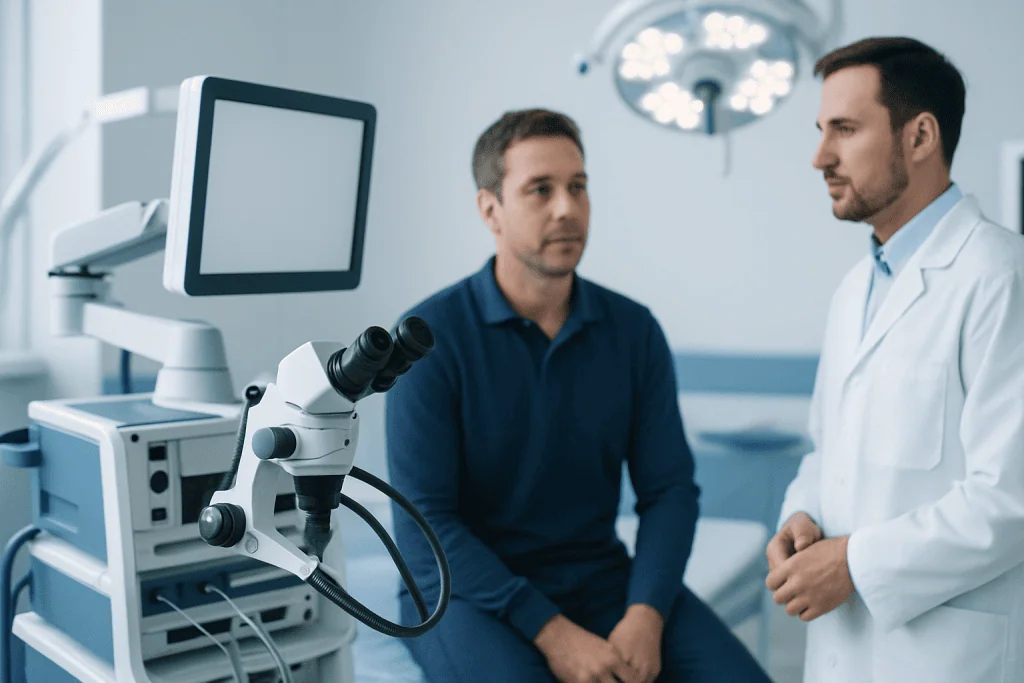
HoLEP is typically considered when an enlarged prostate causes bothersome symptoms that medication and lifestyle changes have not controlled, or when medication is unsuitable for you. It is also considered when obstruction is causing complications: recurrent urinary retention, repeated infections, bladder stones, kidney strain, or persistent blood in the urine once other causes have been ruled out.
Before recommending surgery, a urologist weighs symptom severity, prostate size and shape, urine flow measurement, how much urine remains in the bladder after voiding, PSA assessment where appropriate, imaging, and sometimes cystoscopy or urodynamic testing. Your general health, medications that affect bleeding, and any previous prostate procedures all shape the recommendation.
Not everyone with an enlarged prostate needs an operation. Mild symptoms without complications are often managed with monitoring, medication or a less invasive procedure. The decision is individual and made after examination, not from a description of symptoms alone.
Who is a good candidate?
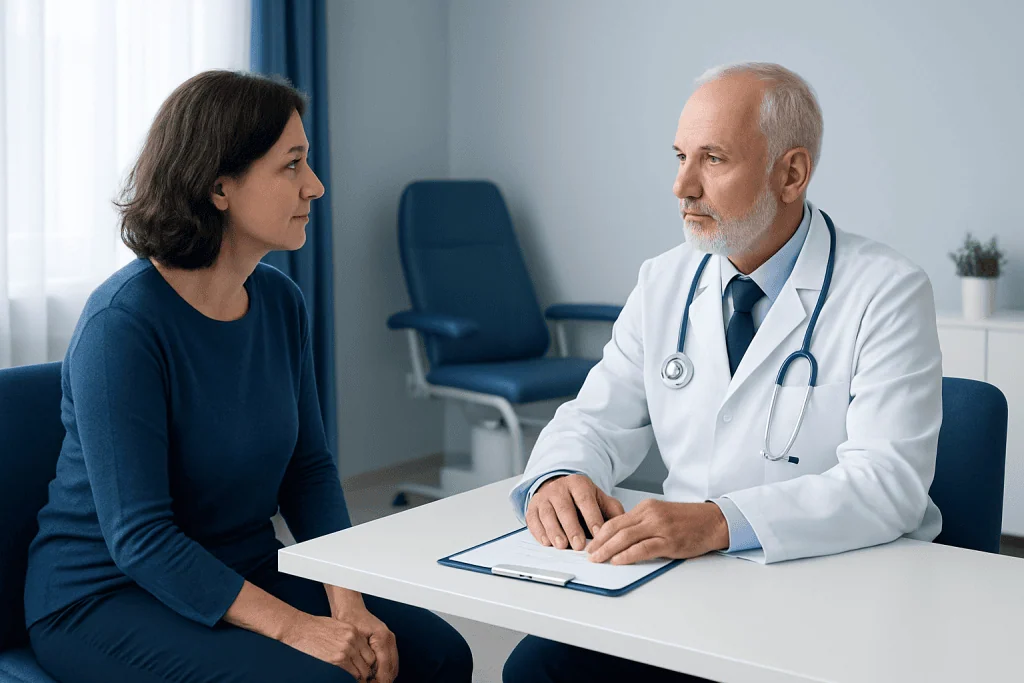
Candidates for HoLEP have confirmed BPH with obstruction and want a durable surgical solution, often because symptoms are disrupting sleep, work or daily comfort. One of HoLEP’s practical strengths is that it can be used across small, medium and large prostates when the surgeon has the specific training the technique requires.
You also need to be fit enough for anaesthesia, and willing to follow catheter, hydration, activity and follow-up instructions after discharge. If you are travelling from abroad, part of being a candidate is practical: you need a plan to stay locally until your treating team confirms travel is reasonable.
Some situations call for extra planning rather than automatic exclusion: active urinary infection, bleeding disorders, significant heart or lung disease, urethral narrowing, previous pelvic surgery or radiotherapy, a neurological bladder condition, or anticoagulant and antiplatelet use. Each of these changes the plan; none is judged without a physician’s review.
HoLEP vs TURP: an honest comparison
Transurethral resection of the prostateTURPis the long-established endoscopic operation for BPH, in which obstructing tissue is shaved away in pieces through the urethra. HoLEP takes a different approach: instead of resecting tissue layer by layer, it enucleates the whole adenoma along the natural plane of the capsule, then removes it from the bladder.
| Question | HoLEP | TURP |
|---|---|---|
| How is tissue removed? | The enlarged inner tissue is separated from the capsule as larger pieces, then morcellated and extracted | Tissue is resected in smaller fragments using an electrical loop |
| Prostate size range | Used across small to very large prostates in trained hands | Generally favoured for small to moderate prostates |
| Bleeding considerations | The laser seals tissue as it works, which can help in some bleeding-related situations: your surgeon judges this individually | Bleeding is managed with electrocautery; usually well controlled in appropriately selected patients |
| Completeness of removal | Aims to remove the adenoma down to the capsule | Removes obstructing tissue; some adenoma may remain, particularly in larger glands |
| Availability | Requires specific laser equipment and dedicated surgical training | Widely available; the historical standard for BPH surgery |
Neither operation is universally safer. Both are established treatments when the patient is selected appropriately and the team is experienced. What matters for you personally is your prostate size and shape, retention history, medications that affect bleeding, heart and lung health, prior operations, and the experience of the surgeon with each technique. A reasonable question for any consultation is simple: why this operation for me, and what would the alternative look like in my case?
Other treatment options for BPH
Surgery sits at one end of a spectrum. Observation and lifestyle adjustment can be enough for mild symptoms. Medicines can relax the prostate or shrink it in selected patients, though they do not always relieve obstruction fully and carry their own side effects. Office-based and minimally invasive procedures exist for suitable anatomy. Other surgical routes include laser vaporisation, transurethral incision for selected smaller prostates, and simple prostatectomy for particular cases.
The right choice is not determined by prostate size alone. A thorough consultation should cover expected benefit, limitations, anaesthesia requirements, effects on ejaculation and continence, recovery time, and how likely a repeat procedure would be with each approach.
How much prostate tissue is removed?
HoLEP does not remove the whole prostate. It removes the adenoma, the inner tissue that has grown and is squeezing the urinary channel, while the outer capsule and the rim of surrounding prostate stay in place. Because the laser works along the natural boundary between adenoma and capsule, the operation aims for a complete removal of the obstructing tissue rather than a partial trim.
How much tissue that means in grams varies enormously between patients, because prostates vary enormously in size. This completeness is one reason HoLEP is often described as a durable option: tissue that has been removed does not grow back, although the prostate that remains can still change over the years, and bladder-related symptoms have their own course.
Remote review before you travel
Most international patients begin with a remote review of existing records before booking flights. A urology team looks at what is already documented to judge whether HoLEP is plausibly the right operation, which tests will need repeating on arrival, roughly how long a stay to plan for, and whether another specialist should be involved first.
The records that make this review meaningful include a clear history of urinary symptoms and their duration, a current medication list, previous urology treatment, prostate ultrasound or MRI reports, urine test results, PSA records where applicable, uroflowmetry or post-void residual measurements, cystoscopy reports and past operative notes.
A remote review is always preliminary. It cannot replace an in-person examination, and the recommendation can change once the surgeon has examined you, repeated tests, or found a condition, an infection, for instance, that needs treating first. Build that possibility into your plans rather than treating a remote opinion as final.
Before the operation
Pre-treatment assessment typically includes history and examination, urine testing and blood tests, and, depending on your case, imaging, urine flow measurement, residual urine measurement, an ECG and a formal anaesthesia assessment. A urinary infection generally has to be treated before elective surgery goes ahead.
Tell the team about every medicine you take, including blood thinners, diabetes medication, supplements and herbal products. Do not change any prescribed medication on your own; if adjustments are needed around surgery, your urologist, anaesthesiologist and prescribing physician will set out a personalised plan.
You will receive fasting instructions before anaesthesia, an arrival time, and guidance on what to bring: our guide on what to pack for recovery after treatment in Turkey covers the practical side. A companion is useful in the first days, though the hospital’s discharge and visitor policies still apply.
During the operation
HoLEP is performed under general or spinal anaesthesia, so you feel no surgical pain during the procedure itself. Once anaesthesia is working, the surgeon passes a scope through the urethra to view the prostate and bladder, then uses the holmium laser to separate the adenoma from the capsule. The freed tissue is moved into the bladder, morcellated and removed, and is normally sent for laboratory analysis as routine.
Operating time varies with prostate size, anatomy, bleeding, and any previous procedures. At the end, a urinary catheter is placed to drain urine and allow bladder irrigation if needed. You wake in a monitored recovery area before returning to your room, what those first hours involve is covered in our guide to recovery after general anaesthesia in Turkey.
Afterwards, discomfort is usually about the catheter, bladder spasms, or burning when you first urinate after the catheter comes out. Many people describe it as discomfort rather than severe pain, and the team provides a pain-relief plan matched to you.
Hospital stay, catheter and discharge
You stay in hospital while the catheter is in place and your urine drainage, comfort and overall condition are monitored. Length of stay varies: some patients are ready to leave after one night, others need longer because of bleeding, medical conditions, catheter requirements or mobility.
The catheter is removed when your urologist judges it appropriate. Before discharge you will usually be asked to pass urine and have your bladder emptying checked. Pink or lightly blood-stained urine is normal in early healing; the team will explain what is expected in your case and what is not.
You should leave with written instructions covering hydration, activity, bowel care, medications, the situations that need prompt assessment, the timing of your first review, and contact details for the team. Keep that document with you: it is the reference point for everything in the weeks that follow.
Recovery timeline
Recovery after HoLEP is gradual, and this is the part many guides understate. Relief of obstruction can be noticeable early, but a bladder that has spent years pushing against a blockage needs time to settle. Your timeline depends on your pre-operative symptoms, prostate size, bladder function, catheter duration and general health.
| Timeframe | What to expect |
|---|---|
| First 24 hours | Monitoring after anaesthesia, usually with a catheter in place. Urine may be pink or red-tinged; bladder spasms and catheter discomfort are common. |
| First week | After catheter removal: burning, urgency, frequency, mild leakage and intermittent blood in the urine are all typical. Rest, hydration and your written instructions matter most here. |
| Weeks 2–4 | Gradual return to light routines. Scab-like healing tissue inside the channel can shed and cause a temporary return of blood in the urine or irritation, usually alarming to see, usually expected. |
| Months 1–3 | Flow continues to stabilise. Urgency, frequency and control tend to improve progressively, especially if the bladder was irritated before surgery. |
| Longer term | Results are assessed at follow-up. Some bladder symptoms take months to settle, and the pace differs from person to person. |
The urethra and surgical bed begin healing immediately, but complete settling is not instant: irritative symptoms often last several weeks, and internal healing continues for a few months. Follow-up matters because recovery is judged on your symptoms, flow and bladder emptying, not on a fixed calendar date.
What to avoid during early healing
For the period your urologist specifies, avoid heavy lifting, strenuous exercise, cycling, high-impact activity and straining with constipation. All of these raise pelvic pressure and can restart bleeding or worsen discomfort. Gentle walking is usually encouraged if you feel well and your team agrees.
Drink fluids as advised to keep urine flowing, with any individual limits if you have heart or kidney conditions, and go easy on alcohol, heavy caffeine and anything that noticeably irritates your bladder until symptoms settle. Do not drive, make significant decisions or drink alcohol immediately after anaesthesia or while on medication that dulls alertness.
Ask your surgeon specifically when sexual activity, work, exercise and long-distance travel are appropriate for you. These answers differ between patients, and your discharge instructions will set out what to do if bleeding increases after activity.
Risks and possible complications
All surgery and anaesthesia carry risk, and honest counselling covers it plainly. Early effects of HoLEP can include blood in the urine, urinary infection, temporary difficulty urinating after catheter removal, bladder spasms, burning, urgency, frequency and temporary stress leakage. These tend to improve as inflammation settles and the pelvic floor adapts.
Less common but important complications include bleeding that needs treatment, injury to the bladder or urethra, urethral stricture, bladder-neck contracture, persistent incontinence, clot retention, the need to reinsert a catheter, or the need for a further procedure. Anaesthesia-related complications and blood-clot risk are assessed against your overall health before surgery.
Two points deserve particular honesty. First, retrograde ejaculation, semen passing backwards into the bladder at orgasm, is common after any tissue-removing prostate operation. It is not usually harmful, but it affects fertility and should be discussed before you consent. Second, HoLEP has a genuine learning curve: outcomes depend partly on the surgeon’s specific training in the technique, which is a fair thing to ask about directly.
What healing normally looks like
Some things that feel wrong during recovery are, in fact, expected: small intermittent amounts of blood in the urine, stinging when urinating, urgency, and a temporary flare of symptoms after a more active day, particularly around weeks two to four when internal healing tissue sheds. Knowing this in advance saves considerable worry.
Your discharge paperwork will separately list the situations that fall outside normal healing and need prompt medical assessment, together with how to reach your treating team. Those personalised instructions always take priority over any general guide, including this one.
Results and how long they last
The goal of HoLEP is better urine flow and relief of obstruction-related symptoms. A stronger stream and less straining are often noticed once early healing passes, while urgency, frequency and night-time urination settle more gradually. If prolonged obstruction has changed how the bladder behaves, some symptoms can persist even after the blockage itself has been fully removed: a distinction worth understanding before surgery.
Because enucleation removes the adenoma down to the capsule, HoLEP is generally regarded as a durable operation: removed tissue does not regrow. That said, no procedure can promise a particular symptom outcome or rule out every future urinary problem, and the remaining prostate and bladder can change over the years. Follow-up assesses symptom change, flow, bladder emptying and the laboratory findings from the removed tissue.
Planning HoLEP in Turkey: travel and timing
Booking HoLEP in Turkey means building a schedule around clinical milestones rather than a fixed number of days. Plan time for the in-person consultation, pre-operative testing, the operation, the hospital stay, catheter removal and the first post-operative review, and confirm the likely stay with your urologist, because it depends on how you recover.
Book flexible or changeable return travel where possible. Catheter timing, bleeding or slower-than-expected healing can extend a stay, and it is far easier to absorb that with a movable ticket. Two of our guides go deeper here: when you may need extra recovery time in Turkey before flying home and questions to ask before you book a recovery flight home.
Travel with a companion if you can, keep the first days after discharge free of sightseeing or work commitments, and make sure you leave with discharge records, medication instructions and arrangements for remote follow-up. Your team can provide medical documentation for travel when clinically indicated.
How quotations for HoLEP work
The cost of HoLEP in Turkey is not a single fixed figure, because it reflects a clinical pathway that differs between patients. A quotation depends on the complexity of your prostate condition, the pre-operative tests required, the anaesthesia assessment, operating-room requirements, length of hospital stay, catheter needs, laboratory examination of removed tissue, medications, and whether extended observation becomes necessary.
A useful quotation is written, personalised after medical review of your records, and explicit about what it includes, typically scheduled consultations, standard pre-operative assessment, the operation, anaesthesia, routine hospital care and planned early follow-up. It should be equally explicit about what sits outside it: flights, accommodation, companion costs, treatment for unrelated conditions, extra imaging, extended stays, unexpected interventions, and care after you return home.
Treat generic price estimates with caution, and budget some contingency for a longer stay; our guide on budgeting for extra nights in Turkey if recovery takes longer explains how to do that sensibly.
Why patients choose Acibadem
For international patients, coordination matters as much as the operation. Acibadem International organises communication between you and the urology team, gathers records for preliminary review, schedules testing, and supports a clear plan from arrival through follow-up. Interpreter services, transfers and accommodation guidance are part of that support, and remote follow-up helps continuity after you fly home.
HoLEP is performed only after a urologist has confirmed the diagnosis in person, reviewed the alternatives, and discussed benefits, limitations and risks with you. That sequence protects you: it means the operation you have is the one your assessment actually supports, not the one you enquired about.
Medical review and disclaimer
This guide has been reviewed by the Acibadem International medical team and provides general educational information for people considering HoLEP. It cannot cover every medical situation, and it does not replace consultation, examination, testing or personalised advice from a qualified physician.
Suitability for HoLEP, TURP or any alternative requires evaluation by a urologist, taking into account your symptoms, anatomy, test results, medications and overall health. Recommendations can change if new findings arise before or after travel, and the discharge and follow-up instructions from your own treating team always take precedence over general information.
Step by step
- Initial contact. Contact Acibadem International with your interest in HoLEP and your preferred travel timeframe.
- Medical record submission. Share your medical history, medication list, urology reports, imaging and test results securely for review.
- Preliminary medical review. The urology team reviews your records to judge whether HoLEP is a reasonable option and what is still missing.
- Treatment plan and quotation. You receive a proposed care pathway and a written, personalised quotation with inclusions and exclusions spelled out.
- Travel planning. Coordinate dates, likely length of stay, accommodation, transfers and companion arrangements, with flexibility built in.
- Arrival. Arrive with time to spare before appointments and keep your original medical records accessible.
- In-person consultation. The urologist examines you, reviews alternatives, takes consent and confirms the final plan.
- Pre-operative tests. Complete urine, blood, anaesthesia and other assessments; an infection or medical issue may need treating first.
- Surgery. Undergo HoLEP with anaesthesia and post-operative monitoring according to your plan.
- Hospital stay. Recover under observation while catheter drainage, comfort and your overall condition are monitored.
- First review. Attend the planned post-operative assessment, including catheter removal and bladder emptying checks when appropriate.
- Discharge and travel clearance. Receive written discharge instructions and travel guidance once the team confirms recovery is stable.
- Remote follow-up. Stay in contact after returning home and share requested updates or test results.
Your checklist
- Valid passport and visa information if required for your nationality
- Full medical history, including heart, lung, kidney, diabetes and neurological conditions
- Complete medication list, including blood thinners, supplements and herbal products
- Known drug, latex, contrast or anaesthesia allergies
- Details of previous surgeries, especially prostate, bladder, urethral or pelvic procedures
- Clear description of current urinary symptoms, their duration and any episodes of retention
- Urine tests, blood tests, PSA records and infection treatment history where available
- Urology reports: ultrasound, MRI, cystoscopy, uroflowmetry or residual urine measurements where available
- Previous discharge summaries and operative reports
- Contact details for your regular doctor and an emergency contact
- Travel insurance details, if applicable
- Companion and accommodation arrangements, with flexible return travel where possible
Key takeaways
- HoLEP is an endoscopic laser operation for benign prostate enlargement: it does not treat prostate cancer.
- It enucleates the obstructing inner tissue down to the capsule and can be used across small to very large prostates in trained hands.
- Neither HoLEP nor TURP is universally safer; the right choice depends on your anatomy, health and the surgeon’s experience.
- A temporary catheter is standard, irritative urinary symptoms commonly last weeks, and internal healing continues for months.
- Plan flexible travel and stay in Turkey until your surgeon confirms your recovery supports the journey home.
Frequently asked questions
How risky is HoLEP surgery?
HoLEP is an established operation, but like all surgery it carries risk: bleeding, infection, temporary difficulty urinating, and less commonly stricture, persistent incontinence or the need for further treatment. Your personal risk depends on prostate size, medications, heart and lung health, prior operations and the team’s experience, which is why it is assessed individually before consent, not assumed from averages.
How much prostate is removed during HoLEP?
HoLEP removes the adenoma, the enlarged inner tissue pressing on the urinary channel, while leaving the outer capsule in place. Because the laser works along the natural boundary with the capsule, the operation aims for complete removal of the obstructing tissue rather than a partial trim. The actual amount in grams varies widely, because prostate sizes vary widely.
How much does HoLEP surgery cost?
There is no single figure, because the cost reflects your clinical pathway: required tests, anaesthesia, operating-room needs, hospital stay, catheter care, laboratory examination of tissue and medications. Travel, accommodation, companion costs and unexpected care are often separate. Ask for a written, personalised quotation prepared after medical review of your records, with inclusions and exclusions stated explicitly.
How many years does HoLEP last?
HoLEP is generally regarded as a durable operation because the obstructing tissue is removed down to the capsule, and removed tissue does not grow back. No procedure can promise a lifelong result, though: the remaining prostate and the bladder can change over time, and some urinary symptoms have causes beyond obstruction. Follow-up is how durability is judged in your case.
Which is safer, TURP or HoLEP?
Neither is universally safer. Both are established operations when selected appropriately and performed by experienced teams. HoLEP can have practical advantages in larger prostates and in some bleeding-related situations, while TURP remains a well-understood option for many patients. The meaningful comparison is between the two operations in your specific anatomy and health, made by the surgeon examining you.
How painful is HoLEP surgery?
You are under general or spinal anaesthesia during the operation, so you do not feel it. Afterwards, discomfort usually comes from the catheter, bladder spasms and burning on urination after catheter removal. Most people describe discomfort rather than severe pain, and you leave hospital with a pain-management plan matched to you.
How long should I stay in Turkey after HoLEP?
Until your catheter plan, first post-operative assessment and early recovery are stable enough for travel: a duration your surgeon confirms rather than a fixed number of days. It depends on urine drainage, any bleeding, your general health and how you feel. Book flexible return travel so an extra night or two of observation does not become a crisis.
Can HoLEP affect sexual function?
Retrograde ejaculation, semen passing backwards into the bladder at orgasm, is a common, expected consequence of tissue-removing prostate surgery and affects fertility, though orgasm itself may still occur. Erectile function is often preserved, but changes can happen and may also relate to age, circulation and existing conditions. Raise your sexual and fertility priorities before choosing a procedure.
Add us as a Preferred Source to see more of our trusted health content across Google Search, AI Overviews and Discover.

Update history
- PublishedAugust 27, 2026
- Medical review approvedSeptember 2, 2026
- Last content updateSeptember 2, 2026
References2
- NHS: Benign prostate enlargement nhs.uk
- MedlinePlus: Enlarged Prostate (BPH) medlineplus.gov
More Patient Guides
Porcelain Veneers in Turkey: Who Is Suitable and How Many Visits Are Needed?
Porcelain veneers in Turkey can enhance tooth shape and colour in two visits for suitable patients after a personalised dental assessment.

How to Prepare for a Sedation Procedure in Turkey
Prepare safely for a sedation procedure in Turkey with guidance on fasting, medicines, travel, recovery and follow-up.
Treatment Delays in Turkey: What Happens If Tests or Recovery Change Your Schedule
Treatment delays in Turkey can happen if tests or recovery change your plan. Learn how to manage appointments, travel, accommodation and follow-up.

Can You Travel to Turkey Alone for Treatment?
You can travel to Turkey alone for treatment when your care team confirms it is suitable and you plan support, transport and…