

After General Anesthesia in Turkey: Recovery Room, Nausea, and Going Back to Your Room

After general anesthesia in Turkey, you wake in a monitored recovery area, not your own room. Nurses check your breathing, blood pressure, alertness, pain and nausea until you are stable. Nausea, chills, sore throat and patchy memory are common and usually temporary. You return to your room once you are waking appropriately and your symptoms are manageable, not when every effect has disappeared.
You will not go straight from the operating theatre to your hospital room. There is a stage in between, and it is the part most patients know least about. This guide explains what actually happens in the recovery room, why you may feel sick or cold, and what has to be true before you go back to your room.
Waking from an anesthetic can feel strange the first time: you are drowsy, the room is unfamiliar, and your memory of the next hour may be patchy. None of that means something has gone wrong. It is the normal shape of the first hours, and the recovery room exists precisely so that this phase happens under close observation.
At a glance
- Best for: International patients preparing for the hours immediately after an operation under general anesthesia
- Main focus: Recovery room monitoring, nausea and chills, sleep and grogginess, and transfer back to your room
- Typical sequence: Recovery room first, then transfer once you are awake, stable and comfortable enough for ward care
- Who is involved: Recovery nurses, the anesthesiology team, your surgeon, and international patient coordinators
- Common early effects: Sleepiness, dry mouth, chills, sore throat, nausea, dizziness, mild confusion
- Good to know: Patchy memory of the recovery period is normal; drug effects on judgement can outlast the sleepiness
What happens right after general anesthesia in Turkey
When your procedure ends, the anesthetic drugs are stopped or reversed and you begin to wake while still in the operating theatre or immediately after leaving it. You are then moved to a recovery area, often called the post-anesthesia care unit, or PACU, where nurses and the anesthesia team watch you closely during the most sensitive part of waking up. This is standard practice after general anesthesia in Turkey, as it is in hospitals worldwide, and it is not a sign that anything unusual happened during your operation.
In the first minutes you may drift in and out. Some people open their eyes, answer a question, and fall back asleep several times before staying awake. Others feel alert quite quickly but heavy, slow and unsteady. You may feel emotional, thirsty, cold or only partly aware of where you are. All of this sits within the normal range for the first phase of waking.
You will probably notice equipment: monitoring leads on your chest, a clip on your finger measuring oxygen, an IV line in your arm, sometimes an oxygen mask or a small tube under your nose. Depending on your procedure there may be dressings, drains or compression sleeves on your legs. The recovery team checks you at short intervals and asks simple questions: your name, whether you have pain, whether you feel sick. These questions test how awake you are as much as they gather information. If you have read about preparing for general anesthesia in Turkey before your trip, much of this stage will match what you were told at your pre-operative assessment.
What the recovery room feels like
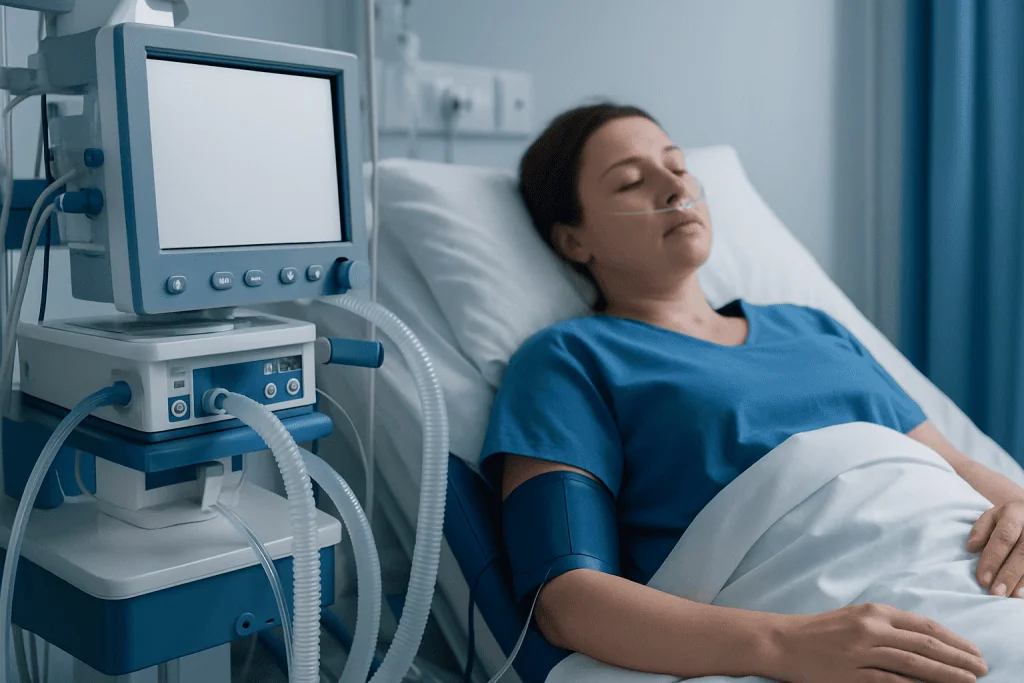
The recovery room is built for observation, not for rest, and it feels that way. Lights are brighter than in a ward room, monitors beep, other patients are recovering nearby behind curtains, and nurses check on you often. Even if all you want is quiet sleep, the frequent checks are the point: they confirm you are waking safely.
Your nurse assesses the same things repeatedly, breathing, oxygen level, blood pressure, heart rate, how awake you are, how much pain you have, whether you feel sick, and how your wound site or drains look. There is no fixed clock for this stage. A short, straightforward procedure in a healthy patient may need only a brief stay; a longer or more complex operation, or a slower wake-up, means more time under observation. The deciding factor is how you recover, not the schedule.
Do not be surprised if you later remember very little of this period. Anesthetic drugs and pain medicines blur memory formation, so the first hour or two often survives only in fragments: a voice, a blanket, a question you half answered. If your companion is waiting elsewhere and has not heard anything for a while, that usually means the team is simply completing routine monitoring.
Nausea, vomiting, chills and other common symptoms

Nausea is the symptom patients worry about most, and it is a recognised effect of anesthetic drugs, opioid painkillers and the surgery itself. Some people feel mildly queasy; some vomit once or twice; many feel nothing at all. Recovery nurses expect nausea and ask about it deliberately, because anti-nausea medicines tend to work best when given early, before sickness builds. If you have had post-operative nausea before, this is worth mentioning at your pre-operative assessment: the anesthesia team can plan preventive medication from the start. Nausea that lingers after you leave the recovery room is covered separately in our guide to managing nausea and appetite loss after treatment in Turkey.
Other common early effects include a dry mouth, shivering or chills, dizziness, blurry vision, a floating sensation, and a sore throat from the breathing tube used during the operation. Chills deserve a special mention because they alarm people: they do not necessarily mean you are dangerously cold. Body temperature drifts down during surgery, and shivering is part of how the body readjusts as the drugs wear off. Warm blankets and forced-air warming devices are routinely used, and the shivering usually settles.
Pain is handled the same way as nausea: earlier is better. There is no benefit in enduring pain quietly until it becomes severe, pain that has escalated is harder to bring back under control than pain treated early. Recovery nurses ask about pain repeatedly and often use a simple zero-to-ten scale; an honest number helps them respond precisely. In Acibadem hospitals, pain and nausea management in this phase is coordinated between the recovery nurses, the anesthesia team and your surgeon, so the response follows a plan rather than improvisation.
- Common and usually brief: sleepiness, chills, sore throat, dry mouth, mild nausea
- Unpleasant but often expected: vomiting, dizziness, mild confusion, emotional ups and downs
- What the team watches closely: breathing, bleeding at the wound site, pain that is escalating rather than settling, and nausea that does not respond to treatment
How the anesthetic leaves your body
A frequent question after general anesthesia in Turkey is how long the drugs take to leave the system completely. The honest answer has two parts. The sedative effect that keeps you asleep wears off within minutes to hours of the drugs being stopped: that is why you wake in the recovery room rather than the next day. But smaller residual effects on concentration, coordination, judgement and memory commonly persist for the rest of the day, which is why patients are typically advised not to drive, sign important documents or make significant decisions for around 24 hours, and longer if their doctor says so.
How quickly your body clears the drugs depends on the type and length of anesthesia, the doses used, your age, your liver and kidney function, your weight, and any other medicines you take. Two patients having the same operation can wake at noticeably different speeds, and neither is doing recovery “wrong”.
| Time frame | What patients commonly experience |
|---|---|
| First minutes | Drifting in and out of sleep, confusion about place and time, thirst, chills |
| First hour or two | Frequent nurse checks in the recovery room; patchy memory; nausea or pain treated as it appears |
| Rest of the day | Back in your room; drowsiness comes in waves; sips of fluid and light food when your team allows; first assisted steps for many patients |
| First 24 hours | Judgement, reflexes and coordination may still be affected even when you feel alert; rest under supervision is the norm |
Treat the table as a general shape, not a personal schedule. Your surgeon and anesthesiologist will tell you where your operation sits within it.
Can you go back to sleep after general anesthesia?
Yes, and most patients do. Once the team has confirmed you are waking appropriately and your breathing and vital signs are stable, sleeping is not only allowed but expected. Drowsiness after an anesthetic comes in waves, and dozing between nurse checks is a normal part of the first day. What the recovery team needs first is evidence that you can wake: that you respond to your name, answer simple questions, and breathe well without support. After that, sleep is your body’s ally, not something to fight.
The distinction matters because some patients try hard to stay awake, worried that falling asleep means slipping back “under”. It does not. Anesthesia is a drug-maintained state; once the drugs are stopped and their effect fades, natural sleep is simply sleep. Nurses will still wake you periodically for checks during the first hours, briefly annoying, but deliberate.
When you can go back to your room
Transfer out of the recovery room follows your condition, not the clock. In practical terms, the team wants to see that you are breathing well without concerning support, your blood pressure and heart rate are stable, you are waking appropriately and can respond to questions, your pain is at a manageable level, and any nausea is under control. Recovery staff typically score these points formally before signing you out to the ward.
You do not need to feel normal to leave the recovery room, and most patients don’t. Going back to your room means the most intensive monitoring phase has passed, not that every symptom has gone. On the ward, nurses continue observations at longer intervals, help you restart fluids and food when your surgeon allows, and support your first attempts to sit up or walk. If your procedure is planned as a day case, the sequence from recovery room to leaving the hospital is described in our guide to recovery room to same-day discharge.
Your personal timeline depends on the type and length of the operation, your age and general health, whether you have had anesthetic nausea before, how much pain control you need, and whether your surgeon wants extra observation. If any step feels unclear, your care team or international patient coordinator can walk you through what happens next, clear explanation is part of their job, and it makes the day feel far less foreign.
How long until you feel back to normal?
Feeling “back to normal” is really two different questions. The first, when does the anesthetic itself stop affecting you, usually resolves over the first day or so, as described above. The second, when do you feel like yourself again, depends far more on the operation than on the anesthesia. A short procedure may leave you tired for a day or two; major surgery involves weeks of gradual healing during which fatigue, reduced appetite and low energy are part of the process, not a complication of the drugs.
Some people also notice foggy thinking or poor concentration for days after an anesthetic, particularly after longer operations or in older patients. This usually improves steadily. What lingers after you leave the hospital, and how to think about it sensibly, is covered in our guide to post-anesthesia side effects after discharge in Turkey. For international patients there is one more timing question layered on top: when it is reasonable to travel. That decision belongs to your surgeon and depends on your operation: our guide on flying home after sedation or anesthesia explains what goes into it.
What you can do to make the first hours smoother
The medical team does most of the work in this phase, but you are not passive. The single most useful thing you can do is speak up early. Pain, nausea, feeling too hot or too cold, anxiety, a need to cough, confusion about what is happening, all of these are easier to manage when the nurse hears about them at the start rather than the peak.
Once you are awake enough, follow the small instructions carefully: breathe deeply when asked, move your legs and ankles, change position, and get out of bed only with help and only when told it is safe. These small actions support circulation and lung function after an anesthetic, and they matter more than they sound. If your throat is sore or your mouth dry, ask when you may sip water or suck ice chips rather than reaching for the glass yourself, timing depends on your surgery and your nausea.
A few practical points for international patients. Glasses, hearing aids, dentures and your phone are usually stored during surgery; ask for them back when staff confirm it is safe, because being able to see, hear and communicate makes the whole afternoon easier. If you prefer to communicate in your own language, ask for interpreter support: Acibadem commonly assists international patients with interpretation and practical coordination, which is especially valuable when you are drowsy and trying to absorb instructions. And if anything you are told does not stick, ask for it to be repeated later. Nobody expects perfect recall an hour after an anesthetic.
What your companion should know
If a family member or friend has travelled with you, they usually cannot join you in the recovery room itself. Recovery areas prioritise monitoring, privacy and patient safety, and several patients recover behind curtains in the same space. Your companion typically waits until you are transferred back to your room, or until staff invite a brief visit.
They can still be genuinely useful. The most valuable role is listener: you will be sleepy when instructions about eating, drinking, walking, wound care and medicines are given, and you may not remember them. A companion who writes down the key points, keeps their phone reachable, and manages messages to family at home takes real load off you. Our guide on when you need someone with you after sedation or anesthesia explains which situations make a companion particularly important.
If you are travelling alone, say so before surgery. Ward nurses and international patient coordinators can adapt, repeating instructions once you are fully alert, providing written summaries, and helping with practical matters a companion would normally handle. Travelling solo does not make safe recovery impossible; it just means the planning should happen in advance rather than on the day.
Step by step
- Wake up in the recovery room. After surgery you go to a monitored recovery area, not directly to your room. You may drift in and out of sleep and feel confused, cold or thirsty for a short time.
- Answer simple checks from the nurse. You will be asked your name, whether you have pain, and whether you feel sick, while the team monitors your breathing, oxygen level, blood pressure and pulse as the anesthetic wears off.
- Mention nausea, pain or chills early. Anti-nausea medicines, pain relief, warming blankets, oxygen and repositioning all work better when the team knows about a symptom at the start rather than the peak.
- Stabilise before transfer. You stay in recovery until your vital signs are acceptable, you are waking normally, and your symptoms are manageable. The clock does not decide this; your condition does.
- Return to your hospital room. Monitoring continues in a calmer environment. You may still feel sleepy and will likely need help with drinking, sitting up and your first walk.
- Restart fluids, food and movement as advised. Timing depends on your operation and your recovery, so follow your own team’s instructions rather than comparing yourself with other patients.
Your checklist
- Tell the anesthesia team before surgery if you have had nausea after an anesthetic before
- Arrange for your companion to stay reachable by phone during and after your operation
- Keep glasses, hearing aids and dentures stored safely until staff return them
- Ask before surgery how to request interpreter support afterwards
- Mention pain, nausea, chills, dizziness or breathing discomfort to your nurse as soon as you notice them
- Do not stand up alone until staff confirm it is safe
- Wait for permission before drinking or eating, and start with small sips
- Ask for ward and discharge instructions to be repeated once you are fully awake, and ideally written down
Key takeaways
- After general anesthesia in Turkey, you recover in a monitored area first and return to your room only when you are stable, waking appropriately and comfortable enough for ward care.
- Nausea, chills, sore throat, dry mouth and sleepiness are common early effects, and they respond best when mentioned early.
- The sleep-inducing effect wears off within hours, but effects on judgement and coordination commonly last around a day, plan nothing important for that time.
- Sleeping after the anesthetic is normal and expected once the team has confirmed you can wake and respond.
- Feeling fully yourself again depends more on the operation than on the anesthesia, and the timeline is personal.
- Interpreter support and a well-briefed companion make the first hours much easier to navigate.
Frequently asked questions
How long does it take for general anesthesia to leave your system completely?
The sedative effect fades within minutes to hours once the drugs are stopped, which is why you wake in the recovery room. Residual effects on concentration, coordination and judgement commonly last for the rest of the day, so patients are typically advised to avoid driving and important decisions for around 24 hours. Clearance speed varies with the drugs used, the length of anesthesia, and your age and general health.
Can you go back to sleep after general anesthesia?
Yes. Once nurses have confirmed you can wake, respond and breathe well, dozing is normal and expected. Falling asleep does not mean returning to the anesthetised state: the drugs have been stopped, and natural sleep is simply sleep. Staff will still wake you briefly for routine checks in the first hours.
How long does it take to feel back to normal after general anesthesia?
The anesthetic itself usually stops affecting you within about a day, though some people notice foggy thinking for a few days, especially after long operations. Feeling fully like yourself depends mainly on the surgery: a minor procedure may mean a day or two of tiredness, while major surgery involves weeks of gradual healing. Your surgeon can describe the realistic timeline for your specific operation.
Is nausea normal after anesthesia?
Nausea is a recognised effect of anesthetic drugs, opioid painkillers and surgery itself. Some patients feel queasy, some vomit, many feel nothing. Anti-nausea medicines tend to work best when given early, so recovery nurses ask about sickness deliberately and treat it as soon as it appears. A history of anesthetic nausea is worth mentioning before surgery so prevention can be planned.
Why do I feel so cold or shaky after surgery?
Body temperature drifts down during an operation, and shivering is part of how the body readjusts as the anesthetic wears off. It does not necessarily mean you are dangerously cold. Warm blankets and forced-air warming devices are routinely used in the recovery room, and the chills usually settle within a short time.
Will I remember what happened in the recovery room?
Possibly only in fragments. Anesthetic drugs and pain medicines blur memory formation, so many patients recall the first hour or two only partially: a voice, a blanket, a question. This is normal and is also why important instructions should be repeated later, once you are fully alert.
When can I drink water or eat again?
Timing depends on your operation, your nausea and how alert you are. Teams usually start with small sips of water or ice chips and progress gradually once you can swallow safely and keep fluids down. Ask your nurse rather than reaching for the glass yourself: the go-ahead is specific to your surgery.
Can my family come to the recovery room with me?
Usually not immediately. Recovery areas prioritise close monitoring and patient privacy, and several patients recover in the same space. In most cases your companion sees you once you are back in your room, or when staff invite a brief visit. Waiting without news for a while usually just means routine monitoring is still under way.
Add us as a Preferred Source to see more of our trusted health content across Google Search, AI Overviews and Discover.

Update history
- PublishedAugust 6, 2026
- Medical review approvedSeptember 1, 2026
- Last content updateSeptember 1, 2026
References2
- General anaesthesia: NHS nhs.uk
- Anesthesia: MedlinePlus, U.S. National Library of Medicine medlineplus.gov
More Patient Guides

When a Hospital Stay in Turkey Becomes Longer Than Planned: What to Arrange
If your hospital stay in Turkey is longer than planned, arrange medical updates, accommodation, travel changes, insurance and support for your companion.
Waiting for Test Results in Turkey: How to Use Time Between Appointments
Waiting for test results in Turkey is easier with a clear plan for appointments, rest, records, questions and support in Istanbul.

Unexpected ICU Stay in Turkey: What Patients and Families Should Expect
Unexpected ICU stay in Turkey: learn what patients and families can expect, from communication and visiting to care updates and travel support.

How to Manage Special Diets During Medical Travel in Turkey
Special diets during medical travel in Turkey are easier to manage when you share your needs early, confirm meals and carry safe…