

How to Manage Special Diets During Medical Travel in Turkey

Write a one-page diet summary before you fly, share it while your treatment is being arranged, and repeat it at admission so it enters your care plan. Pack sealed snacks for travel days, confirm fridge or kitchen access at your accommodation, and follow your clinical team's fasting and recovery instructions exactly. With that groundwork, a special diet becomes a manageable part of the trip rather than a daily worry.
You are flying for treatment, not a holiday, and the question of what you will safely eat, on the plane, on the hospital tray, in a city you do not know, deserves a straight answer rather than reassurance.
This guide gives you that answer. It explains how to manage special diets during medical travel in Turkey from the day your appointments are arranged to the day you fly home: what to write down, who to tell, what hospital kitchens can and cannot do, and how to order in restaurants when the menu is in Turkish and the stakes are medical.
At a glance
- Best time to share needs: Before you travel, while your treatment plan and appointments are being arranged
- Who to tell: Your international patient coordinator, admitting nurse, treating doctor and, where relevant, the dietitian
- Carry with you: A written diet summary in English, your medication list and sealed non-perishable snacks
- Hospital meals: Therapeutic diets are routine in Turkish hospitals, ask for yours to be documented in your care plan
- Eating out: Ask how a dish is prepared, not just what it is called
- Important reminder: Fasting and post-treatment diet instructions come from your treating clinicians, not from this guide
Why food planning is part of your treatment plan
The reliable way to manage special diets during medical travel in Turkey is to treat food as a clinical detail, not a travel detail. A diet that exists because of diabetes, coeliac disease, kidney disease, a food allergy, a swallowing difficulty or a religious requirement affects your admission paperwork, your hospital tray, your fasting instructions and your recovery. It belongs in the same conversation as your medical records.
The good news is that none of this requires improvisation. Turkish hospitals that treat international patients handle therapeutic diets every day, restaurant food in Turkey leans towards simple, identifiable ingredients, and interpreting support is available in the clinical setting. What the system cannot do is read your mind. Everything in this guide comes back to one habit: put your needs in writing, share them early, and repeat them at the moments that matter.
Start with a clear diet summary
Before you travel, prepare a short, practical summary of your dietary needs. Include food allergies, intolerances, medical diets, religious or cultural requirements, foods you must avoid, and anything you need to eat or drink regularly. If a diet is medically necessary, say so explicitly: a kitchen treats “medically required” differently from “prefers not to”.
Be specific rather than brief. Instead of writing only “gluten-free”, state whether you have coeliac disease and need protection from cross-contact. Instead of “diabetic diet”, describe your usual meal pattern, whether you count carbohydrates, and what you carry to treat low blood sugar. Instead of “allergic to nuts”, name the nuts and describe how severe a reaction can be. Bring a printed copy in English and keep a digital version on your phone; a laminated card you can show in restaurants earns its place in your bag many times over.
If a food allergy is part of the picture, the practical detail matters even more: our guide on handling food allergies and special diets during treatment in Turkey goes deeper into allergy-specific planning.
Tell every relevant part of your care team
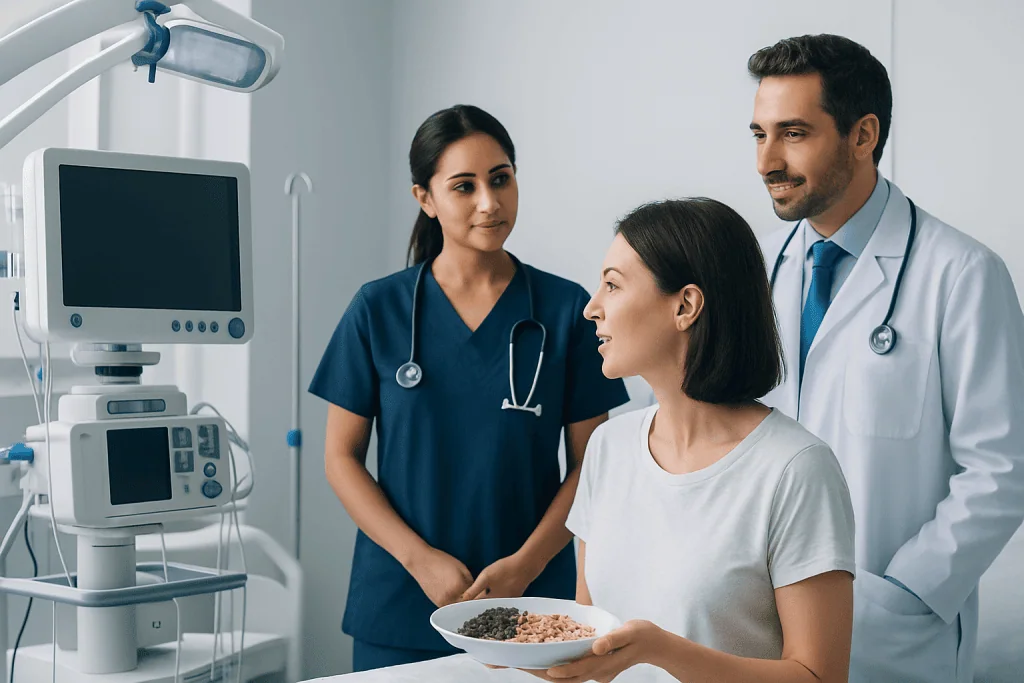
Dietary needs touch more than the meal tray. Share your written summary while your appointments are being planned, international patient coordinators exist partly to pass this kind of practical information to the clinical team, and at Acibadem, interpreting support can be arranged so nothing is lost in translation. Then repeat the important points in person: to the admitting nurse, to your doctor, and to the dietitian if one is involved in your care. Repetition is not rudeness here; it is how information reaches the right part of your record.
Ask two concrete questions at admission. First, how will your dietary requirement be communicated to the food service team? Second, what should you do if a meal arrives that does not look suitable? Never judge safety by appearance alone if you have a severe allergy, coeliac disease or a diet that depends on strict ingredient control: a sauce or a garnish can undo a correct main course.
What to expect from hospital meals in Turkey
Hospital kitchens in Turkey routinely prepare therapeutic diets: diabetic, low-salt, renal, soft, pureed and clear-liquid menus are standard fare, ordered against each patient’s care plan rather than chosen from a public menu. Because Turkey is a majority-Muslim country, pork does not typically appear in hospital food, which simplifies halal requirements for many patients. Vegetarian, vegan and other specific requests are usually manageable but should be confirmed rather than assumed.
Your diet order can change during a stay, before a procedure, after anaesthesia, or as you progress from liquids to soft food. Ask who reviews the order and when, so a temporary restriction does not linger longer than intended. For a fuller picture of how inpatient food service works, see our guide to managing special diets during hospital care in Turkey.
Plan food for travel days and your accommodation
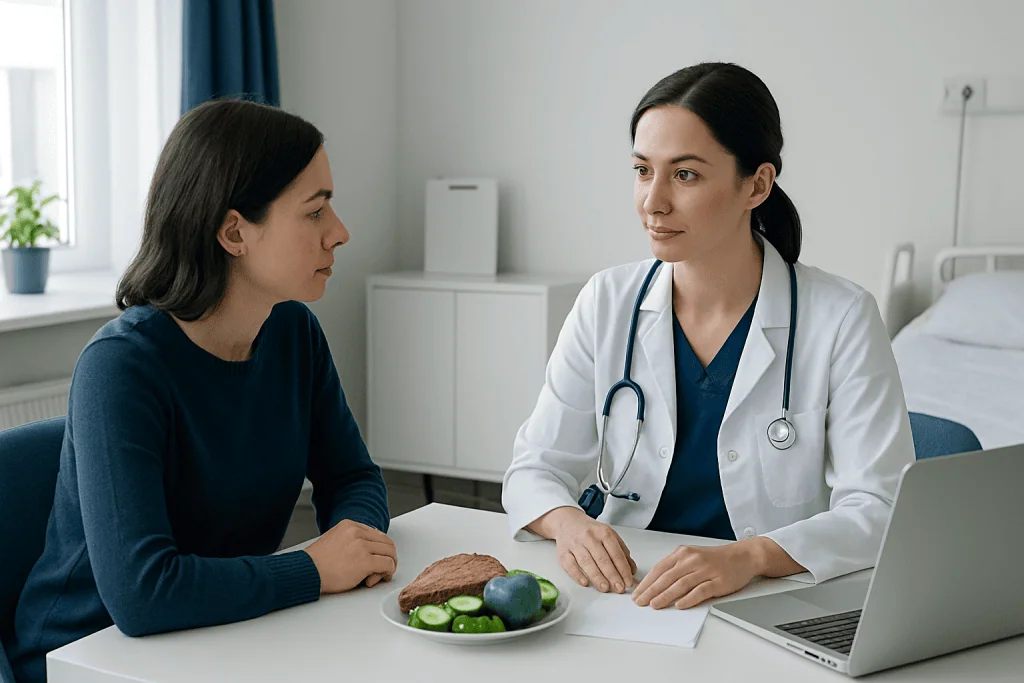
Travel days are the weakest link in any diet plan. Airport queues, delays, unfamiliar menus and late arrivals conspire against you. Pack a small supply of sealed, non-perishable snacks that fit your requirements, crackers, nutrition bars, plain nuts if appropriate for you, dried fruit, and check airline and border rules before packing food, particularly liquids, gels and fresh produce.
Request an airline special meal in advance, but treat it as a bonus, not a plan. Special meals can be missed after a late booking, a schedule change or an aircraft swap, and they rarely meet strict medical requirements precisely. If you travel with insulin, tube-feeding supplies or prescribed nutritional drinks, discuss carrying them with your clinician and read our guides on temperature-sensitive medicines and keeping regular medicines on schedule, since meal timing and medicine timing often depend on each other.
Before confirming accommodation, ask the unglamorous questions: is there a refrigerator, a kettle, a microwave or kitchen access? Is breakfast included, and can it accommodate your restriction? Is there a supermarket within walking distance? A room with a fridge and a kettle solves more diet problems in practice than any restaurant recommendation. Plan simple food for your first evening, especially if you land late.
Understanding everyday Turkish food
Knowing what Turkish people typically eat makes your own planning easier. A traditional breakfast is built from bread, white cheese, olives, tomatoes, cucumber, eggs and honey. Lunches and dinners lean on lentil and vegetable soups, grilled meat and fish, rice and bulgur, legumes, vegetables cooked in olive oil, salads, yoghurt and the yoghurt drink ayran. Tea accompanies almost everything.
For many special diets this is workable territory: plainly grilled protein, plain rice, vegetables and yoghurt are everywhere. But the cuisine has quiet traps. Wheat is ubiquitous, in bread served unasked, in soups thickened with flour, in bulgur, in fried coatings. Many soups start from a meat stock even when they look vegetarian. Nuts appear in desserts and some rice dishes. Dairy runs through the whole table. None of this is a problem if you ask; all of it is a problem if you assume.
Eating out with dietary requirements
Restaurant meals are where most people who manage special diets during medical travel in Turkey feel least in control. Preparation varies from kitchen to kitchen, so interrogate the dish, not the menu name. Show your written diet card when ordering, and use short, direct questions. For an allergy, state that you cannot eat the ingredient and ask whether it appears in the meal, the sauce, the oil, the seasoning or the fryer. For gluten-free needs, ask about flour, breadcrumbs and shared preparation surfaces. For vegan, halal or low-salt requests, confirm the ingredients and the cooking method each time, kitchens change, and so do cooks.
- Choose plainly prepared dishes with few components when ingredients are uncertain.
- Ask specifically about sauces, broths, marinades, oils and shared fryers.
- Skip buffets where labelling is unclear and cross-contact is likely.
- Keep a familiar snack with you for appointment days and transfers.
- Do not take chances with a severe allergy or strict medical diet; walking away from a meal is always an option.
If communication stalls, simpler is safer. And however good your restaurant technique becomes, keep carrying any emergency medication your allergy plan includes.
Fasting, medicines and diet changes around treatment
Do not change your usual diet, fluid intake or medication schedule before a test or procedure unless your clinical team tells you to. Fasting instructions matter, particularly around anaesthesia and some imaging and laboratory tests, and they are individual. Ask exactly what “nothing to eat or drink” means in your case, whether clear fluids are allowed, and how your essential medicines should be handled, then follow the answer you are given, not a general rule from the internet.
If you have diabetes or another condition affected by missed meals, raise it early so the team can plan fasting, monitoring and medicine timing around your appointment. Carry your usual glucose treatment if you normally use one, but check before eating or drinking anything on the day itself. Our guide on managing chronic conditions during medical travel covers this coordination in more detail.
Nutrition through recovery
Appetite and food tolerance often change temporarily after treatment. Nausea, a sore mouth, constipation, reduced mobility and some pain medicines can all affect what you feel able to eat, and your team may prescribe specific restrictions or a staged return to normal food. Recovery diets are reviewed as you progress, and dietitians can be brought in when a need is complex, ask your treating team how that works in your case.
Check before adding anything from outside the plan: supplements, herbal products, meal replacements and food brought in by relatives can all interact with recovery or with new medication. Nutrition during the weeks after treatment is its own subject, covered in our guide to managing special diets in Turkey during treatment and recovery.
Step by step
- Write down your dietary requirements. Prepare a concise summary of allergies, intolerances, medical diets, religious requirements and foods you must avoid. Note cross-contact risks, usual meal timing and any emergency treatment you carry.
- Share the summary before travel. Send it to your coordinator while your appointments are being planned, and ask for confirmation that clinically important restrictions have reached the treating team.
- Ask about treatment-related instructions. Find out whether you will need to fast, change fluids, pause supplements or adjust meal timing for tests or procedures, and request individual guidance if your condition is affected by missed meals.
- Arrange travel-day food. Request an airline special meal, pack a sealed backup supply, and check airline and customs rules for foods, liquids and medically necessary nutrition products.
- Choose practical accommodation. Confirm refrigerator, kettle or kitchen access, check what breakfast can accommodate, and locate the nearest supermarket. Plan simple food for your first evening.
- Repeat your needs on arrival. State serious allergies and medically necessary diets at admission and before meals, and ask who to speak to if a tray looks unsuitable.
- Review the plan before discharge. Confirm whether your recovery diet, fluid intake or medicine timing has changed, and make sure you understand what to eat and what to avoid once you leave.
Your checklist
- A concise written diet summary in English, printed and on your phone
- A list of food allergies, intolerances and any emergency medication you carry
- Your current medication list and relevant clinician letters
- Sealed non-perishable snacks for the journey and appointment days
- An airline special-meal request, with a backup plan
- Confirmation of fridge or kitchen access at your accommodation
- Your treating team’s fasting and post-treatment diet instructions, in writing if possible
- Contact details for your international patient coordinator
- A plan for low blood sugar or other diet-related situations, if this applies to you
Key takeaways
- Share dietary needs in writing before travel and repeat them at admission.
- Specific beats brief: name conditions, cross-contact risks and severity, not just labels.
- Turkish hospital kitchens handle therapeutic diets routinely, but only once your need is in the care plan.
- Pack backup food for travel days and choose accommodation with a fridge or kitchen access.
- Fasting and recovery-diet instructions come from your clinical team; ask exactly what applies to you and when.
Frequently asked questions
How do I manage my diet while travelling for treatment?
To manage special diets during medical travel in Turkey, work in three layers: a written diet summary shared before travel and repeated at admission, a supply of safe backup food for travel days and appointments, and accommodation with a fridge or kitchen access. Then confirm any fasting or recovery-diet instructions directly with your clinical team, since these override your usual routine around procedures.
What is the typical diet of Turkish people?
Everyday Turkish food centres on bread, cheese, olives, eggs and vegetables at breakfast, then soups, grilled meat and fish, rice and bulgur, legumes, olive-oil vegetable dishes, salads and yoghurt later in the day. Much of it is simple and identifiable, which helps many special diets, but wheat, dairy, nuts and meat-based stocks appear widely, so ask about preparation rather than assuming.
What medications can I not take into Turkey?
Turkey, like most countries, restricts certain controlled medicines such as strong painkillers and some psychiatric drugs, and travellers carrying them generally need a prescription or a doctor’s letter showing the medicine is for personal use. Rules change, so check current Turkish customs guidance or your nearest Turkish embassy before travelling, and keep medicines in original packaging with documentation.
Is it a good idea to travel to Turkey for medical reasons?
Turkey is an established destination for international patients, but whether medical travel suits you depends on your condition, your fitness to fly, the complexity of the treatment and how follow-up care will be handled at home. It is a decision to weigh with your own doctor, taking your full medical picture into account, including any diet-related condition that needs managing away from home.
What should I eat before a procedure in Turkey?
Follow the exact fasting instructions given by your treating team, because requirements differ by procedure and by health condition. Do not assume your usual food, drink, chewing gum, supplements or medicines are permitted beforehand; ask what applies in your case, including whether clear fluids are allowed and when fasting starts and ends.
Can I bring my own food into the hospital?
It depends on your care setting and your prescribed diet. Ask the ward or treating team before bringing food in, because food safety rules, infection precautions and a staged recovery diet may limit what is appropriate, even for food that would normally be fine for you.
How can I eat gluten-free while travelling in Turkey?
Carry a written card explaining that you must avoid wheat, barley, rye and cross-contact if you have coeliac disease, and show it when ordering. Ask about flour, breadcrumbs, soups, sauces, shared fryers and preparation surfaces. Plainly grilled meat or fish, plain rice, vegetables and yoghurt are widely available; bread arrives unasked at most tables, so send it back early.
What if I have diabetes and need to fast for a test?
Tell the clinical team well in advance and give details of your medicines, insulin and monitoring routine, so they can give you individual instructions for fasting day. Carry your usual glucose treatment, but do not skip, take or change any dose without the advice of the team managing your appointment.
Add us as a Preferred Source to see more of our trusted health content across Google Search, AI Overviews and Discover.

Update history
- PublishedAugust 22, 2026
- Medical review approvedSeptember 13, 2026
- Last content updateSeptember 12, 2026
References3
- Food and Water Safety: CDC Travelers' Health wwwnc.cdc.gov
- Coeliac disease: NHS nhs.uk
- Food Allergy: MedlinePlus medlineplus.gov
More Patient Guides

When a Hospital Stay in Turkey Becomes Longer Than Planned: What to Arrange
If your hospital stay in Turkey is longer than planned, arrange medical updates, accommodation, travel changes, insurance and support for your companion.

Waiting for Test Results in Turkey: How to Use Time Between Appointments
Waiting for test results in Turkey is easier with a clear plan for appointments, rest, records, questions and support in Istanbul.

Unexpected ICU Stay in Turkey: What Patients and Families Should Expect
Unexpected ICU stay in Turkey: learn what patients and families can expect, from communication and visiting to care updates and travel support.

How to Manage Laundry During a Longer Treatment Stay in Turkey
Laundry during a longer treatment stay in Turkey is manageable with hotel services, local laundries and a simple packing plan.