

Waiting for Test Results in Turkey: How to Use Time Between Appointments

Confirm how and when your results will be reviewed before you leave the department, keep your phone charged and reachable, and plan light, flexible days. Use the gap to organise your records and write down questions for the follow-up. Waiting time reflects laboratory and reporting steps, not the meaning of a result, so save interpretation for the clinician responsible for your care.
The test is done. Now there is a gap, a day, sometimes several, before anyone sits down with you to discuss what it showed. When you are far from home and every hour of your stay feels accounted for, that gap can be the hardest part of the trip.
This guide is about using that time well. Not filling it frantically, and not spending it refreshing a patient portal, but keeping yourself rested, organised and reachable so that the follow-up conversation is as useful as it can be. If you are waiting for test results in Turkey right now, the days in between have a job to do, and it is a quieter job than most people expect.
At a glance
- Best first step: Confirm when, where and how your results will be reviewed before you leave the department
- Keep with you: Passport, appointment details, medication and allergy list, prior reports and scans
- Avoid: Interpreting technical findings alone or changing any medicine without your treating doctor
- Useful support: International patient coordinators, who handle scheduling and interpretation
- Plan for: Rest, low-pressure activities near your accommodation, and possible schedule changes
Waiting for test results in Turkey: start with a clear results plan
The single most useful thing you can do happens before the waiting even begins. Before you leave the test or imaging department, make sure you know what happens next. Results reach patients in different ways: some are reviewed at a scheduled consultation, some appear on a patient portal, some are discussed by phone, and some are collected in person as printed reports or images on disc. Ask which of these applies to you, and write down the date, time, hospital location and the department name if you have it.
Then ask one more question: does the follow-up appointment stand regardless, or does it depend on the results being ready? Knowing this in advance saves you from the low-grade uncertainty of not knowing whether tomorrow’s plan is really tomorrow’s plan. The practical detail of how reports and images are shared during treatment is covered in more depth in our guide to getting lab test and imaging results during treatment in Turkey.
It also helps to understand why some results take longer than others. Different tests pass through different hands before they reach your clinician, and the number of review steps, not the seriousness of the finding, is usually what sets the pace.
| Type of test | Who reviews it | What can add time |
|---|---|---|
| Routine blood and urine tests | Laboratory analysers, checked by laboratory specialists | Batching, verification of unusual values, repeat runs |
| Imaging (X-ray, ultrasound, CT, MRI) | A radiologist writes a formal report | Comparison with earlier scans, complex studies, second reads |
| Biopsy and pathology samples | A pathologist examines prepared tissue | Sample preparation stages, additional stains or tests |
| Genetic and specialised tests | Specialist laboratories | Often the longest process; see our guide to genetic testing in Turkey |
Some results also need to be discussed between specialists, or set against records from your home country, before recommendations can be made. None of this reflects what the result contains. A longer wait when you are waiting for test results in Turkey is a feature of the review process, not a message about your health. If a step is unclear, the international patient coordinators exist for exactly this kind of question: they can confirm the logistical sequence, arrange interpretation and check that your follow-up appointment is in place. For a fuller picture of realistic timeframes, see how long results may take and how to plan your stay.
Use the waiting time without overfilling your schedule
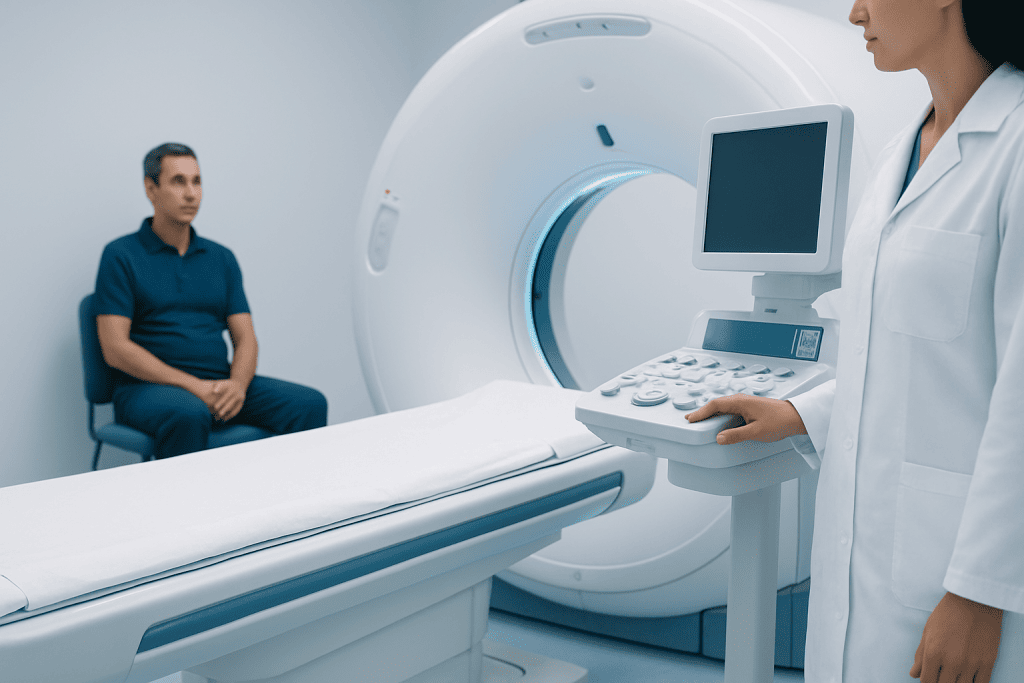
The instinct when waiting is to keep busy. That is fine, up to a point. The mistake is building days so full that a schedule change becomes a crisis. Tests can be tiring in ways that are easy to underestimate, particularly if you have travelled recently, fasted, received sedation or contrast material, or are managing symptoms alongside everything else. Build your day around the post-test instructions you were given, and avoid strenuous plans until you know how you feel.
Choose activities you can pause
The best plans while waiting for test results in Turkey are the ones you can walk away from mid-way without losing anything: a short walk near your accommodation, a quiet meal, time with your companion, reading, or drafting questions for your clinician. A day trip to the other side of Istanbul the morning of a possible follow-up is not one of those plans. Traffic in large Turkish cities is genuinely unpredictable, and the journey between hotel and hospital can take much longer at some hours than others, leave a generous margin on any day with an appointment, even a tentative one.
If you have genuinely free days with no appointments attached, they are a different matter, and there is more room to enjoy where you are. Our guide to what to do during free days between appointments in Turkey covers that side of the stay.
Stay reachable
Being reachable is the quiet obligation of this period. Keep your phone charged and switched on, check messages regularly, and make sure the number the hospital holds for you actually works in Turkey. Appointments sometimes move earlier, not just later, and a team may need extra information from you before a review. A missed message can cost you a day.
- Keep plans close to your hotel or hospital on appointment days.
- Carry water and a light snack if your care instructions allow it.
- Save the hospital address and your coordinator’s contact details offline, in case of poor signal.
- Ask your hotel reception to help arrange reliable transport when you need it.
- Tell the hospital promptly if your phone number, hotel or travel dates change.
Organise your medical information for the follow-up

A results appointment goes better when the clinician has the fullest possible picture and you have your questions ready. The waiting days are the natural time to prepare both. A simple folder, on your phone, on paper, or both, is enough. Into it goes anything relevant to the question being investigated:
- Your referral letter and any test request forms
- Previous scans, laboratory reports and clinic letters, including those from home
- An up-to-date list of medicines, doses and allergies
- Discharge summaries or visit notes from earlier in this trip
- A short note of when each test was done, what preparation it involved, and any symptoms you noticed before or after
That last item matters more than it looks. Clinicians interpret results against context, and “I felt light-headed for two hours after the scan” or “the pain has been milder since Tuesday” is exactly the kind of context that gets forgotten in the moment. Write it down while it is fresh.
If a document is not in English or Turkish, ask whether a translation is needed for the clinical team, sometimes it is, sometimes the key values are readable as they are. And do not worry if your folder has gaps. Bring what you have and say plainly what is missing; an honest gap is more useful than a guessed answer. Acibadem teams may coordinate across several departments when a case needs more than one perspective, and your role in that is not to interpret technical reports yourself. It is to make sure the clinicians have the clearest available history, so the appointment time is spent on decisions rather than reconstruction.
Prepare questions instead of searching for conclusions
Searching your test online is the most natural impulse in the world, and general background reading is genuinely useful, understanding what an MRI measures, or why a biopsy takes several days to process, can make the wait feel less opaque. Where the search goes wrong is at the level of your specific numbers and phrases. A value slightly outside a reference range, or a technical phrase on a scan report, does not mean the same thing for every person. Results are interpreted against your symptoms, examination findings, history and other tests, and that interpretation is precisely what the follow-up appointment is for.
So redirect the energy. Keep a running list of questions as they occur to you, and bring the list to the appointment. If anxiety is running high, weight the list towards practical questions: the ones that clarify the plan rather than try to predict an outcome. Useful ones include:
- What do these results show, and, just as importantly, what do they not show?
- Do the findings fit with my symptoms and my previous records?
- Do I need another test, a specialist opinion or a further follow-up?
- Are there activities or foods I should avoid in the meantime?
- Can I travel as planned, or should I keep my itinerary flexible?
- How will I receive copies of my reports and images, and in what format?
You are also entitled to ask for plain language, for important points to be repeated, and for the next step to be stated explicitly before you leave the room. If you want a head start on how results feed into treatment decisions, our guide on understanding the next step in your plan after medical test results walks through that conversation.
Look after your wellbeing while you wait
Waiting for medical information is a recognised source of stress, and it tends to show up as worry, irritability, poor sleep or difficulty concentrating. These reactions are common and understandable, and they are often sharper when you are away from home, in an unfamiliar city, with a schedule you do not fully control. Naming that helps: you are not handling it badly, the situation is simply demanding.
A gentle routine does more than any single distraction. Regular meals where your instructions permit them, enough water, a reasonable bedtime, short walks, and daily contact with someone you trust: a companion in Turkey or family at home by phone. Keep alcohol modest and screens out of the small hours; both make anxious nights longer.
If you have a companion, give them a role. They can take notes at the follow-up, track the practical details, or simply sit with you in the waiting area. People who want to help do better with a specific task. If you are travelling alone, say so early, coordinators can arrange interpreters and can add practical structure to your days, which matters more when there is no one sharing the load. Structuring the in-between days deliberately is its own skill, and we cover it in how to organise your days between tests and treatment in Turkey.
One reframe worth holding onto: the waiting period is not empty time in which nothing is happening. Laboratories are processing, specialists are reporting, and comparisons are being made. The process is moving even when your calendar looks blank.
Stay flexible with travel, accommodation and work commitments
The final piece is structural. When you arrange a stay that includes testing, build a buffer between the last expected result and your departure. Some results need specialist reporting or a multidisciplinary discussion before recommendations can be made, and occasionally a result prompts one more test or one more consultation. A rigid itinerary turns each of these ordinary steps into a logistical problem; a flexible one absorbs them.
In practice, flexibility looks like this:
- Choose accommodation that can be extended by a night or two without drama.
- Avoid non-refundable flights booked immediately after an important follow-up.
- Keep your airline, hotel and travel insurer details accessible, in case dates move.
- If an employer, insurer or travel provider needs documentation, ask early what the hospital can provide, administrative paperwork has its own processing time.
Acibadem’s international patient services can support the practical side of a changed schedule, including interpreter arrangements and guidance on accommodation and transport. That support is designed to make the stay easier to manage; the clinical decisions themselves remain with your treating team, on their timetable, and the honest position is that nobody can promise you a fixed date for a result that has not yet been reported. Plan as though the schedule might shift, and be pleasantly surprised when it does not.
Step by step
- Confirm the next appointment before you leave. Ask when your results are expected to be reviewed and whether you need to return in person. Note the location, contact number and whether an interpreter will be arranged.
- Follow your post-test instructions. Continue any instructions given after blood tests, imaging, sedation or other investigations. Do not start, stop or change prescribed medicines unless your treating doctor tells you to.
- Keep your day flexible. Plan quiet, pausable activities and allow generous travel time around hospital appointments. Avoid commitments that would be hard to unwind if your team requests an earlier review or a further test.
- Create a results folder. Gather appointment papers, your medication and allergy list, prior reports and imaging. Add a short note of current symptoms and the questions you want to ask.
- Stay reachable. Keep your phone charged, check messages, and tell the team promptly if your number, hotel or travel arrangements change.
- Attend the results discussion prepared. Bring a companion if you can, ask for plain language, and leave with the next steps stated clearly, including how you will receive copies of reports and images.
- Update onward plans only after clarification. Once you understand the care plan, revisit flights, accommodation and work arrangements. If further care is recommended, coordinators can advise on the practicalities of extending a stay.
Your checklist
- Confirm the date, time and format of your results review
- Save your international patient coordinator’s contact details offline
- Keep your passport and hospital registration details accessible
- Carry an up-to-date list of medicines, doses and allergies
- Bring previous reports, scans or laboratory results if available
- Write down your symptoms and questions before the appointment
- Keep your phone charged and check messages regularly
- Leave flexibility in your hotel booking and onward travel
- Ask early about any documentation you need for employers or insurers
Key takeaways
- Confirm exactly how and when your results will be discussed before leaving the test department.
- Keep your schedule light and pausable, your phone reachable, and your travel plans flexible.
- Use the waiting days to organise records and write questions, so the follow-up focuses on decisions.
- Avoid interpreting technical findings alone or changing any medicine without your treating doctor.
- A longer wait reflects the review process behind the result, not the result itself.
Frequently asked questions
How long will I wait for test results in Turkey?
It depends on the test. Routine laboratory work is generally among the quicker results, while imaging reports, pathology and genetic tests pass through more review steps and take longer. Comparison with previous records or discussion between specialists can add time. Your care team or coordinator can give you the expected timeline for your specific tests, and it is worth asking for it explicitly at the point of testing.
Can I leave Turkey before my results are ready?
Sometimes results can be discussed remotely, but this depends on the test, your clinical needs and your treating team’s plan. Before booking onward travel, ask whether an in-person review, additional testing or a specialist consultation may be needed. Keeping a buffer between testing and departure, and avoiding non-refundable bookings straight after a follow-up, reduces stress if the plan changes.
Will someone explain my results in English?
International patient services can arrange communication support, including interpreters where needed. Mention language preferences before the appointment so arrangements are in place. You can also ask the clinician to explain the main findings and next steps in clear, non-technical language, and to repeat anything important: that is a normal request, not an imposition.
Should I collect copies of my reports and images?
Yes. Ask how you can obtain copies of your reports, images and relevant visit notes, and whether digital access, printed copies or both are available. These records are useful for follow-up with your doctor at home and for any other clinician involved in your care later. Collecting them before you travel home is far easier than requesting them afterwards.
Is it safe to look up my results online while I wait?
General background reading about a test is reasonable and can make the process feel less opaque. Interpreting your own specific values or report phrases is a different matter: findings mean different things in different clinical contexts, and a value outside a reference range is not automatically significant. Save the interpretation for the clinician who has your full picture, and bring written questions instead.
Can my companion attend the results appointment?
Usually a companion is welcome and genuinely helpful, for emotional support, note-taking and remembering details afterwards, though privacy practices and room capacity can vary. Mention it in advance if you would like someone to join you. You remain in control of who receives information about your care.
What if the clinician recommends another test or specialist review?
Ask why it is recommended, how soon it is needed and whether it affects your travel plans. Additional tests after a first round of results are a normal part of careful assessment, not necessarily a sign that something is wrong. Coordinators can handle the practical scheduling, interpretation and accommodation side while your treating team advises on any time-sensitive steps.
What if my results are delayed past the expected date?
Delays usually reflect processing or reporting steps: verification of a laboratory value, comparison with earlier imaging, or coordination between specialists. A delay does not by itself indicate whether a result is reassuring or concerning. Ask when the result is now expected and whether your follow-up appointment needs to move, and adjust your accommodation or travel margin accordingly.
Add us as a Preferred Source to see more of our trusted health content across Google Search, AI Overviews and Discover.

Update history
- PublishedAugust 22, 2026
- Medical review approvedSeptember 2, 2026
- Last content updateSeptember 2, 2026
References1
- How to Understand Your Lab Results: MedlinePlus medlineplus.gov
More Patient Guides

When a Hospital Stay in Turkey Becomes Longer Than Planned: What to Arrange
If your hospital stay in Turkey is longer than planned, arrange medical updates, accommodation, travel changes, insurance and support for your companion.

Unexpected ICU Stay in Turkey: What Patients and Families Should Expect
Unexpected ICU stay in Turkey: learn what patients and families can expect, from communication and visiting to care updates and travel support.

How to Manage Special Diets During Medical Travel in Turkey
Special diets during medical travel in Turkey are easier to manage when you share your needs early, confirm meals and carry safe…

How to Manage Laundry During a Longer Treatment Stay in Turkey
Laundry during a longer treatment stay in Turkey is manageable with hotel services, local laundries and a simple packing plan.